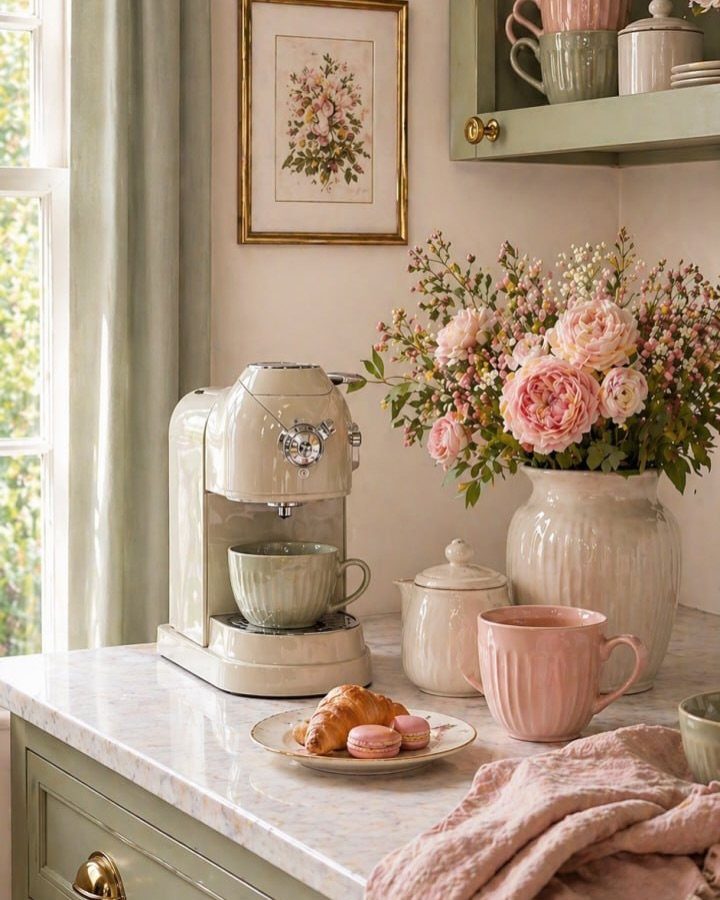
The ideas in this list run from painted cabinets and shaker doors to small moves like dishware, a backsplash, or brass pendants that bring in sage without a full remodel.
The range runs from a tray on the counter to glass-front cabinets, painted islands, and herringbone floors, which I’d price before falling for them.
Across all of it, the shade matters as much as the idea, since sage sold under that name runs from gray-leaning to blue-leaning.
1. Modern Sage Green Kitchen
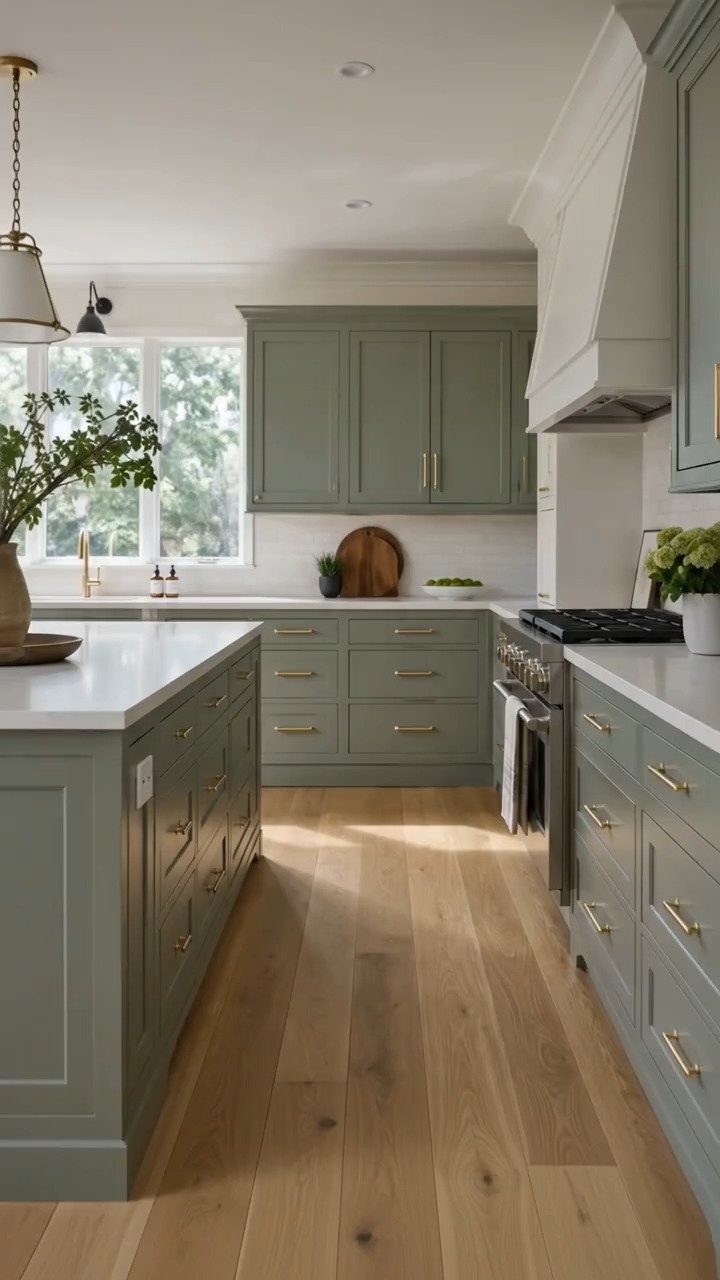
Flat-front or simple slab-style doors in sage keep this look crisp, and the color does the softening so nothing else has to.
Gold hardware against the green is the detail I’d copy first, since it’s the cheapest swap in the room.
White counters and light wood floors keep the green from feeling heavy. If you rent, new pulls and a good cleaner on the existing cabinets get you part of the way for very little money.
2. Farmhouse Sage Kitchen
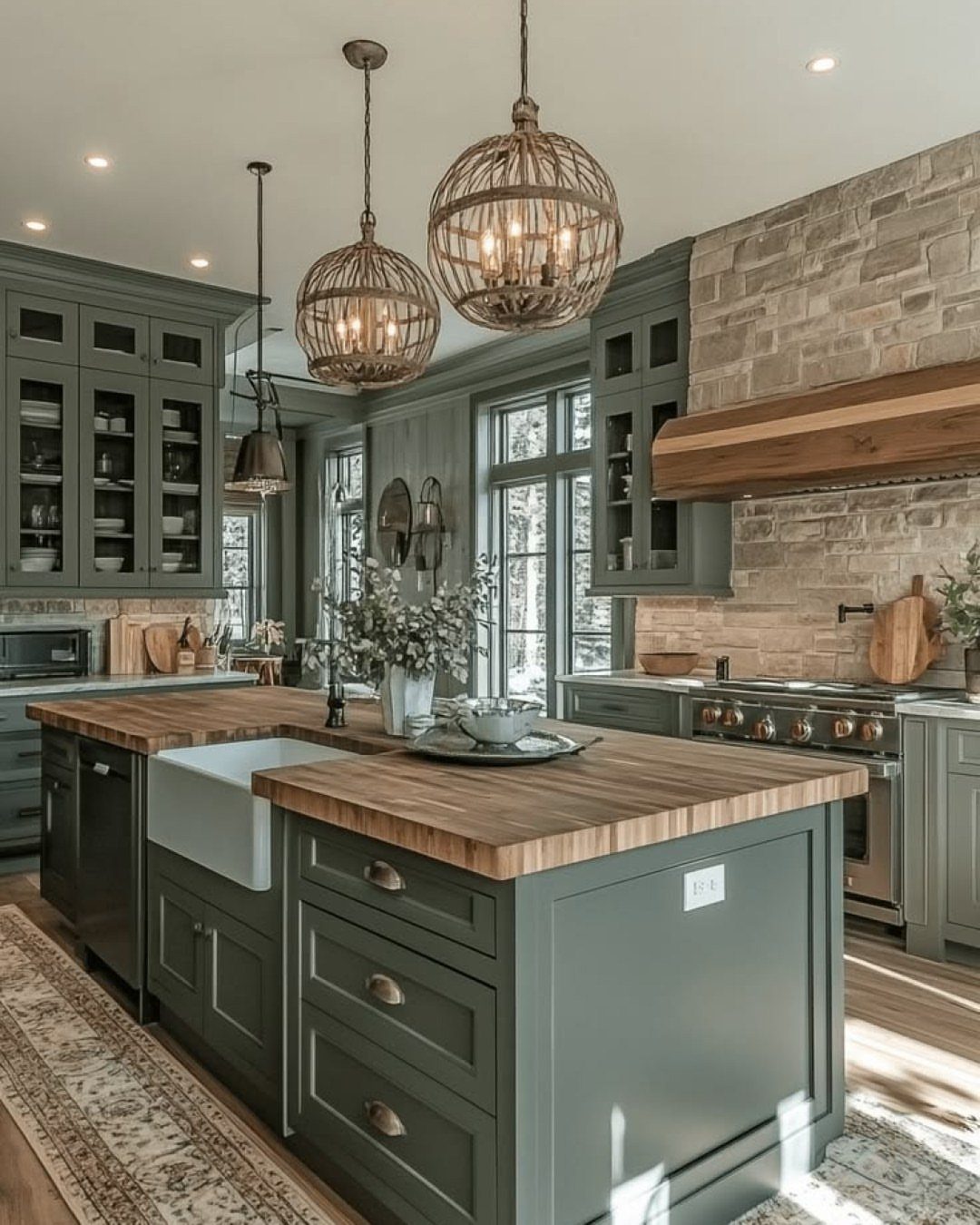
Sage reads as old-fashioned in the best way once natural materials surround it. A wood island, a white apron sink, a stone wall and woven pendants all share an earthy, handmade quality, and the green sits comfortably among them.
I’d keep the wood on the island and range hood in one tone so the room doesn’t look busy. Wicker pendants are a low-cost way to start if a full remodel is out of reach.
3. Sage Green with Wood Accents
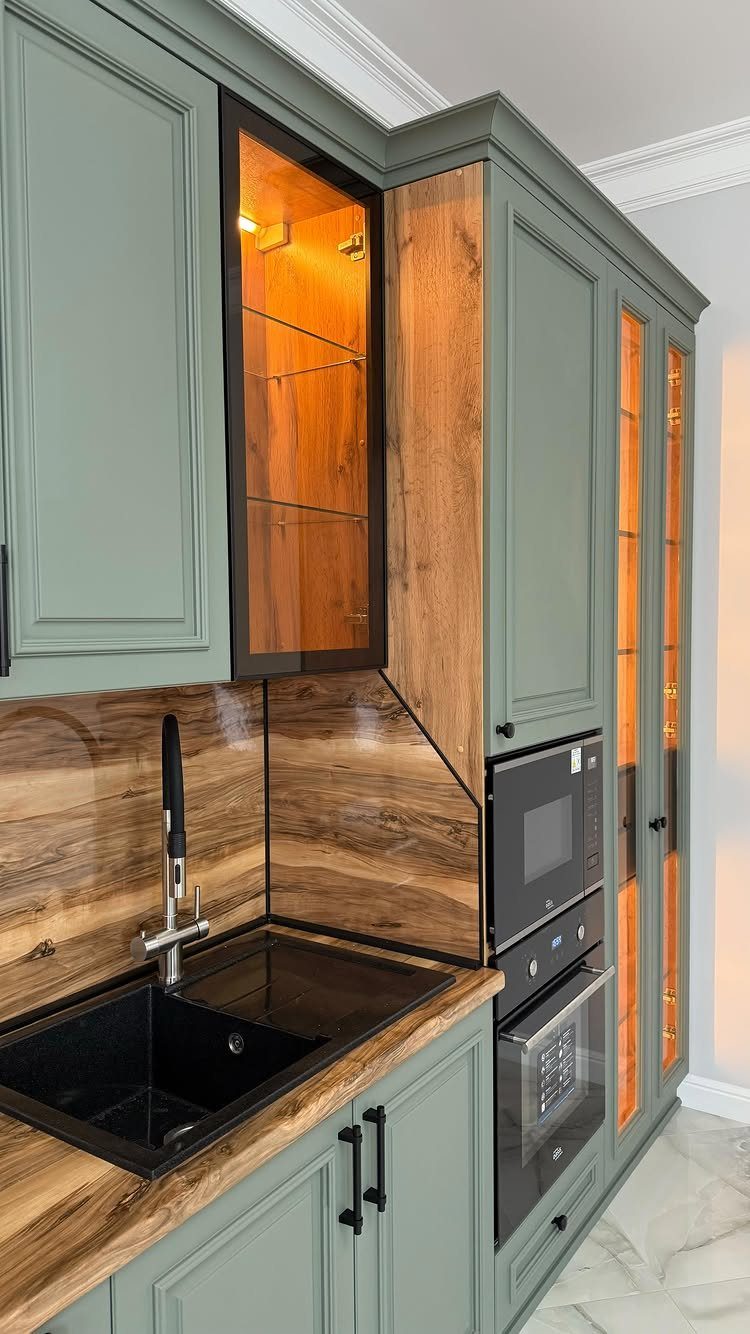
Wood and sage are close cousins, which is why they rarely clash. Wood-grain countertops and a matching wood backsplash wrap the green in warmth, and a black sink gives the whole run some contrast.
Matching the wood tone across surfaces is what makes it feel planned.
Wood does well with sage green, and one tone usually reads calmer than several, so I’d choose a main wood like oak and repeat it in the shelves, stools and cutting boards.
4. Sage Green and White Marble
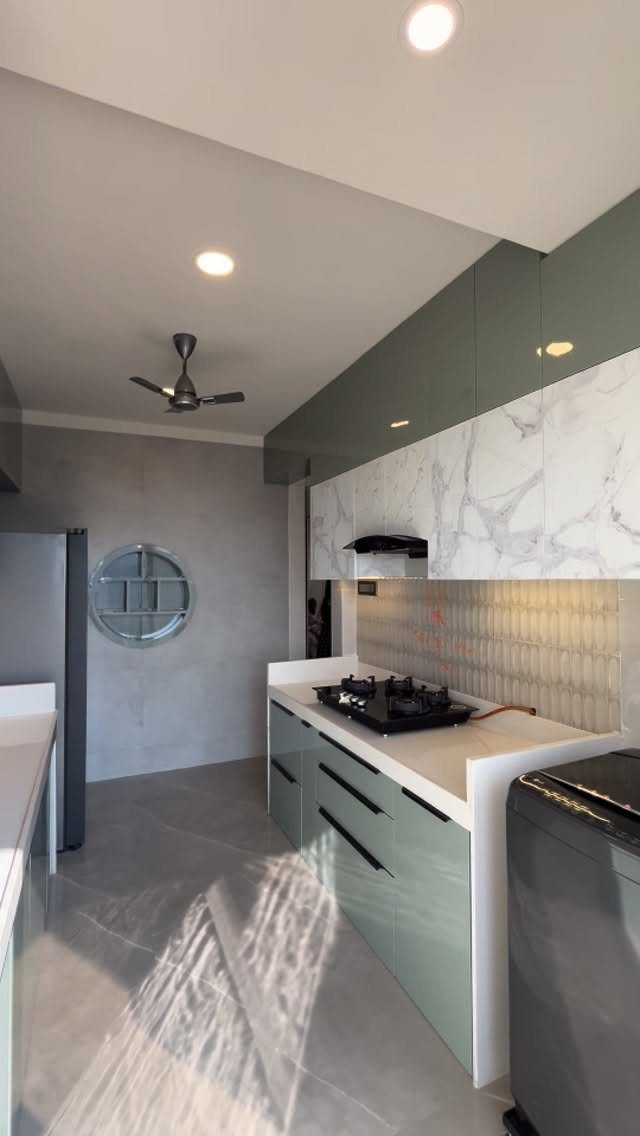
White marble is the classic partner for sage, and a marble backsplash lets the green cabinets carry the color without competing. White counters keep things clean and bright.
I’d choose a quiet, lightly veined slab over a busy one.
Real marble costs a lot, so marble-look tile or laminate is the budget route for a weekend project. A black stovetop adds a sharp accent.
5. Sage Green Shaker Cabinets
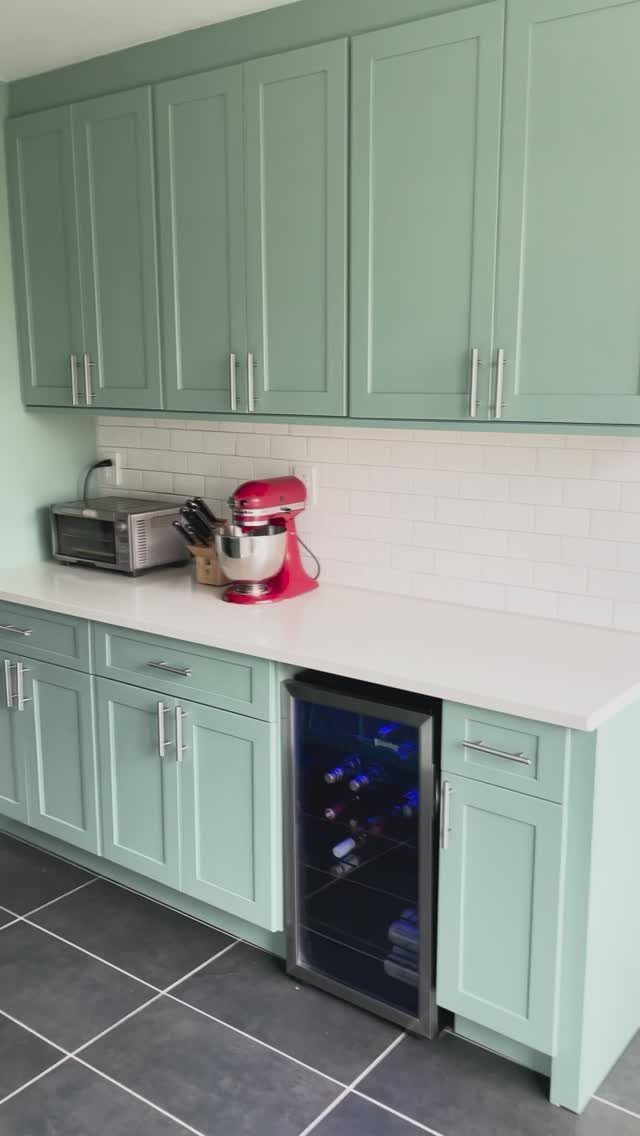
Shaker doors, with their simple recessed panel, are the safest shape to put sage on. The green makes them feel current, while the profile stays familiar and easy to live with.
Sage takes a bold accent well, so if you want one bright piece, pick it and leave the rest neutral.
6. Coastal Sage Kitchen
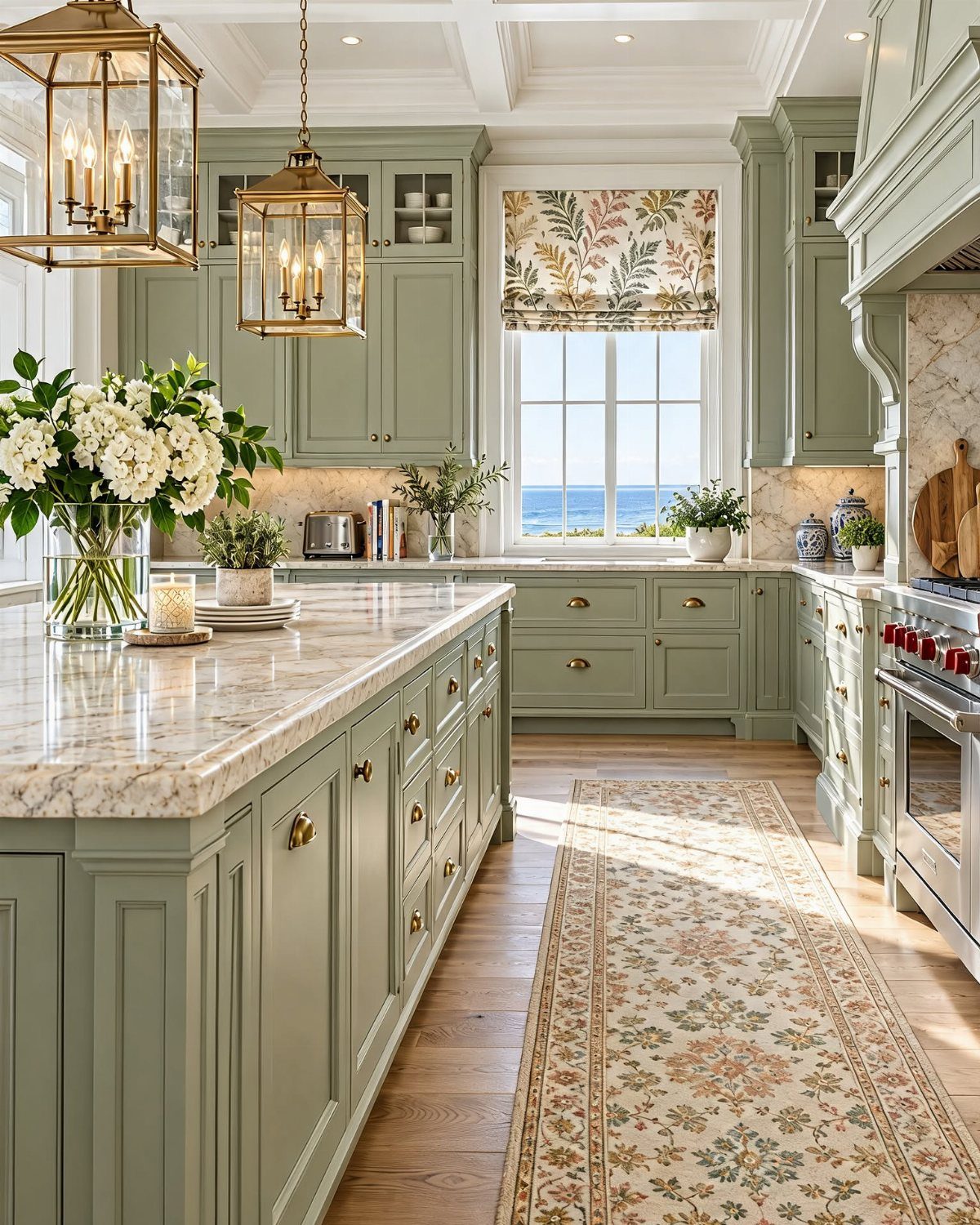
A sage kitchen near water almost designs itself, because the green echoes the soft tones of sea and sky. Marble counters, gold lanterns and a patterned runner add a relaxed, lived-in layer.
The palette works just as well inland. Light counters, warm metal accents and a runner with a little pattern give the same easy feeling, and the runner is the least expensive piece to try first.
7. Two-Tone Kitchen Cabinets
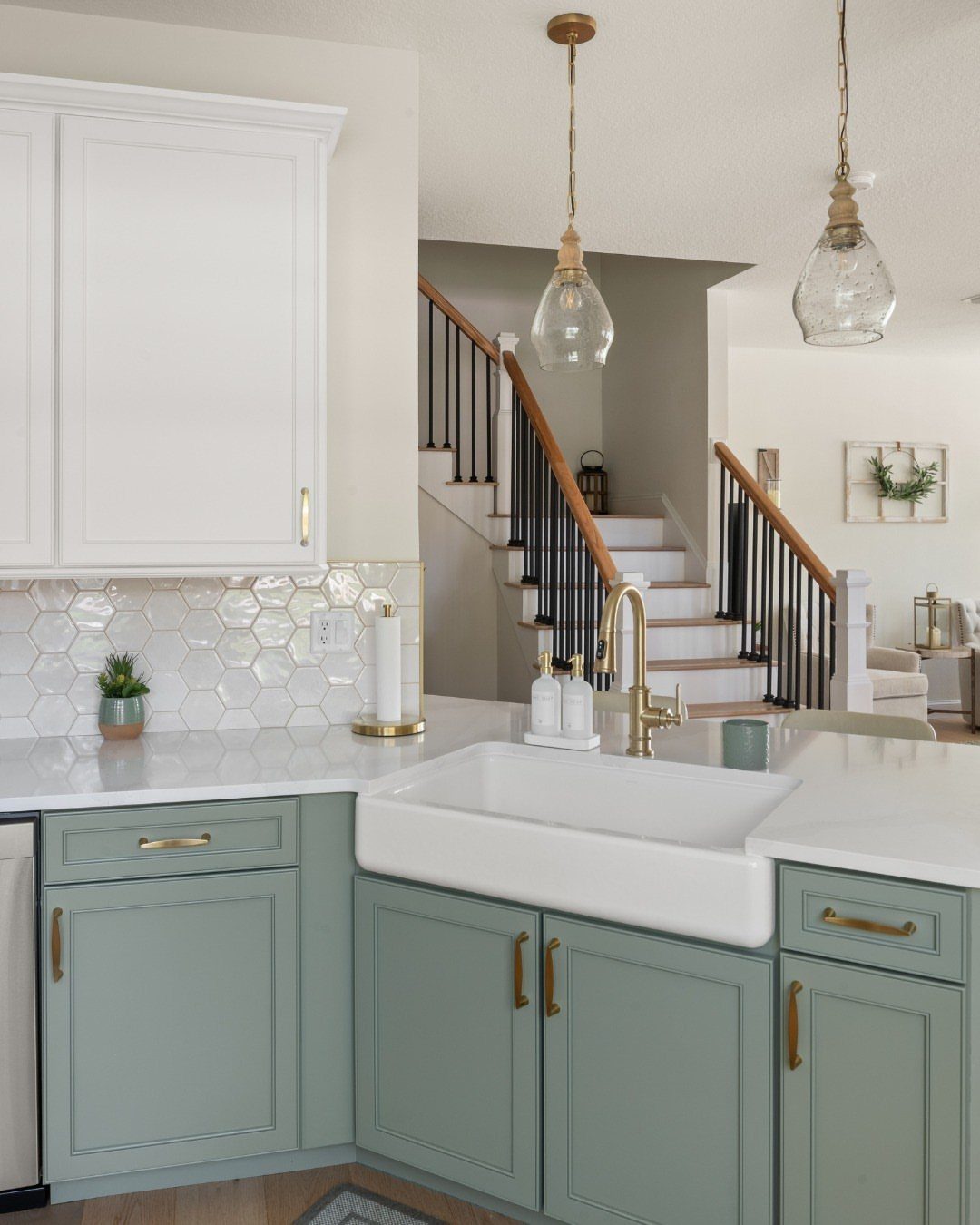
Sage below and white above splits a kitchen into a grounded half and a light half, and the balance is hard to get wrong.
A white honeycomb backsplash and a white farmhouse sink keep the white run continuous, so the green reads as a deliberate base.
Gold pulls tie the 2 colors together. I’d put the same hardware on both levels so the split looks planned.
8. Sage Green Island
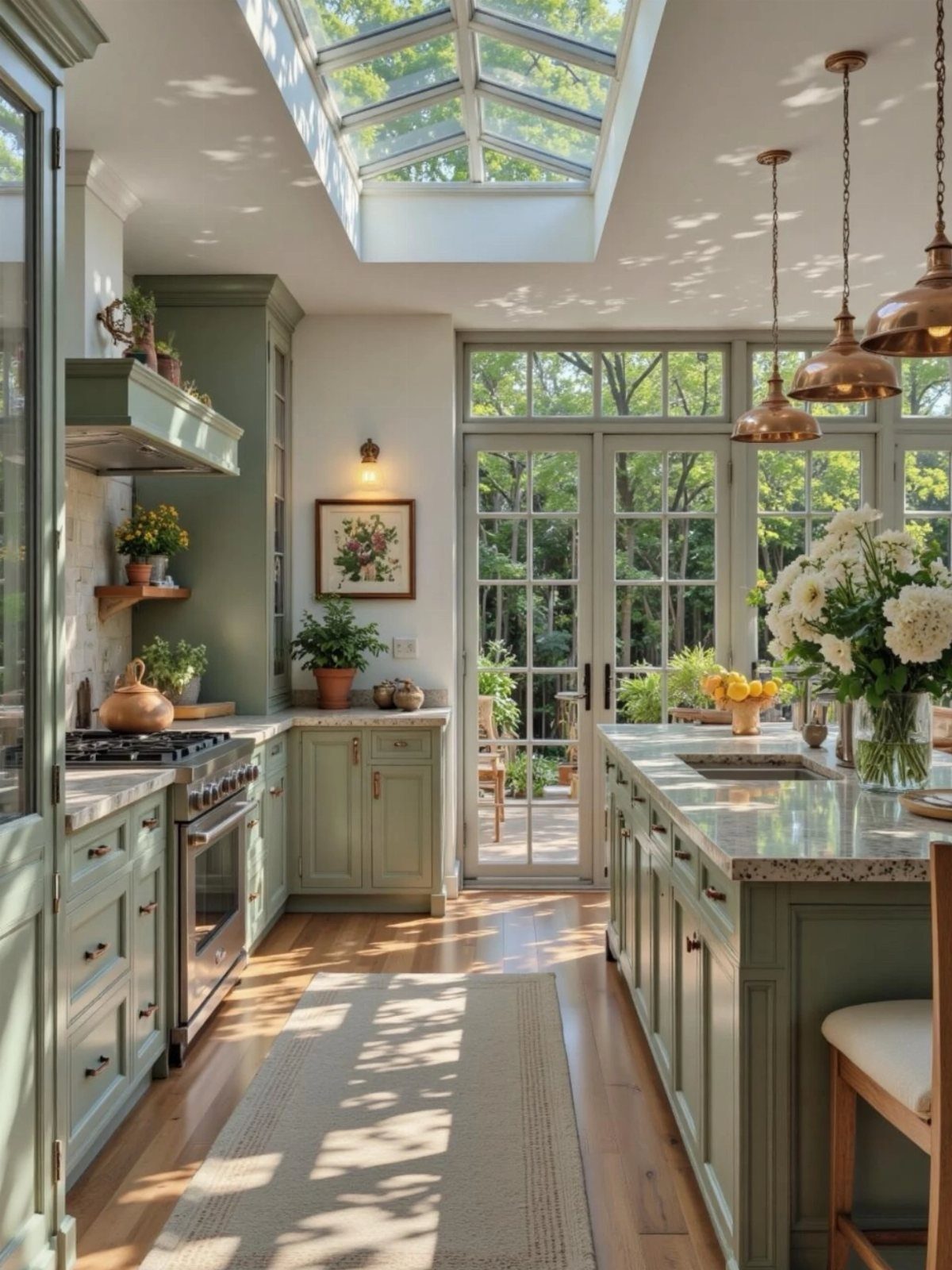
An island is the easiest place to put sage when a single focal point with quiet cabinets around it is the goal. A marble top on the green base keeps it feeling light, and copper pendants overhead add warmth.
I’d hang the pendants centered over the island so the whole piece reads as one unit. Painting just the island is the cheapest way to test the color before committing to more.
9. Sage Green Backsplash
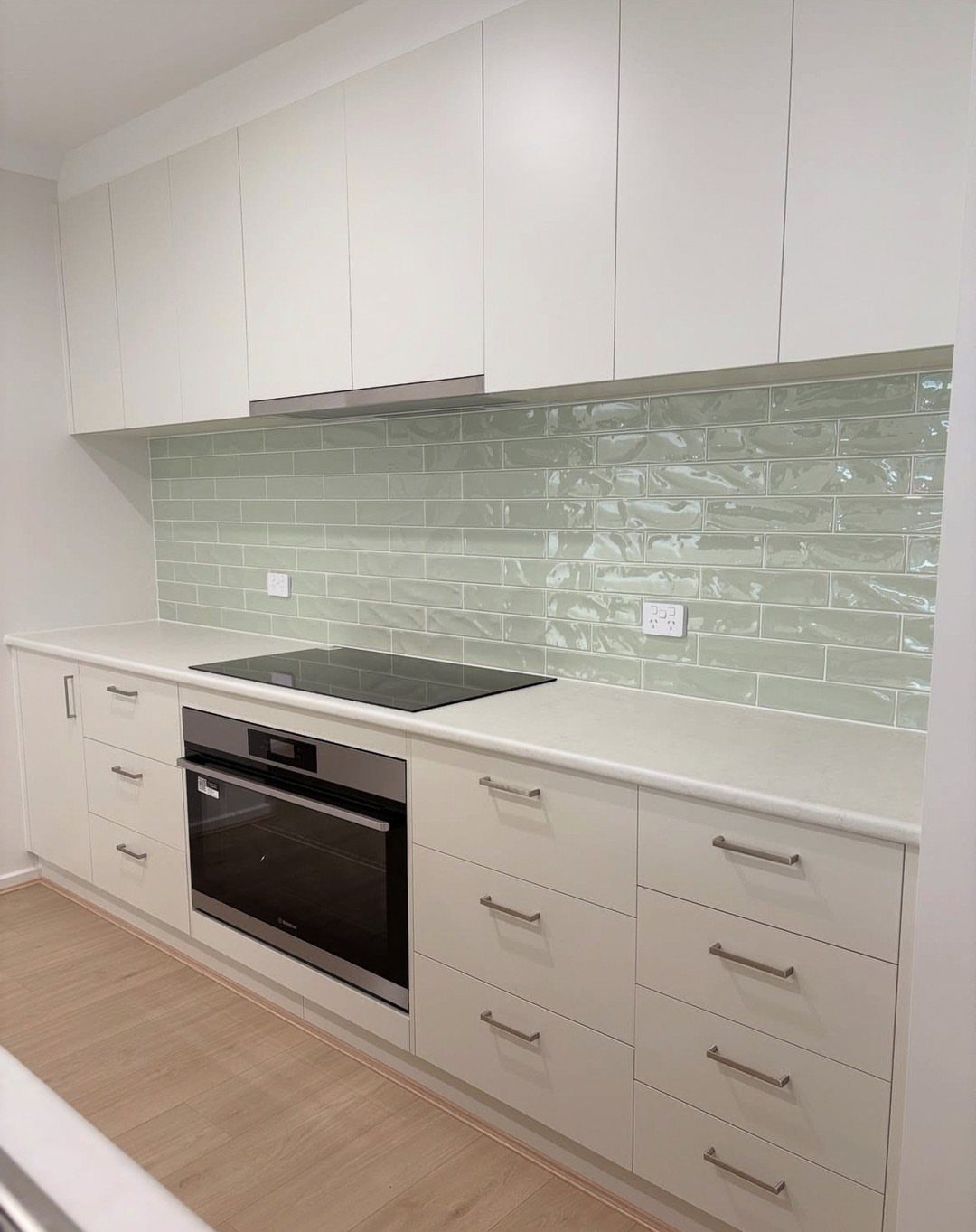
Subway tile in sage puts color at eye level while the cabinets and counters stay white. The tile’s simple shape keeps the green calm, and a black stovetop below gives it a crisp edge.
A backsplash is one of the smallest surfaces in a kitchen to cover, so the green stays manageable. Peel-and-stick subway tile is a fair choice if you rent.
10. Sage Green Dishware
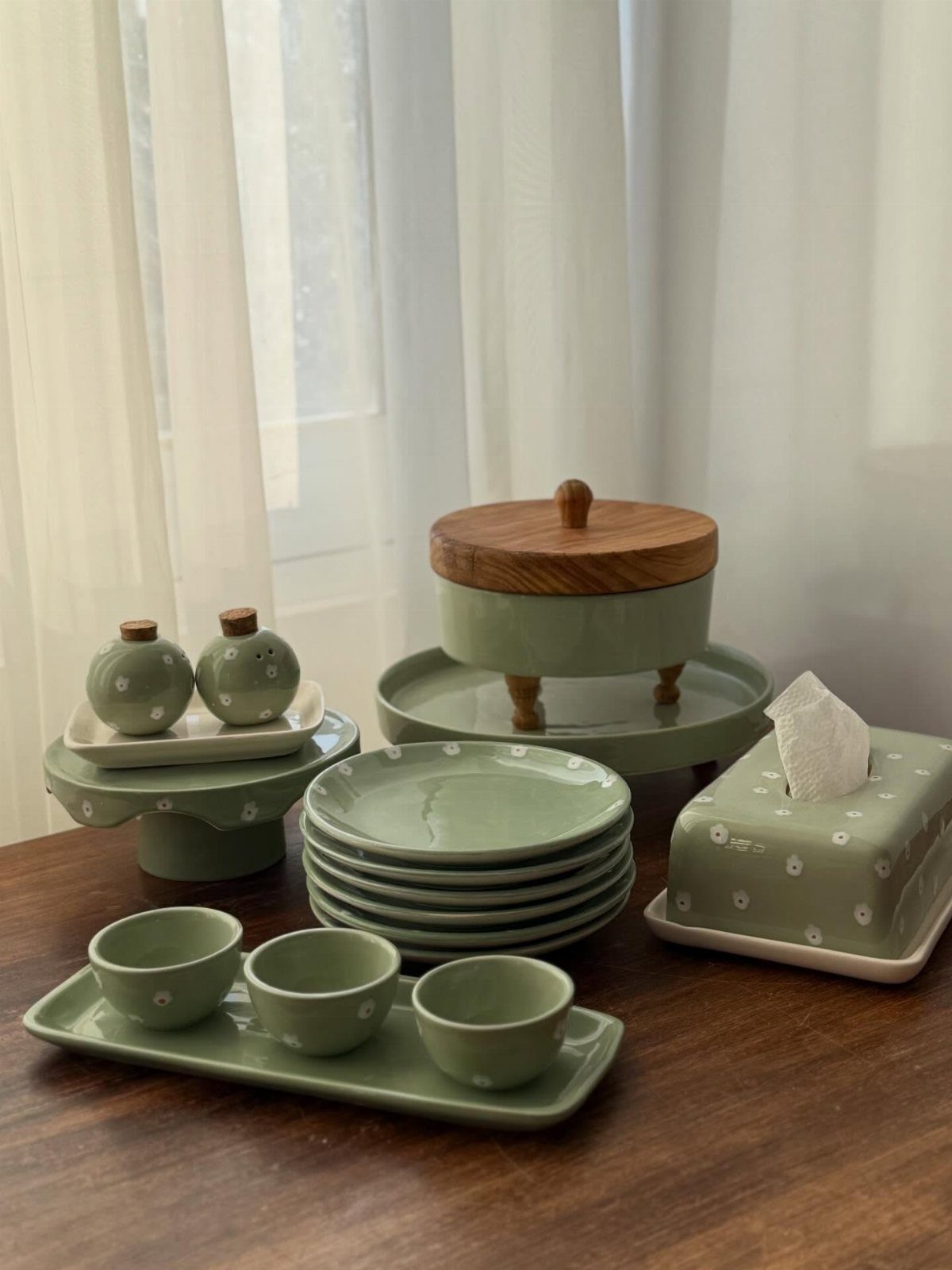
Sage ceramics let you try the color without touching a single cabinet.
I’d start with a few pieces and see how they sit in your kitchen. Dishware is easy to swap out, which suits renters and anyone unsure about committing to paint.
11. Sage Green with Black Hardware
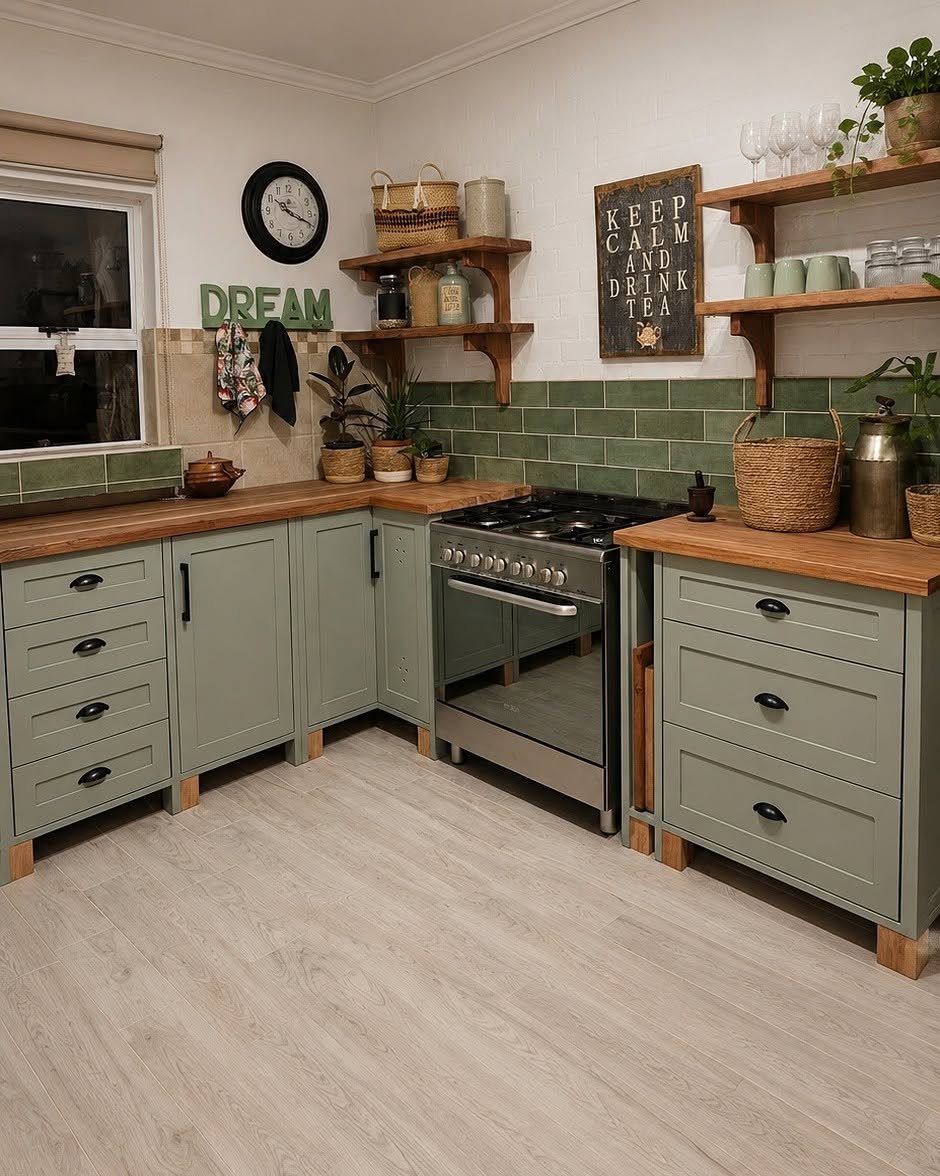
Black handles give sage cabinets a defined outline, and the contrast is stronger than brass or gold. Wood countertops and a stainless stove sit well alongside them.
I like a green backsplash that matches the cabinets here, since the black hardware supplies all the sharpness. Swapping pulls is a weekend job with a screwdriver, so it’s an easy change to make.
12. Sage Green and Cream
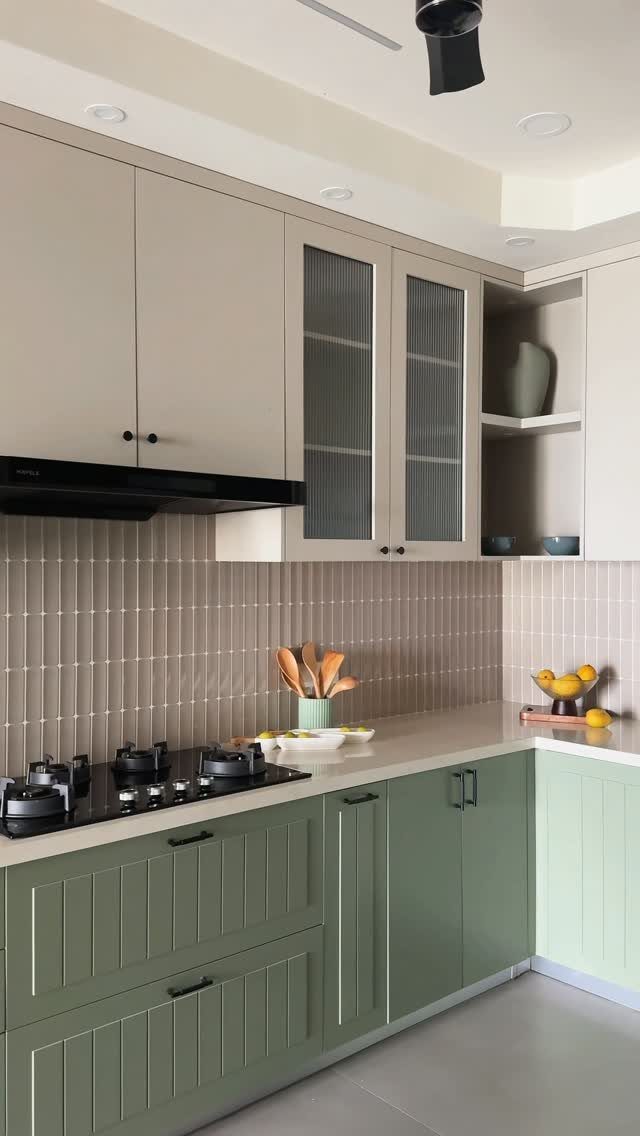
Cream is gentler than stark white next to sage, and the pair feels cozy rather than crisp. Cream uppers over sage lowers, with a tiled backsplash between, give the room a soft, layered look.
Test a cream sample beside the green in your own light before buying paint, because cream can lean yellow.
13. Sage Green with Brass Light Fixtures
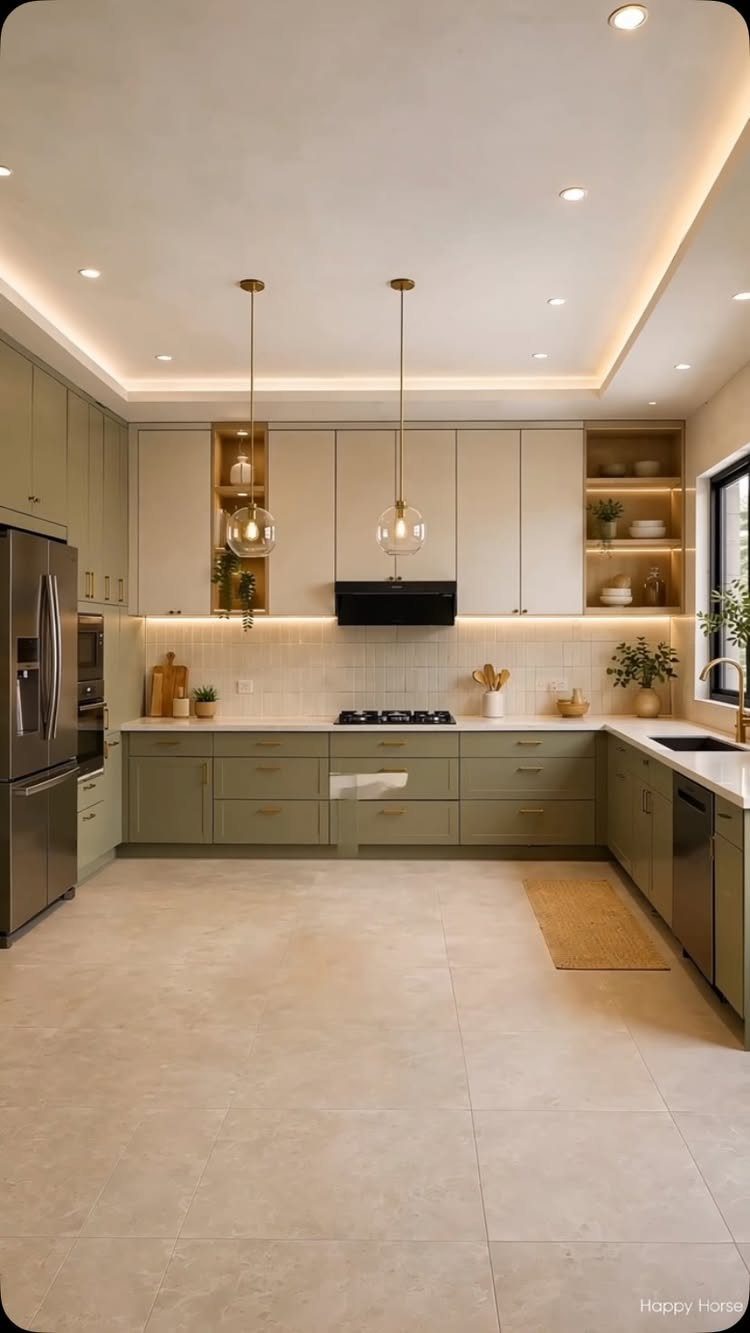
Brass pendants are the cheapest way to warm up sage cabinets, and they pair well with cream uppers because both lean soft and golden. Light tile underfoot keeps the whole room airy.
A pair of pendants over the counter run adds warm light and leaves every cabinet exactly as it is. Lighting is a swap you can finish in an afternoon, which suits renters who can reinstall the old fixture later.
14. Sage Green Open Shelving
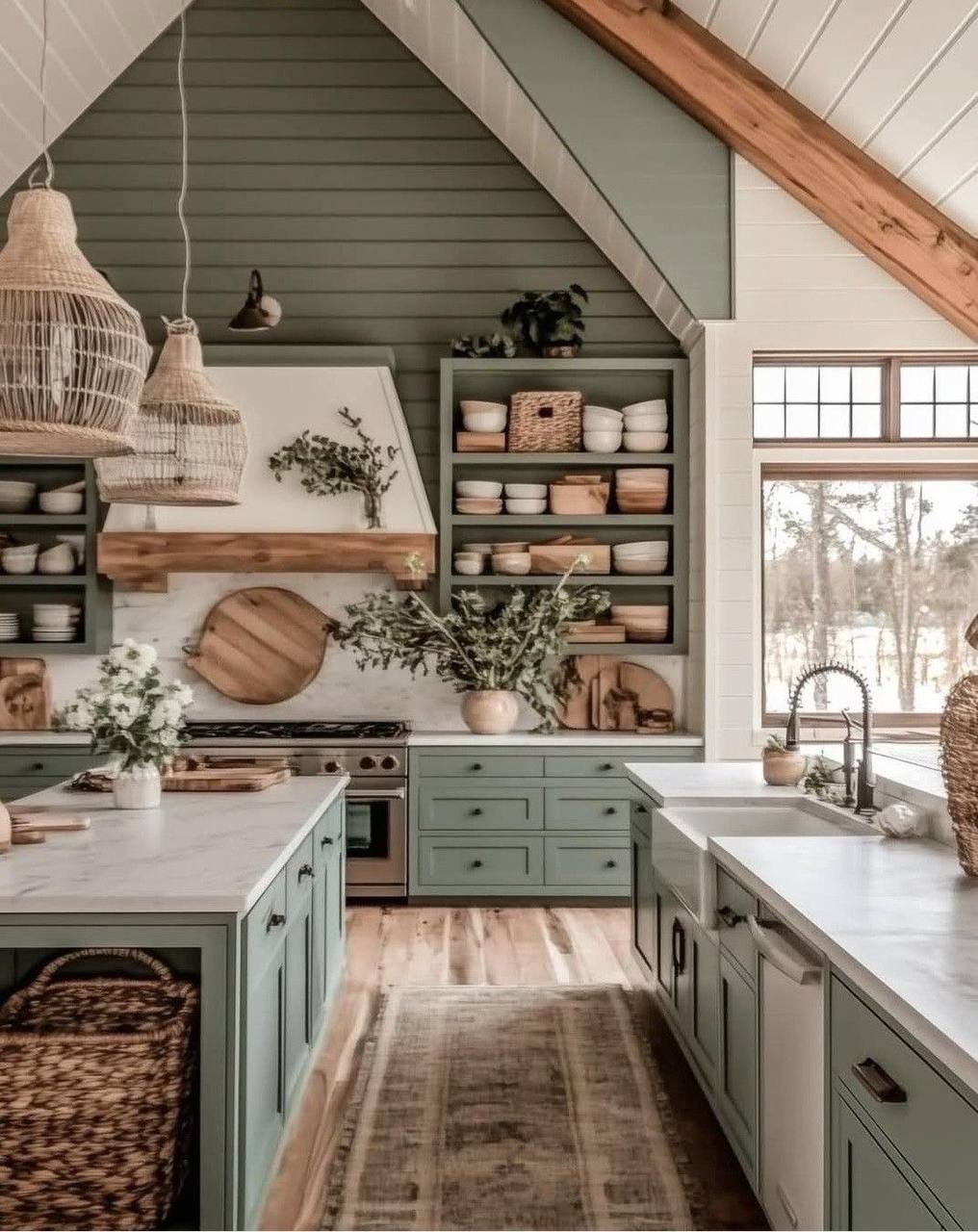
Open shelving in sage turns the wall into part of the color scheme instead of a row of closed doors.
White marble counters and a white island keep the green from crowding the room, and wood beams overhead add a rustic note.
Shelves work best when you edit what sits on them. Everyday dishes and a few baskets look intentional; a jumble of mismatched mugs doesn’t.
15. Sage Green and Gray Kitchen
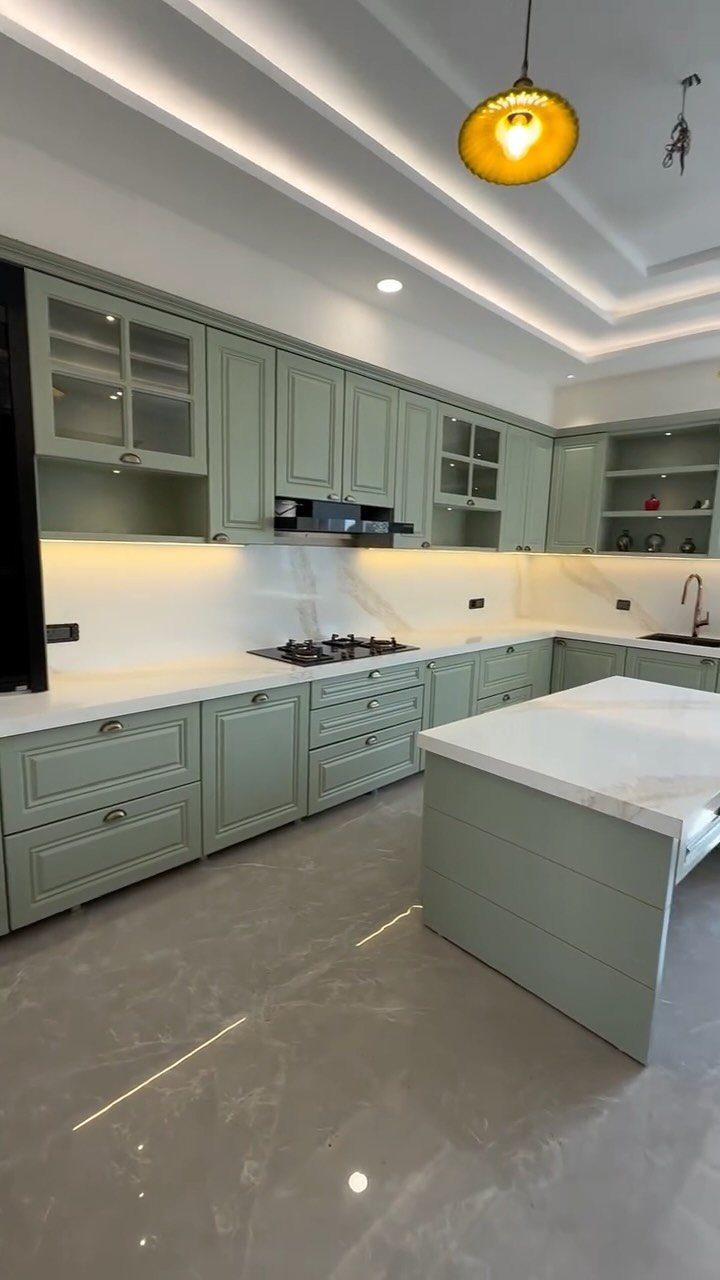
Gray is the quiet partner for sage, and polished gray floors with white marble counters keep the palette cool and calm. Matching the island to the cabinets makes the room read as one clean piece.
I’d pick a gray with a slight warmth so the green doesn’t turn chilly. Add a single bright accent, like a yellow pendant, and the neutrals stop feeling flat.
16. Paint All Your Cabinets Sage Green
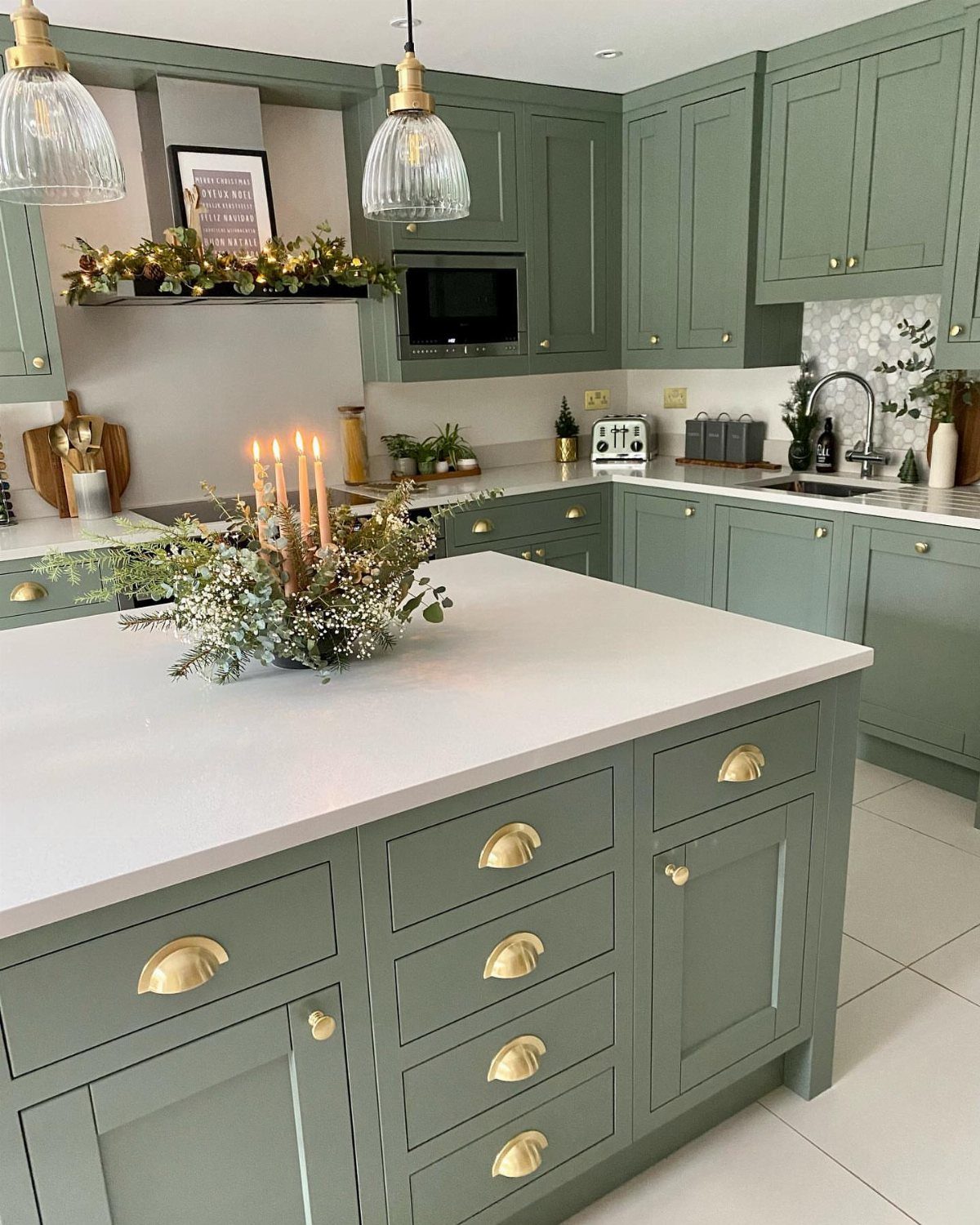
Painting every cabinet sage is the biggest change a brush can make, and it costs a fraction of what new doors would. Done across the whole kitchen, including the island, the color reads as a decision rather than an accent.
White countertops and gold hardware keep it bright. I’d take the old pulls off before painting, so the paint reaches every edge and the doors dry without hardware in the way.
17. Sage Green Glass-Front Cabinets
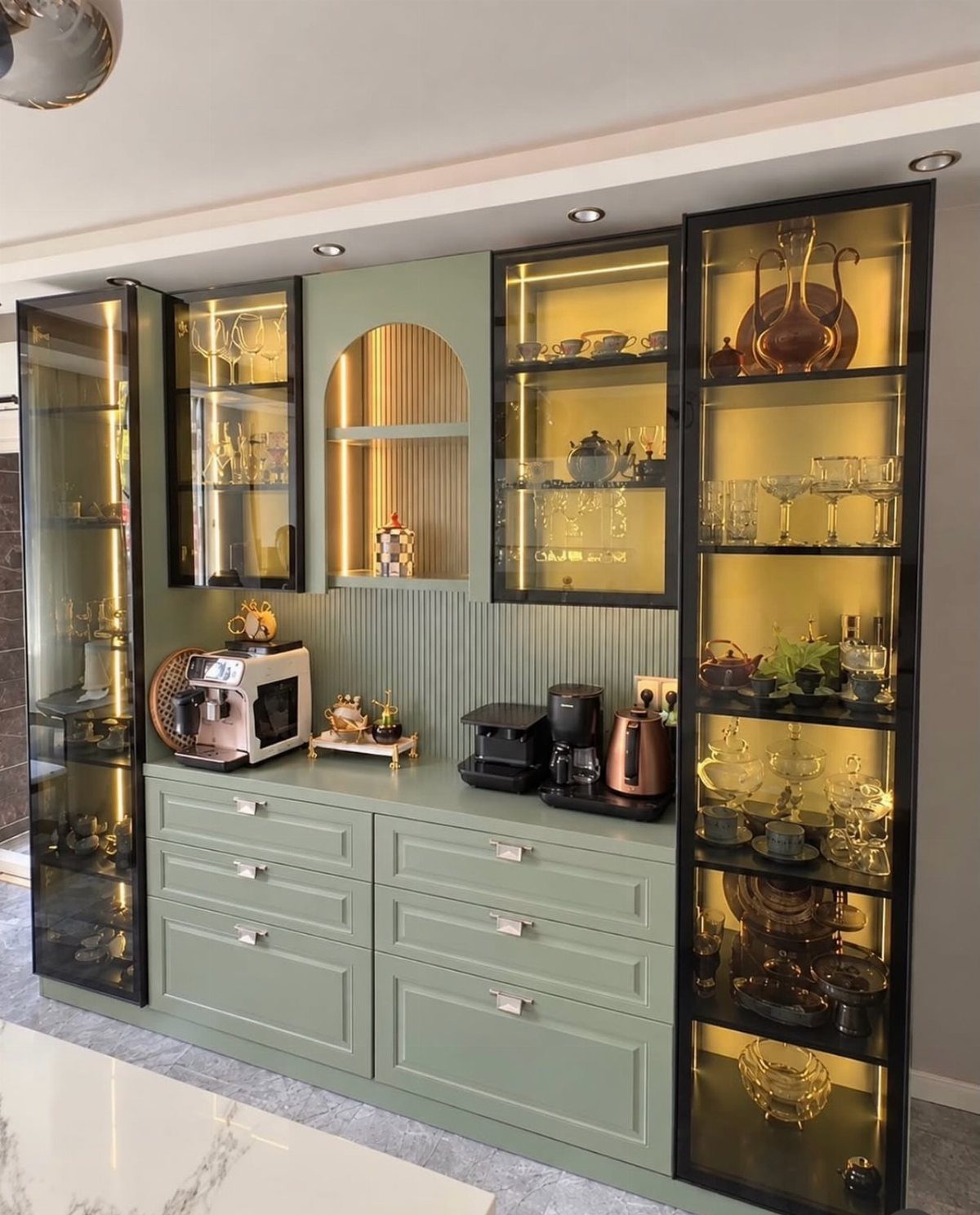
Glass-front uppers let sage cabinets hold a display, and built-in lighting makes glassware glow after dark. A coffee station below turns the unit into a small, tidy corner of its own.
Silver handles keep the look cool and understated against the green. Only put out pieces you like looking at, since glass shows everything inside.
18. Sage Green Kitchen Decor Tray
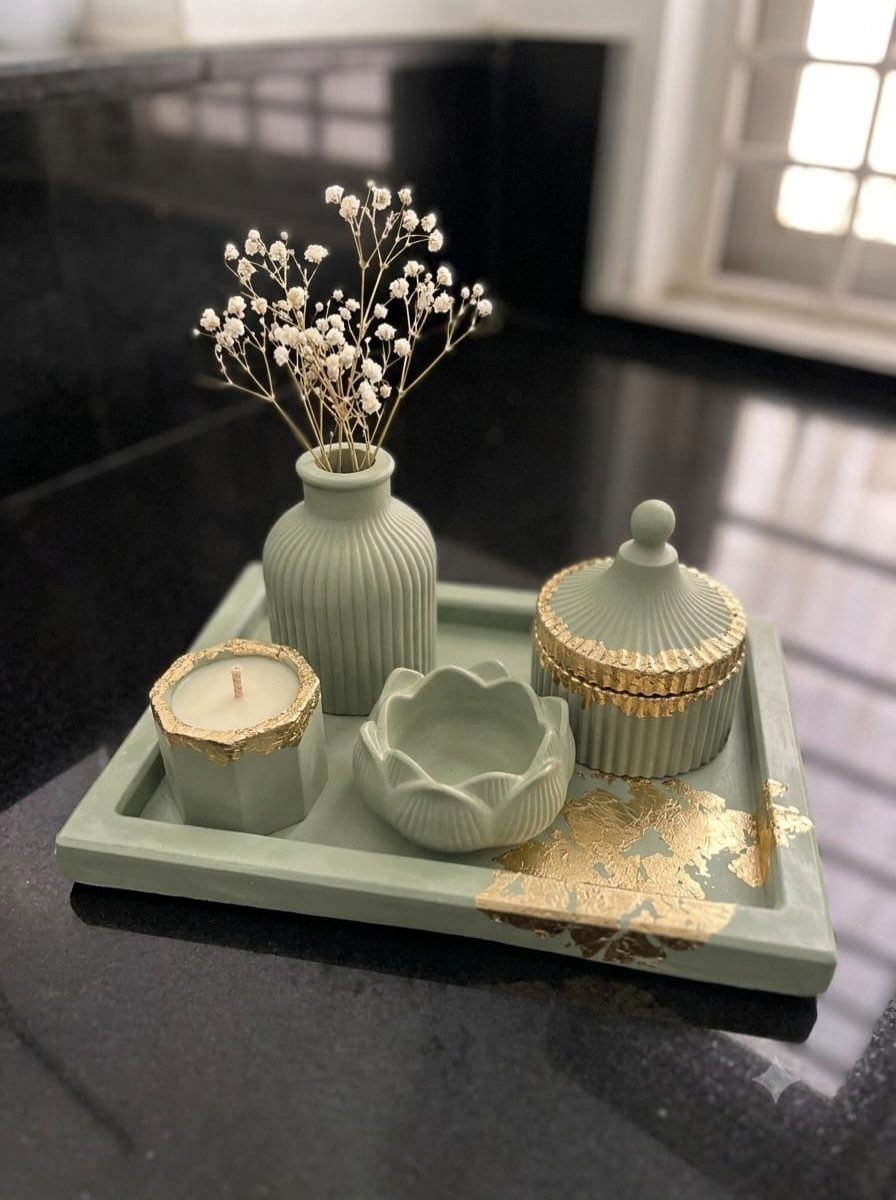
A sage tray gathers small things into one tidy cluster, which keeps a black countertop from looking cluttered.
It’s a very low-cost way to bring sage in without paint. Keep the tray edited so it stays calm, and let one or two colors repeat across the pieces.
19. Sage Green with Black Countertops
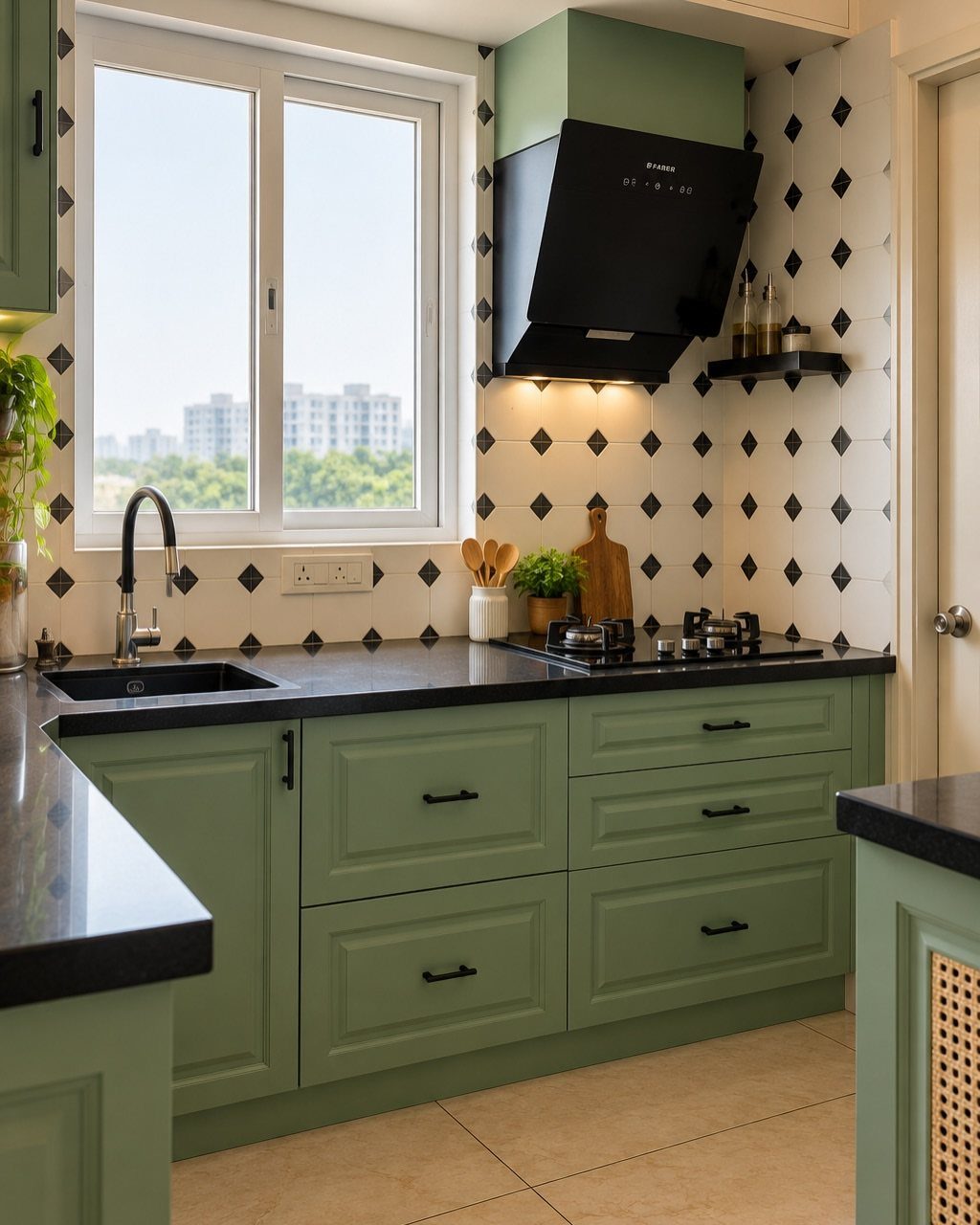
Black counters make sage look richer, almost like a deep forest tone, and a black range hood repeats the contrast overhead. The black and white diamond backsplash ties the two together, so the pattern does the linking.
I’d keep the pattern to the backsplash and leave the cabinets plain. Black surfaces show crumbs and water spots, so plan on wiping them down often.
20. Sage Green with Gold Hardware
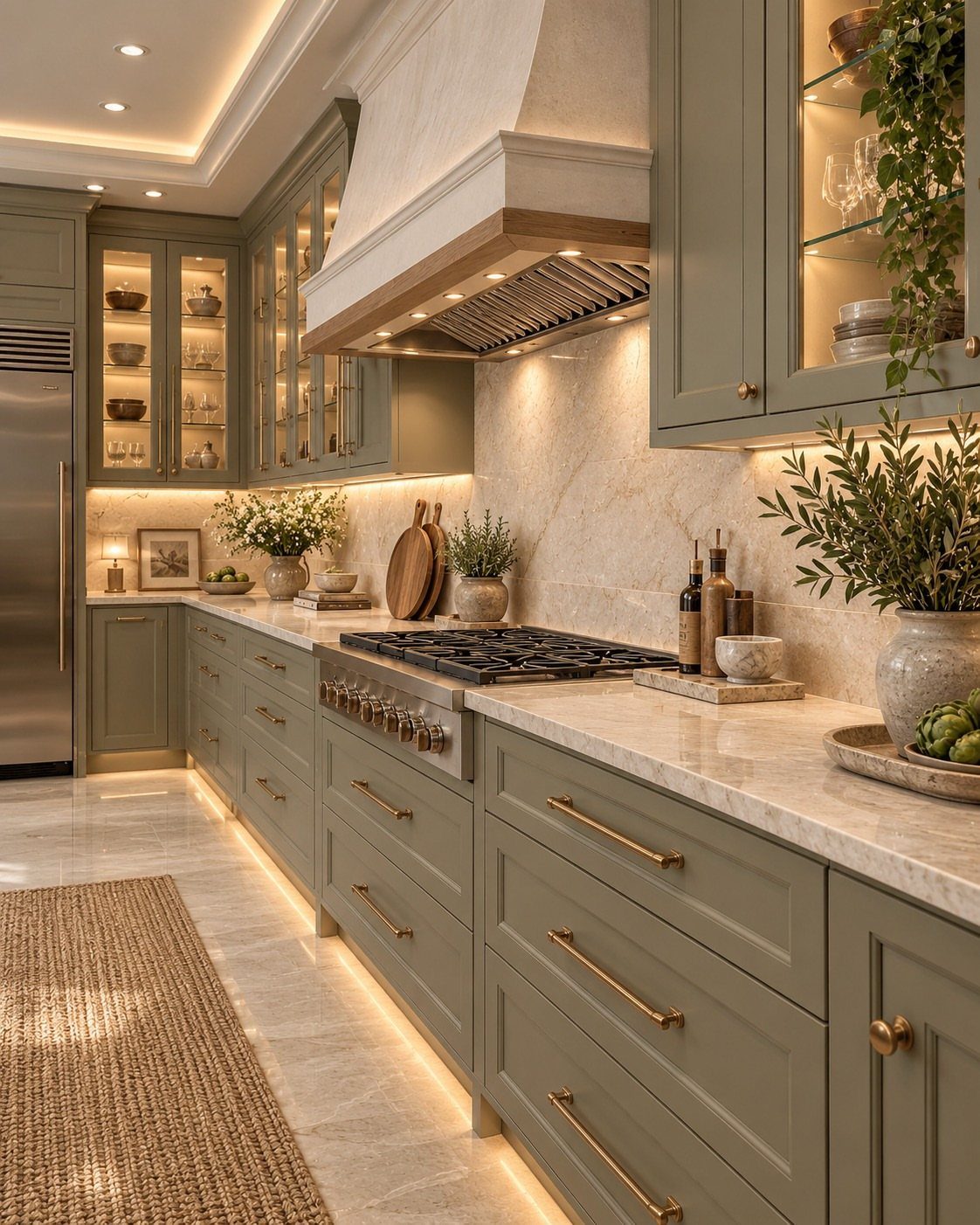
Gold handles are the small, warm detail on sage cabinetry, and against white marble counters and backsplash they read as jewelry rather than hardware. A white range hood keeps the upper half of the room quiet.
Pulls are the budget route here, a screwdriver job you can finish in a weekend. I’d buy one sample first and hold it against a door in daylight.
21. Sage Green and Herringbone Floors
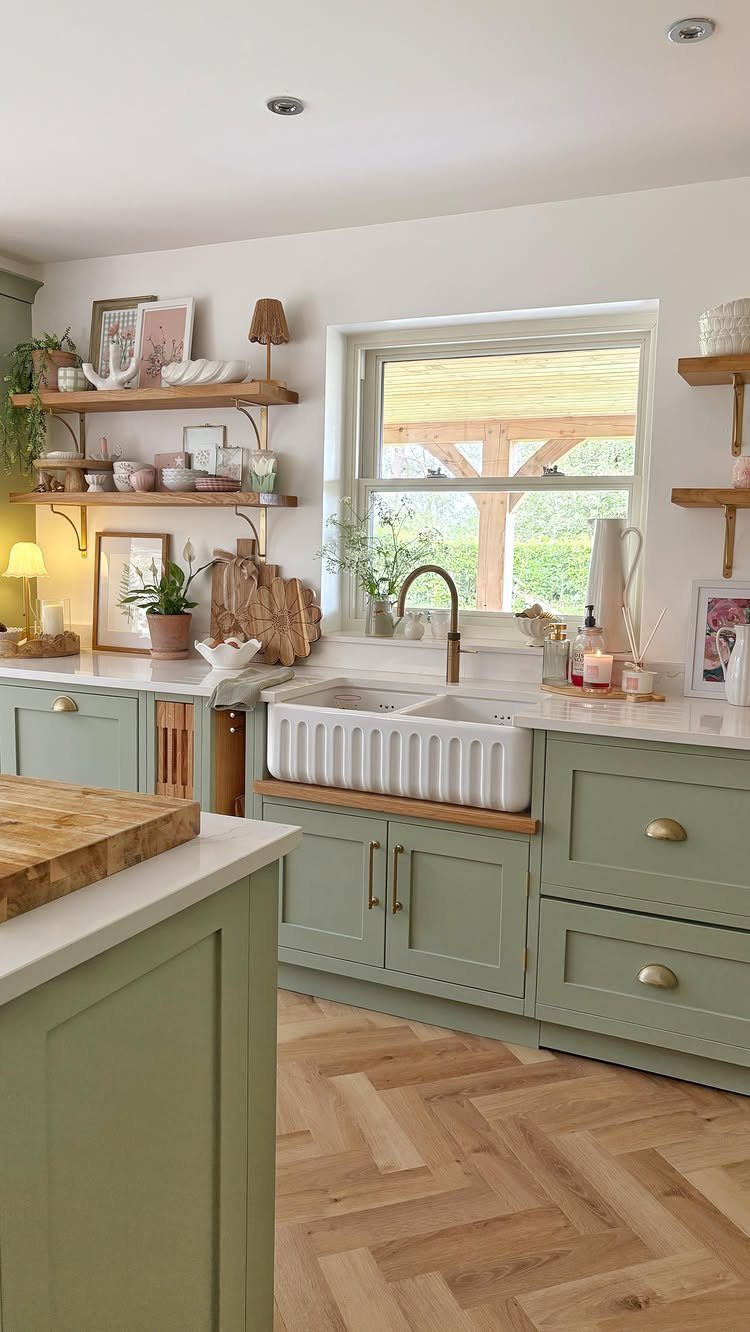
Light wood herringbone floors give a sage kitchen movement underfoot, so the cabinets can stay simple.
Herringbone is a bigger project than paint, and I’d price it before falling for it. Renters can get a similar look from herringbone-pattern vinyl planks or tiles, which skip the cost of real wood.
Complementary Colors
Navy is the pairing the cabinets alone won’t suggest, and it works best in small doses. A navy island or a single shelving unit gives sage a deeper contrast without making the room feel heavy.
For a warmer kitchen, stay with cream, oatmeal and natural oak. Pairing sage with crisp white and a dusty blue gives a cooler, more current look.
Oak is the easiest wood to live with next to sage, and warm white is a safer choice than stark white.
If you can’t decide, tape paint chips of each color to a cabinet door and live with them for a few days first.
Choosing the Right Shade
"Sage" is a loose label, and the shades sold under it differ more than most people expect. It sits between green and gray, muted and a little dusty, but there are 3 versions worth knowing.
Classic sage is a muted, gray-leaning green. It’s the calmest of the three, pairs with nearly anything, and is the one you’ll see most often.
A deeper, more muted sage green suits larger kitchens, and it looks especially good against pale stone countertops.
Blue-leaning sage feels fresher and more modern. It does best where there’s plenty of natural light.
Whichever you choose, look at samples in your own kitchen before committing, because the light in the room changes how the color reads through the day.
Practicality of Sage Green
Sage is a practical color to live with. In Houzz’s data, green came in second to blue among kitchen colors, picked for 17% of renovations.
It sits between 2 extremes. Pure white can read cold and dark forest green can feel heavy, but sage takes the edge off a room and still has some life in it.
Sage also holds its color in daylight and under lamps, so it won’t turn muddy at 7 p.m. under your bulbs.
And because it’s a muted tone rather than a fashion-forward one, it’s unlikely to feel dated, which matters when you’re spending your own money and don’t want to repaint in 3 years.





