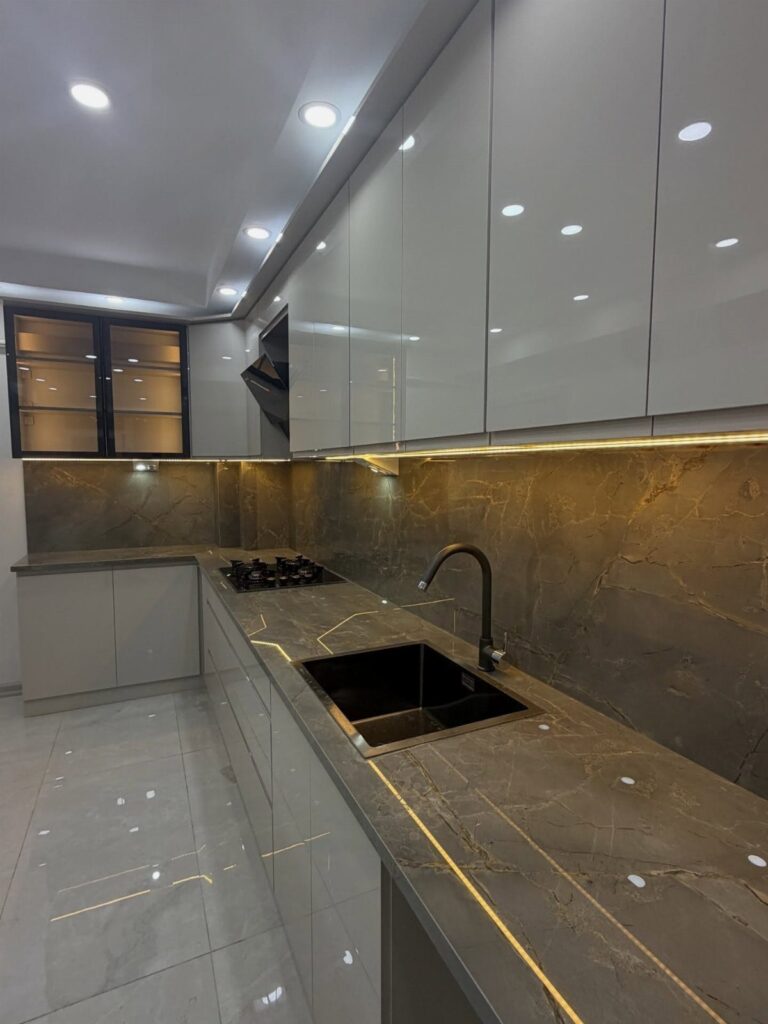
The ideas here run from butcher block, which costs little, to a waterfall island that uses more stone and pushes the price up, and the cabinet color you already have settles which pairing fits.
Dark cabinets need a lighter counter, beige ones can take black, and warm wood or cherry doors want a neutral or gray top that won’t turn muddy beside them.
Hardware is the cheapest piece to swap, which is why a gold handle on muted blue cabinets is an easy way to test a look first.
1. Marble Look Kitchen Countertops
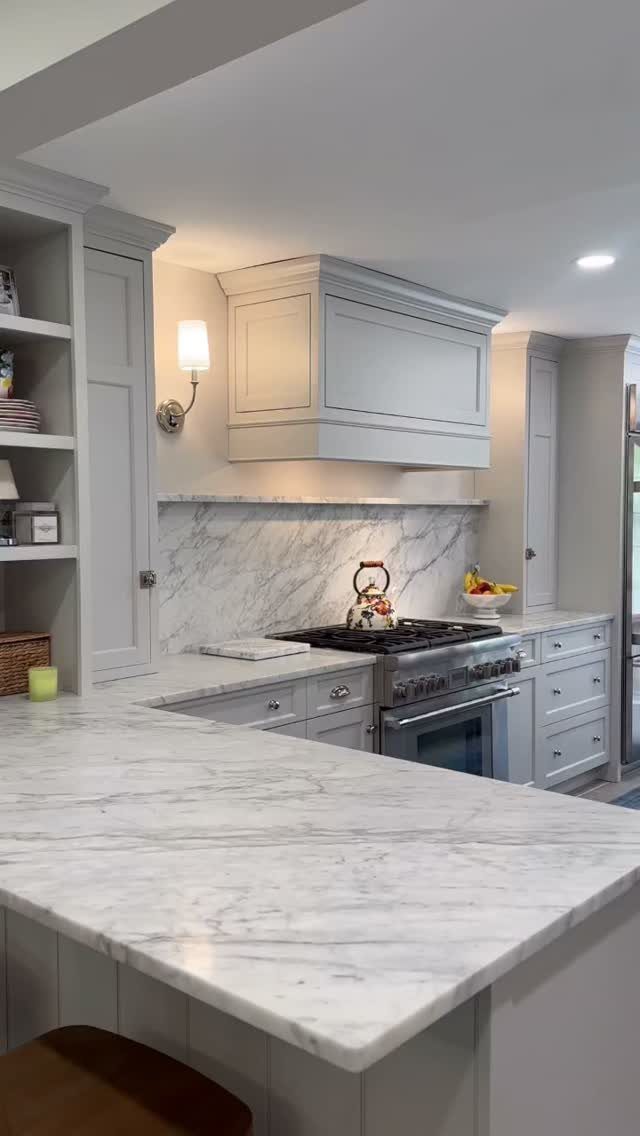
White marble-look counters that run up into the backsplash make one continuous surface, and light gray cabinets keep it from going stark. A stainless range sits comfortably against it.
I like this pairing because the cabinets do the quiet work while the stone look carries the room.
Before buying, hold a full sample against your cabinet color in the room’s own light. Gray reads cooler or warmer depending on the bulbs overhead.
2. Polished Porcelain Countertops
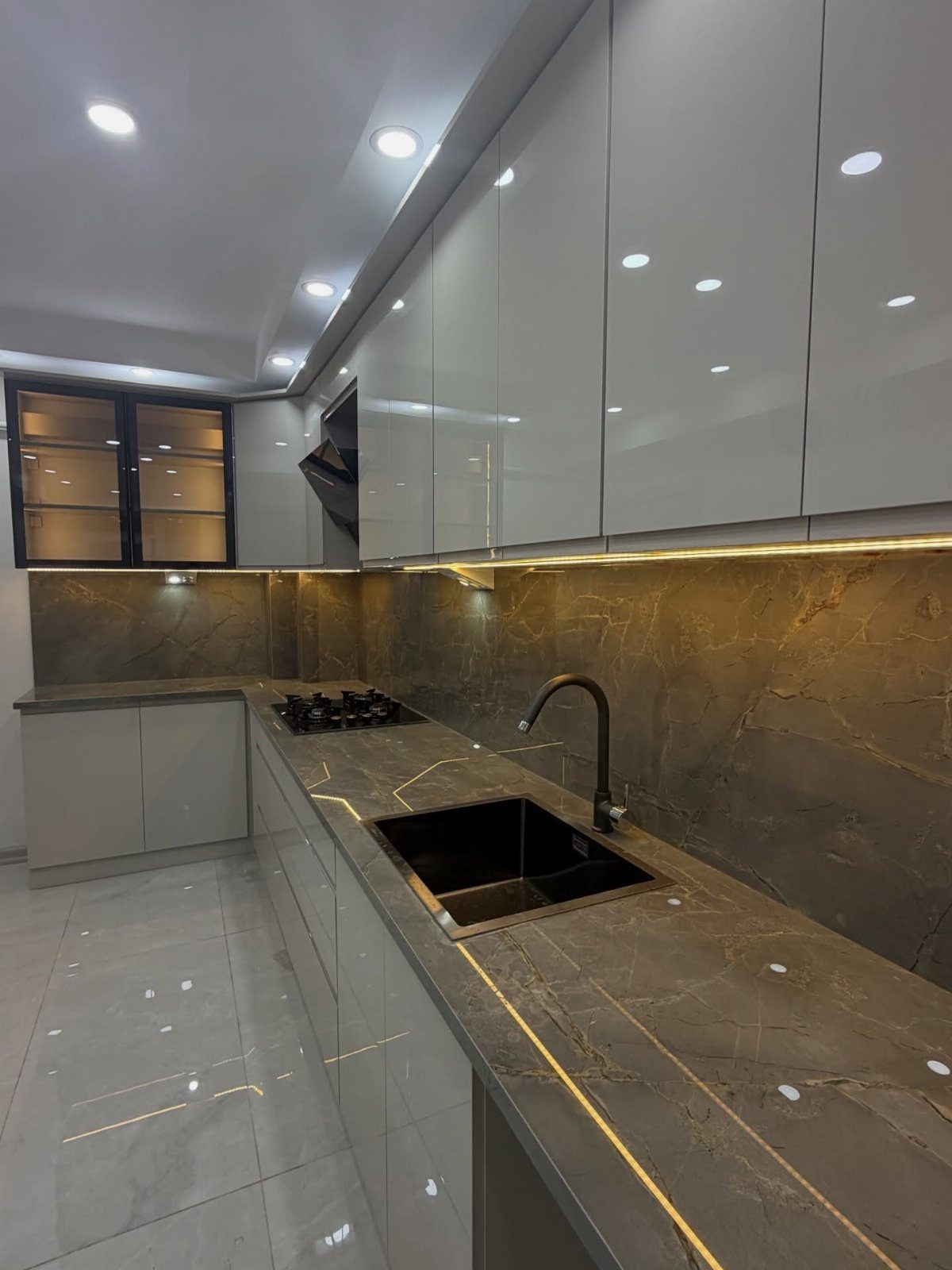
Polished porcelain with soft gray veining, carried up the wall as a matching backsplash, makes a kitchen look cut from one slab. Glossy cabinets in the same family push that effect further.
A black sink and faucet are the detail I’d copy, since they give the pale surface something to anchor to.
Gloss shows fingerprints and splashes, so keep a microfiber cloth near the sink. Ask for a large sample, because small chips hide how the veining repeats.
3. Monochrome Countertops
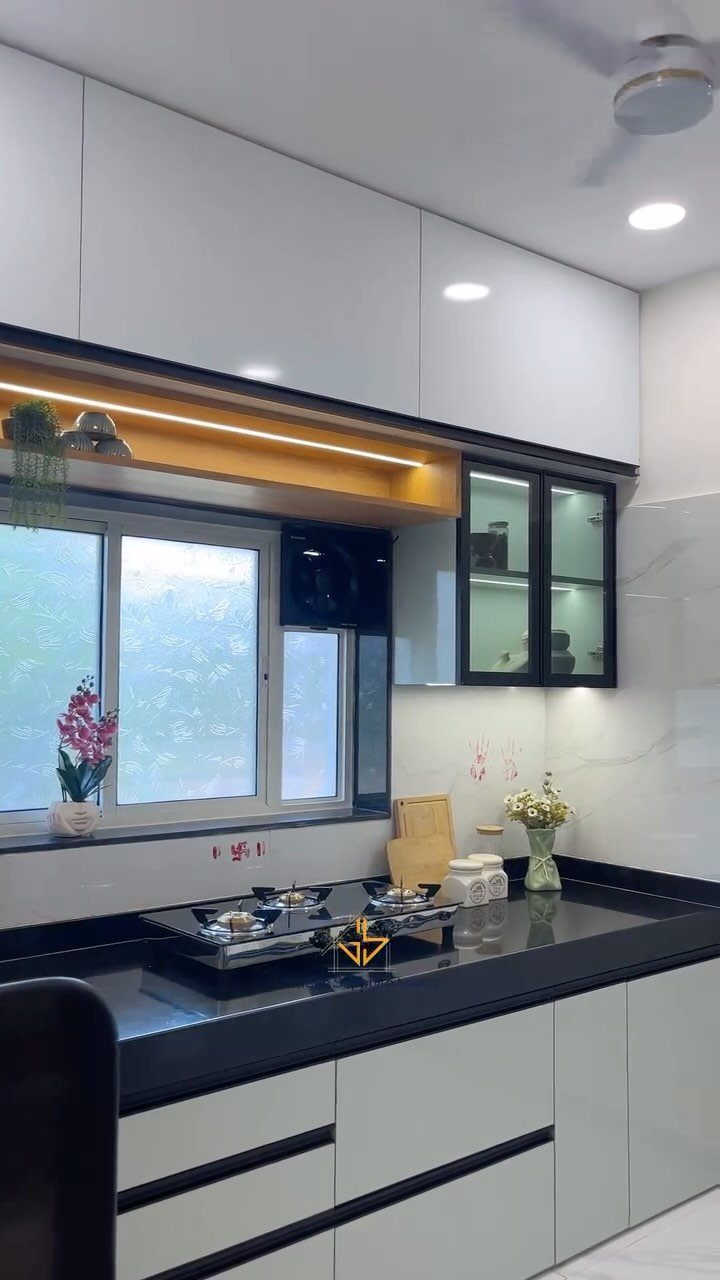
A solid black countertop against white cabinets is the sharpest contrast you can put in a kitchen, and it needs very little else. Black trim on the cabinets ties the two together so the counter doesn’t look dropped in.
Black can be laminate, quartz, soapstone or painted butcher block, so the budget is flexible. Wipe it often, since crumbs and water spots show up fast on dark surfaces.
4. Cherry Cabinets with Gray Quartz Countertops
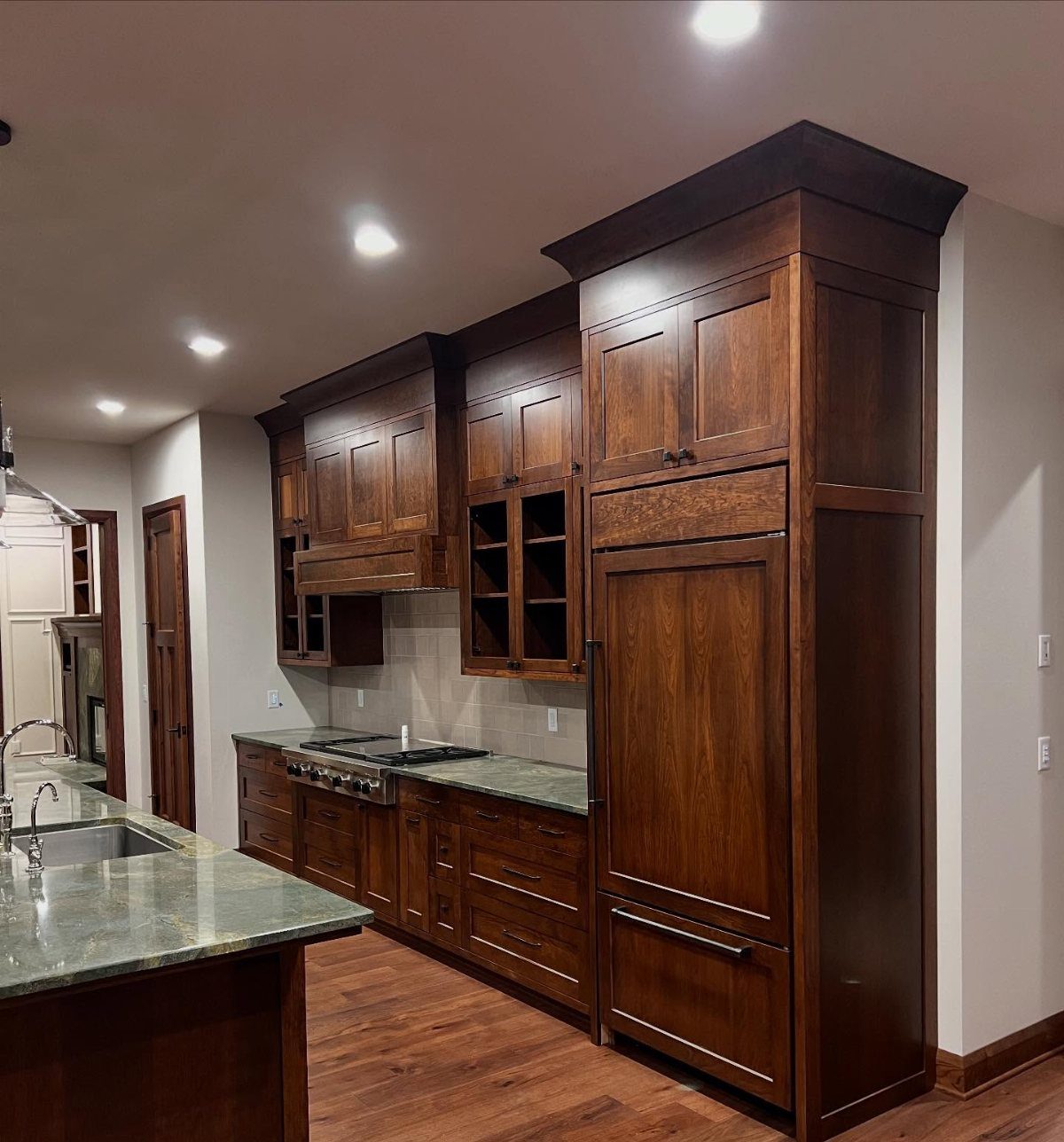
Dark cherry cabinets have a red-brown depth that most paint can’t copy, and gray quartz counters cool them down. Without that gray, the room tips orange.
Hardwood flooring adds more warmth, so I’d keep the counter a mid or light gray and avoid anything close to charcoal.
Too much dark makes a small kitchen feel closed in. Bring a cabinet door home and lay the quartz sample on it before you commit.
5. Muted Blue Cabinets with White Quartz Countertops
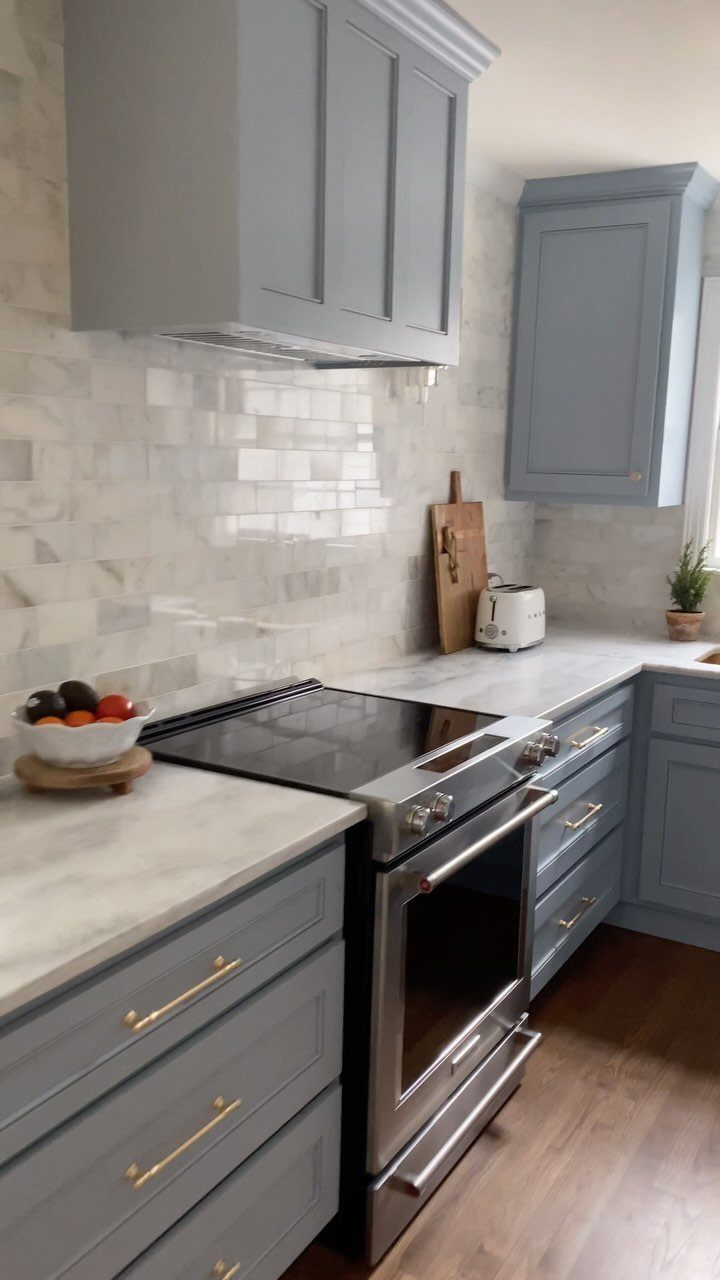
Muted blue cabinets with gold handles and white quartz is a combination I’d happily repeat. The blue stays calm, the white counter keeps things bright, and the gold adds warmth.
The owner said they’d remodel the kitchen the same way 1,000 times over, which tells you how well the mix settles in.
Paint a large board and check it morning and night, since grayed blues shift a lot. Swapping hardware is the cheapest weekend upgrade here.
6. Darker Lower Cabinets with Lighter Upper Cabinets
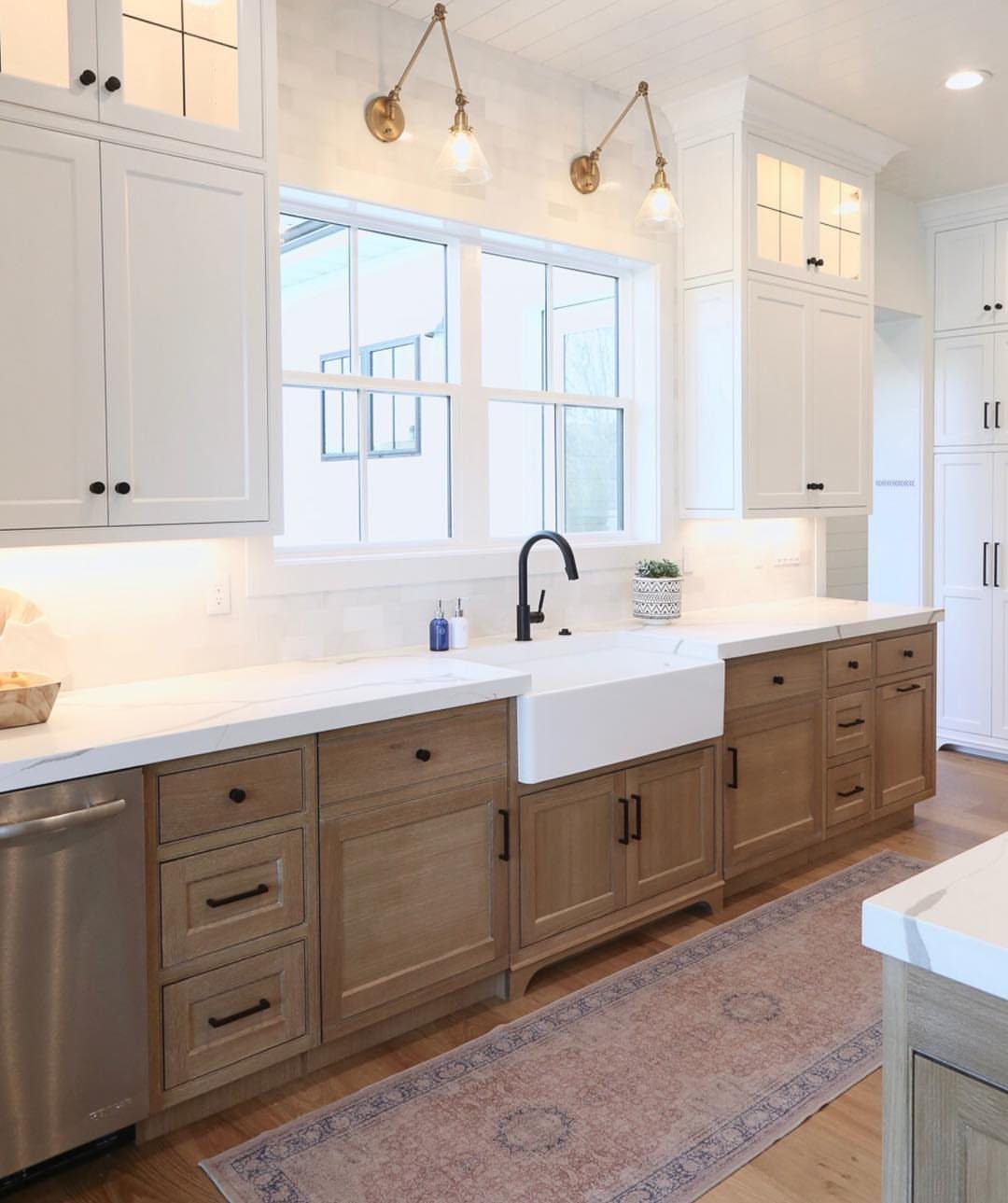
White counters bridge the 2 tones, and a farmhouse sink in white does the same job.
If you’re painting, the darker color belongs on the lowers, where scuffs happen. Keep wood tones to one family so the pairing feels intentional.
7. Concrete Looking Countertops
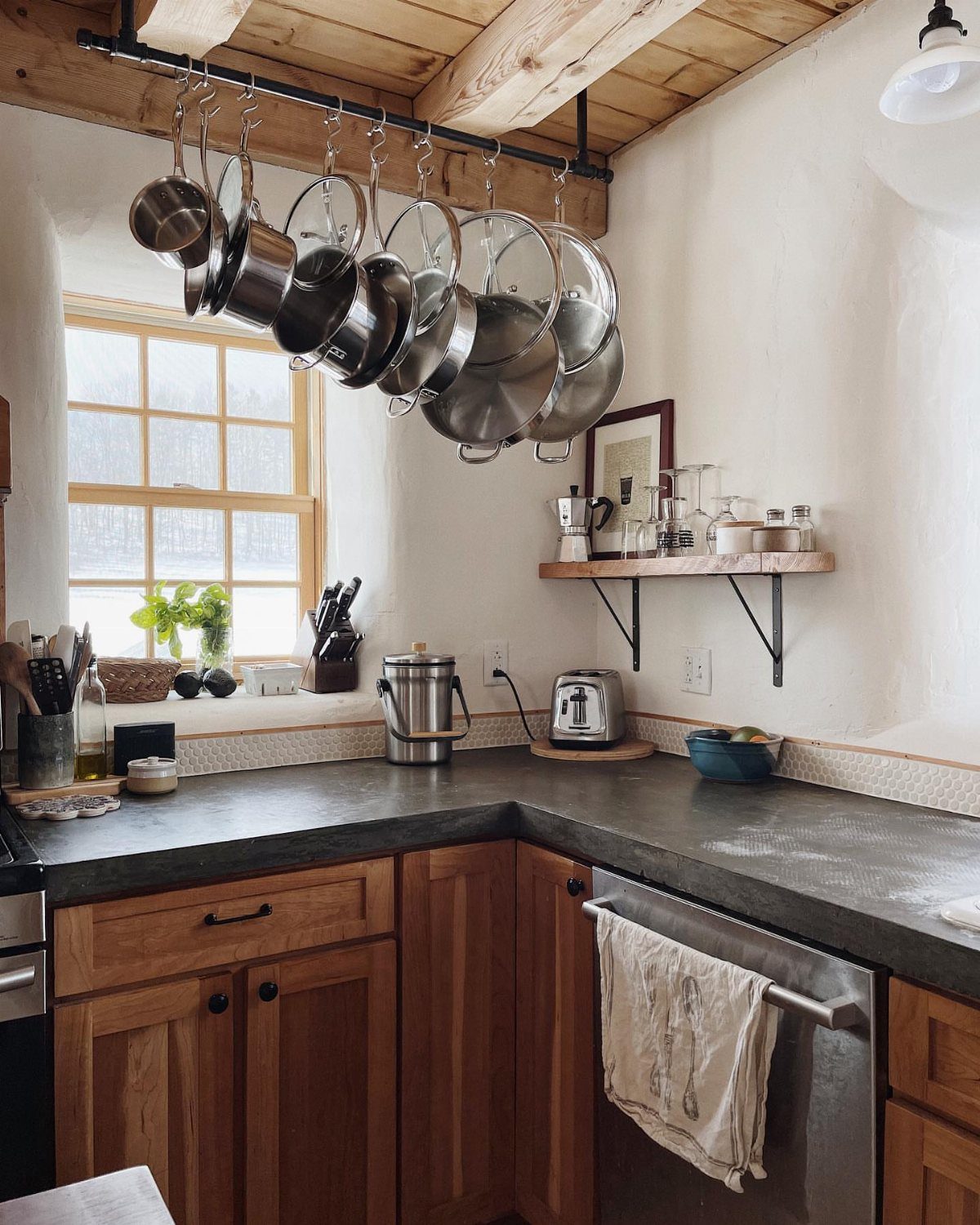
Concrete-look counters bring a gritty, workshop feel that softens fast next to warm wood cabinets. Dark gray against wood is a pairing I’d choose over all-gray every time.
Stainless pots hanging overhead pick up the cool tone, so the counter doesn’t have to do all the work.
Because the surface is a look rather than poured concrete, you can get it in laminate or quartz. Hold a sample against your cabinet door first, since gray can turn muddy beside orange-leaning wood.
8. Patterned Granite Countertops with Understated Cabinets
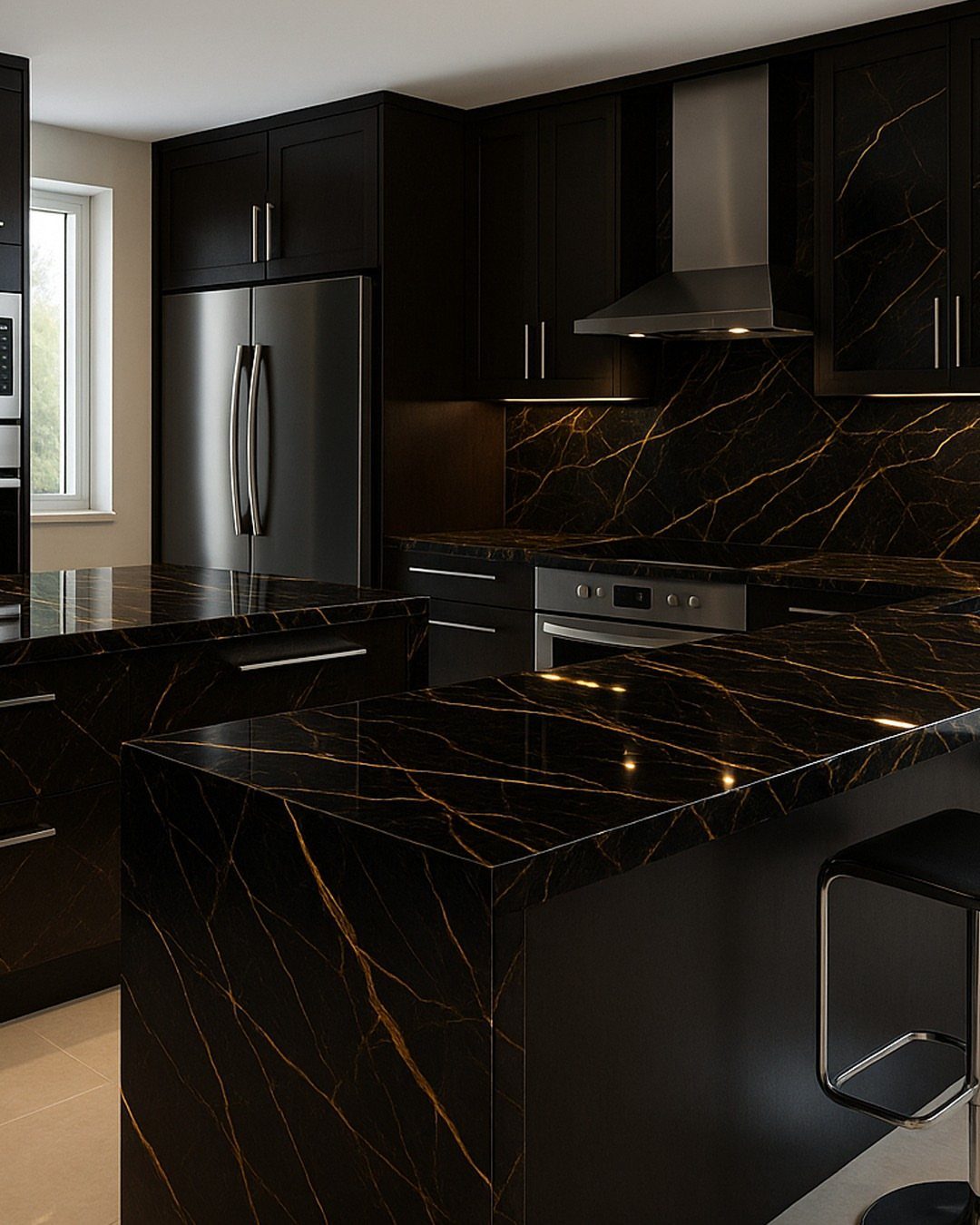
Black granite with gold veining is a pattern strong enough that the cabinets should stay quiet, and solid black ones do exactly that. Stainless appliances add a cool edge.
I’d choose a slab with fine veining over a heavy, sweeping one, since the stone is already the show.
Gold or brass hardware echoes the veins without competing. Look at the full slab, not a small sample, because the pattern shifts across the surface.
9. Warm Wood Cabinets with Neutral Countertops
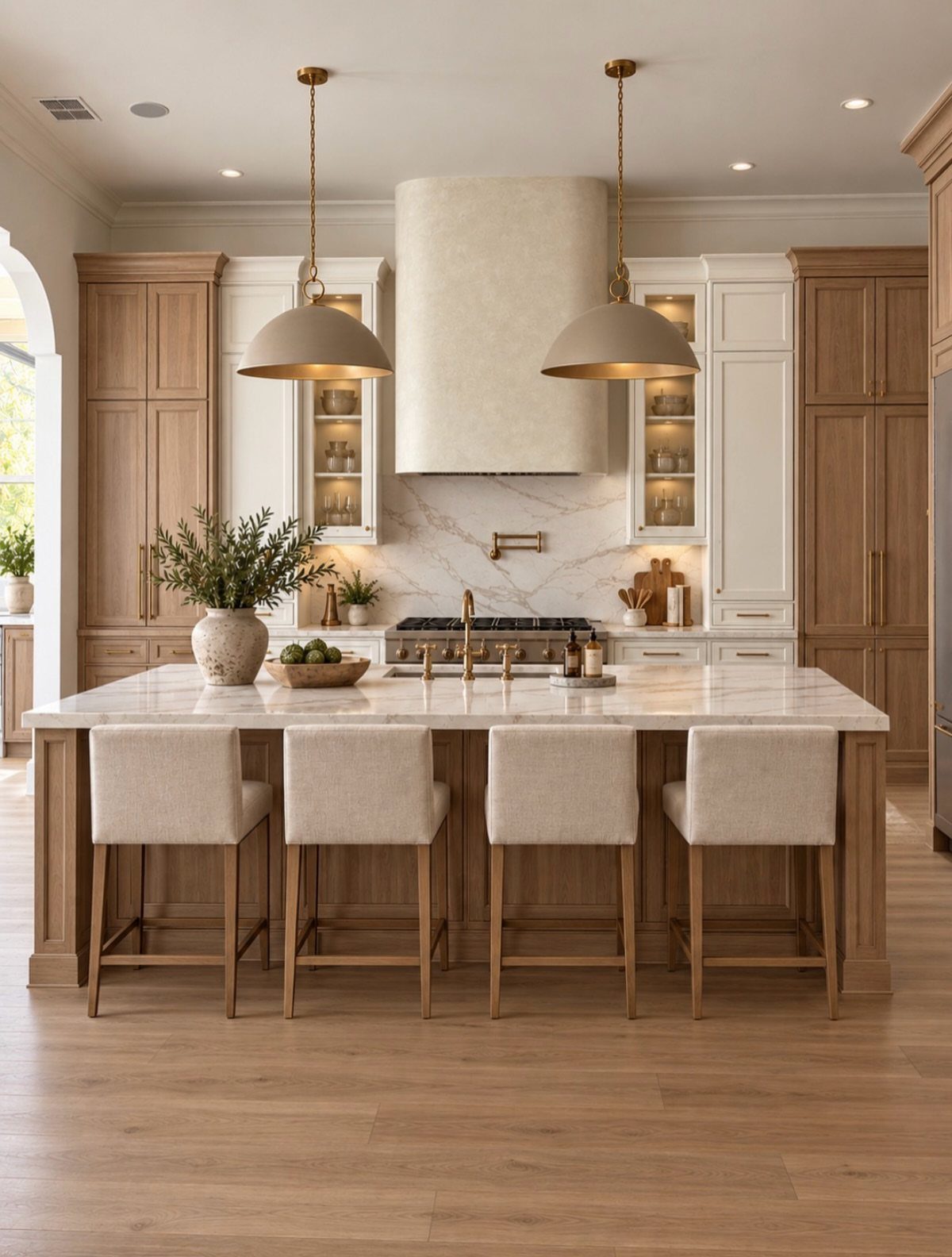
Light wood cabinets bring warmth and texture, and white marble counters keep that warmth from going heavy. Together they make a kitchen feel welcoming without much effort.
I’d keep every other color neutral so the wood grain does the talking. If you want the marble look on a budget, a marble-pattern laminate or quartz gets close.
10. Espresso Dark Stained Cabinets with Veined White Quartz Countertops
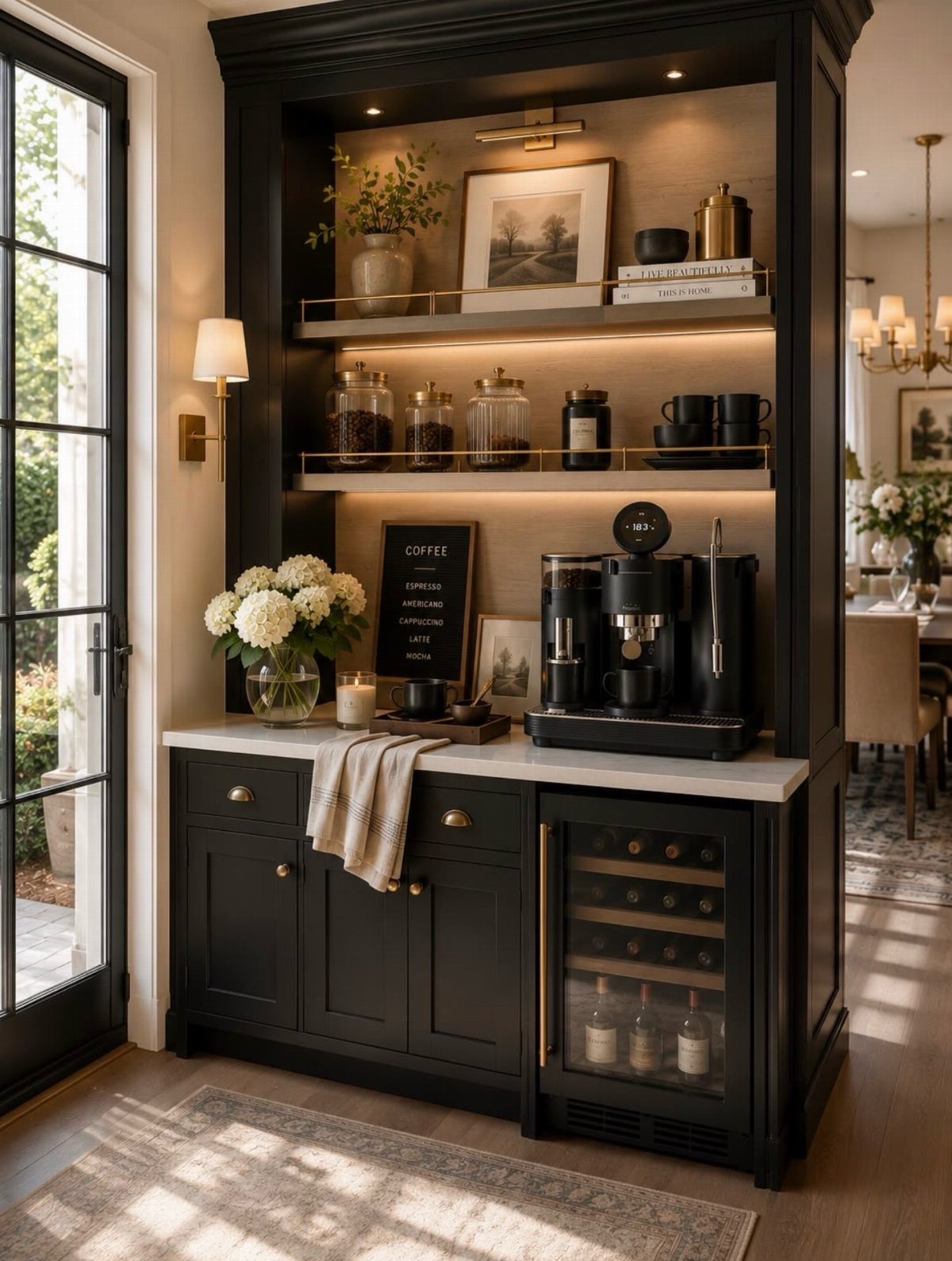
Espresso-dark cabinets topped with white veined quartz suit a small built-in spot like a coffee station, where a bright counter keeps the dark from swallowing the nook.
A chalkboard for the drink menu is a cheap, personal touch I’d copy.
Dark finishes show crumbs and water spots, so wipe after each use. Choose quartz with soft veining so it reads as stone but stays calm beside the near-black cabinets.
11. Waterfall Kitchen Countertops
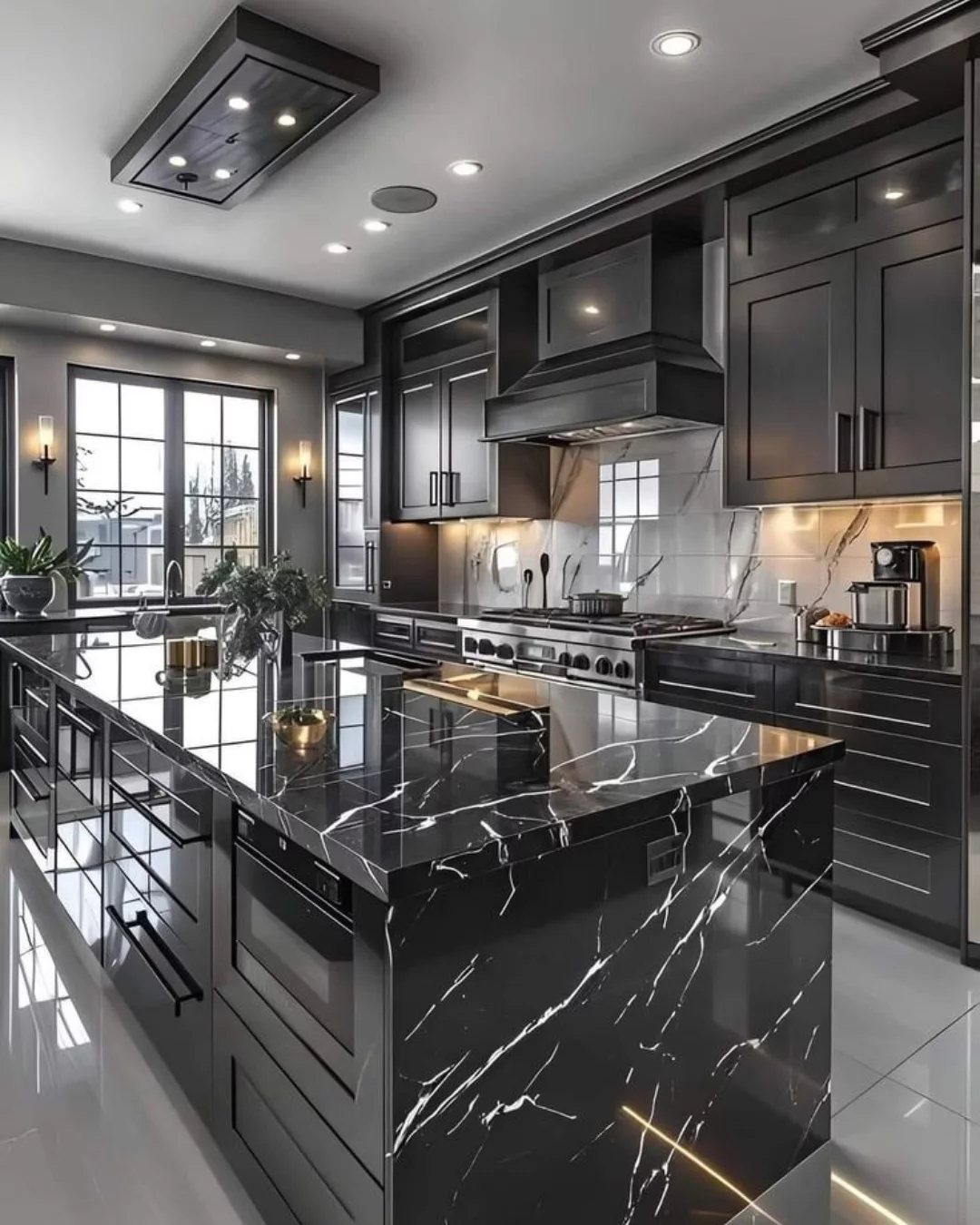
A waterfall edge carries the counter straight down the sides of an island, so the stone reads as one solid block with clean vertical lines.
Black marble with white veining makes the effect dramatic, especially when the backsplash matches. I’d save this for one feature, usually the island, while the rest of the kitchen stays plain.
It uses more material than a standard counter, so expect the price to climb. Laminate or quartz in a marble pattern is a gentler route.
12. Dark Cabinets with Light Countertops
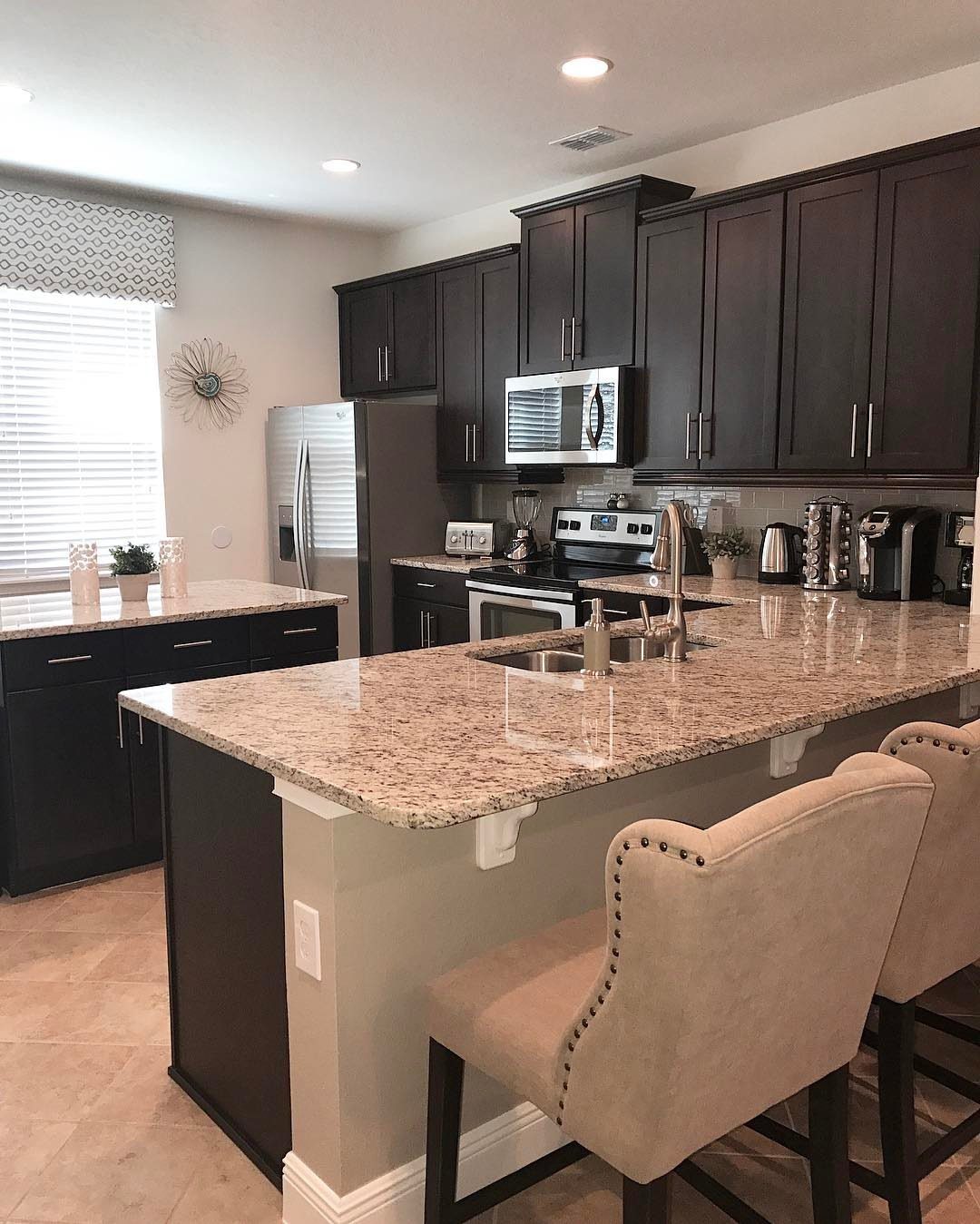
Dark espresso cabinets with a light, speckled granite counter give the room a strong focal point, because the contrast does the styling for you.
The speckles break up the flat brown, so the counter doesn’t look blank.
I’d pick a counter light enough to stand clearly apart from the cabinets; a near match loses the drama. Test a sample on a door in your own lighting first.
13. Butcher Block Countertops
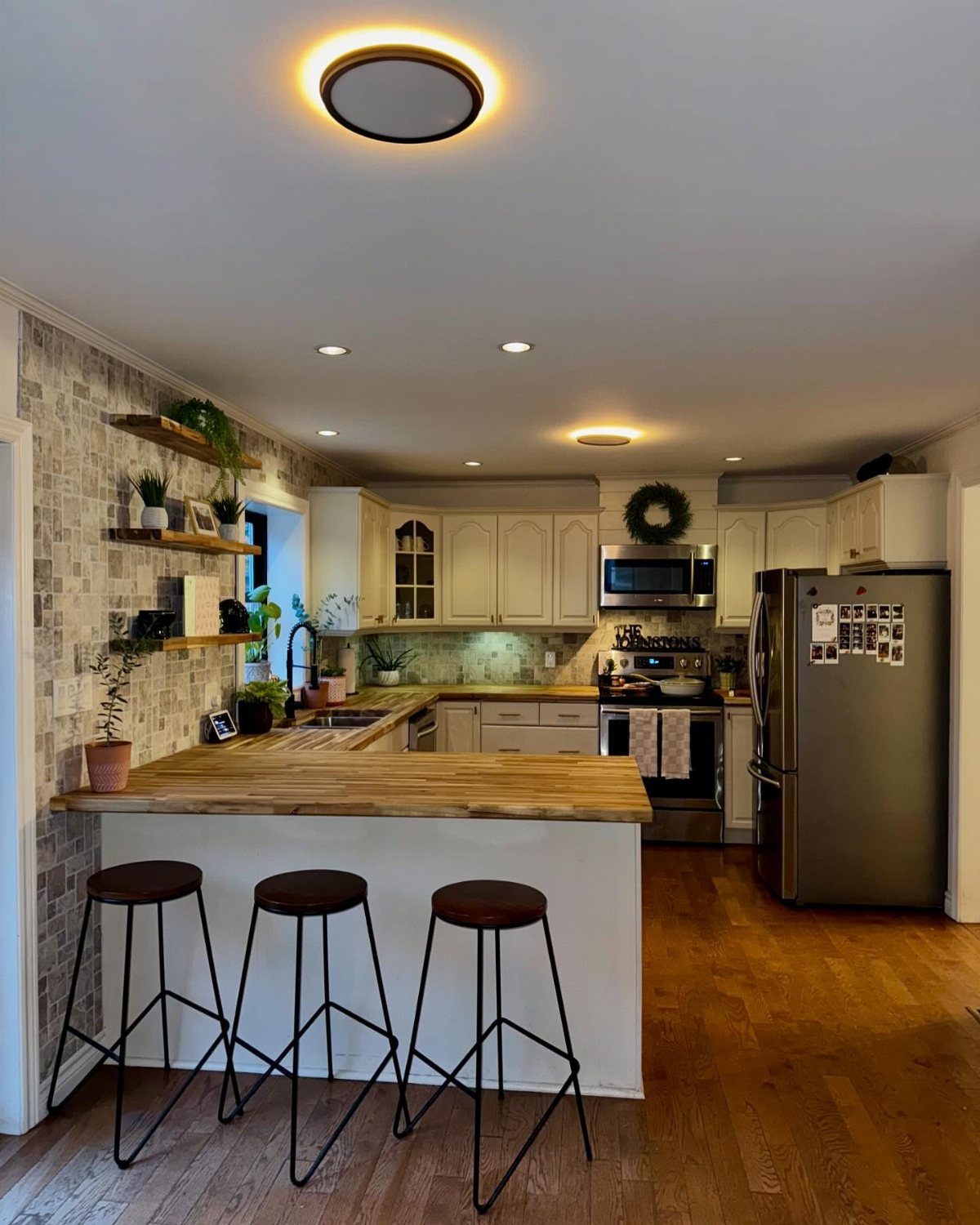
Butcher block on a white island is a warm, forgiving pairing, and it sits well beside wood-look flooring because the grain repeats across the room.
Black metal stools are worth adding next to a butcher block counter, because a run of all wood can start to feel soft and a little heavy without one dark, hard-edged contrast.
I’d match the undertones of counter and floor rather than the exact shade, since 2 near-identical woods can look like a mistake. Lay a sample on the floor in daylight before ordering.
14. Black Cabinets with Live-Edge Countertops
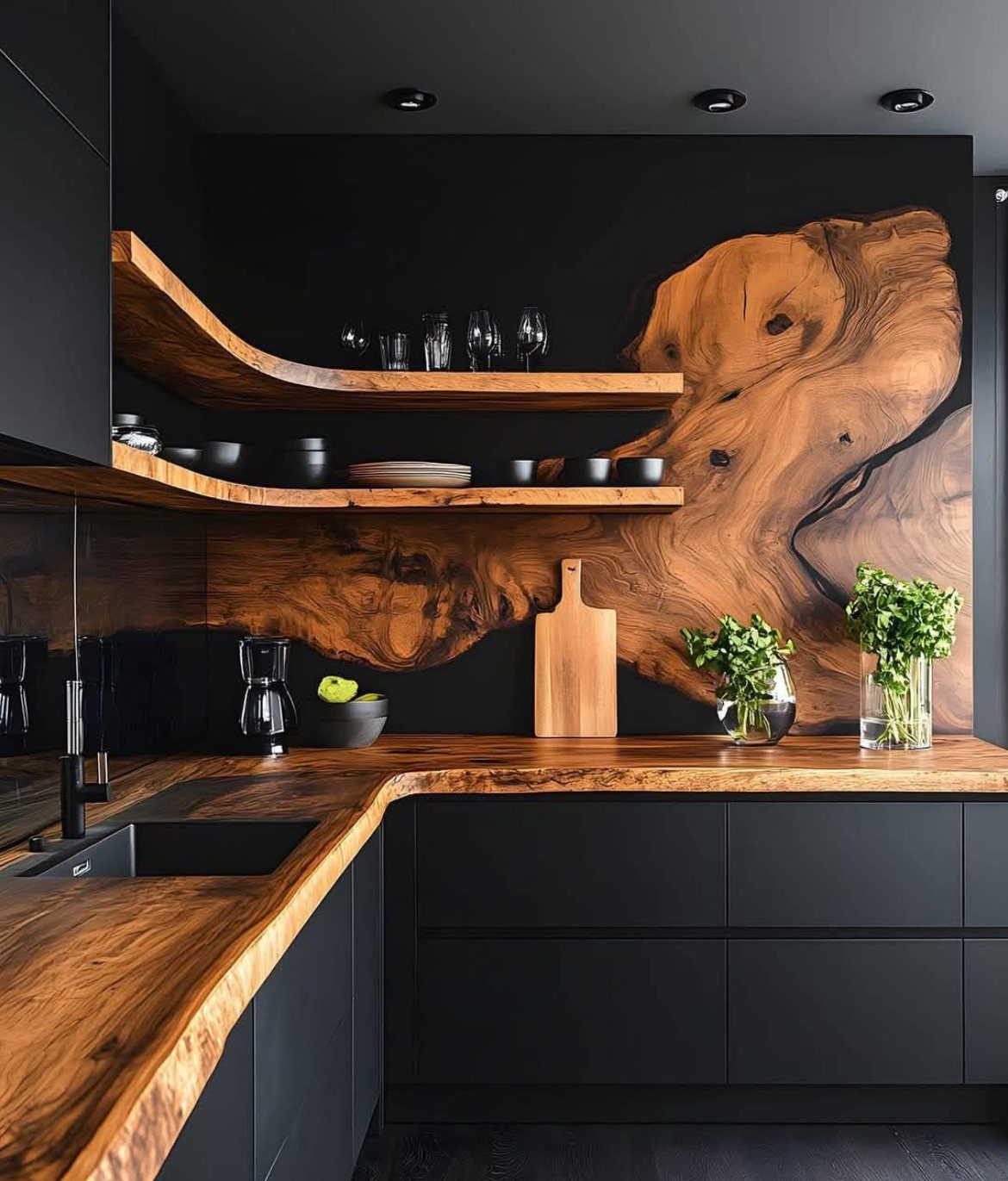
Matte black cabinets against a live-edge counter give you smooth, flat color beside a surface with a natural, uneven outline. Running the same wood up the wall as a backsplash, with floating shelves in it, makes the pairing look planned.
I’d keep the wood to one species so the grain doesn’t compete. Matte black shows fingerprints, so wipe it down regularly.
15. Beige Cabinets with Black Countertops
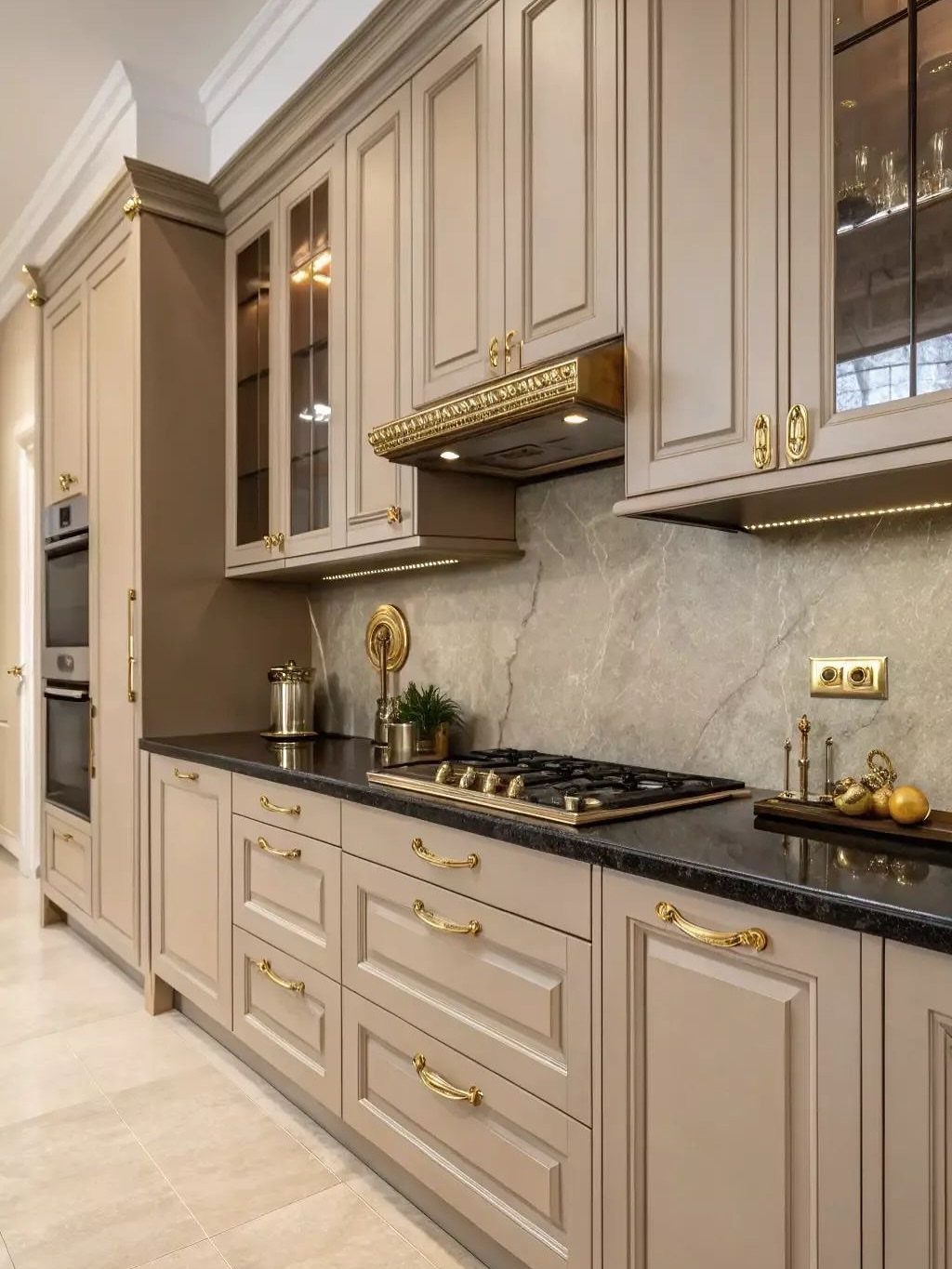
Beige shaker cabinets with gold hardware soften a polished black counter, so the contrast reads rich rather than harsh. A gray marble backsplash links the 2 tones.
Pick a beige with a little warmth; a cold one turns dull next to black.
Polished black shows water spots and crumbs, so keep a cloth handy. Gold pulls and knobs cost little, so changing the hardware is a low-risk way to test the look before you commit to anything bigger.
16. All-White Cabinets and Countertops
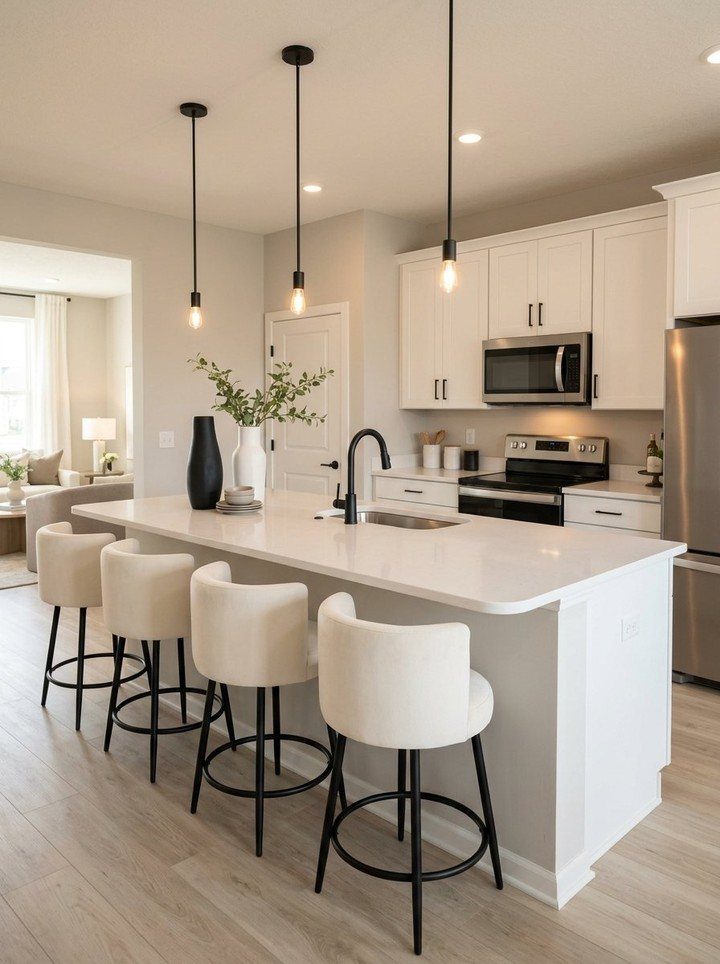
White cabinets and white counters, on the perimeter and the island alike, make a kitchen look larger and calmer. Black pendants over the island give the eye somewhere to land.
I’d hold a white sample against your cabinet door first, because whites drift warm or cool and a mismatch shows.
In an all-white kitchen, cream seating takes the edge off the brightness, and stainless appliances give the surfaces some depth so the room doesn’t read flat.
A. Whites and off-whites are by far the most popular kitchen cabinet colours; Benjamin Moore colour experts love Cloud Cover OC-25, Simply White OC-117, and Silver Satin OC-26.
17. Olive Green Cabinets with Wood Countertops
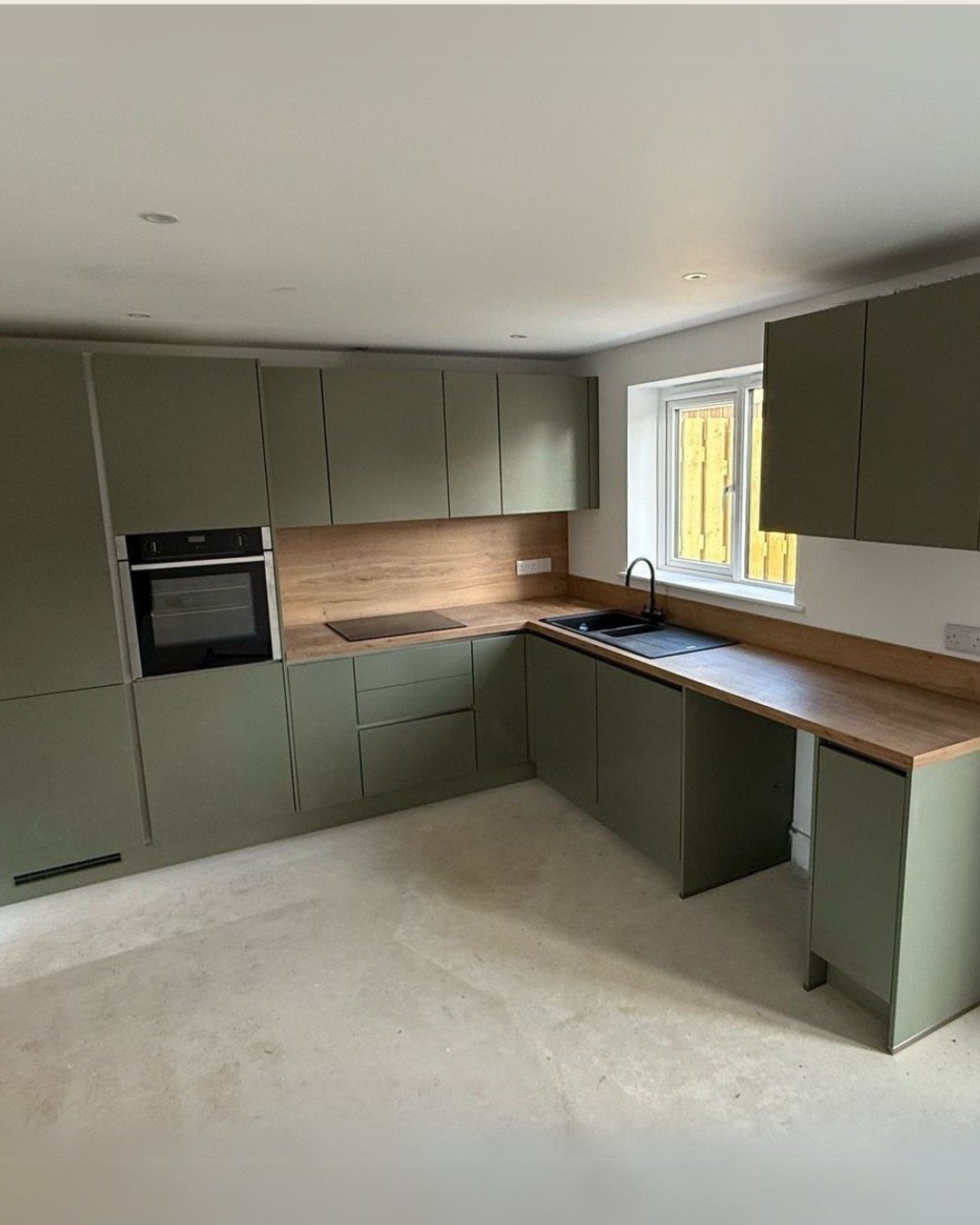
Olive green flat-panel cabinets with light wood counters feel earthy and calm, and the plain doors keep the look modern. A black sink gives the pairing a sharp, grounded accent.
Keep the walls white and the floor light so the green is the only strong color in the room. Test a paint sample next to the wood, since olive can lean yellow or gray beside it.
Natural Finishes in Kitchen Design
For natural wood, my first pick is walnut in a shaker door. Walnut’s grain gives the doors movement so they don’t read as flat slabs, and the simple shaker profile fits almost any style from modern to farmhouse.
Walnut is a hard, durable wood, and a lighter finish on it hides daily wear in a kitchen that actually gets cooked in.
Bright white quartz on top gives strong contrast with the dark wood, and it’s a pairing that stays good-looking for years.
The veining in a marble countertop lifts darker wood cabinets, and the pairing works in a big open kitchen as well as a small one.
In a small kitchen, keep the quartz to one plain stretch of counter so the wood is the only strong texture in the room.
Practicality in Kitchen Design
Durability should break any tie between 2 materials you like equally. Choose cabinet finishes rated to resist scratches, moisture and general wear, because the sink and dishwasher zones take the worst of it.
For counters, choose a surface that wipes clean and resists stains. Large-format porcelain slabs are a strong candidate, because they’re sturdy and easy to maintain.
Before ordering, ask the seller how each surface handles daily cleaning, and keep the answer in mind next to the sample you love.
A beautiful finish that needs constant care will start to wear on you within a year, and a plain one that wipes clean in seconds rarely does.
Trends in Kitchen Design
Trends are worth borrowing in small doses. Bold color, contrasting styles and built-in technology are all shaping kitchens right now, but each one can date a room if it covers every surface.
I’d put the trend in the pieces that are cheap to change: paint, hardware, lighting. Keep the big, expensive items, like counters and cabinet boxes, in materials that will outlast a season.
Large-format porcelain slabs are one example of a material that is both current and sturdy. For technology, pick one useful addition rather than several, so the kitchen still works if a gadget goes out of style.
Frequently Asked Questions
What are some good combinations of kitchen cabinets and countertops?
Another pairing I’d happily repeat is soft blue cabinets, white quartz and brass pulls: the blue reads calm, the quartz bounces light around, and the metal brings in a little warmth.
White cabinets with white counters is the calm, larger-feeling choice. Before you buy, prop a sample against a cabinet door and look at it in your own kitchen at morning and at night.
What is the 2026 trend for kitchen countertops?
Large-format porcelain slabs are the countertop trend I’d actually back, since they look current and hold up to heat and scratches.
Trends date a room when they cover every surface, so I’d put them in cheap-to-change pieces like paint, hardware and lighting.
What makes a kitchen look cheap?
Low-quality materials and mismatched designs make a kitchen feel cheap.
2 near-identical woods side by side can look like a mistake, and a gray or white that clashes with its neighbor shows right away. Match undertones rather than exact shades, and test samples in your own light before buying.
What is the average cost of kitchen cabinets and countertops?
I can’t give a reliable average, because cost swings with the material you pick. A black counter can be laminate at the low end, painted butcher block in the middle, or quartz and soapstone if you have more to spend.
A waterfall edge uses more material and raises the price, while marble-pattern laminate or quartz is a gentler route to a similar look. New pulls and knobs are the cheapest upgrade you can finish in a weekend.





