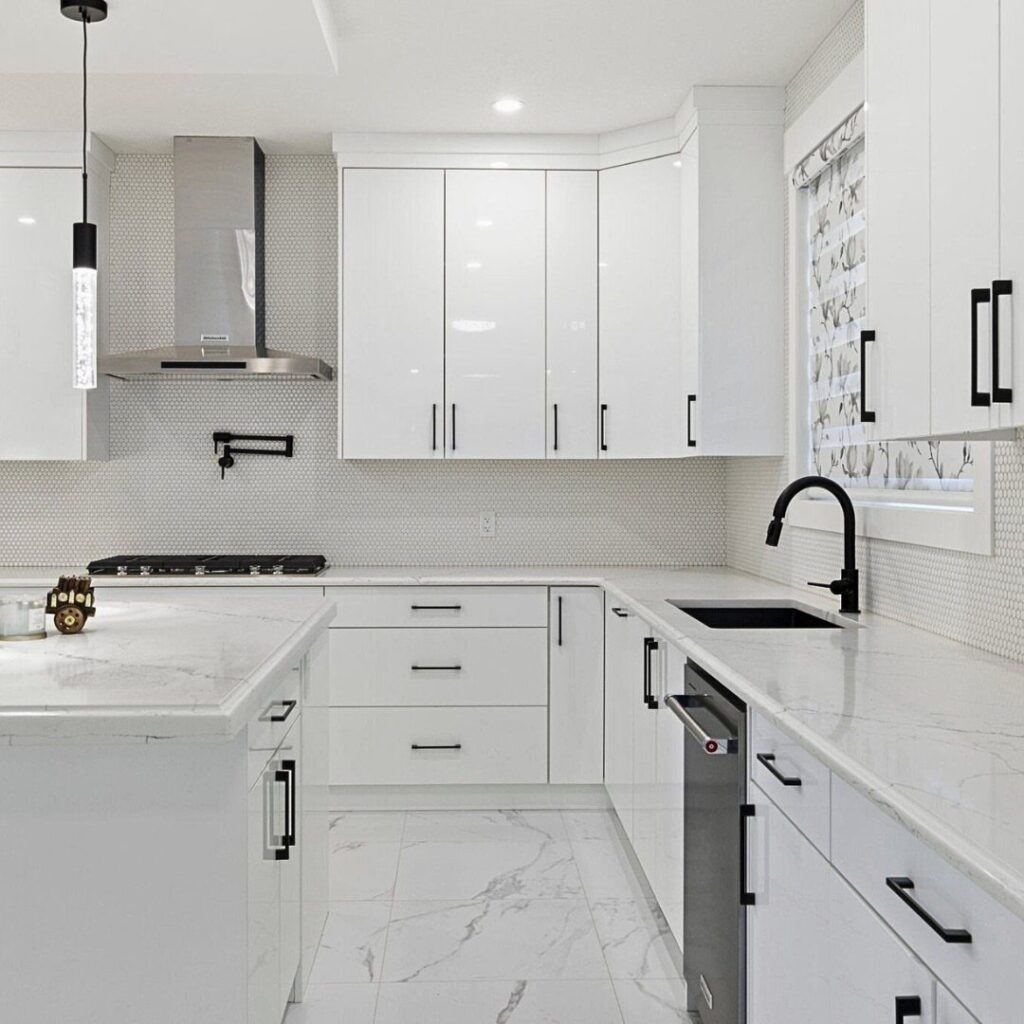
The ideas here run from an afternoon with a screwdriver, swapping pulls to match your faucet, up to a marble waterfall island that sits among the pricier moves on the list.
How far you go depends on whether you own or rent: hardware and paint stay surface-level in a temporary space, while a waterfall island or marble countertop makes sense when the kitchen is yours for years.
White cabinets show every choice you make around them, so the backsplash, countertop, and hardware carry more weight than they would in a darker kitchen.
1. Mix Your Metals
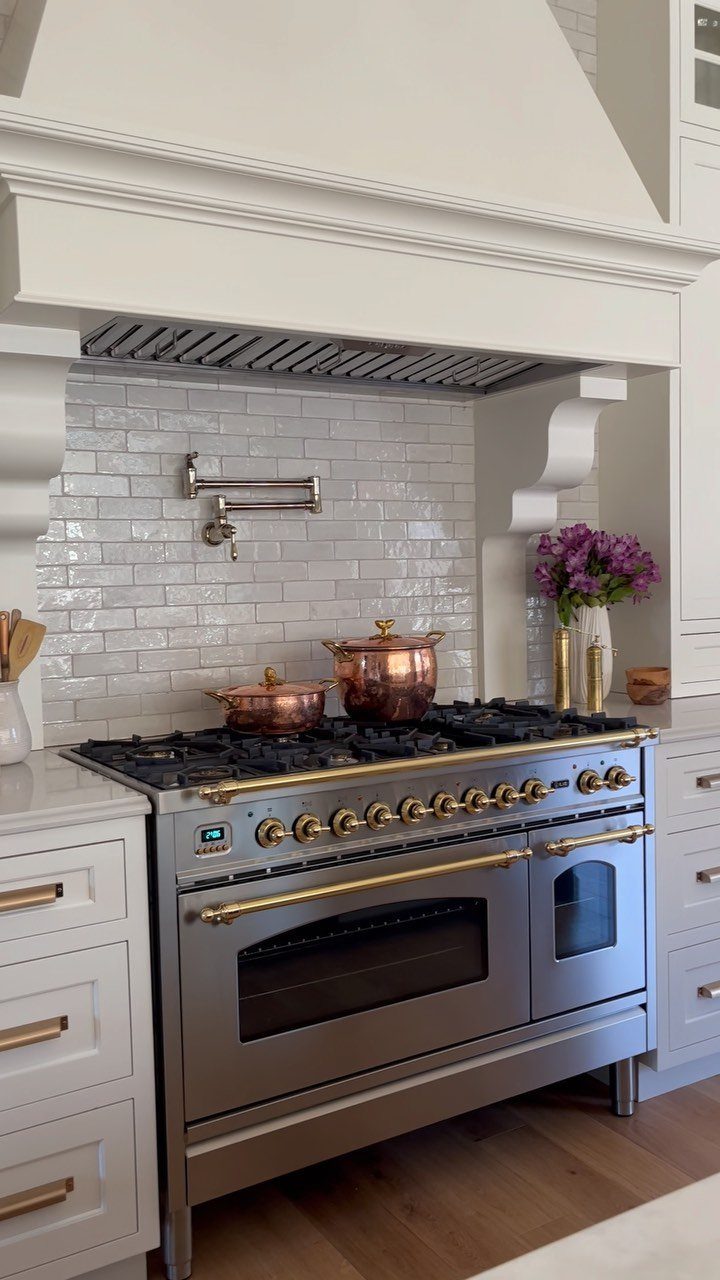
Stainless, gold and copper can share one kitchen without a fight, as long as one metal clearly leads. Here stainless carries the range, and gold and copper play supporting roles in the handles and pots.
Pick a lead metal first, then repeat each accent at least twice so it reads as a choice and not an accident. White cabinets and a plain white backsplash keep the mix calm.
Cheap place to start: swap cabinet pulls or hang a few copper pots.
2. Waterfall Island
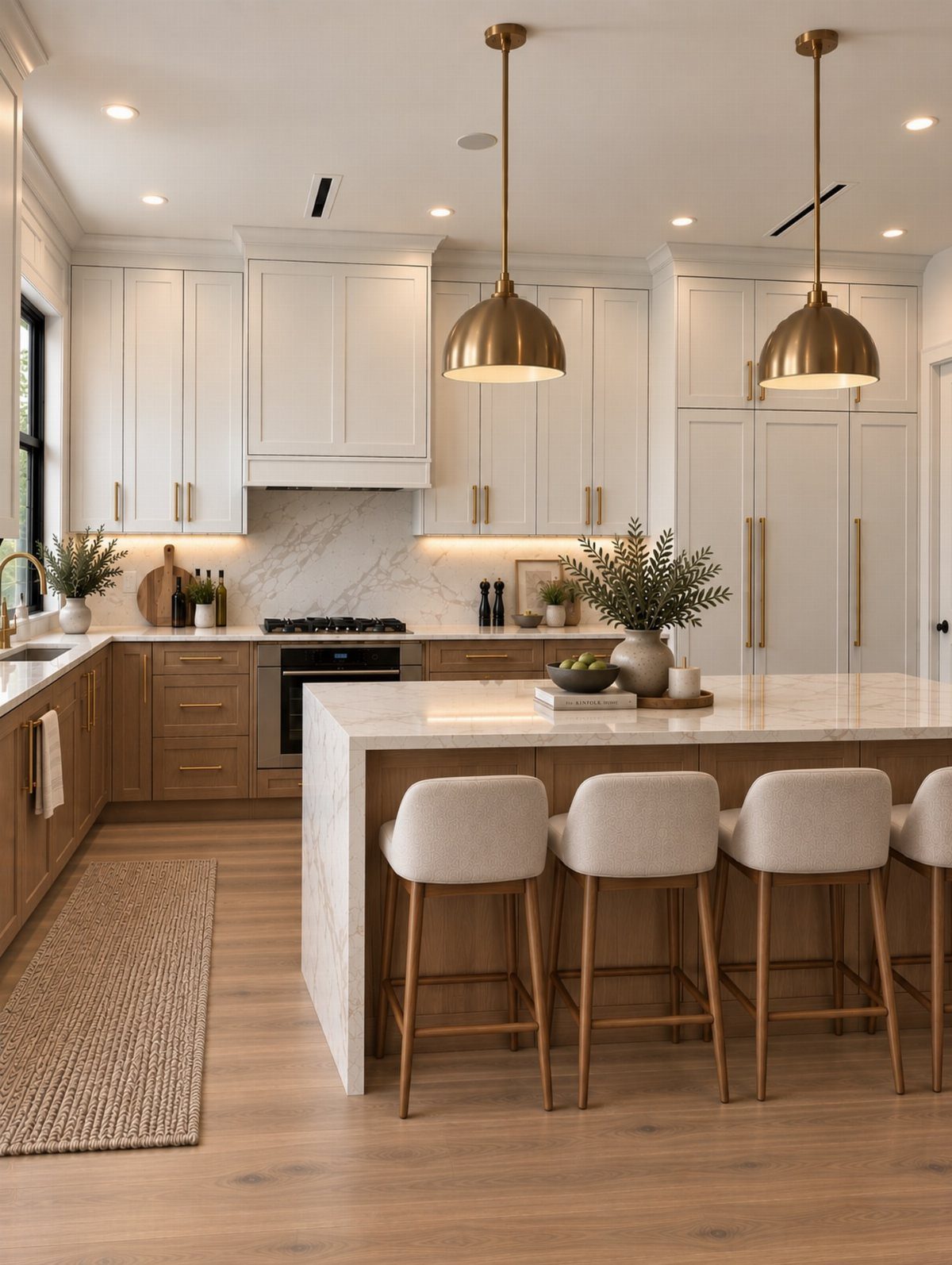
A waterfall island runs the stone countertop straight down the sides to the floor, so the slab looks like one solid block. On cream-white cabinets, a marble version gives the room a single strong focal point.
Expect it to be one of the pricier moves on this list, since the stone and the cut sides both add cost.
If a full waterfall is out of reach, a single waterfall end on one short side of the island gets you much of the look, and the seating side stays open for legroom.
Gold pendants over the island, with stools in a quiet beige, keep the stone as the star.
3. Colorful Backsplash Tile
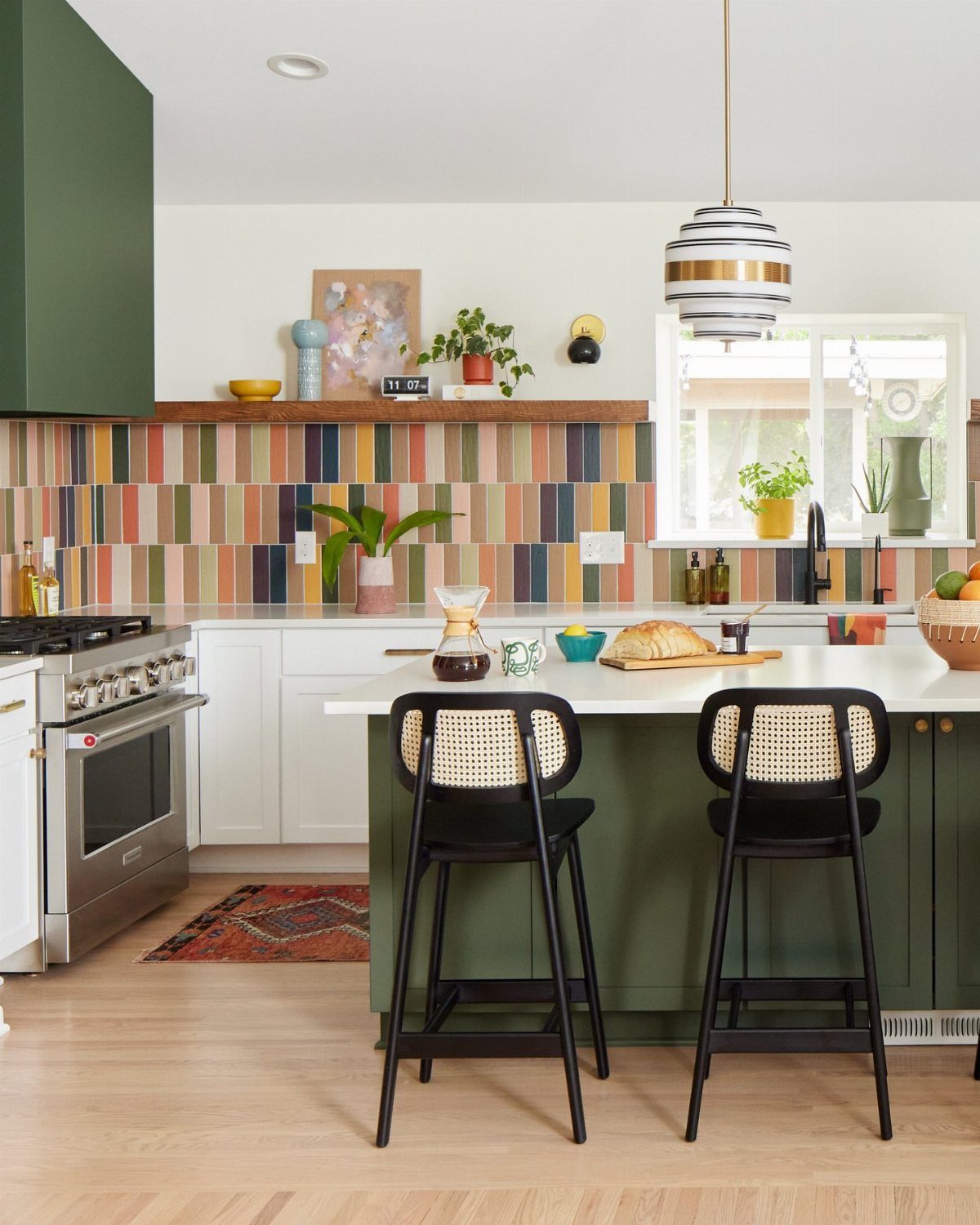
Tile turned vertical draws the eye up, and in a kitchen with white lower cabinets it can carry the whole color story.
Keep everything else plain: white cabinets, simple black stools, open shelving. Pull one or two tile colors into the island or a bowl, and stop there.
A backsplash is a small area, so a bold tile costs far less than it looks like it should.
4. Warm Up White Paint
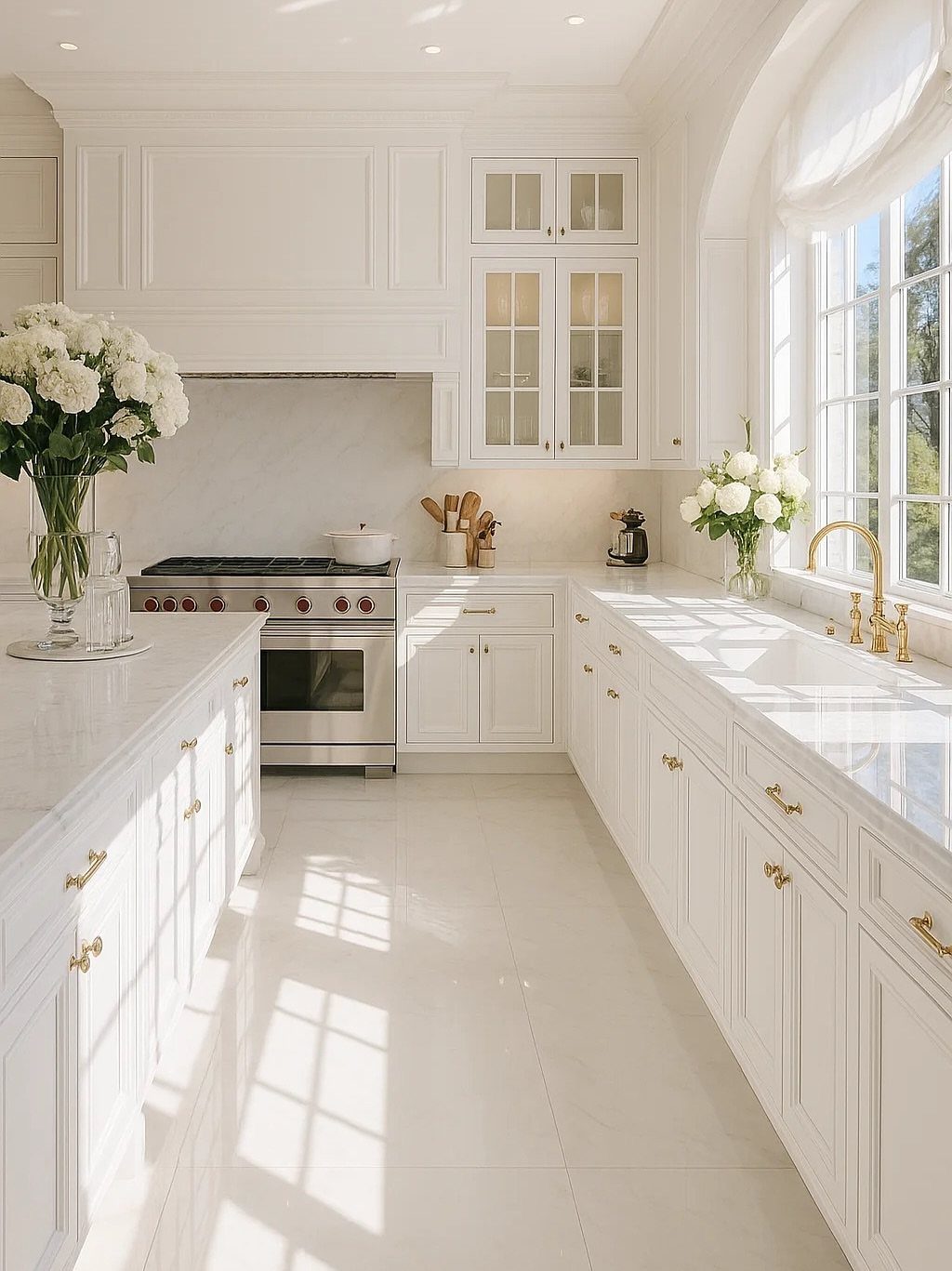
Pure bright white can feel clinical, and a creamier shade softens it without losing the clean look. Cream cabinets with gold hardware and white marble countertops make a warm, layered white room.
Test paint samples on the cabinet doors themselves and check them at different times of day, including after dark under your lights, since cream shifts more than stark white does. Large windows help the shade glow.
I would choose cream over stark white for anyone who wants a modern kitchen that still feels lived in.
5. Contrasting Vent Hood
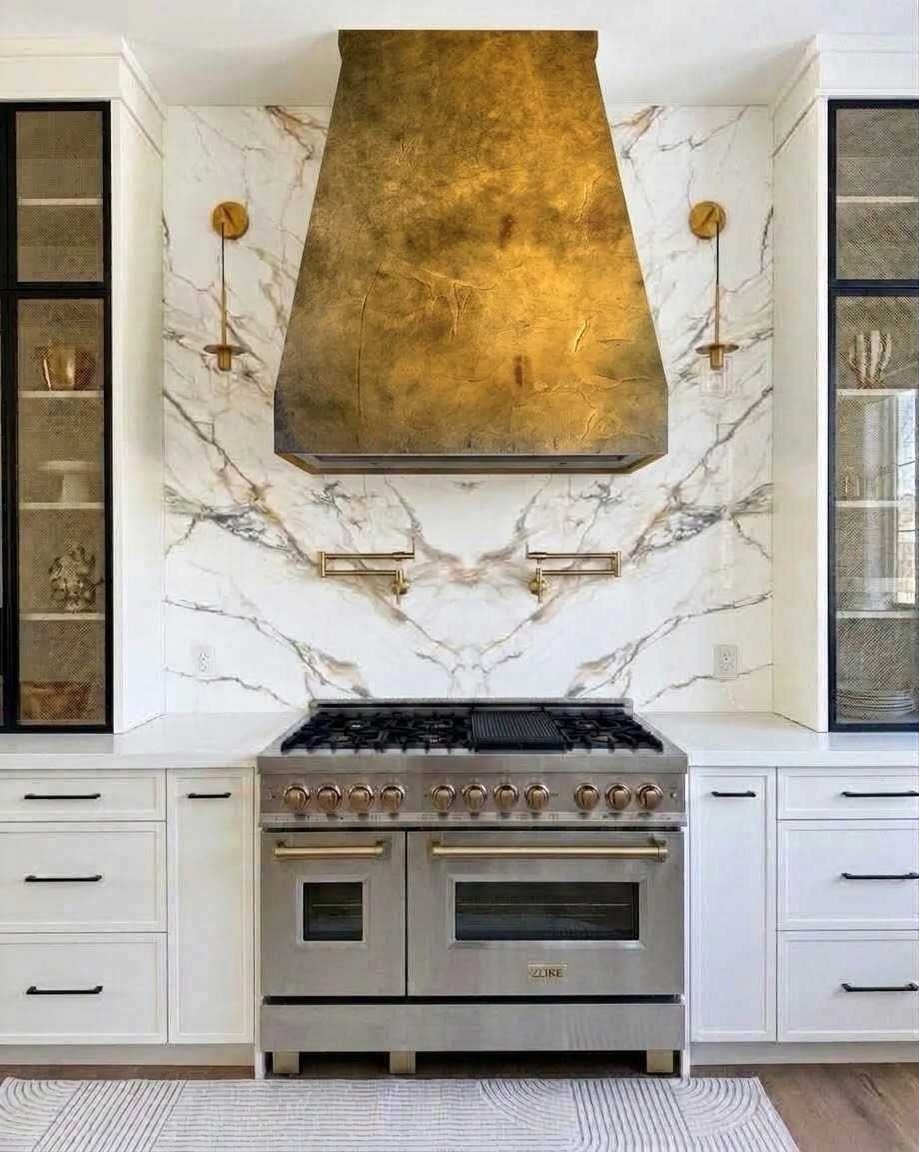
A vent hood is usually the biggest vertical surface over the range, so painting or finishing it in a contrasting metal turns an appliance into a feature. Gold against white cabinets and a marble backsplash stands out without adding clutter.
Keep the range simple, as stainless does here, so the hood is the only loud piece. Match the hood’s tone to your cabinet hardware and the whole kitchen ties together.
Budget route: a hood cover or wrap in a metallic finish costs less than replacing the unit.
6. Open Shelving
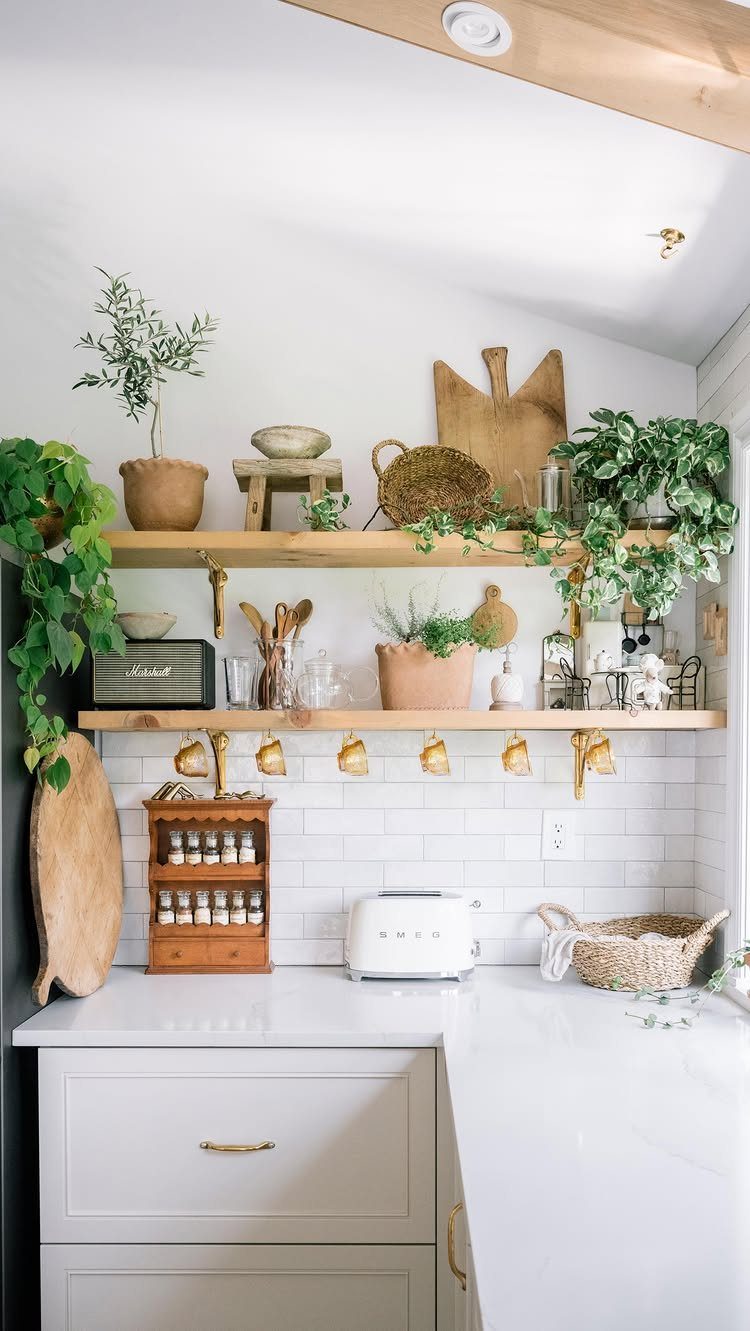
Swapping upper cabinets for 2 wood shelves makes a white kitchen feel lighter and gives you a place for plants and favorite cookware. White subway tile behind them keeps the look clean.
Shelves only work if you edit. Stick to everyday dishes, a few plants and one or two good small appliances, because everything on them is on display and gets dusty.
Light wood warms up an all-white palette. Keep the closed base cabinets below for the clutter you don’t want to show.
7. Minimal Earthy Furniture and Decor
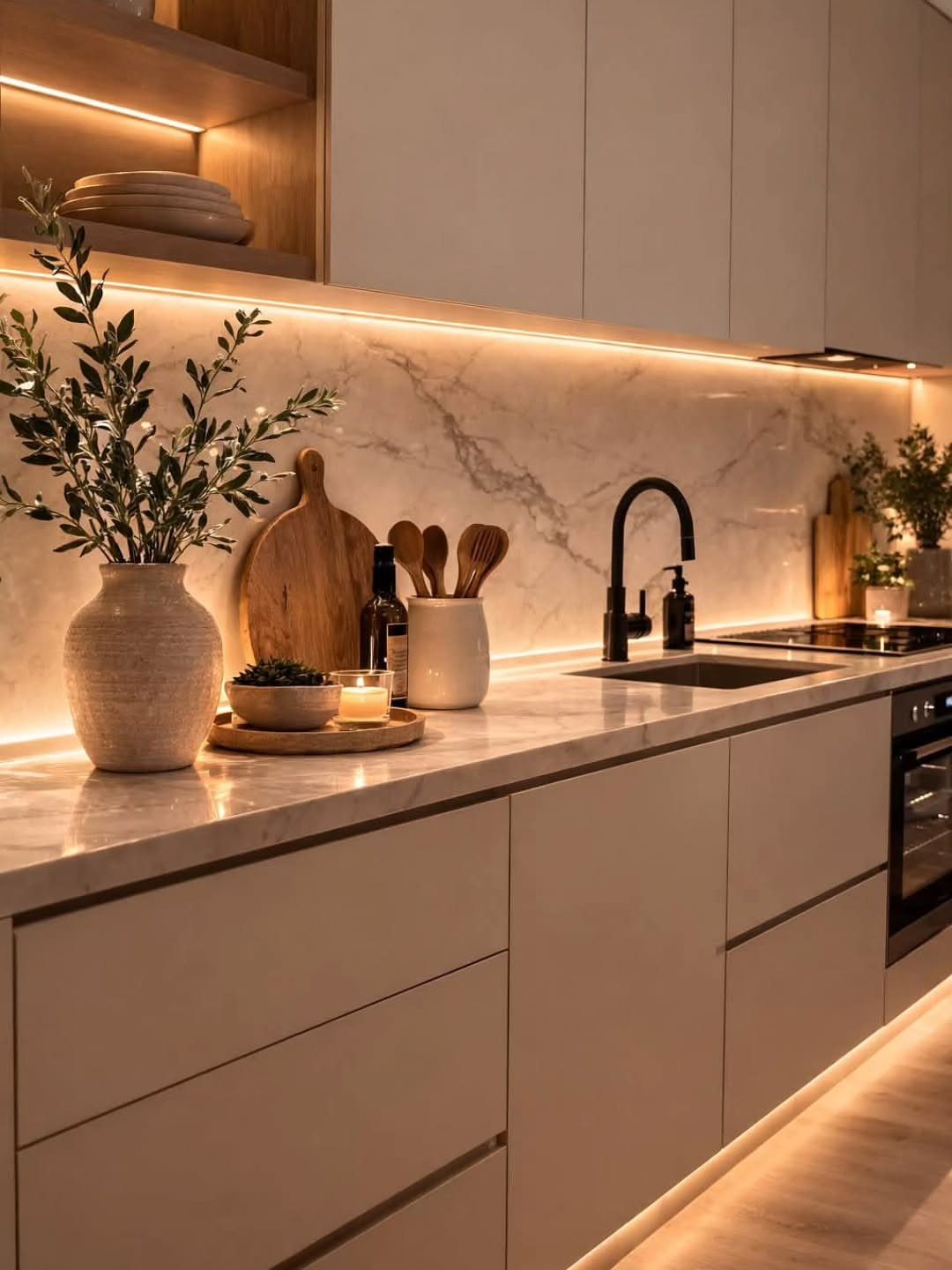
Earthy decor works best in a white kitchen when you stop early: wooden cutting boards, a plant, a candle, a vase of olive branches, and nothing more. Marble counters already supply the pattern, so everything else can stay quiet.
Pick wood and greenery over anything colorful, and leave a stretch of counter completely bare. That empty space is what makes the few objects look chosen.
8. High Contrast Black Countertops
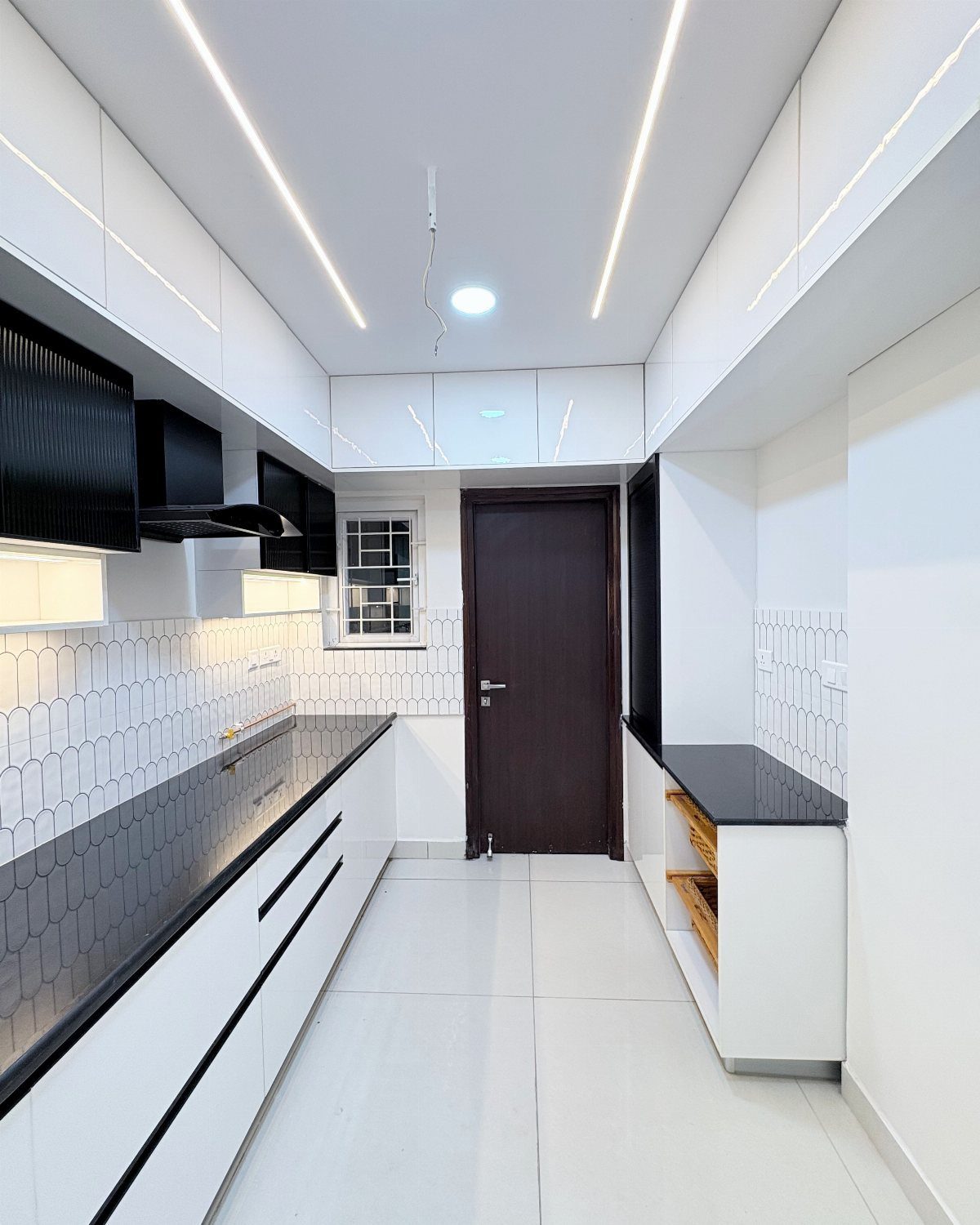
Black countertops against white cabinets give a galley kitchen a sharp graphic line, and a white tiled backsplash keeps the contrast from feeling heavy.
I like that the black range hood repeats the counters, because the dark color then reads as a plan instead of a single bold patch.
Repeat black at least once more above the counter, in the hood, hardware or a light fixture.
In a narrow room, keep the walls and backsplash white so the dark surface stays a thin band and not a tunnel.
9. All-White Monochromatic Look
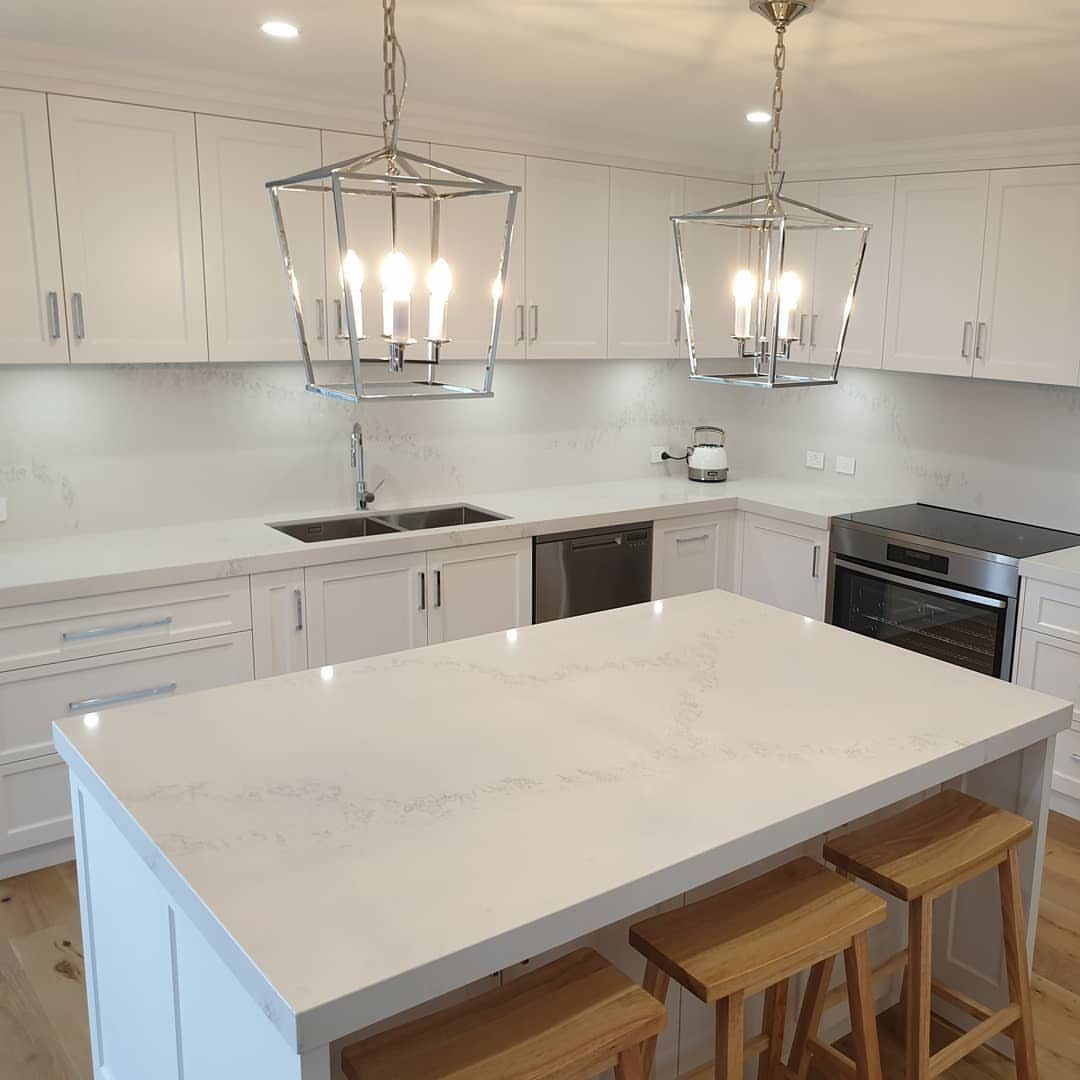
White cabinets, white counters and a white island can look flat if nothing breaks them up, so give the eye a few materials to rest on.
Wooden bar stools do that job here, and 2 metal pendants over the island add a second texture.
I would choose stools in a warm wood tone over more white, since they keep the room from feeling like a showroom. Choose a single white for every surface so nothing looks mismatched.
Swapping stools is an easy, low-cost change.
10. Glossy Cabinets with Marble
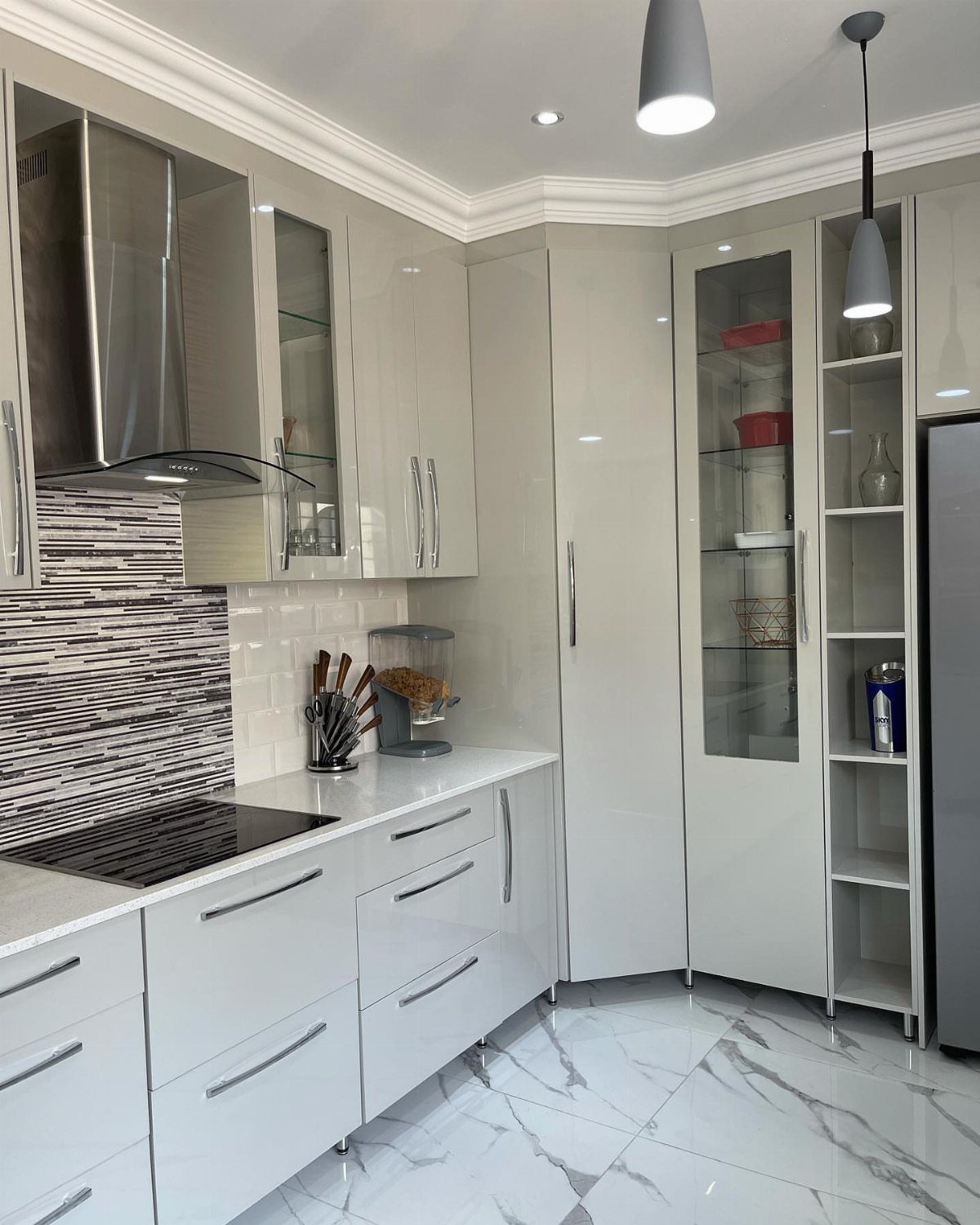
Ultra-glossy cabinet doors bounce light around the room, and grey veined marble underfoot gives that shine something soft to play against. A linear tile backsplash adds clean horizontal lines without competing with the veining.
Keep the vent hood plain stainless, as it is here, so only the cabinets and the floor do the talking.
Gloss shows fingerprints and smudges more readily than matte, so expect to wipe the doors down often. If you can only afford one of the two, I would put the money into the cabinets.
Timelessness of White Kitchens
White cabinets have outlasted every trend cycle, and that makes them a safe base if you plan to stay in a home for years or sell it later.
The color adapts to whatever you layer on top, so you can change the look without touching the cabinets.
Pale cabinets and walls bounce light around, so a tight room reads bigger, and that matters most in a rental or starter home with few square feet to spare.
Because the style is so simple, execution decides how it looks. Check that doors hang evenly, gaps are consistent, and the paint finish is smooth, since a plain white surface hides nothing.
Layering and Warmth
The stark, glossy, all-white kitchen is fading. Cooler, flat white gives way to creamier tones, then gets built up with warm wood, a mix of metal finishes, one bold slab of stone and a color or two used lightly.
A good pendant or sconce, plus a few materials you can feel, like woven shades or a butcher block, makes a kitchen look custom without a big spend. A plaster-look range hood is another way to add texture.
Stools, runners and lighting are the cheapest layer to change. Choose earthier materials like cane or wicker, and keep the colors neutral and minimal so they balance the white.
Plan the scheme as a whole, and think about how it relates to the rest of your home before you buy anything.
“The biggest difference is warmth and layering,” says designer Stephanie Wiott. “Today’s white kitchens still feel timeless, but they’re softer and more nuanced.”
Functionality of White Cabinets
White cabinets make hardware stand out, so the pulls and knobs you choose do more work than they would on a darker door.
Pulls and knobs are the easiest place to settle on a finish, so choose them first, then look at the faucet, the appliance trim and any other visible metal before you buy.
That repetition is what makes the room look finished.
Before you buy, hold a pull against a door and check how it reads next to the faucet.
If you are on a tight budget, new hardware is the cheapest way to get this effect, and it takes an afternoon with a screwdriver.
Frequently Asked Questions
Are white kitchen cabinets still trendy?
Yes.
You can swap out the accessories and change the whole feeling without repainting or replacing anything structural. Plain cabinets show every flaw, so alignment, spacing and paint quality all need to be tight.
What color is replacing white kitchens?
Nothing has fully replaced white; creamier whites are taking over from cool, bright white. Cream, beige or taupe undertones read gentler and less clinical, and they pair well with gold hardware and marble counters.
Put samples directly on the cabinet faces and look at them morning, afternoon and under artificial light, because cream reads differently depending on the hour.





