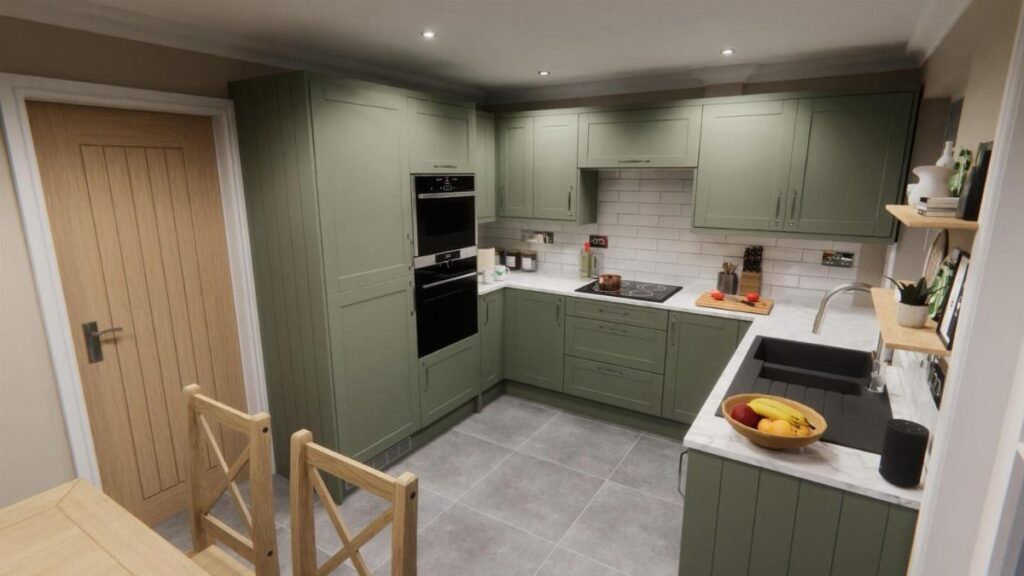
Moss green cabinets show up in matte and gloss finishes, paired with brass hardware, split into two-tone layouts, or matched to wood and stone countertops that shift the whole feel of the room.
How much light the room gets decides whether you can use deep Oakmoss, high-gloss doors, or a two-tone split that keeps the space from closing in.
1. Matte Moss Green Cabinets with Wood Countertops
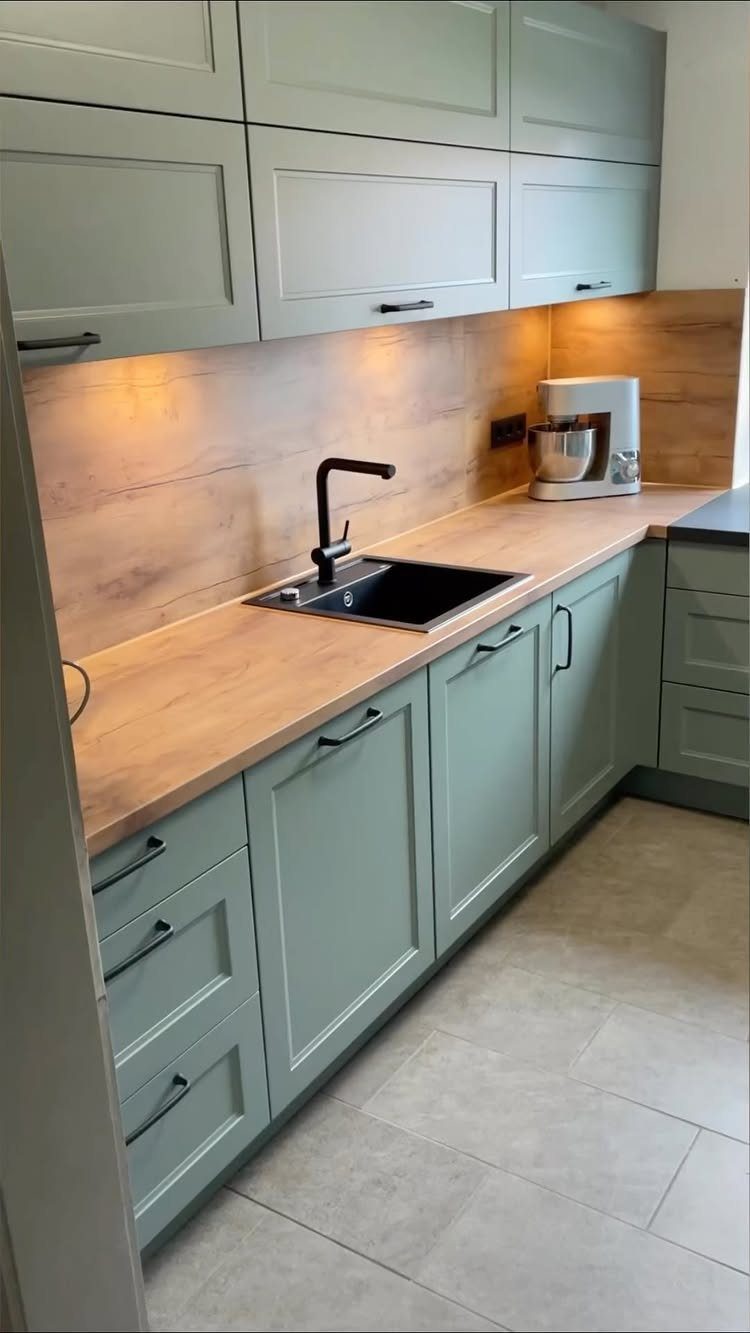
Moss green and warm wood get along because both come from the same palette. Matte paint keeps the green soft and hides fingerprints better than a glossy finish would.
Light wood countertops, like the ones here, keep the room from turning dark. Carrying the wood up the wall once more, as a backsplash or a shelf, is what makes a wood counter look planned rather than dropped in.
A black faucet and sink give moss green cabinets a sharp contrast, and matte finishes hide water spots better than polished ones. Butcher block is the budget route for a weekend install, but it needs sealing, so plan for that.
2. High-gloss Moss Cabinets
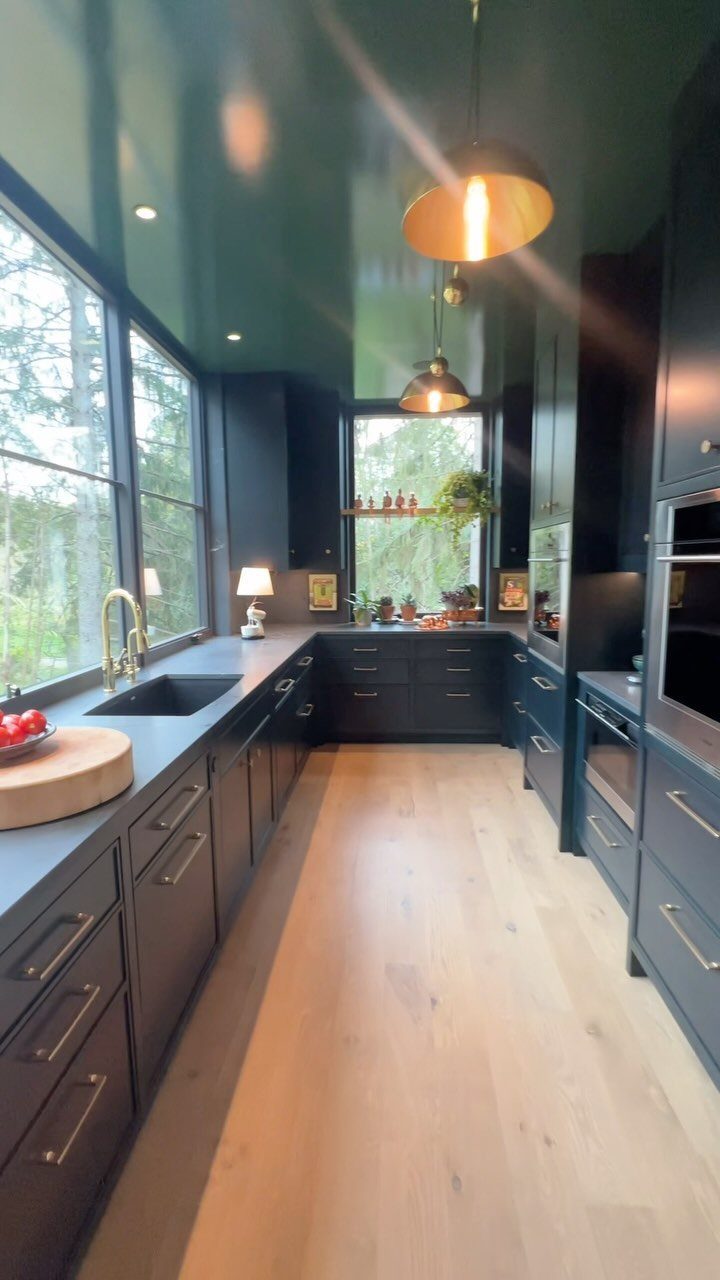
A glossy finish bounces window light around a room, and on a deep green that matters. The same color in matte looks quiet; in high-gloss it picks up the pendants, the windows and the floor.
Gloss shows every flaw underneath, so doors need to be smooth before they get paint.
Brush marks and dings are hard to hide. If you’re painting existing cabinets, I would sand and prime carefully, then spray or use a fine foam roller.
Light wood floors keep all that shine from feeling heavy. Painting the ceiling the same green is a bold move, and I’d only try it in a room with big windows.
3. Moss Green and Brass Accents
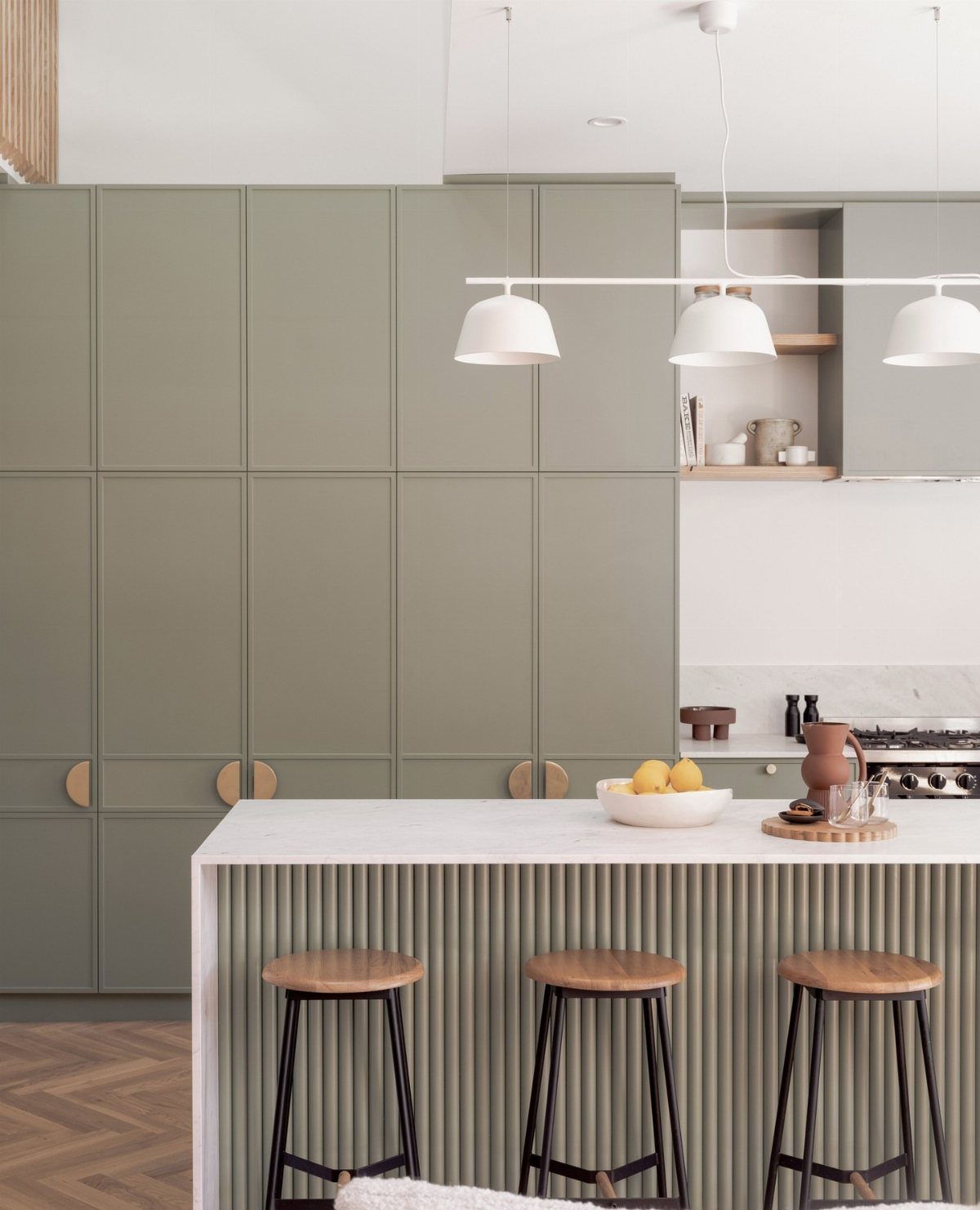
Brass hardware is the cheapest way to make green cabinets look expensive. Round pulls cost a fraction of what new doors do and change the whole look in an afternoon.
Moss green has a yellow undertone, and brass picks it up. I would choose a warm brass over a polished, shiny one, because it sits more softly against the paint.
A pale island in white marble or a look-alike stops the green from swallowing the room. If marble is out of budget, a white quartz slab gives you the same contrast.
4. Two-Tone Kitchens
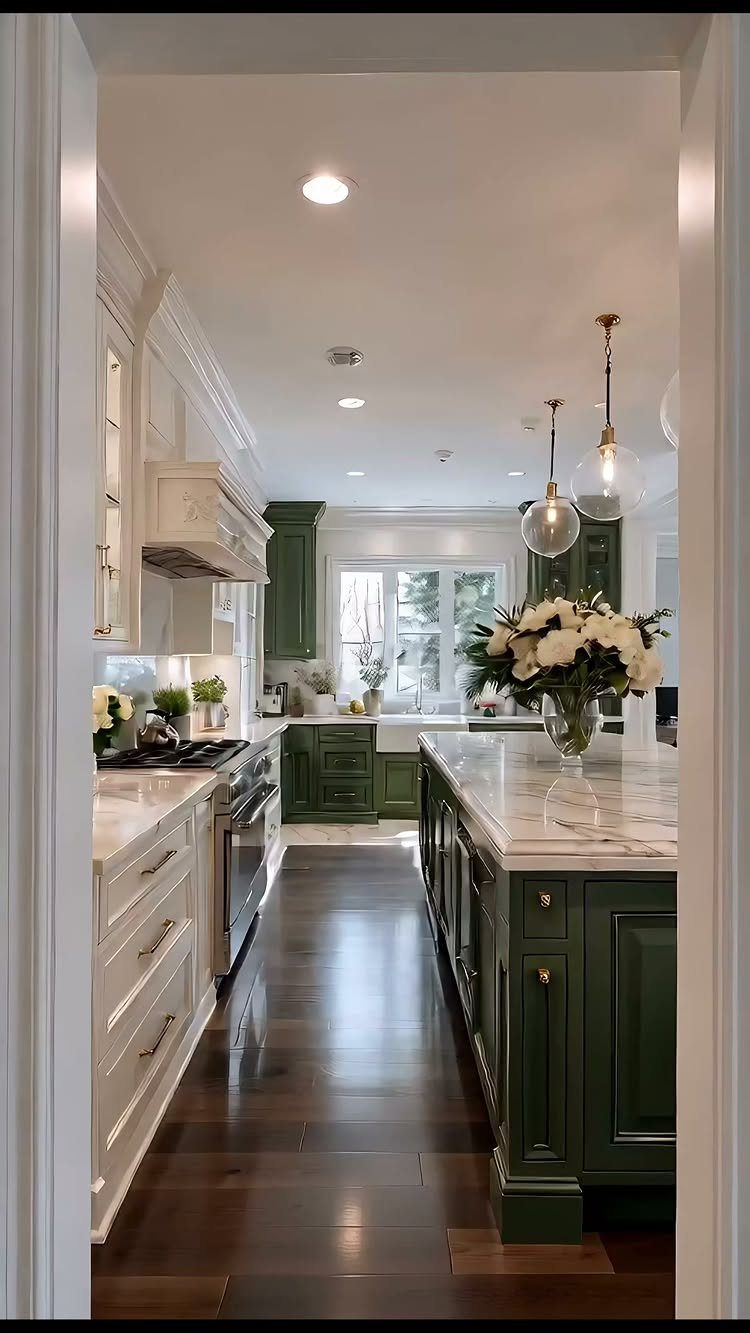
Dark on the bottom, light on top: that is the whole rule, and it works because the heaviest color sits closest to the floor.
Moss green base cabinets and an island ground the room, while white uppers keep the walls open.
If all-green feels like too much in a tight space, this is the layout I’d pick. Paint only the lowers and you cut the cost of the project roughly in half.
Keep the countertop pale, as marble is here, so the 2 tones have a bright surface between them. Dark wood floors add depth if the room has enough light.
5. Earthy Green Cabinets
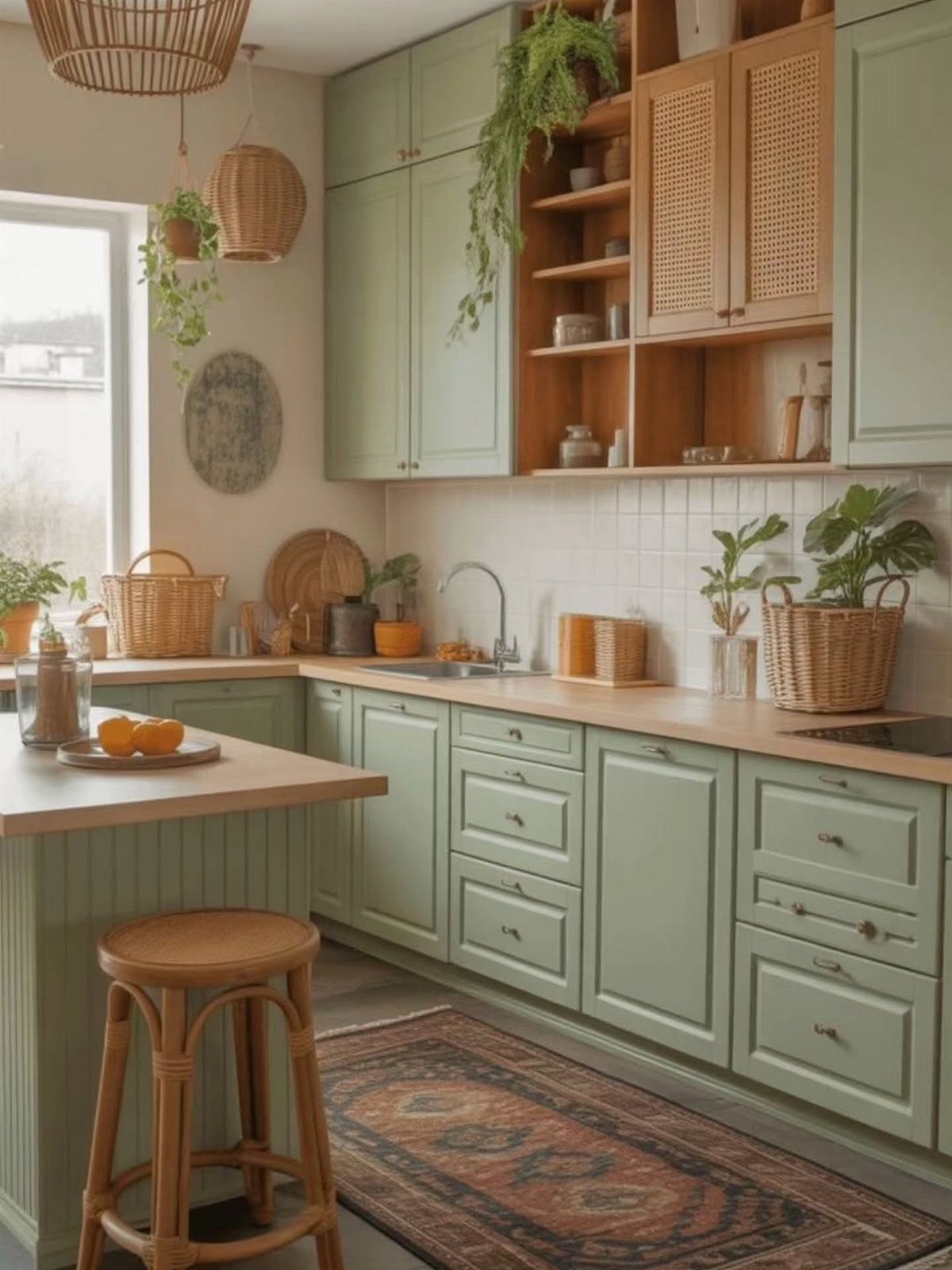
Moss green kitchen cabinets are a strong pick when you want a color with real depth.
The green in this kitchen is softer, closer to sage, but the approach carries over: surround it with natural materials.
Light wood counters, open wooden shelves, woven baskets and a few plants all make the color feel grown rather than painted.
If you want the deeper Oakmoss, test a large sample on a door first. Dark greens can look almost black at dusk and much softer at breakfast, so test a sample on the cabinet itself before committing.
6. Shaker Moss Cabinets
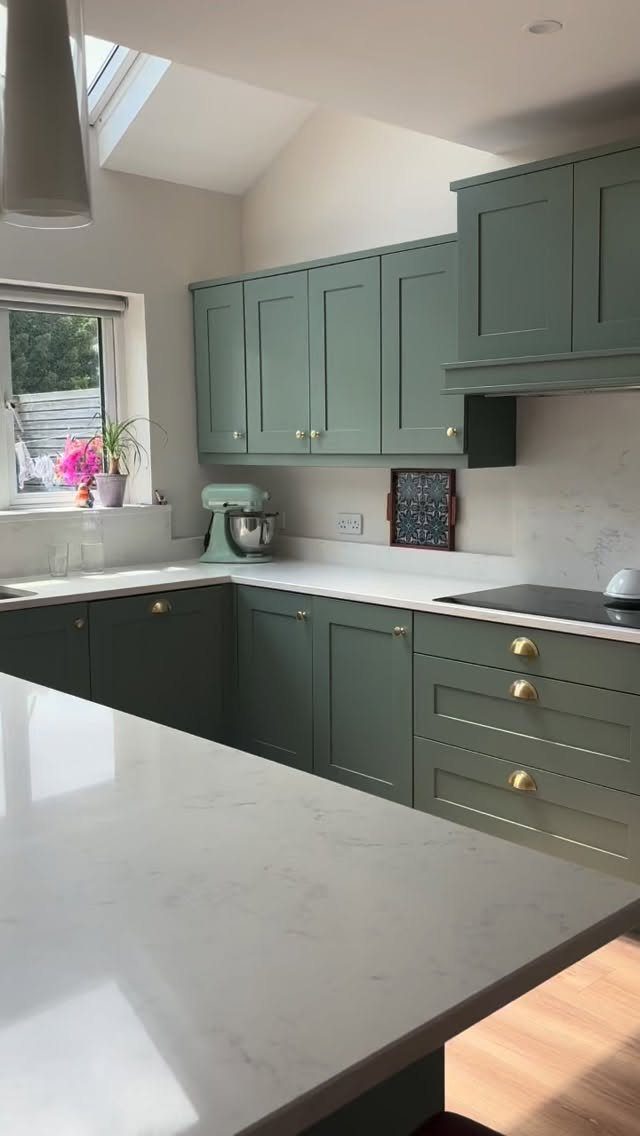
Shaker doors are a flat panel in a simple frame, and they suit nearly any green because the shape stays out of the way. The color does the talking.
That plain profile is also why Shaker is easy to buy and easy to paint. Stock doors are widely sold, so a budget refresh can mean new doors in moss green over existing boxes.
Choose one hardware finish and stay with it across every door and drawer.
7. Oakmoss Cabinets
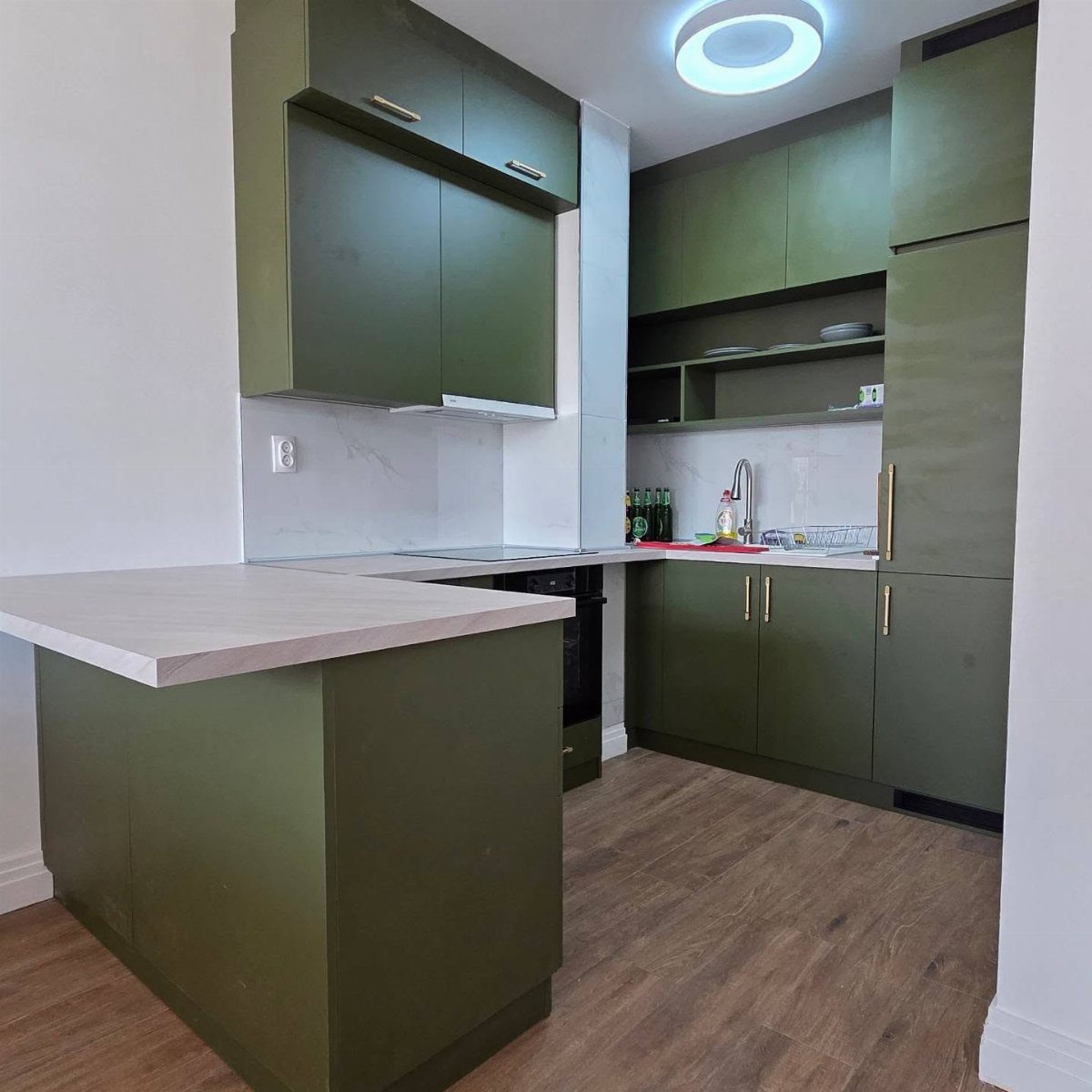
Oakmoss is the deeper, browner cousin of moss green, an olive that leans toward bark and wet earth. That muted tone is what gives it a grounded, quiet sophistication.
Dark olive next to pale surfaces stays calm instead of heavy.
Brush a large sample onto a door and look at it morning and night before you order. Oakmoss shifts a lot with the light, and a small chip on a card won’t show you that.
Maintaining Moss Green Cabinets
Finish decides how much wiping you’ll do.
If you want gloss in a narrow kitchen for the extra light, keep the hardware simple and the backsplash a lighter stone. Fewer pulls and a pale, easy-to-wipe surface behind the counter make the upkeep lighter.
For technical detail on sheen and wear, the Paint Quality Institute publishes research on both. Check how the finish holds up to wiping and handling if the doors sit where your family passes through all day.
Countertop Pairings
White quartz with veining is the safest pairing. It lifts the whole room and keeps the cabinets from reading heavy, and a marble-look version or a warm cream does the same work.
Butcher block suits the earthy side of the color, especially a deeper olive. Warm oak does the same job, so match the wood tone to your floor.
Black granite is the high-contrast move. It makes a dramatic kitchen, but I would save it for a room with plenty of daylight.
Set a sample against the cabinet door in the actual light of the room, then decide.
Design Styles for Moss Green
Moss green is versatile. It fits modern, Scandinavian, farmhouse and transitional kitchens, as long as the materials around it match the style.
Hardware does a lot of that steering. Brass adds warmth, matte black adds contrast, and brushed nickel stays neutral, so choose by the mood you want.
Small kitchen?
Dark moss still works. Use it on lower cabinets only, or let it run across one wall as an accent, and bring in glass or polished metal to bounce light back into the space.
As for trend versus timeless, it’s popular right now, but it leans timeless because it comes from nature and adapts to many designs.
Green is mercifully easy to match with your existing finishes and fixtures, and a verdant coat on your cabinets is a surefire way to create a look that’s both trend forward and classic.
Frequently Asked Questions
What are some good green paint colors for kitchens?
Oakmoss sits deeper in the olive range, pulling toward bark and wet earth when moss green feels too light.
Sage is a softer option. Paint a full cabinet door and live with it for a few days before you commit to the rest.
Can you use moss green on kitchen cabinets?
Yes, and it works well with the right pairings.
Warm wood counters, brass hardware and pale surfaces like white quartz keep it from feeling heavy. If you’re painting existing cabinets, repainting costs far less than replacing them, and painting only the lowers cuts the cost roughly in half.
What is the most popular cabinet color right now?
The color stays current because it borrows from the outdoors, which means it ages better than most trends.
That makes it a lower-risk choice than a color tied to one trend. Pairing it with natural materials keeps it from looking dated.





