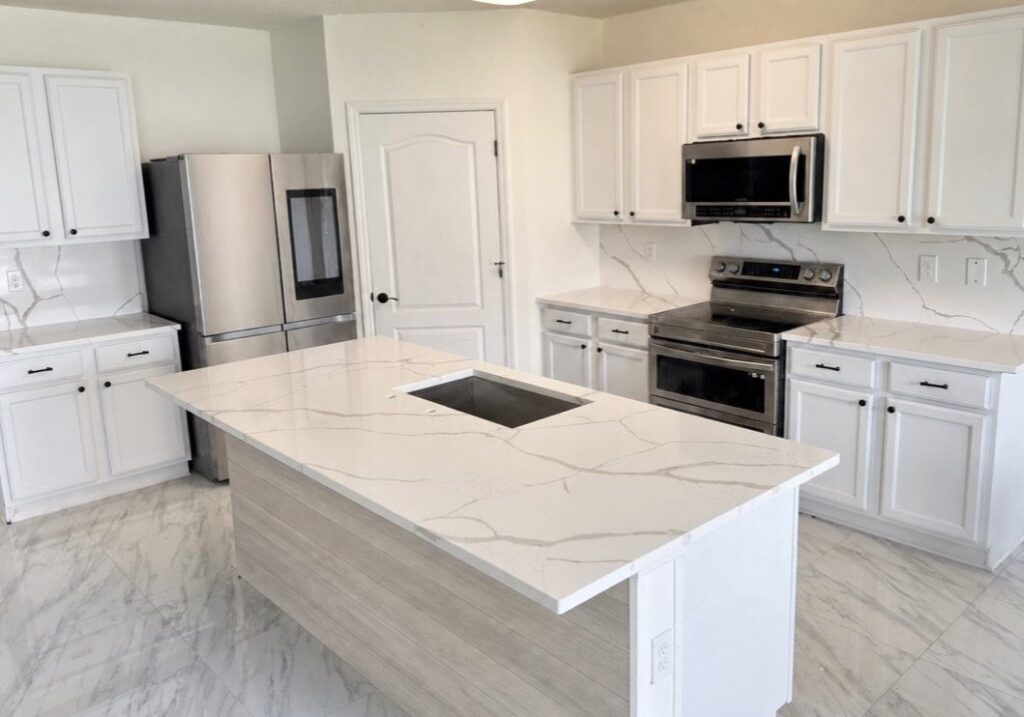
The counter that works depends on your cabinet’s white: warm, cool or somewhere between. The counter works when it matches the cabinet’s temperature or stands apart deliberately.
The range runs from marble and granite that need regular care to wood and black surfaces that each bring different upkeep. Test a sample on your counter in morning light and again at night to see how it shifts.
1. Marble Countertops
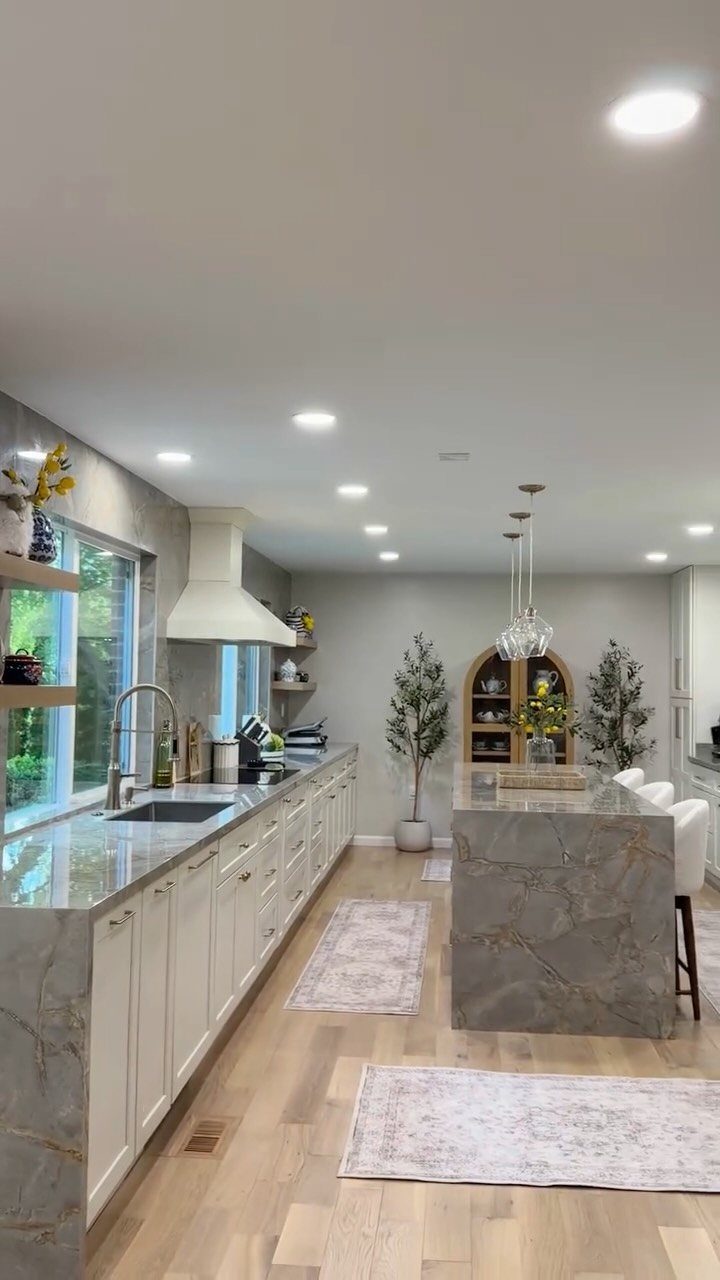
Grey veining against white cabinets is the pairing I’d pick when a kitchen needs depth without adding color.
The cool tone of the stone ties in with a white range hood, and light wood floors warm up the room so it doesn’t read as cold.
Carrying the same slab across the perimeter and the island looks calm and expensive.
Marble is a premium material, so price a smaller island or a single run of counter before committing to every surface. Ask for a sample and check it beside your cabinet paint in daylight.
2. Black Countertops
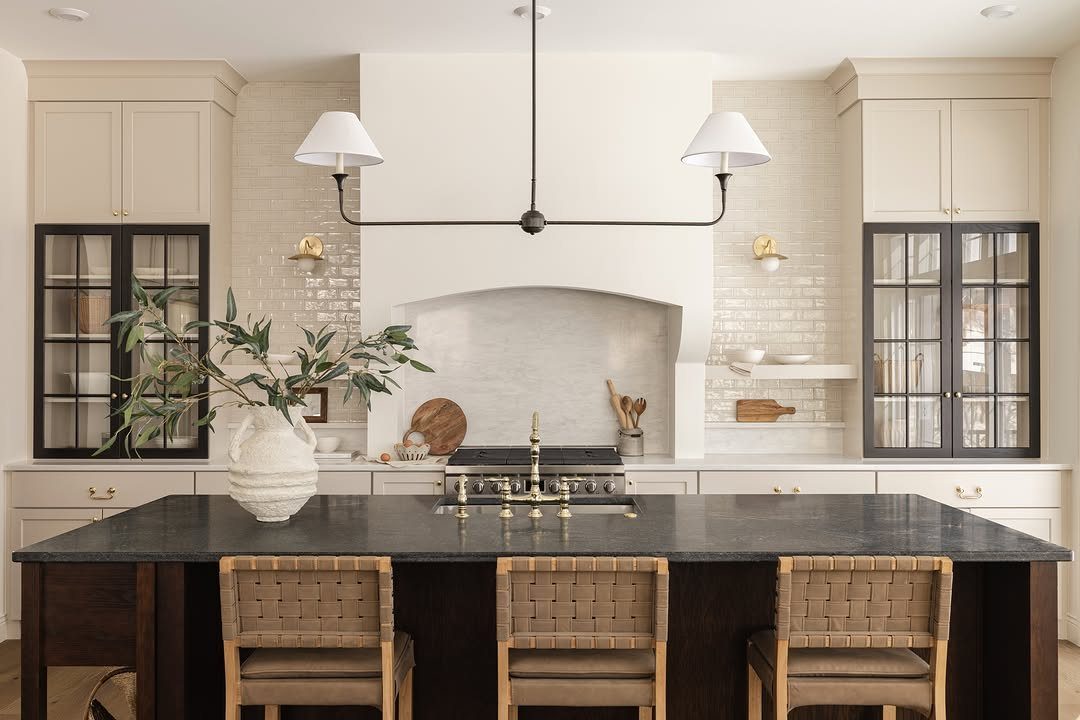
A black island against white cabinets is the strongest contrast a kitchen can take, and it only needs one piece to do it.
Keeping the dark surface to the island lets the perimeter stay light, so the room reads bold but not heavy.
Woven stools soften all that black, and I like that choice.
Pick a matte or honed finish if you can, since a glossy dark surface tends to show every smudge. Hang a black pendant above it so the island feels planned.
3. Granite Countertops
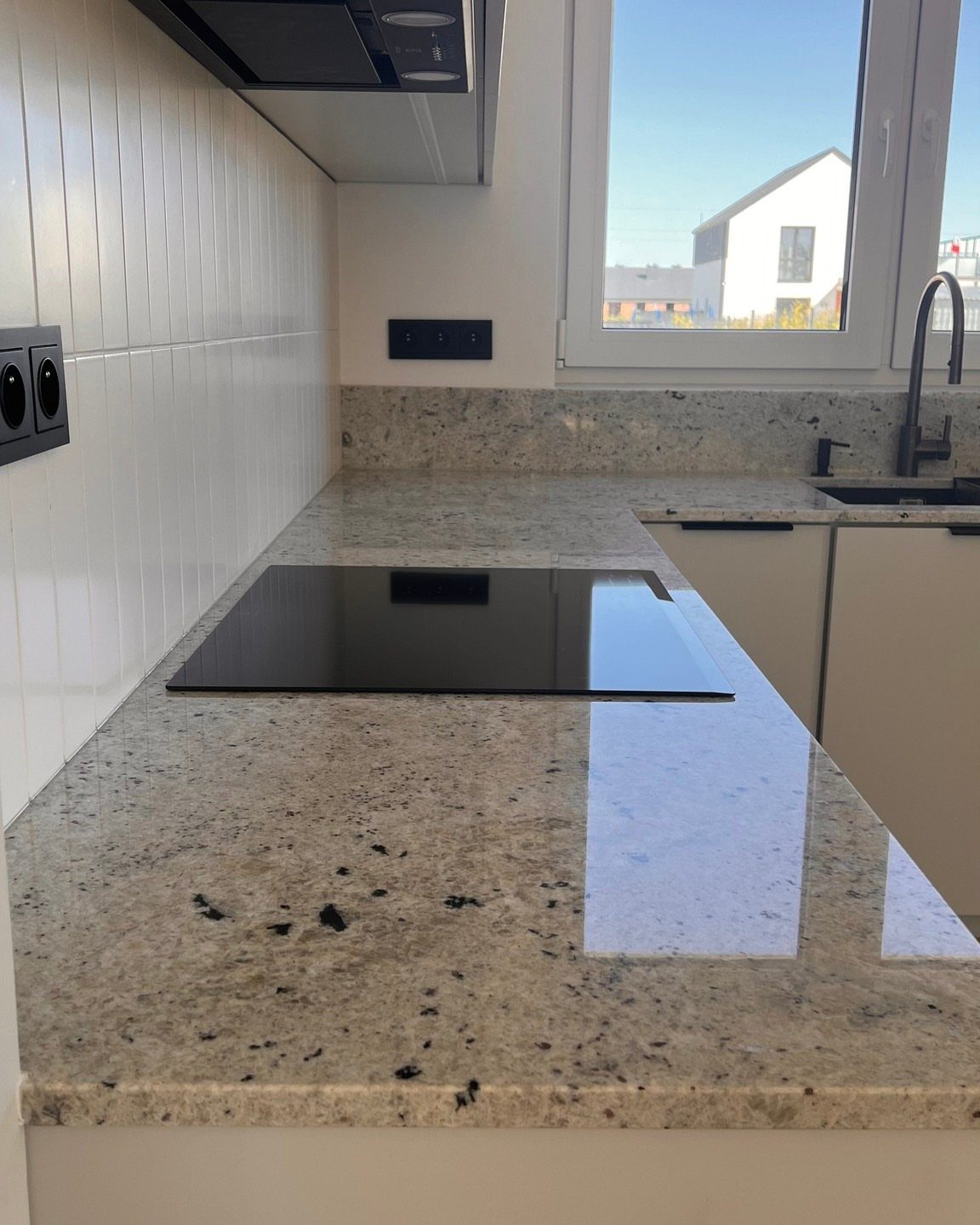
Speckled granite is the practical pick: a light, flecked slab hides crumbs and small marks better than a plain solid color. Against white cabinets it reads quietly traditional, and a black cooktop sets into it cleanly.
Choose a fine, even speckle if you want a calm look; large, busy patterns fight with white cabinets.
Ask to see a full slab, not just a small sample, because the pattern shifts across the stone. Granite is a long-term choice, so pick a shade you’ll still like years from now.
4. White Countertops
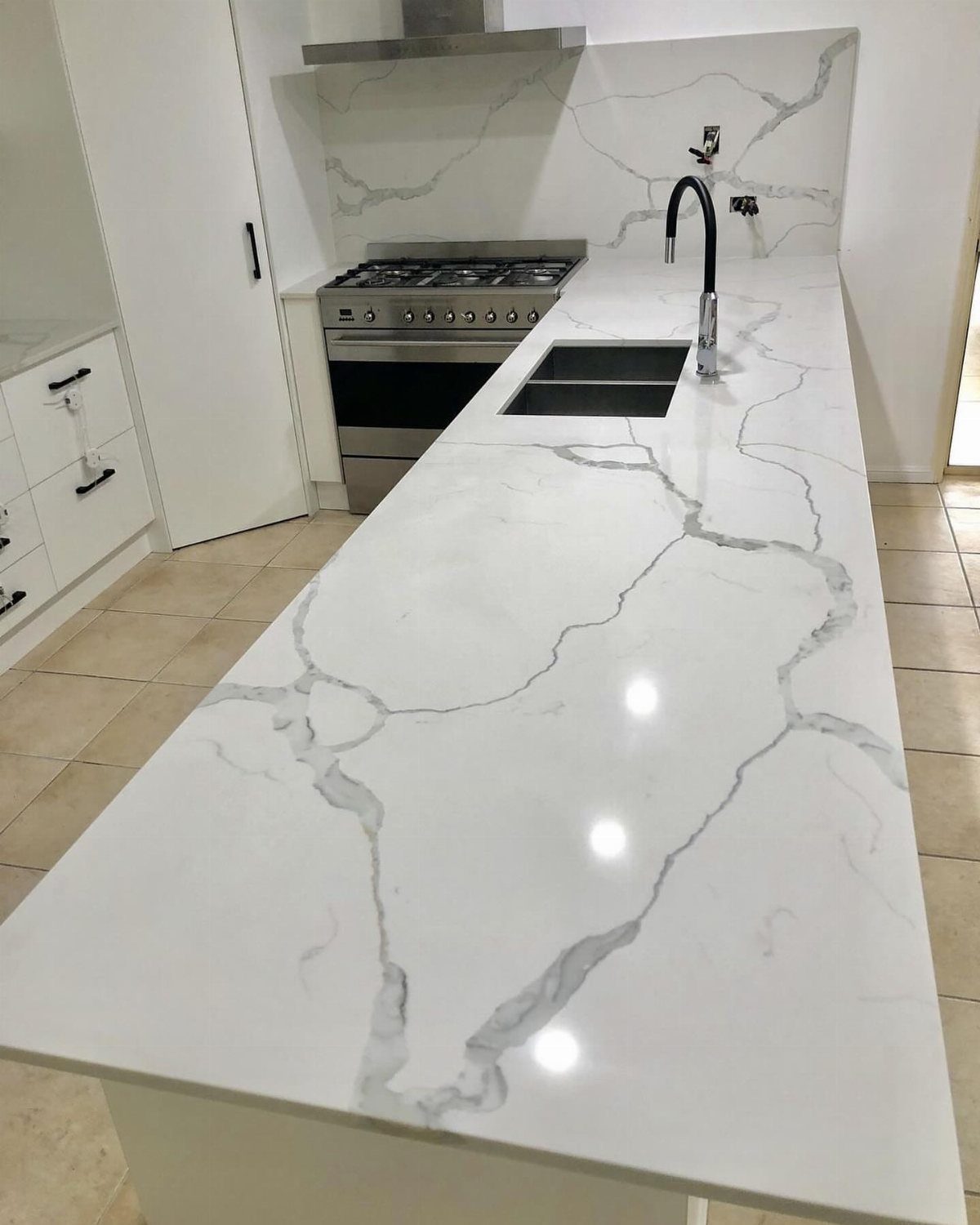
White counters with soft grey veining make a small kitchen feel larger, because the surface and the cabinets bounce light together. Quartz gives that marble-style look in a material that is made for kitchens.
I’d run the same pattern up the wall as a backsplash, which keeps the lines uncluttered.
Black fixtures, like a matte black faucet, keep an all-white counter from going flat. Hold each sample against your cabinet color before buying, because a warm white next to a cool one can look dingy.
5. Wood Countertops
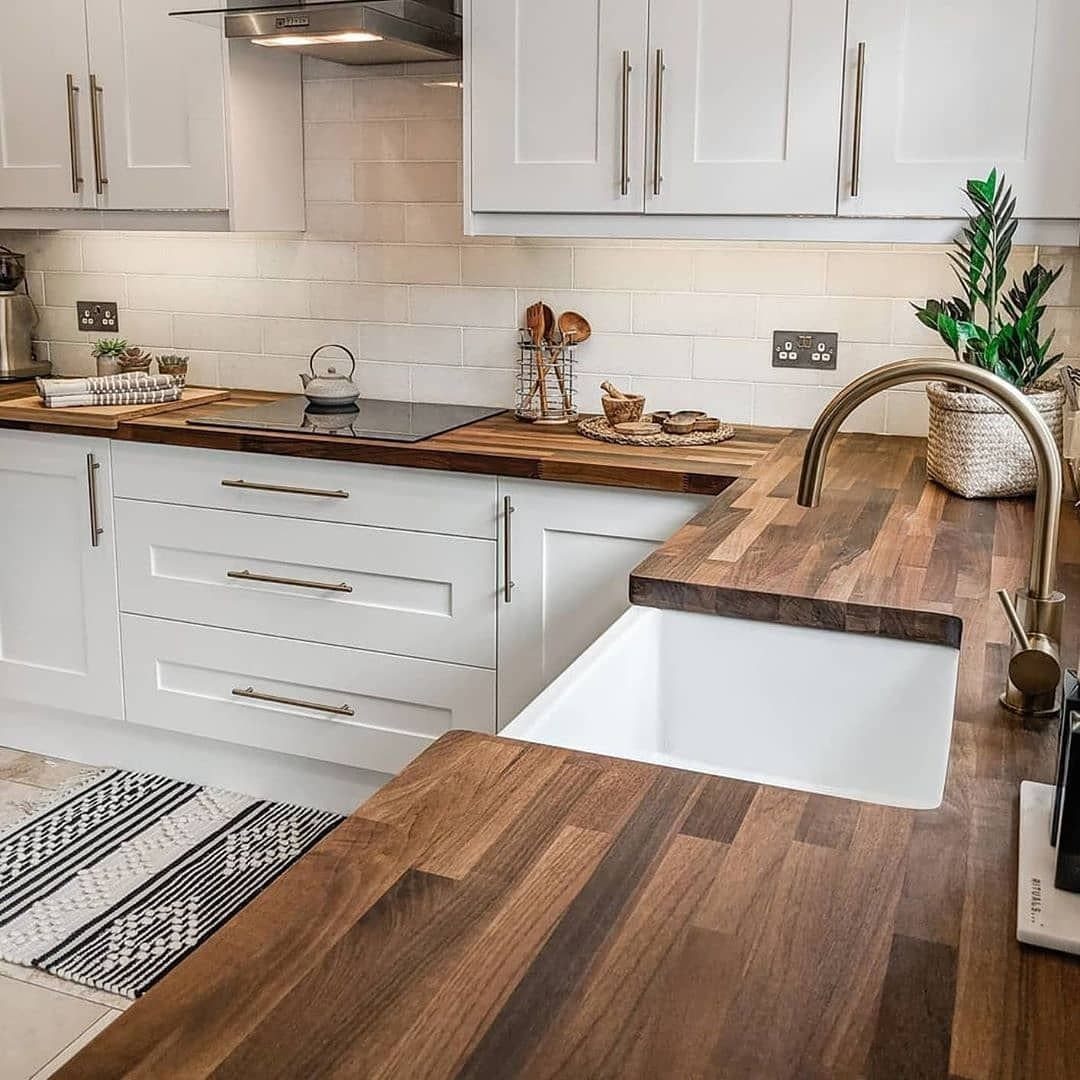
Dark butcher block brings the one thing white cabinets lack: warmth you can see and touch. It also pairs well with a farmhouse sink, where the wood and the white basin sit side by side.
Wood is a softer surface than stone, so I’d keep a trivet near the stove and wipe up water around the sink quickly.
Sealing the top with a food-safe finish is worth the time. It is also the friendliest option for a budget project you do yourself.
6. Brown Marbled Countertops
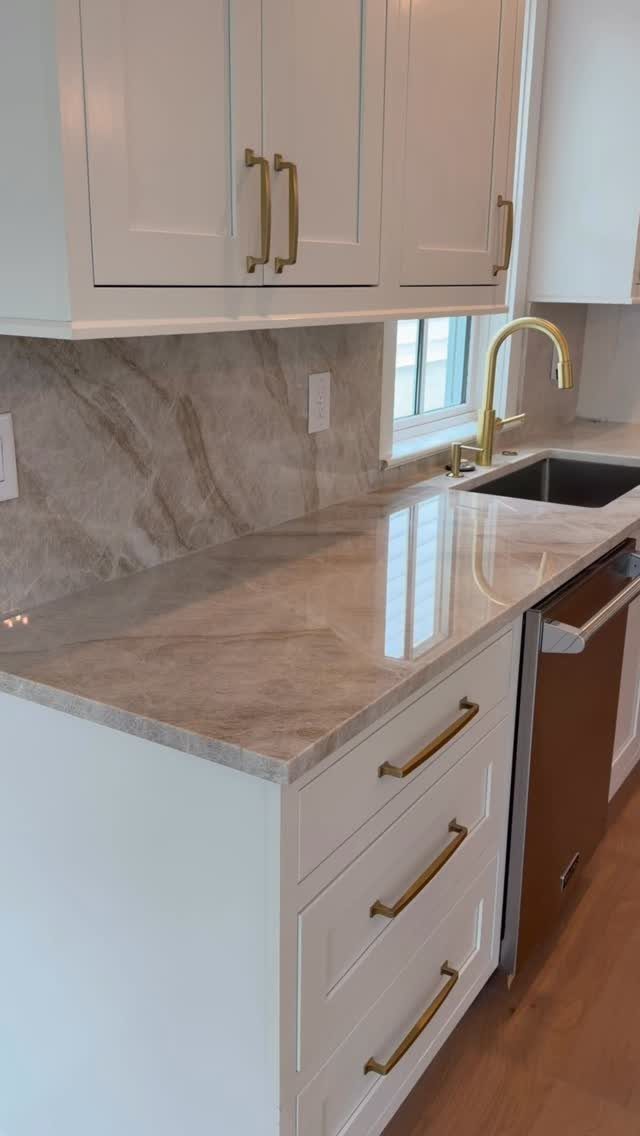
Brown and beige marbling suits white cabinets that want to look warmer and a bit richer. Gold hardware and a gold faucet pick up the golden tones in the stone, so the metal looks chosen rather than added.
Carrying the same slab up as a backsplash makes the counter feel like one built piece.
I’d limit the metals to gold so the stone stays the focus. Check a sample under your own lighting first; warm stone can look very different at night.
Choosing Countertop Colors
Start with the undertone of your white cabinets, because that decides which countertop colors look intentional. Whites run warm (creamy, yellowish), cool (bluish, crisp) or neutral, and the countertop should lean the same way or sit clearly apart from it.
Neutral choices like whites, grays and beiges stay quiet, and light stained wood is just as soft.
Darker stone or wood gives strong contrast instead. A concrete or laminate counter gives white cabinets a modern, slightly industrial look, and it will usually draw the eye first.
Light shifts how every counter color reads, so tape a sample to your own counter and check it at 8 a.m. and again after dark.
Before you pick a color, decide what the surface has to do: heat and scratch resistance, easy cleaning, a certain texture.
Then check the price. A color you love in a material you can’t afford or maintain won’t last.
Maintenance Considerations
Maintenance is where countertop choices get decided after the looks are settled.
Quartz and laminate are the low-effort options: wipe them down and you’re mostly done. Quartz holds up better than natural stone, since it’s engineered and doesn’t need sealing.
Marble asks more of you. Marble and other soft natural stones need sealing on a schedule, and acid from lemon juice or wine will etch and stain them quickly in a kitchen that gets daily use.
If you love the look but cook a lot, I’d take quartz and skip the worry. If you choose marble anyway, wipe spills quickly and keep a sealing date on your calendar.
Granite sits in between: durable, and available in a wide range of colors.
Mixing Materials
Splitting materials lets each surface do the job it’s best at. A common setup is butcher block on the island and a tougher surface like quartz on the main counters, where the sink and stove take the abuse.
Wood tone matters. Maple and oak keep the look light and casual; walnut brings deeper contrast, and next to it white cabinets read crisper.
Keep it to 2 materials so the kitchen looks planned. Pick one material to lead, usually whichever covers the bigger run, and give the second a smaller role as the accent.
Bring a sample of each to your cabinets and set them side by side before you order.
Frequently Asked Questions
What kind of countertop goes with white cabinets?
Nearly any material or color works with white cabinets, so the choice comes down to your taste, your budget and what the surface has to do.
Start with the undertone of the white: warm (creamy), cool (bluish) or neutral. Pick a countertop that either matches the cabinet undertone or contrasts it intentionally.
What color countertops make a kitchen look bigger?
Light colors do it best: white, cream or light gray.
Light counters with subtle veining reflect light back into the room alongside white cabinets, which opens up tight spaces. Quartz delivers marble’s movement in a surface that holds up to daily use.
What is in style for kitchen counters?
Granite, quartz, laminate and wood are the most popular materials for kitchens with white cabinets.
In look, white counters with soft veining and bold dark counters are both common. A dark island against pale cabinetry creates contrast, and a matte surface hides fingerprints better than polished stone.





