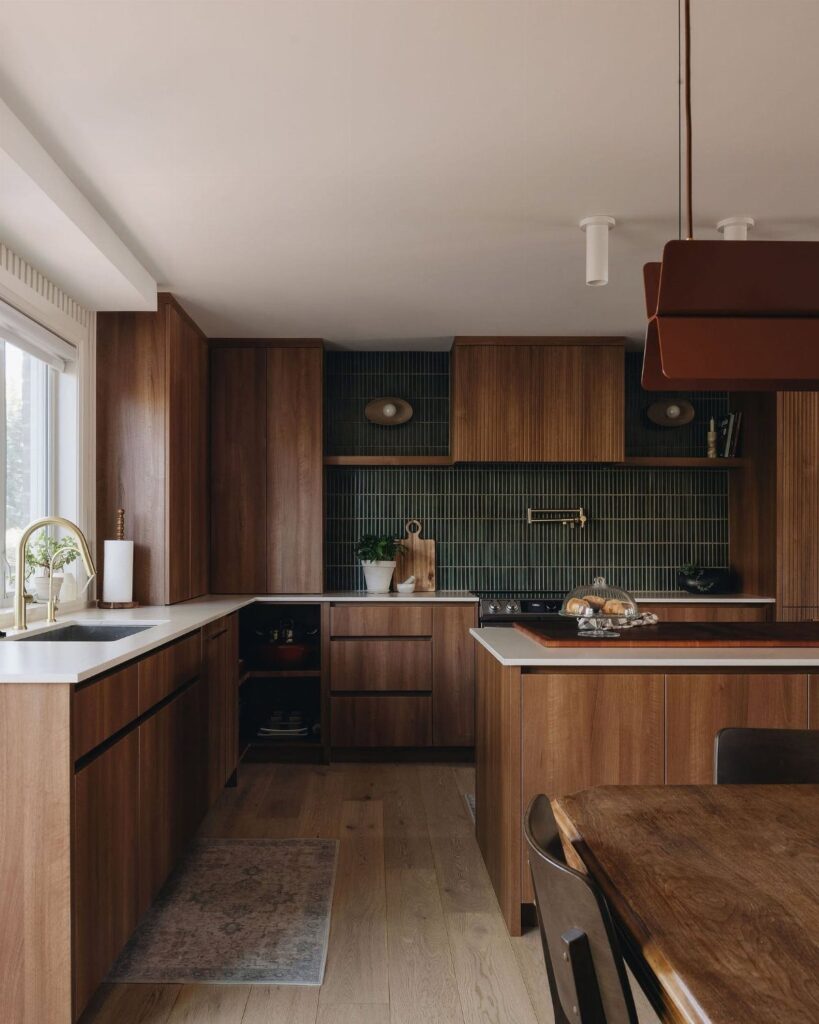
Whether you rent or own decides which of these mid century kitchen ideas is yours: a renter can swap a sputnik chandelier, hardware or stools in an afternoon, while an owner can take on terrazzo, tile or new flat-front cabinets.
Open shelving and flat-front cabinets cost almost nothing if you already have the boxes, while geometric tile and terrazzo sit at the higher end of the budget.
1. Open Shelving
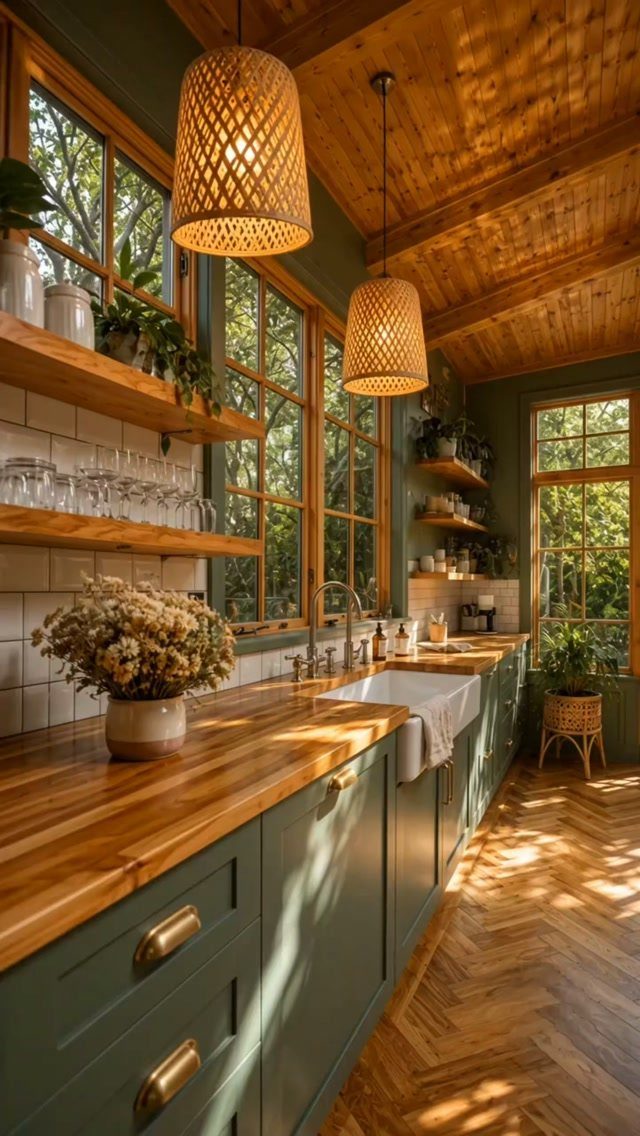
Open shelves suit a mid century kitchen when you treat them as a short display, not a replacement for cabinets.
Wood shelves like the ones here pair well with green cabinets and wood counters because the tones stay in one family.
I would keep to glassware and a plant or two, since that is what stays tidy. Everyday plates and mismatched mugs turn the wall into clutter fast.
If you’re renting, one shelf run in place of a single upper cabinet gives you the look without gutting the room.
2. Geometric Tile Backsplash
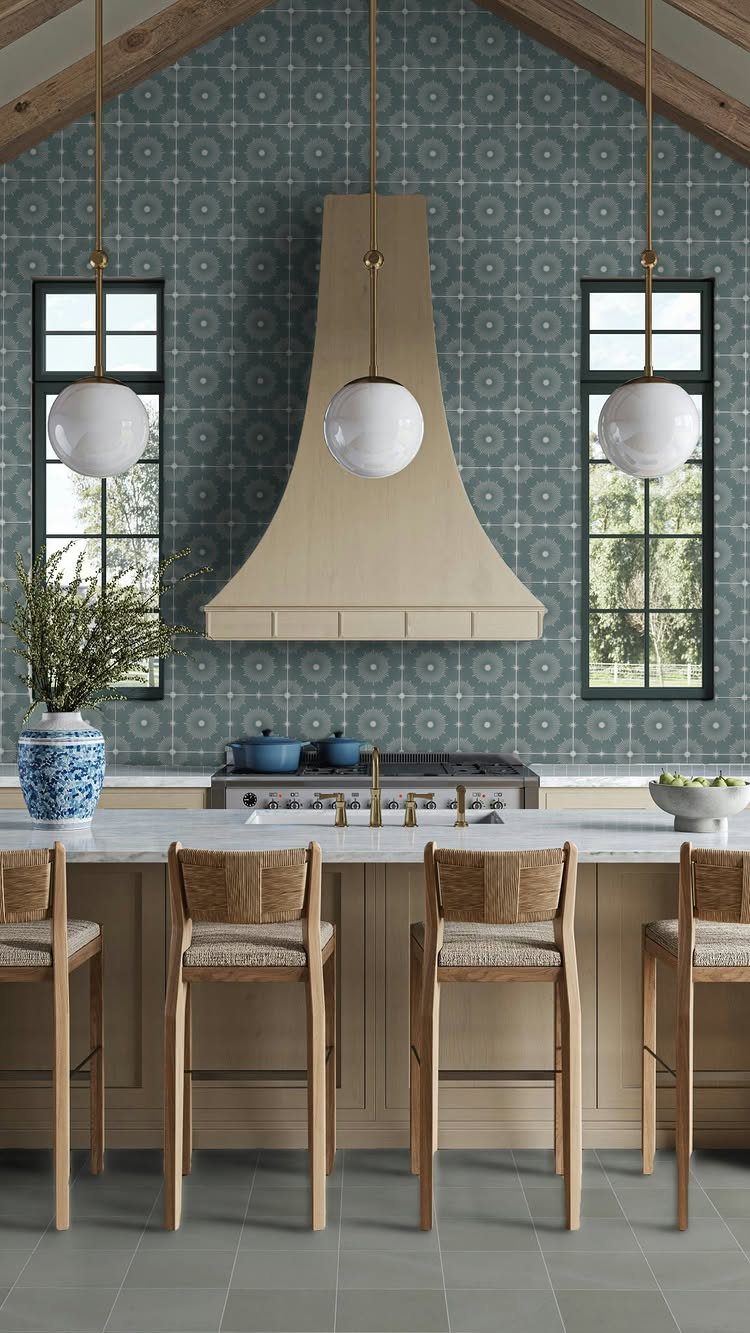
A blue geometric backsplash does the work of art in a kitchen, and it only needs a small stretch of wall. Behind the range is the natural spot, where the pattern becomes the focal point.
I’d keep everything near it quiet: light wood, white marble and simple globe lights. Pattern next to pattern fights.
Tile is the pricier route. On a tight budget, a smaller area, such as just the wall behind the stove, keeps the cost down.
3. Terrazzo Countertops
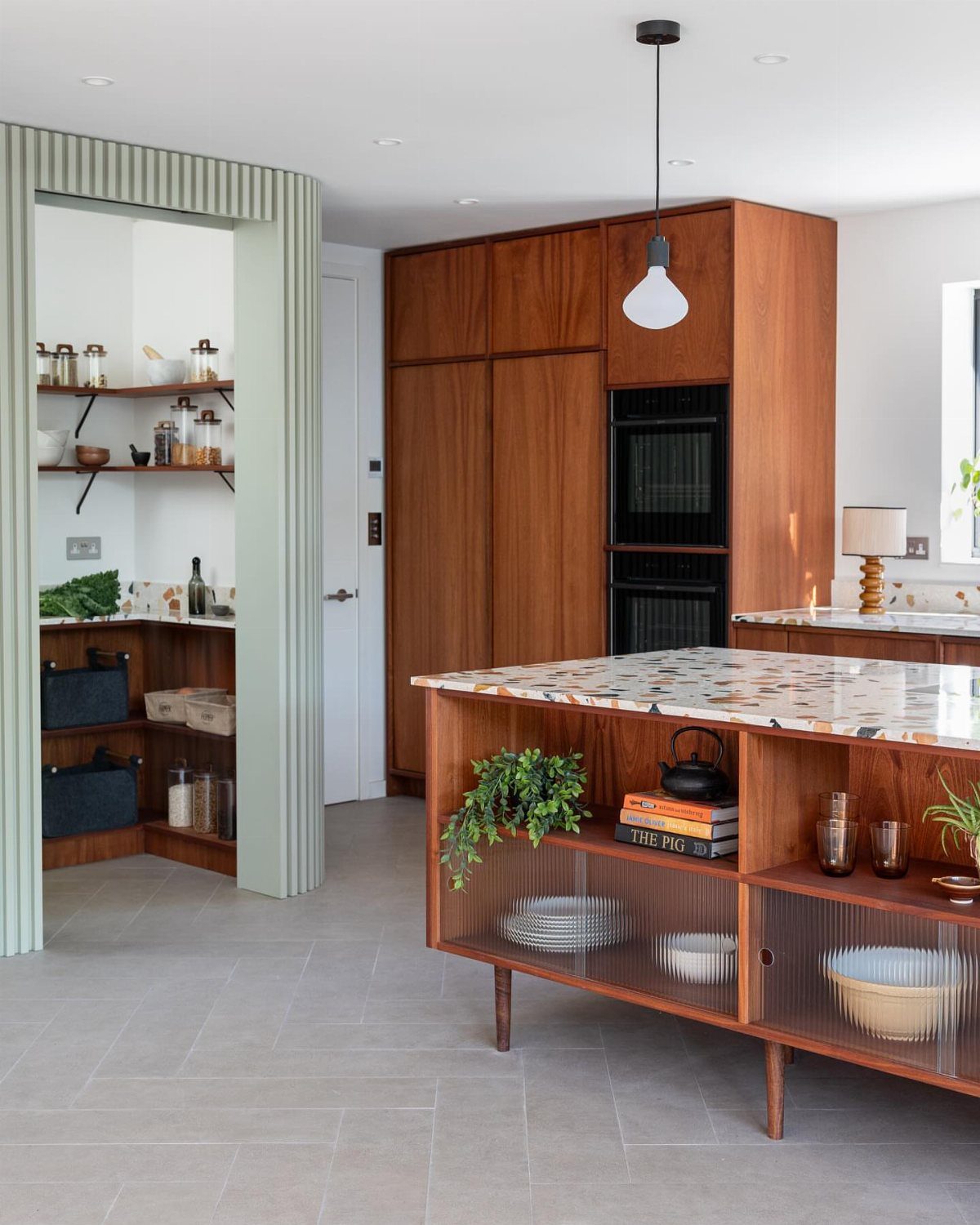
Terrazzo is speckled chips set in a solid base, and it is the most period-correct countertop I recommend for this style. Warm wood cabinets give it the right partner, as the island here shows.
Use it on an island or a short run, not every surface. The speckle already carries plenty of pattern, so I’d keep the cabinet fronts plain.
Real terrazzo costs more than most budgets allow. Look at terrazzo-look laminate or tile if you’re working with a tight budget.
4. Sputnik Chandeliers
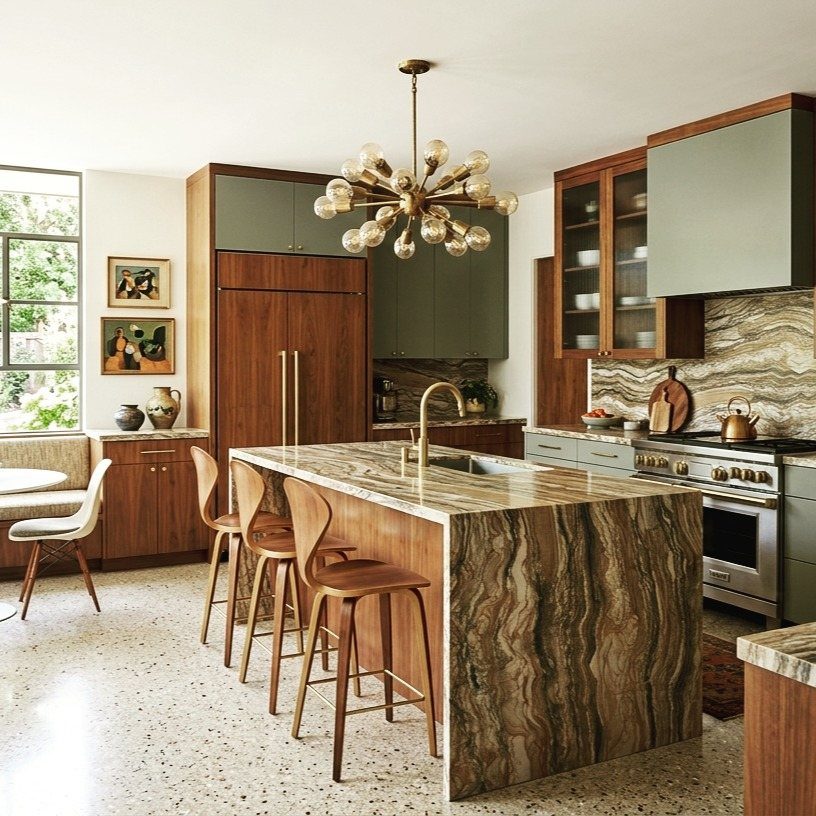
Hang a sputnik chandelier over the island and the room gets its focal point at once. The starburst arms read as unmistakably mid century, and a gold finish like this one warms up green and wood cabinets.
Center it over the island, and give it clear space so the arms don’t crowd people sitting underneath.
It’s one of the easier swaps for a renter or first-time owner: replace a fixture, patch nothing, and the kitchen looks different in an afternoon.
5. Geometric Flooring
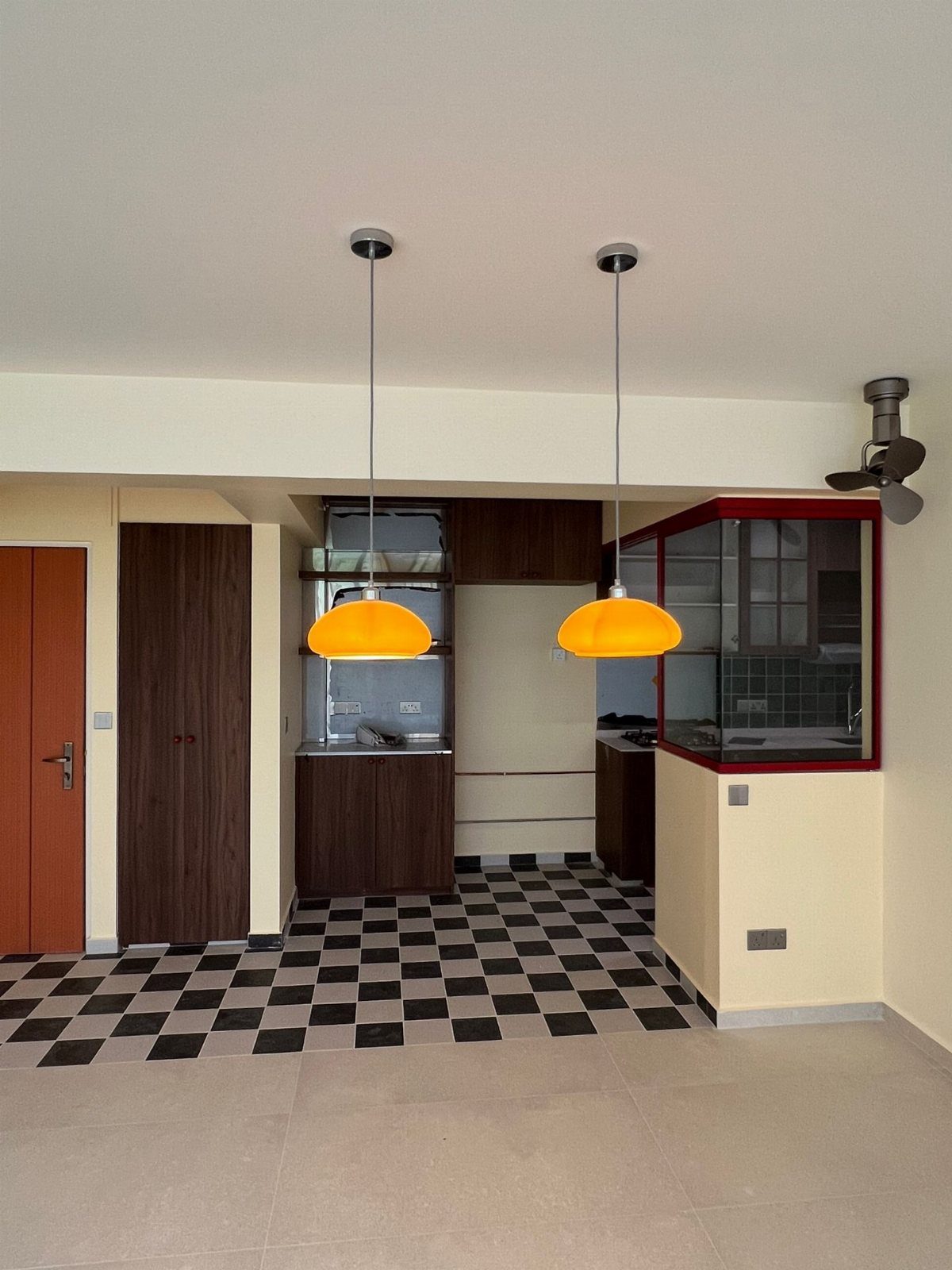
Black and white checkered flooring brings a playful note that suits a kitchen with dark wood cabinets. The crisp contrast keeps heavy wood from feeling gloomy.
I’d let the floor be the loud element and keep walls and counters calm. Yellow dome pendants, as here, add a second pop without competing.
Checkerboard is a big commitment, so check the room size before you buy. Peel-and-stick squares are the cheaper, rental-friendly way to test the look.
6. Flat-Front Cabinetry
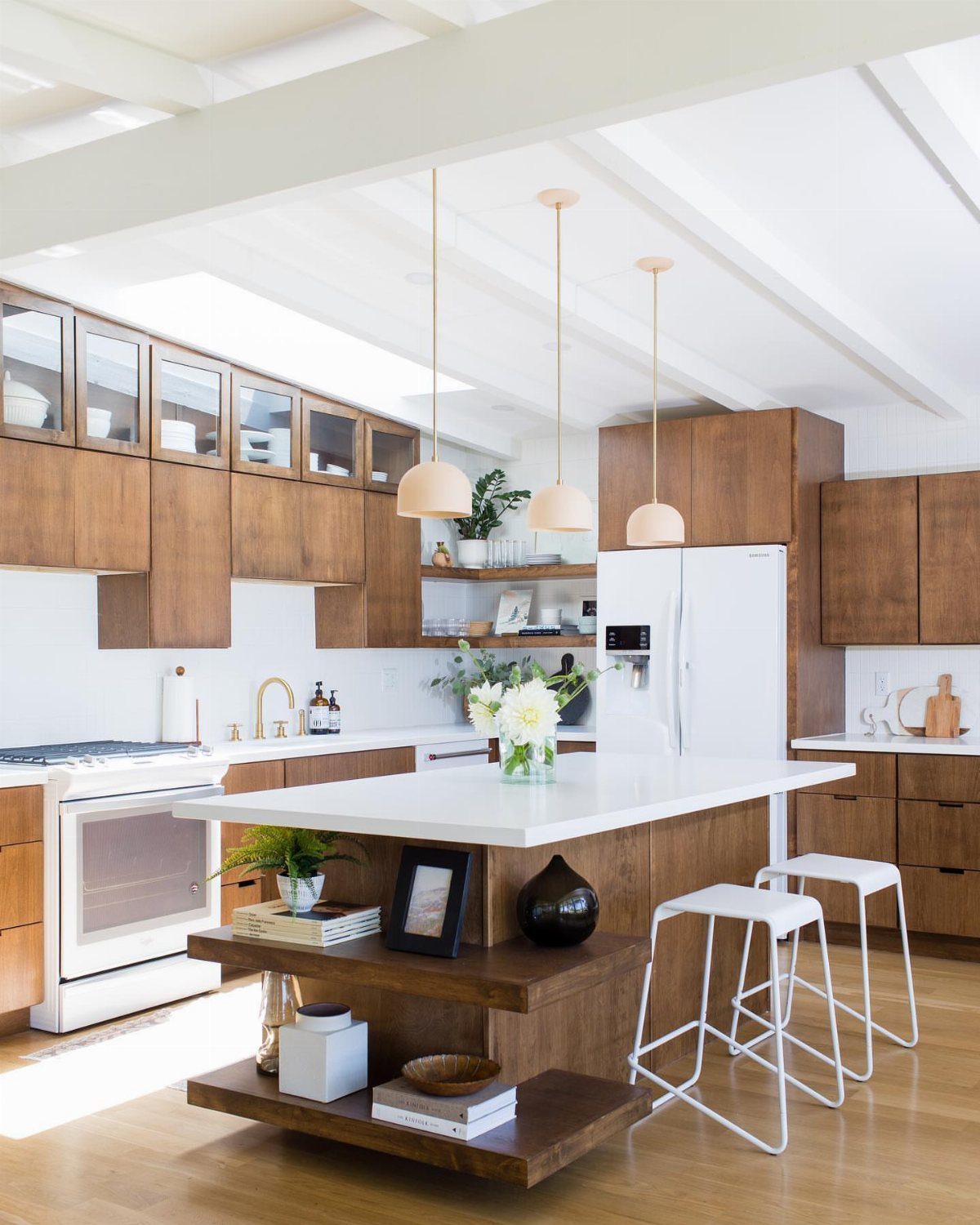
Flat-front cabinets are what make a kitchen read mid century: slab doors, no raised panels, no trim to catch the eye. The clean lines let the wood grain do the talking.
For a budget project, I’d replace doors only and keep the existing boxes. Choose a wood tone and keep hardware minimal, since the simplicity is the whole look.
Pair them with a white island and white appliances, and the room stays bright instead of heavy.
7. Warm Wood Cabinets
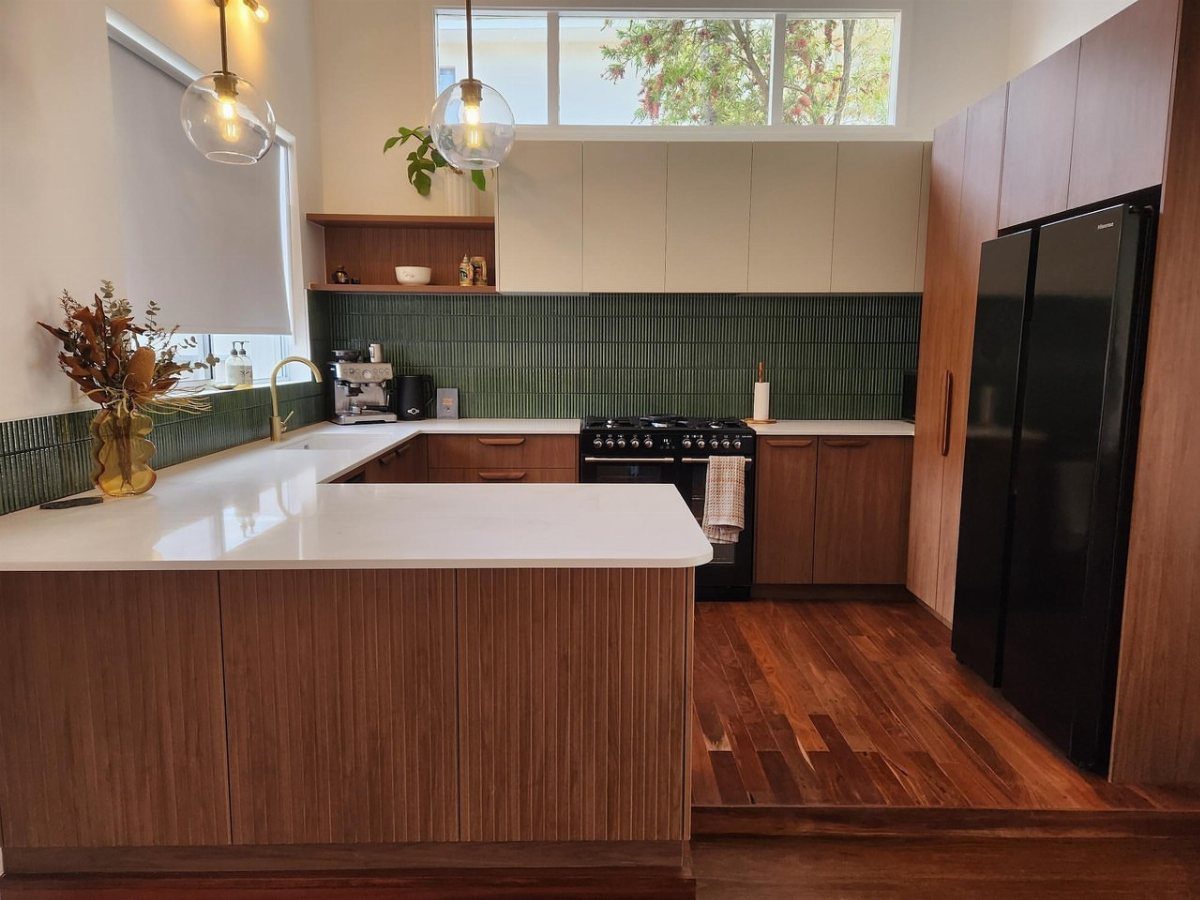
Wood lower cabinets are the easiest way to get a mid century kitchen to feel warm, and they pair especially well with green tile. White countertops keep the wood from taking over.
I’d put wood on the base cabinets only and let the wall stay lighter. Black appliances then read as a deliberate contrast, not a heavy block.
If new cabinets are out of reach, refinishing or replacing the doors is the cheaper way to get the same look.
8. Bold Color Accents
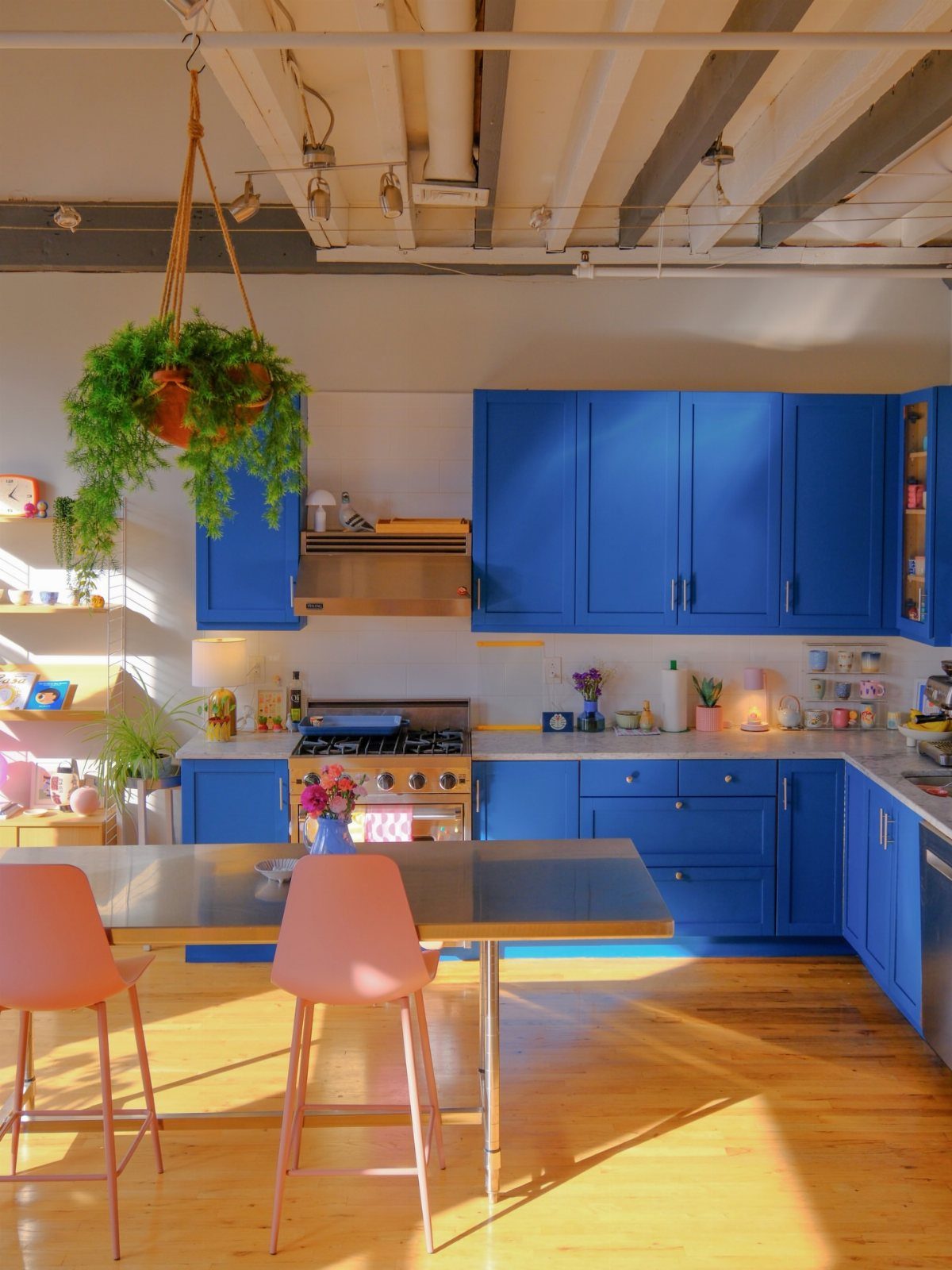
Bright blue cabinets prove a mid century kitchen doesn’t have to stay in browns and creams. One saturated color on the cabinets, then a second, softer one in the seating, gives the room its energy.
Pink chairs against blue are a bold pairing, and I like that the metal table keeps them from feeling sweet. A hanging plant adds green without another purchase of paint.
For renters, chairs and stools are the low-risk place to try color. Painting cabinets is a bigger commitment.
9. Kitchen Islands with Seating
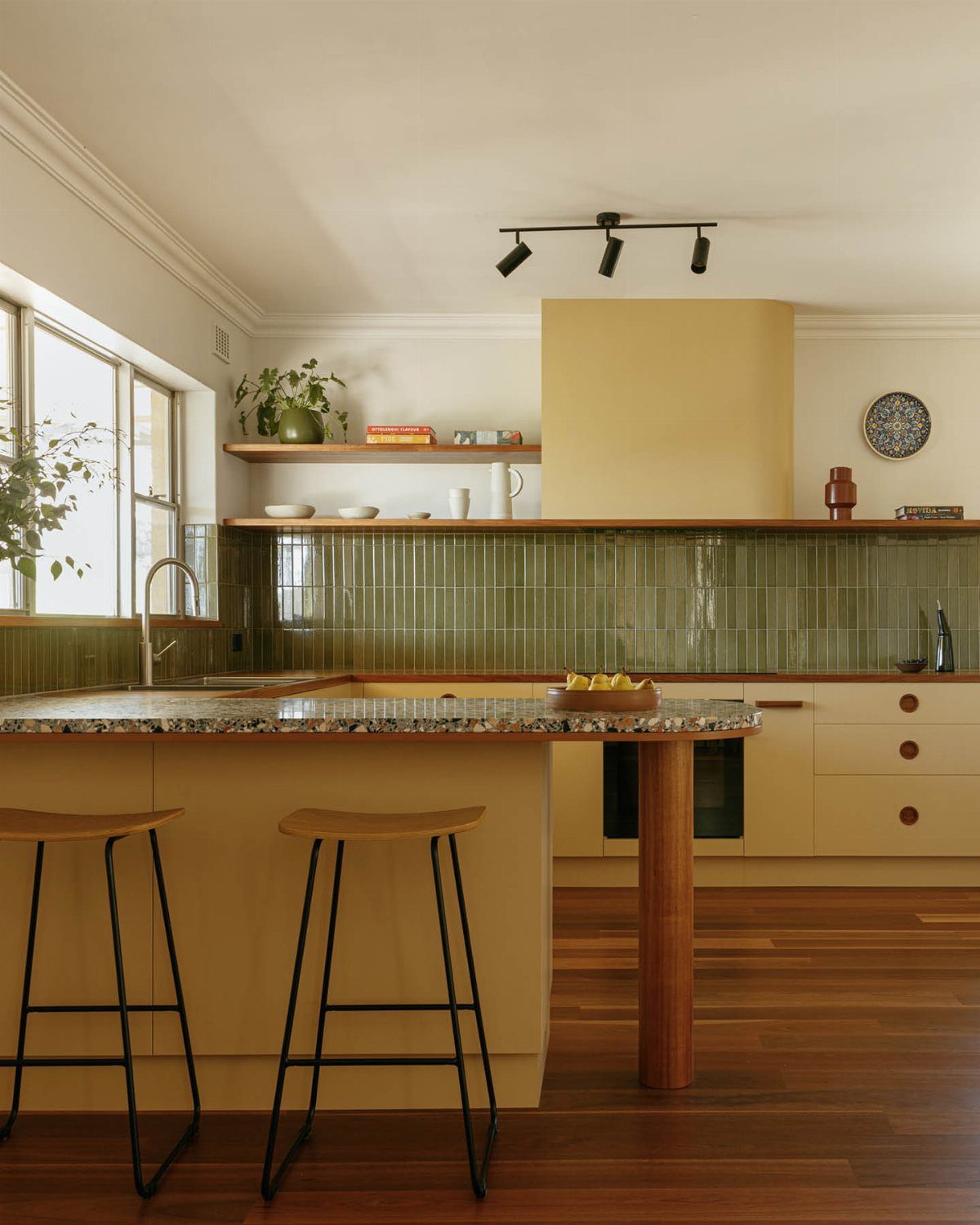
A tan island with 2 stools gives a kitchen a spot to sit down, and it doesn’t need many seats to work. 2 wooden stools match the wood floors and keep the island from feeling crowded.
When the cabinets run bold, a neutral island keeps the layout from feeling busy. It rests the eye between the louder colors.
Choose stools that tuck fully under the counter so walkways stay clear in a small room.
10. Earthy Color Palette
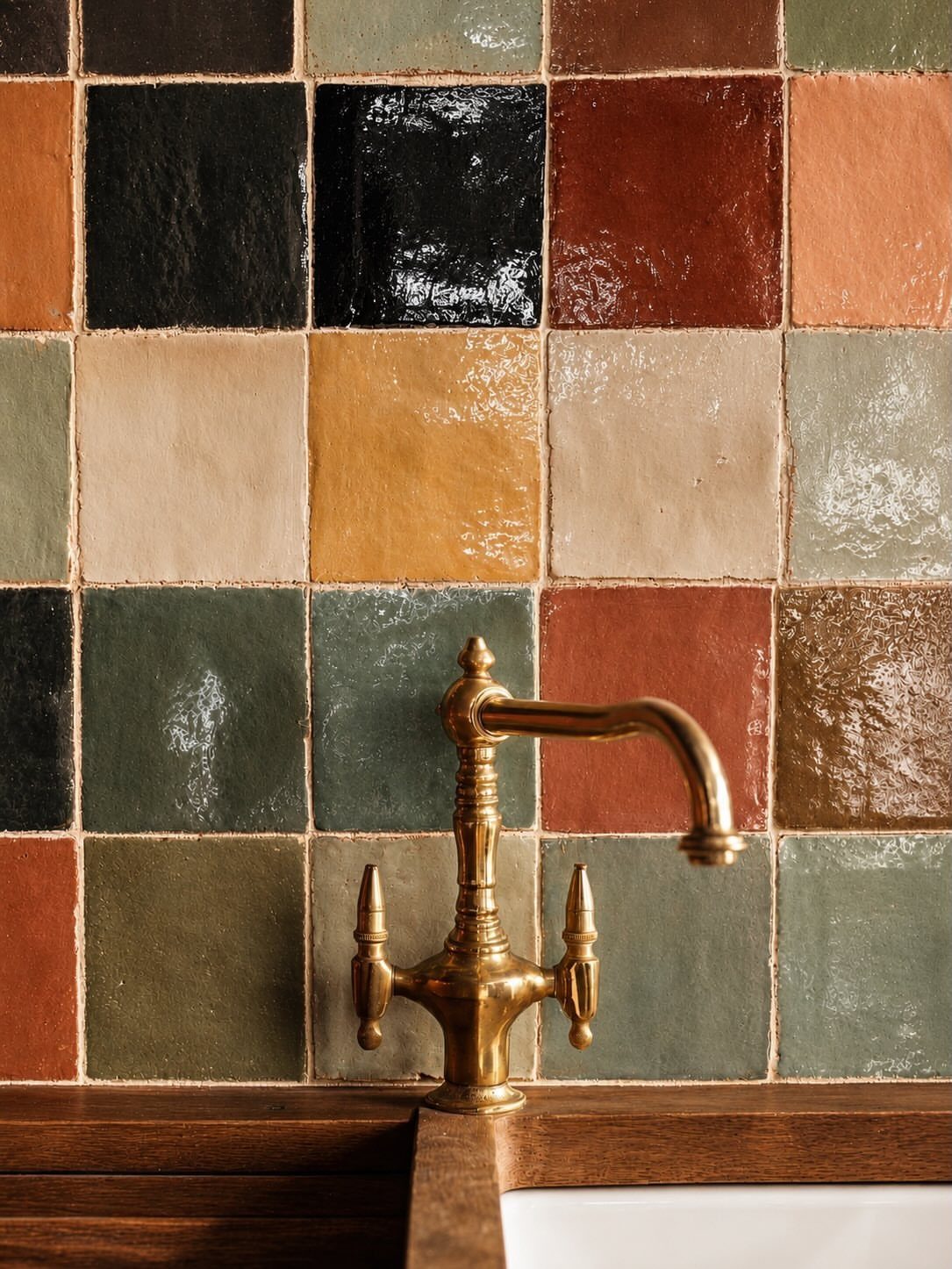
Earthy tones work best when one muted color sits next to something bolder. Glossy square tiles in several earthy shades behind a wood countertop do exactly that, and a white sink keeps the mix from getting muddy.
A small backsplash area is enough to carry the palette.
Tile is the costlier part; paint in muted tones on walls or cabinets is the cheaper way in.
11. Use of Plants
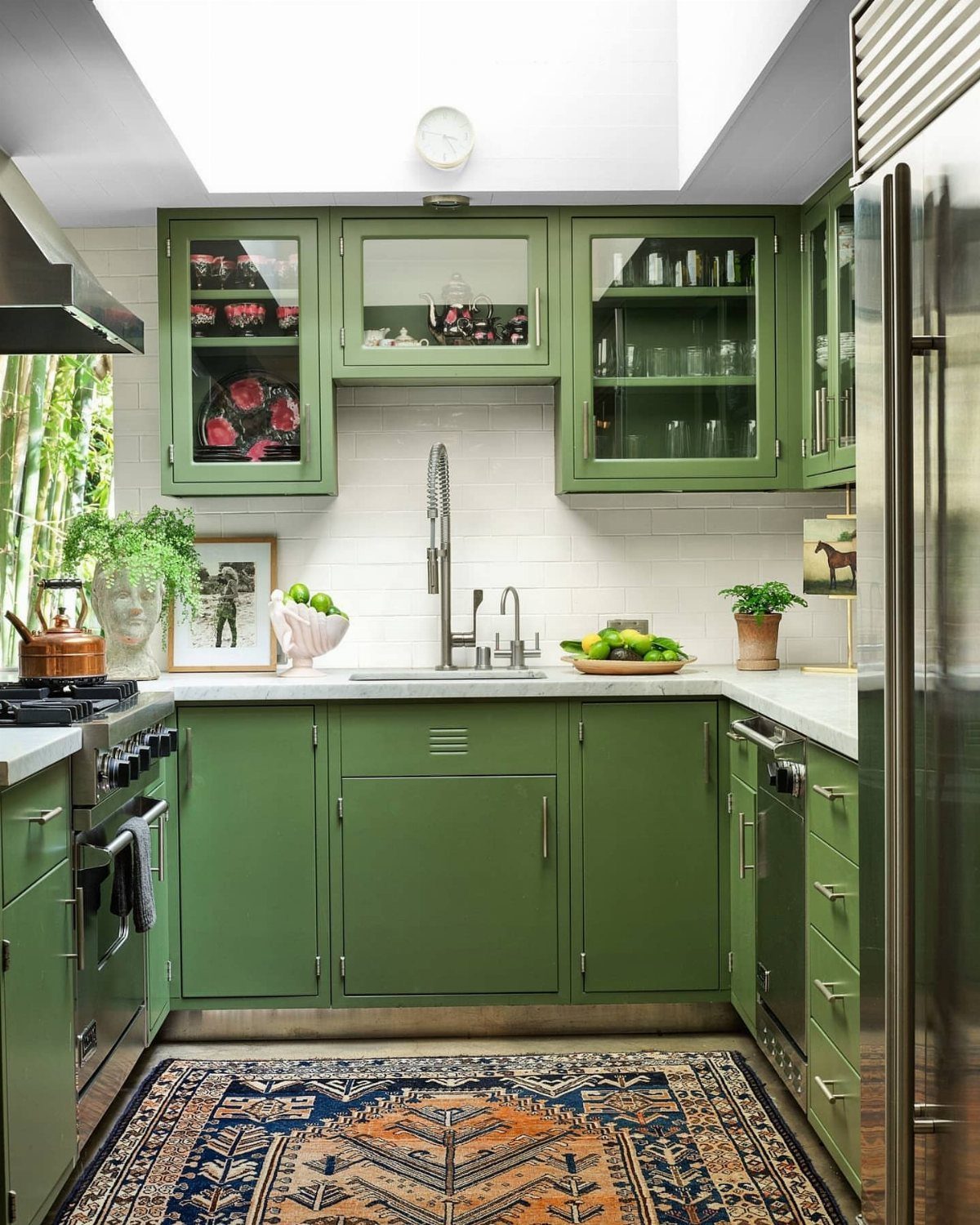
Olive green cabinets already feel close to nature, and a few potted plants push that further without needing a remodel. Keep a few pots near the window, where they sit naturally, and leave the rest of the counter clear.
A patterned rug adds texture underfoot without competing with the greenery. I’d stay with a handful of plants in simple pots, since too many starts to crowd the prep space.
Plants cost almost nothing and work in a rental.
12. Brass Fixtures and Hardware
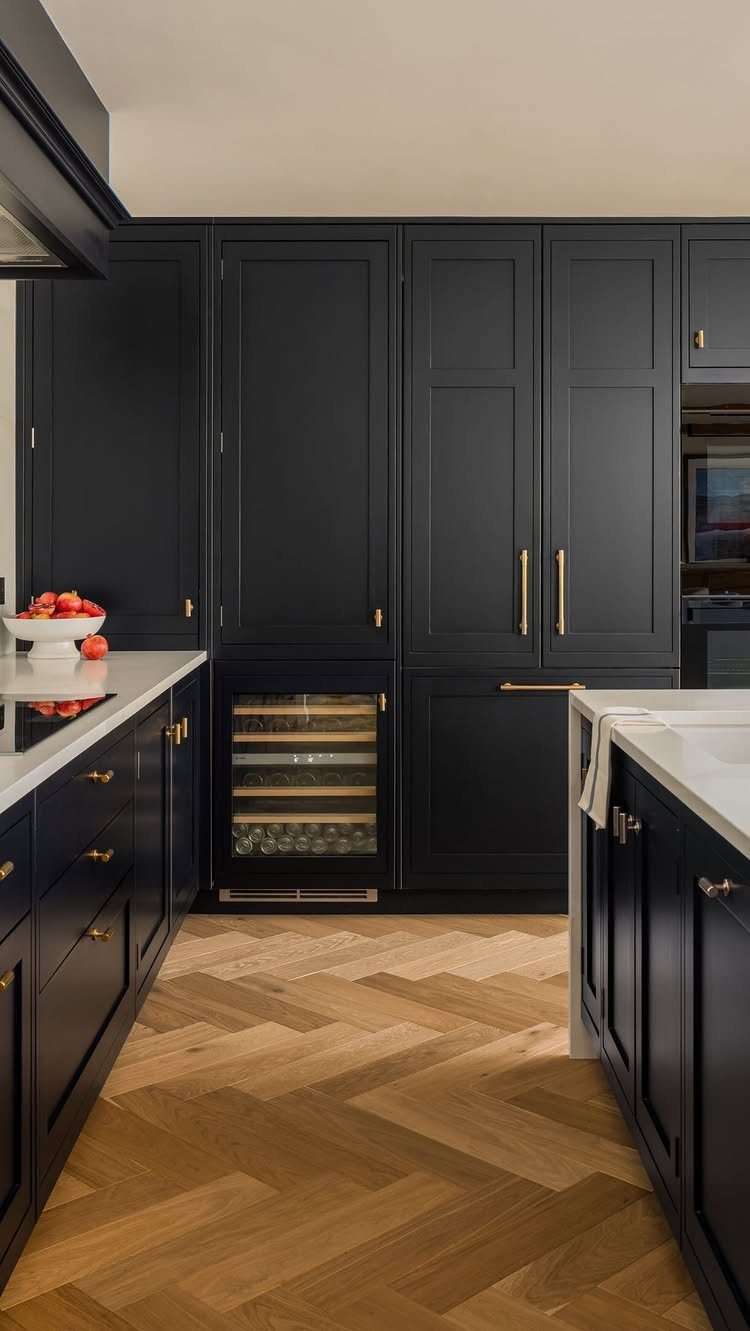
Brass hardware looks best on dark cabinets, where the warm metal stands out clearly. Navy is a strong match, and light wood herringbone floors brighten the whole picture.
I’d choose one finish and use it on every pull and knob so the set looks planned. Swapping hardware is a quick weekend job with just a screwdriver, and it’s a good way to try the look before repainting anything.
Keep the old hardware if you’re renting, and put it back when you move.
Planning a Kitchen Remodel
Start with the layout, because it sets what everything else can do. A galley plan suits a narrow room, while an L-shaped or U-shaped kitchen gives you smoother movement between cooking, prep and eating.
Spend money in order of impact.
Reface instead of replace: new flat-panel doors in walnut or teak veneer run about $70–$120 per linear foot, while all-new cabinetry lands closer to $200–$350. That gap usually pays for the rest of the project.
If you have hardwood floors, refinish them in a satin or semi-matte finish for $3–$5 per sq. ft. New flooring can top $10–$15 per sq. ft.
For a backsplash, ceramic subway tile in a muted green or a geometric mosaic costs about $6–$10 per square foot. Globe pendants run $150–$200 each.
Mixing Styles
A mid century kitchen works best when it fits the house around it.
In a home built in the ’50s or ’60s it will feel original, and in any other era it can still work if the colors and materials don’t clash hard with the neighboring rooms.
Mixing eras is a good thing here, since it adds depth. I’d pair flat-front cabinets with a contemporary faucet or modern counter lines, and let one curved element, like a pendant light, soften the straight edges.
Pick one or two period pieces and let the rest stay current. A kitchen that copies the decade exactly tends to feel like a set, not a room you cook in.
A midcentury-modern kitchen is a cookspace that incorporates design elements of the ’50s and ’60s—like flat-front cabinetry, walnut millwork, terrazzo countertops, and geometric tile—while also featuring contemporary appliances and amenities.
Color Coordination
Let wood carry the muted side. Wood cabinets and counters already supply warm brown, so make every extra feature black, cream or white to stop the colors from piling up.
In a small kitchen, white walls open the room up. Black flooring keeps it looking sleek.
A bolder kitchen leans on burnt orange, deep green and a mix of brown tones. Add warm pops in small doses, and bring in primary colors the same way.
Contrast is the tool: mix bold color with calm neutrals, and organic shapes with geometric ones. Before buying paint, gather swatches and tile samples in one spot and see if the mix still feels calm.
Frequently Asked Questions
What makes a mid-century modern kitchen?
Flat-front slab cabinets with no raised panels or trim are the clearest sign, usually in warm wood like walnut or teak. Add minimal hardware and geometric touches such as tile, terrazzo or a sputnik chandelier.
Is $30,000 enough for a kitchen remodel?
For a mid-century look, it can go a long way if you reface instead of replace. Refacing with walnut or teak veneer typically costs $70–$120 per linear foot, compared to $200–$350 for full cabinet replacement.
That gap often covers the rest of the project, such as a ceramic tile backsplash at roughly $6–$10 per square foot or globe pendants at $150–$200 each.





