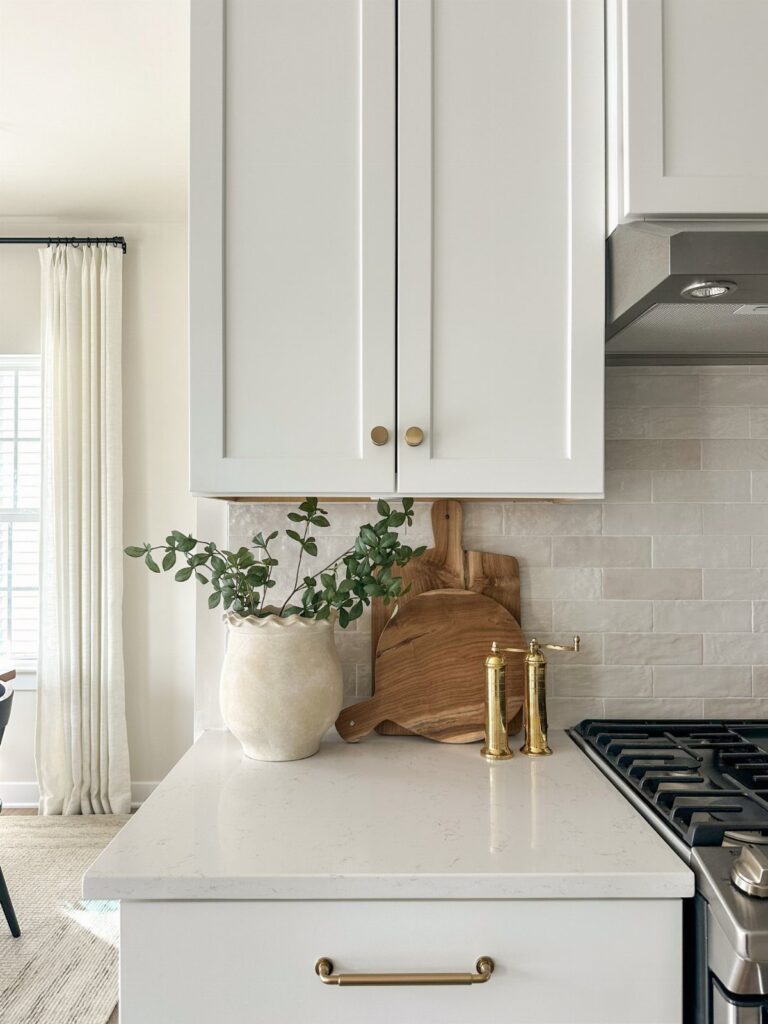
The tile stays white from start to finish; what shifts is the layout, the grout color and the surface, from polished marble-look pieces to a herringbone wall, and each one changes the look of the kitchen more than you’d expect.
How much cutting you’re willing to do should drive the choice: a classic brick pattern is the easiest place to start, while a pot filler backsplash calls for a water line inside the wall, and that part is best left to a plumber.
Dark grout on the same tile is the cheapest contrast on the list.
1. White Polished Marble Subway Tile
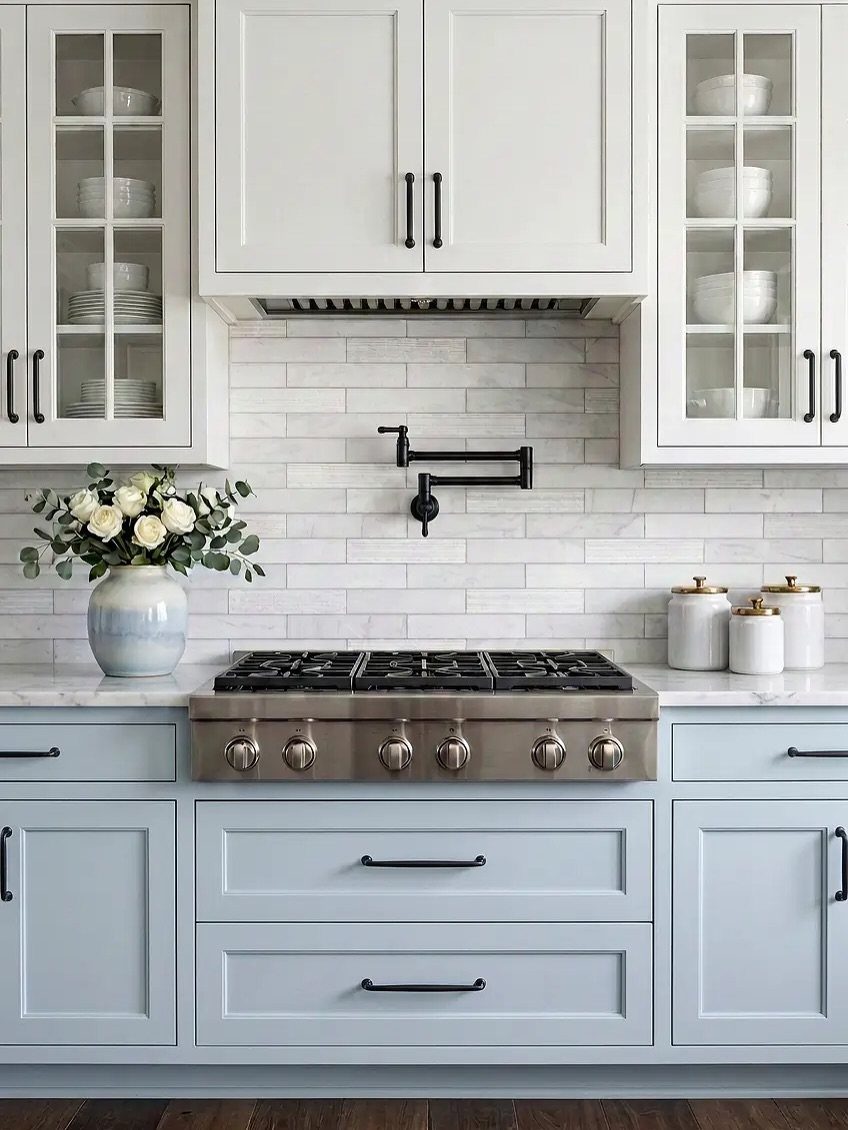
Polished marble subway tile is the version I pick when a kitchen has color on the lower cabinets and needs something calm above them.
White tile with soft veining keeps light blue from feeling sugary, and the shine bounces light across the counter.
Real marble costs more than ceramic, and it is a softer stone. A marble-look ceramic or porcelain tile gives a similar feel on a tight budget, and it is easier to live with near a stove.
2. White Subway Tile with Dark Grout
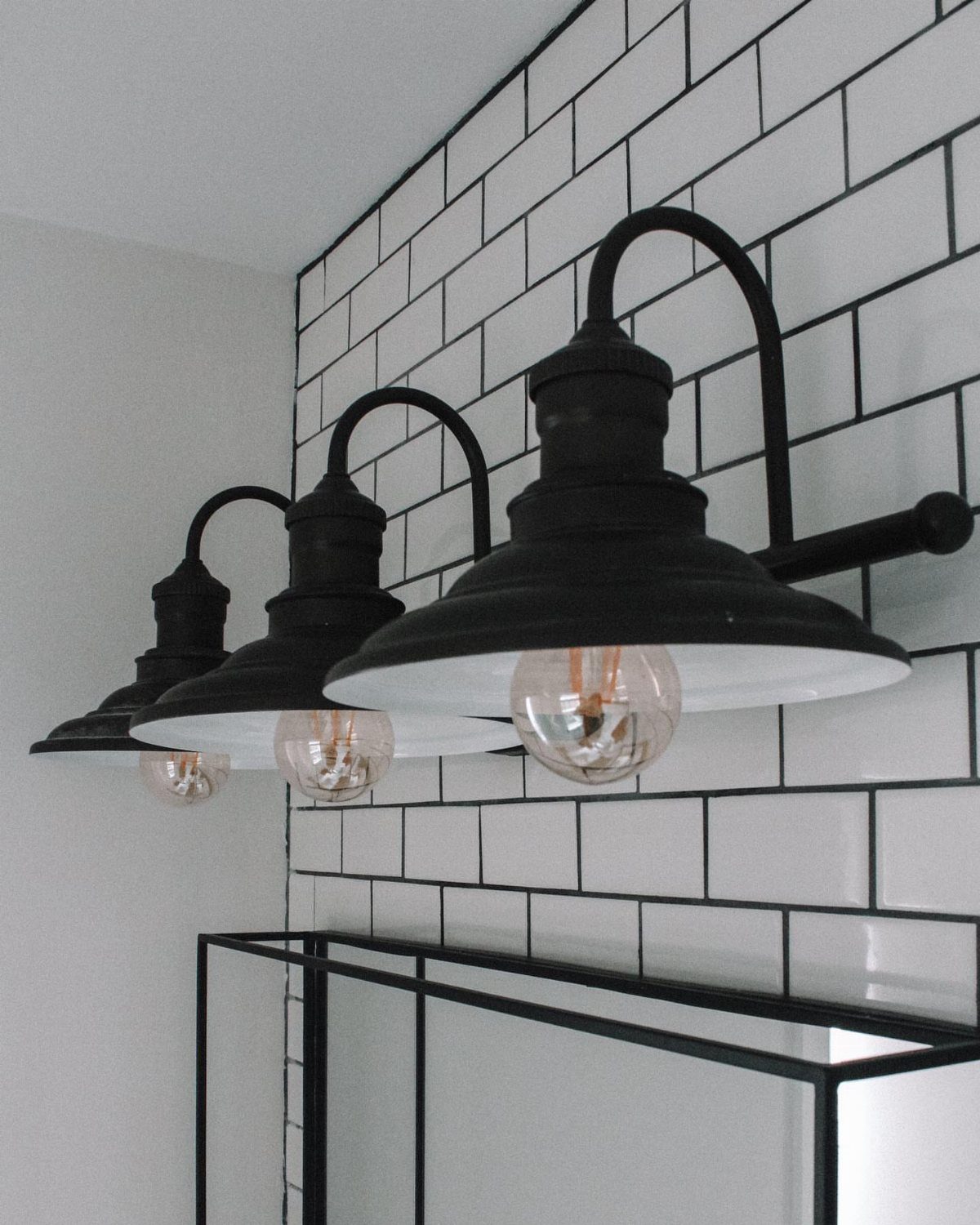
Dark grout does the work here. Against white tile, charcoal or black lines turn every rectangle into a drawn outline, so even plain tile looks graphic.
For a weekend job, it is one of the cheapest ways to add contrast: same tile, different grout.
I’d keep the grout lines narrow and the layout simple, since a wobbly row shows up immediately. Wipe the haze off the tile quickly, because dark grout smears on white are easy to spot.
3. Vertical Stacking White Subway Tile
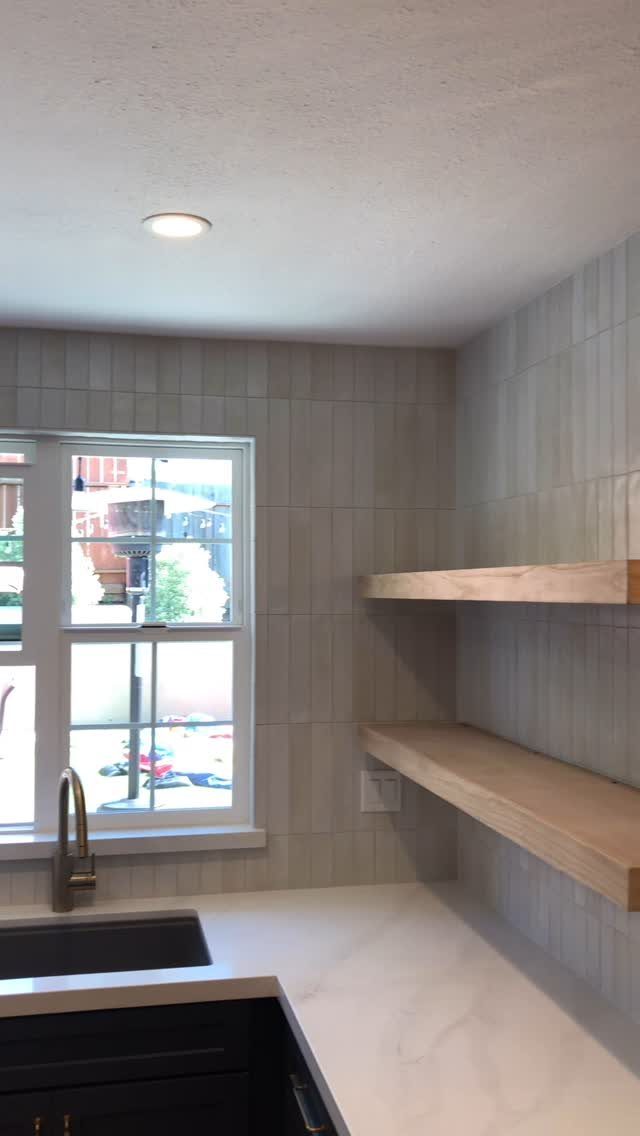
Turning subway tile on end stacks the rows into tall columns, and the eye travels up instead of across. It stretches the height of a short wall under a window or between counter and cabinet.
Cutting is the same as any subway layout, but the alignment matters more.
Use spacers and a level on every few rows, because a drift in a vertical stack is obvious. I like it with plain white tile, where the direction is the only change.
4. Zellige-Style Subway Tile
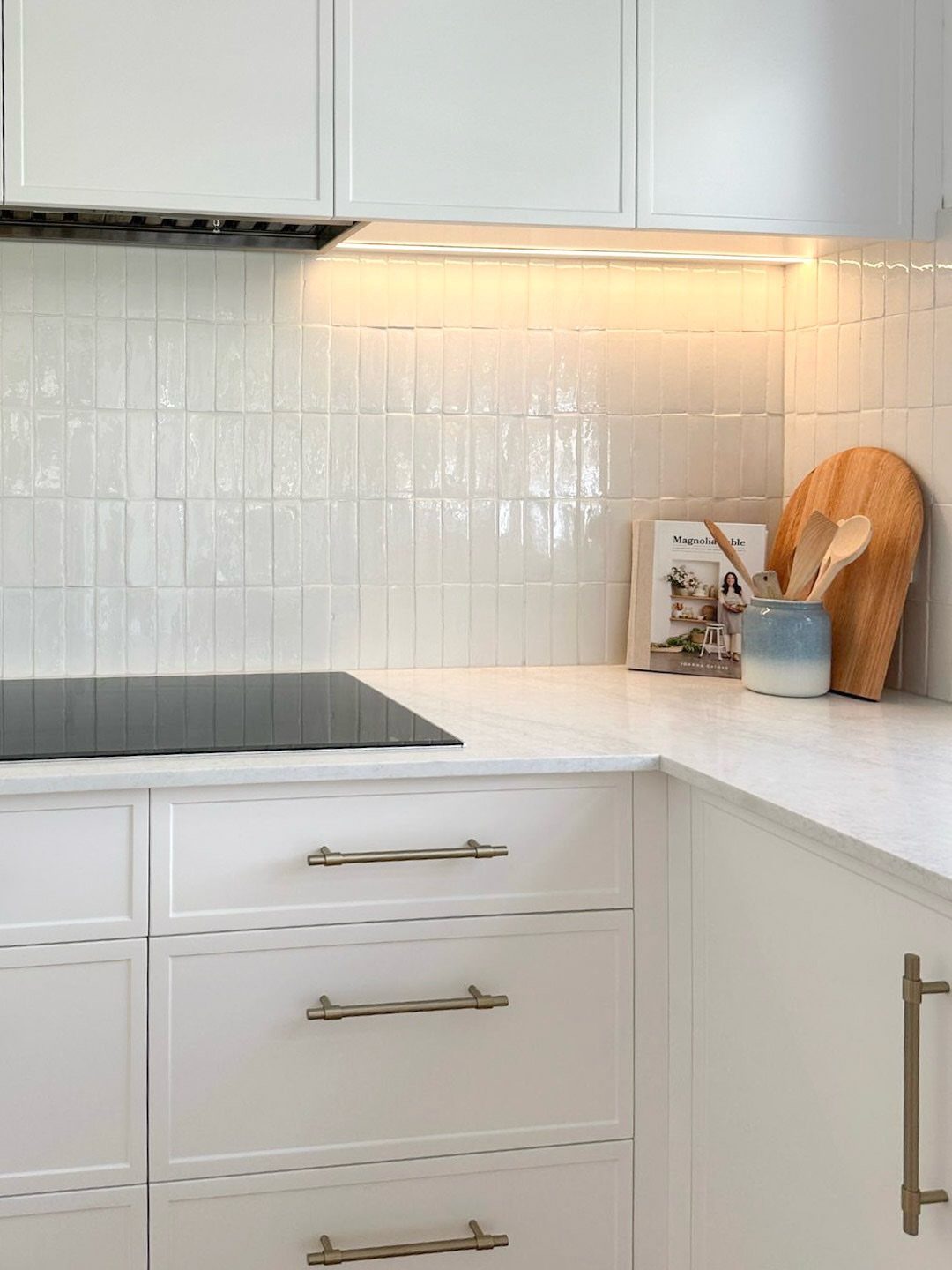
Zellige-style tile is subway tile with the flatness taken out. Each piece has natural glaze variation and subtle surface texture, so light catches differently from one tile to the next and the wall gets movement without any color.
I’d choose it for a white kitchen that feels a little too flat.
Expect uneven edges and slight differences between tiles, so mix pieces from several boxes as you set them. Wider grout lines suit that handmade look.
5. Classic Brick Pattern White Subway Tile
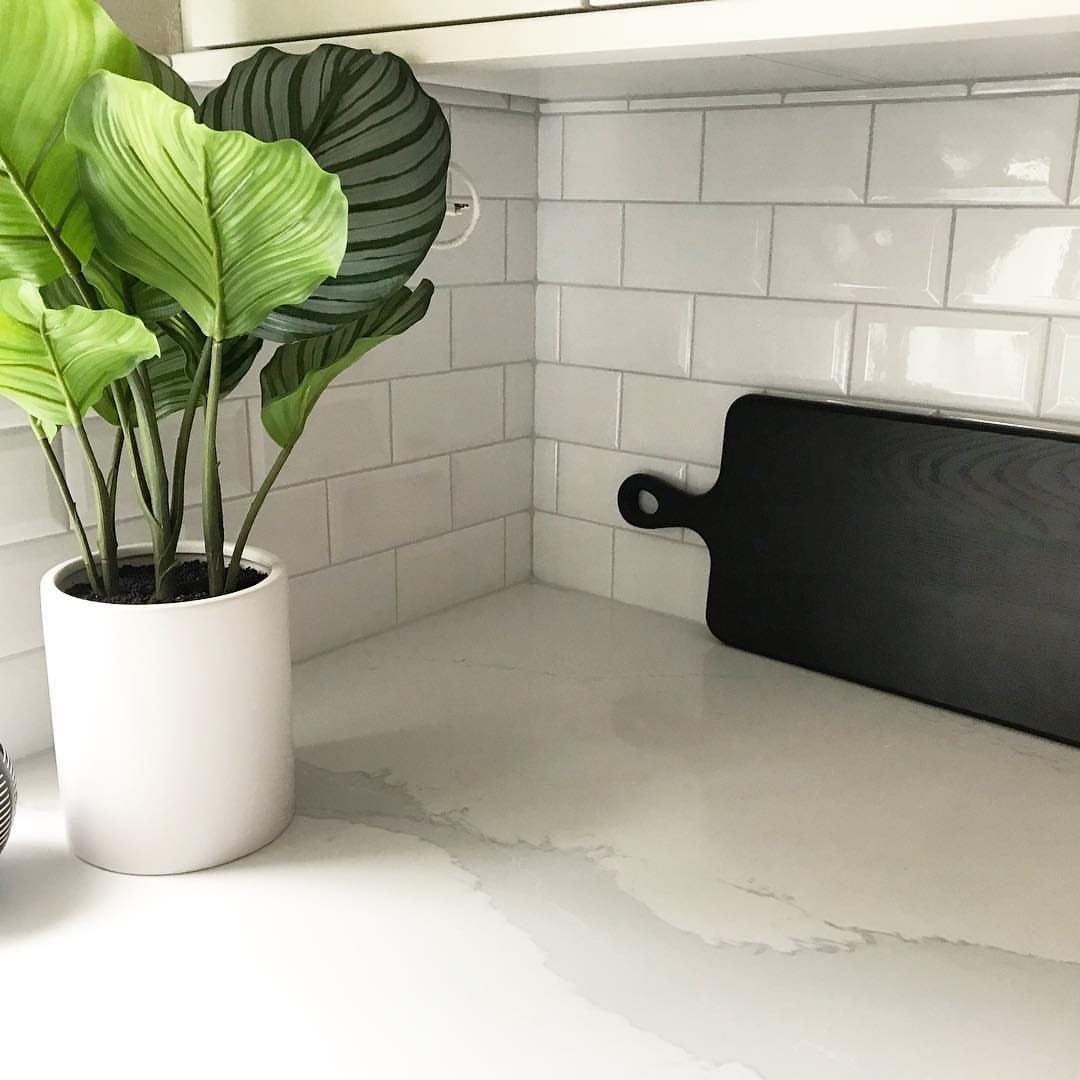
The staggered brick layout is the one most people picture, with each tile centered over the joint below. It is forgiving, quick to lay, and keeps cutting waste low on a standard backsplash.
Start from the center of the main wall so the end cuts match on both sides. For a first tiling project on a tight budget, this is the pattern I’d hand a beginner.
6. Glossy White Subway Tile
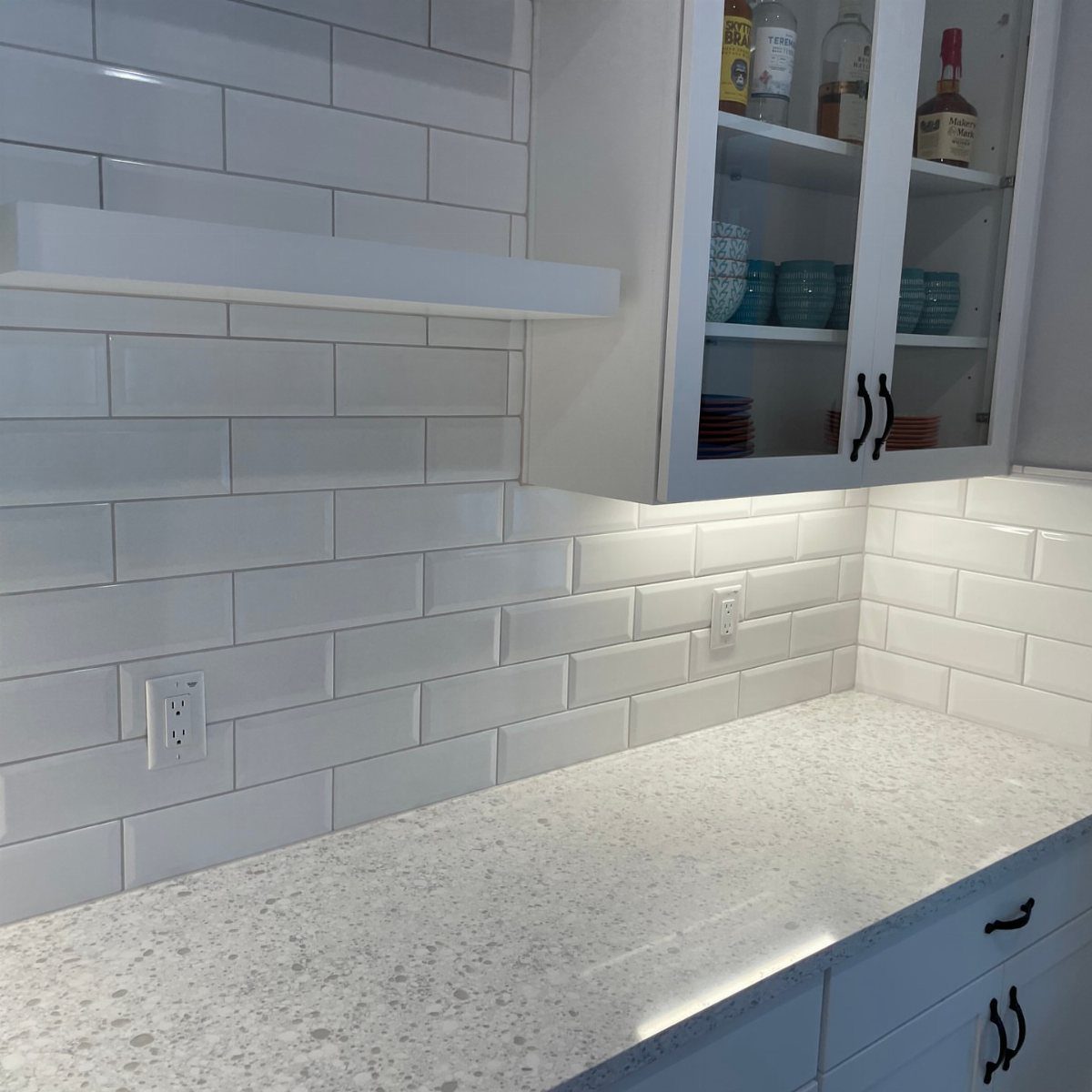
Glossy white tile earns its place in a busy kitchen because a smooth glaze wipes clean fast and bounces light back into the room. Next to white quartz and glass-front cabinets, it keeps everything bright.
That shine also shows every wavy edge on the wall, so a flat, well-prepped surface matters.
Pick a plain white without heavy crackle, and keep the grout light or close in tone for a clean look. Standard glossy ceramic is among the most budget-friendly choices.
7. Herringbone White Subway Tile
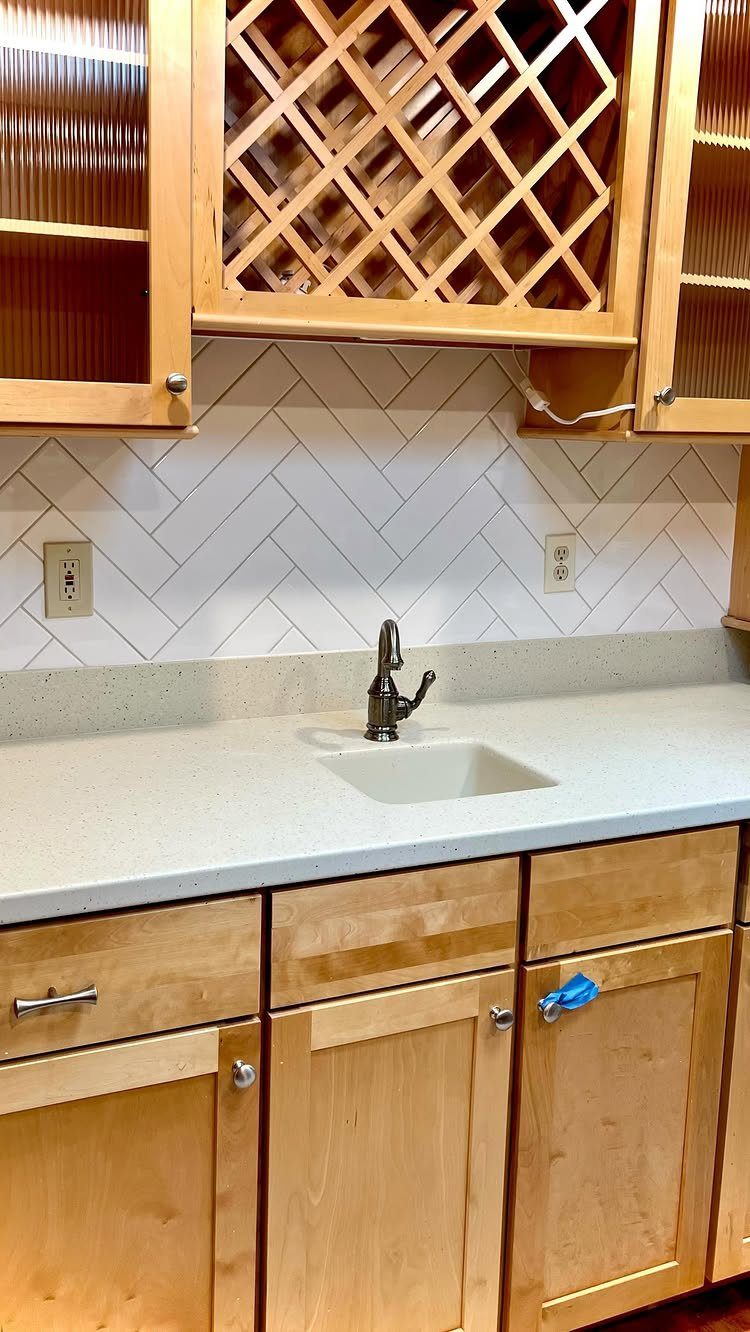
Herringbone turns plain white rectangles into a zigzag, and a small stretch of wall behind a sink is the right place to try it. The pattern adds movement without any color, which suits light wood cabinets and a pale counter.
Cutting is the cost.
Every edge at the top and sides needs an angled cut, so buy extra tile and rent or borrow a wet saw. A small wet bar keeps that work to a weekend.
8. Subway Tile with Decorative Inset
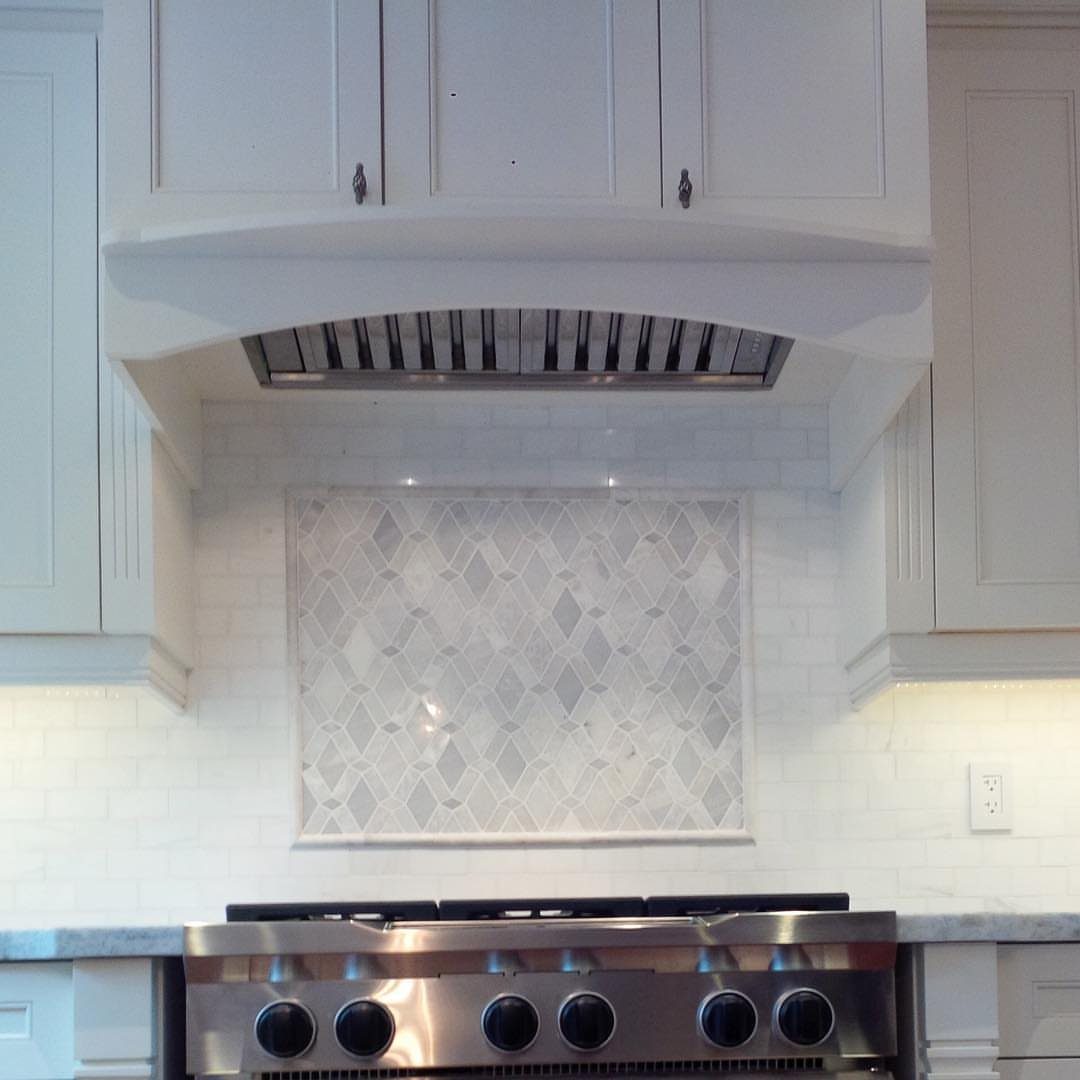
A framed inset behind the range gives a plain white backsplash a focal point, and the diamond pattern here sits right where eyes land. Everything around it stays simple, so the inset gets all the attention.
I’d dry-lay the border and the diamond on the floor first, then tile the field around it. Measure the inset against the width of the range so it sits centered under the hood.
9. Bathroom Vanity Subway Tile Backsplash
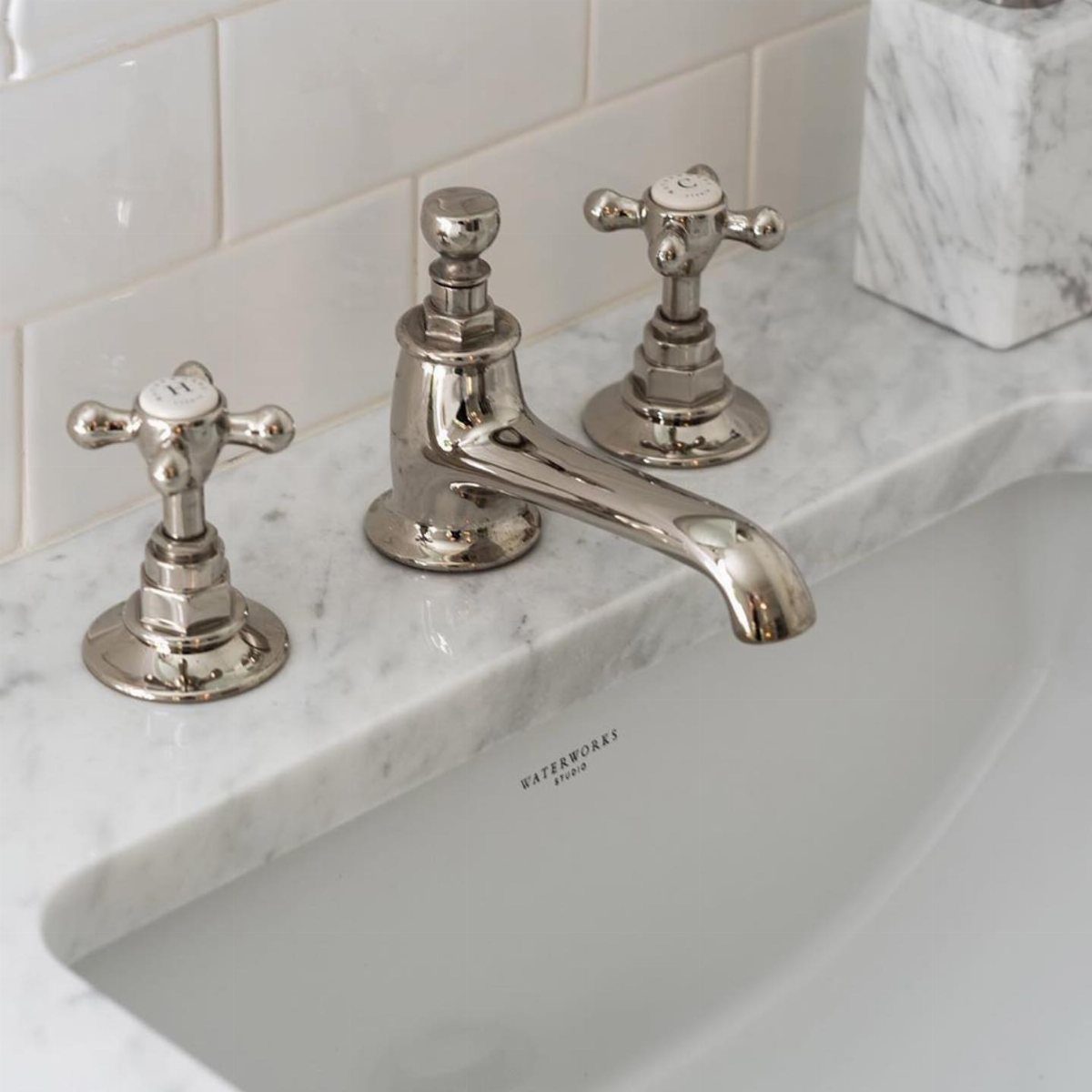
A short white subway backsplash behind a vanity is the easiest bathroom tile job I know. Against a marble counter and chrome faucets, plain white reads clean and keeps the stone as the star.
Only a few rows are needed, so it fits a weekend and a small budget.
Run the tile up from the counter, and seal the joint where tile meets countertop with caulk instead of grout, since that seam takes splashes every day.
10. Subway Tile with Colored Cabinets
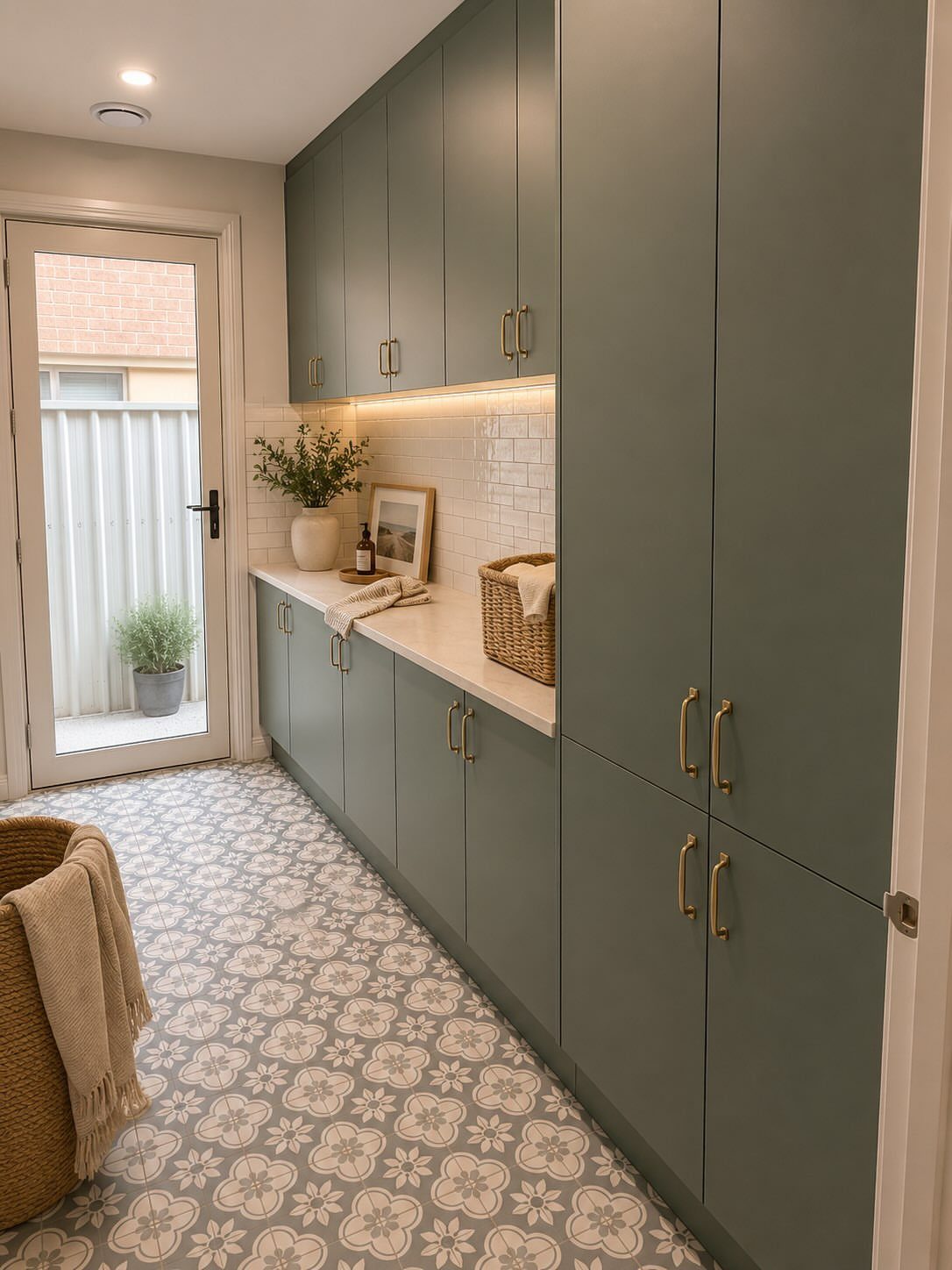
Sage green cabinets want a quiet partner, and white subway tile is it. The tile stays neutral while the green carries the color, even with a patterned floor in the same room.
When the floor already has a busy pattern, I’d keep the backsplash plain: standard rows, light grout, nothing extra.
Bring a cabinet door or paint sample to the tile store and hold it beside the tile, since whites can lean warm or cool next to green.
11. Subway Backsplash with Pot Filler
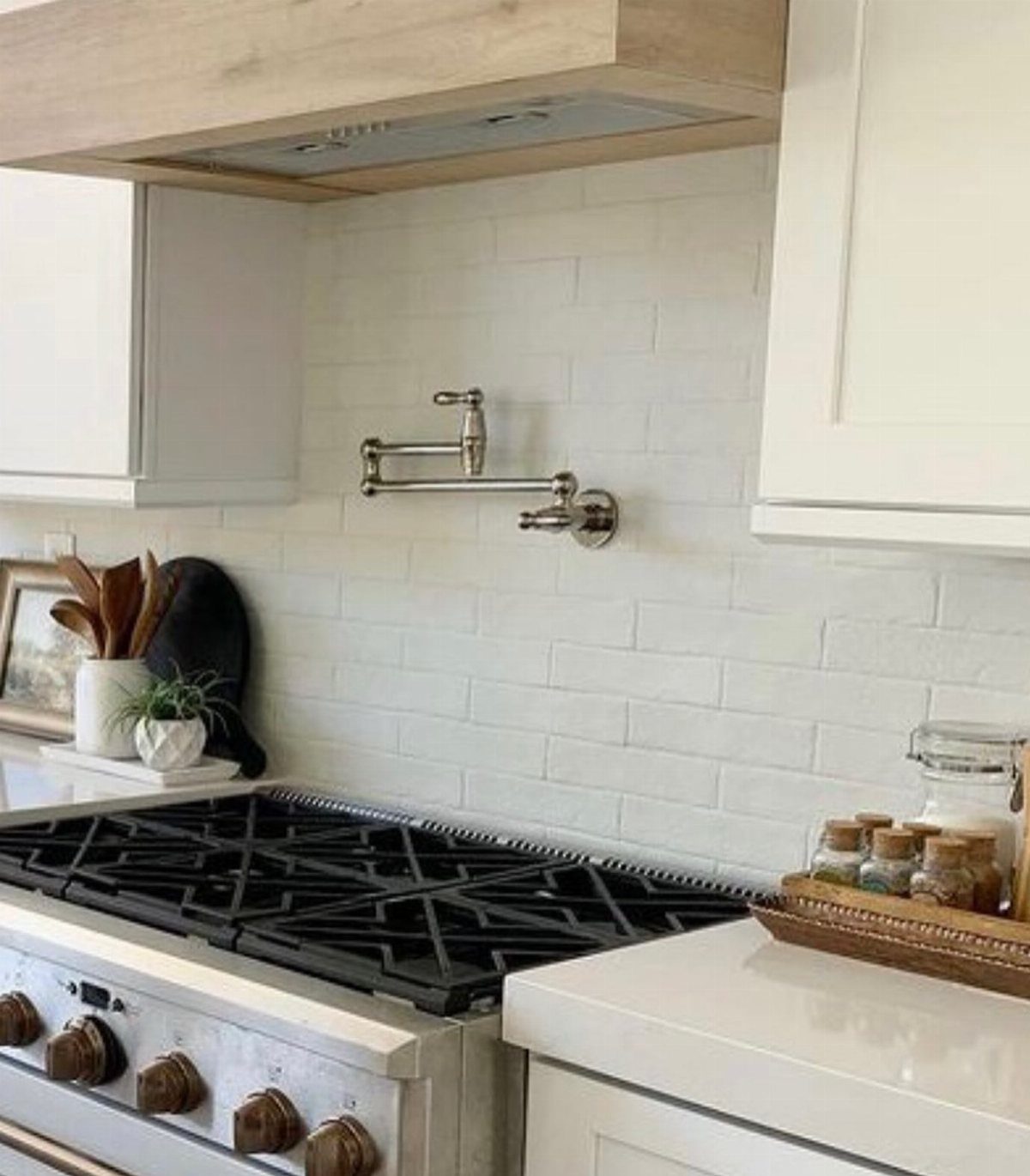
A pot filler above the range puts water at the pot, and white subway tile is a sensible backdrop for it. The tile wipes clean behind a silver spout where splashes land.
Plan the placement before any tile goes up, because the water line has to be run inside the wall.
Tile around the fixture afterward and cut the holes carefully so the trim covers the edges. This one is not a casual weekend swap, so I’d hire a plumber for the supply line.
Benefits of White Subway Tiles
White subway tile started in New York City’s subway stations in the early 1900s, chosen because it was durable, sanitary and bounced light around dark corridors.
A glossy glaze that wipes clean is what carried the tile into kitchens and bathrooms, and it still earns its place anywhere that gets splashed and scrubbed often.
Durability is the practical reason I’d pick it for a budget project. Tile resists chipping, cracking and wear, so it handles spills, splashes and constant cleaning in a high-use kitchen without looking tired.
It also works in gloss or matte, and it takes well to other stones and tiles, so you can change the look later by changing the layout or grout instead of starting over.
Installation Tips for Subway Tile
Prep decides how the wall turns out. Clean it, let it dry, strip off old tile or wallpaper, and repair any damage before a single tile goes up.
Running to the store mid-job lets the adhesive skin over.
Spread adhesive on a small section at a time, then set tiles with spacers and check them with the level as you go.
Let the adhesive cure per the package directions before grouting; 24 hours is typical. Mix grout as directed, push it in with the float, and wipe off the excess with a damp sponge while you work in small areas.
After the grout has cured completely, brush or roll on a grout sealer.
Maintenance Tips for White Subway Tile
For everyday cleanup, a damp cloth and a little mild dish soap lifts grease and splatter. Steel wool, gritty powders and scouring pads can dull or scratch the glaze, so keep them away from the wall.
Grout takes more attention than the tile. For grimy grout lines, work a small brush through them with baking soda mixed into a paste with water (a store-bought grout cleaner also works), then rinse well.
Plan to reseal the grout every 2–3 years so water and stains stay out.
Bleach and other harsh chemicals can eat into the grout and leave it discolored, so I’d skip them.
Wipe up splashes right away so stains never set.
Frequently Asked Questions
Are white subway tiles still in style?
Yes. And the reason is range: a plain white 3×6 sits just as comfortably in a 1920s bungalow as in a sleek, flat-front kitchen or a farmhouse with open shelves.
Should the backsplash be lighter or darker than the countertop?
Neither is a fixed rule; it depends on how much contrast you want.
Pair white tile with a pale counter and the wall stays soft and bright; keep the same tile and switch to charcoal grout, and you get sharp contrast without buying anything new.
If you want more definition, the grout is the cheapest place to get it.
What backsplash is trending in 2026?
White subway tile with a twist is what the sources point to: mixed patterns and colored grout.
Dark grout is the easy version, since charcoal or black lines turn each white rectangle into an outline. Patterns like herringbone or vertical stacking also give plain white tile movement without adding color.
What is the best white subway tile for a kitchen backsplash?
For most budgets, standard glossy white ceramic is the best pick.





