Your pick depends on how much of the work you can do yourself and how close the surface sits to the range, since porous brick, concrete and bare wood plank need sealing while glazed tile wipes clean in one pass.
Hexagon tile on mesh sheets is the kind of option that keeps a weekend install realistic.
1. Subway Tiles
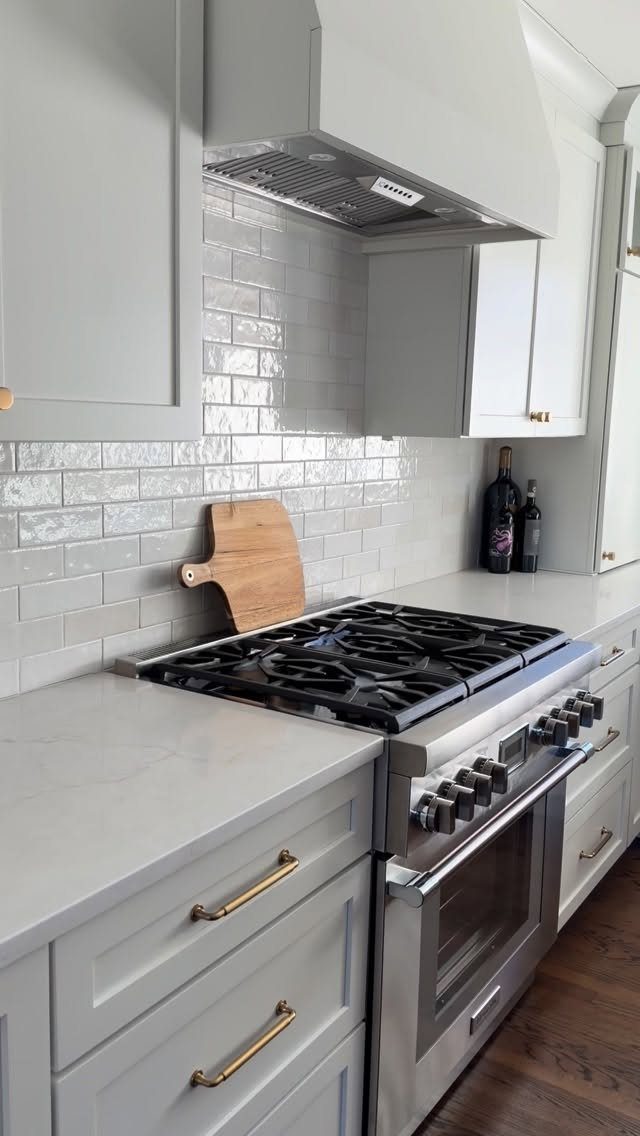
A glossy subway tile behind a gas range does the quiet work in a kitchen like this: it bounces light and wipes clean with one pass of a sponge.
Light gray cabinets and white quartz keep everything calm, so the tile can stay plain.
I’d pick a gray grout a shade darker than the tile if you cook a lot, since white grout lines show splatter first.
It’s also the most forgiving tile for a weekend install, because the running-bond layout is easy to line up.
2. Rustic Brick
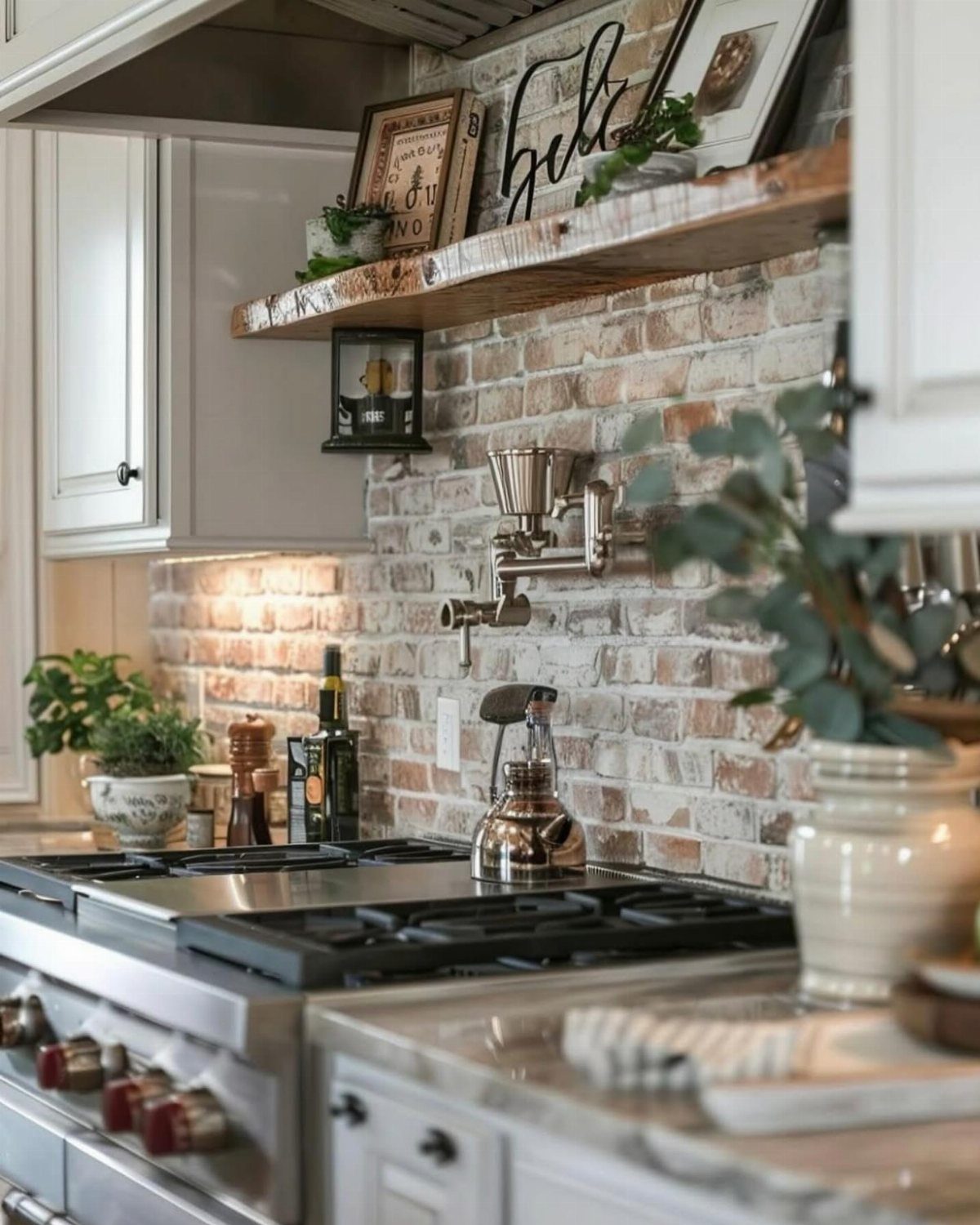
White-washed brick gives a farmhouse kitchen warmth without the heaviness of bare red masonry. Where the red shows through the white, the wall looks aged, and that suits wood shelving and a pot filler.
For a renter or first-home owner, thin brick veneer is the version I’d look at, since it skips the weight of full brick. Thin the white paint with water and wipe it on, so the texture stays visible.
Brick is porous, so seal it behind the stove.
3. Marble Slab Backsplash
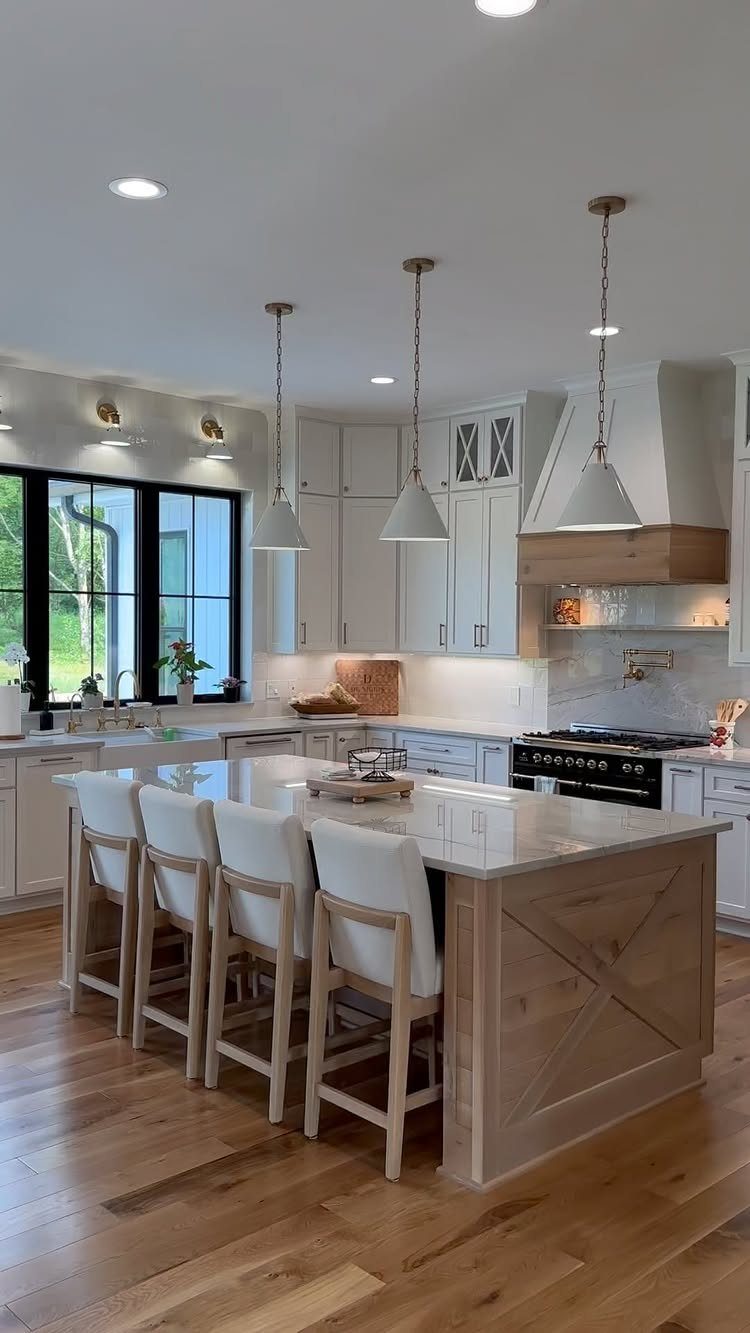
Running one marble slab from counter to upper cabinets leaves no grout lines at all, and that’s the whole appeal. With white cabinets and wood floors, the veining becomes the only pattern in the room.
It’s a splurge, and I’d say so plainly: slab costs more than tile, and it usually needs a pro to cut around outlets. If the budget is tight, a marble-look porcelain tile in large format gets close to this look.
4. Vertical Shiplap
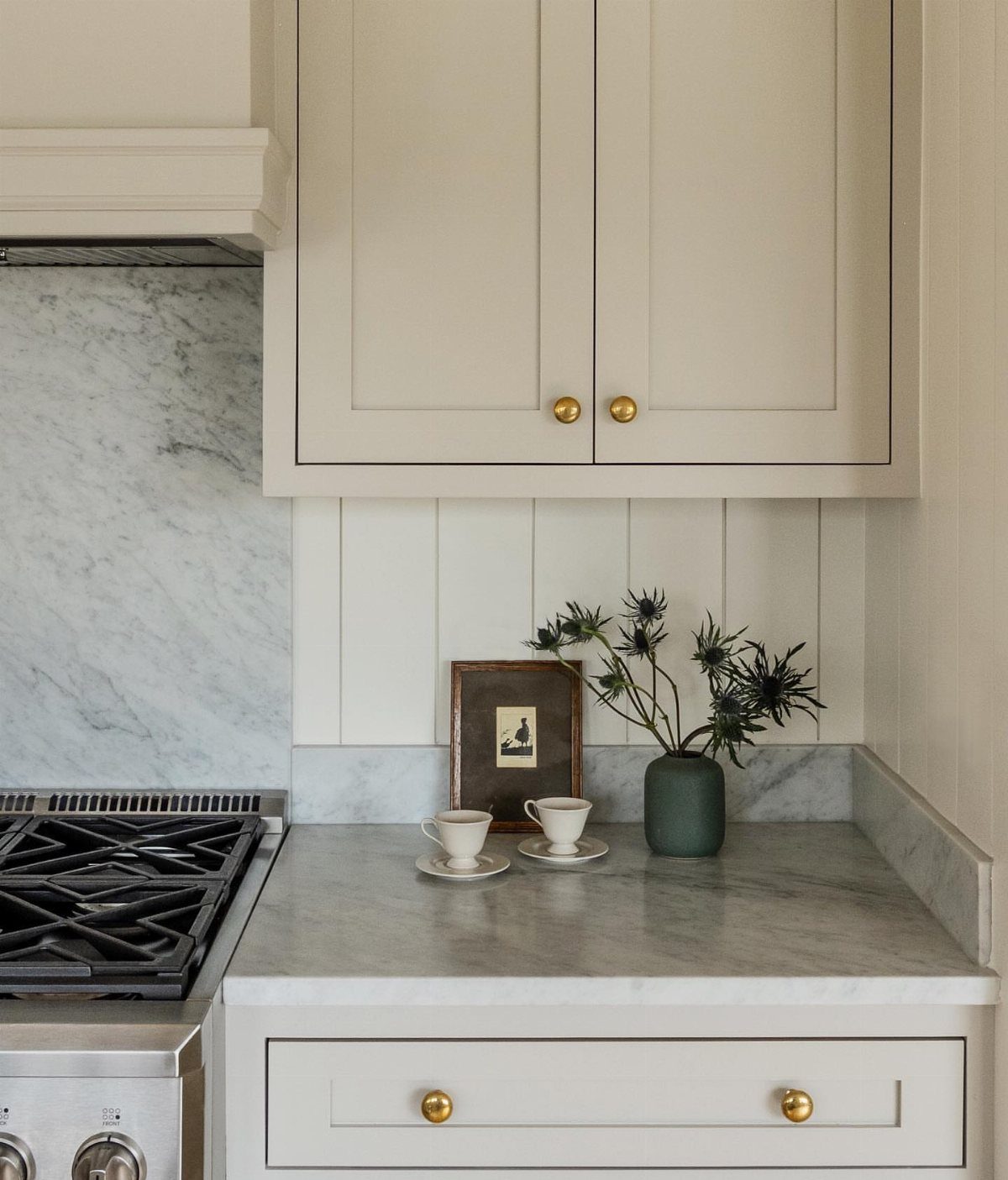
Vertical shiplap pulls the eye up, which helps a kitchen with standard-height cabinets feel taller. Painted white, it sits well beside marble counters and gold knobs without competing.
Run the boards floor to ceiling on the wall or stop them just above the counter; I prefer stopping at the counter line with a small cap trim for a finished edge.
Nail each board level with a long level, because one crooked board throws off the rest.
Seal the paint near the stove so grease wipes off.
5. Beadboard
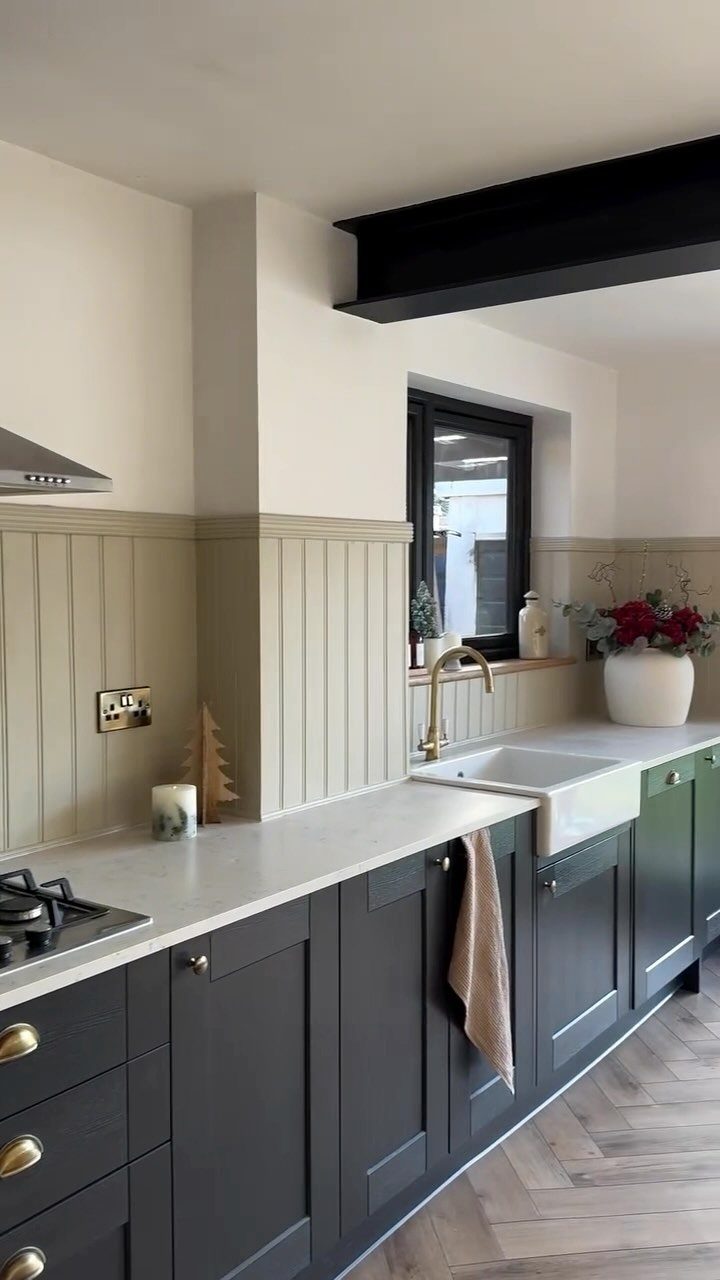
Beadboard is the cheapest route to a cottage feel, and it looks best against dark gray cabinets and white counters, where its soft beige tone warms the contrast.
Panels are sold in sheets, so a weekend and a caulk gun can cover a backsplash.
Paint it in semi-gloss so the grooves wipe clean. Behind a sink, caulk the seam along the counter so water can’t creep behind the panel.
6. Patterned Tiles
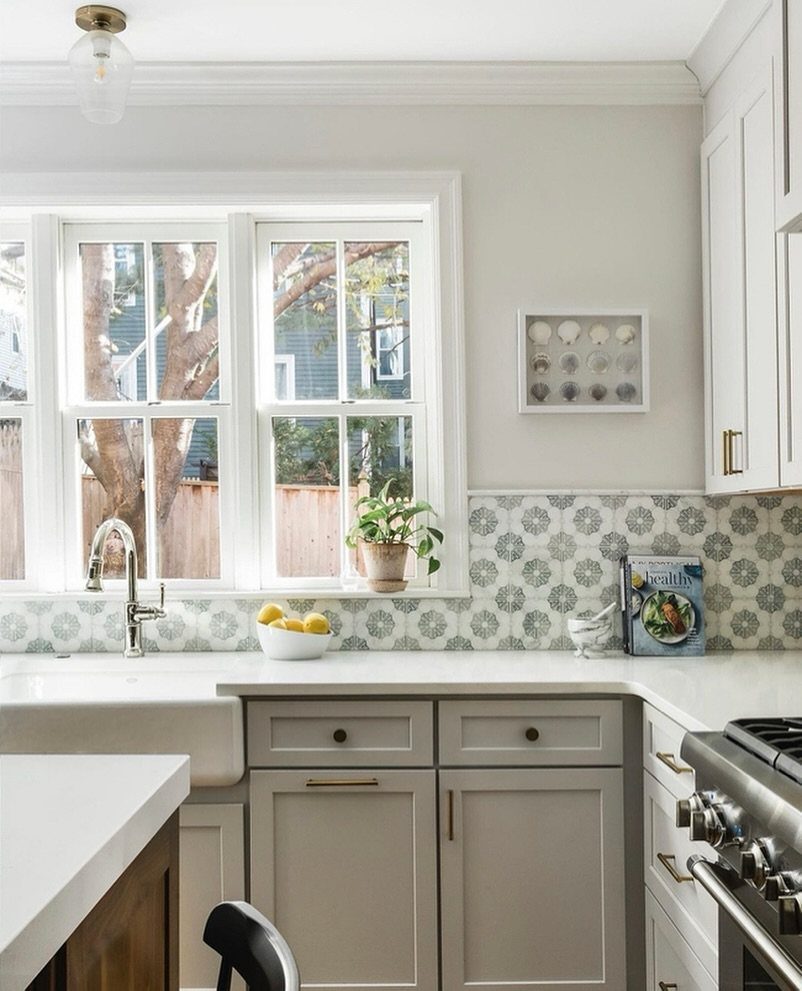
Patterned tile is the one backsplash I’d let be the star, especially with plain gray cabinets and a white farmhouse sink. Keep everything near it quiet: one pattern, two colors, and the rest of the wall simple.
White and gray patterns read as bold without clashing with most cabinet colors. Dry-lay the tiles on the floor first to check the pattern repeats the way you want before any adhesive goes down.
If a full wall feels like too much, tile only the area behind the sink.
7. Herringbone Tile
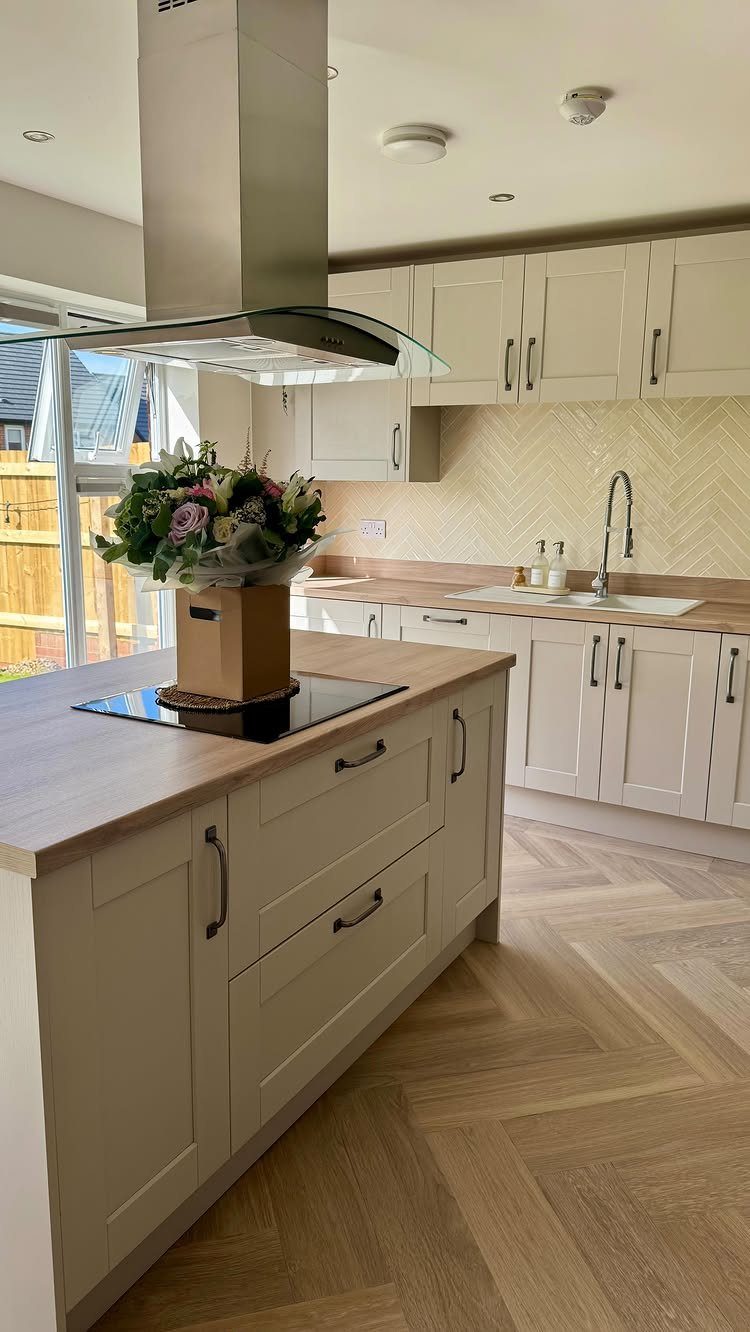
Herringbone in a soft neutral gives cream cabinets and light wood counters movement while staying monochrome. The zigzag does the talking, so the tile itself can stay quiet.
I’d keep the grout close to the tile color so the pattern reads as texture, not a grid. Cutting the angled edges takes patience, so plan a full weekend, and lay a few rows dry first to check the angle.
8. Vintage Tin Tiles
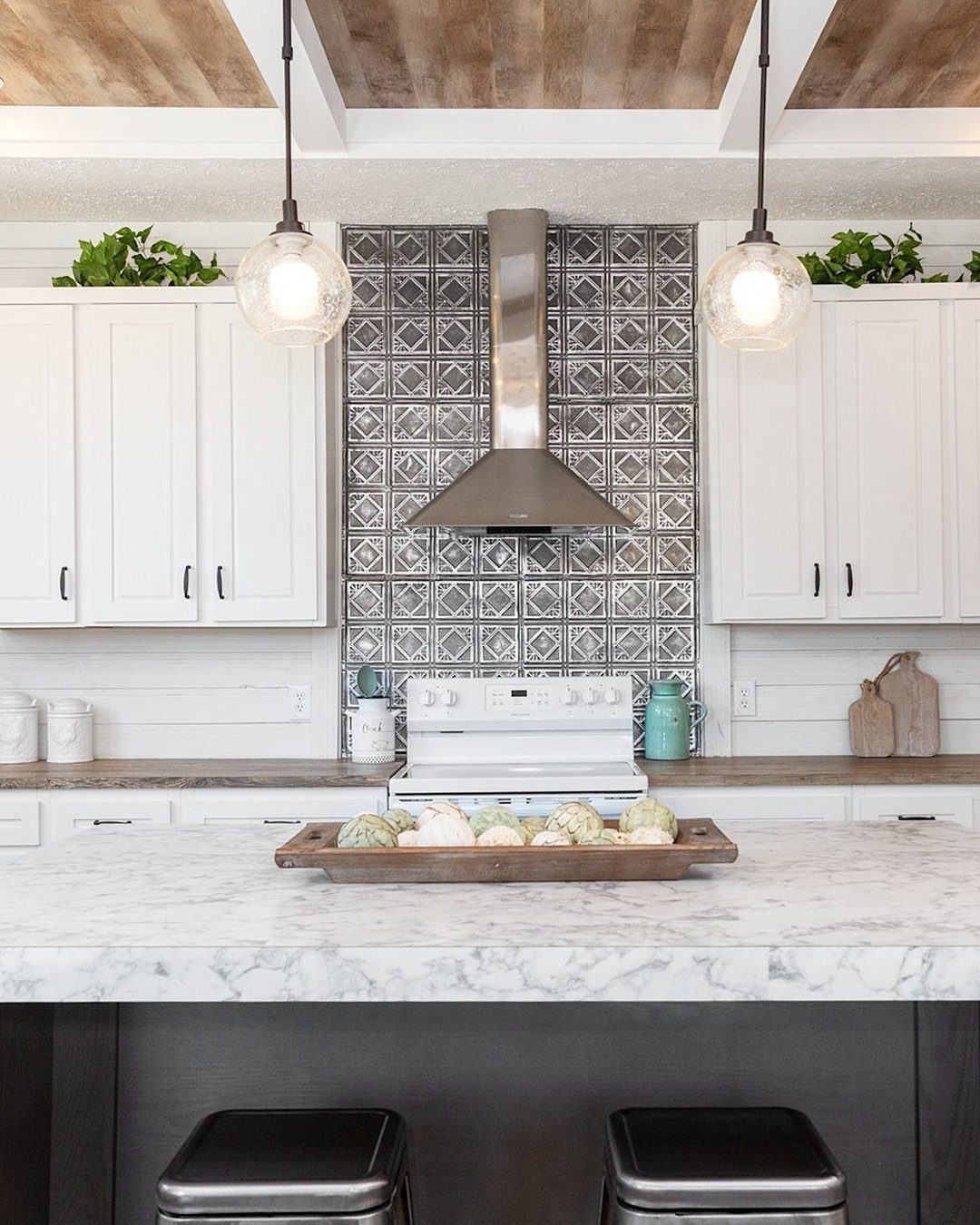
Metallic tin-style tile gives a white kitchen one reflective surface, and a stainless vent hood sits well beside it. The geometric pattern catches pendant light and throws it back across a marble island.
I’d use it on one wall only, since a shiny pattern in every direction gets busy fast. Keep cabinets plain white so the metal stays the focus.
Wipe it often near the stove; fingerprints and splatter show on reflective finishes.
9. Textured Tile
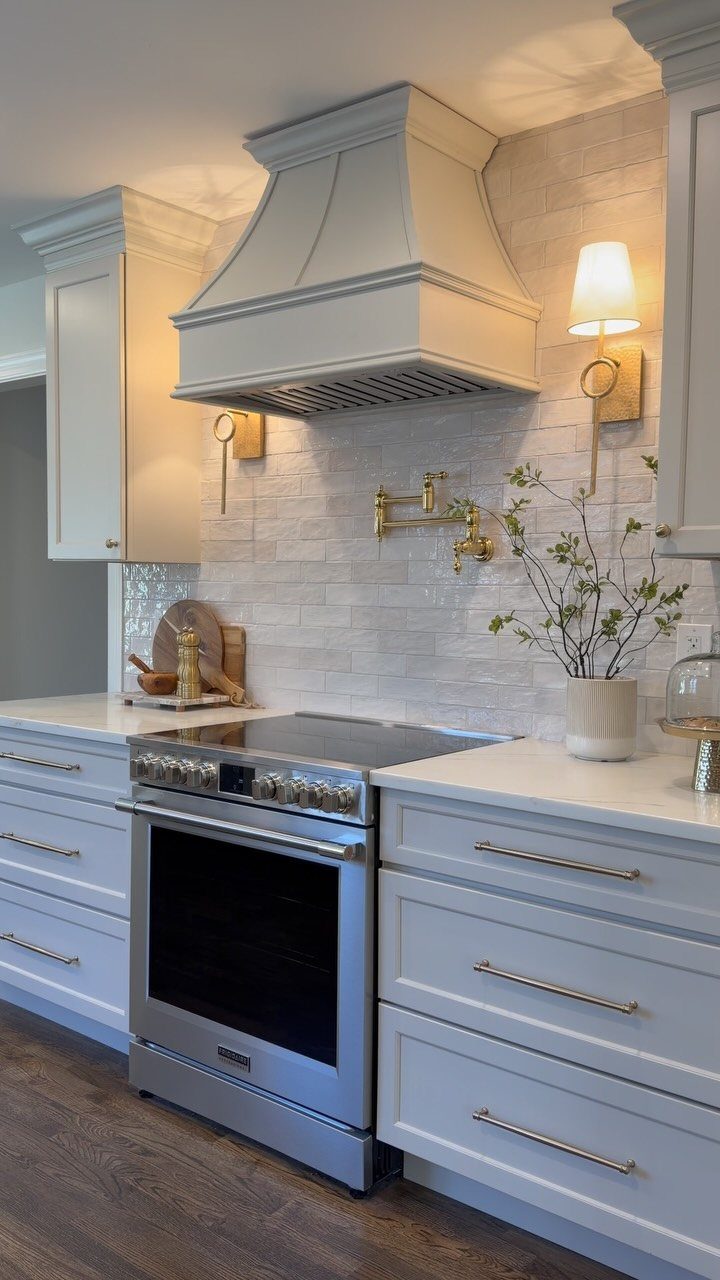
Raised, sculpted tile in white adds shadow lines that shift with the light, so a plain white backsplash stops looking flat. With light gray cabinets and gold fixtures, the surface supplies the interest and nothing else needs to shout.
My pick is a gentle texture over a deep relief. Deep grooves hold grease behind a range, and a soft one wipes clean much faster.
10. Wood Plank
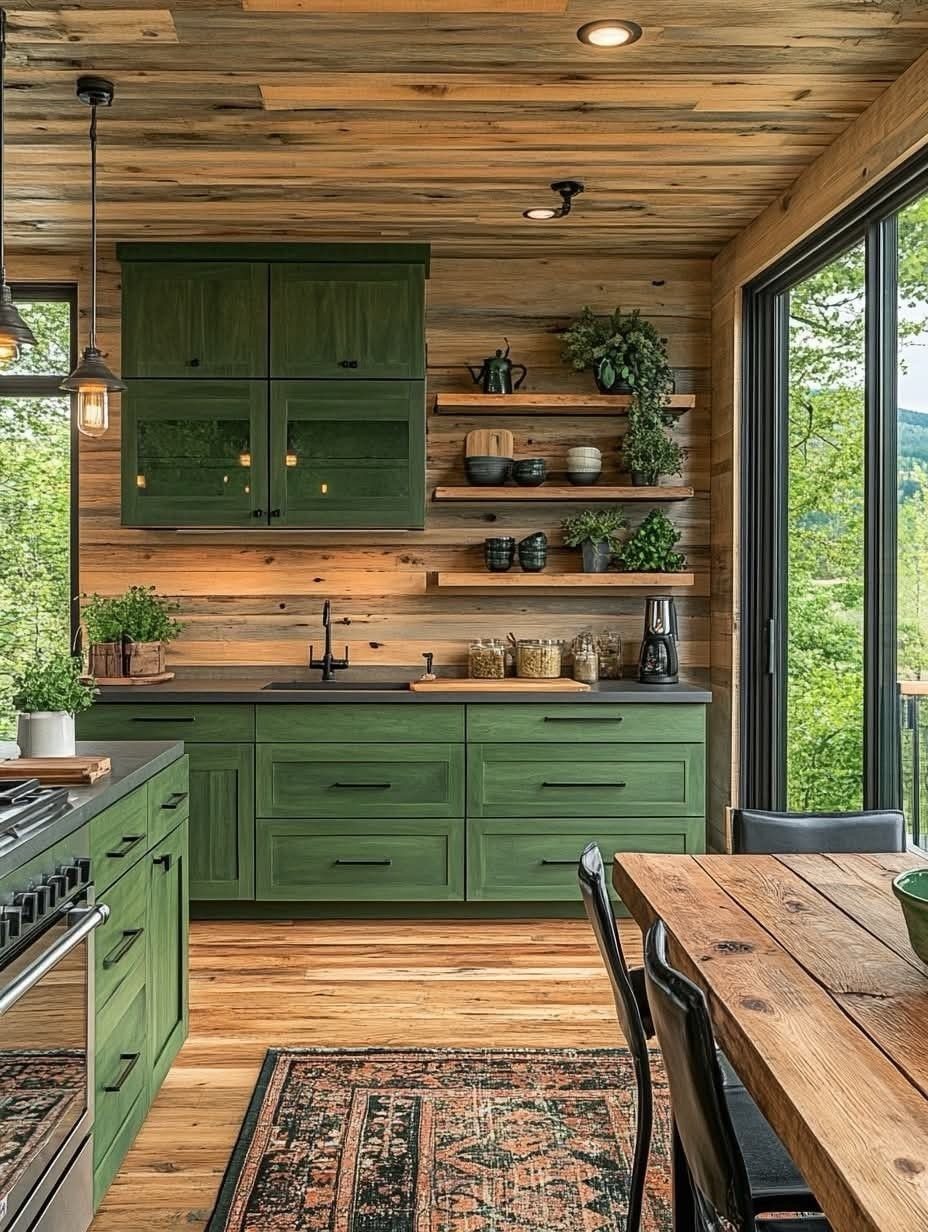
Wood planks running up the wall and across the ceiling wrap a kitchen in warmth, and green cabinets are a good match for all that brown. A dark countertop keeps the wood from feeling too sweet.
I’d limit planks to the backsplash zone if the room is small, since a full wood envelope eats light. Seal the boards well near the sink and stove, because bare wood stains.
11. Dark Granite
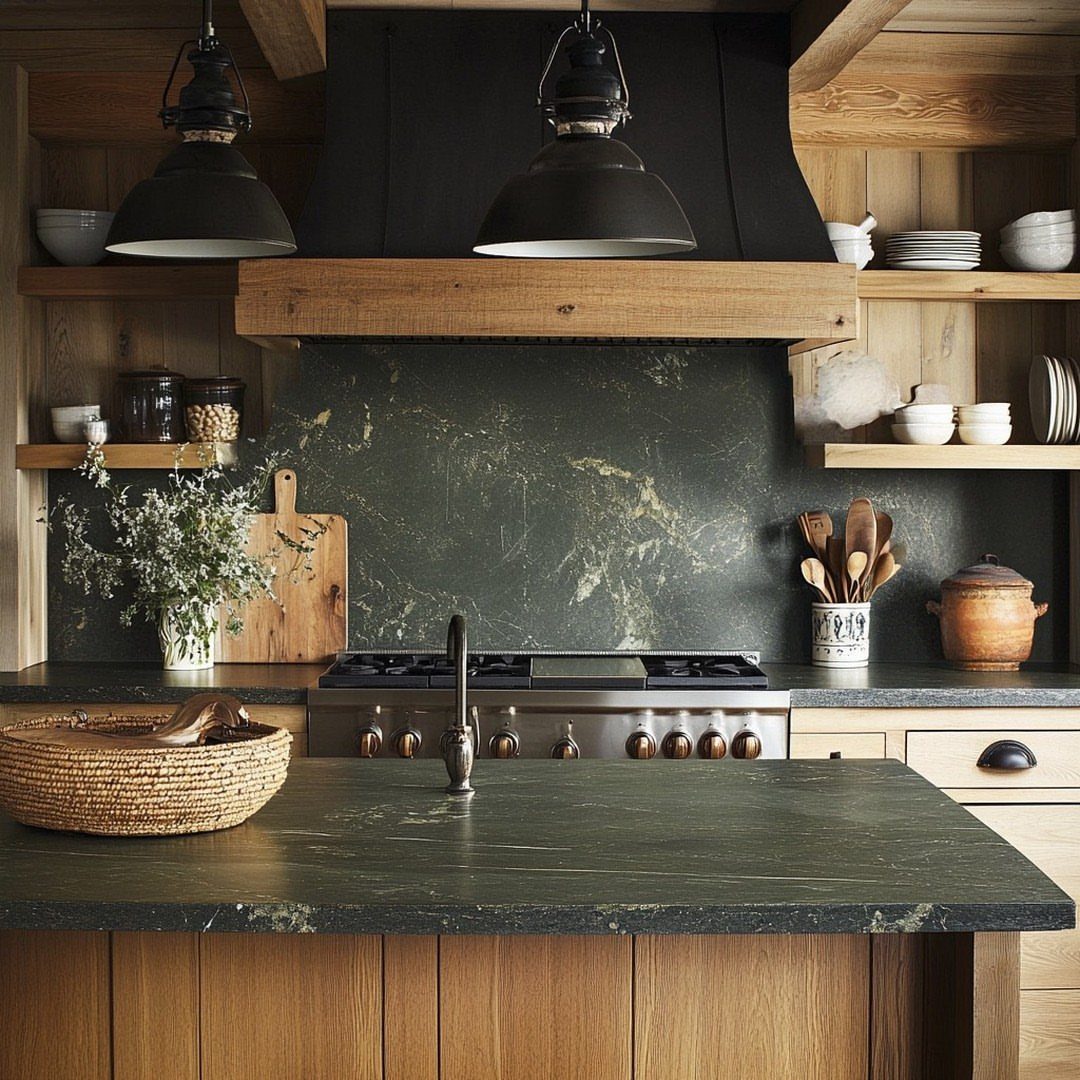
Dark green granite carried from the island up the wall makes a bold, grown-up backsplash, and wood cabinets soften it. In a light kitchen it gives the eye somewhere heavy to land.
Granite is a splurge compared with tile, and I’d say so plainly.
If the budget is tight, use it only on the island and pick a dark tile for the wall. Black pendants keep the look consistent.
12. Honeycomb Tiles
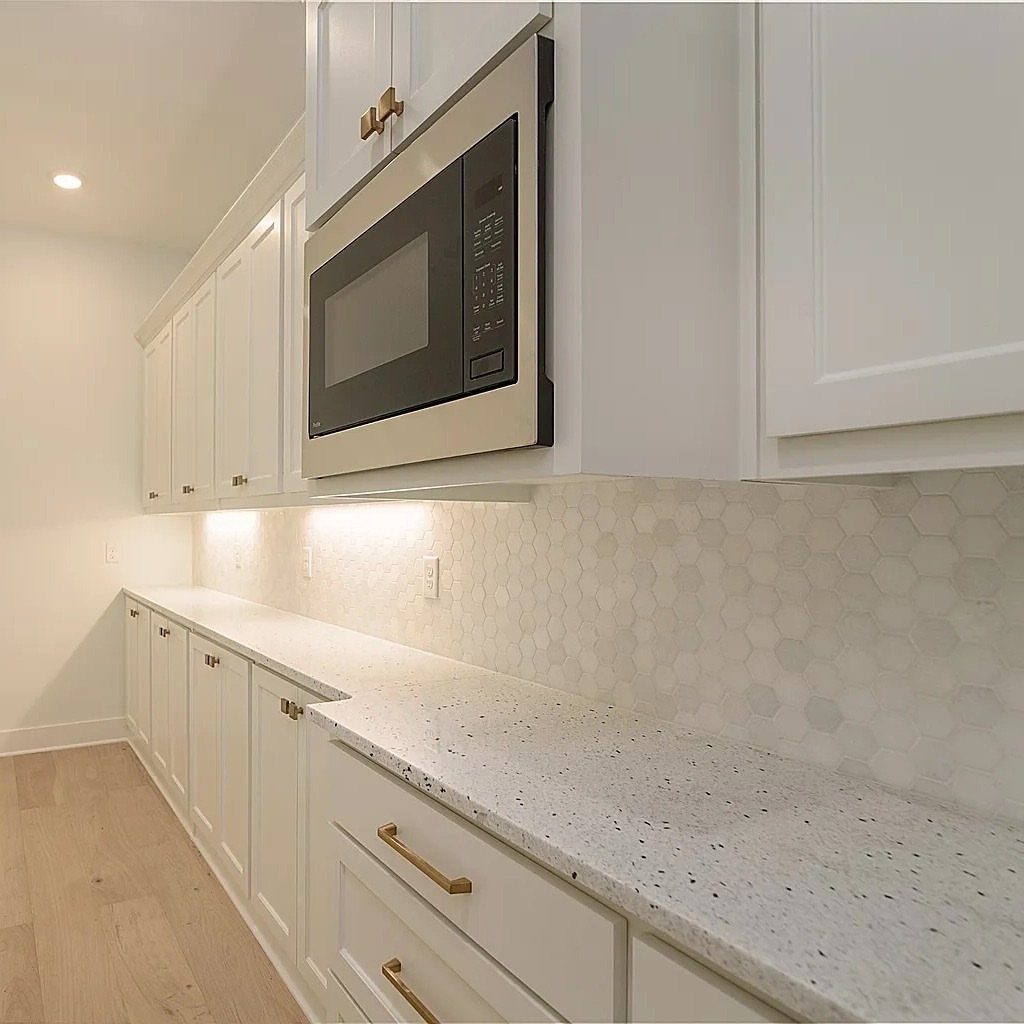
White hexagon tile reads as honeycomb, and the six-sided shape adds dimension even when every tile is the same color. It pairs easily with white cabinets, gold hardware, and a speckled counter.
Small hexagons often come on mesh sheets, which makes a weekend install realistic and saves cutting each piece. I’d choose light gray grout to outline the shape; white grout makes it vanish.
13. Floral Ceramic Tiles
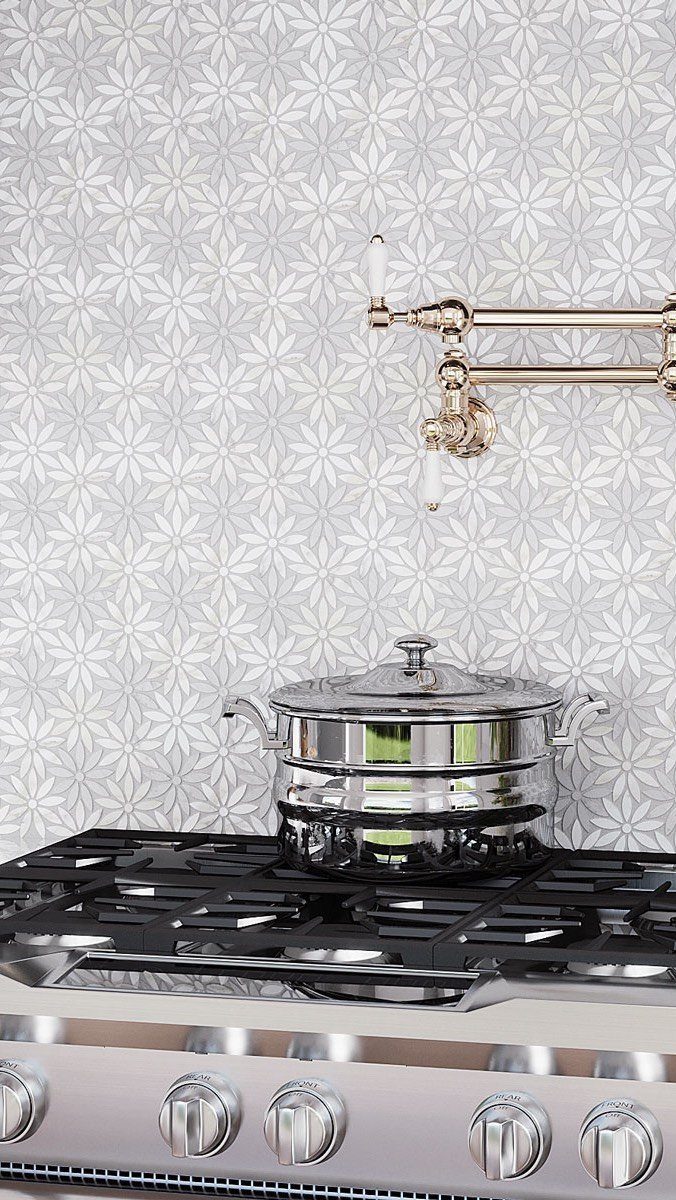
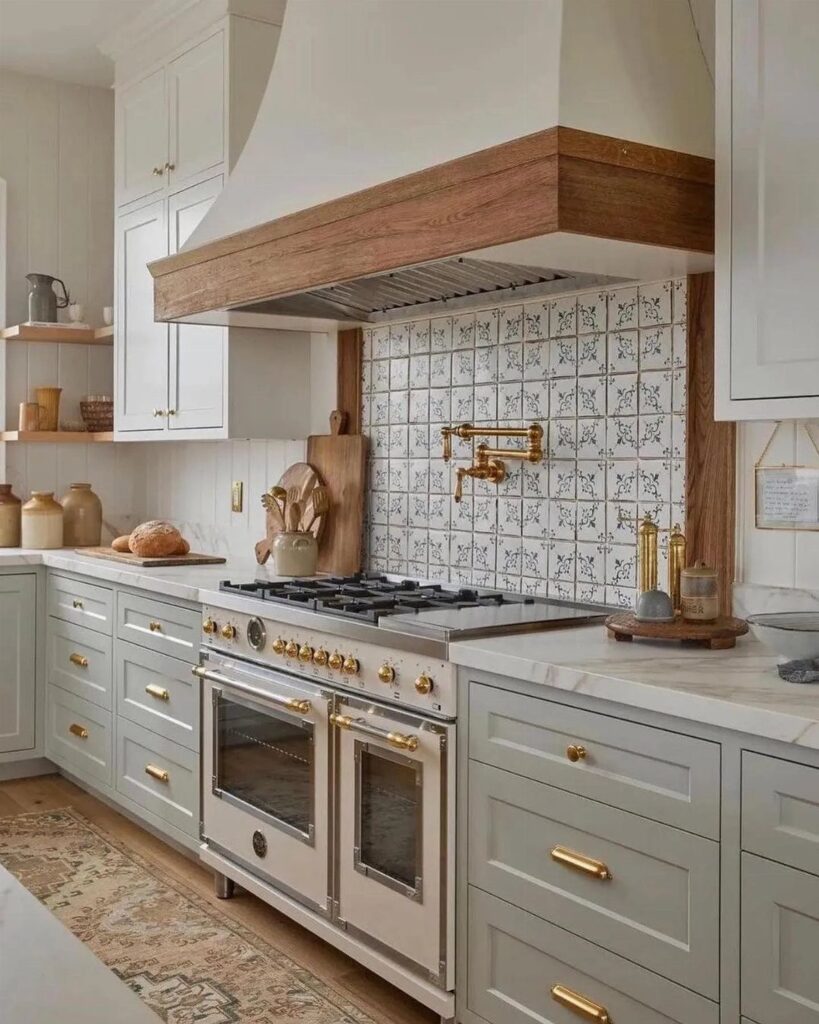
A floral tile in white and gray behind a stainless range and gold pot filler gives the cooking wall a vintage feel, and the gold fixture picks up warmth the cool pattern lacks.
Leave the surrounding walls plain so the pattern holds attention.
I’d confine it to the stove area, where a few square feet of pattern go a long way on a small budget.
14. Concrete Backsplash
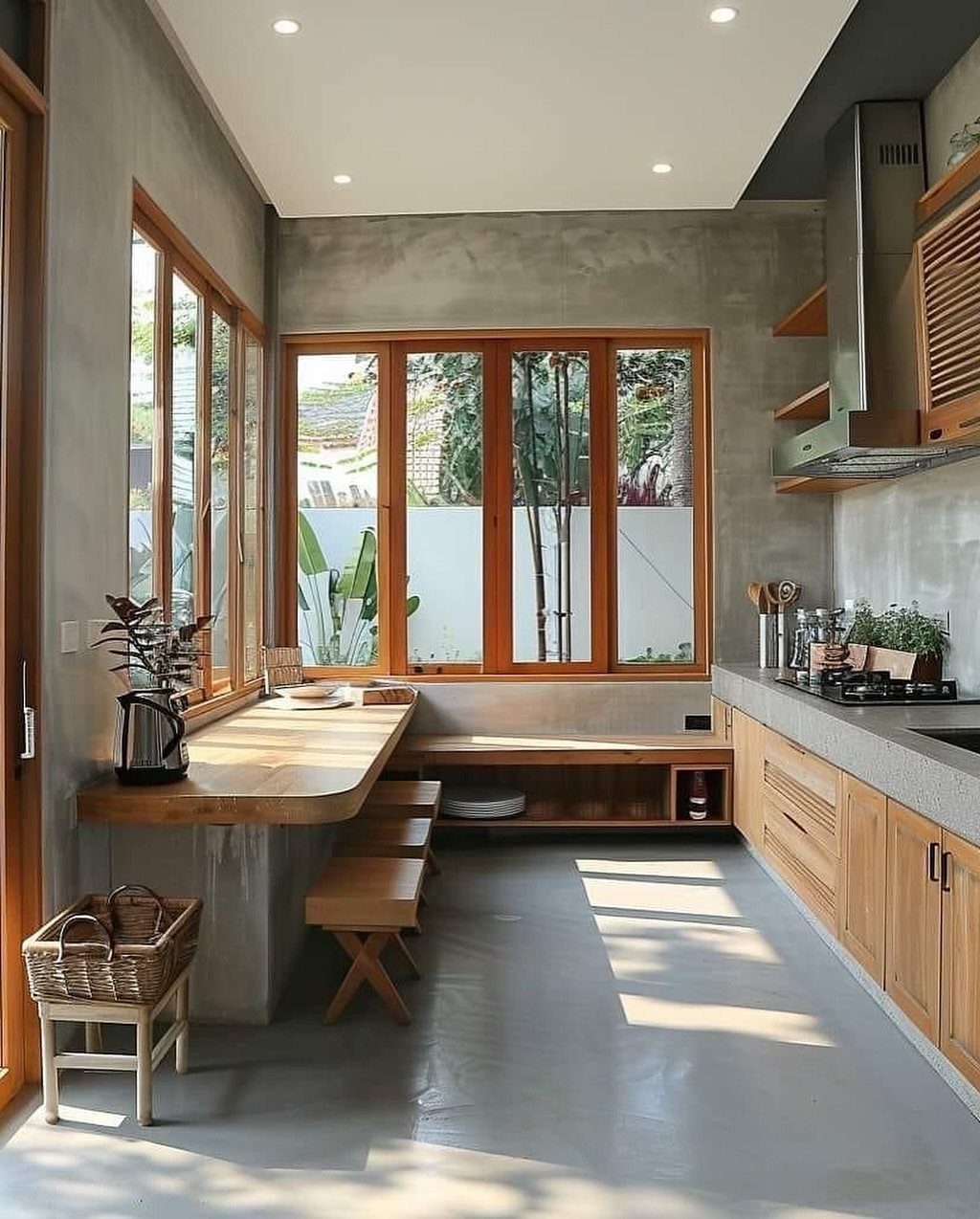
Poured-look concrete in gray, carried from the walls straight behind the counter, adds industrial character, and light wood cabinets prevent the room from feeling stark. Large windows with greenery outside soften all that gray.
The wood is what makes it work, so I’d match any concrete wall with warm cabinets rather than more gray.
For a renter, a concrete-look tile or skim coat on just the backsplash zone is the lighter version.
Choosing the Right Material
Start with the kitchen’s overall style, then let 3 things narrow the choice: durability, upkeep, and looks. A rustic room and a more polished one call for different materials, so decide which you want before you pick a sample.
Judge each material by how it handles the cooking wall. For a surface that holds up with little care, pick one that wipes clean in a single pass, like glazed ceramic or sealed quartz.
If you like a worn, natural texture, accept that it will need sealing or more frequent cleaning.
Cement-style tile is a popular farmhouse pick because it suits nearly any space. I’d keep the pattern subtle and the colors neutral, since that combination stays classic longest.
Mixing Styles
Farmhouse doesn’t have to mean country. A modern version works, and plenty of traditional elements can be updated without losing the style.
Encaustic-style tile behind open shelving, with a big island in bright white nearby, makes a combination I like for its mix of pattern and calm. The rustic bones stay, and the room reads crisp.
A modern direction calls for pale woods like maple or white oak, with white walls and counters as the quiet backdrop.
A classic direction gets its warmth from a few antique or vintage-style pieces, such as a worn cutting board or an old pendant light.
Keep appliances simple and practical, since a plain finish lets the backsplash do the talking. Whichever direction you go, the aim is a balance of old and new, so if one side starts to dominate, change something on the other.
If you’ve been thinking about incorporating a new look that’s perfectly rustic, read on for 30 farmhouse kitchen backsplash ideas to satisfy your craving for rural charm.
— Hunker
Color Coordination
Build on neutrals.
Modern farmhouse kitchens run light and bright, so a white or gray backsplash gives the room an airy feel. White, brown, blue, gray, and beige are all safe colors to build the rest of the room on.
Then add one or two pops of color, not more.
Painted cabinets, a brightly colored appliance, or a patterned tile can carry it. Too much color overwhelms the room fast.
A dark backsplash in charcoal or deep navy can work too, and it makes the room feel cozy and dramatic. Pendant lights over the counter help it work, because they keep the dark surface from swallowing the space.
A brass rail for utensils and pans, easy to hang yourself, adds a warm accent and frees up counter space.
Frequently Asked Questions
What are backsplash trends for 2026?
Natural materials, bold patterns, and mixed textures lead the pack. Wood planks, brick, and marble suit the natural side, while patterned or raised, sculpted tile covers pattern and texture.
Mixing works best when one area carries the bold choice, such as a patterned tile only behind the stove, with the rest of the wall kept plain.
What makes a kitchen farmhouse style?
Rustic elements, natural materials, and a cozy feel define it. Think white or light cabinets, wood, a farmhouse sink, vintage-style pieces, and ceramic or cement tile with subtle patterns.
Paler woods such as maple or white oak, paired with white walls and counters, give the modern take, while a classic farmhouse kitchen gets its warmth from a handful of antiques.
What are some simple and stylish ideas for a kitchen backsplash?
Glossy white or gray subway tile is the easiest, since it wipes clean and the running-bond layout is simple to line up on a weekend.
For the lowest price, paint beadboard in semi-gloss and you have a cottage look for a few dollars a square foot; herringbone in a soft neutral costs more but brings pattern without adding a color.





