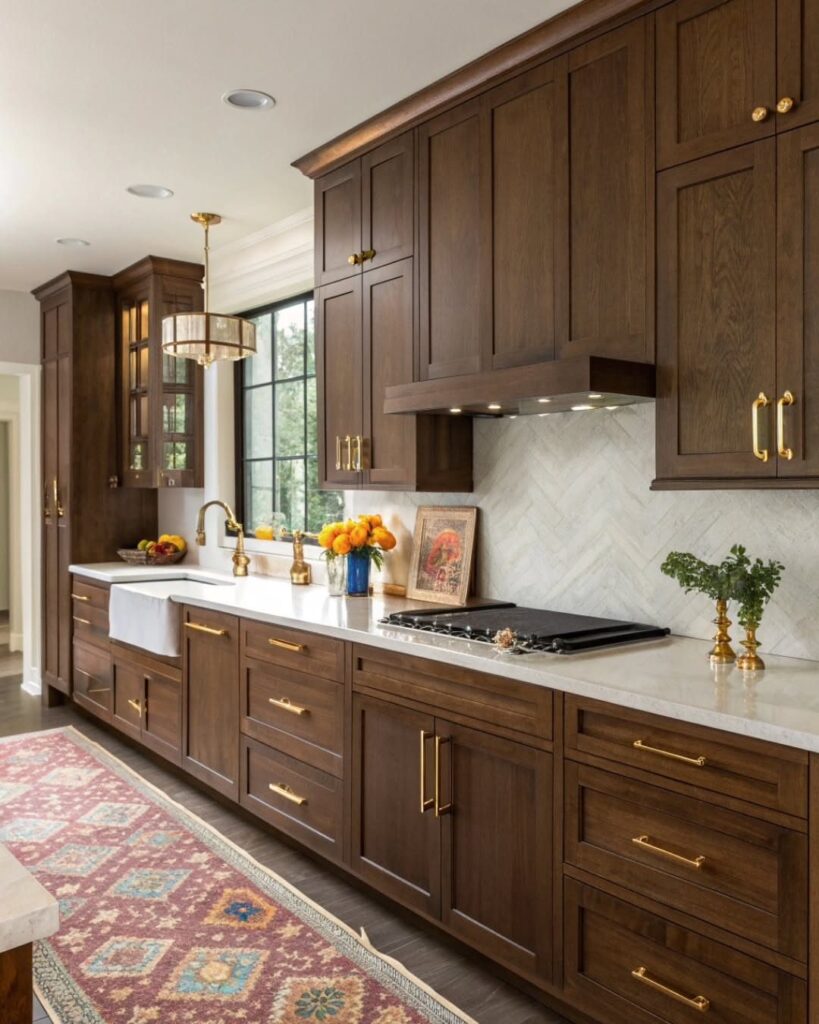
How much walnut you use should follow how much light the room gets, since the choices here run from a single walnut island to black walnut with dark countertops, rustic finishes in tight galley layouts, and glass-front walnut uppers that need good lighting once the sun sets.
Walnut on the lower run only costs less and introduces the material gently, and the wood itself holds up for 30 years or longer when you stay on top of cleaning and refinishing.
1. Walnut Kitchen Cabinets
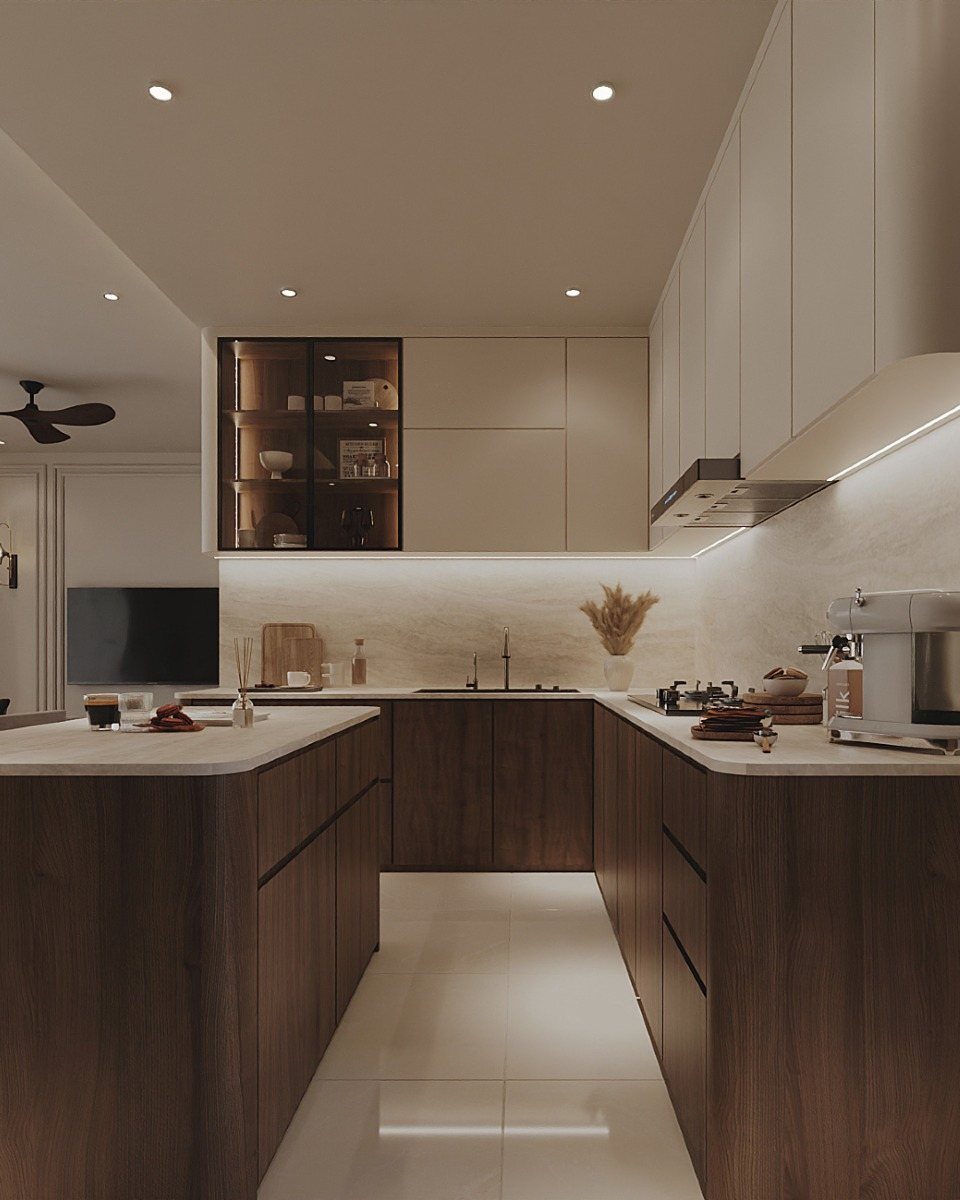
Dark walnut on the base cabinets and island, with white uppers, is the split I’d pick for a kitchen that needs to stay easy to live with.
Light countertops and backsplash let the walnut stand as the single warm material without competing. On a budget, a white upper run with a few walnut-fronted bases costs less than wrapping the whole room.
2. Walnut with White Countertops
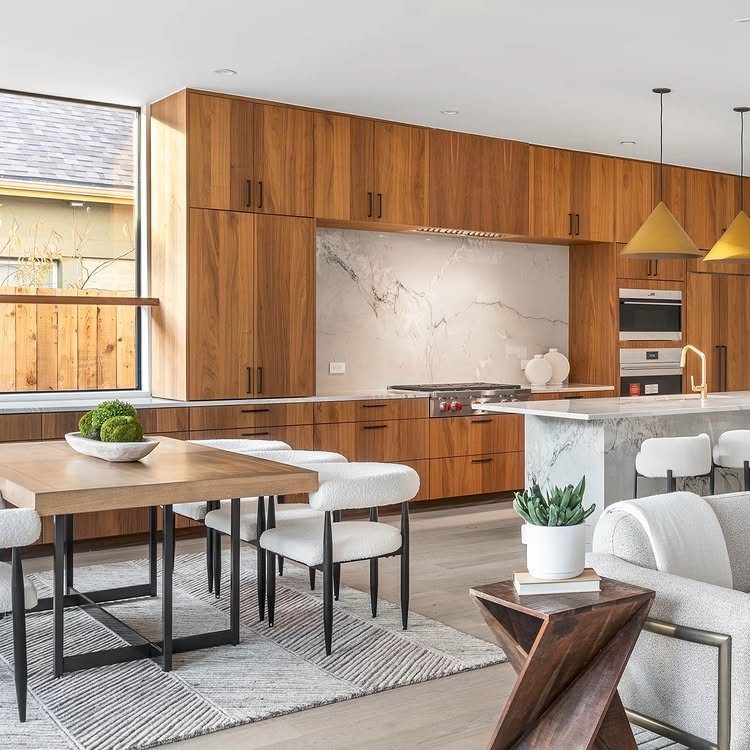
White marble against walnut gives the strongest contrast you can get from 2 materials.
Run the marble up the wall as a matching backsplash, and the counter reads as one clean surface instead of a slab with a stripe behind it.
A white laminate or quartz look-alike keeps the same contrast for far less, though real stone has the veining that makes the pairing work.
3. Rustic Walnut Cabinets
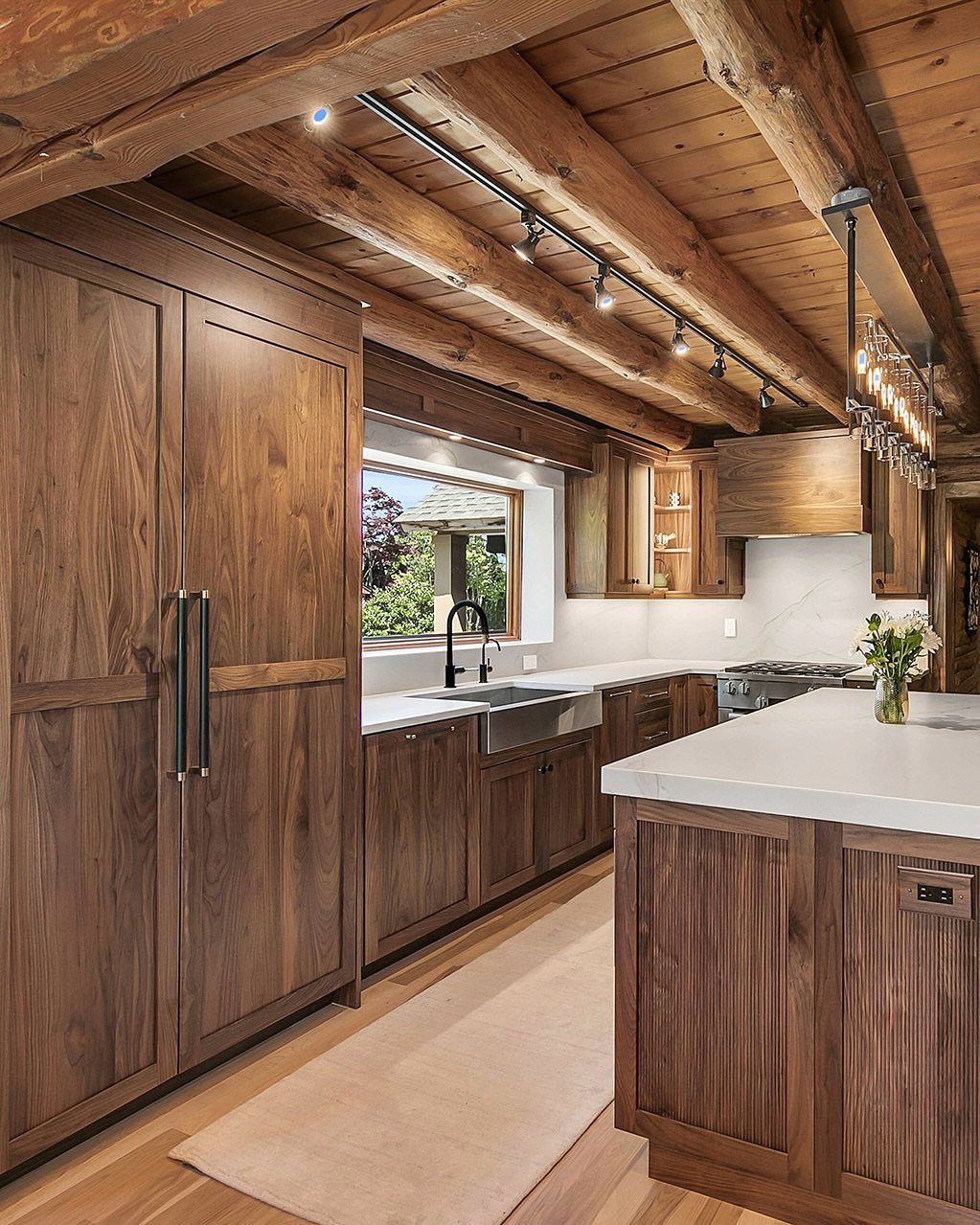
Heavy log beams overhead can carry a rustic kitchen, so the cabinets don’t have to. Walnut doors in a plain slab, paired with light counters, stay modern instead of sliding into cabin territory.
Track lighting works well under beams because you can angle each fixture toward the work surface. If you rent or can’t add beams, a single rough wood shelf or a wood-toned light fixture borrows a little of the same feeling.
4. Black Walnut Kitchen Cabinets
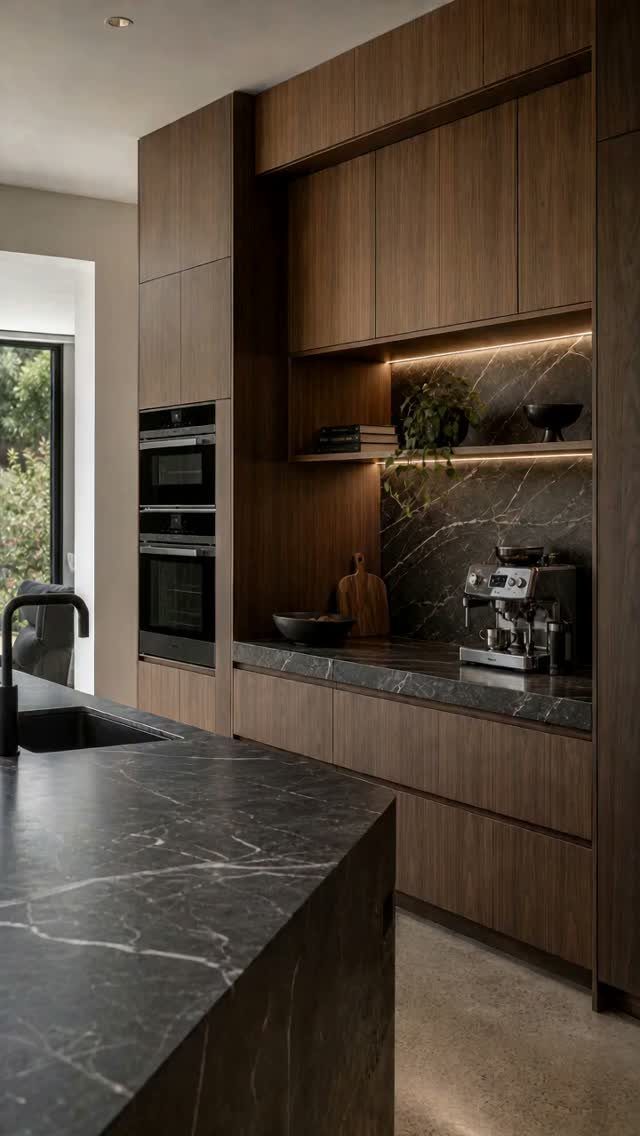
Dark walnut beside black marble is the moodiest version of this kitchen, and I like it best with warm light. A lit shelf, as here, stops the 2 dark surfaces from swallowing the room.
Expect it to demand good lighting. Add under-cabinet strips or a shelf light early, because dark cabinets and a dark counter flatten out once natural light drops.
5. Walnut with Beige, Taupe
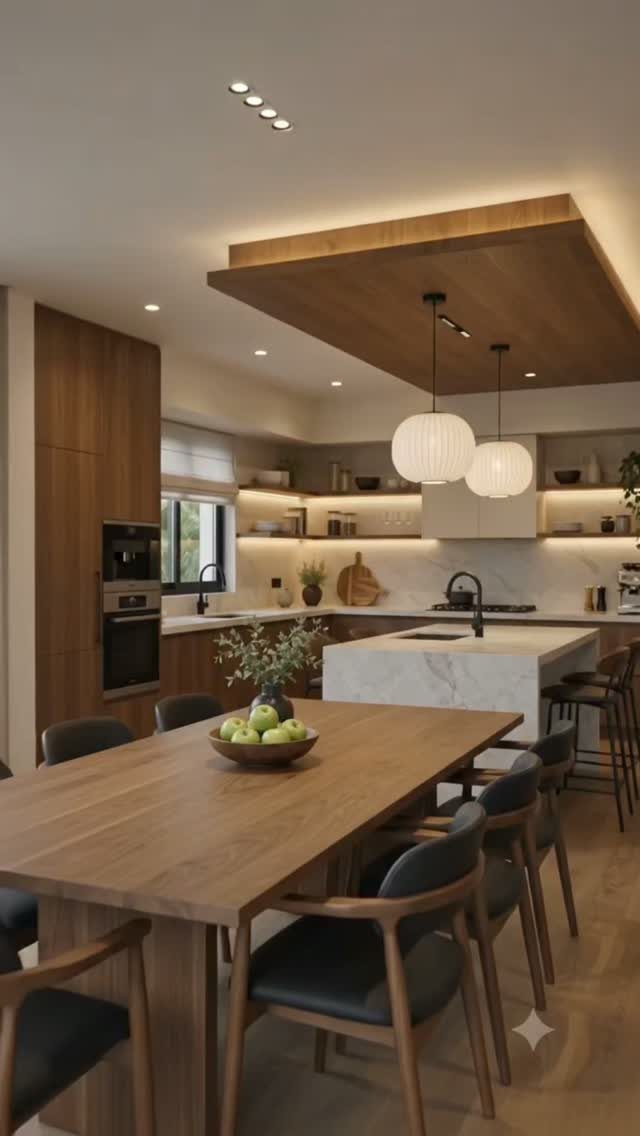
Beige or taupe walls soften walnut better than stark white does, and the wood looks richer for it. A white marble island gives the eye somewhere to land in the middle of all that warmth.
Pick a wall color with a warm undertone, and test a sample next to a cabinet door before painting. Taupe that leans gray can make walnut look muddy.
6. Modern Walnut Kitchen Cabinets
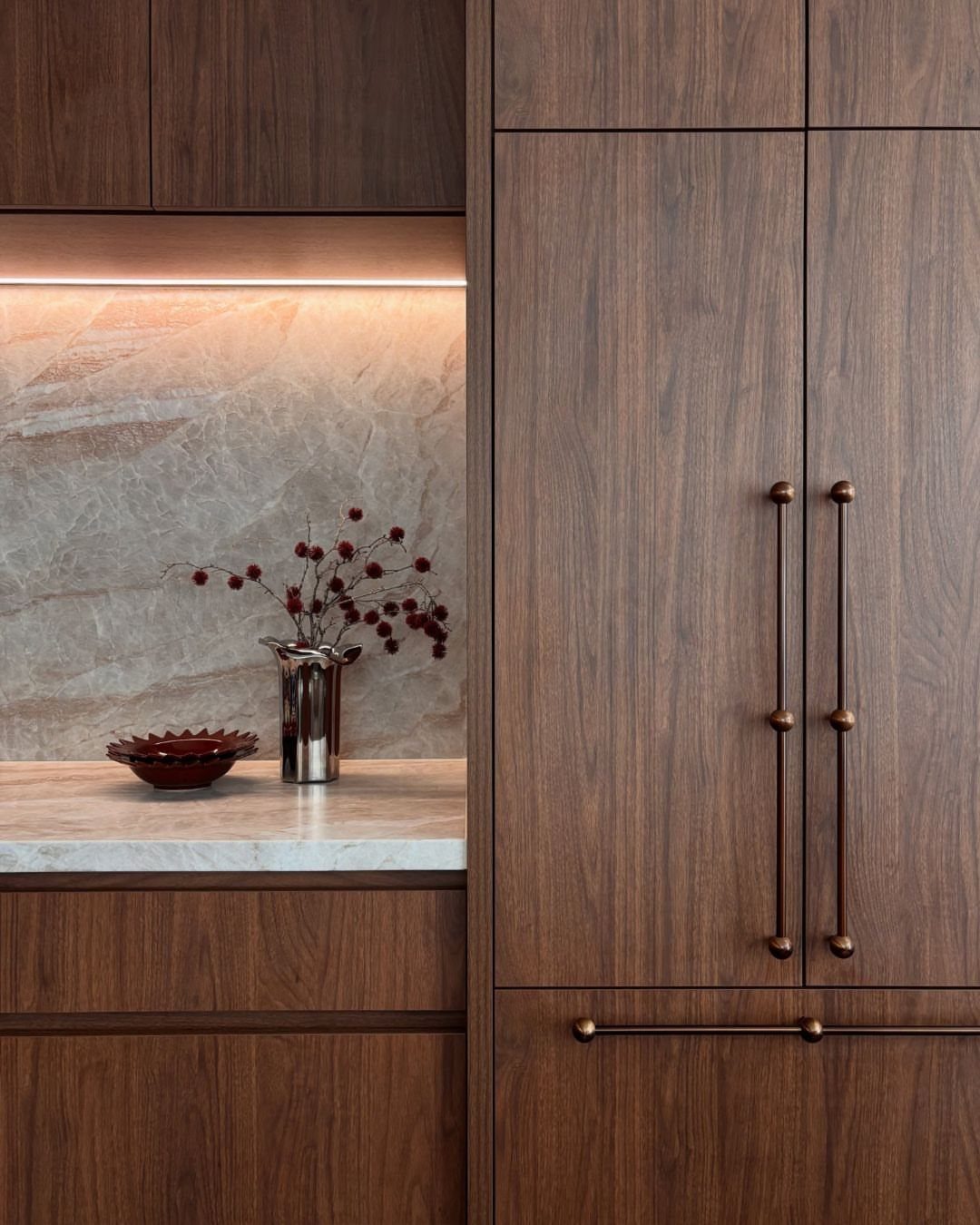
Long bronze handles are the detail I’d copy first. They echo walnut’s warmth in metal, and they cost far less than swapping the cabinets.
Pair the dark doors with a marble counter and a matching marble backsplash, and add under-cabinet lighting so the stone catches light. If walnut feels like a gamble, try it on the lower cabinets only.
7. Walnut Cabinets with Glass Fronts
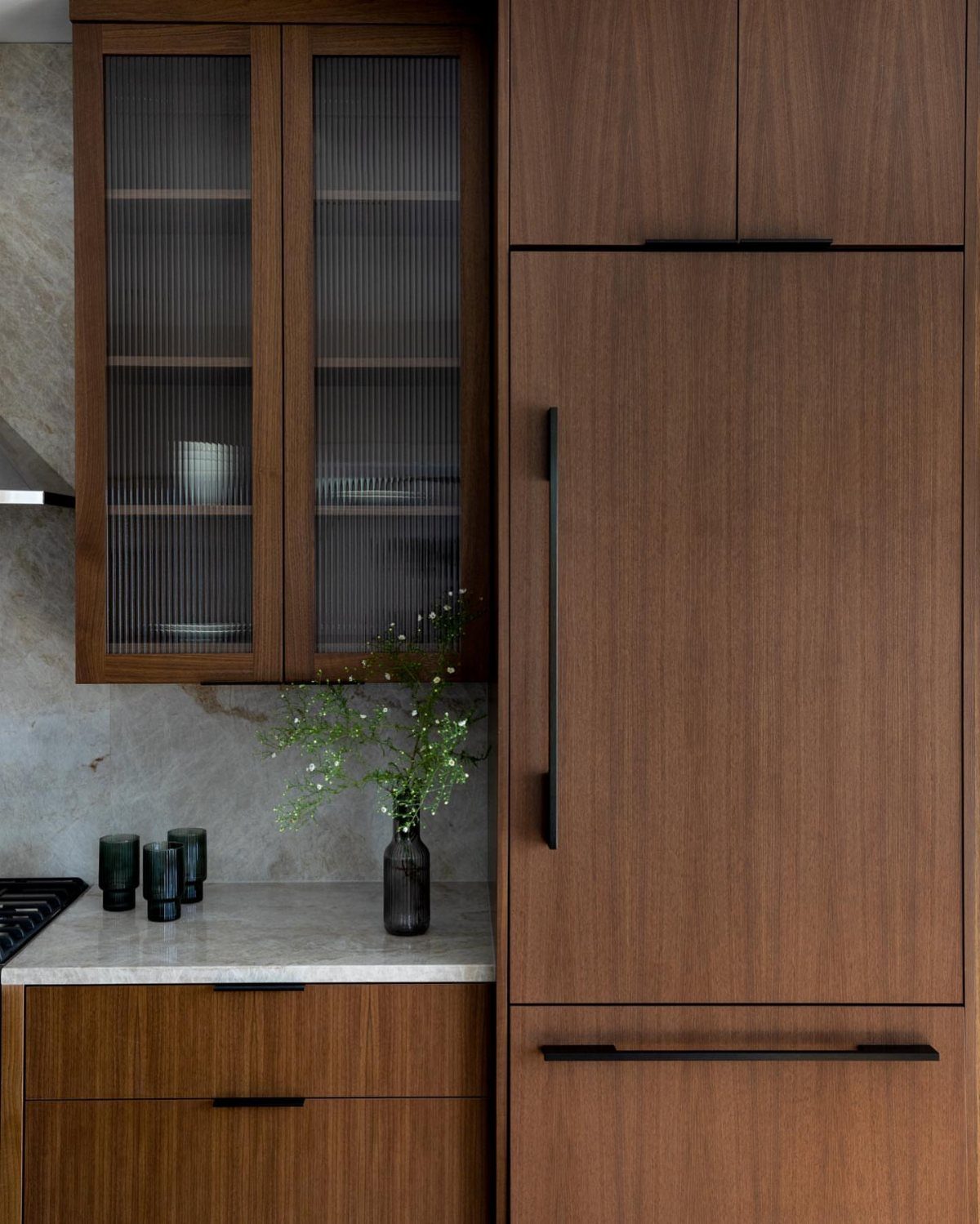
Fluted glass fronts let walnut cabinets show a little without exposing everything inside. The ribbed pattern blurs the contents into soft shapes, so a shelf of mismatched mugs still looks calm.
Limit glass to one or two upper doors; leave the others solid. Stack plain white dishes behind the fluting, and the marble counter below stays the brightest thing in the room.
8. Colorful Backsplashes with Walnut Cabinets
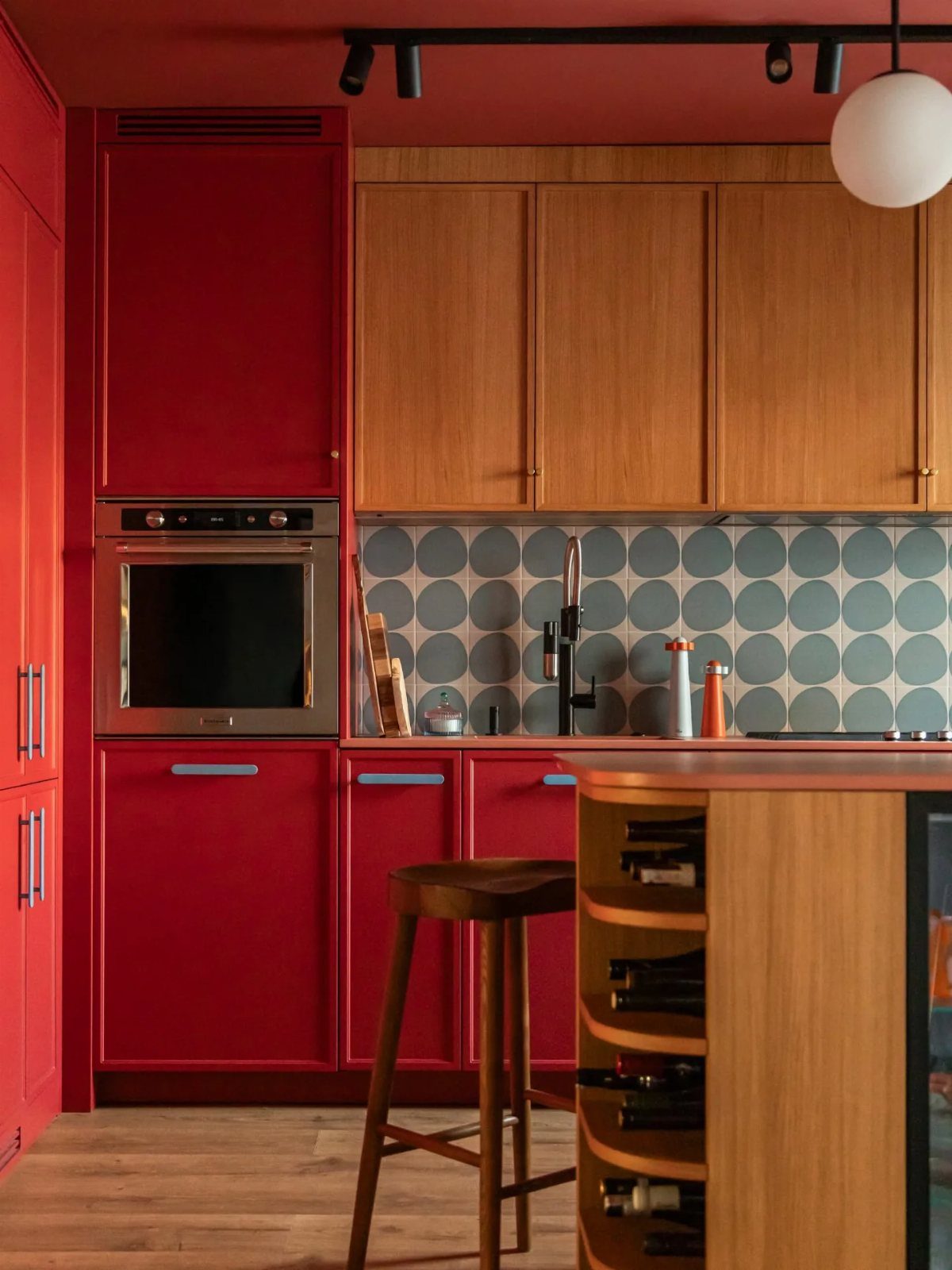
Red lower cabinets, walnut uppers and a blue and white circular tile make a loud kitchen, and the wood is what keeps it grounded.
Walnut is a quiet neutral next to those 2 colors, so the tile can carry the pattern.
Choose one bold color for the cabinets and one for the tile, then let walnut handle everything else. Backsplash tile is a small area, so it’s the cheapest place to try a pattern.
9. Vintage Walnut Kitchen Island
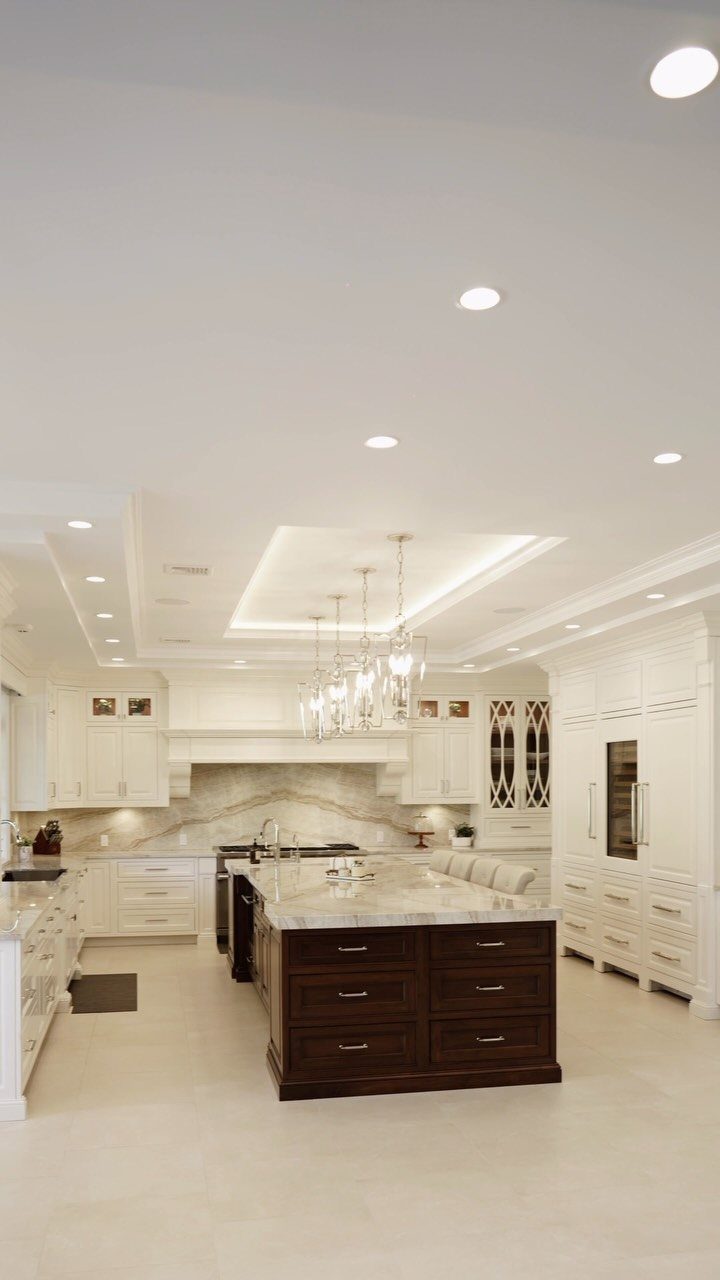
A dark walnut island in a white kitchen looks like a piece of furniture someone inherited. White marble on the countertop and backsplash stops the room from looking too heavy.
If the perimeter is already white, an island is the one spot where walnut pays off most. Pick a dark stain and a light top, and the island becomes the room’s anchor without touching the other cabinets.
10. Flat Panel Walnut Kitchen Cabinets
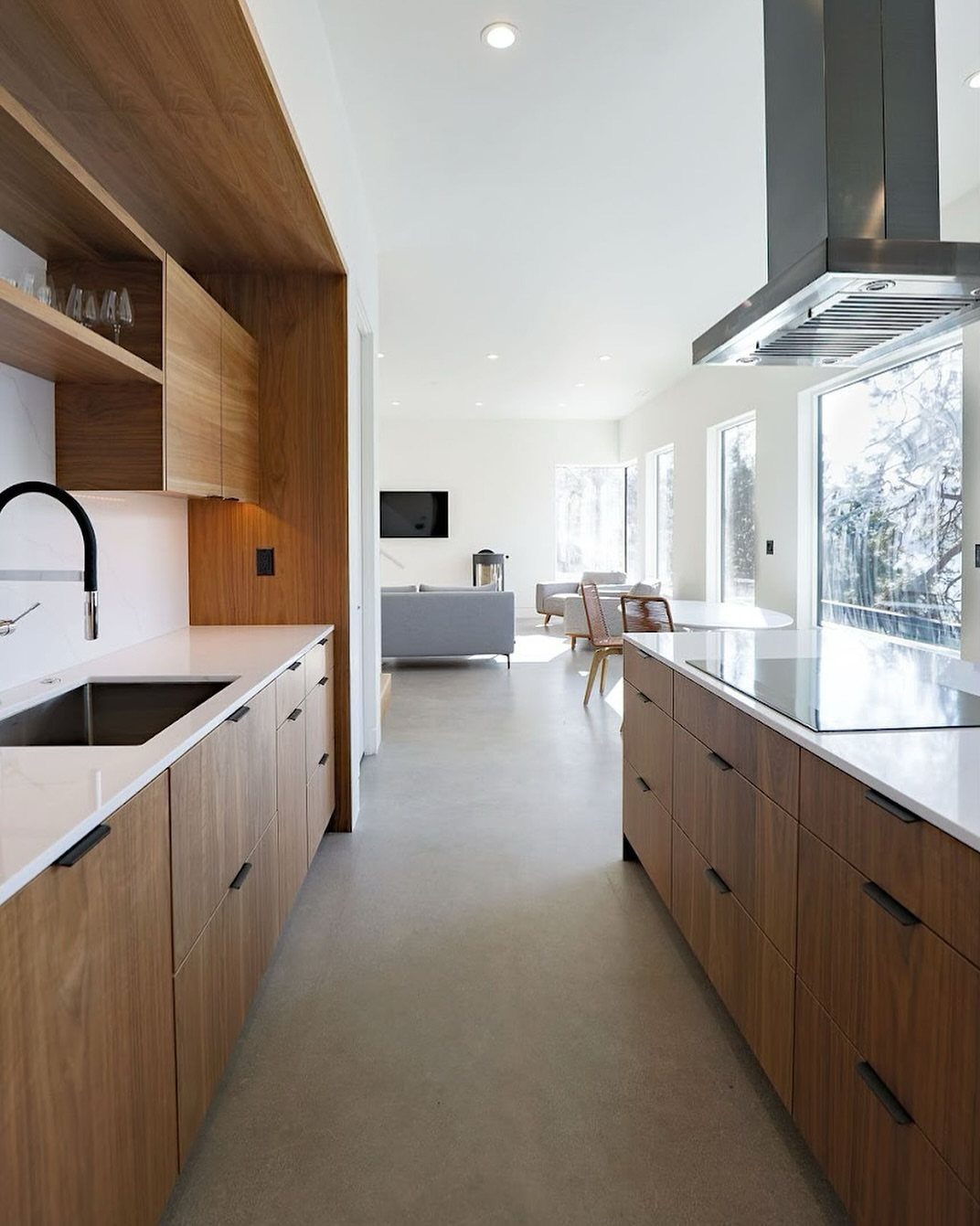
Flat panel doors skip the frame entirely, so each face reads as a single unbroken surface. That puts all the attention on the walnut grain, which is why I prefer this style for the wood.
Pair it with white countertops and a plain stainless vent hood, as here, and the grain does the decorating. Fewer seams and no raised edges also mean fewer places for grease to settle when you wipe the doors down.
Caring for Walnut Cabinets
Mild dish soap in warm water is all walnut cabinets need for regular cleaning. Wipe with a soft cloth, then dry the surface right away with a second cloth so no moisture sits on the wood.
Skip harsh chemicals.
If grease builds up near the stove, a mild dish soap diluted in warm water cuts through it without damaging the finish. Diluted store-bought stain removers from a hardware store are another option.
Microfiber cloths are worth buying for this job. They lift grime without scratching and dry well.
Pros and Cons of Walnut Cabinets
Walnut costs more than oak or maple, and that is the main reason to think twice. With proper care it can last 30 years or more, so the higher price spreads out over a long time.
Maintenance is the second cost.
Walnut resists stains because it is dense and dark, but heat and acidic residue near a cooktop can discolor it, so wipe up spills quickly. It may also fade over time.
Weight matters too.
The weight makes installation slow, and shipping costs climb fast if you order direct. Color choice is narrow, and in a compact space with little light, the dark tone can feel heavy.
Color Pairings with Walnut
White, gray and warm neutrals are the safest partners.
Gray reads modern and lets the wood do the talking.
Avoid mid-tone colors that muddy the contrast, which can make the room feel indistinct.
Frequently Asked Questions
What color goes with walnut kitchen cabinets?
White, gray and warm neutrals are the safest partners.
Beige or taupe walls bring out walnut’s warmth better than stark white, but the undertone matters: test a sample next to the cabinet door because taupe that leans gray flattens the wood.
Gray gives you a modern look and lets the grain stay front and center, while bright colors fight for attention.
How much are walnut cabinets?
Walnut typically runs 15–30% more than maple, so get quotes from several sources and compare species before deciding.
To bring the cost down, put walnut only on the island or the base cabinets and use white uppers. Shipping also climbs fast if you order direct, because the wood is heavy.





