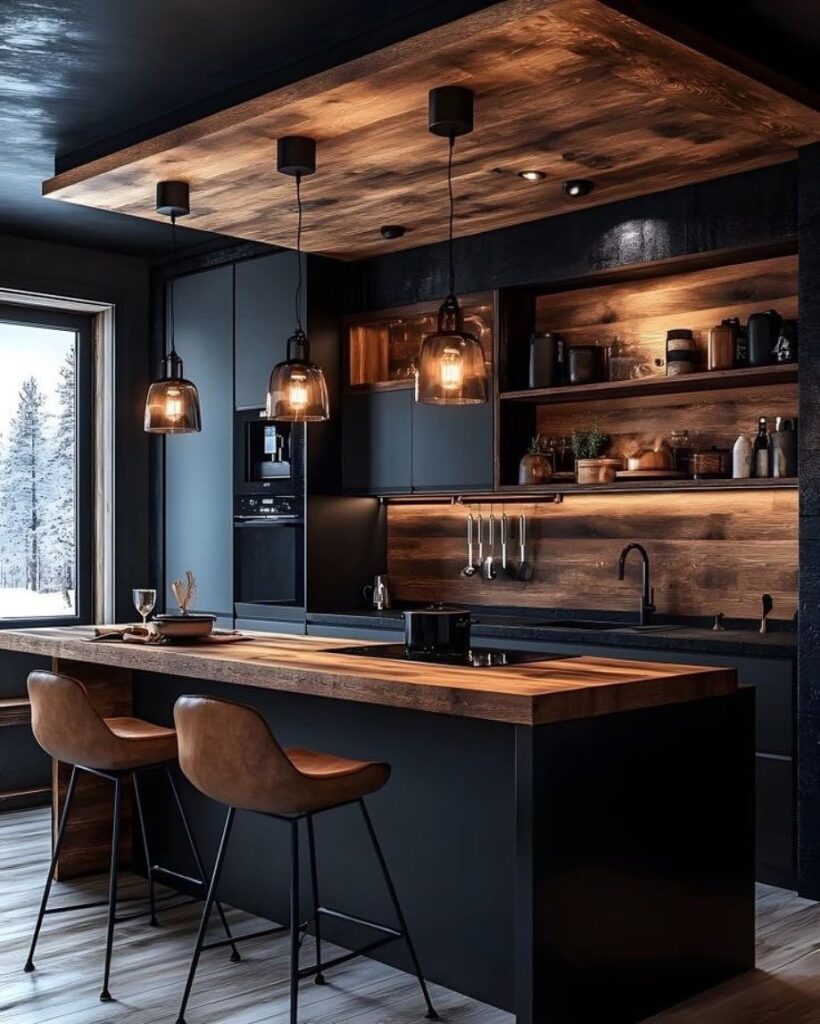
The ideas here range from a cheap hardware swap to bigger jobs like a black island with a wood top, slatted island details, a black tile backsplash, wood paneling and matte black with wood flooring.
How much black a room can carry in its own light decides it: with small windows and little sun, I’d keep black to the hardware, the range hood or the appliances, while a bright kitchen can handle matte black cabinets next to wood flooring.
With this much dark in the room, a wood that leans too red or too gray will look off next to the black, so I check the undertone before I fall for the grain.
1. Black Island with a Wood Countertop
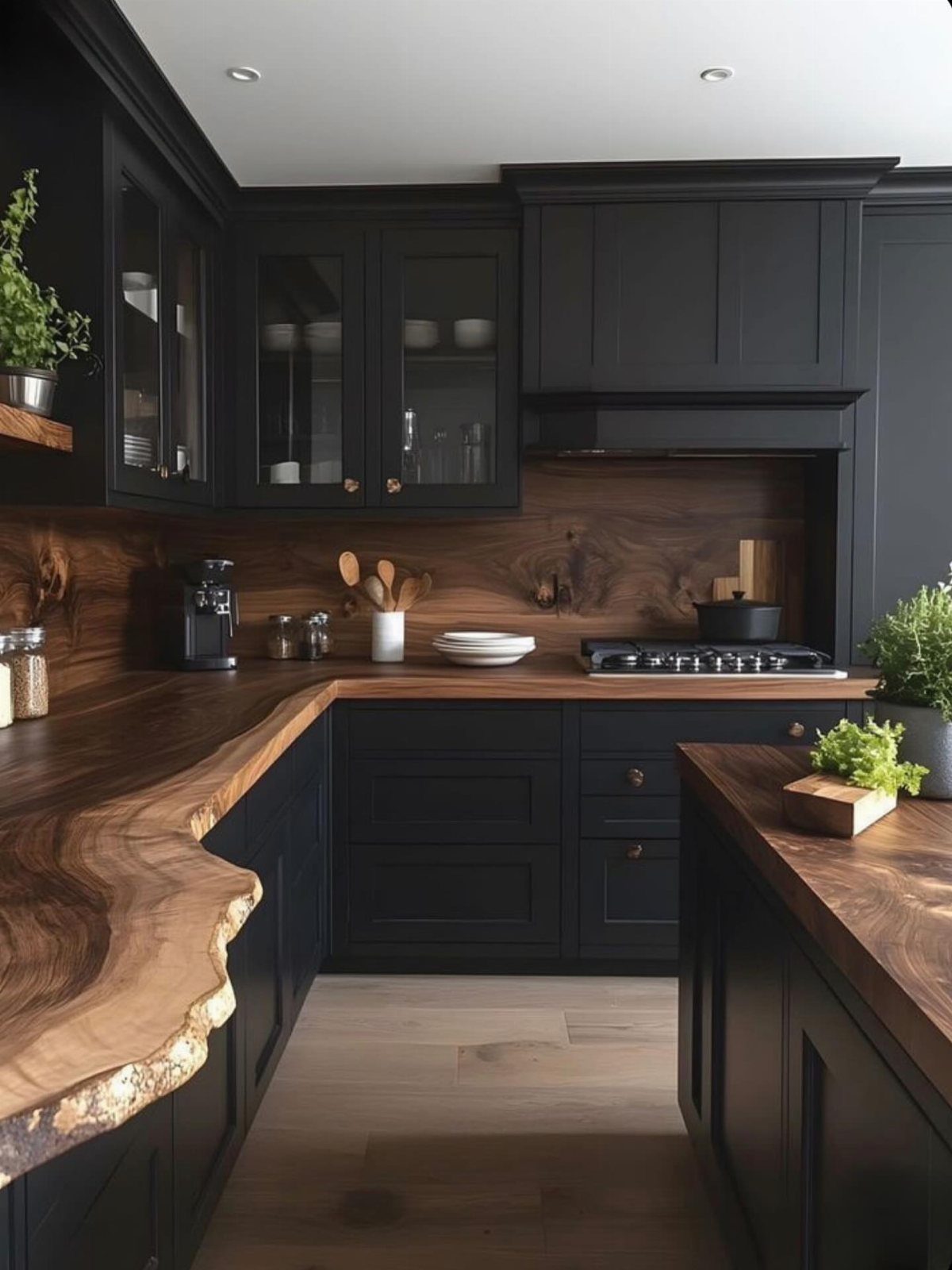
A thick slab of live-edge wood on a black island gives the room one warm, uneven line against all that flat color. Keep the wood as the only organic shape, because black cabinetry already supplies the straight edges.
A matching wood backsplash ties the island to the walls, though I’d pick one or the other if the kitchen is small. Wood beside a sink needs a sealed finish, so plan to reseal the top as it ages.
2. Open Wood Shelving Against Black Walls
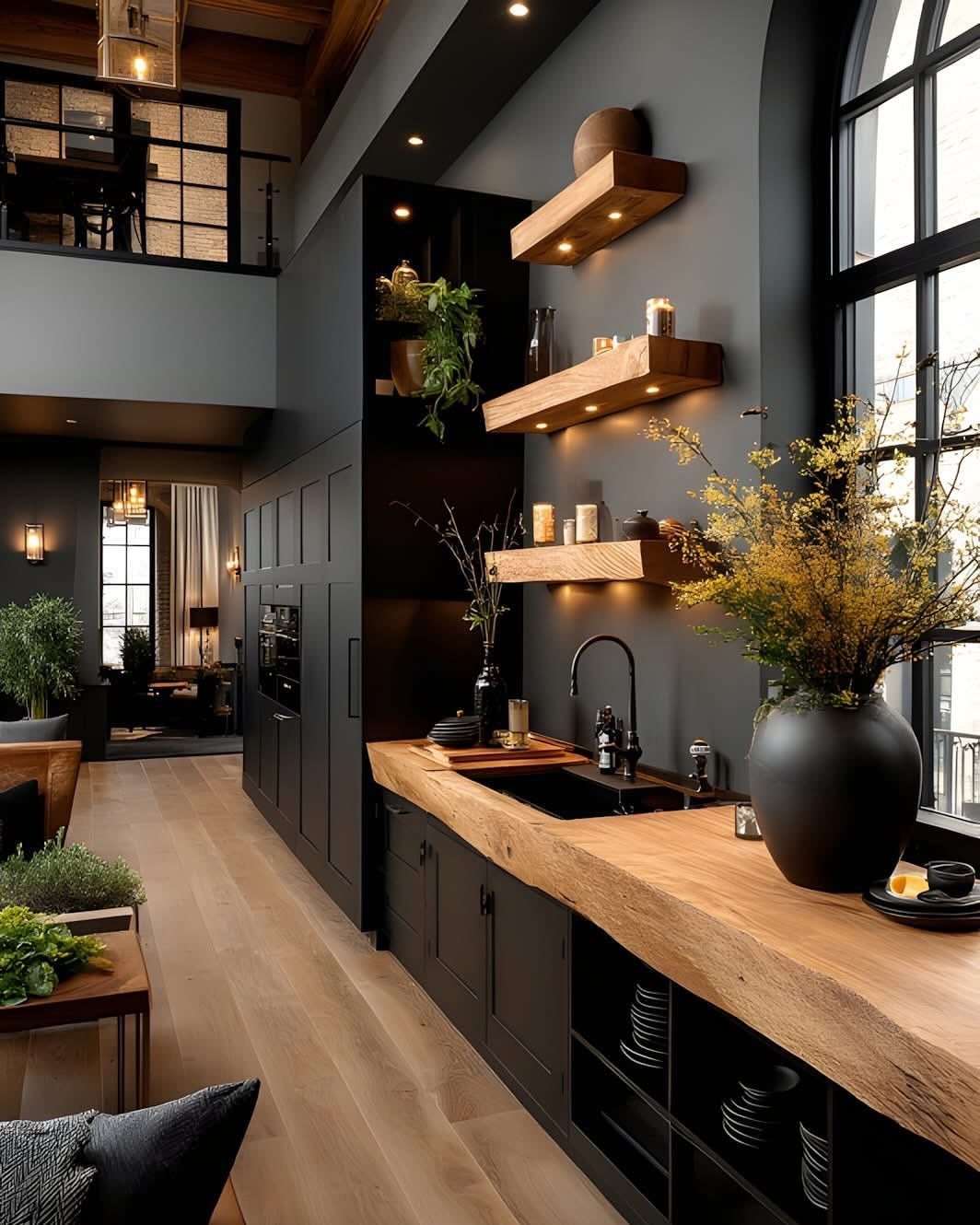
Floating wood shelves read best when the wall behind them is matte, since a dull surface keeps the grain as the thing you notice. 3 shelves of equal length, spaced evenly, look calmer than a mix of sizes.
Plants and a few objects in a single tone are enough.
Crowd the shelves and the dark wall stops doing its job. Shelves also replace upper cabinets, so a wall like this suits someone who is happy to keep dishes tidy and on show.
3. Matte Black Finishes with Glossy Tiles
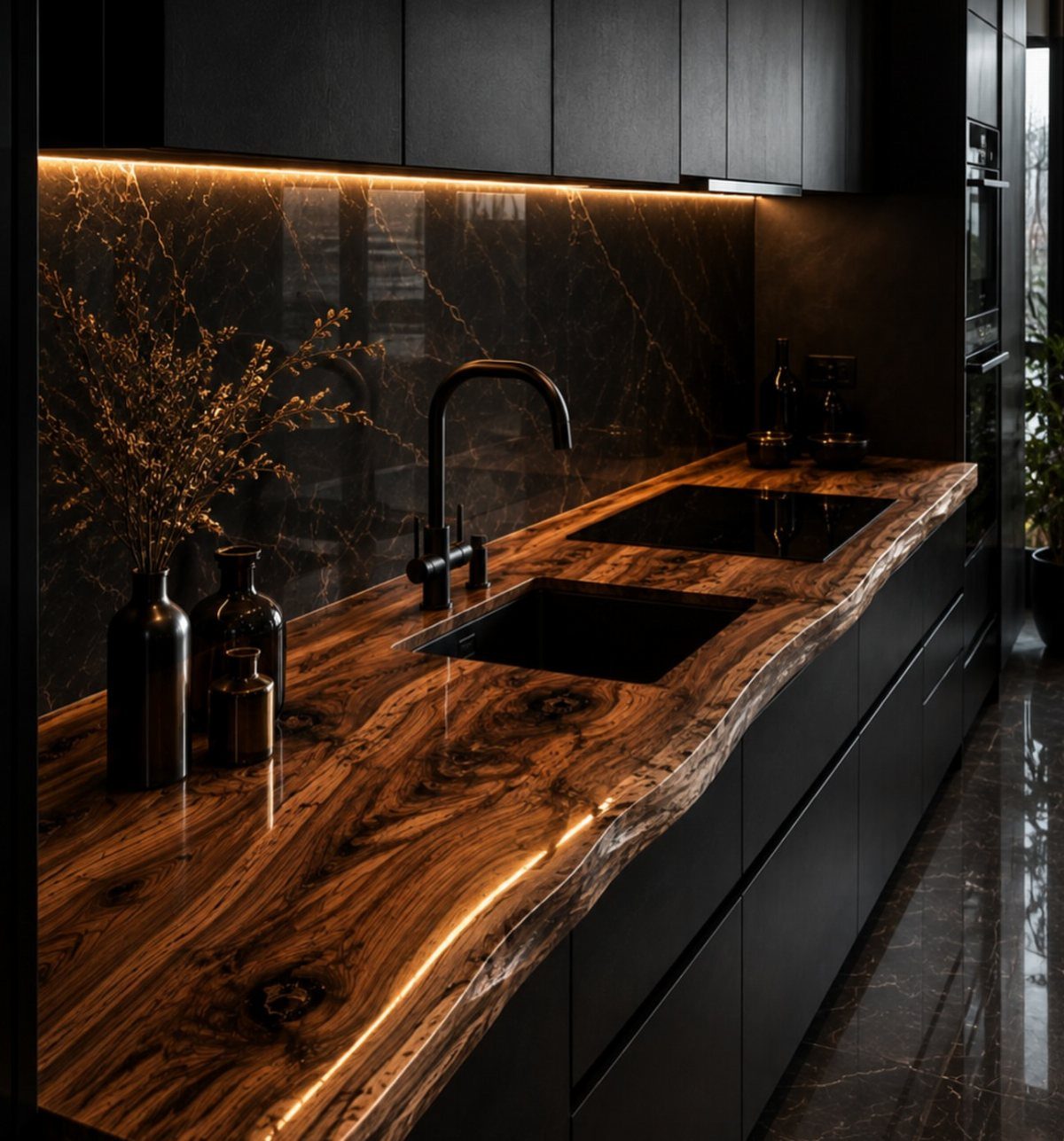
Matte cabinet doors and a glossy backsplash give black two different jobs: one absorbs light, the other bounces it. Under-cabinet lighting is what makes the pairing work, because it rakes across the polished surface and shows the veining.
I’d keep the glossy part to the backsplash alone. Wood on the counter softens the contrast.
Gloss shows splatter and fingerprints faster than matte, so expect to wipe that wall down more often.
4. Two-Tone Cabinets
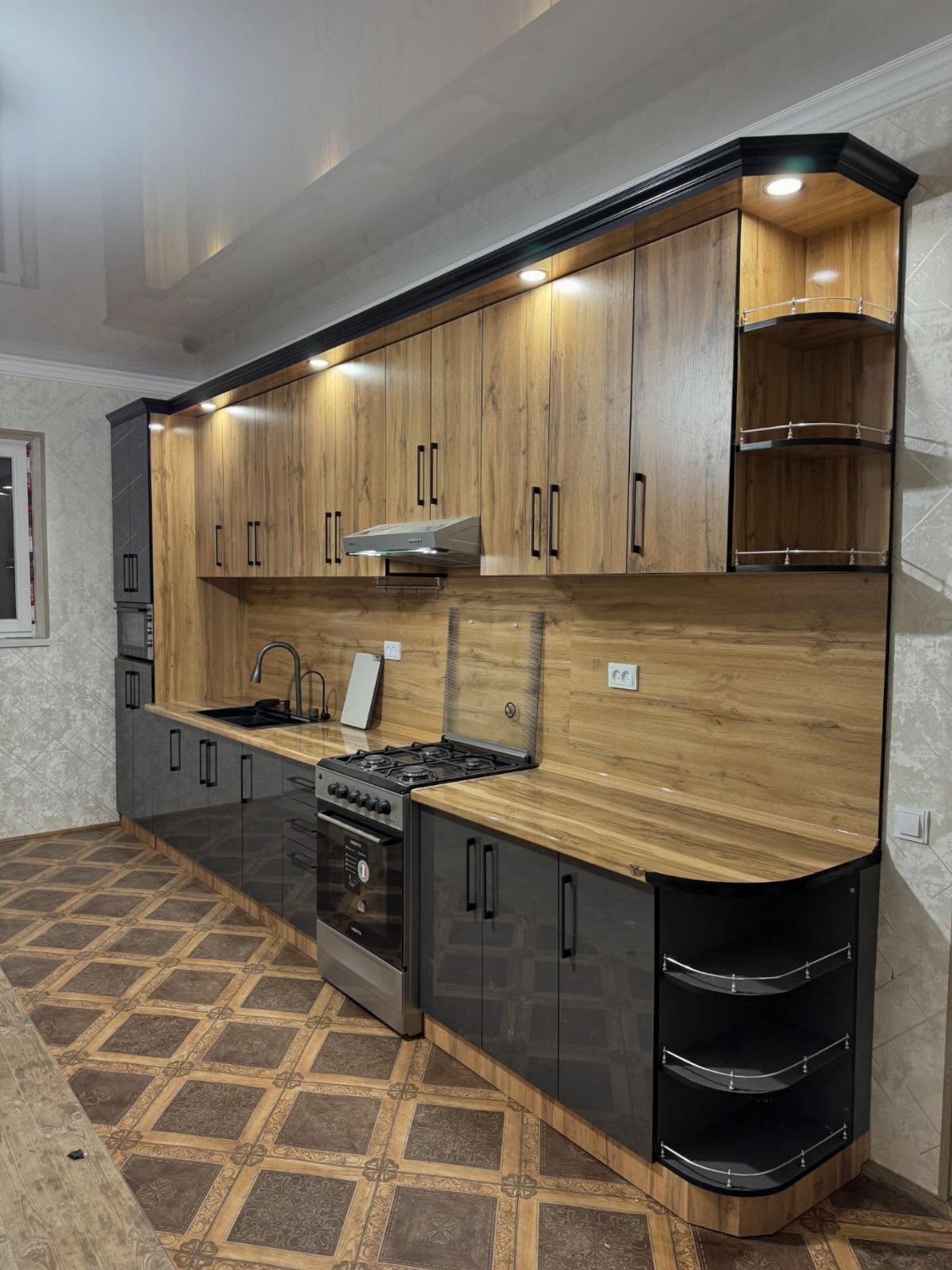
Light wood uppers over glossy black lowers keep a kitchen from feeling top-heavy, since the dark weight sits near the floor and the pale grain stays at eye level.
Carrying the black onto the countertops makes the lower run read as one solid block.
A patterned tile floor is a good partner, as it adds interest without competing with the cabinets.
If you’re repainting only the bases, glossy black will show every flaw in the surface, so sand and prep carefully before the first coat.
5. Warm-Toned Pendant Lights
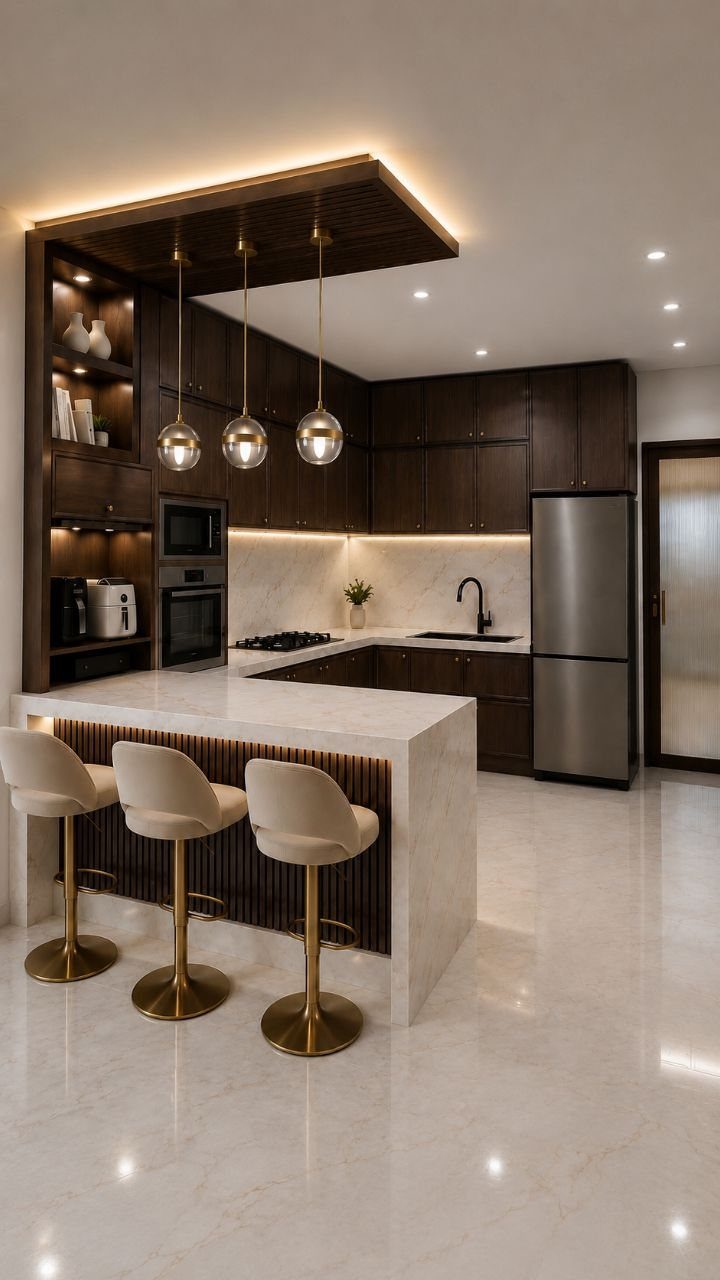
3 globe pendants in a gold tone, hung in a row over an island, add a glow that dark wood cabinetry badly needs. Round shapes soften a room built from rectangles, and the warm metal picks up the wood’s undertones.
Space them evenly along the island’s length, and put them on a dimmer so the light can drop for evenings.
Pendants are also one of the easier swaps for a weekend project, since they replace a fixture rather than rebuild anything.
6. Brass Hardware and Fixtures
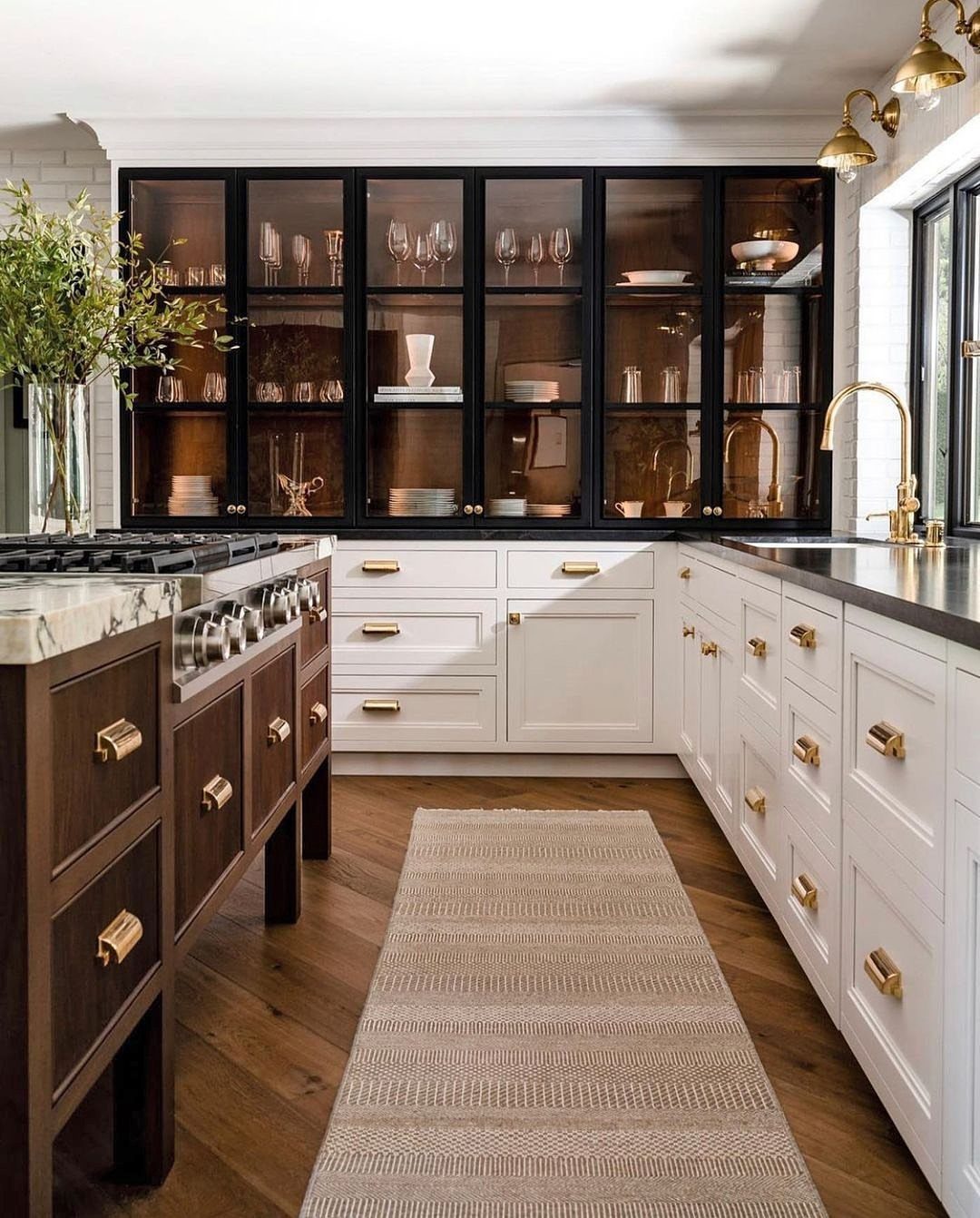
Polished brass on a kitchen with black glass-front cabinets and dark wood floors does the work of jewelry: small in area, obvious in effect. Matching the pulls to the faucet keeps it deliberate rather than random.
I prefer brass on white lowers, as in this setup, because the metal stands out cleanly against a light door.
Hardware is the cheapest piece of this whole look to change, so test a few pulls on a single door before buying for every cabinet.
7. Black Range Hood with Wood Accents
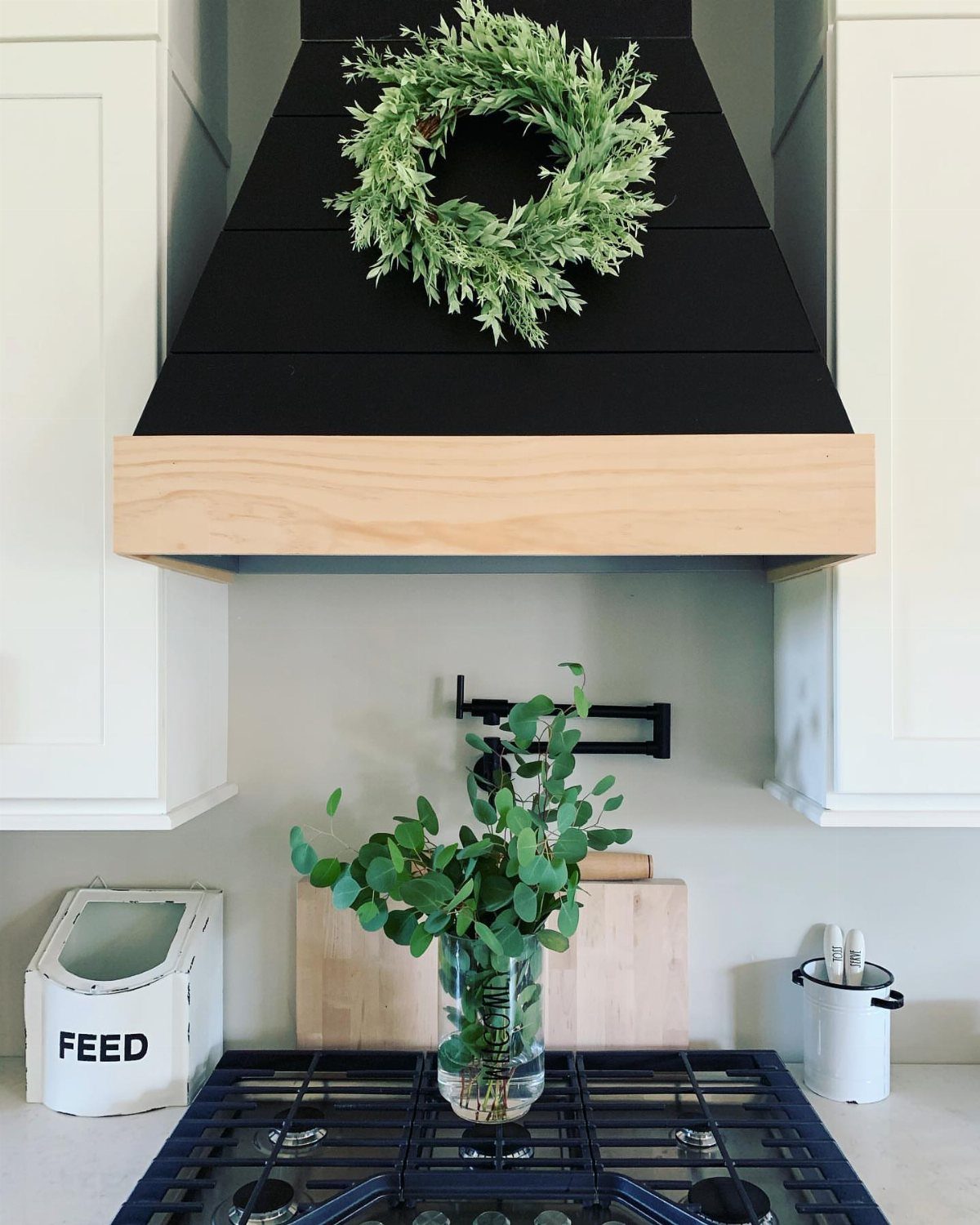
A black hood with a pale wood trim turns the vent over the stove into the one sculptural piece in the room. Because the trim is a different tone from the body, the hood reads as built rather than bought.
Keep the styling around it light, since the hood already carries the weight.
A wreath or a vase on the counter is plenty. Hoods collect grease, so a matte black body will need regular wiping to keep from looking streaky.
8. Dark Wood Cabinets with Black Hardware
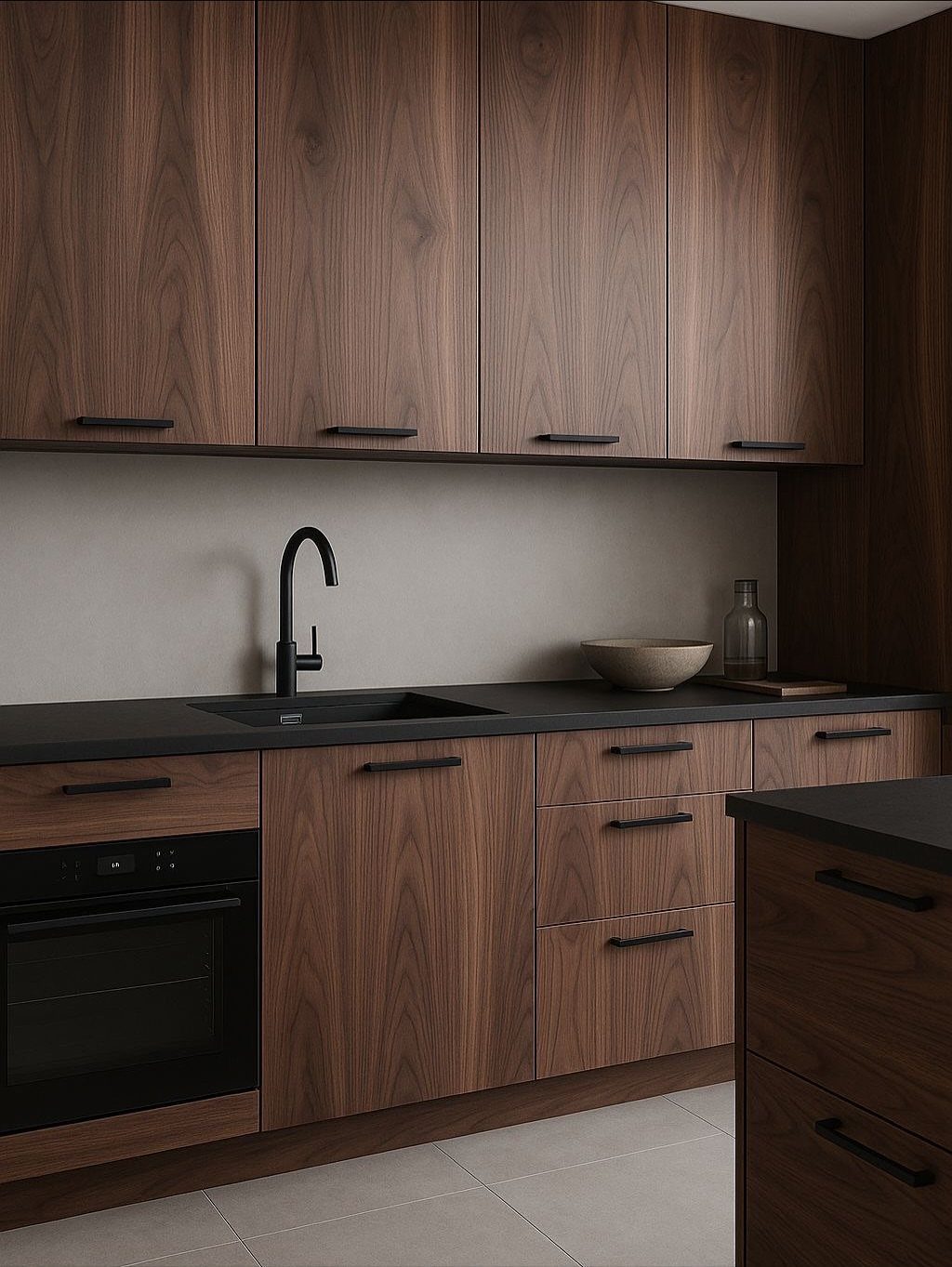
Dark wood on both the uppers and lowers, paired with black handles, a black countertop and a black faucet, gives a kitchen one deep, nearly monochrome mood. The grain keeps it from going flat.
I’d keep the hardware slim and the same finish throughout, so the contrast stays in the details and not in the colors. A built-in black oven fits the same scheme.
Dark on dark leaves little room for error, so good lighting matters more here than in a pale kitchen.
9. Built-In Black Appliances
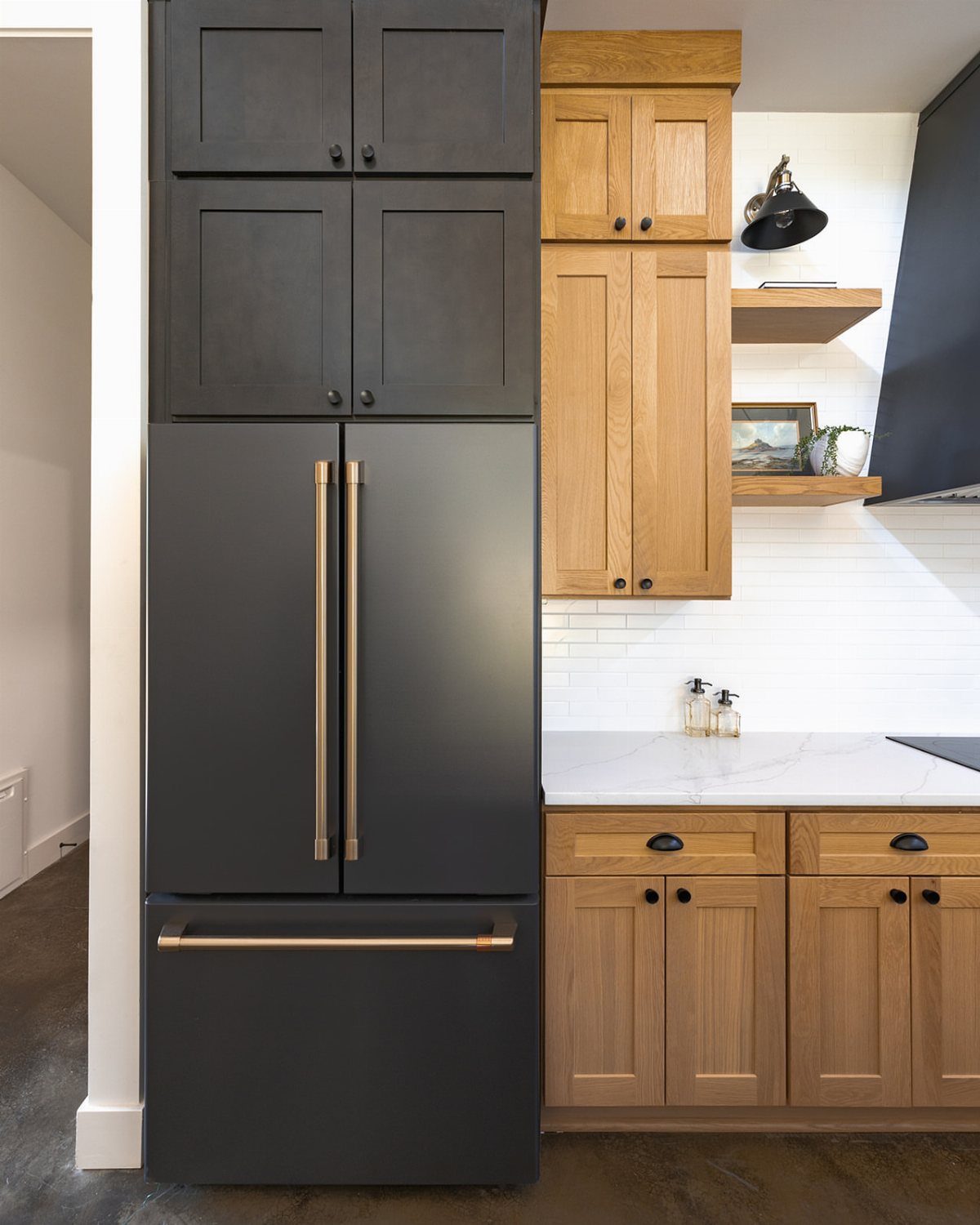
Setting a black refrigerator into the cabinet run makes it read as part of the cabinetry.
Panel-ready or built-in models cost more than freestanding ones, so check the price difference while you’re still choosing. If the budget is tight, a freestanding black fridge with a cabinet built around it gets partway there.
A white subway tile backsplash keeps all that dark color from closing in.
10. Black Elements
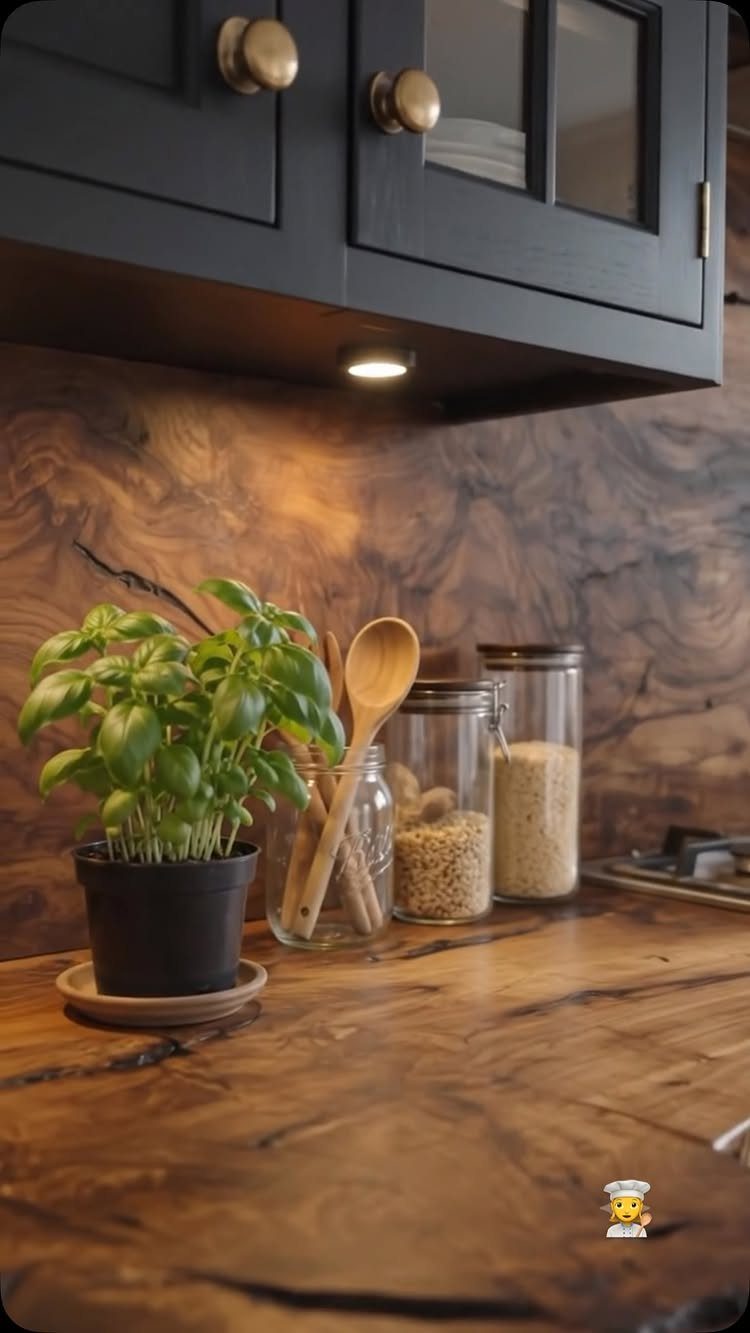
Black upper cabinets over a wood-grain counter and backsplash make the dark color feel warm instead of heavy. Gold knobs add a small bright note, and herbs or glass jars of grains give the shelf-level space something to do.
Limiting black to the uppers is a manageable way to try the look. Paint is the cheapest route, and the knobs are a one-evening swap.
I’d keep the wood the same tone on counter and wall so the 2 surfaces read together.
11. Incorporate Black and Wood Decor
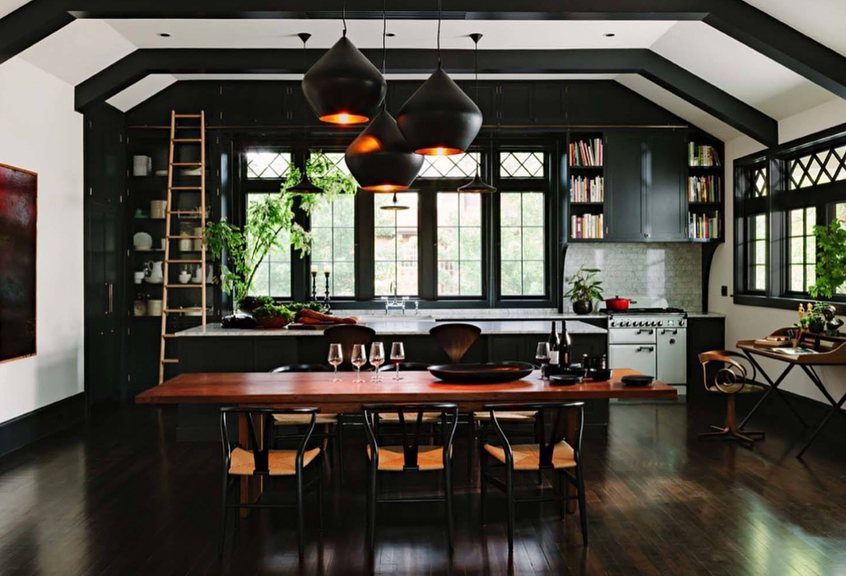
Plants soften a black and wood kitchen faster than any other addition.
Two or three is enough; more starts to look like clutter against the clean lines.
Black pendants over the table keep the plants and wood in a shared palette. Real plants beat fake ones, but faux is fine in a dim corner.
12. Black Tile Backsplash
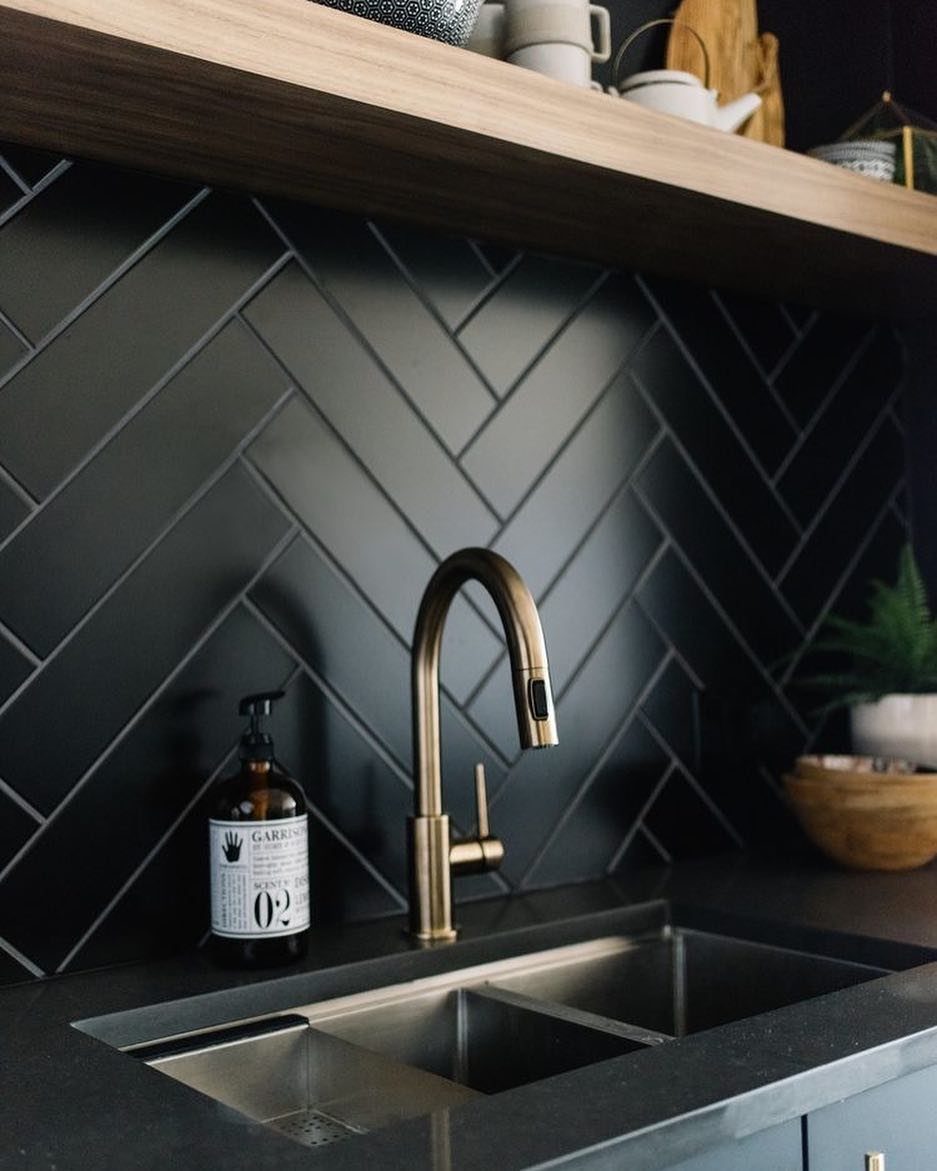
Black herringbone tile behind the sink makes the backsplash the loudest surface in the room, and the zigzag pattern gives flat color some movement. A gold faucet stands out sharply against it.
Herringbone takes more cuts and more patience than a straight stack, so it suits a confident DIYer or a small wall like this one. Dark grout hides stains best.
A light wood floating shelf above keeps the wall from feeling like a cave. I’d stop there and leave the rest bare.
13. Wood Paneling with Black Cabinets
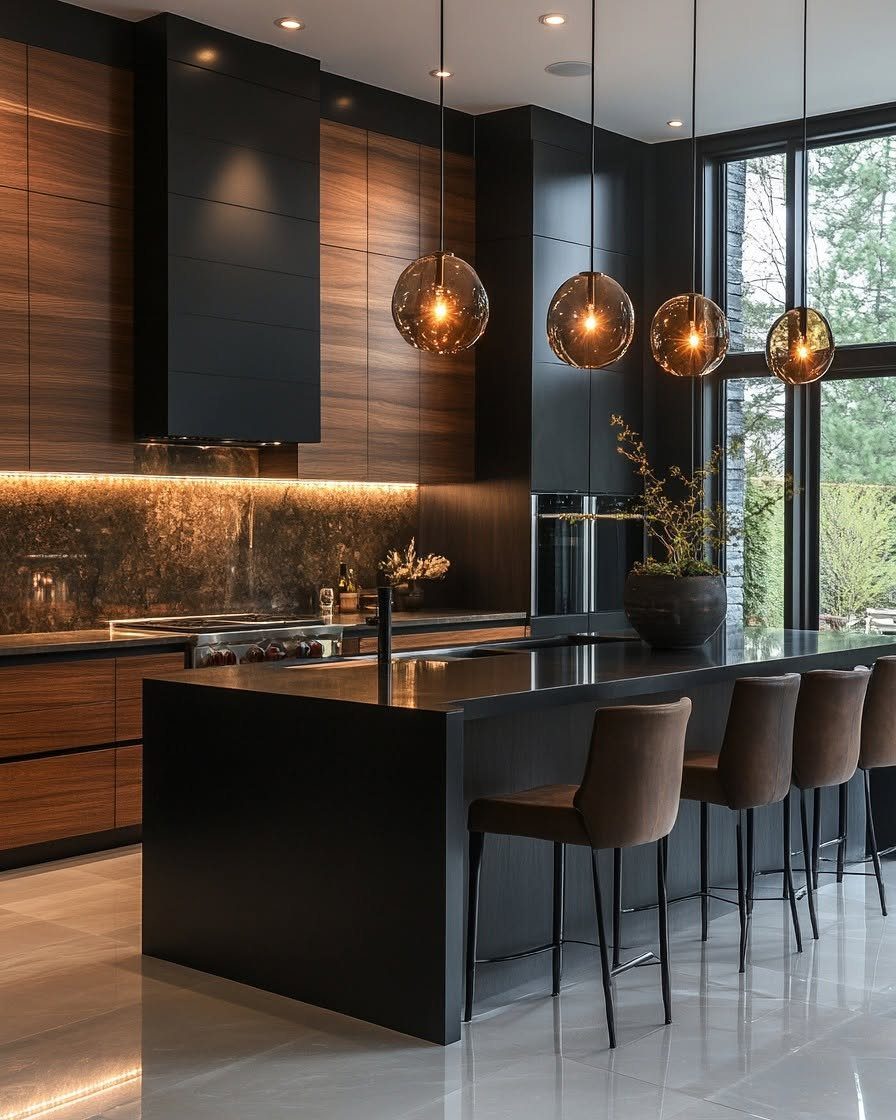
Vertical wood paneling runs the eye upward, which helps a kitchen with matte black cabinets feel taller instead of boxed in. Warm grain against flat black is a pairing that rarely goes wrong.
I’d put the paneling on the wall beside the cabinets rather than behind them, so each surface gets room.
Soft accent lighting is what makes the wood glow at night, so plan a light source before you hang a single board.
14. Slatted Wood Island Details
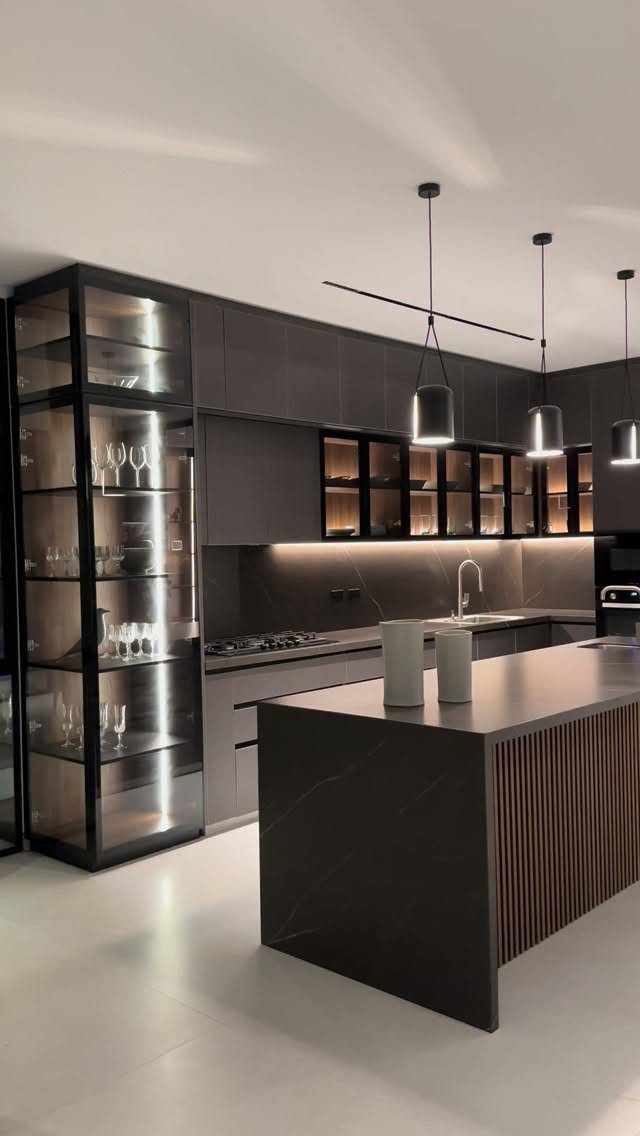
Vertical slats on the face of an island give dark cabinetry a texture that flat doors can’t. The wood breaks up a big block of grey or black and gives the island its own character.
Keep the slats evenly spaced and the same width, since the pattern only looks sharp when the rhythm holds. Slats are a good project for an existing island, because they attach to the outside and leave the cabinet itself alone.
Wiping between them takes patience, so I’d skip deep gaps near the cooking side.
15. Matte Black with Wood Flooring
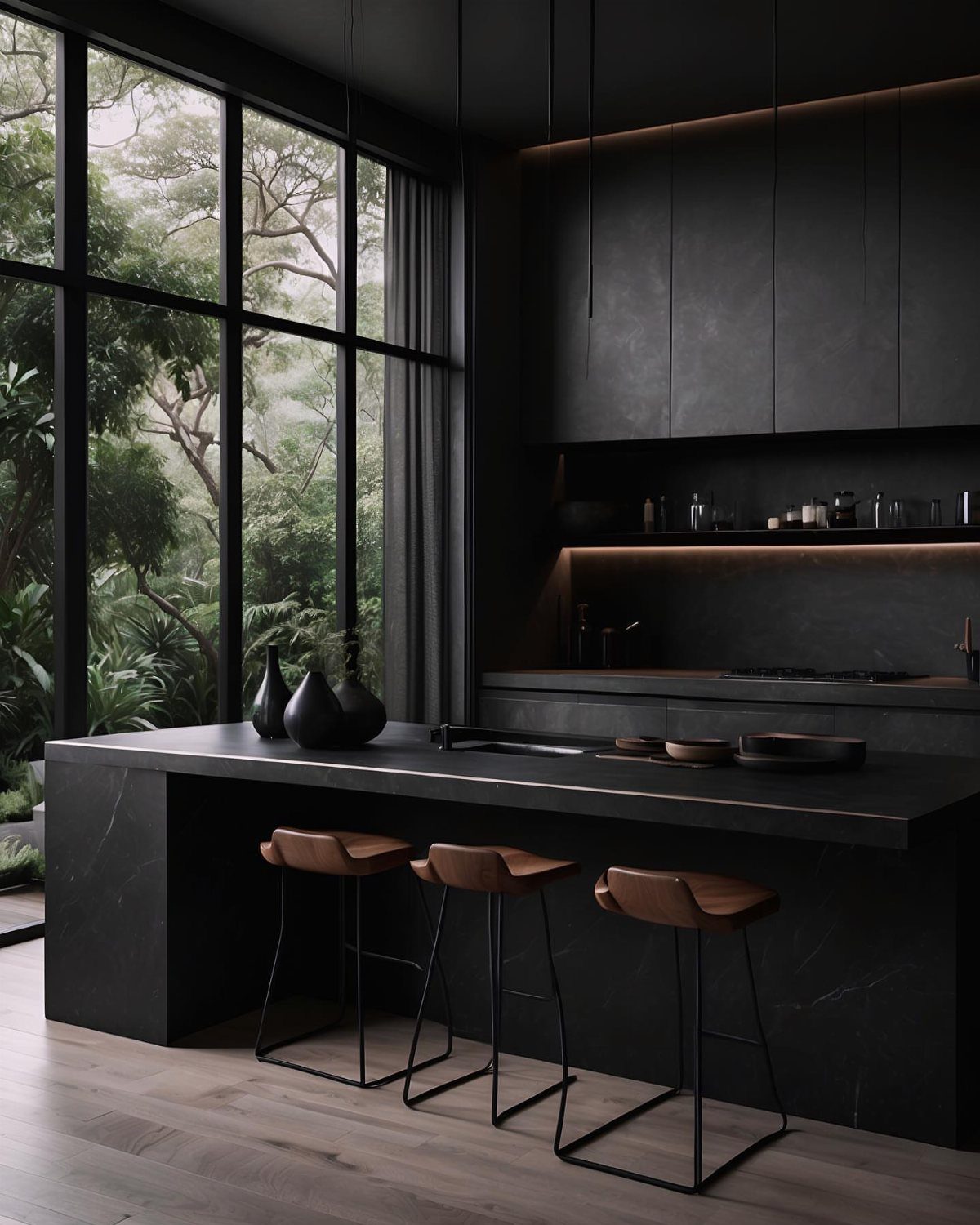
Light wood floors do the warming in an all-black kitchen, and they do it from the bottom up. Matte cabinets and a stone island keep the black quiet, while the pale planks bounce daylight back into the room.
I’d choose a floor lighter than you think you need. Black cabinetry already supplies the depth, so a mid-tone floor can make the whole room feel heavy.
Flooring is the priciest piece of this look, so if the budget is thin, a wood-look surface over a wood-toned rug runner is a cheaper start.
16. Wood Backsplash Behind Black Counters
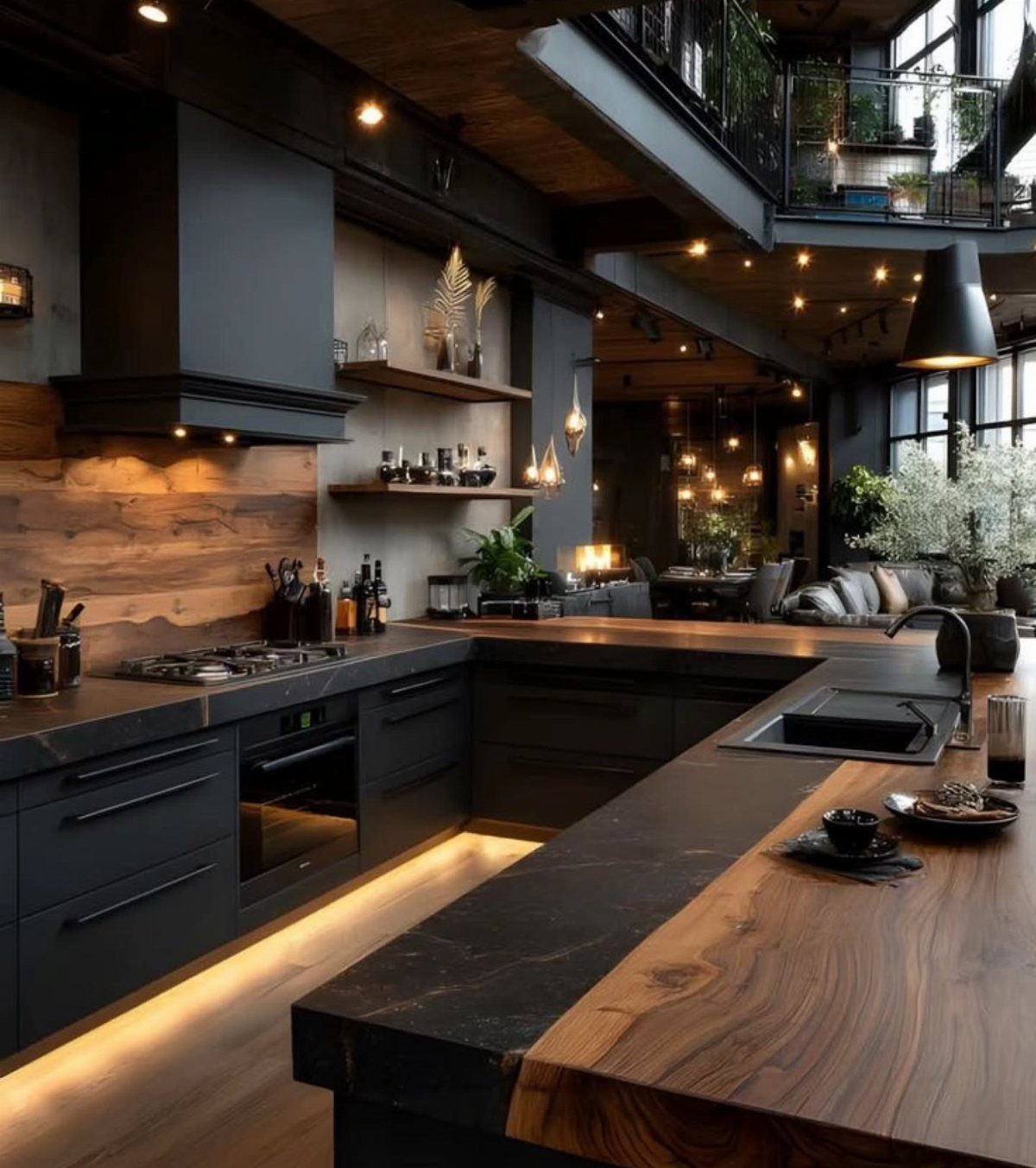
Natural wood behind matte black cabinets and black counters gives the backsplash a job tile rarely does: it warms the whole run at once. Because the cabinets and counters are flat and dark, the grain becomes the thing you notice.
Warm lighting matters here, as it brings out the color in the wood. Wood near a stove or sink needs a sealed finish, so keep the panels away from direct splashes or plan to wipe them down.
I like it best on a single wall, with the rest left simple.
Choosing the Right Wood
Oak, walnut and pine each suit a different kitchen. Oak reads classic, walnut leans luxurious, and pine gives a more casual, relaxed feel.
Before falling for a species, weigh how much upkeep you will tolerate. A wood that looks right in a showroom but fights you every week will wear on you fast.
Then hold a sample next to your black finish, in the room’s own light.
Black cabinet doors, hardware and fixtures all sit near the wood, so the undertone has to get along with them. I’d test the sample against the darkest piece first, since that is where a mismatch shows.
Lighting Choices
Natural light does more for a black and wood kitchen than any fixture, so protect it. Keep large windows clear of heavy curtains, and if you are planning a bigger change, skylights are another way to bring daylight in.
Daylight also shifts through the day, which brings out different textures in the wood and the dark surfaces. A kitchen without much sun feels like a cave quickly.
If the windows are small, add under-cabinet lighting over the work areas so you are never chopping in shadow. Pendants over an island give a second layer of light at night.
Maintaining Your Kitchen
A soft cloth and a gentle cleaner, used often, keep them looking sleek. Harsh scrubbing is what dulls a finish, so skip it.
Wood needs regular cleaning too, plus occasional oiling or waxing to keep it looking good for years.
The surrounding finishes help. Painting the walls white keeps a black and wood kitchen from closing in, and it gives the grain room to show.
Floors in a wood tone close to the cabinets help too, since the two surfaces read as one warm base.
Countertops tend to stay in a narrow range: white softens the contrast and keeps things bright, while black adds a more graphic look.
Frequently Asked Questions
What color kitchen cabinets are out of style?
All-white kitchens are losing ground as more homeowners want contrast.
Black paired with warm wood is one common answer, since it stays neutral but adds depth. Light wood uppers over black lowers, or black uppers over a wood-grain counter, are 2 ways to get that contrast without going all dark.
Is a black and white kitchen in style?
Yes, black and white is still a classic choice, and it pairs well with wood. Pale walls give a dark and wood kitchen some breathing room, and the grain stands out against them instead of sinking into the black.
A white subway tile backsplash does the same job against dark cabinets, and white countertops soften the contrast while black ones look more graphic.
Are black kitchen cabinets a good idea?
Yes, they add sophistication, especially when wood warms them up. Matte black cabinets with wood floors, paneling, or a wood backsplash keep the dark color from feeling heavy.
Still unsure? Paint only the lowers or only the uppers first, since a quart of cabinet paint costs far less than new doors and a screwdriver handles a hardware swap in an evening.
Expect to wipe matte and glossy black surfaces more often, since both show marks.
How to paint kitchen cabinets black?
Sand and prep the surfaces carefully before the first coat, because black, especially glossy black, shows every flaw underneath.
Matte or satin paint gives a clean look and hides more than gloss does. If you’re painting only the base cabinets, pair them with lighter wood uppers so the room doesn’t feel top-heavy.





