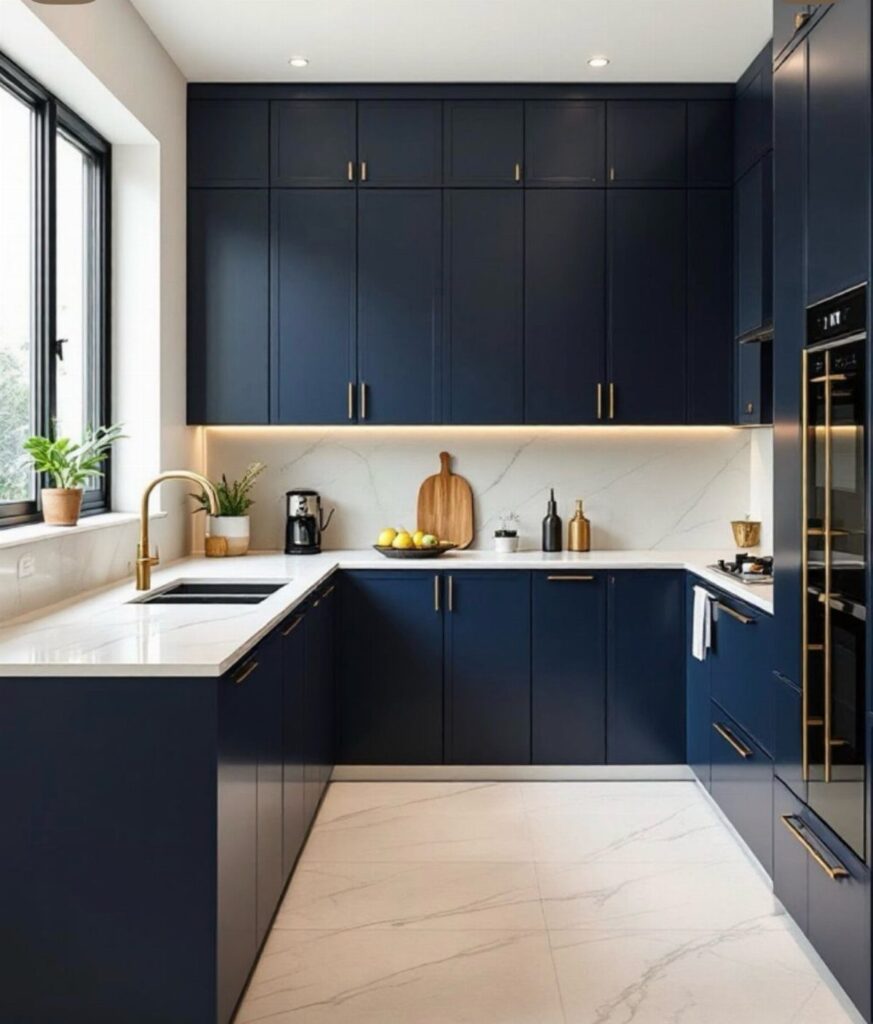
Light decides how much navy a kitchen can carry: a bright room handles a full run of matte navy cabinets with black countertops, while a small or dim one does better with navy on the island or the lower cabinets only.
Ideas here range from a weekend of under cabinet lighting or a swap to brass hardware, up to repainting every door in a deep matte navy.
A sample board taped up for 2 or 3 days will tell you how much dark your room can hold.
1. High Gloss Navy Blue Kitchen Cabinets
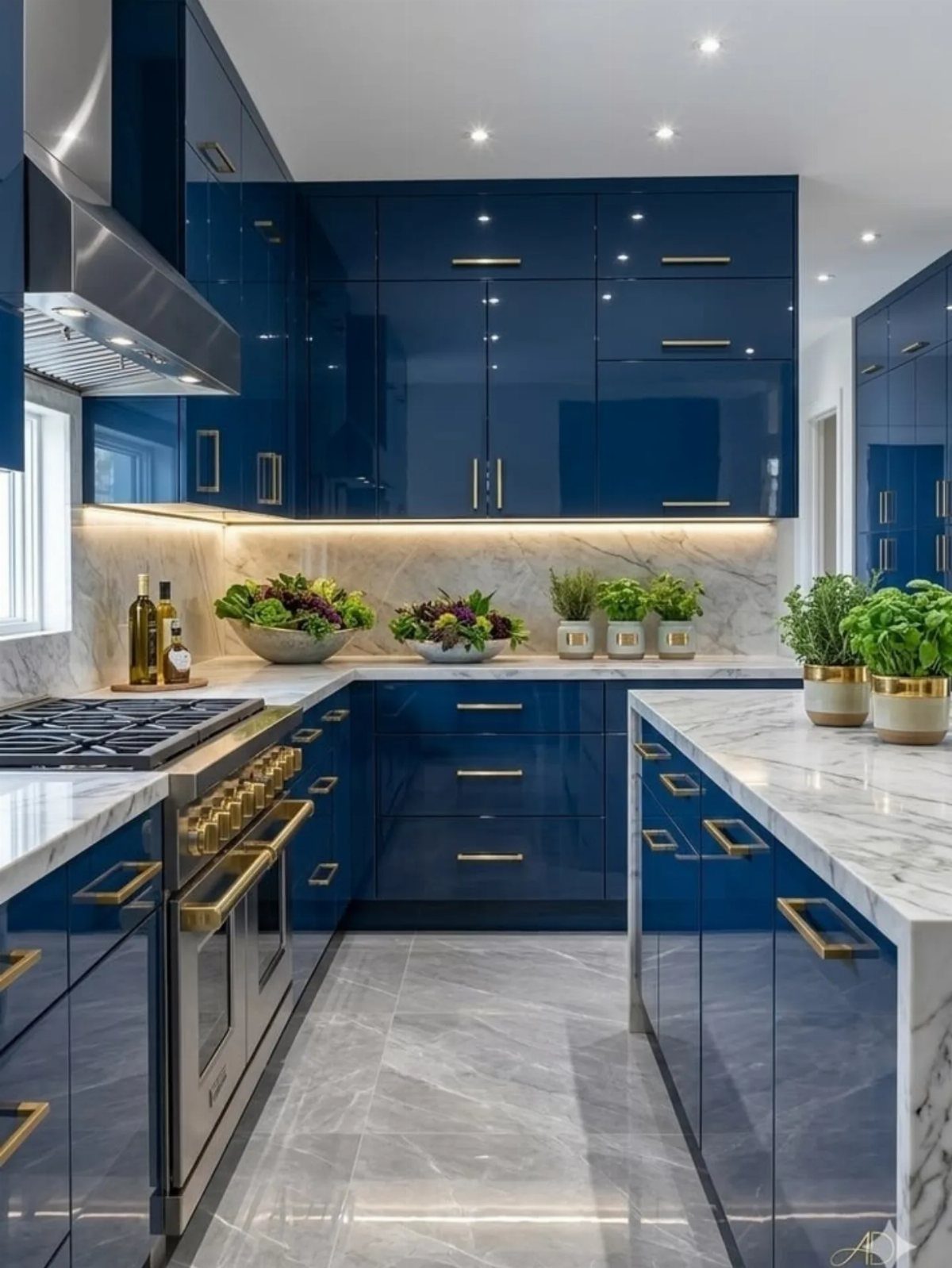
Gloss is the finish that makes navy look almost black in shadow and bright blue where light hits it. Against white marble and gold hardware, that reflection does the decorating, so the rest of the room can stay quiet.
Fingerprints show on gloss more than on any other finish, and so do dents and uneven door panels.
I’d pick it only if you’re happy wiping doors down regularly. Smooth, flat slab fronts suit it best.
2. Navy Blue and White Kitchen Cabinets
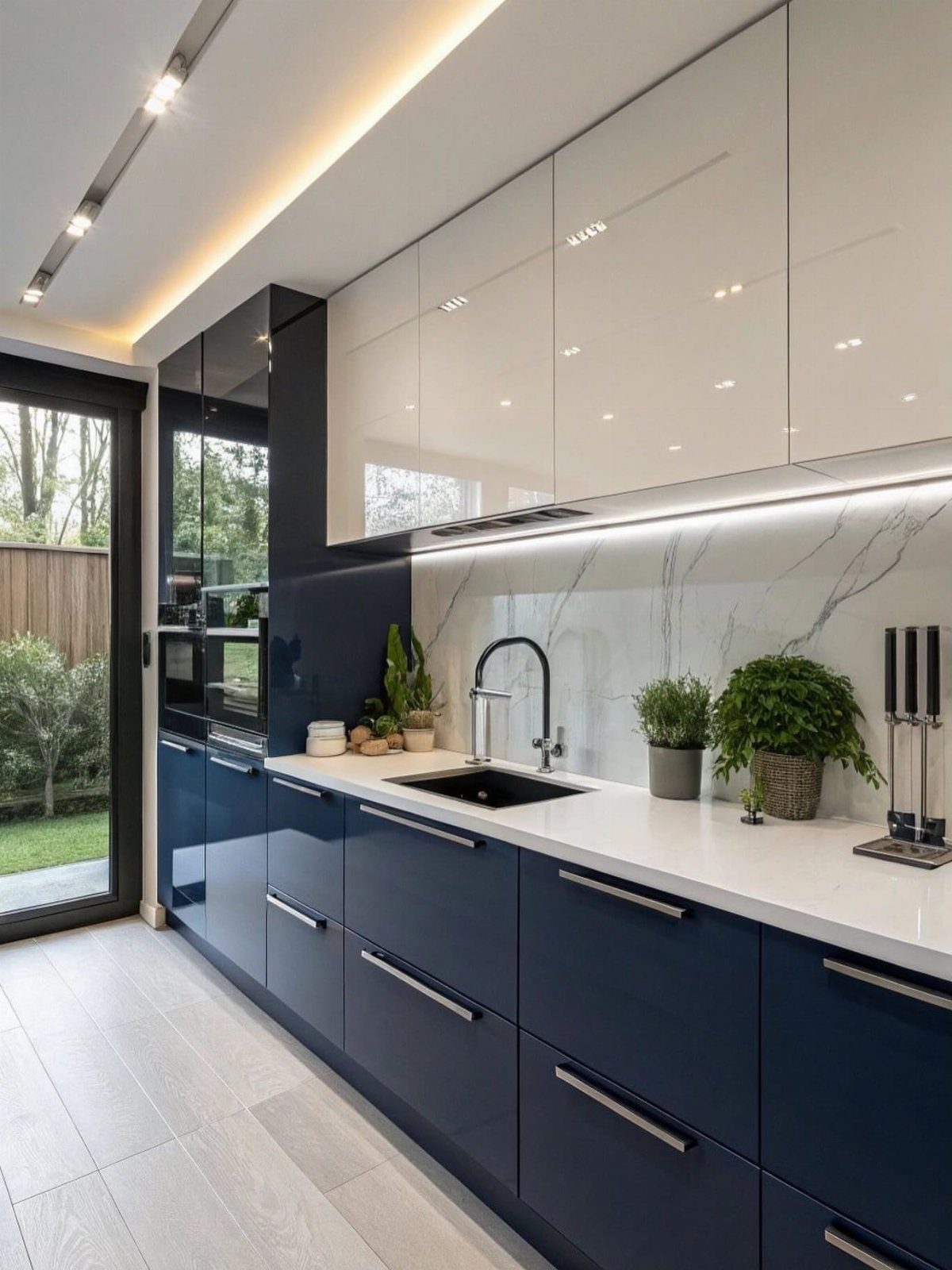
Navy below and white above splits the weight of the room: the dark color anchors the base, and the white keeps the walls from closing in. A white marble countertop and backsplash tie the 2 halves together.
For a rental or first home, this is the safest way to try navy.
Paint only the lower run if your budget is tight, and leave the uppers alone. I’d keep the countertop light so the navy stays the one strong note.
3. Navy Blue Kitchen Island
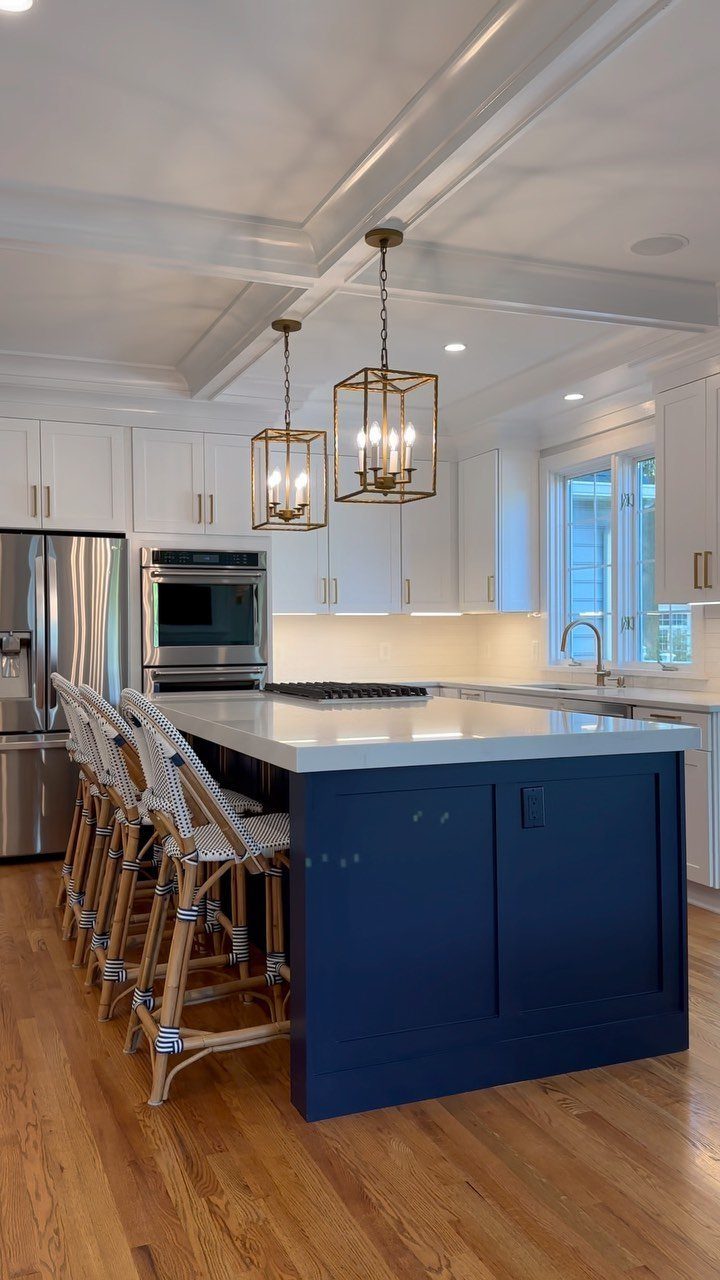
Painting only the island navy gives a white kitchen one strong piece without turning every wall of cabinets dark.
The white countertop on top keeps it from looking heavy, and the lantern pendants in gold pick up warmth against the blue.
If the island is the only piece you can afford to change, this is where I’d spend.
The creator of this kitchen describes it as traditional, which fits: navy plus white is a classic pairing. Woven barstools soften the color without competing.
4. Navy Cabinets with Under Cabinet Lighting
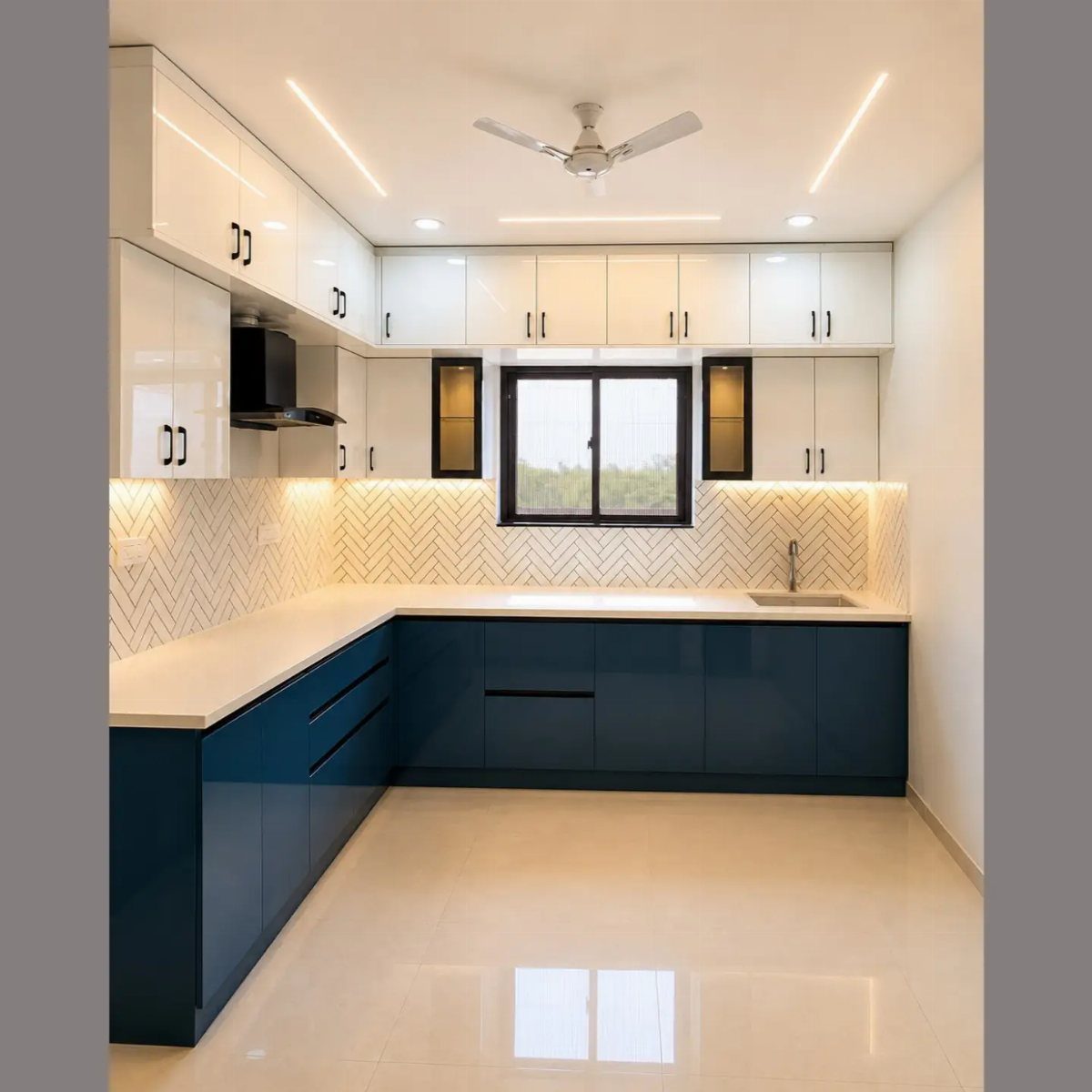
Lighting under the upper cabinets lights the white countertop directly, so a navy base run doesn’t swallow the work area. Dark lower cabinets can make a counter feel dim, and this fixes that.
A plug-in strip is the weekend option for renters, and it needs no wiring.
Mount it toward the front edge of the upper cabinet so the backsplash catches the glow too. I’d choose a warm white bulb, since a cold one turns navy flat and gray.
5. Navy Cabinets with Patterned Tiles
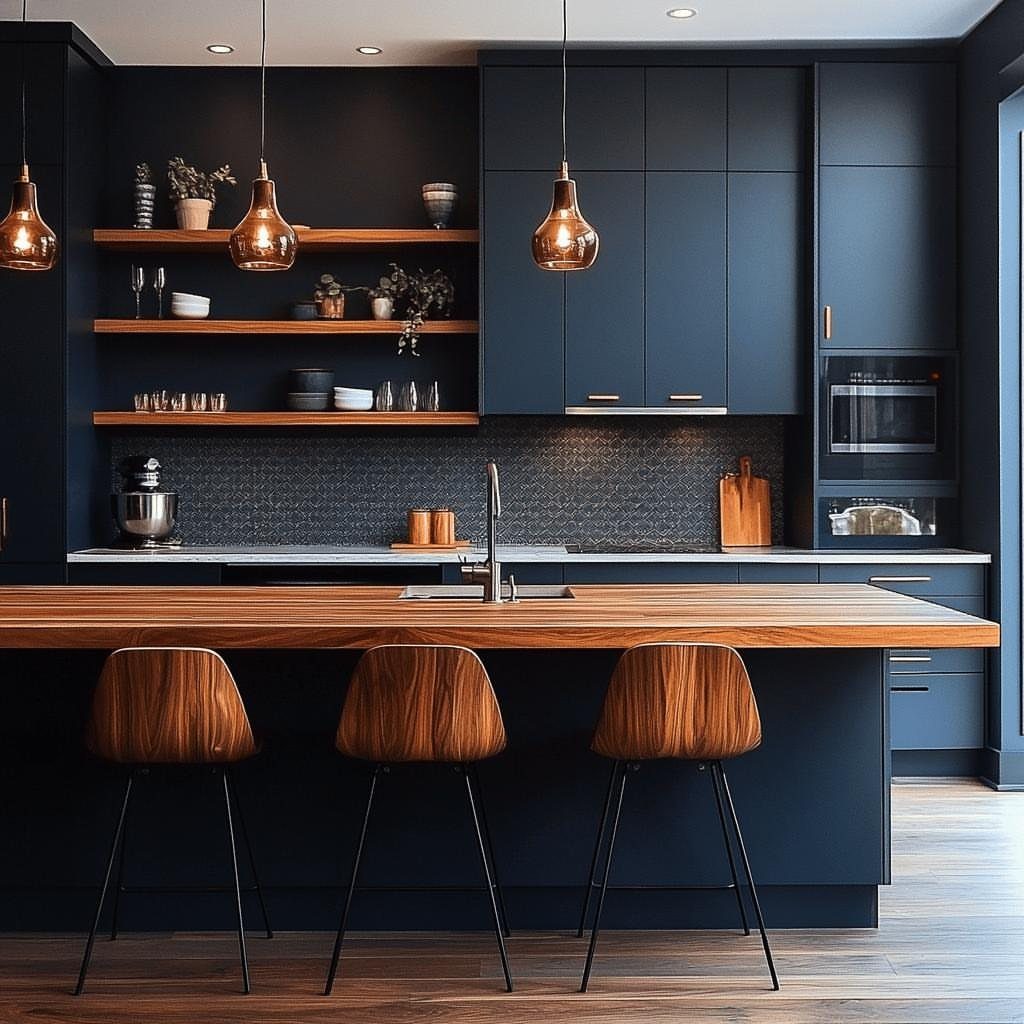
A dark patterned tile behind navy cabinets makes the wall feel layered instead of flat. Here the pattern stays tonal, so it adds interest without fighting the cabinet color.
Keep the pattern to the backsplash alone and let everything else stay plain.
A wooden island and copper pendants bring in warmth that balances all that cool dark. Removable tile is a budget route if grout and thinset feel like too much for a weekend.
Pro tip: You don’t have to do anything special with the cabinets themselves to make navy feel interesting.
— Domino
6. Navy Cabinets with Minimalist Pulls
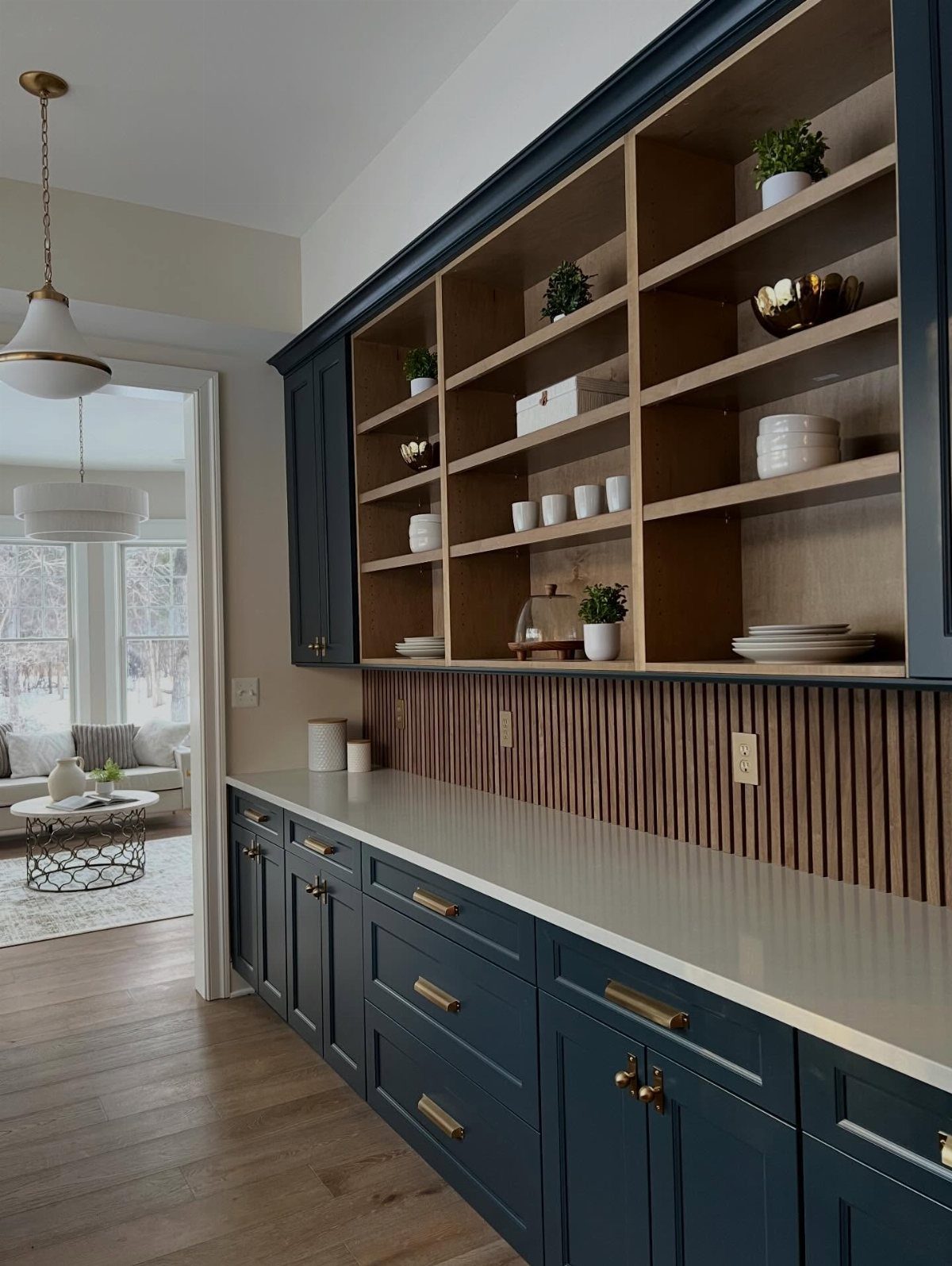
Small gold pulls on navy cabinets read as jewelry: tiny, bright, and placed exactly where your hand goes. Slim bar shapes keep the doors looking clean, which suits a room that already has slatted wood behind the counter.
Open wooden shelving above adds warmth and storage without another run of dark uppers. I’d choose this layout for a compact kitchen that opens to a living room, where lighter walls help the navy feel less heavy.
7. Navy Blue Kitchen Cabinets with Brass Hardware
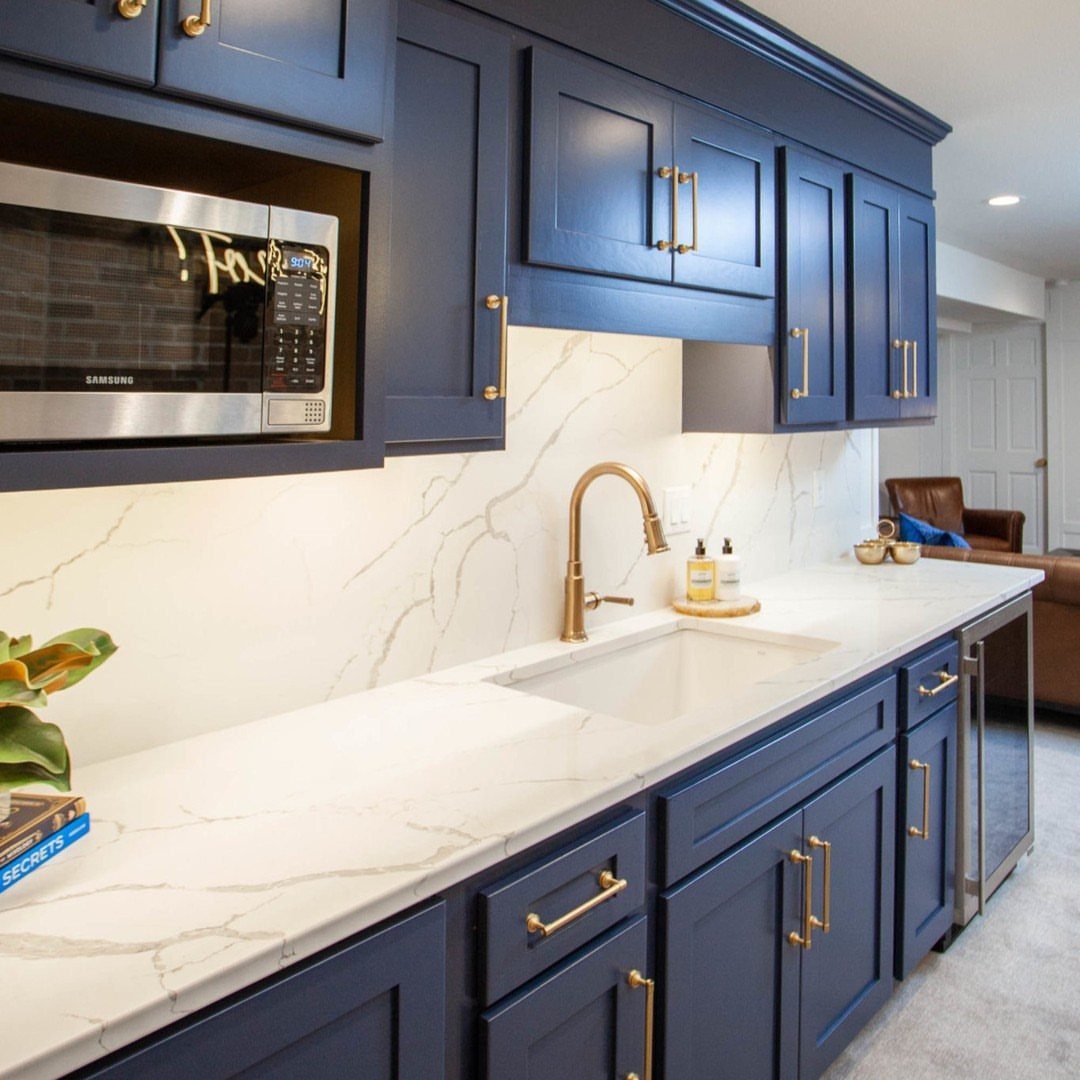
Brass pulls give navy a warm, slightly old-fashioned glow, and a gold faucet at the sink repeats it. Against white marble-style counters, the metal reads as the one warm note in a cool room.
Match the metal tones when you can.
Brass handles beside a faucet in a different finish look like an accident. I prefer a clean white countertop and backsplash in this setup, since it lets the brass read clearly without competing finishes.
8. Navy Blue Kitchen Cabinets with Natural Wood Elements
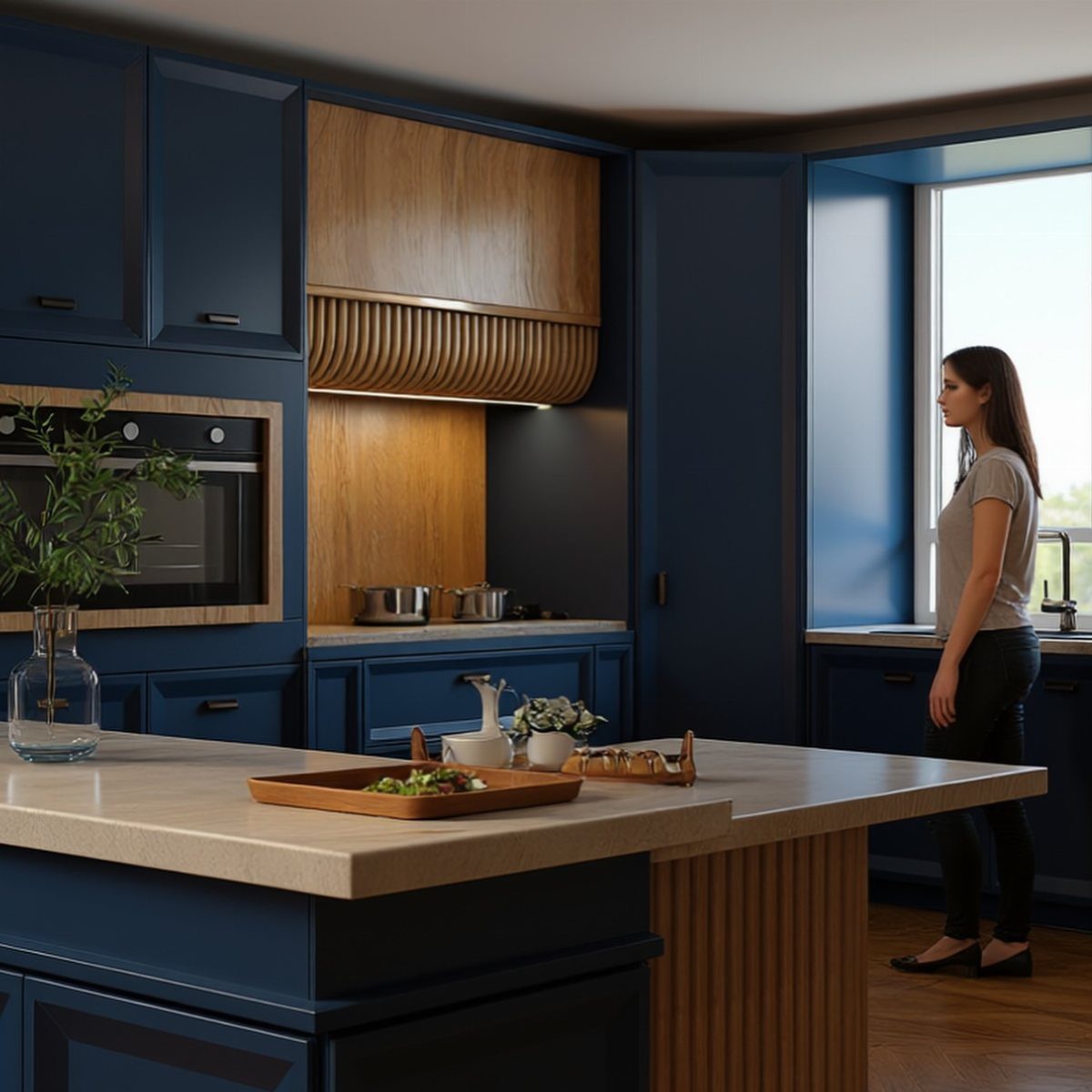
Light wood against navy is the pairing I reach for when a dark kitchen needs to feel friendlier.
A wooden tray on the island is the cheapest way to try it, and it comes off the counter in a second if you change your mind.
Keep the wood pale and the countertop white.
Heavy, dark wood next to navy gets dim fast. Cutting boards, stools or open shelves all add the same warmth.
9. Modern Navy Blue Kitchen Cabinets
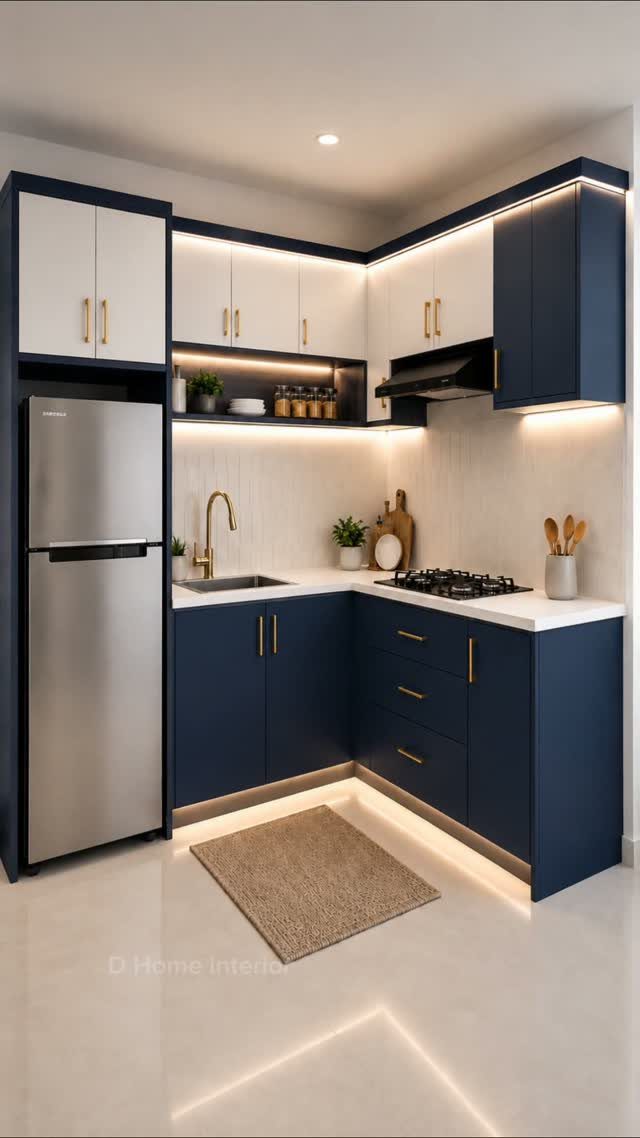
Clean lines are what make navy look modern: flat doors, a simple L-shaped layout, and nothing fussy on the fronts. Splitting the color, navy below and white above, keeps the sleek look from feeling like a cave.
Stainless appliances and white countertops fit that crisp mood.
Gold hardware adds just enough shine, and I’d stop at one metal. Under-cabinet lighting helps the dark base run stay usable.
10. Matte Navy Blue Kitchen Cabinets
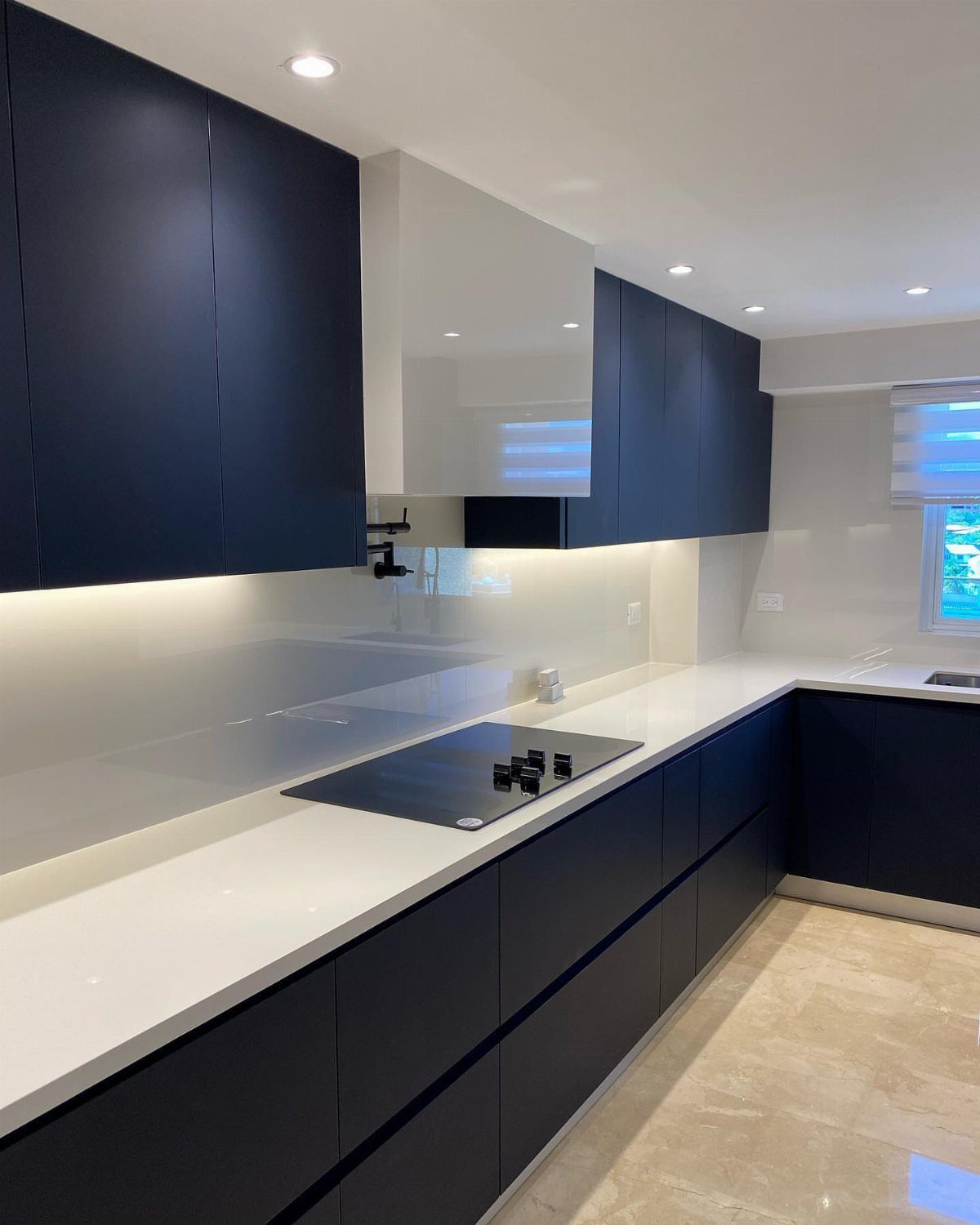
The matte finish pulls light in rather than reflecting it back, so the cabinet fronts stay soft and quiet with almost no glare. Even covering both upper and lower cabinets, it feels calmer than gloss would.
A white backsplash and white countertops keep a full run of dark cabinets from closing the room in. I’d pick matte over gloss for a busy kitchen, since it hides reflections and looks even under overhead lights.
11. Navy Blue and Gold Kitchen Cabinets
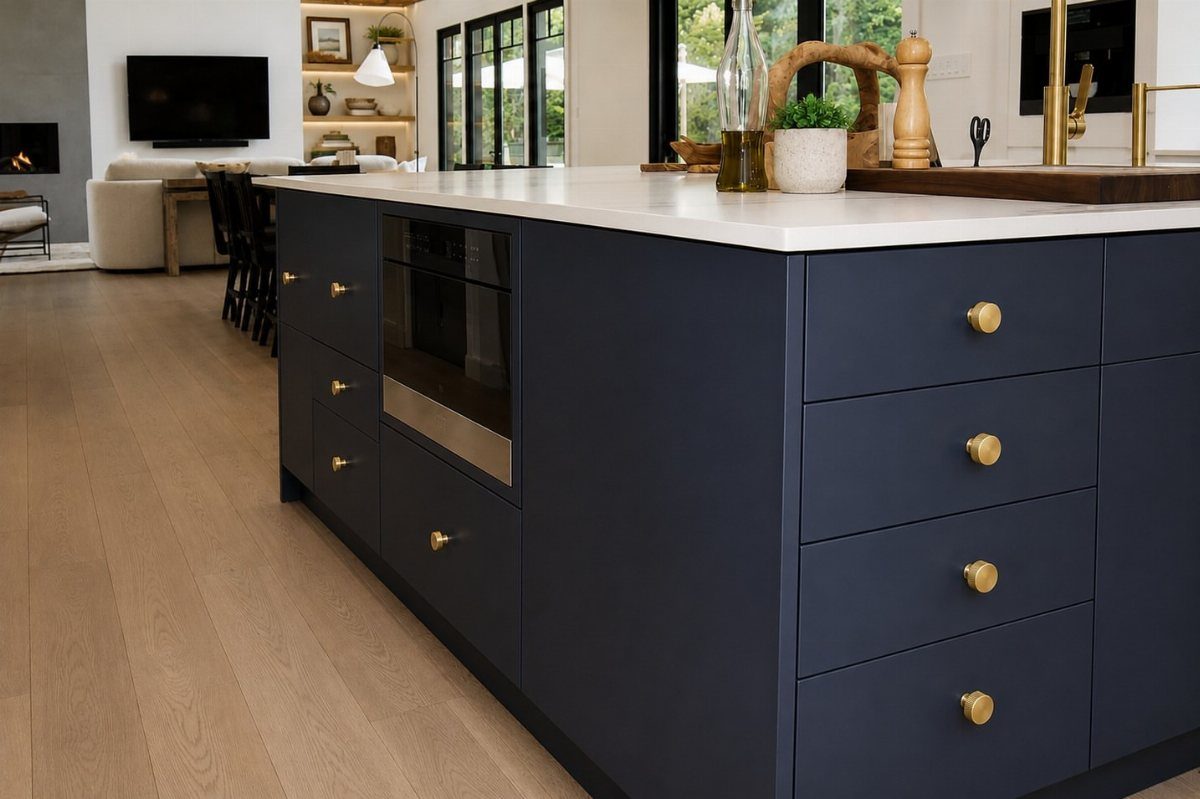
Navy and gold is the dressy combination: deep blue fronts with small gold knobs, and a white countertop to keep it bright. On an island in an open-plan room, it reads as furniture rather than cabinetry.
Knobs are an inexpensive way to get the look, and swapping them is a one-screwdriver job. I’d keep the gold to hardware only, so it stays an accent instead of a theme.
12. Navy Blue and Cream Kitchen Cabinets
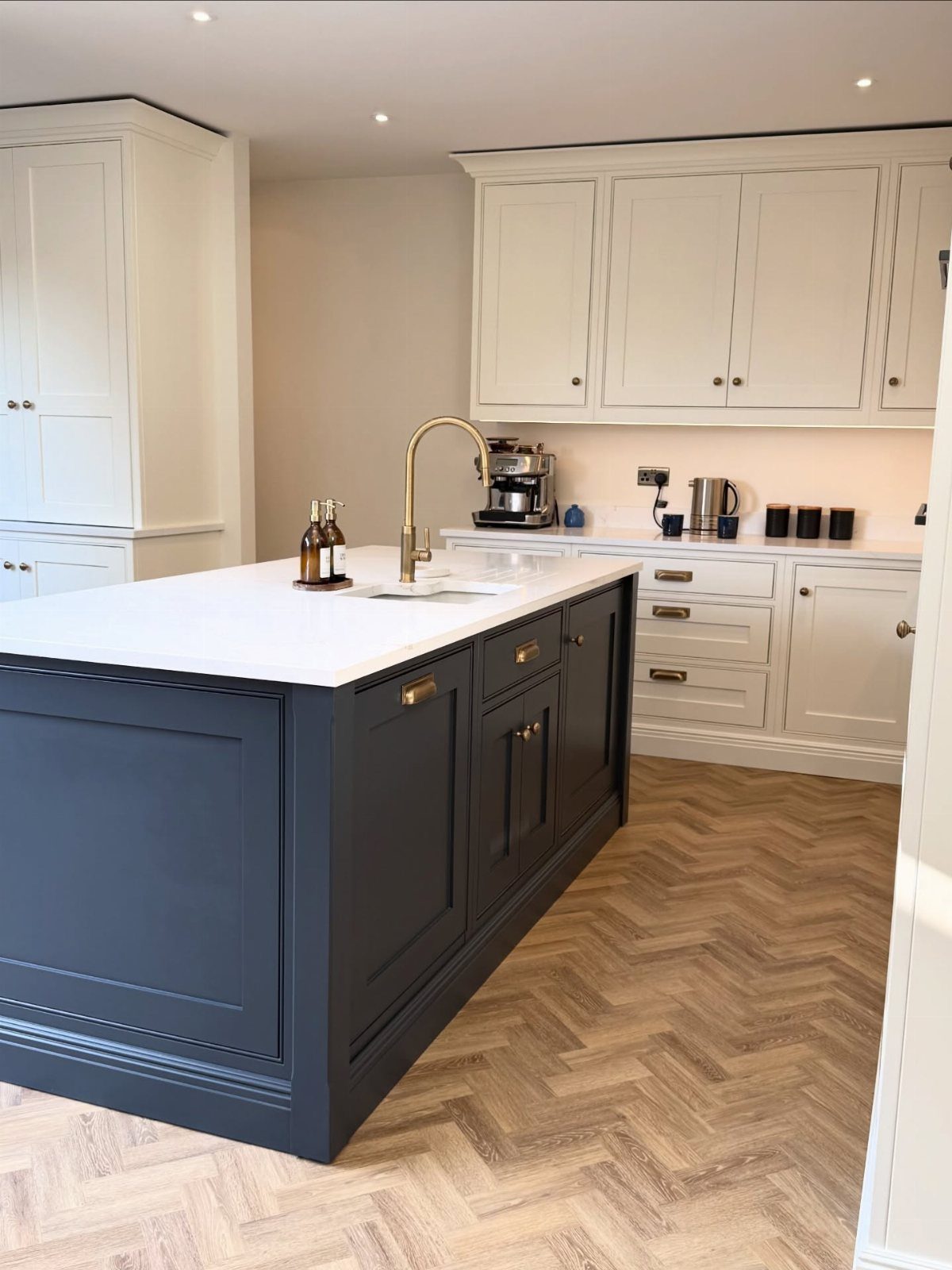
Cream perimeter cabinets with a navy island is the gentlest way to use a bold color. The cream softens the contrast that white would sharpen, and the island still gets to be the focal point.
Light wood herringbone floors and gold hardware keep everything in the same warm family.
Choose a cream with a yellow undertone, not a gray one, so it sits comfortably beside the blue. Test paint samples next to the navy before buying.
13. Navy Blue Kitchen Cabinets with Black Countertops
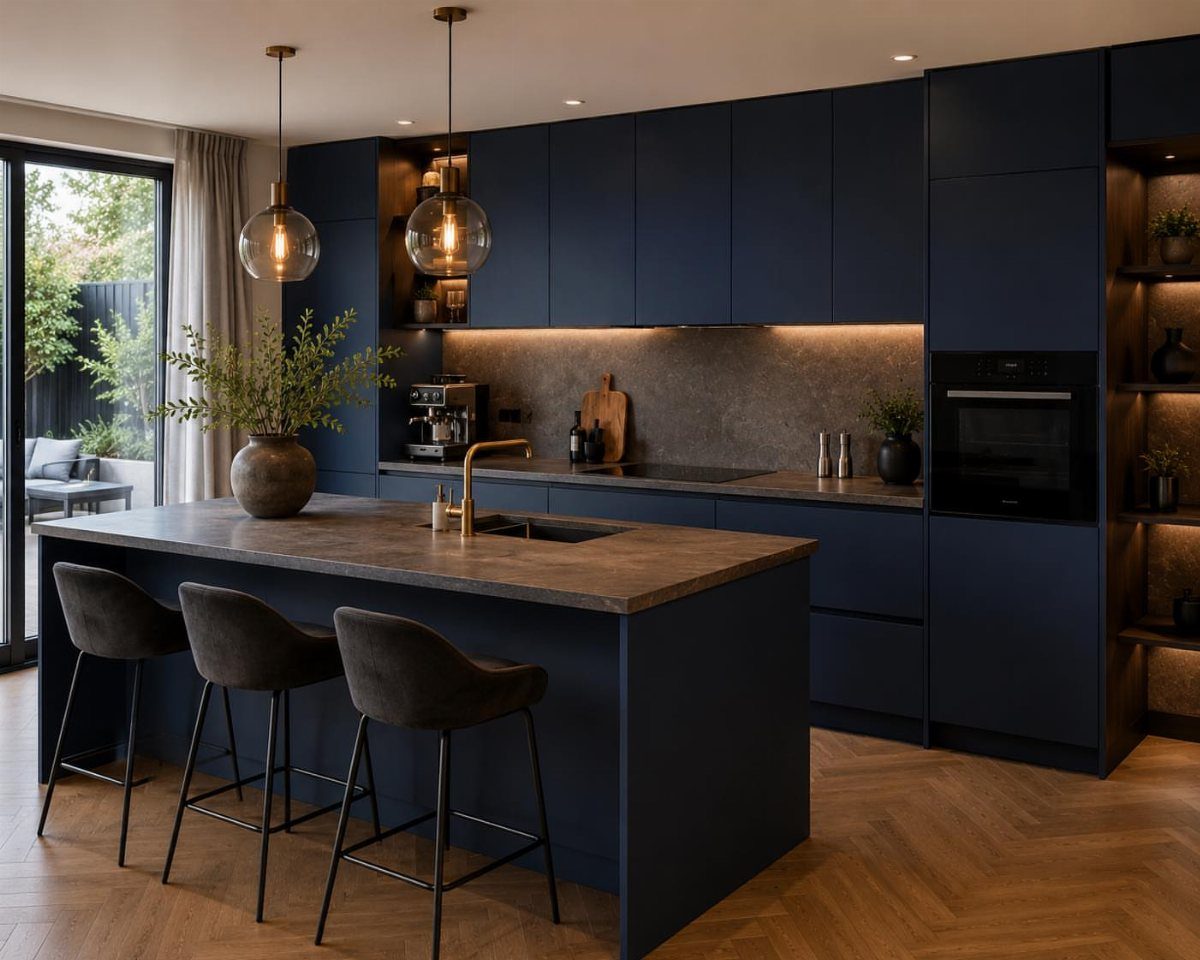
Navy cabinets, dark countertops and black barstools put three deep tones in one room, and the result is moody and cohesive.
Navy and black can go flat fast, so add warmth with brass or gold hardware and a faucet, plus a wood tone on the floor or open shelving.
Warm metal and wood are what stop an all-dark palette from feeling like a cave. Globe pendants add shine overhead without more color.
I’d choose this only if you like a dramatic kitchen and have decent light, since dark on dark absorbs a lot of it. Where the room is small or dim, a lighter counter is safer.
Best Blue Paint Colors
3 navies come up again and again for cabinets: Hale Navy by Benjamin Moore, Naval by Sherwin Williams, and Dark Navy by Behr.
Hale Navy is the one I’d start with, since it works in both modern and traditional kitchens and pairs well with light countertops and brass hardware.
Naval is bold and elegant, and Dark Navy leans toward drama and depth. Behr is usually the easiest of the three to find at a big-box store, which helps on a weekend schedule.
Buy a sample of each and paint it on a large board. Move the board around the room, because the same navy shifts between morning light and a night with the overheads on.
Tape up a painted sample board or a large swatch near the cabinets and look at it for 2 or 3 days, in morning light and under the kitchen bulbs at night, before buying a full gallon.
Navy Blue’s Practical Benefits
Stains and fingerprints disappear into it better than they do on lighter colors, which matters in a kitchen that gets cooked in every day.
That makes it a sensible pick for a busy household, and it’s one reason I’d choose navy over white for lower cabinets, where most of the mess lands.
Navy is also a neutral that doesn’t feel bland. It gives you an unexpected color with plenty of room to style: white, gold, wood and marble all sit well beside it.
A whole room of navy can feel heavy, so I’d paint only the island or one stretch of base cabinets and let white or light gray handle the rest.
Navy Blue’s Timelessness
Navy has stayed in style because it behaves like a neutral. It has real depth, yet it suits minimalist, modern and rustic rooms as easily as traditional ones, so you aren’t locked into one look.
That flexibility helps when you rent or plan to sell. Compared with white or gray, navy adds personality and makes the cabinets a focal point, and it contrasts as well with white as it does with hardwood.
Because the color holds up, I’d spend on the things you can’t swap in an afternoon, like solid paint prep and a good topcoat.
Hardware, lighting and accessories are easy to change later if your taste shifts, while the navy itself can stay put for years.
Frequently Asked Questions
What is the best blue paint color for kitchen cabinets?
Benjamin Moore Hale Navy is where I point most people first.
What colors go with a navy kitchen?
White, gold, wood and marble all sit well beside navy, and gray works too.
White countertops and a white backsplash keep the blue as the one strong note, while brass or gold hardware adds warmth. Pale wood, such as stools, cutting boards or open shelves, makes a dark kitchen feel friendlier.
What is the most popular kitchen cabinet color right now?
Navy is one of the most popular choices, since it works with modern, classic and farmhouse kitchens.
It adds depth and personality without feeling bland, and it flatters materials like gold, brass, marble and wood. Navy also holds up to daily wear better than pale finishes that show every smudge.





