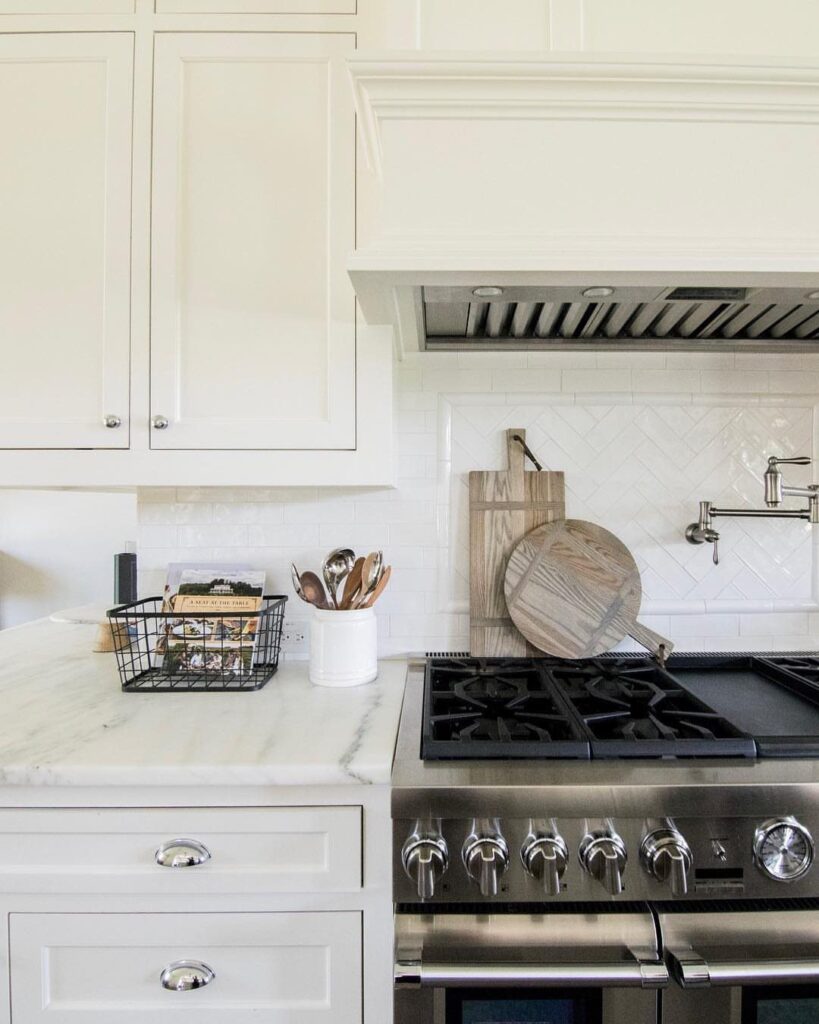
Your countertops, flooring and backsplash tile have an undertone, and that decides which of these whites looks right, so the paint chip comes second.
The list moves from cooler whites like Pure White to creamier ones like Alabaster and Swiss Coffee, then on to a sage island, yellow walls, gold or black hardware, and a dark grey island.
Check the paint against whatever you can’t swap out, like the counters and floor, and brush a sample right on a cabinet door so you can watch it change from breakfast to dinner.
1. White Dove
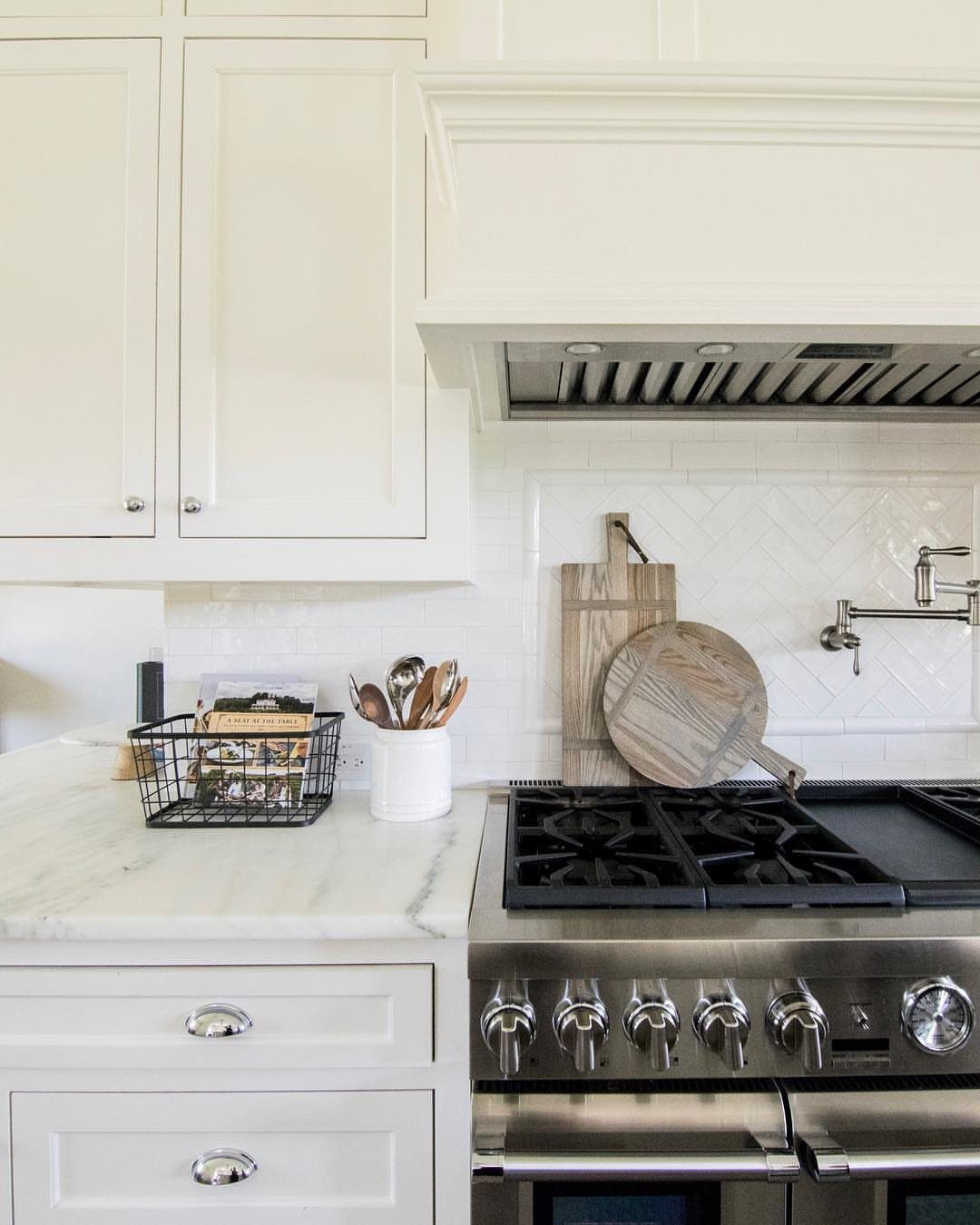
White Dove reads as a soft gray-cream rather than a true white, which is why it sits so quietly beside marble. Against veining like the countertop here, it keeps the stone looking warm instead of icy.
I’d pick it if bright white feels clinical to you. Test a sample on the cabinet door itself and check it morning and night, since gray-cream shifts more than a plain white does.
2. Alabaster
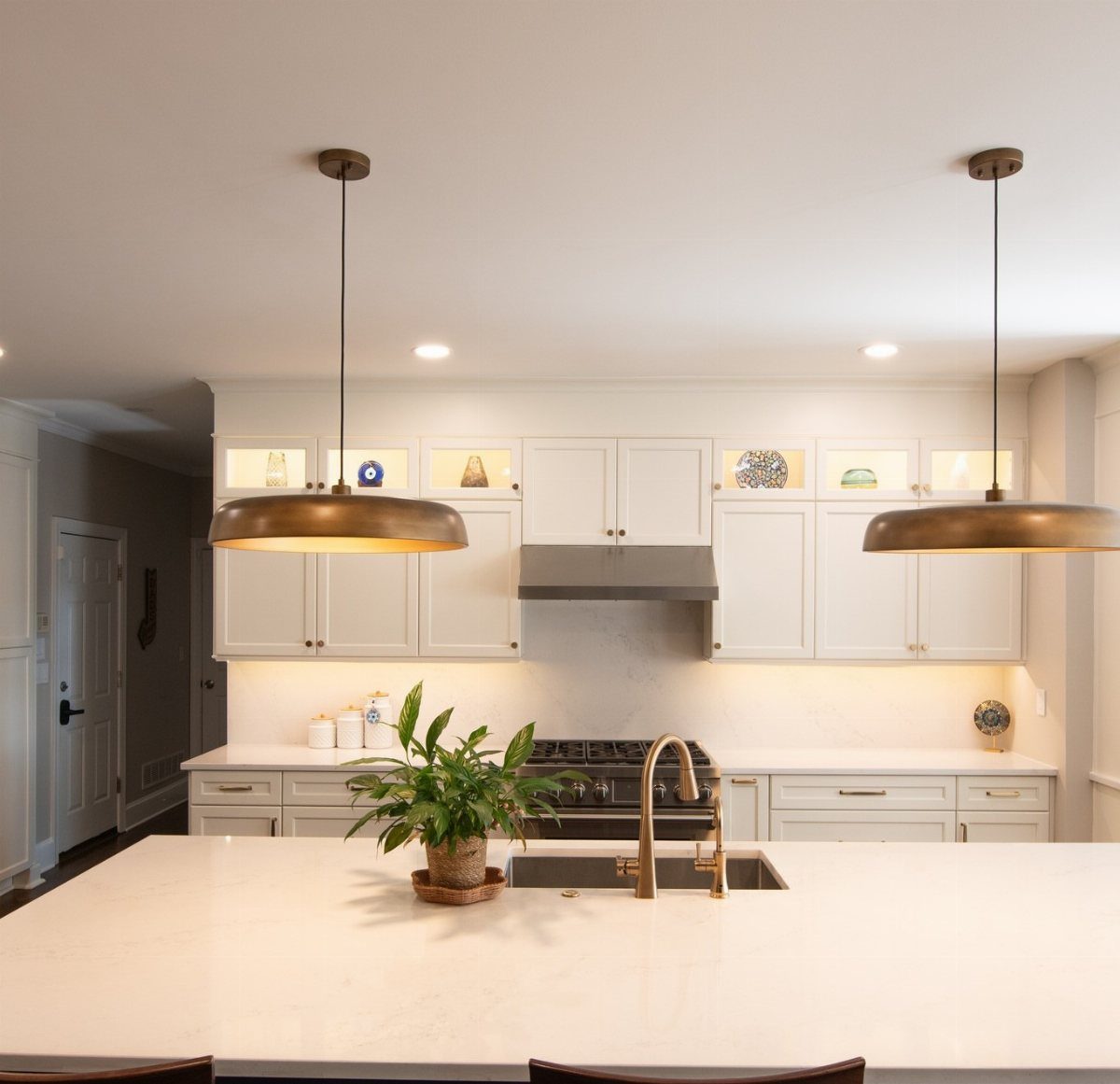
Alabaster leans creamy, with a beige undertone that shows up more as the light warms, so you’re committing to that tint along with the white.
It softens a room that has a lot of hard surfaces, like a stainless range hood and a marble island.
Pair it with warm metals.
Gold or bronze lighting suits those beige notes better than chrome would. Paint a large sample board and move it around the kitchen before you buy a gallon.
3. Simply White
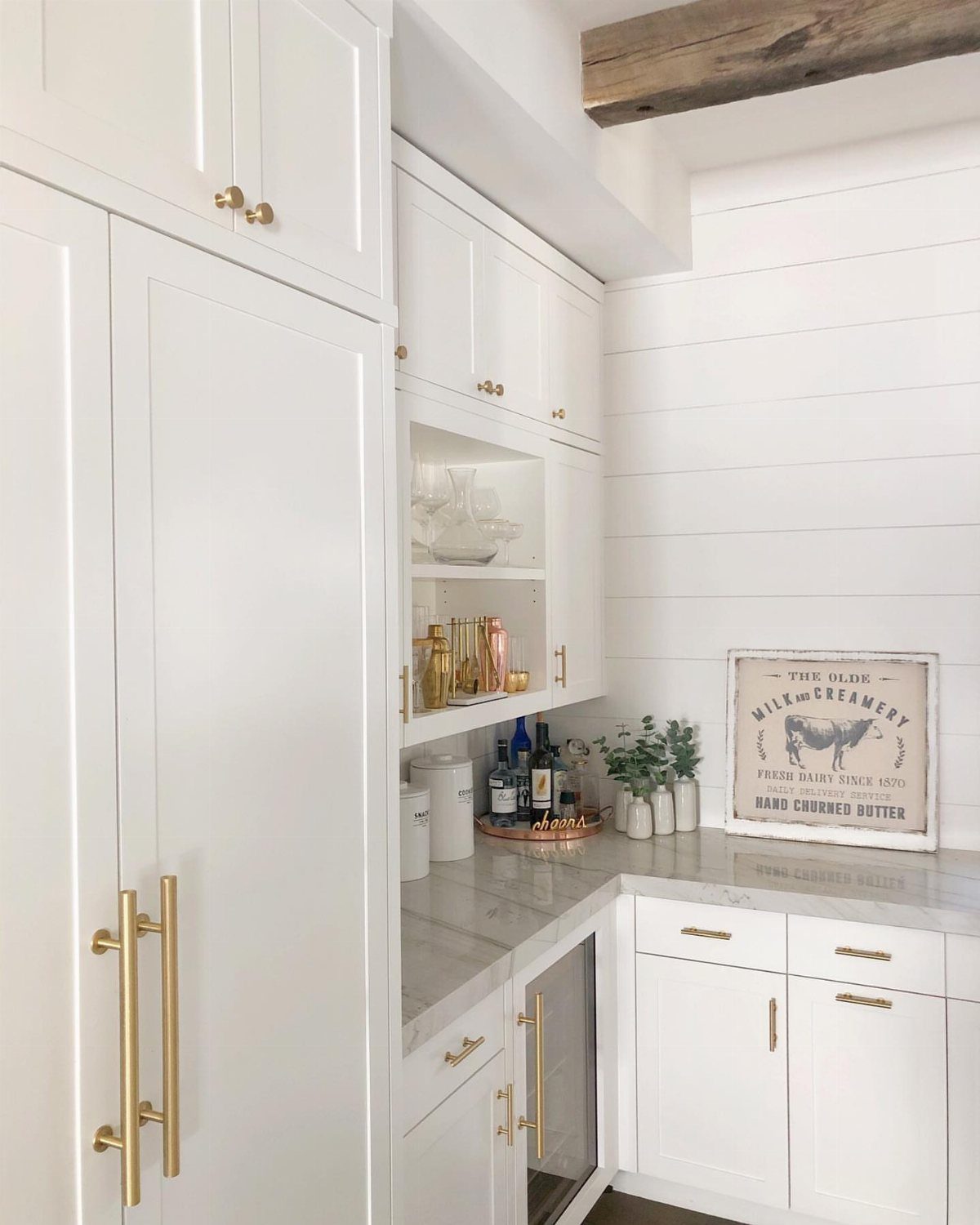
Simply White sits just shy of pure white, with enough cream in it to feel soft while still reading clean and bright. That makes it an easy pick if you want warmth without a visible tint.
It plays well with gold hardware and marble, and with painted shiplap behind it. Keep the wall in the same family so the cream doesn’t look yellow next to a cooler white.
4. Pure White
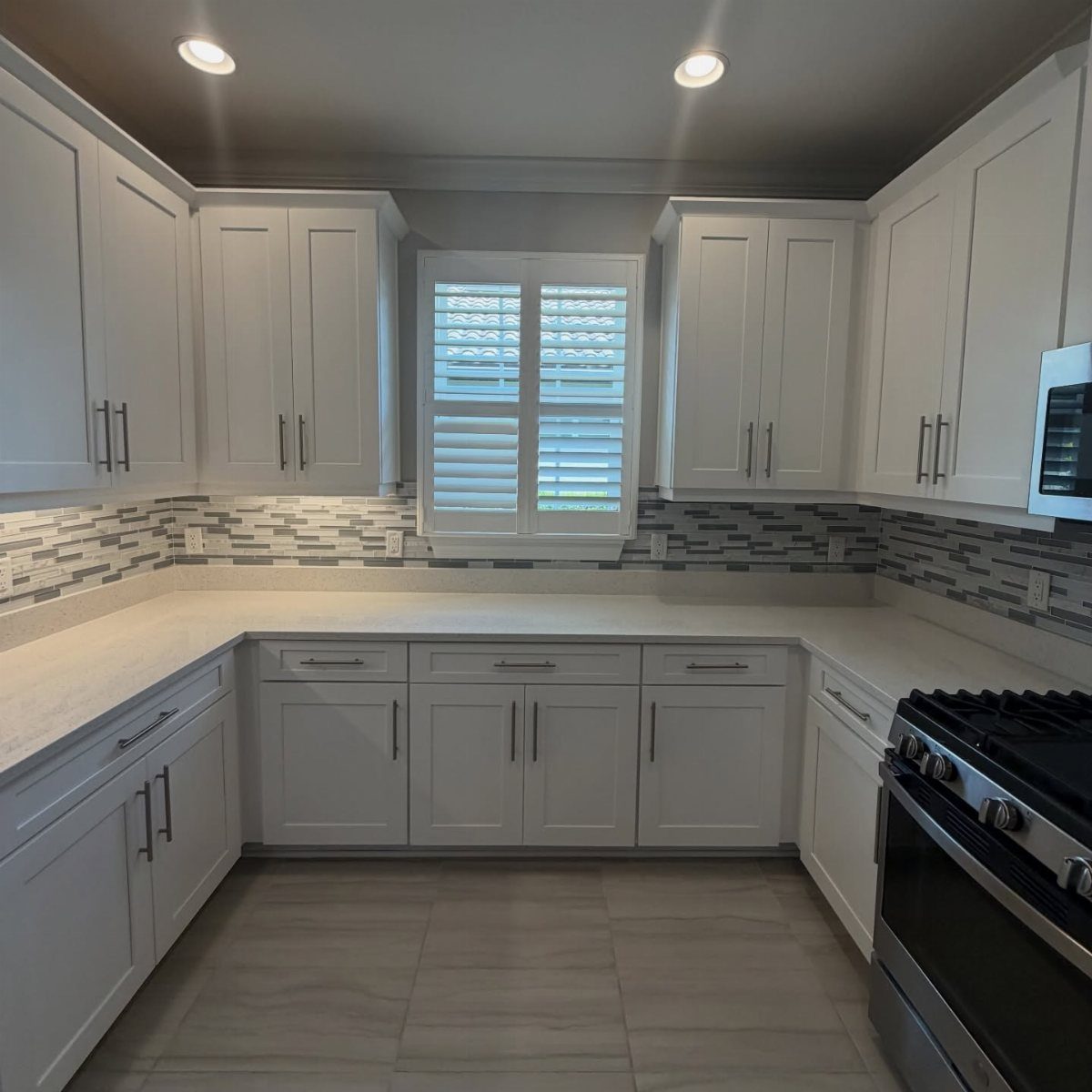
Pure White is the crisp, clean choice, with no cream to speak of. Of the whites here, it’s the one I’d choose for a kitchen that should look bright and plain.
It holds up well beside white countertops and a gray and white tiled backsplash, because nothing fights. Because it’s so clean, keep your sample away from warm woods while you judge it, or it can look stark.
5. White Cabinets with a Sage Island
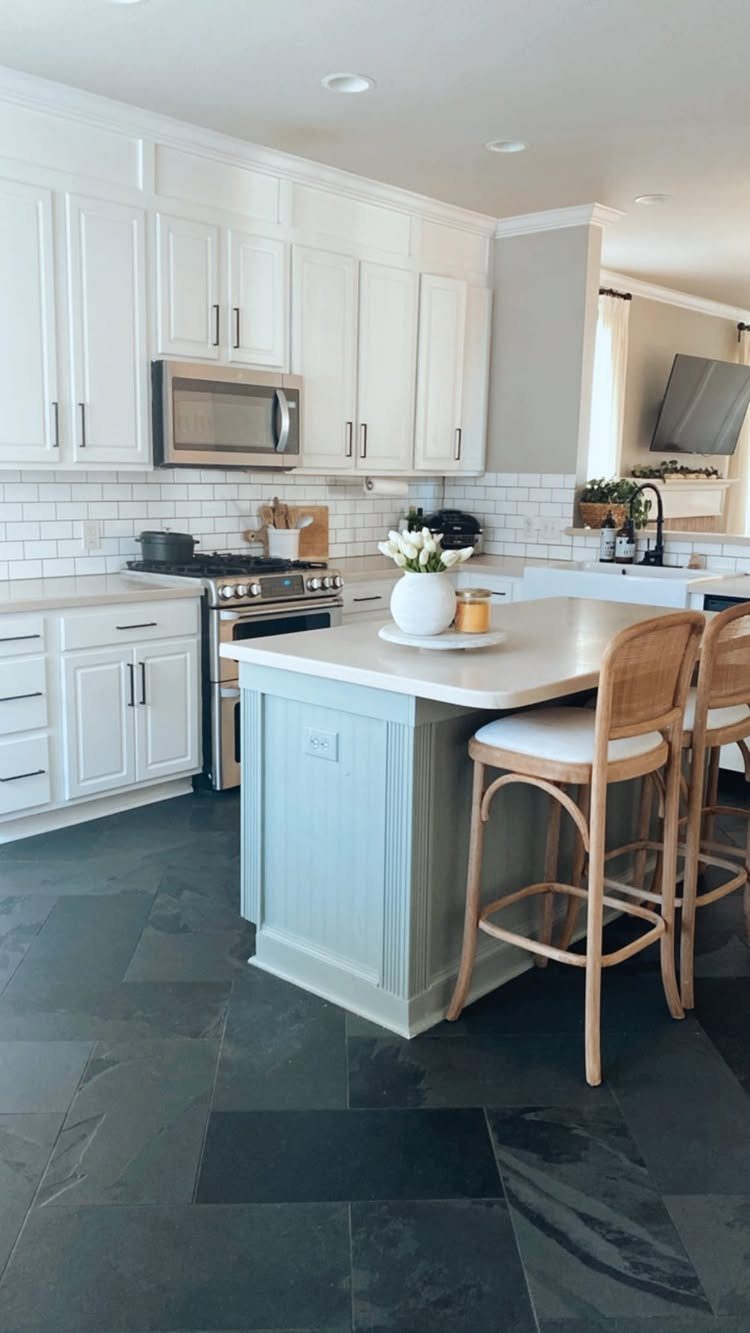
Painting only the island a color gives you a bold choice without committing the whole room. Sage green is a calm pick, and it stands out against white cabinets and a white tiled backsplash.
It’s also the cheaper way to try color: one piece of cabinetry instead of every door. Wood stools and a darker floor give the green something to settle against.
6. Cloud White
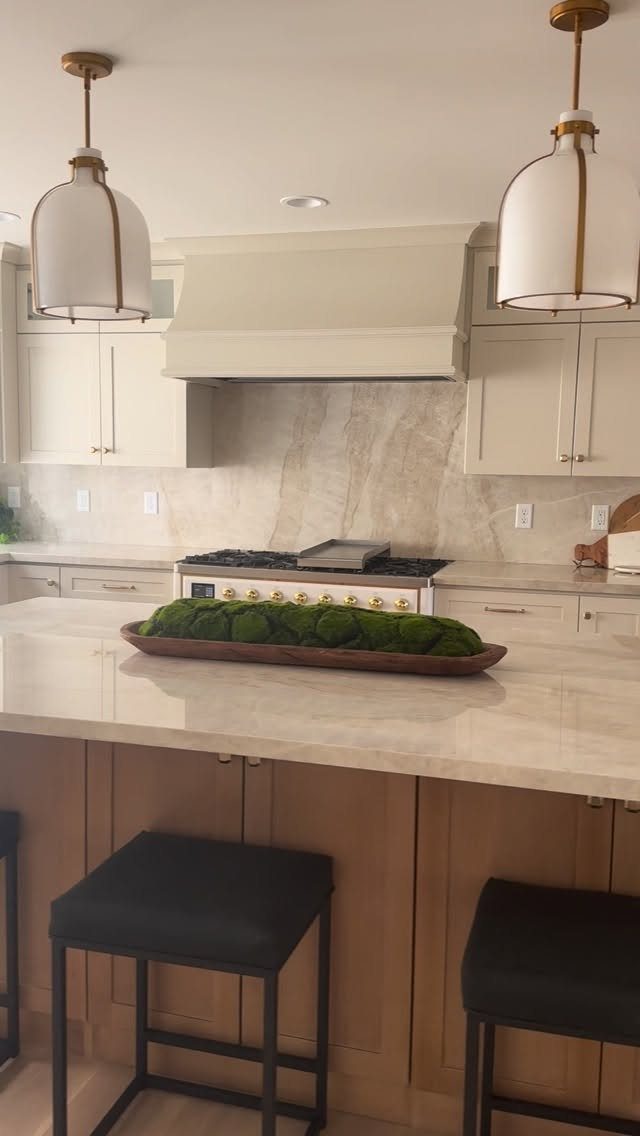
Cloud White carries a buttery cream undertone, which keeps it from looking stark under several bulbs and fixtures.
Gold pendants deepen the buttery tone, while black stools add a sharp contrast that keeps it from feeling sweet. I’d choose it over a stark white if your kitchen already has a lot of warm finishes.
7. Swiss Coffee
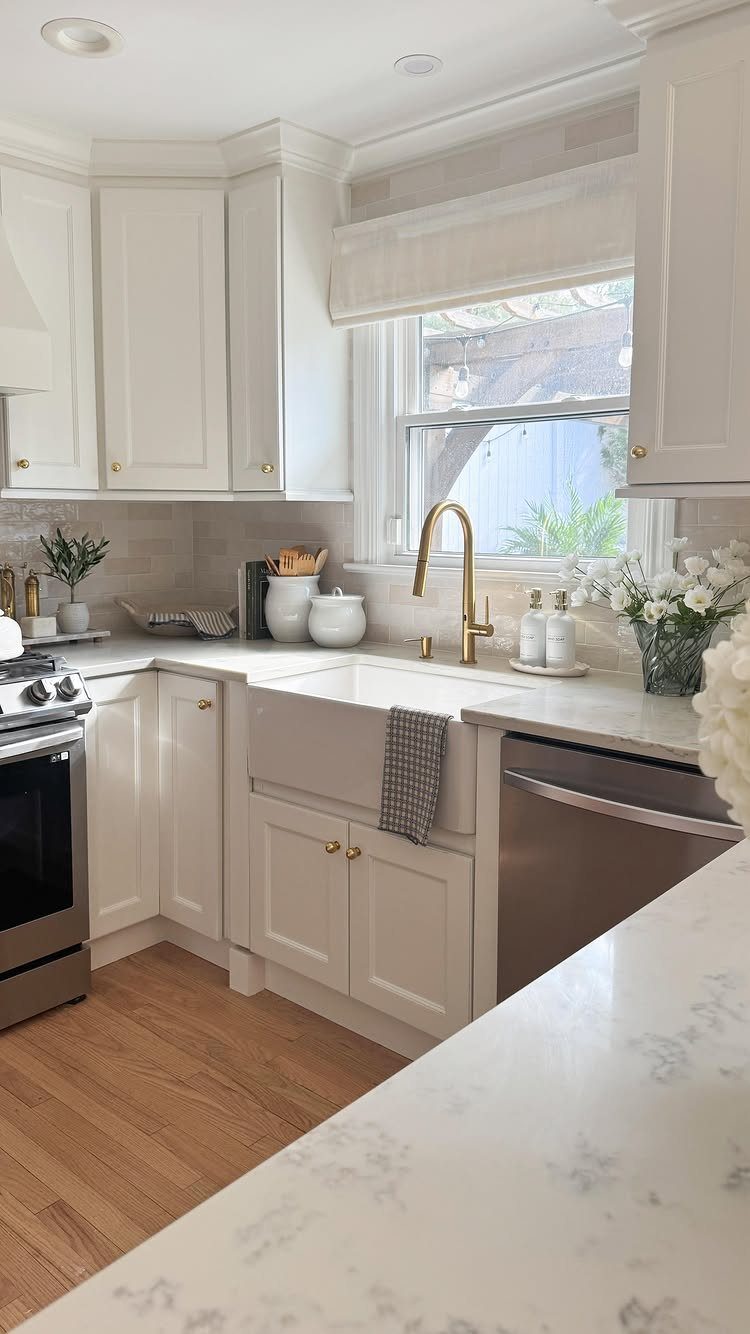
Swiss Coffee leans warm with a yellow base and the faintest green note, which keeps it from looking cold or builder-grade. Beside a white farmhouse sink and white countertops, that cream keeps the whole run from going flat.
The yellow in it pairs cleanly with a brass or gold tap. Hold a sample next to your countertop before committing, since the green hint can show up against a cooler white.
8. White Cabinets with Yellow Walls
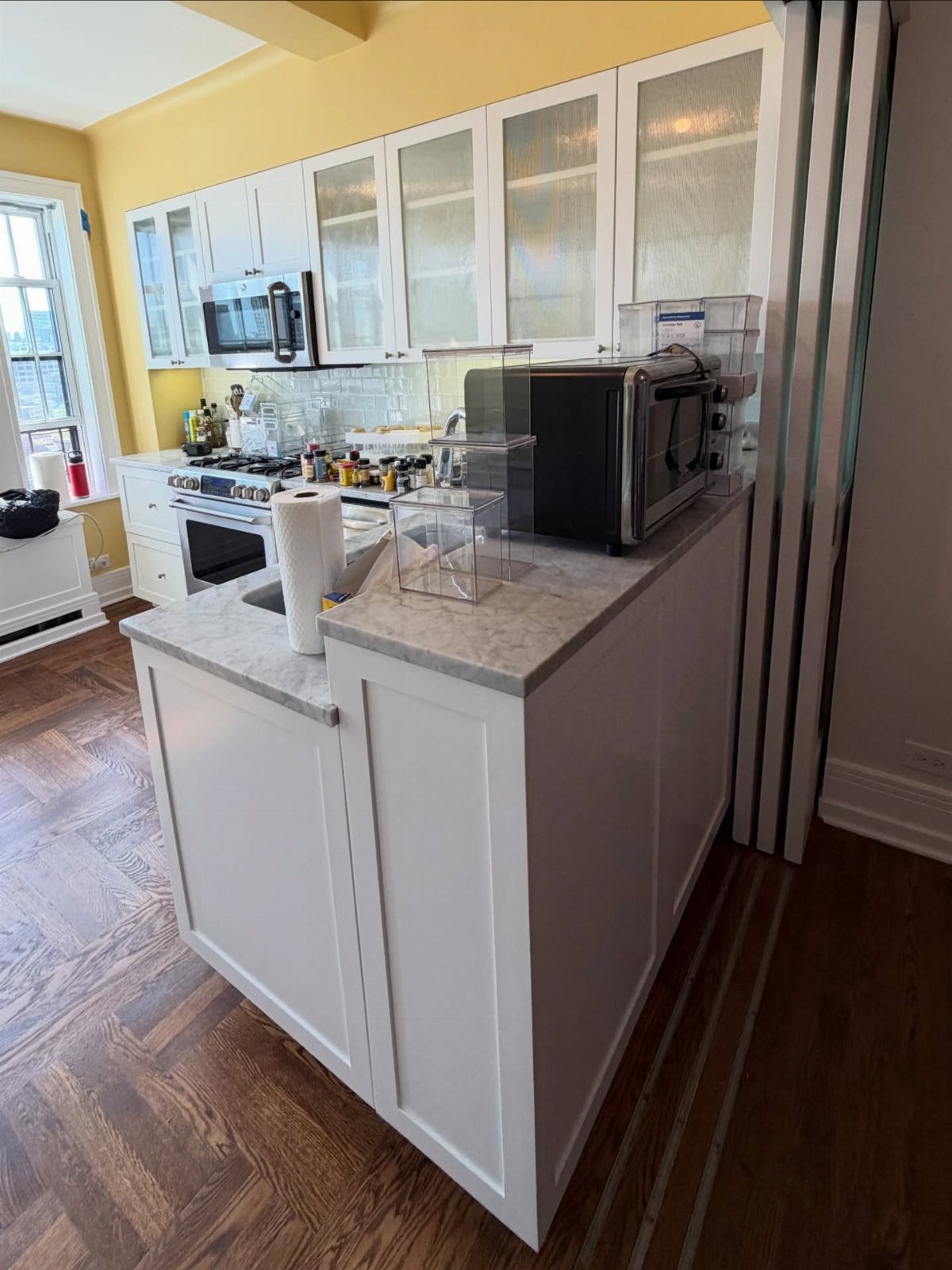
Yellow walls make white cabinets look crisper, and marble countertops keep the pairing from feeling too sweet. Herringbone wood floors add a third warm tone, so the yellow has something to sit with.
I’d pick a soft, buttery yellow over a bright one, because a strong shade will crowd the white. Brush a large swatch on the wall and watch it beside the cabinets at different hours before buying paint.
9. All-white Kitchen with Gold Hardware
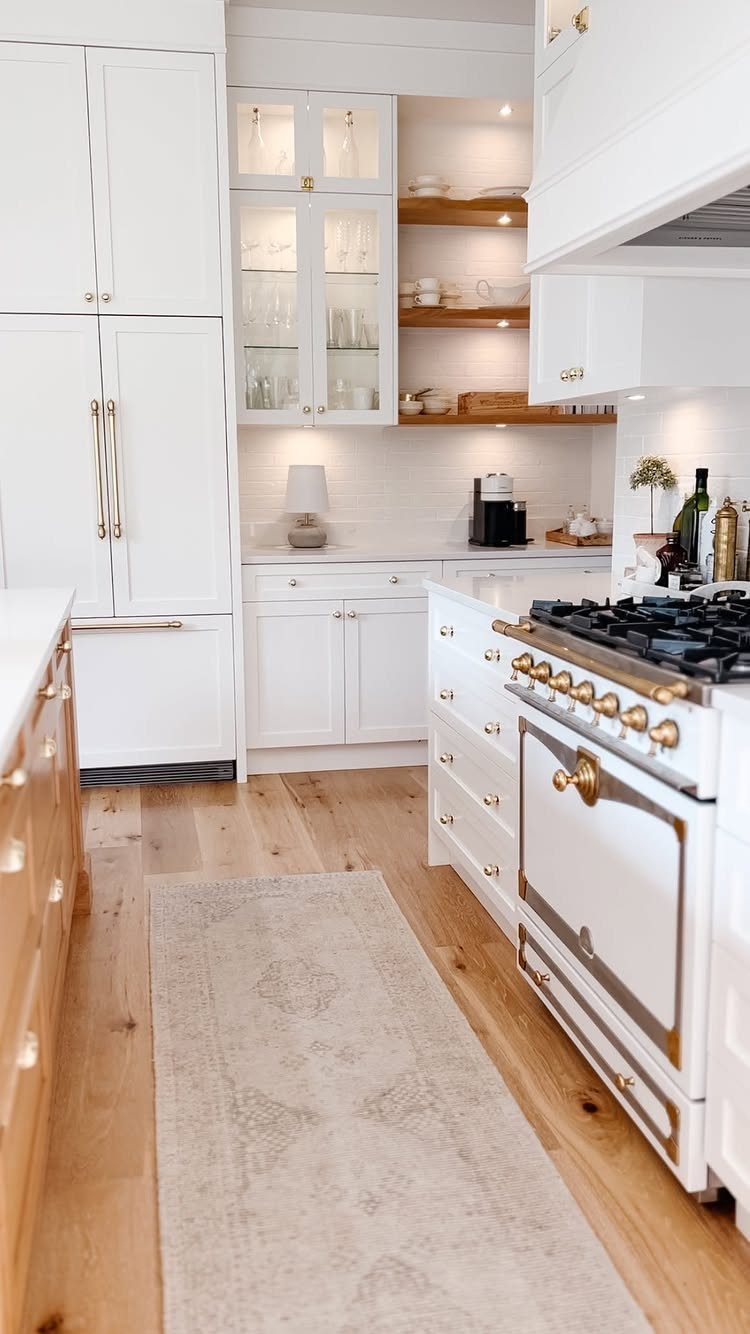
Gold handles do a lot of work on all-white cabinets, adding warmth without a single extra color. Light wood floors and open wooden shelving carry that warmth across the room.
Hardware is the cheap part of this idea.
Swapping pulls is a quick weekend job, so buy one handle first and hold it against a painted door. Stick to one gold tone throughout so nothing looks mismatched.
The most popular color by miles, white kitchen cabinets are ultra versatile.
10. White Cabinets with Dark Grey Island
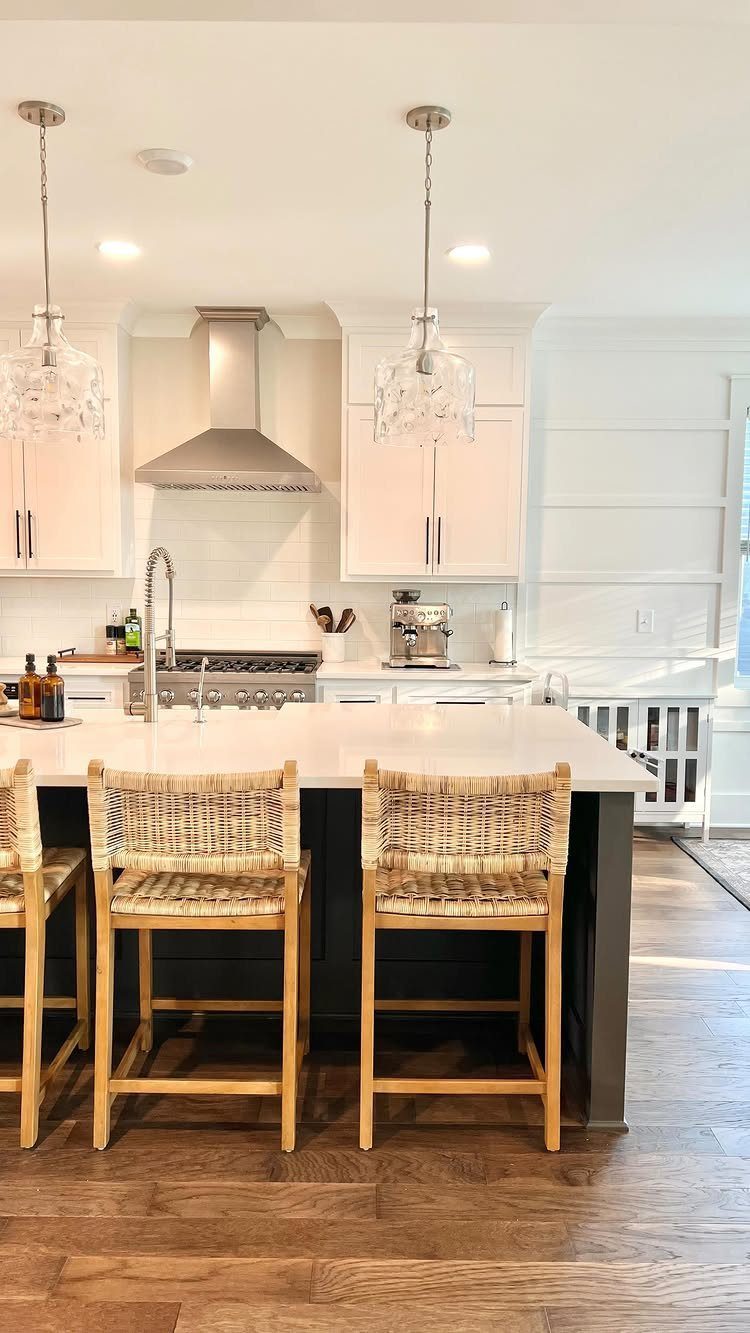
A dark grey island gives white perimeter cabinets something to push against, and it grounds the room without darkening every wall. Woven stools soften the contrast with a natural texture.
If your kitchen is small, I’d paint only the island and leave the uppers white.
That is one piece of cabinetry to paint instead of the whole room. Choose a matte or satin finish so the grey looks deep rather than shiny.
11. White Shaker Cabinets with Black Hardware
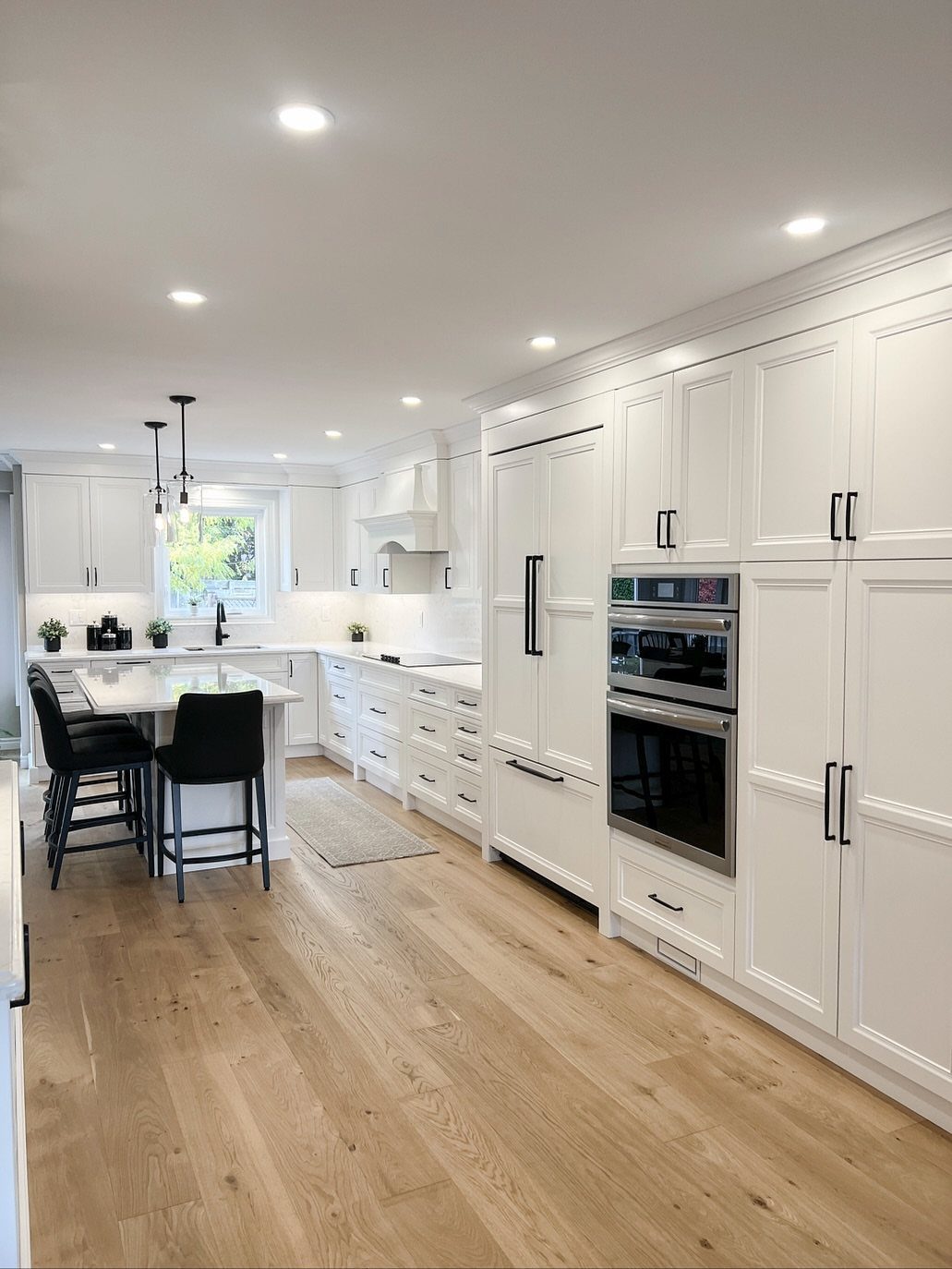
White shaker doors are plain enough that black pulls become the main design move. Repeating that black on the stools and a few small accents ties the room together, and light wood floors keep it from feeling heavy.
I like this for renters and first-time painters because the pulls swap out with a screwdriver.
Buy one black pull and test it on a door before you order a full set. Keep every pull the same finish.
Choosing Wall Colors
Start with your hard finishes: countertops, flooring and backsplash tile. Their undertones decide which wall colors look right, so match the wall to the coolness or warmth of those surfaces before you look at paint chips.
For a bolder room, pick a color from the opposite side of the color wheel from your cabinets. Deep blue, such as Sherwin-Williams Naval SW 6244, makes white or gray cabinets stand out.
Pick a wall color that matches the warmth of your cabinet white.
Cabinets in cream or antique white take warmer, heavier wall colors without looking mismatched. A bright or cooler white suits lighter, bolder colors, like a mossy green such as Behr Back to Nature S340-4.
Lighting Effects
White cabinets depend on good natural light to stay bright instead of flat. Low light turns whites with gray or yellow bases into colors you didn’t choose.
If your kitchen is dark, sample true whites first. When white isn’t working, a pale warm neutral like Benjamin Moore Pale Oak usually is.
A bright kitchen has the opposite problem: paint looks lighter than it did on the swatch. To get an off-white result, go a shade or two deeper than your instinct says.
Light shifts with every room and every house, so sample the paint on your own kitchen wall before you commit.
Maintenance of White Cabinets
A satin or semi-gloss finish on white cabinets lifts marks well and takes little effort to keep clean.
Paint finish matters as much as the cleaner. Satin or semi-gloss resists stains and moisture, so wall paint in one of those finishes wipes down easily and holds up around the stove and sink.
Frequently Asked Questions
Should walls be lighter or darker than cabinets?
Either can work, depending on how much contrast you want. Deep walls like navy make white cabinets stand out, while a wall in the same white family keeps the room soft and quiet.
What matters most is that the undertones agree: if the whites differ only slightly, they read as a mismatch rather than a choice.
What is the best white paint for kitchen cabinets?
It depends on your lighting and countertops, but soft warm whites like White Dove suit most kitchens. Simply White from Benjamin Moore gives warmth with no obvious tint.
Pure White is the crisper choice, with no cream in it at all. If your counters or backsplash are gray or marble, a cooler white beside them looks more settled.
Paint a sample on a cabinet door, then look at it in morning light and again at night, and only then pick up a full gallon.
Can wall white and cabinet white be different?
Yes, as long as you do it on purpose. Match undertones, warm with warm and cool with cool; a cream cabinet next to a cooler white wall can start to look yellow.





