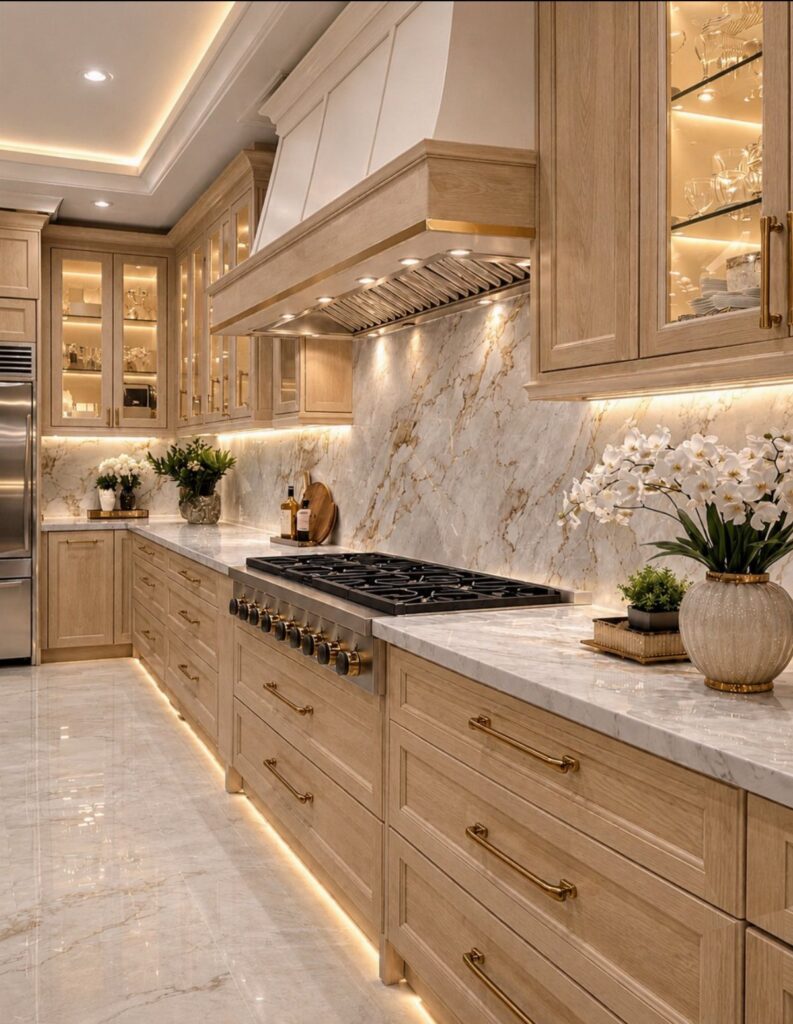
Light wood kitchens range from a free fix, like plug-in strips of warm light under the uppers, to panel-ready refrigerators that cost well above standard models, with white paint on the base run, subway tile and a single floral backsplash strip in between.
Renting or owning decides most of this list: renters can stick to under-cabinet lights, open shelving and other changes that leave the walls and cabinets alone, while owners with a flexible budget can take on panel-ready appliances or a full two-tone cabinet swap.
Whatever you pick, a pale wood tone with the grain as the main feature works best, and everything else around it should stay quiet.
1. White Countertops with Light Wood Cabinets
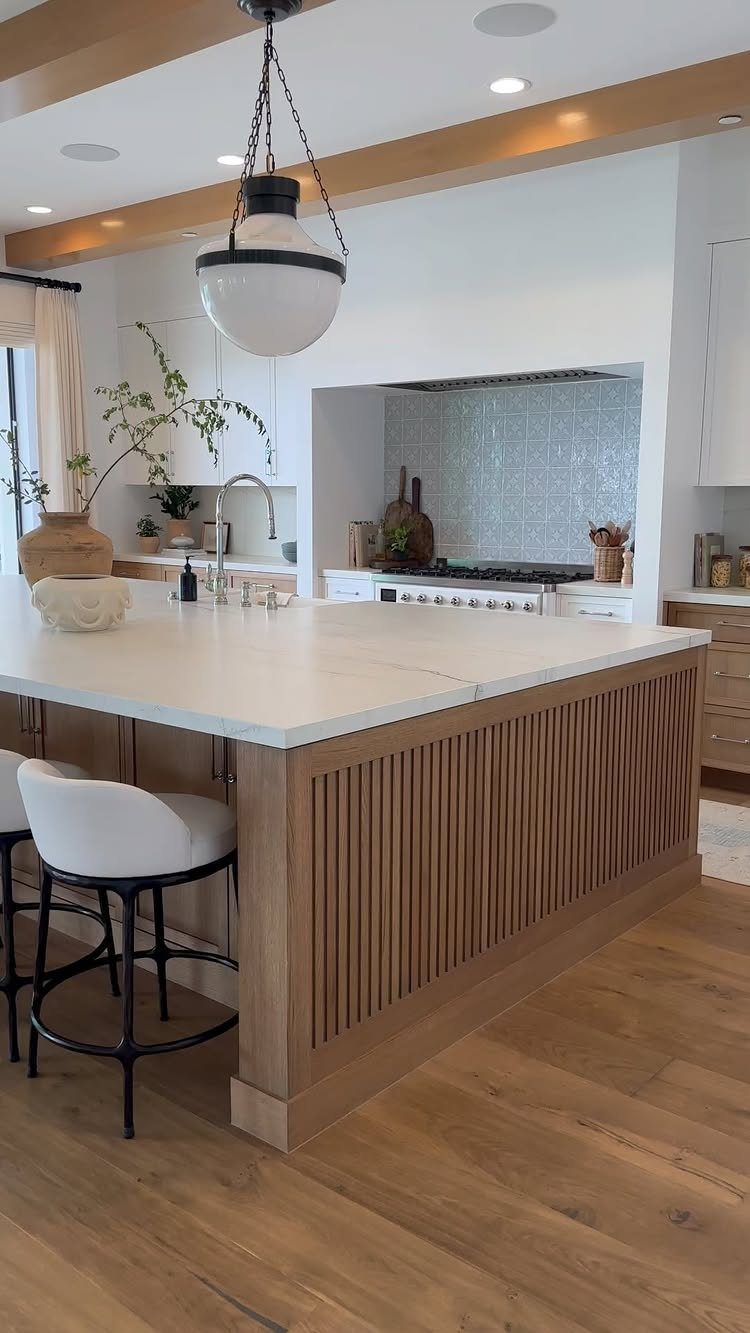
White counters over light wood base cabinets give the kitchen a clear split: pale and soft on top, warm and grainy below. On an island like this, the slatted wood front adds texture, so the countertop can stay plain.
I’d keep the white matte or honed rather than glossy, so it doesn’t fight the wood grain. A single pendant overhead is enough decoration.
2. White Subway Tile Backsplash with Light Wood Cabinets
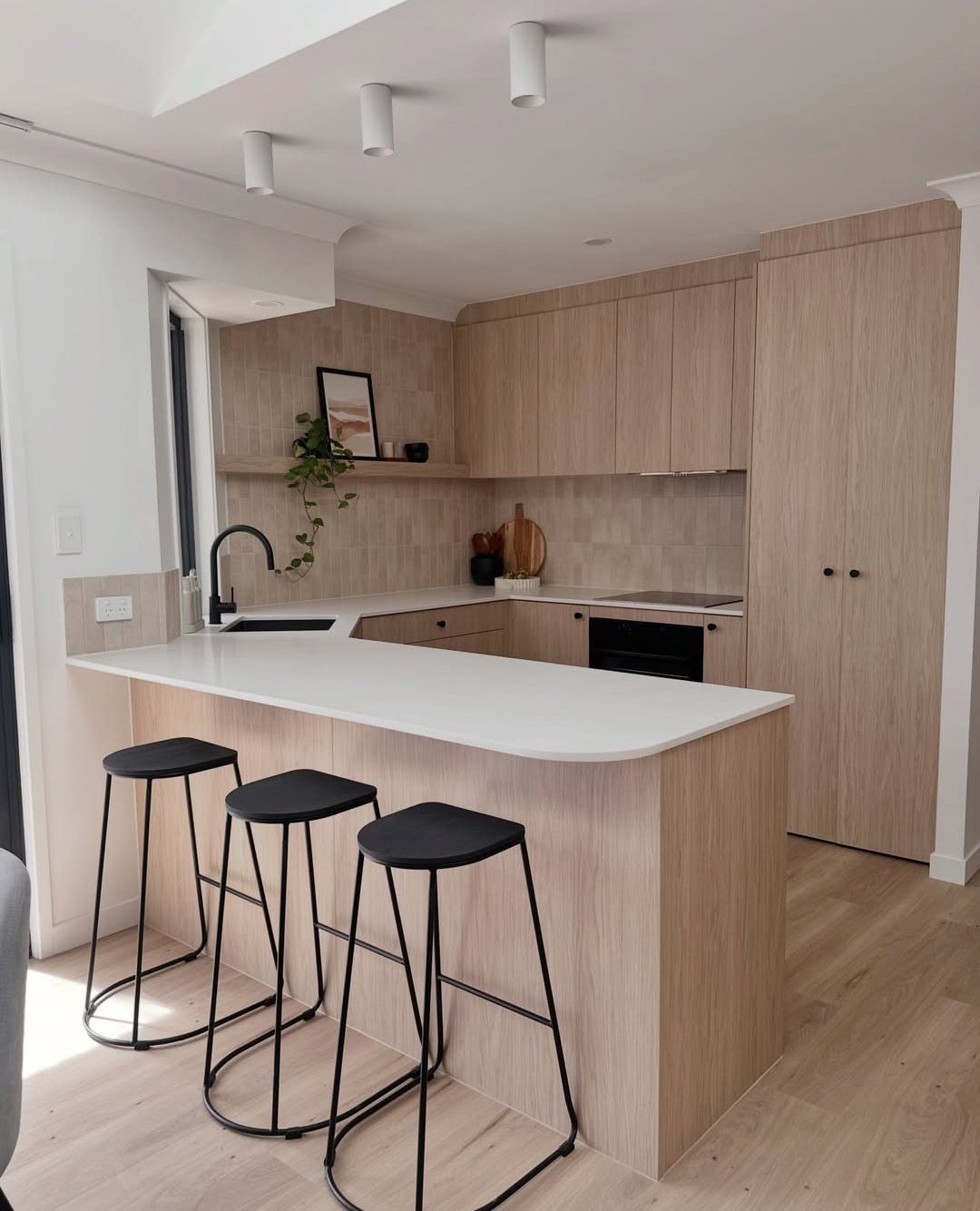
Subway tile is the cheapest way to keep a light wood kitchen looking clean. Its small, regular shape sits quietly behind the grain, and white tile bounces light back onto the cabinets instead of competing with them.
Choose a warm white grout or a pale gray one if you want less contrast. Black bar stools, as above, are an easy add-on for a sharper edge.
3. Panel-Ready Appliances
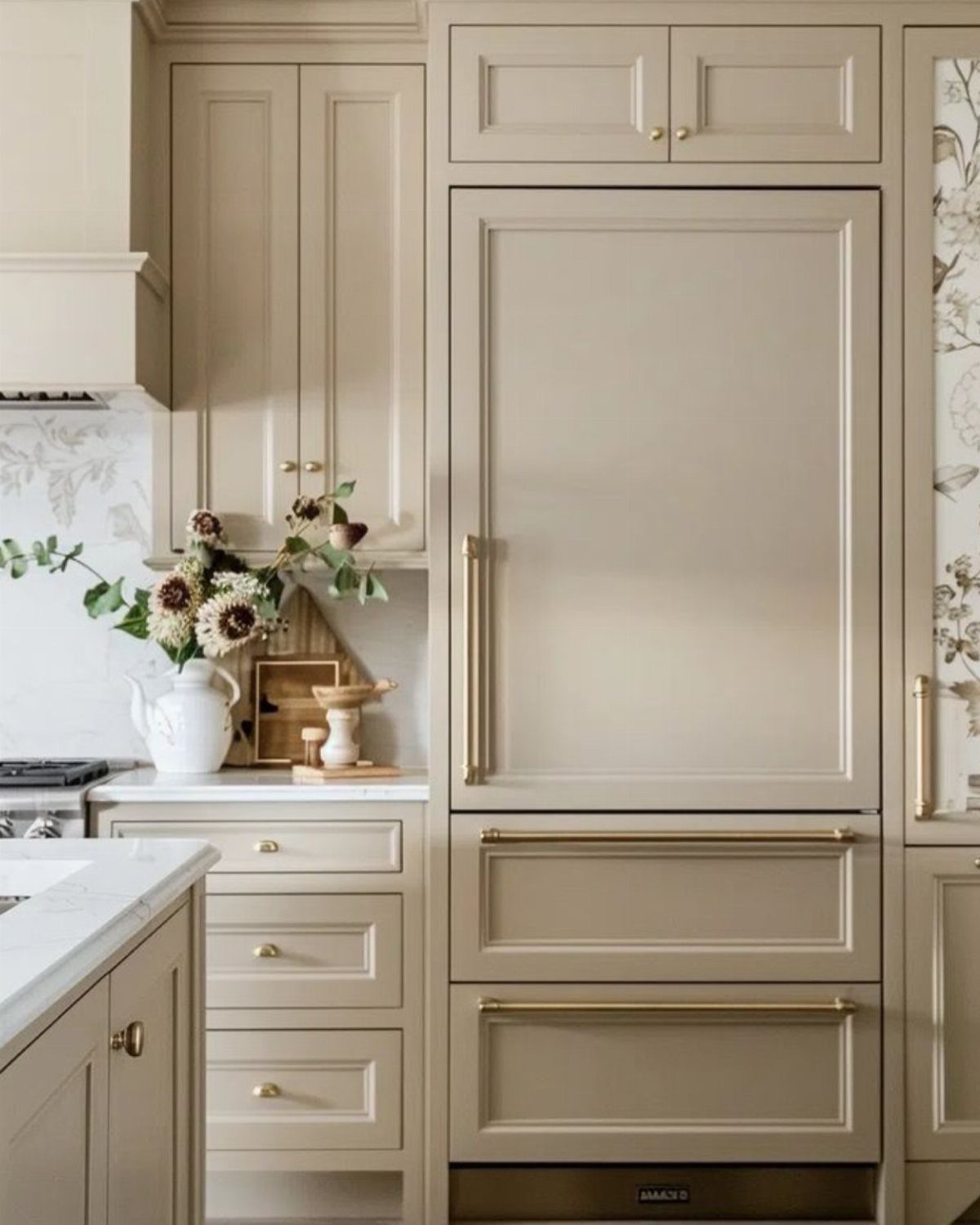
A refrigerator that disappears behind a cabinet door is the quietest upgrade a light wood or beige kitchen can get. Panel-ready models take a front that matches your cabinetry, so the fridge reads as storage rather than an appliance.
Cost is the limit: these units run well above standard fridges, and the panels add more. For a tight budget, I’d skip it and spend on hardware, since gold pulls on matching doors already do much of the work.
4. Open Shelving
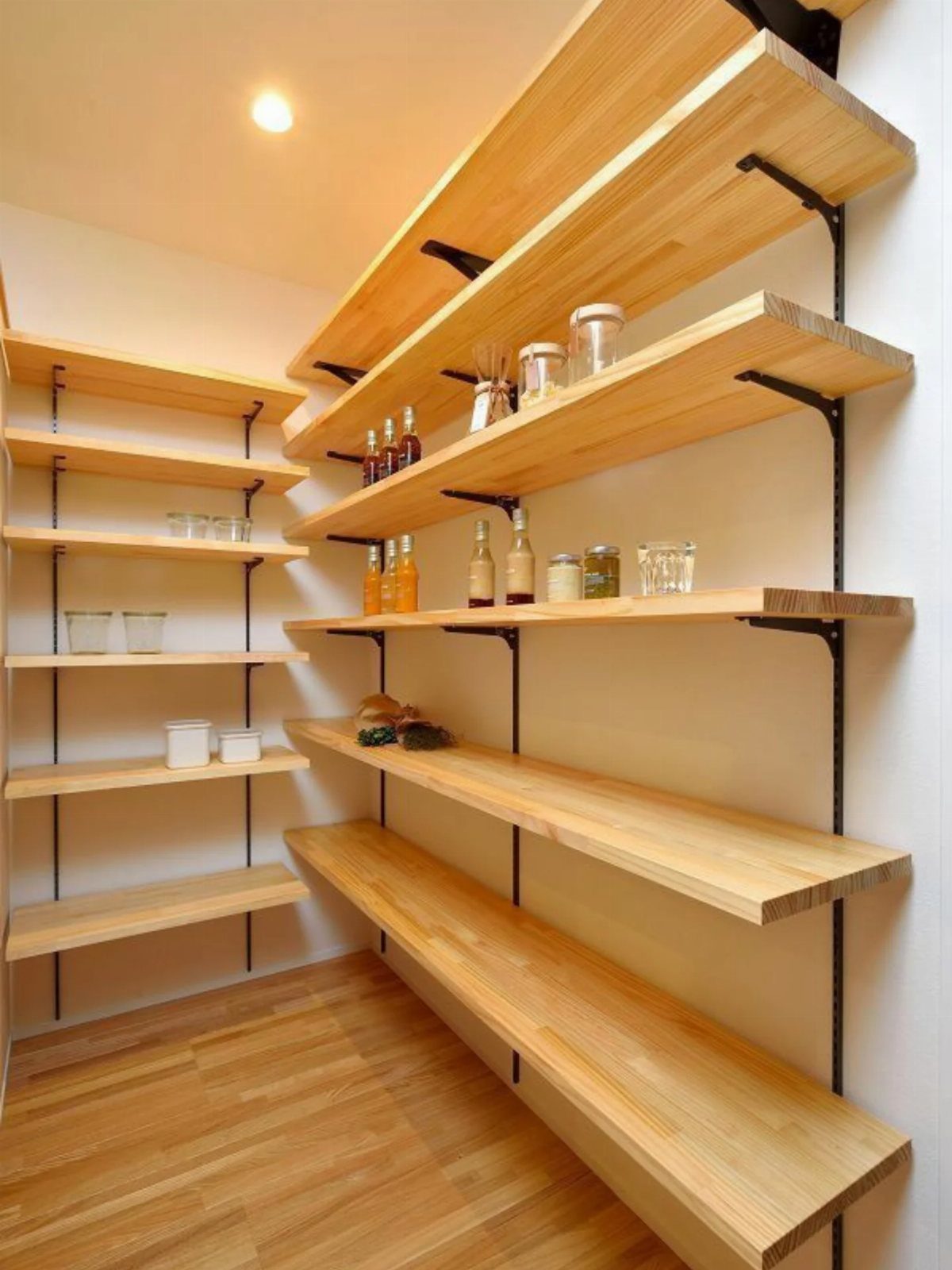
Open shelves in a pantry make sense because everything you reach for sits in plain view.
Matching containers help the look hold together.
Keep daily items at hand height and put the pretty, rarely used ones up high. Dust is the cost, so wipe the boards now and then.
5. Light Wood Cabinets with Other Wood Types
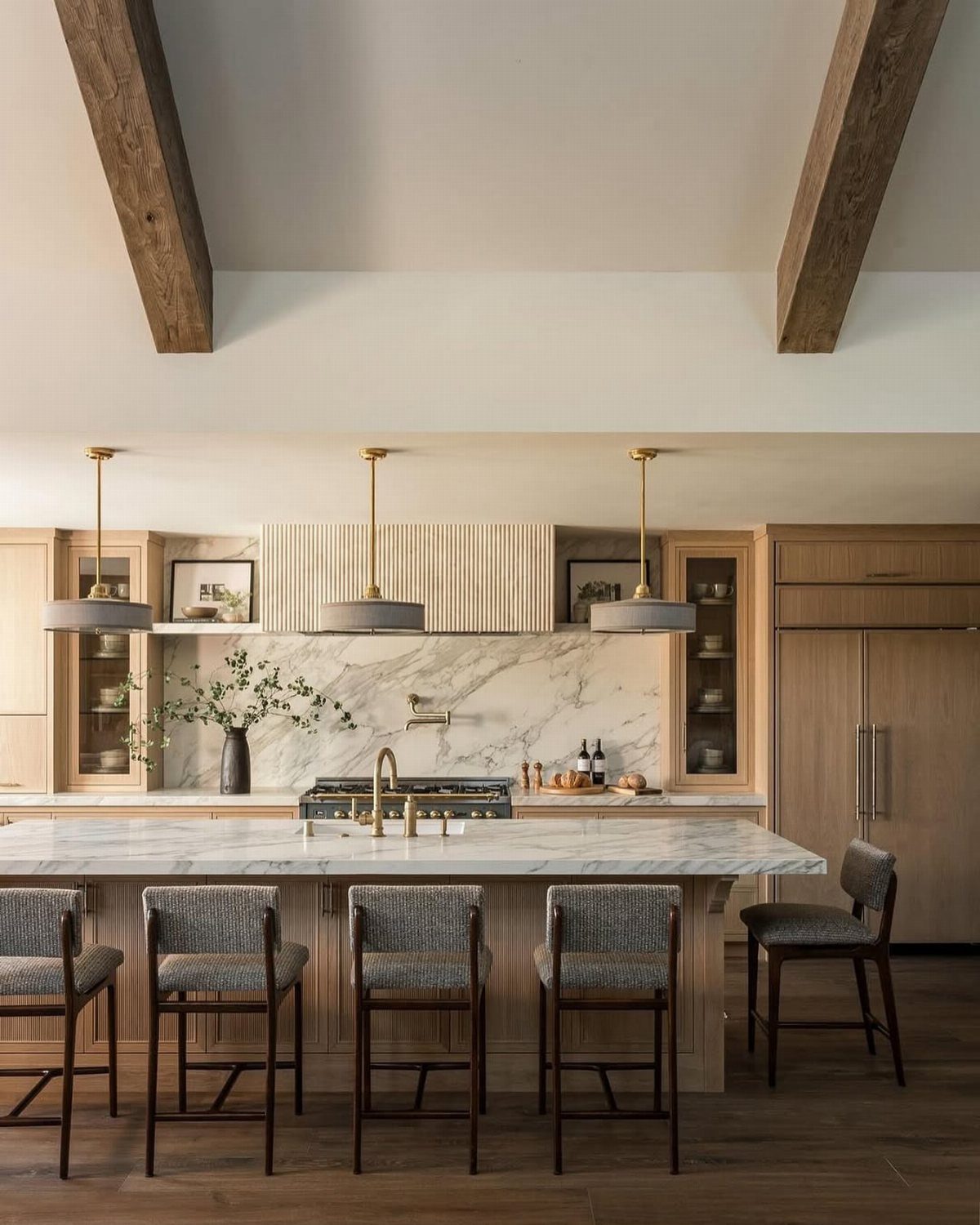
Dark ceiling beams against light wood cabinets show that two wood tones can share a room when one is clearly pale and the other clearly deep. The contrast works because the tones are far apart, not nearly matched.
I’d avoid a third wood tone. White marble counters, as above, give the eye a place to rest between the two.
6. Neutral Kitchen Aesthetics
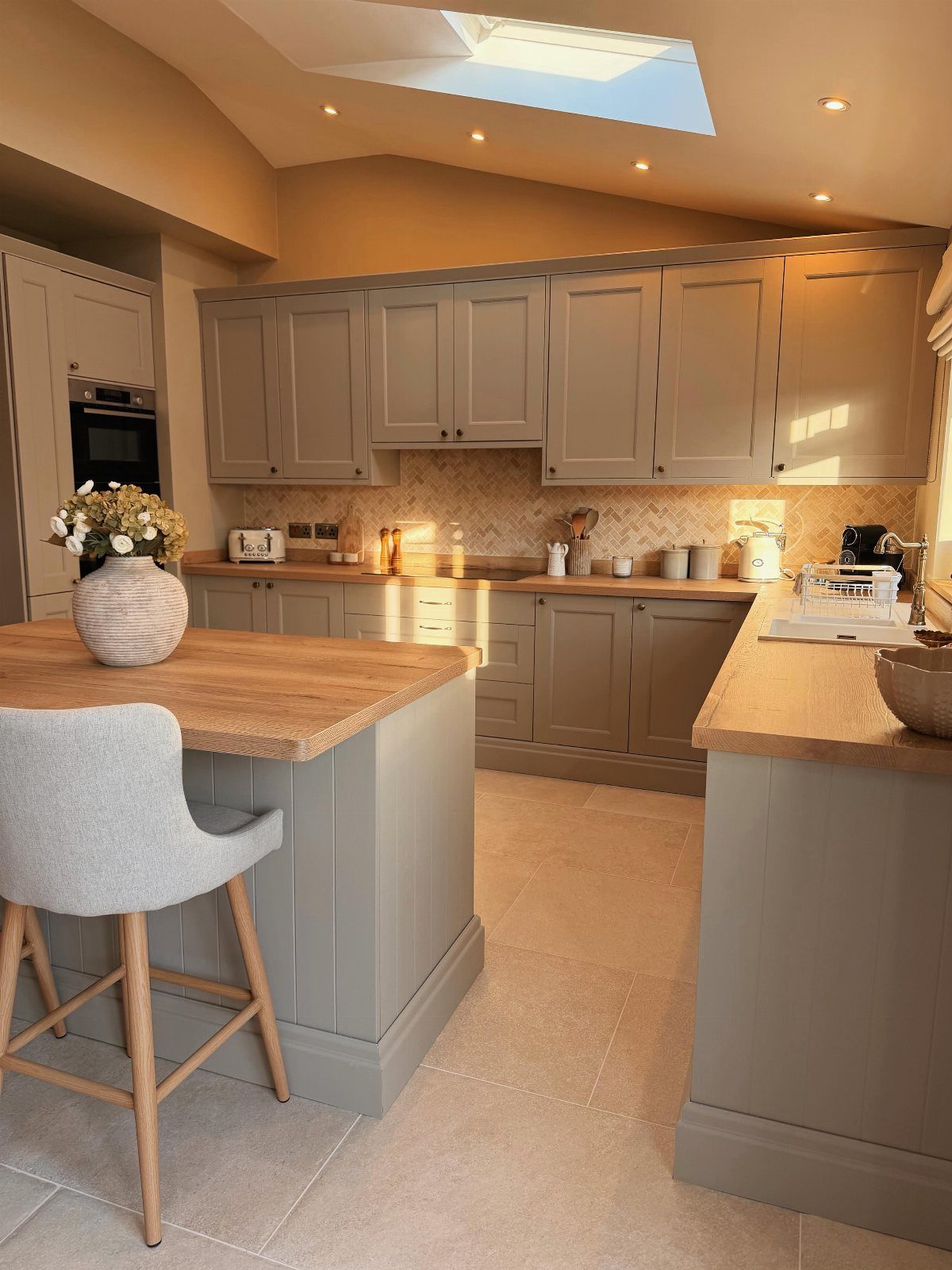
Taupe-gray cabinets with light wood counters give a kitchen a calm, warm feel that still has some depth. Because the palette stays close in tone, the room suits nearly any style of hardware or stool you add later.
Matching the island to the perimeter cabinets keeps it cohesive. If it looks flat, bring in texture through the wood grain and a single accent chair, rather than more color.
7. Under-Cabinet Lights
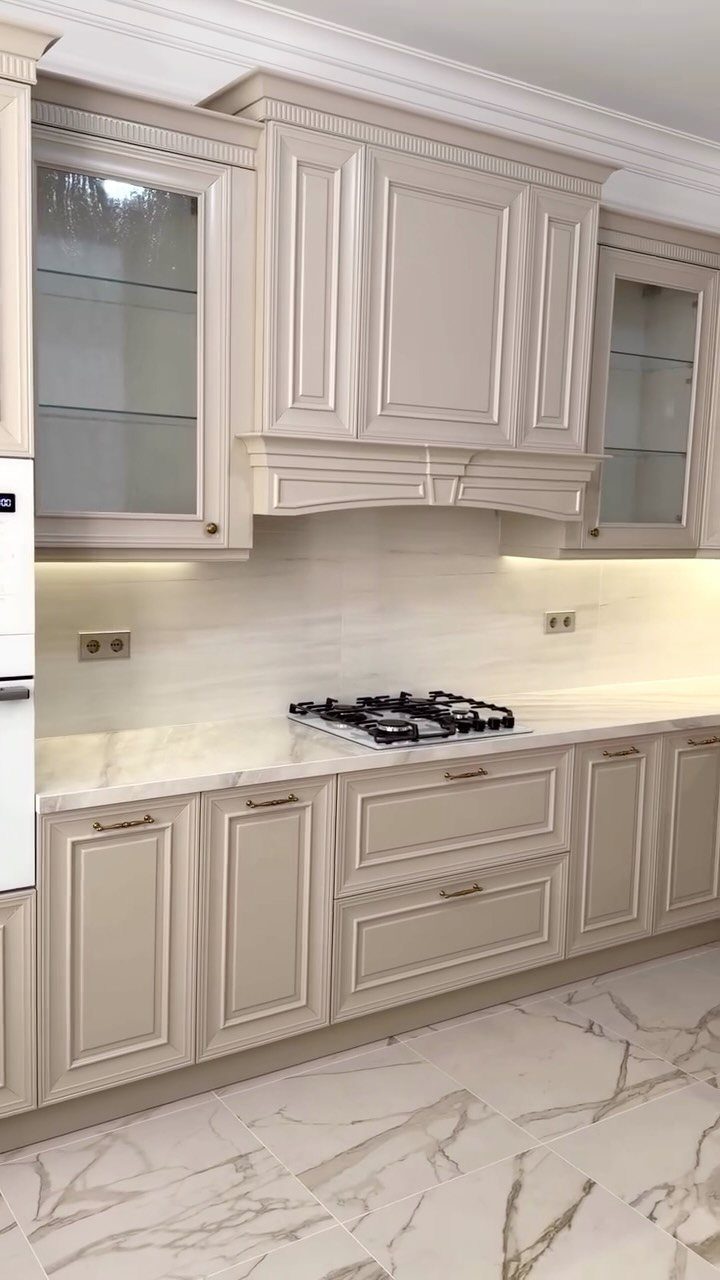
Warm light tucked under the upper cabinets does more for a beige wood kitchen than any paint change. It washes the backsplash and the counter beneath, and it keeps the stovetop area from going dim.
I’d pick a warm white bulb color over a cool one, since cool light turns light wood gray and flat. Plug-in or stick-on strips suit renters and a weekend budget.
8. Light Wood and White Two-Tone Cabinets
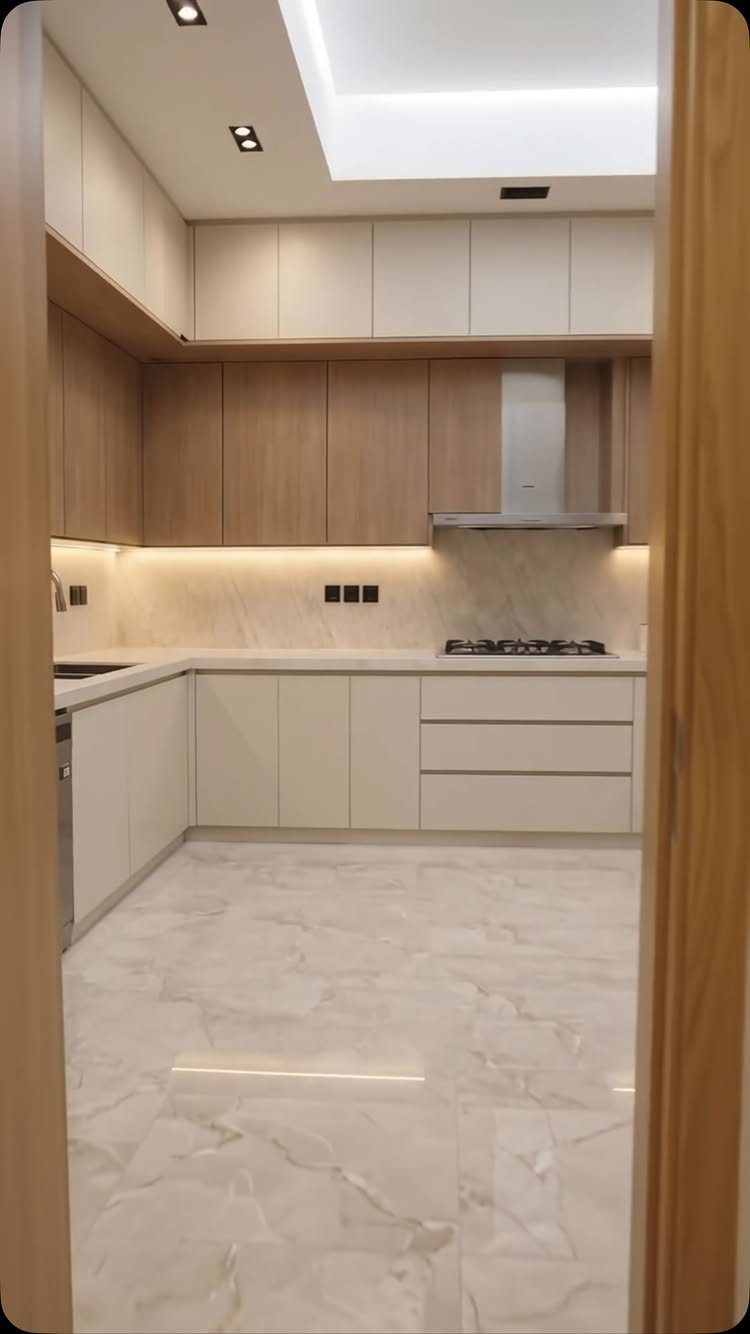
Light wood on top and white below keeps a kitchen airy, because the heavy lower run turns pale and the warm grain sits at eye level.
White counters and a pale floor, as above, carry that brightness across the room.
Plain, flat-fronted wood uppers let the grain do the decorating. Paint is the budget route for the lower cabinets: leave the uppers alone and roll white on the base run.
9. Light Wood Cabinets with Black Appliances
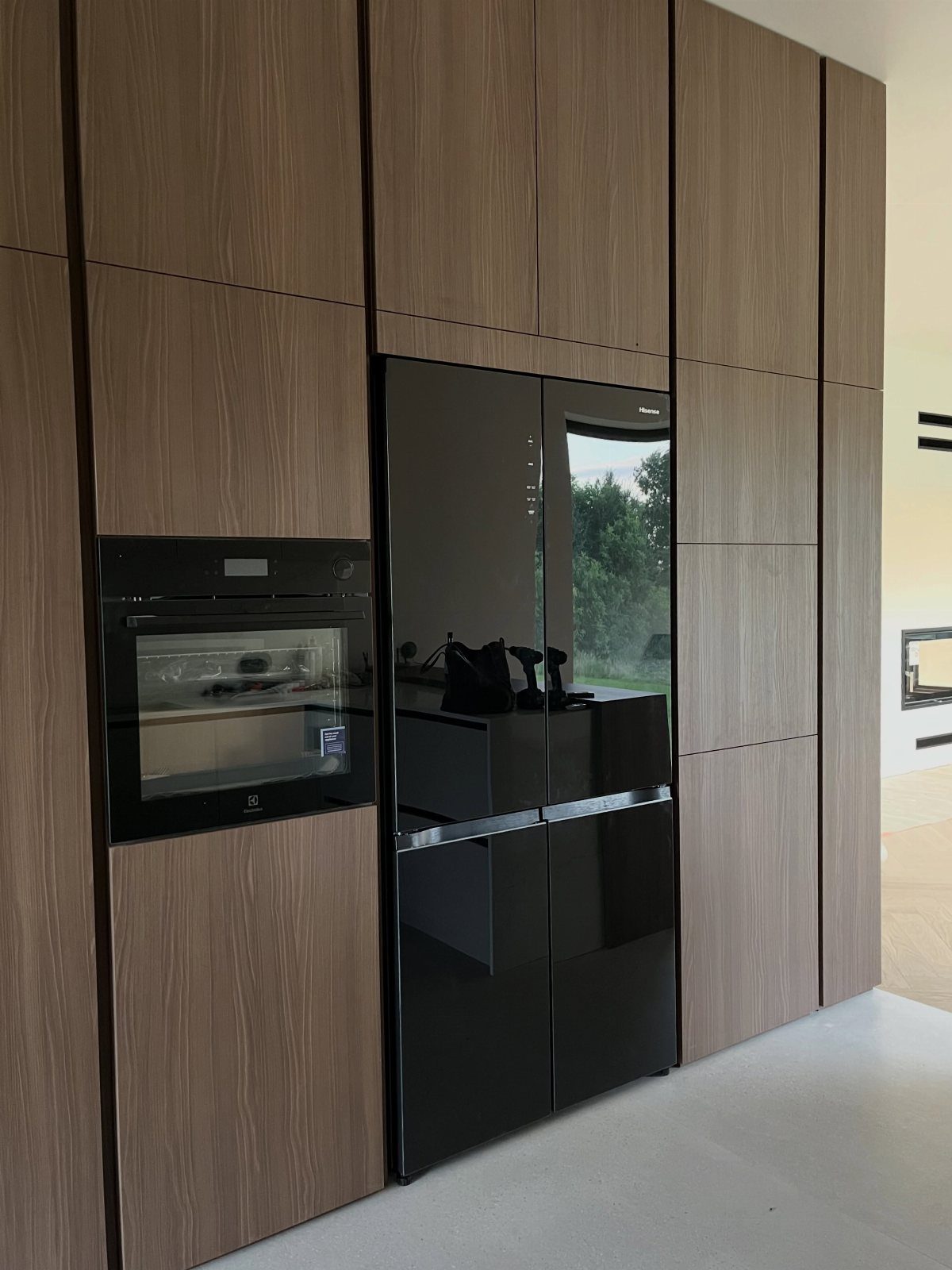
Black appliances set into full-height light wood read as deliberate, not stuck on. The pale grain makes the dark oven and fridge look like part of the cabinetry.
A glossy black finish shows fingerprints fast, so I’d keep a microfiber cloth nearby.
If that bothers you, choose a matte or fingerprint-resistant black instead. Keep the hardware simple, since the appliances already supply the contrast.
10. Light Wood Cabinets with Dark Backsplash
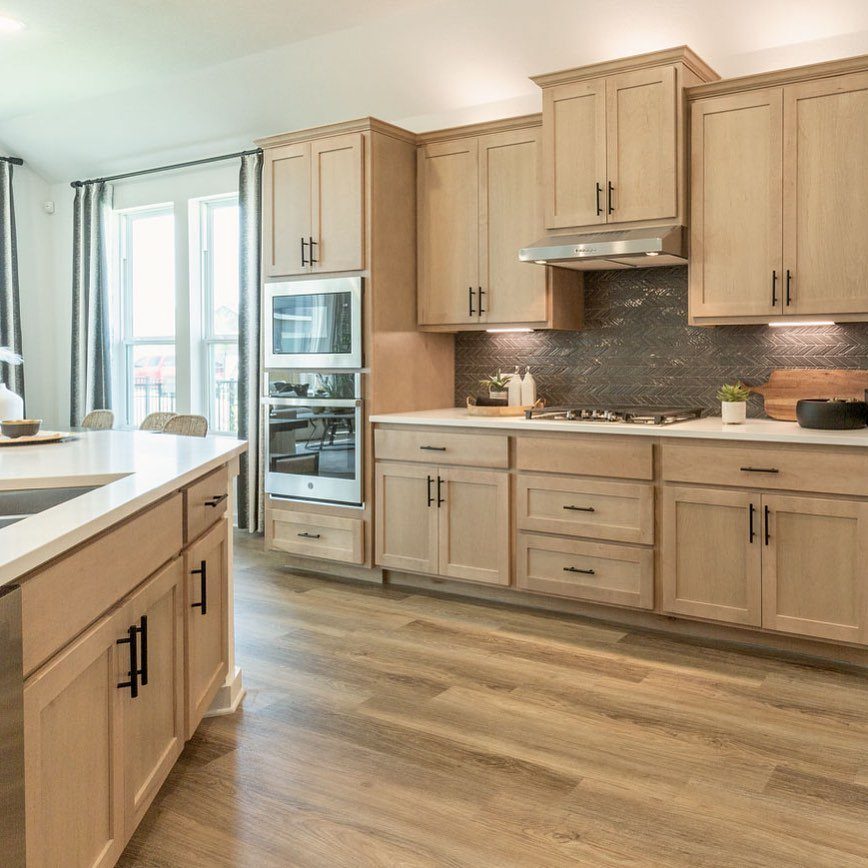
A dark gray textured backsplash gives light wood something to push against. The cabinets look warmer next to it, and white counters keep the middle of the room bright.
Texture matters here: a matte, uneven surface hides splatter better than a glossy one and adds depth without a pattern. I’d keep the dark to the backsplash band only, so the room stays light overall.
11. Light Wood Cabinets with Patterned Backsplash
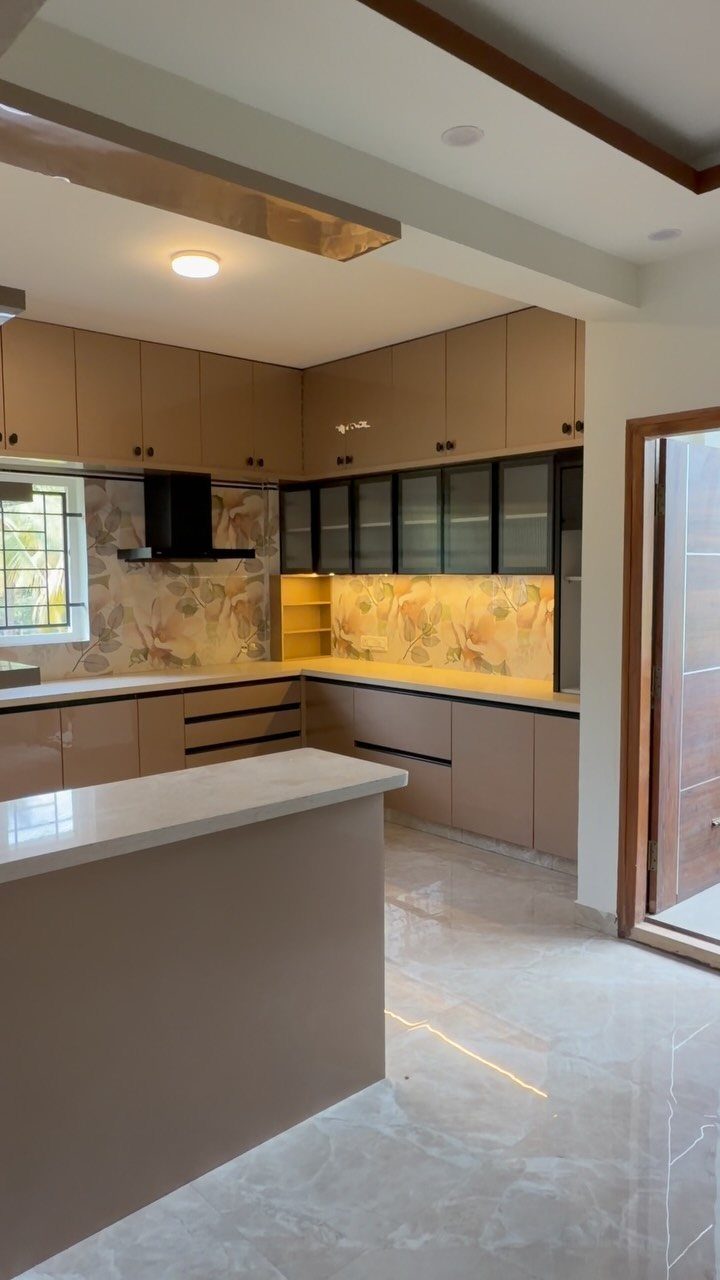
A floral tile backsplash is the one loud piece a light wood kitchen can carry, since the calm cabinets give it room.
A patterned backsplash does the heavy lifting here, and light wood cabinets let its color stand out instead of competing with it.
Keep everything else quiet: white island, plain counters, simple pulls.
Pick tile whose colors already sit near the wood, so the pattern feels chosen. Tile is the pricey part, so I’d limit it to the strip between counter and uppers.
Maintaining Light Wood Cabinets
Light wood shows wear differently than dark wood, so a quick routine matters more than a big cleaning day.
Wipe spills the same day with a soft cloth dampened with mild soap and water, then dry the surface so moisture never sits on the finish.
Spots near the sink, dishwasher and stove take the most abuse, so check those first. Skip abrasive pads and harsh sprays, which dull the finish and leave marks that stand out on pale grain.
Over time, the finish can wear thin or discolor.
When that happens, refinishing is the fix, and it can bring the cabinets back without replacing them. For small worn patches, a light touch-up is often enough if refinishing the whole surface can wait.
Choosing the Right Wood
White oak, maple and birch are the three popular choices, and each one looks and wears a little differently.
Before you pick, ask for a sample door in each and hold it next to your flooring and wall color in your own kitchen light.
Grain is the biggest visual difference.
Oak tends to show more grain, which suits a natural, textured look. Maple and birch read smoother and calmer, which helps when square footage is tight and you want less going on.
Durability and upkeep vary too, so ask about the finish on any cabinet you buy. A good finish protects the wood as much as the species does.
Light Wood Trends
Light wood is a current trend, and it follows the long run of white and gray kitchens. People are choosing it for organic warmth and a cozier feel, which gray never really gave.
That matters if you plan to sell. A warm natural tone feels current right now, while a heavy, trendy finish can date quickly.
If you are unsure, pick a simple door style and a pale, natural tone. You can change hardware, lighting and paint later without touching the cabinets, so the wood stays the steady part of the room.
Frequently Asked Questions
Are light wood kitchen cabinets in style?
Yes. After years of white and gray, light wood has become the finish people want, mostly because it brings in warmth that painted boxes can’t.
Planning to sell? A plain slab or shaker door in a pale, natural tone will age better than a heavy stain or a glaze that screams one particular year.
What is the lightest color wood for kitchen cabinets?
Maple, alder and white oak are the species that start out light, and birch sits in the same pale range at a lower price.
Of the group, maple is the one that deepens fastest, since heat from the range and sunlight from a nearby window turn it more yellow over the years.





