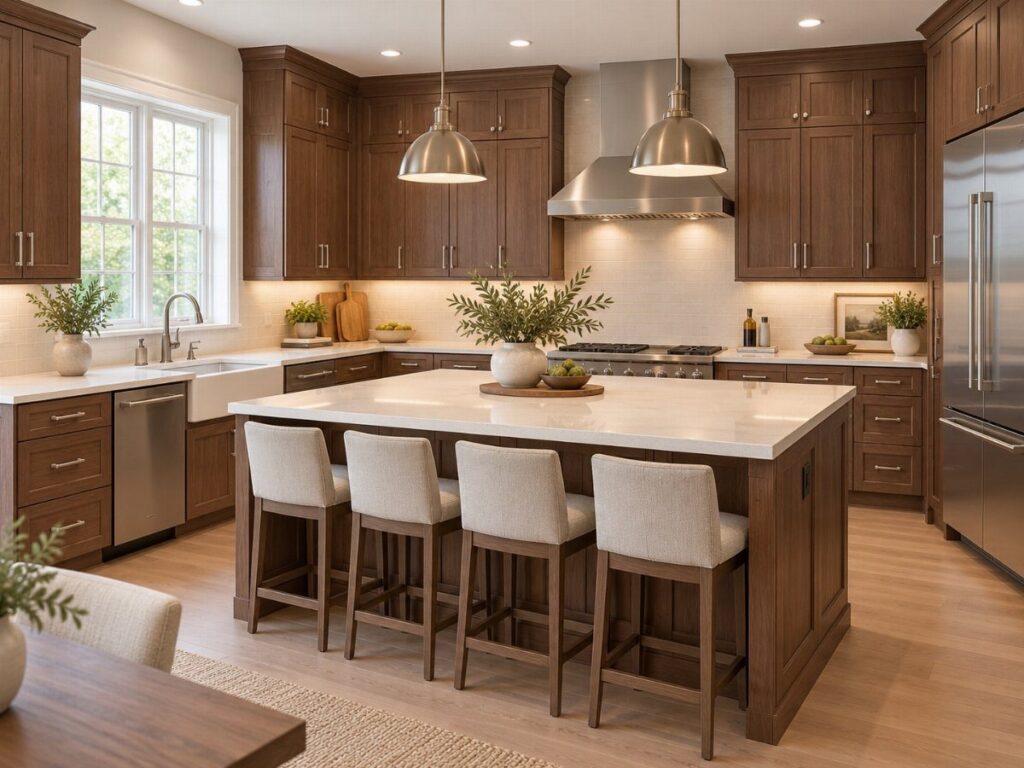
Which stained wood kitchen fits depends on how much daylight comes through the windows and whether you’re keeping your existing cabinets: dark brown stain needs good natural light or under-cabinet lighting, while a dim room does better with light-stained wood and a pale countertop.
The ideas run from simple matte finishes and mixed wood tones to a full kitchen with a matching stained range hood, a marble island, or green marble carried up the wall.
The cheapest changes, like brushed gold pulls, come first; marble and new doors cost the most.
1. Timeless Appeal

A coffee station is a small place to try stained wood before committing a whole kitchen. Drawers hold pods and jars out of sight, while open shelves keep mugs within reach.
Under-shelf lighting is worth adding, since it makes the grain glow and lights the machine at the same time. I’d keep the shelves for everyday mugs and the drawers for everything messy.
2. Mixing Wood Tones
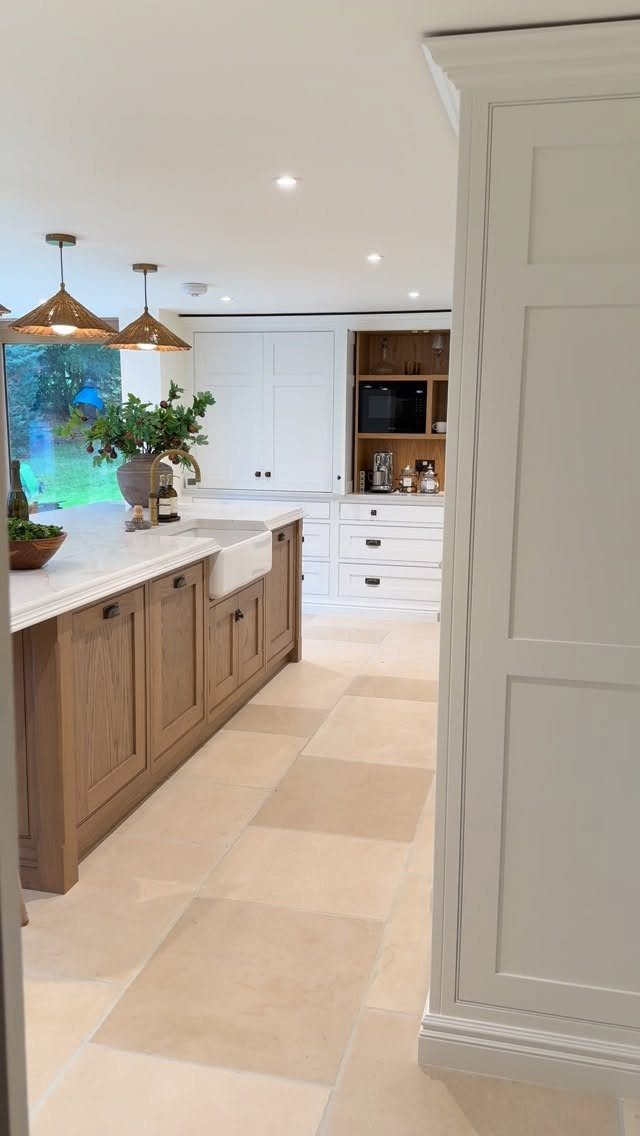
Stained wood can sit on one piece and let the rest stay quiet. A light wood island against white perimeter cabinets is the easiest version, and a darker shelving unit adds contrast without crowding the room.
The maker of this kitchen says soft, neutral cabinetry keeps these tones light and open yet warm.
I agree. Limit yourself to two wood tones, and repeat each one at least twice so it looks planned.
3. Warm, Natural Style
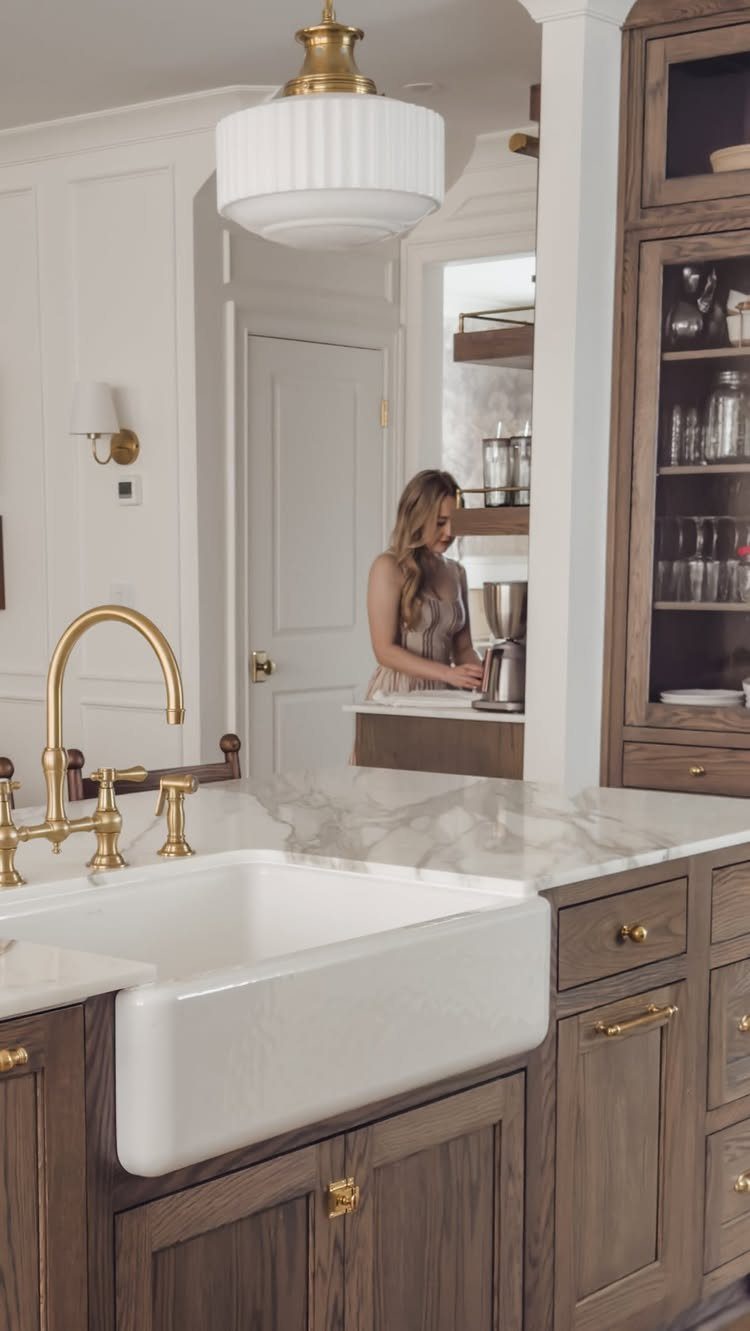
Stained cabinets with a white farmhouse sink and marble countertops give a kitchen warmth without a lot of fuss. The white sink and pale stone break up the wood, so the room reads cozy instead of heavy.
Gold hardware suits this setup well. Swapping the pulls is the lowest-cost way to get this look on existing wood cabinets.
4. Matte Finishes
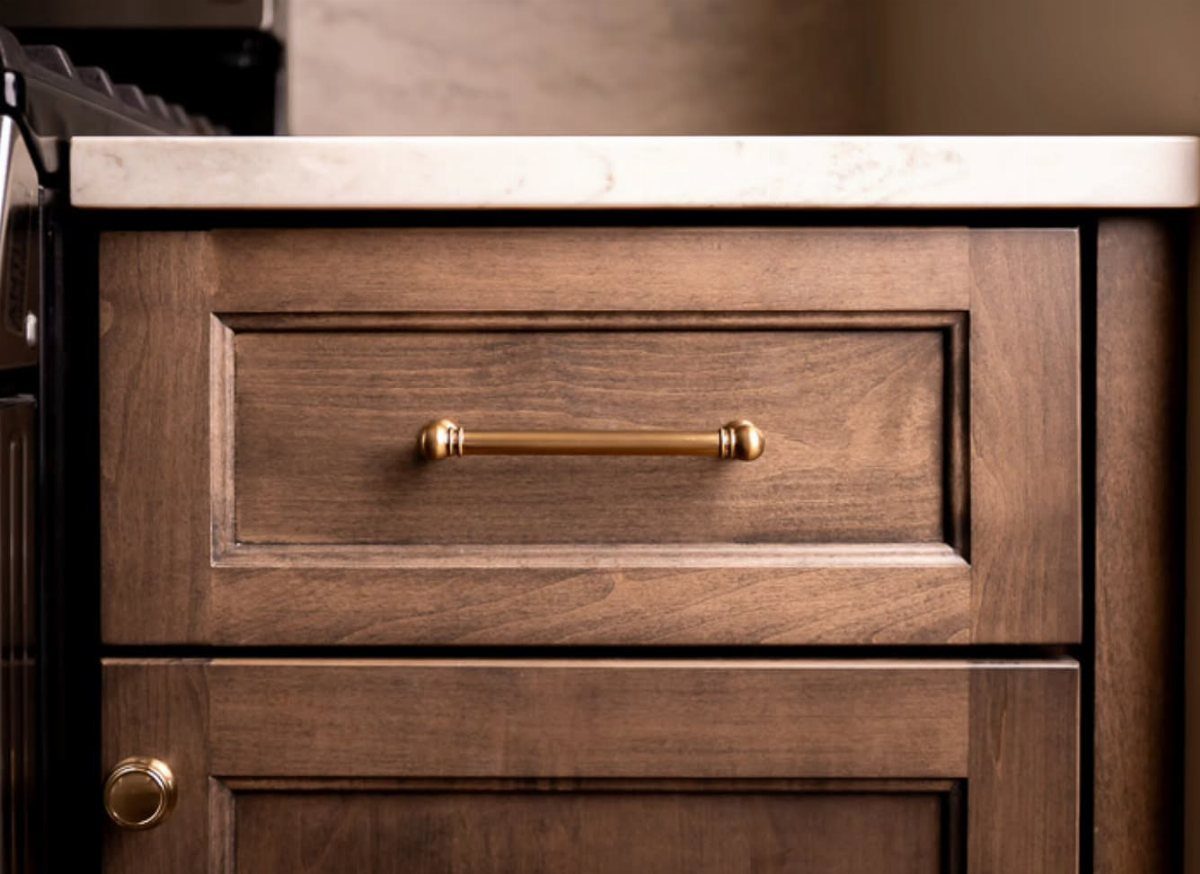
Matte stain lets the grain show without glare, and I prefer it for drawers, where fingerprints and light bounce are constant. Flat brown fronts with gold handles look calm against a white countertop.
If you are refinishing, choose a matte or satin topcoat, and test it on the back of a door first. Sheen changes how dark the stain looks.
5. Stained Cabinetry Resurgence
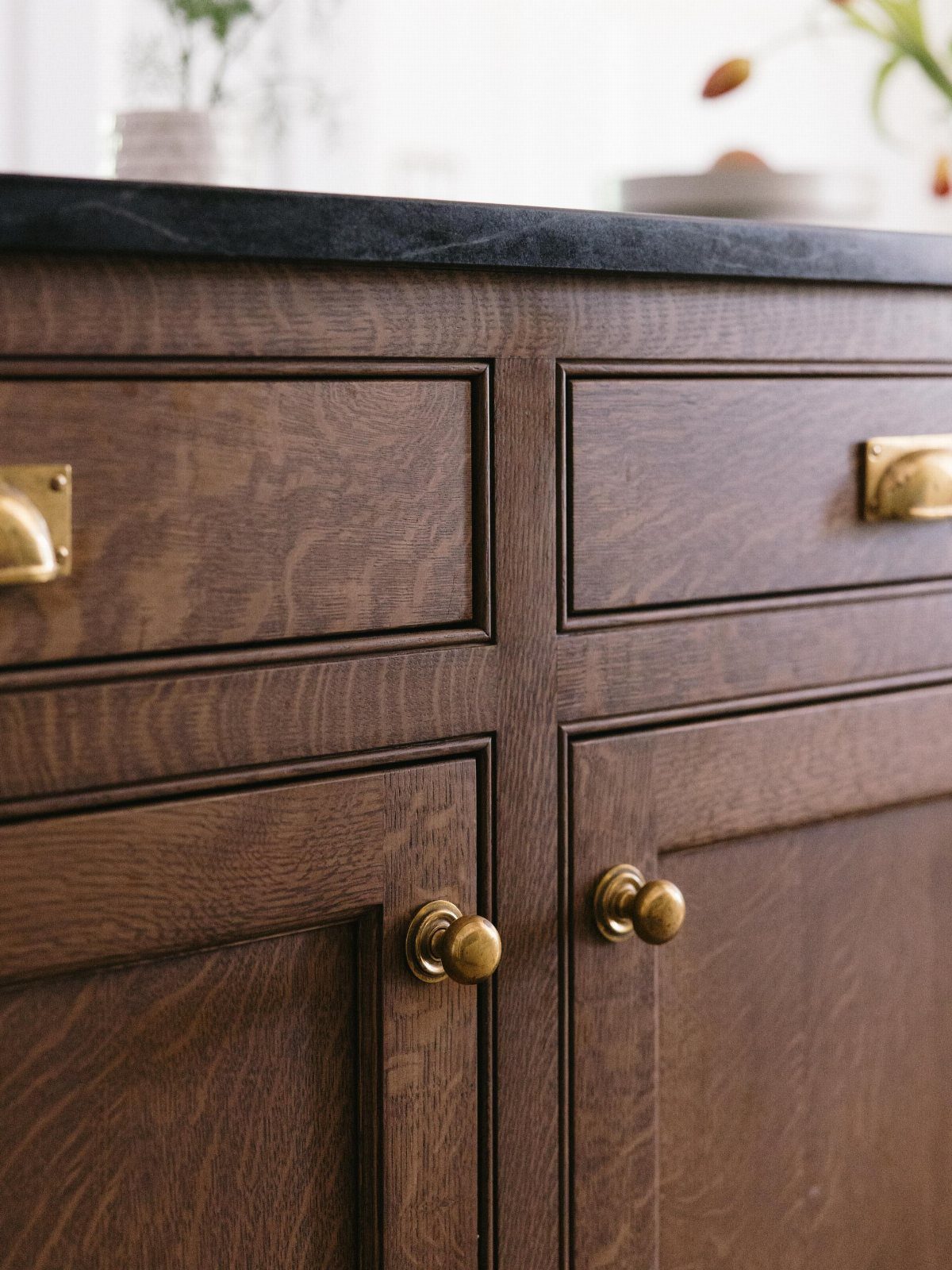
Dark brown stain is back, and a black countertop pushes it into moody territory. Gold hardware keeps that pairing from going flat, because the metal catches light that the wood and stone absorb.
This look suits kitchens with decent daylight or good under-cabinet lighting. In a dim room, I’d lighten the countertop instead.
6. Green Marble with Dark Wood
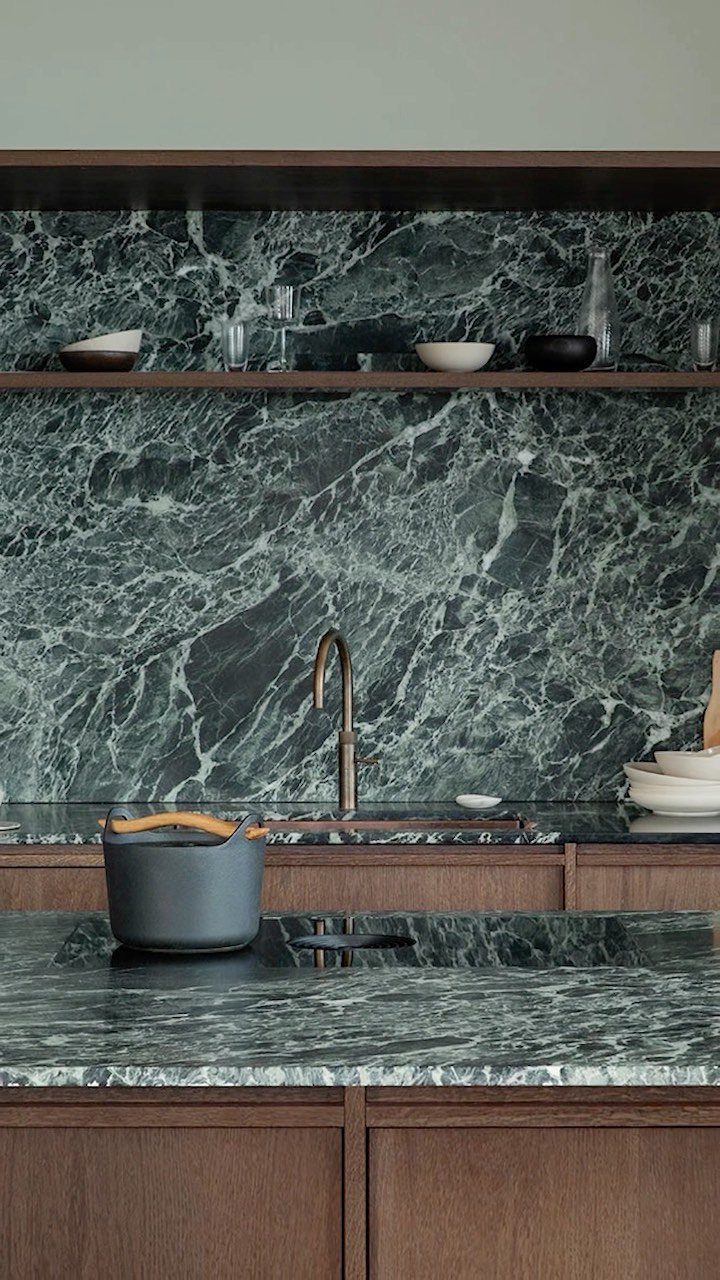
Dark wood against green marble is a bold pairing, and carrying the marble up the wall as a backsplash makes it feel deliberate. A dark wood shelf matching the cabinets ties the two together.
Marble is the pricey part. For a small budget, use a slab remnant for the backsplash or a green-patterned laminate, and keep the cabinets as they are.
7. Traditional Luxury with Matching Hood
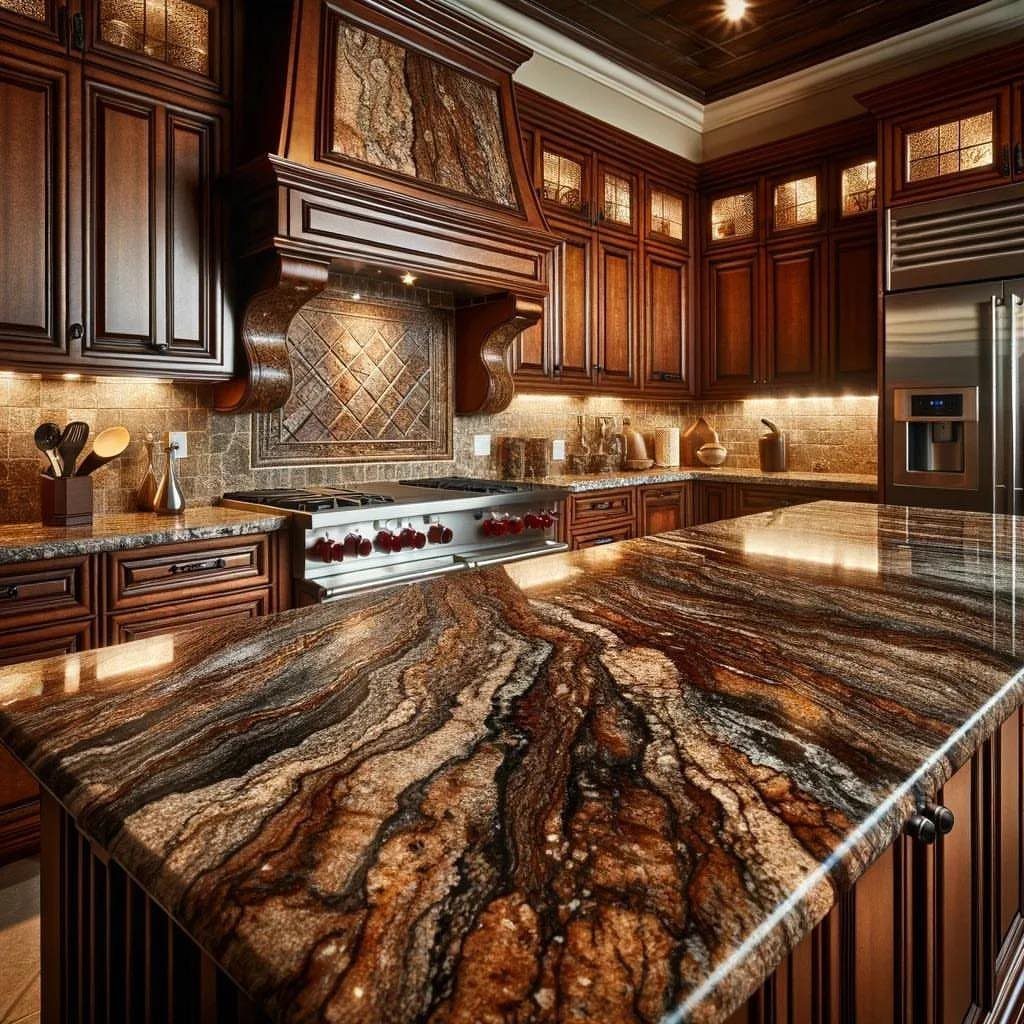
A range hood built from the same stained wood as the cabinets turns the stove wall into a focal point. Matching the stain exactly matters more than matching the style, so have the hood finished with the cabinets, not separately.
Brown and black veined granite on the island suits that much dark wood, since the veining carries both colors. I’d keep the walls light, so the room stays formal without feeling closed in.
8. Light-Stained Cabinets with Marble Island
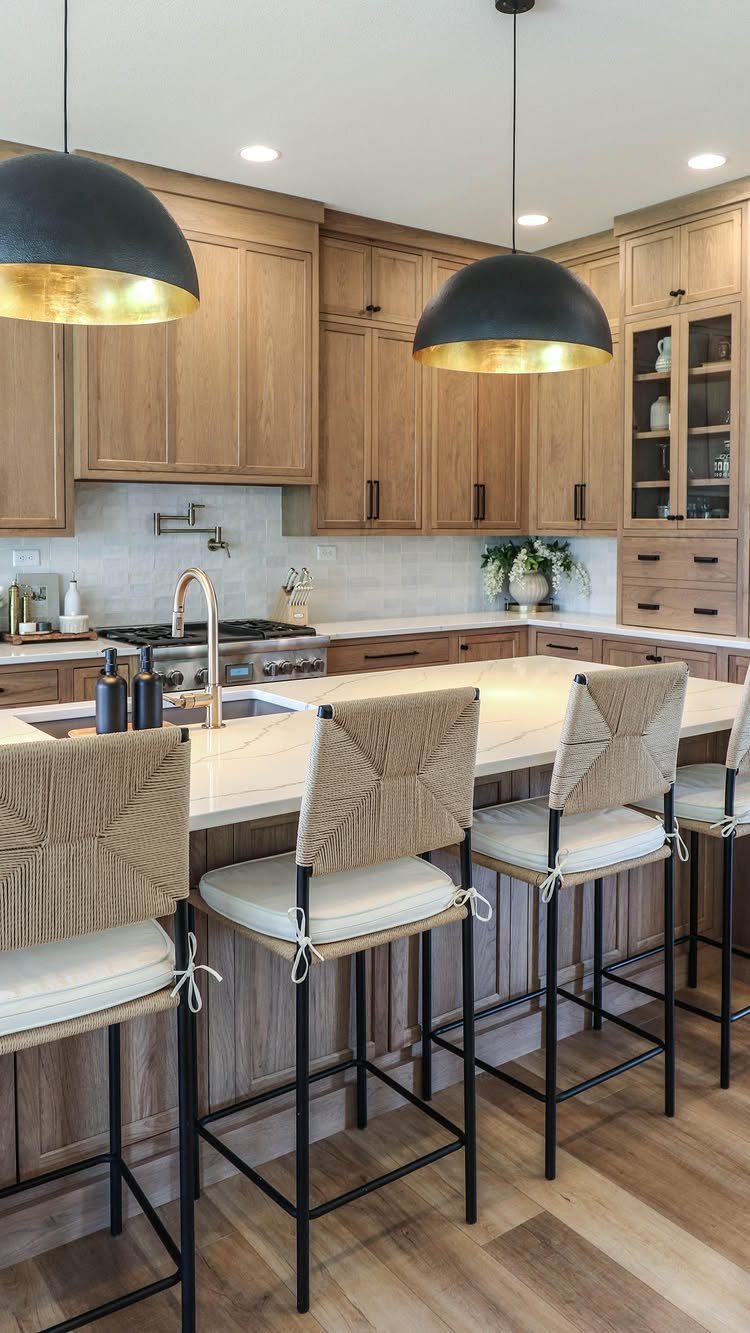
Light-stained wood with a white marble island is the brightest way to use stain, and it works because the wood stays pale enough to let the stone lead. Black pendants over the island give the pale palette an anchor.
Woven barstools add one more natural texture without adding another color. Marble costs the most here, so a smaller island is the sensible place to save.
9. Dark Stained Cabinets with White Quartz
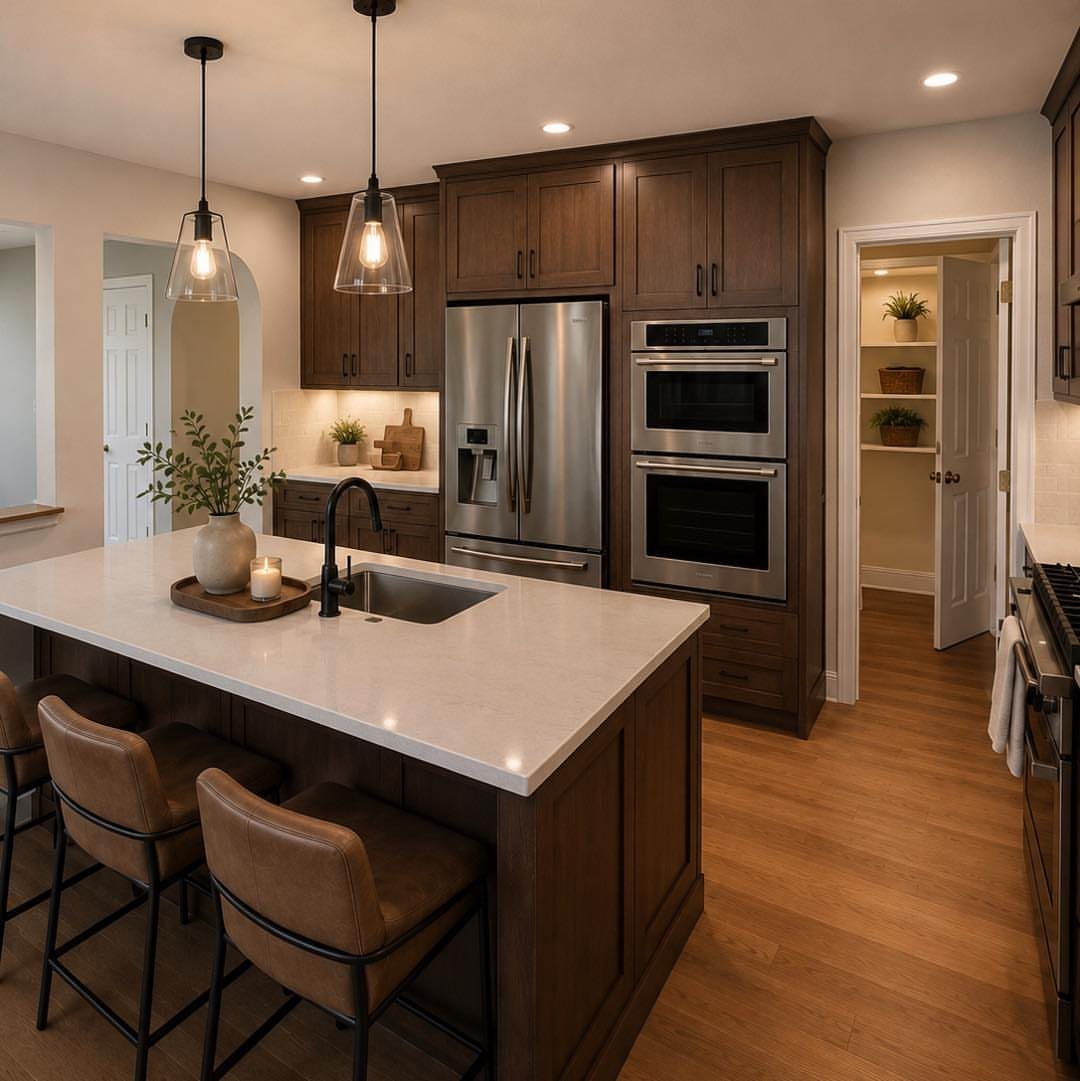
Dark stained cabinets feel crisp, not heavy, once white quartz sits on top of them. The contrast does the work, and quartz keeps the island a clean, plain surface.
Leather stools echo the wood’s warmth, while stainless appliances and 2 pendants stay simple. I’d choose a matte or satin stain here and keep the quartz plain, so the grain gets the attention.
10. Dark Wood with Gold Hardware
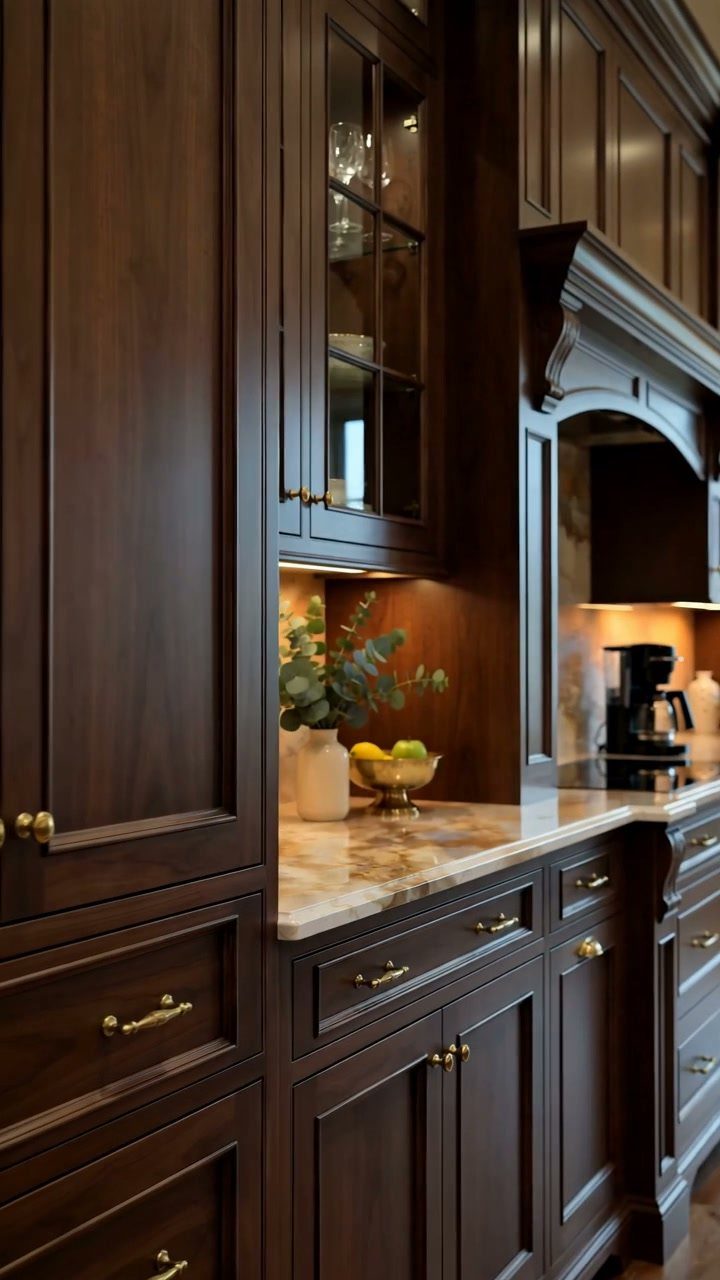
Brushed gold pulls look richer on dark brown wood than on almost any other finish. Brushed reads softer than polished and hides fingerprints better.
A glass-front cabinet breaks up a long run of solid doors, and a marble countertop keeps the dark wood from dominating.
On a budget, swap only the hardware first; it takes one afternoon and a screwdriver, and the bill comes to a small fraction of what new doors would run.
Benefits of Stained Cabinets
Grain is what stained cabinets have that paint can’t match: the lines and knots catch light differently across every door, and a kitchen full of flat surfaces needs that variation.
2 doors from the same stain will never match exactly, which is part of the appeal.
A good seal is what makes the look last.
Stain also gives you room to mix.
Mixing is easy to get right if you keep it to two tones: a pale oak run on the walls with a darker walnut-stained island, or one stain on the perimeter and a painted island in the middle.
And the advantages are twofold. "Unlike paint, stain enhances the natural beauty of the wood grain, adding texture and organic movement," says Lisbeth Parada, color and design lead for Minwax Wood Stain.
Choosing the Right Stain
Start with the wood species, because grain shows through stain and each species takes color differently. Look at a sample of the actual species you are buying, not a color chip on a different wood.
Then match the tone to the room.
Stains run from pale honey and natural tones to espresso, so I’d hold a sample door next to your floor, countertop and wall color before choosing, since the undertone has to agree with all three.
If the floor is already a warm wood, I’d go a few shades lighter or darker than it so the two don’t compete.
Door style changes how a stain reads too. Shaker, Slim Shaker, Modified Shaker and Raised Panel are all common choices, and a flat Shaker front shows the most grain.
Maintenance Tips
Stained wood is forgiving. Matte and natural finishes hide fingerprints and minor wear better than painted surfaces, so daily upkeep stays light.
Wipe doors with a soft damp cloth and dry them right away. Standing water is what wears down a seal, especially around the sink and dishwasher.
The seal does the protecting, so keep it intact. When a small ding shows up, touch it up before moisture gets into the bare wood.
Frequently Asked Questions
Are stained wood cabinets back in style?
Yes, stained cabinetry is making a comeback, with dark brown stain in particular showing up again.
Today’s versions lean toward matte and natural finishes instead of the glossy look of the past. Pairing the wood with gold hardware keeps a dark stain from looking flat.
What is the most popular stain color for kitchen cabinets?
Rich, deep tones like espresso and walnut are the most popular choices, with lighter honey and natural tones close behind.
Test the stain on a sample door and hold it against your actual flooring and countertop in natural light before you commit. If warm wood is already on the floor, pick a stain at least 3 shades away from it.
What kitchen cabinet colors will look outdated in 2026?
I can’t predict a year’s verdict, but glossy finishes are the clearest thing trends are moving away from, as matte and natural stains take over.
Stained wood is one of the safer bets, since real grain and a good seal age well and hide wear better than paint. Choosing a matte or satin topcoat keeps the look current.
What colors to avoid in kitchen cabinets?
Avoid a stain whose undertone clashes with your floor, countertop or wall color, and avoid going dark on every surface at once.
A dark brown stain with a black countertop turns moody and heavy in a room with little daylight, so lighten the counter there.
A matte or satin finish keeps the color true without the glare that makes stain look darker than it is.





