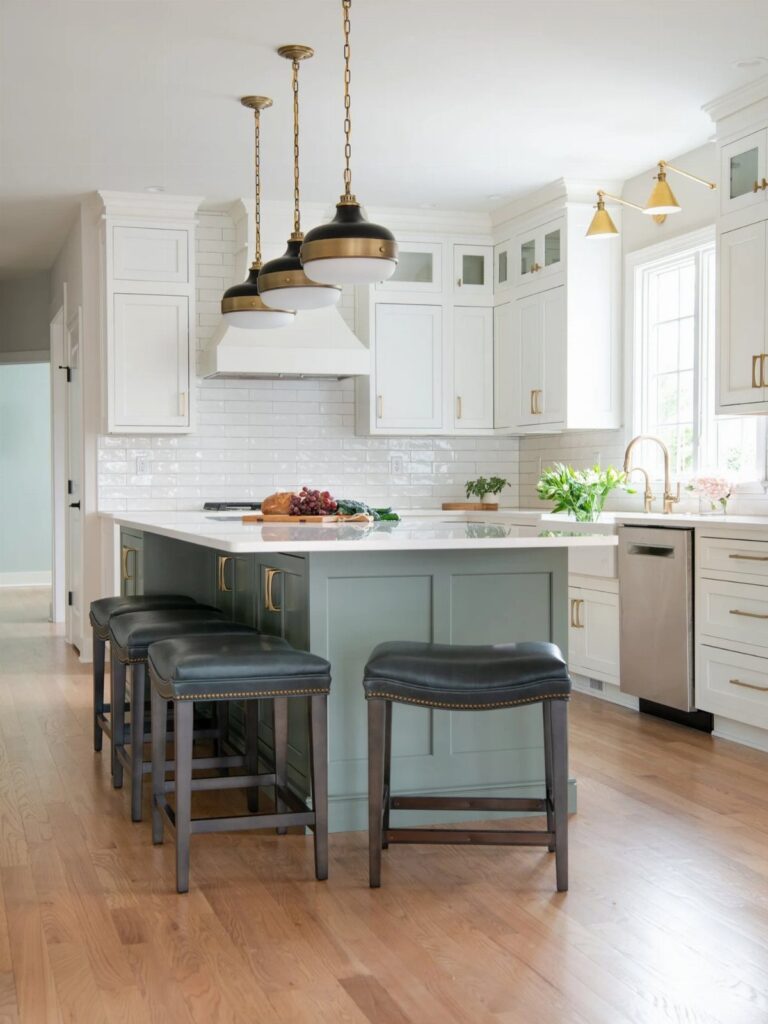
Your kitchen’s light and the finishes you’re keeping decide which of these colors is yours: a north-facing room with cool, flat light wants warm whites, while a south-facing one can carry cooler tones, and a dark kitchen does best with whites and light woods.
The range runs from white and natural wood through dusty rose and sage to black and navy, and a few can start small, like a mint island or lowers painted alone with the uppers left white.
1. White Cabinets
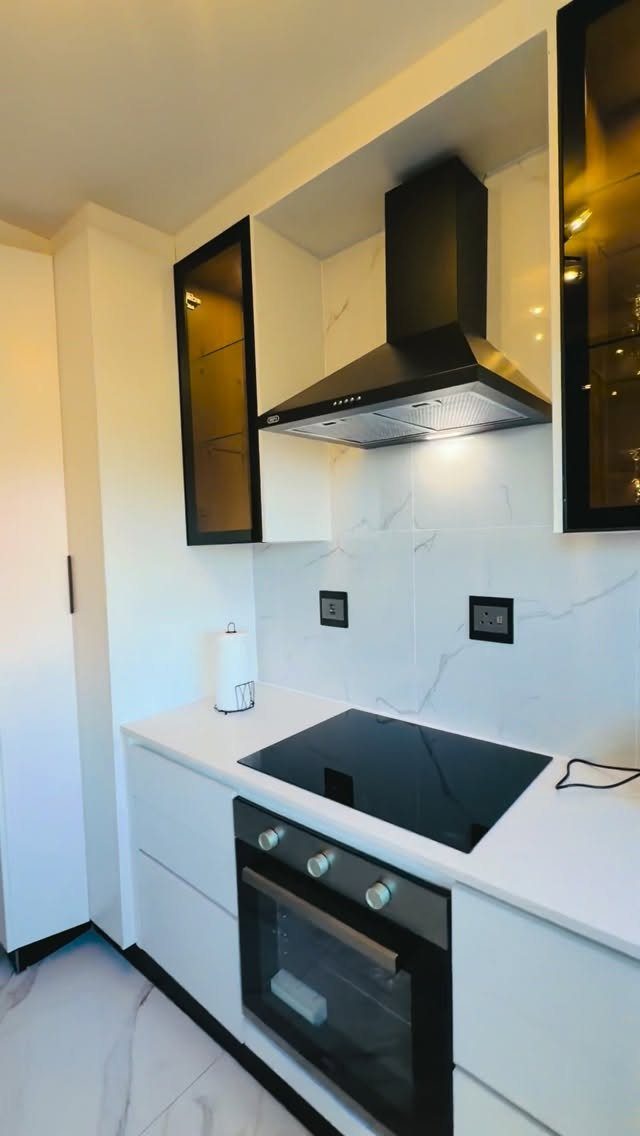
White lower cabinets are the safest paint decision in a kitchen, because white lets marble, black appliances and a black hood be the details people notice.
I like white best with one strong contrast, like the black cooktop and range hood here. Without it, an all-white room can read flat.
Buy a sample quart and paint a large board before committing. White shifts a lot between warm and cool, and your lighting will decide which one you get.
2. Navy Blue Cabinets
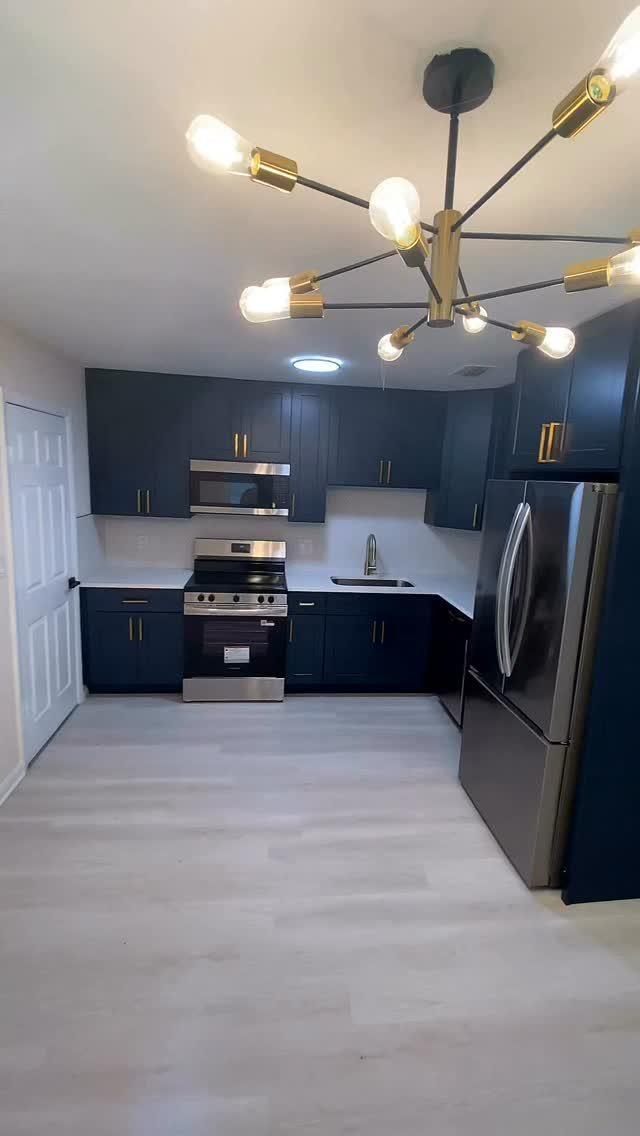
Navy reads as sophisticated because it behaves like a neutral: deep enough to hide scuffs, dark enough to give a room weight, and still a real color.
Light wood floors stop the room from feeling too dark and weighty, so if your floors are dark, I’d keep the walls and countertops light.
Paint a sample board and check it at night as well as in daylight. Navy can look nearly black under warm bulbs.
3. Natural Wood Cabinets
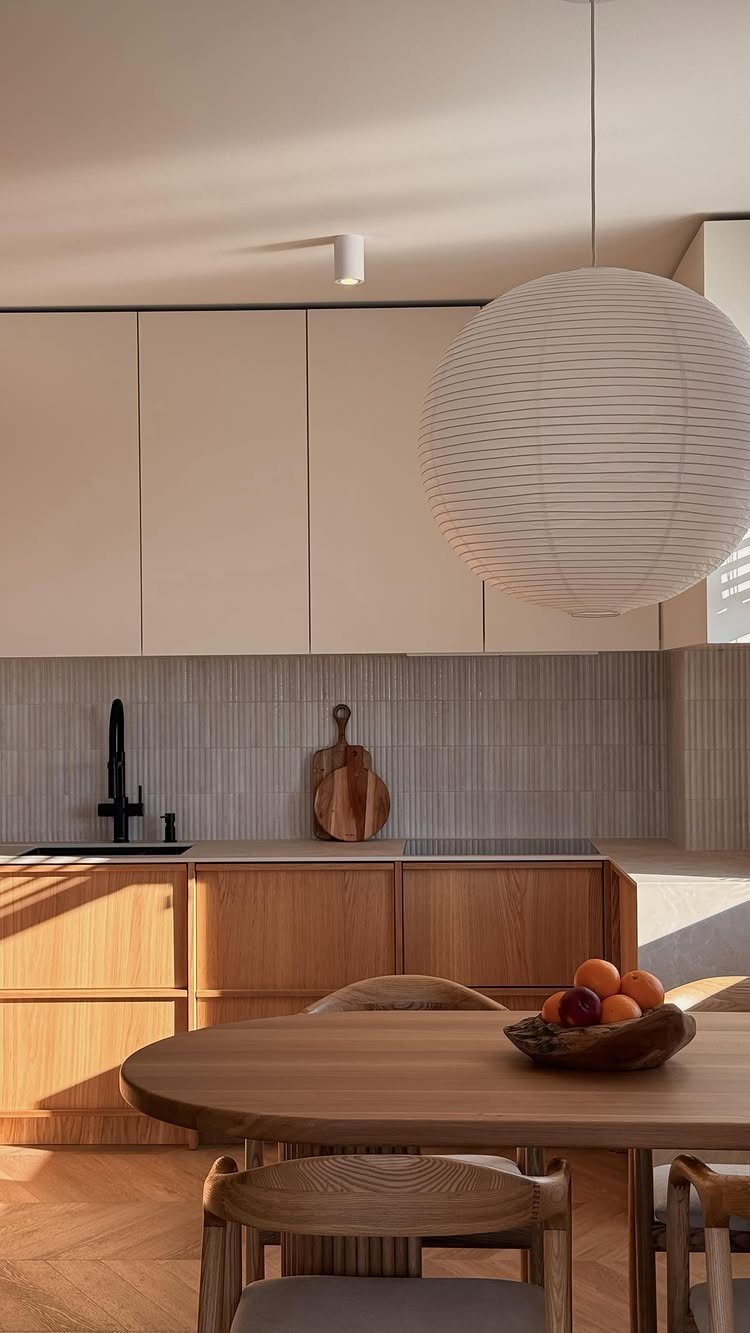
Wood lower cabinets with lighter uppers split the room into 2 weights, and that is a smart way to use wood without making the kitchen feel like a cabin.
A dining table in a matching wood ties the pieces together, which I’d copy. Keep the backsplash quiet, like the gray tile here, so the grain does the talking.
If your cabinets are already wood, cleaning and a fresh protective coat cost far less than painting over them.
4. Soft Mint Cabinets
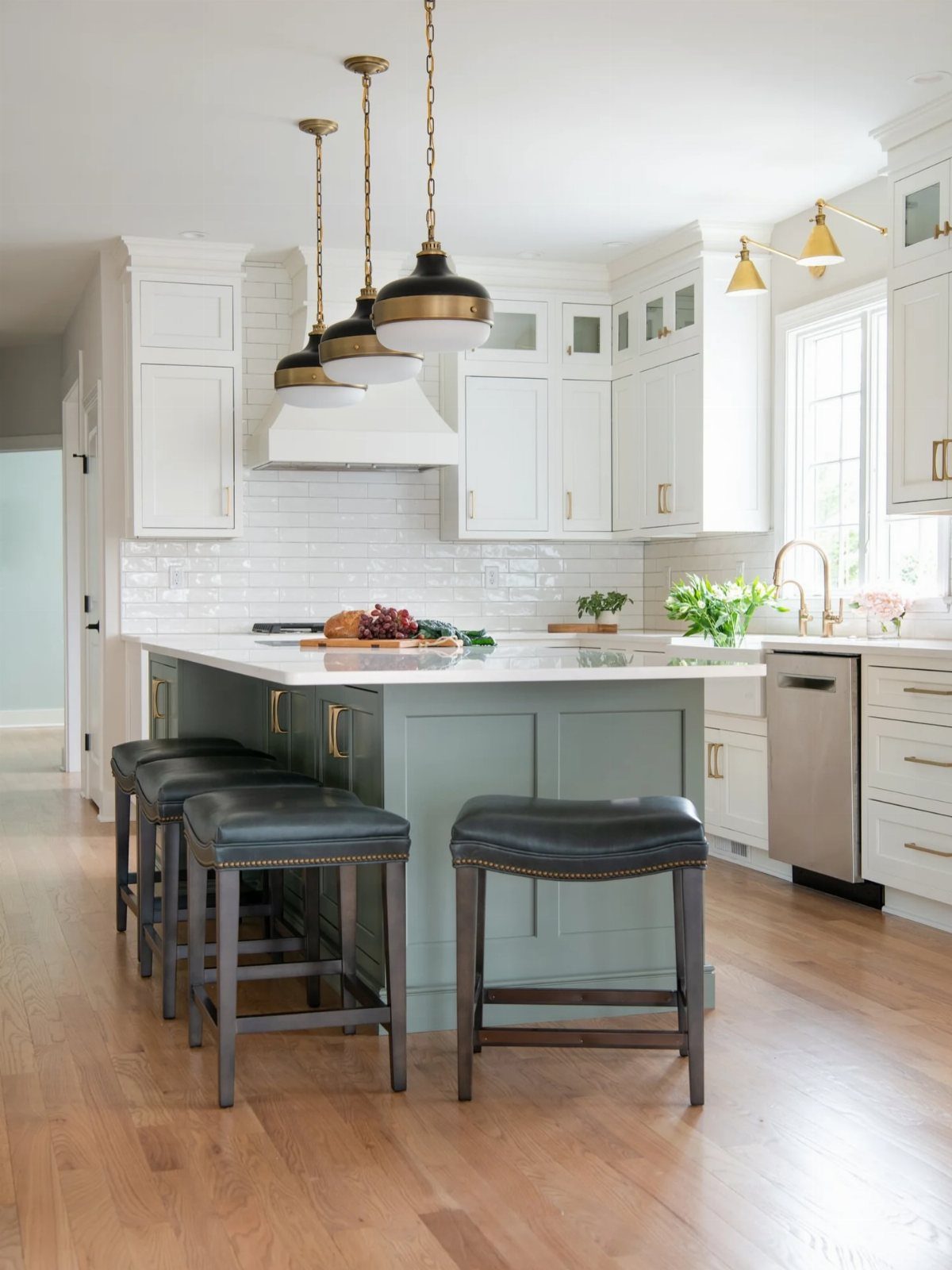
A mint island is a low-risk way to try this color. If you tire of it, one piece of furniture-sized cabinetry needs repainting, not the whole kitchen.
Choose a mint with a little gray in it. Pure pastel mint looks like a nursery once it covers a large surface.
5. Dusty Blue-Gray Cabinets
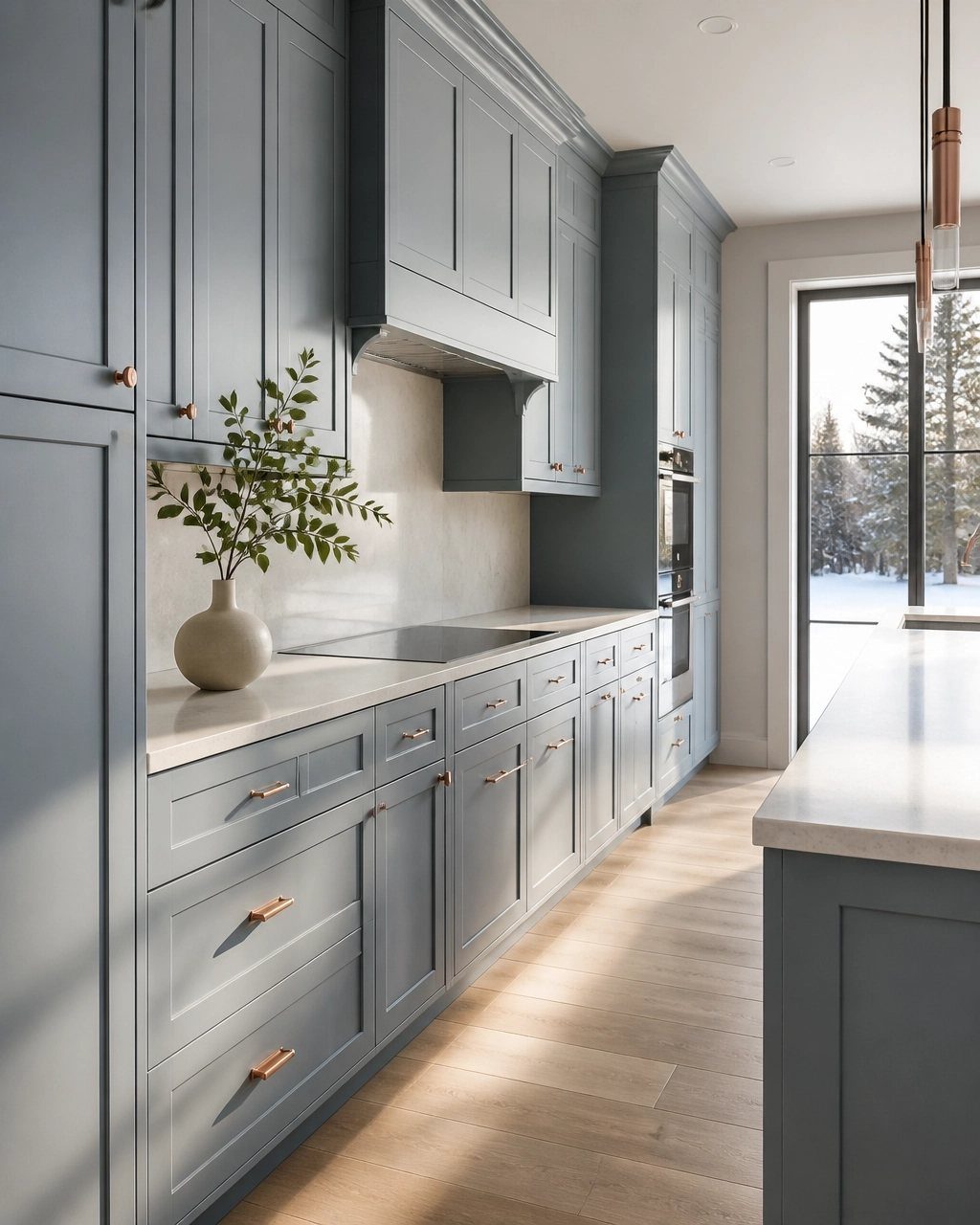
Dusty blue-gray sits between a neutral and a color, which makes it forgiving. It changes with the light: cooler on a snowy day, softer when the sun is out.
Skip heavy dark counters, since they pull the blue toward gloomy.
Test two or three samples beside your countertop before buying gallons. The undertone will either flatter the white or fight it.
6. Dusty Rose Cabinets
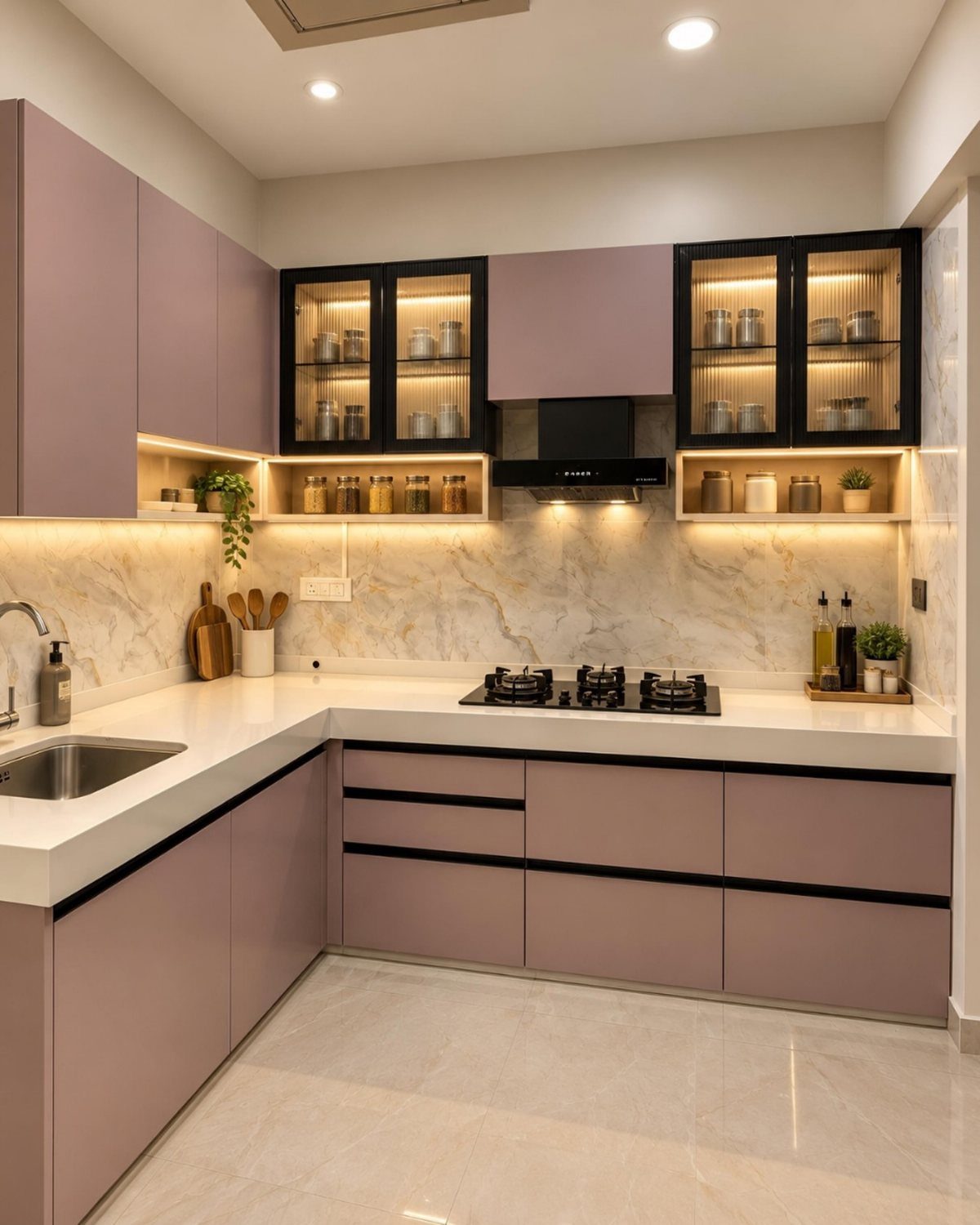
Dusty rose is the boldest choice here, and it works because the pink is muted. Marble and white counters keep it from tipping into sweet.
I’d use it on both lowers and uppers only if you love it, since a color this specific narrows who will like the room later. Black-framed glass doors add a sharp edge that balances the softness of rose.
If you’re unsure, paint the lowers alone and leave the uppers white.
7. Gray Cabinets
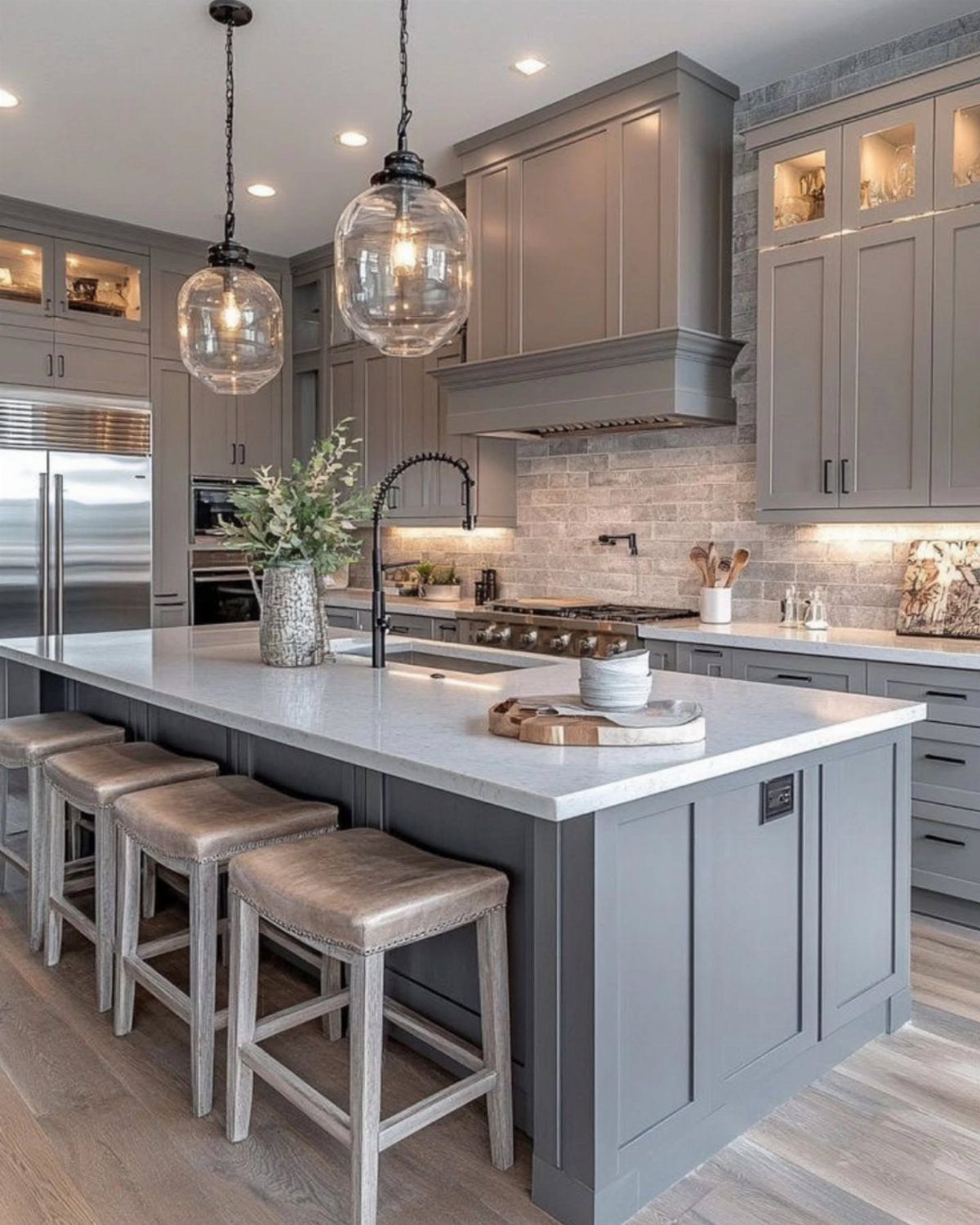
Gray cabinets pair well with a white marble island, because the marble’s veining adds the movement that flat gray paint lacks.
Glass pendants keep the light from adding visual weight over the island, which I’d copy if your ceiling is low. Stainless appliances sit comfortably against gray, so there is no need to replace them.
Test the gray beside your counters. Some grays lean blue and some lean beige, and marble will show which one clashes.
8. Black Cabinets
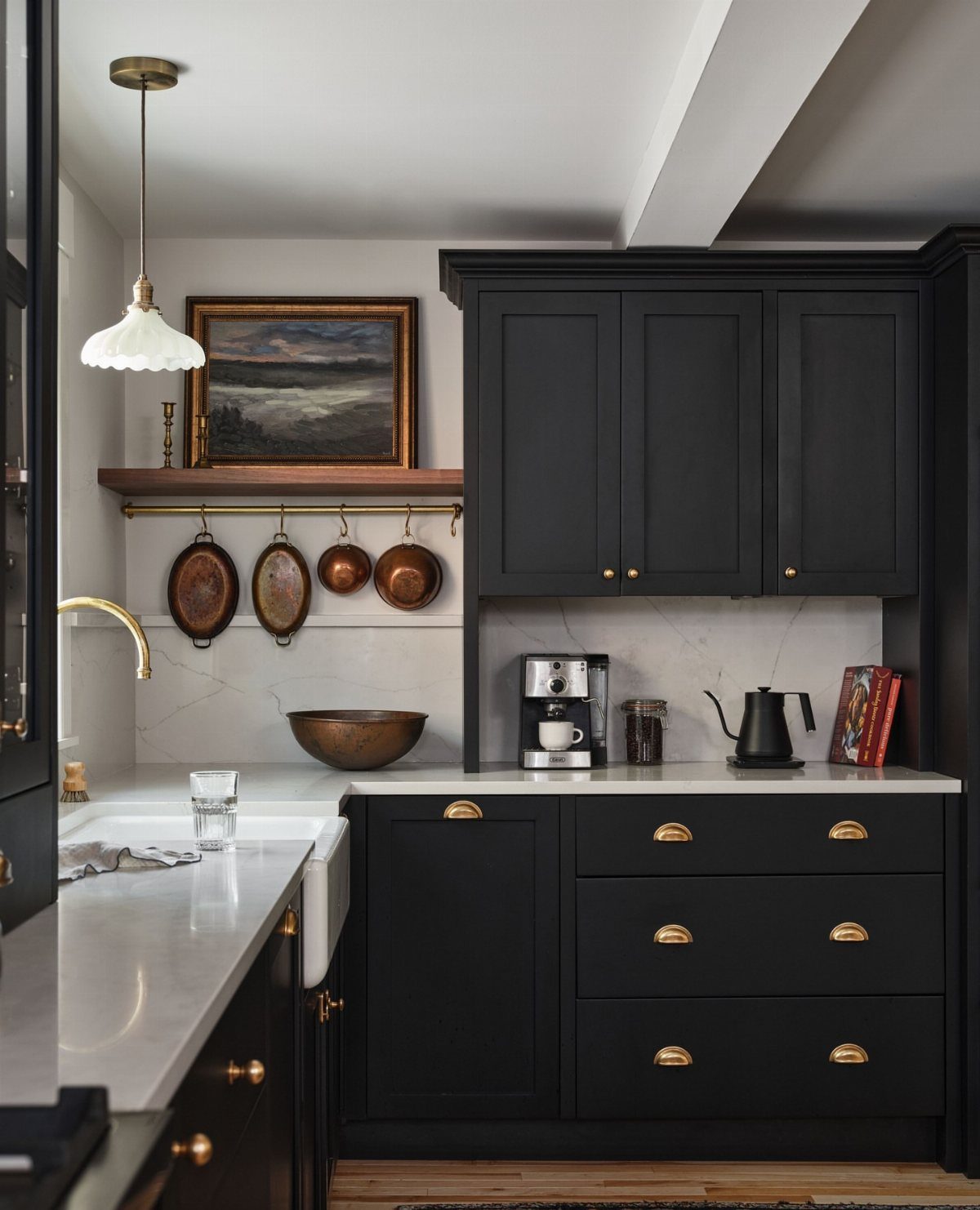
Matte black cabinets look dramatic, and a matte finish keeps them from reading as a showroom piece.
Gold handles are what make this version feel classic instead of stark, and I’d choose them over chrome. White marble counters stop the black from swallowing the room.
Hanging copper cookware under a wood shelf adds warmth, and it costs far less than repainting. If you worry about commitment, paint only the lowers first.
9. Sage Green Cabinets
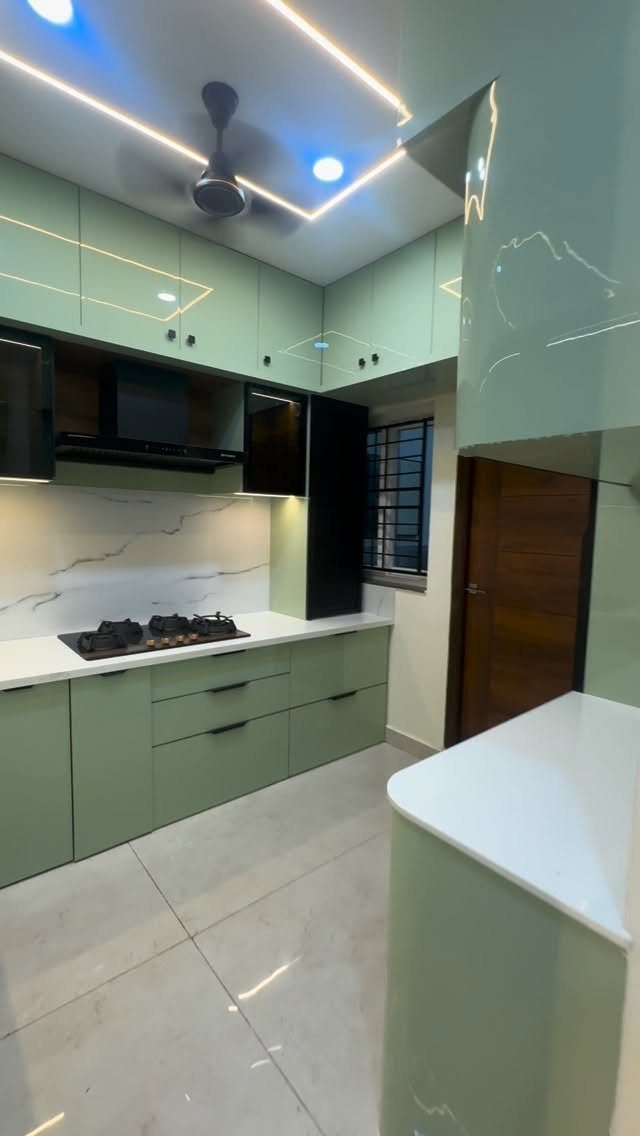
Glossy sage green on both uppers and lowers makes a kitchen feel calm, and the shine bounces light around a room.
White counters and a marble backsplash keep the green clean. Gloss does show fingerprints, so I’d pick it only if you don’t mind wiping doors down.
The maker of this kitchen used green laminate finishes, which is worth considering if you’d rather buy doors than paint them. Whichever route you take, hold a sample next to a window to see how much gray the green carries.
10. Mushroom Cabinets
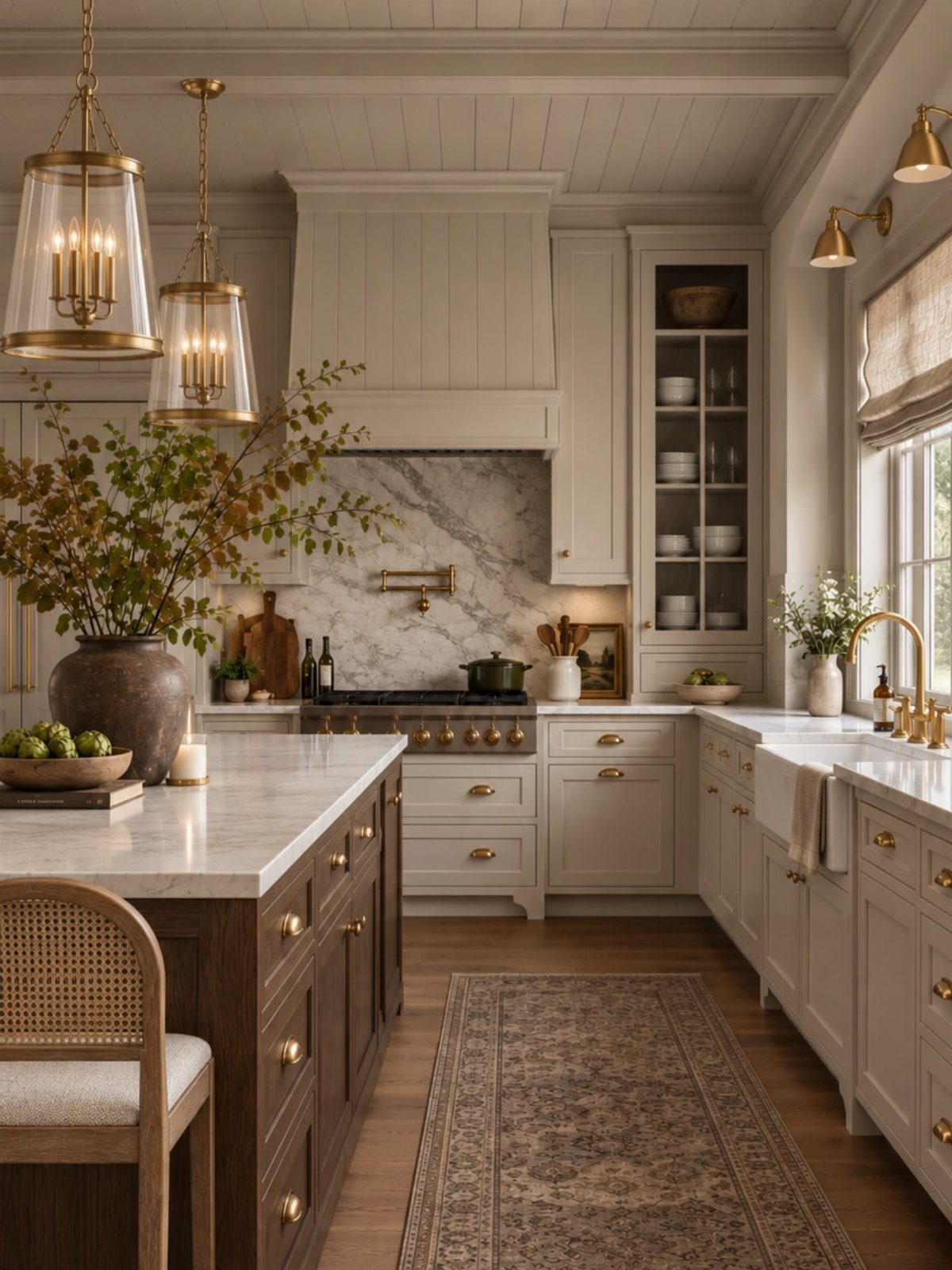
Mushroom is a gray-brown that reads warmer than gray and softer than white, which suits a kitchen that you want to feel settled.
A dark wood island with a marble top gives the pale cabinets something to push against, and gold hardware picks up the warmth. I like that mix far more than an all-beige room.
Check the paint in evening light before buying. Mushroom can swing toward pink or toward gray depending on your bulbs.
11. Butter Yellow Cabinets with White Accents
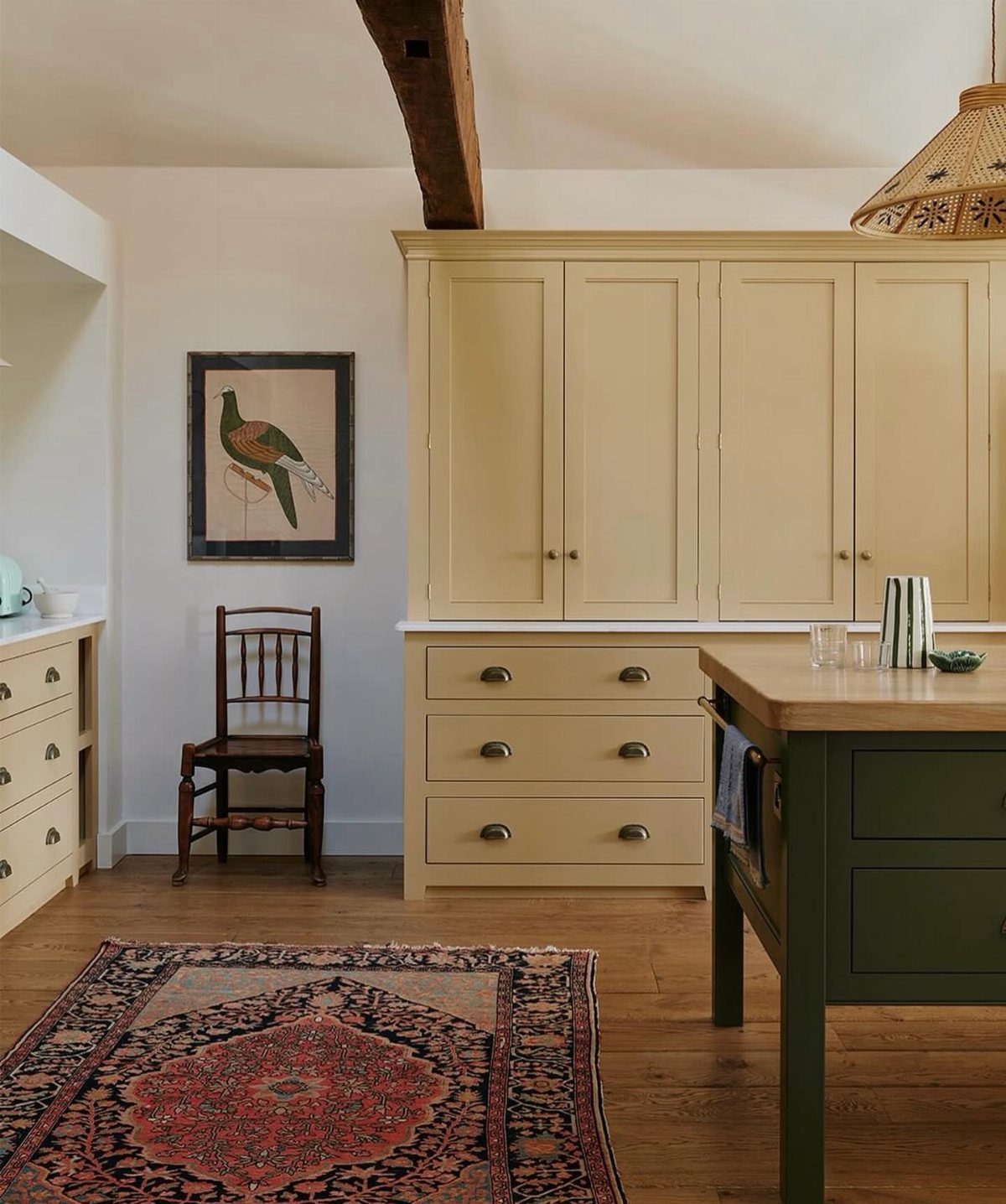
Butter yellow works best when you keep it pale and let other colors carry the contrast. A dark green island does that job here, grounding all that sunshine.
White accents, like the countertop, stop the yellow from turning loud. I’d skip a stark white paint on the walls, since it can make butter look dingy.
Try the island in the dark color first if you want a smaller commitment.
Choosing the Right Color
Daylight direction decides more than most people expect. If the room faces north and gets that cool, flat light all day, warm whites balance it out; south-facing kitchens tolerate cooler tones without feeling cold.
Low-light kitchens do best with whites and light woods. A well-lit room can carry deeper colors without feeling heavy.
Size matters too. White and light colors open up a compact layout, while dark cabinets bring intimacy at the cost of making tight spaces feel tighter.
Look at what you can’t change: appliances, windows, flooring, and the countertops you’re keeping. The cabinet color has to work with all of them.
Your home’s style is a useful guide as well. Craftsman homes suit warm wood or greige, modern farmhouses suit whites and light grays, and mid-century rooms can take wood or a bold color like navy.
Impact of Cabinet Colors
Color affects mood and even appetite, so match it to what the kitchen mostly does. A room built for cooking, one built for gathering, and one built for entertaining don’t need the same palette.
Cabinet style matters as much as the paint. Shaker doors sit comfortably in white or any soft neutral, while slab fronts let wood grain do the talking.
Inset construction reads best in a painted finish, especially one with a little warmth or depth to it.
Black or navy as an accent island or lower run works best when the surrounding cabinets stay light or warm, and a deep green island against butter yellow proves the same rule.
These pairings hold up because they don’t depend on a trend. If you’re buying new doors, choose the style first and the color second.
The right color brings life and personality to the heart of the home while still standing the test of time.
— Veranda
Maintaining Cabinet Colors
Light-colored cabinets fade in direct sun, and sun is easier to manage than most people think. UV-blocking film or exterior solar screens on windows that take direct sun will cut most of the damage before it starts.
A furniture polish with UV inhibitors, wiped on every few months, gives wood a second line of defense after the finish itself.
Rotate the decorative items on your counters now and then. Otherwise one patch of cabinet gets sun while the rest stays shaded, and the difference shows.
Steady temperature and humidity also keep the material from breaking down over time.
Frequently Asked Questions
What are the best paint colors for kitchen cabinets?
White, gray, navy and natural wood are the safest picks. White lets marble and dark appliances stand out, while navy acts like a neutral because it hides scuffs and still reads as a real color.
Paint a large sample board for any of them, since lighting changes how each one looks.
What color cabinets does Joanna Gaines use?
She often uses soft, muted colors such as white and gray.
Those tones are quiet enough to fit most kitchens and let other details lead. If you want to copy the look, sample a few shades in your own light first.





