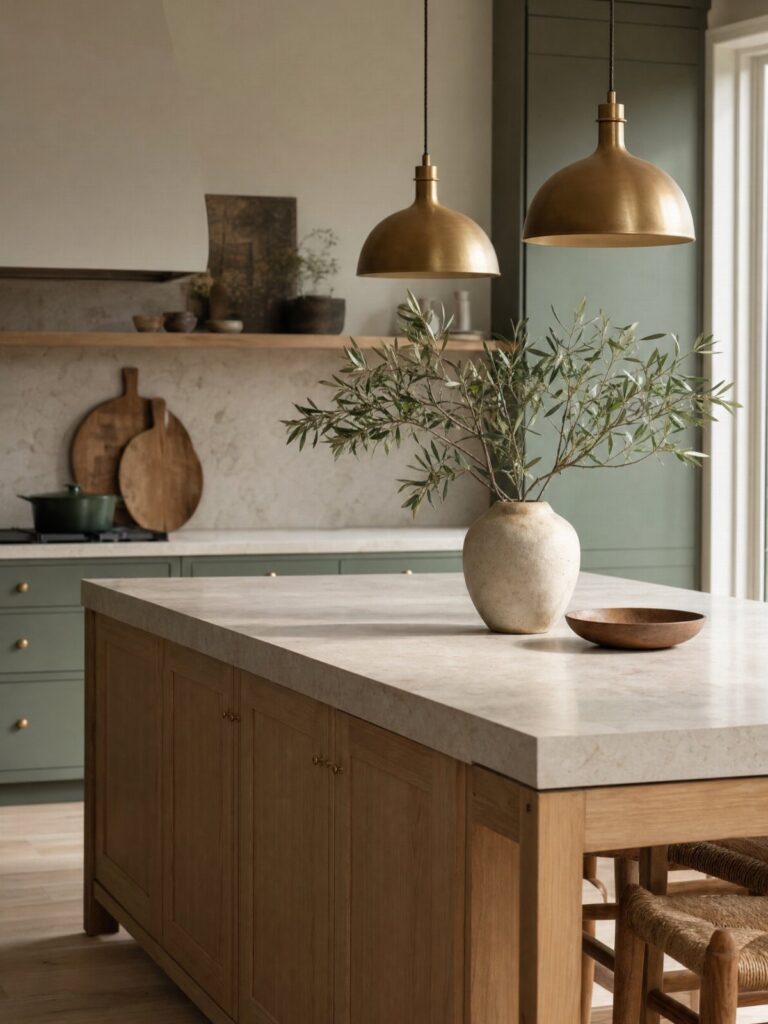
The shade of green on the cabinets is only half the choice.
What decides which idea is yours is how much light the room gets, how much color you’re willing to commit to, and whether you want green on every cabinet or just the island.
A green island with neutral perimeter cabinets colors a single piece, while a full run of forest or emerald green wants large windows so the depth doesn’t turn cave-like.
The list runs from pale sage to forest and emerald, and from pairing black hardware or gold accents to matching green marble or brick backsplashes.
1. Olive Green Kitchen Cabinets
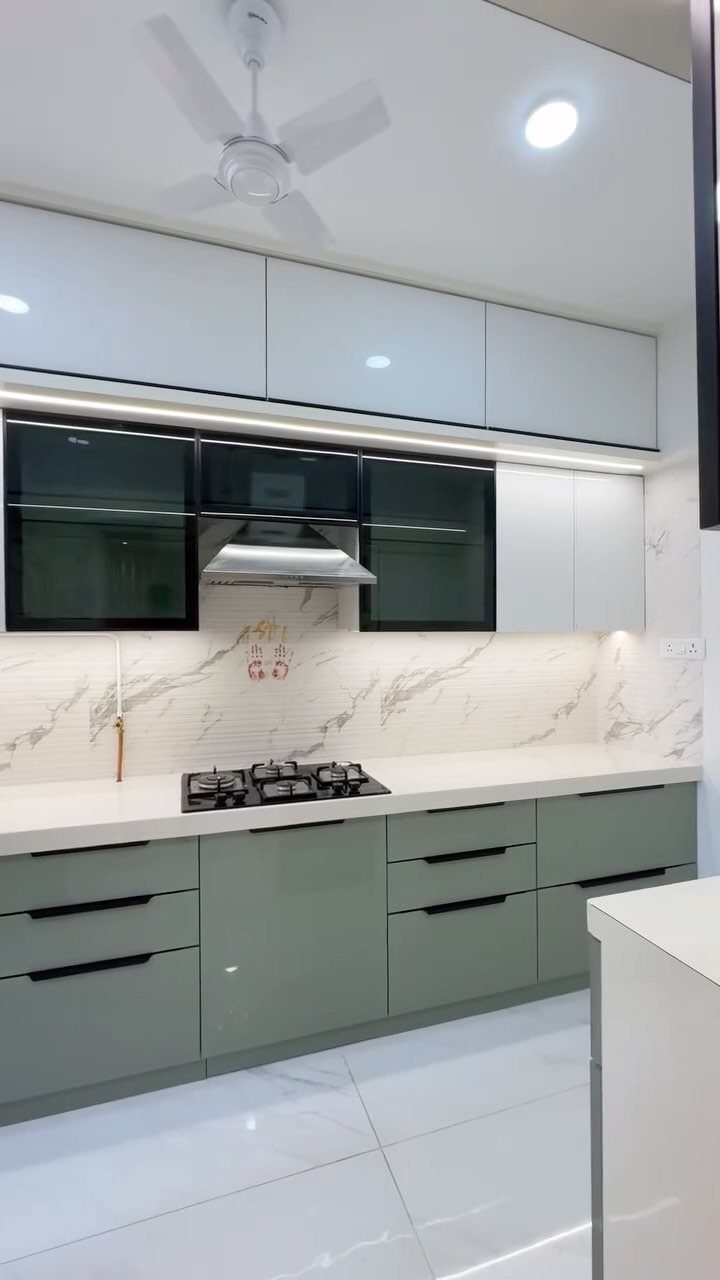
Dark color sits low where it hides scuffs, and white uppers stop the walls from closing in.
White marble on the backsplash and counter is a quiet partner here, since olive has enough warmth to stop all that white from feeling cold.
I’d choose a muted, grayed olive over a yellow one, which can turn mustard under warm bulbs.
2. Green Cabinetry with Walls and Trim
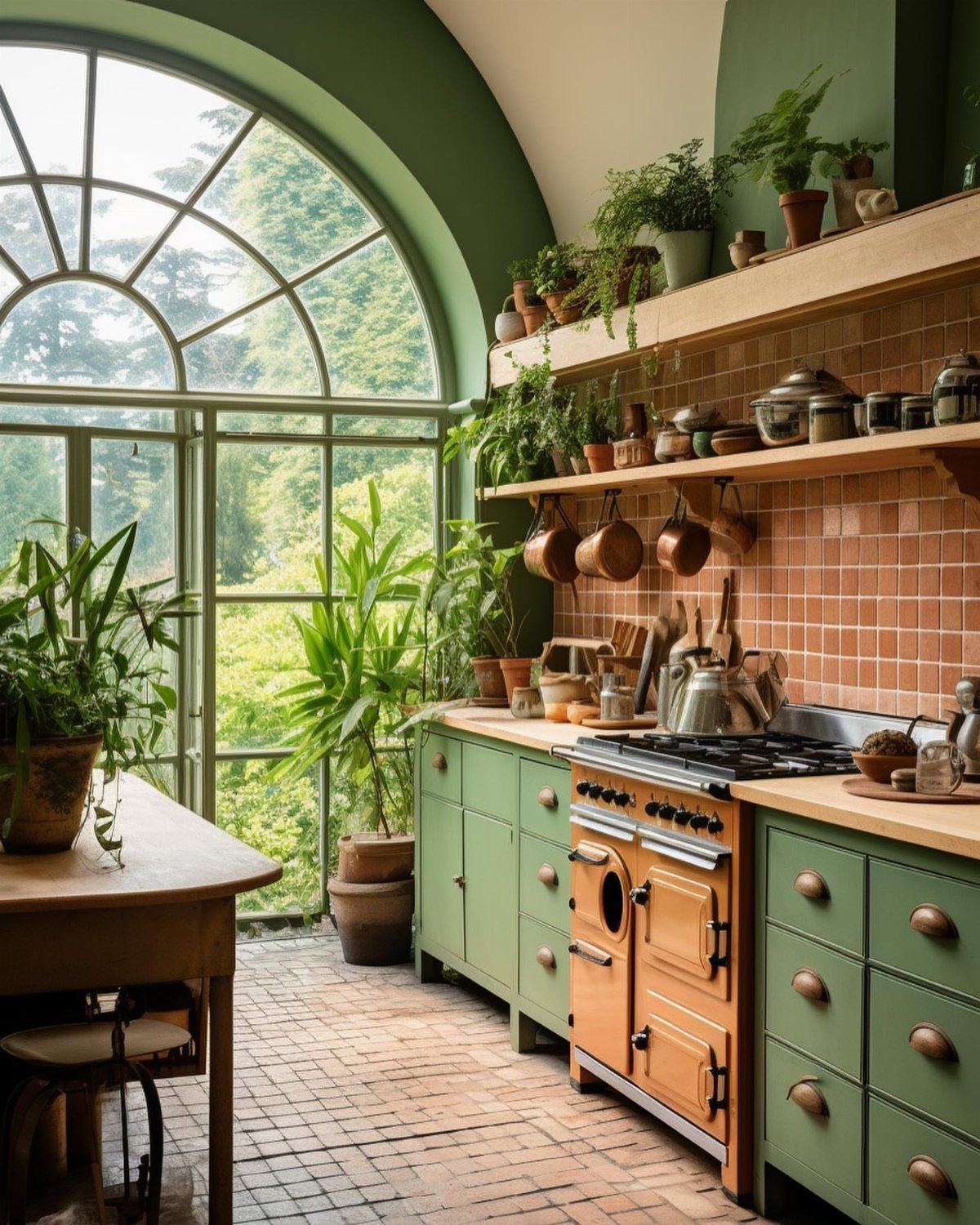
Paint the walls the same green as the cabinets and the cabinet boxes stop reading as separate objects. The room feels wrapped instead of furnished.
Olive works well for this. Open wood shelving and a terracotta-toned stove give the green something warm to push against, so it never goes flat.
If you try it, use a matte or eggshell wall finish and a slightly more satin cabinet finish. A few steps of difference keeps the cabinets distinct.
3. Sage Green Kitchen Cabinets
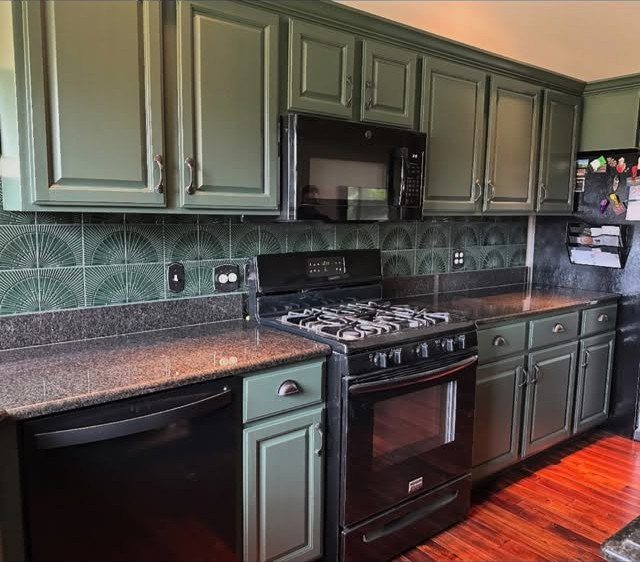
Sage is the green that behaves like a neutral, gray enough to sit beside almost anything. A patterned green tile backsplash adds depth without fighting it, as long as the tile stays in the same color family.
Dark countertops, such as black granite, give sage a firm anchor. I like that pairing better than sage with white, which can wash it out.
Test a large swatch near the window before buying paint. Sage shifts from gray to green with the light.
4. Pale Green Kitchen Cabinets
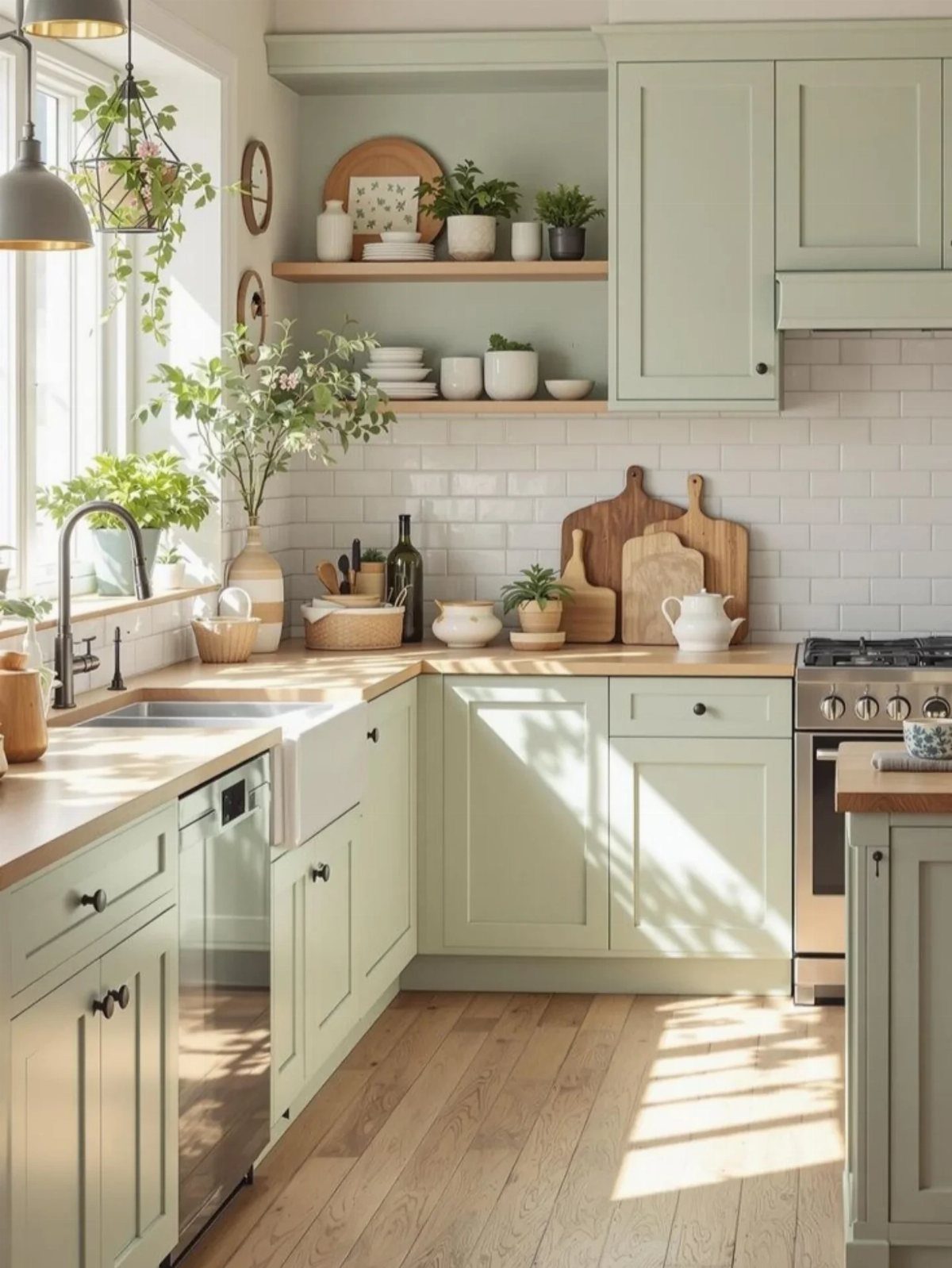
Pale green is the gentlest version of the idea, closer to a tinted white than a color. It asks for warm companions: light wood countertops and floors keep it from turning icy.
White subway tile is the cheap, easy backsplash to match, and plants and cutting boards do the rest of the styling.
I’d pick a pale green with a touch of gray in it, since sweet minty shades can look childish once they cover every cabinet.
5. Green Cabinetry with Black Countertops
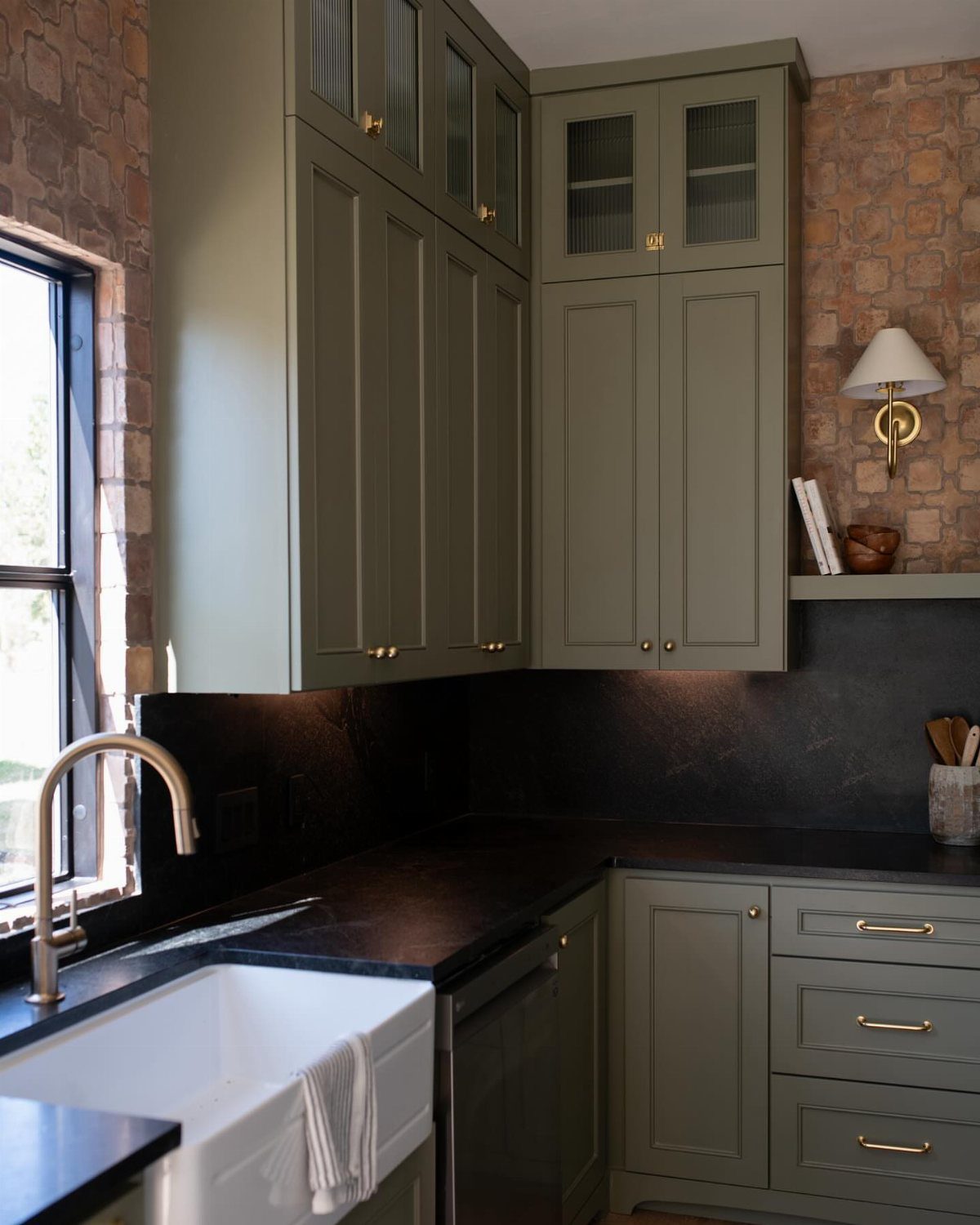
Black countertops give green cabinets a crisp edge, and the contrast makes the color look richer. Gold hardware on olive-toned cabinets adds a warm glint that black alone can’t.
A white farmhouse sink breaks up a dark countertop, and a brick backsplash behind it adds texture. In a small room, I’d paint the walls a light color, because green, black and brick together can feel heavy fast.
6. Green Cabinetry with White Countertops
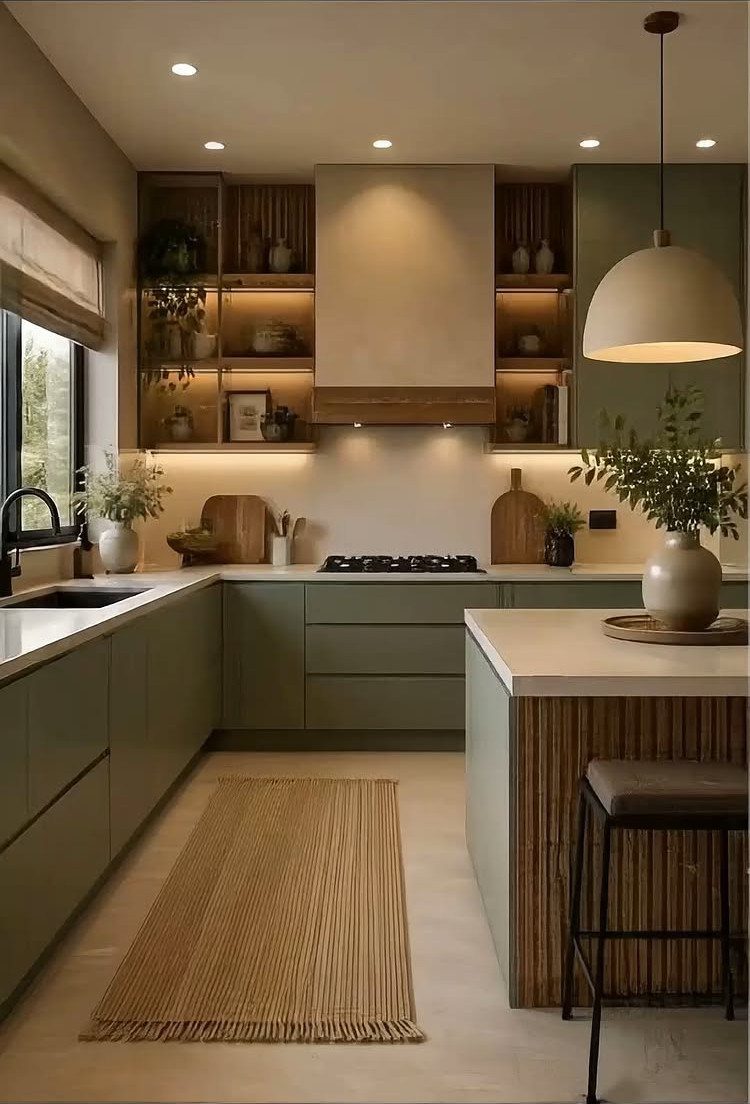
White countertops are the lightest way to carry green cabinets, and they let the color do all the talking. A wood island base against white countertops brings in warmth without adding another color.
Open shelving with built-in lighting helps too, since green lower cabinets can make a kitchen feel dim at night. If you only have budget for one upgrade, I’d put it into the lighting.
7. Green Cabinetry with Gray Countertops
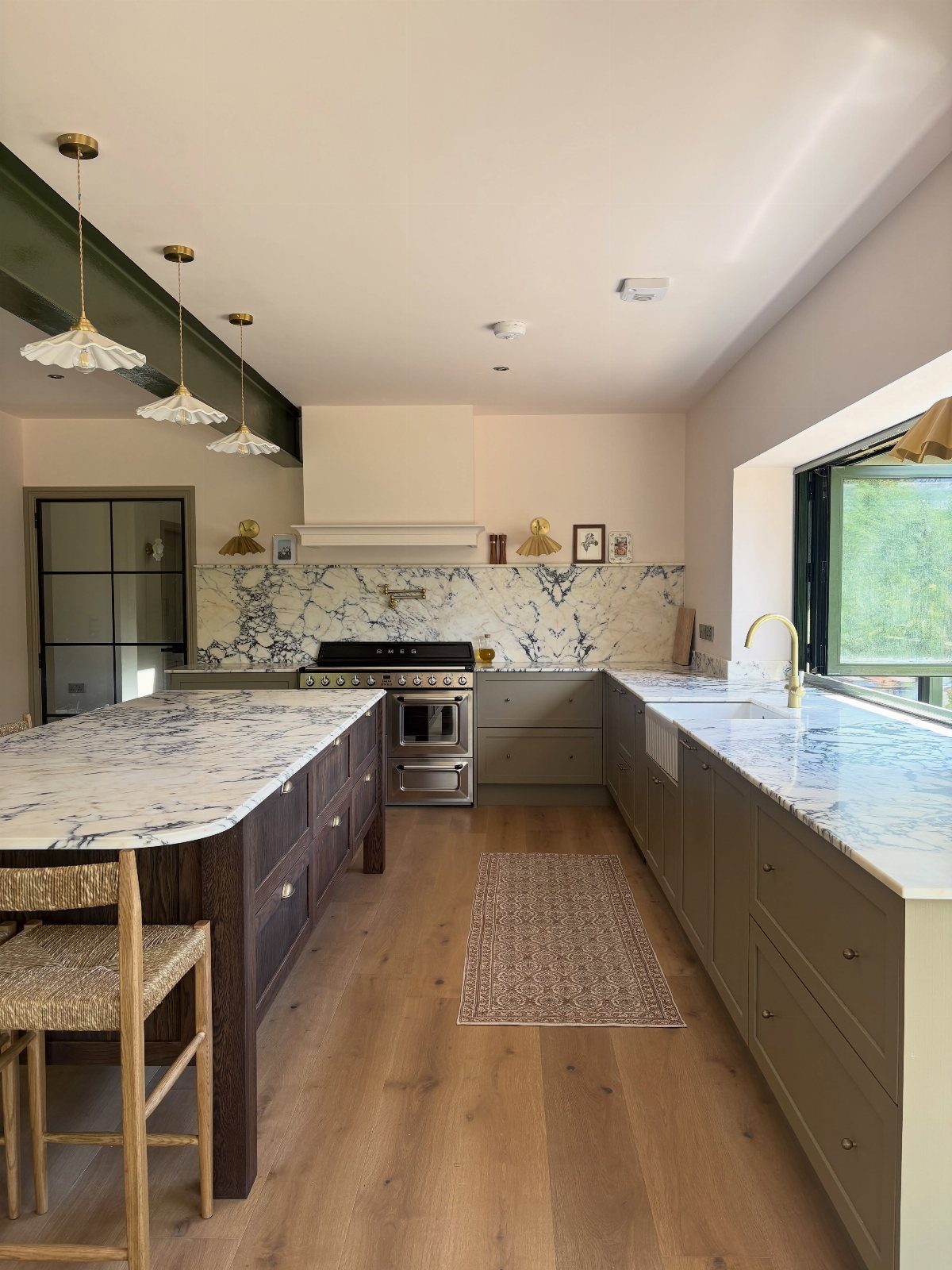
Gray veining in a marble countertop picks up the muted undertone already in olive, so the two read as one palette instead of two competing colors. That’s why this pairing feels grown-up.
I’d keep the gray soft and the green grayed too. A warm wood floor, especially a light one, keeps green cabinets with gray countertops from going cold.
8. White Upper and Dark Green Lower Cabinets
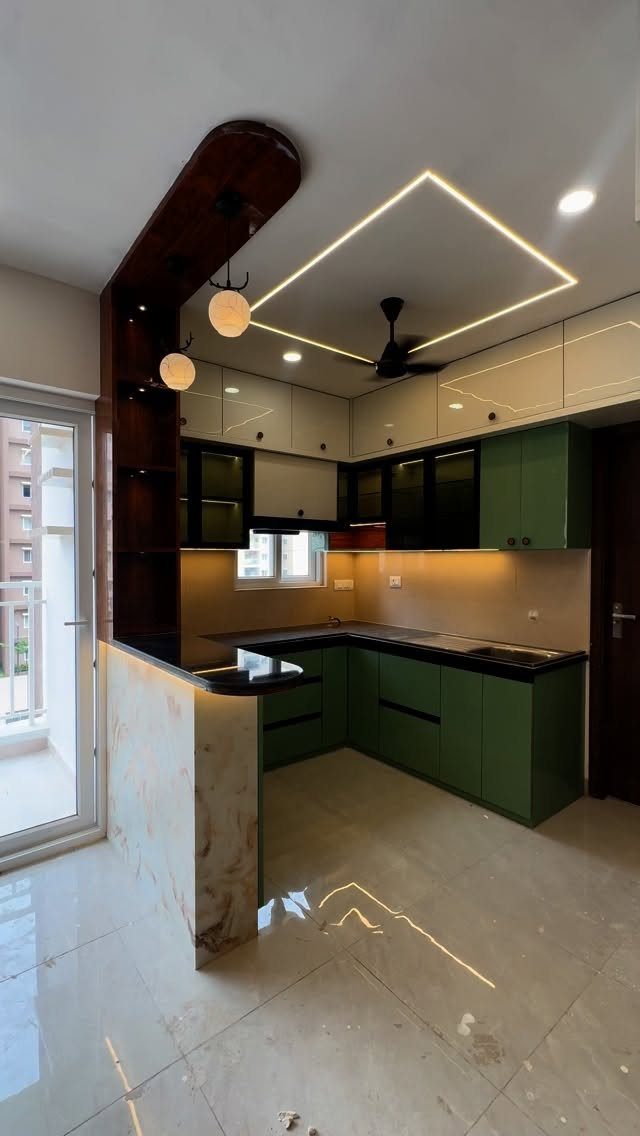
Splitting the colors, dark green below and white above, puts the weight where the scuffs happen and keeps the upper half of the room open.
Painting only the lowers lets you live with a deep green before deciding whether every cabinet should wear it.
A black countertop continues the dark band at counter height, while a marble-patterned breakfast bar adds a lighter surface to break it up. I’d keep the white uppers a clean, plain shade so the green stays the star.
9. Dark Green Cabinetry with Gold Accents
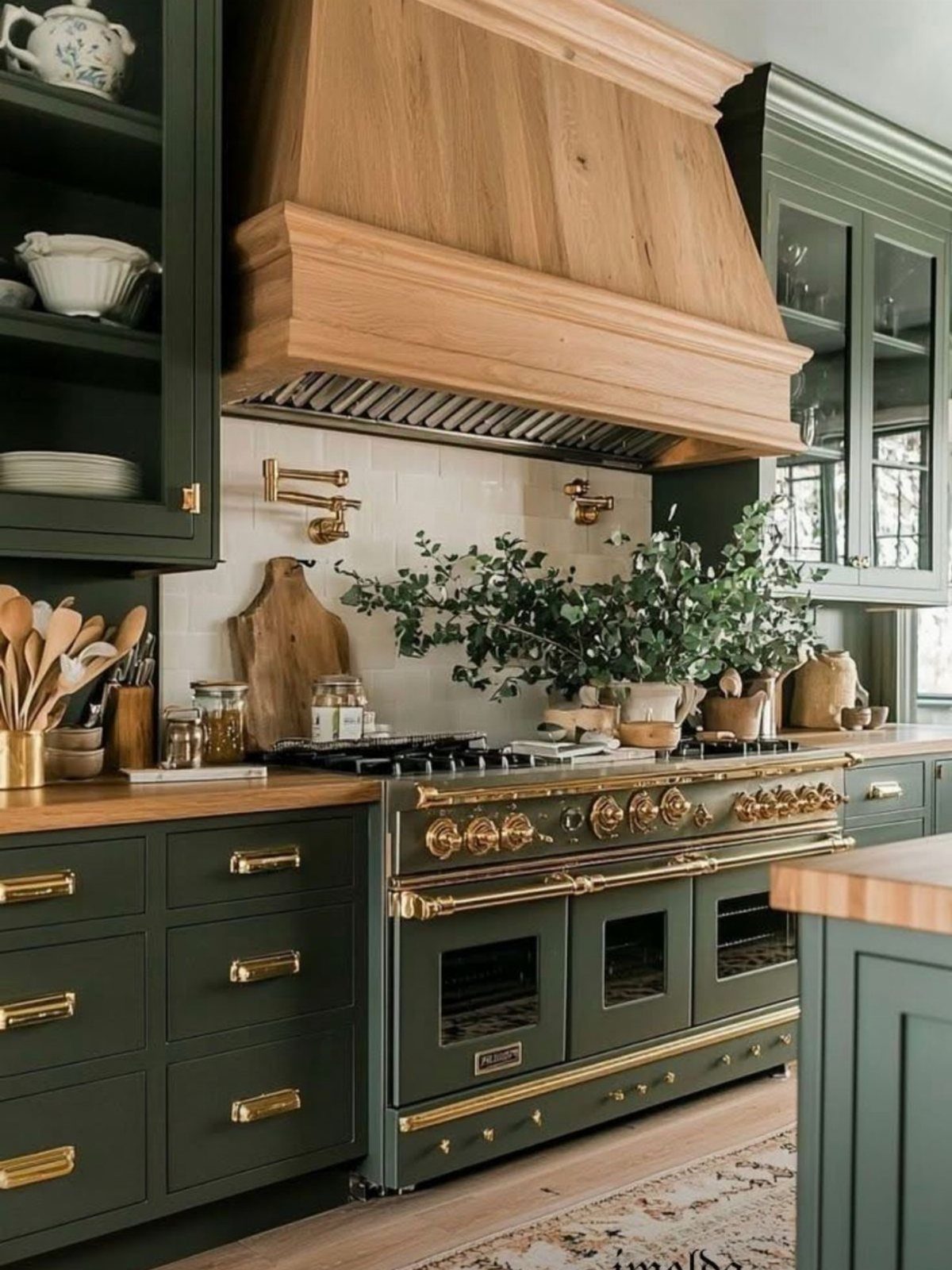
Gold handles are small, but on dark green they do the work of jewelry: a warm glint against a deep color.
If a green and gold stove is out of budget, I’d spend on the hardware first, since handles are the cheapest swap and the most visible.
10. Emerald Cabinets
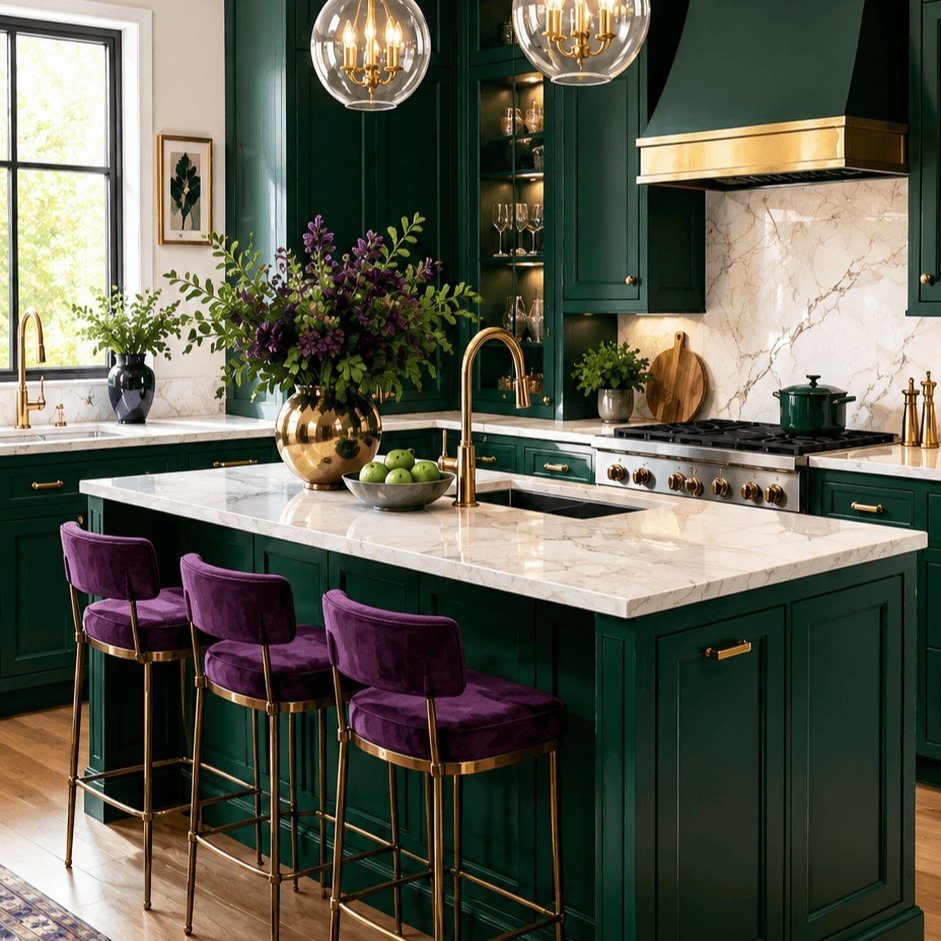
Emerald is the loudest green you can put on cabinets, so I’d let everything near it stay quiet.
Velvet barstools in a deep purple are an optional extra, and a daring one. Stools are cheap to swap, so they’re a smart place to experiment with a bolder color than you’d risk on cabinets.
11. Nature-inspired Green Cabinets with Raw Wood
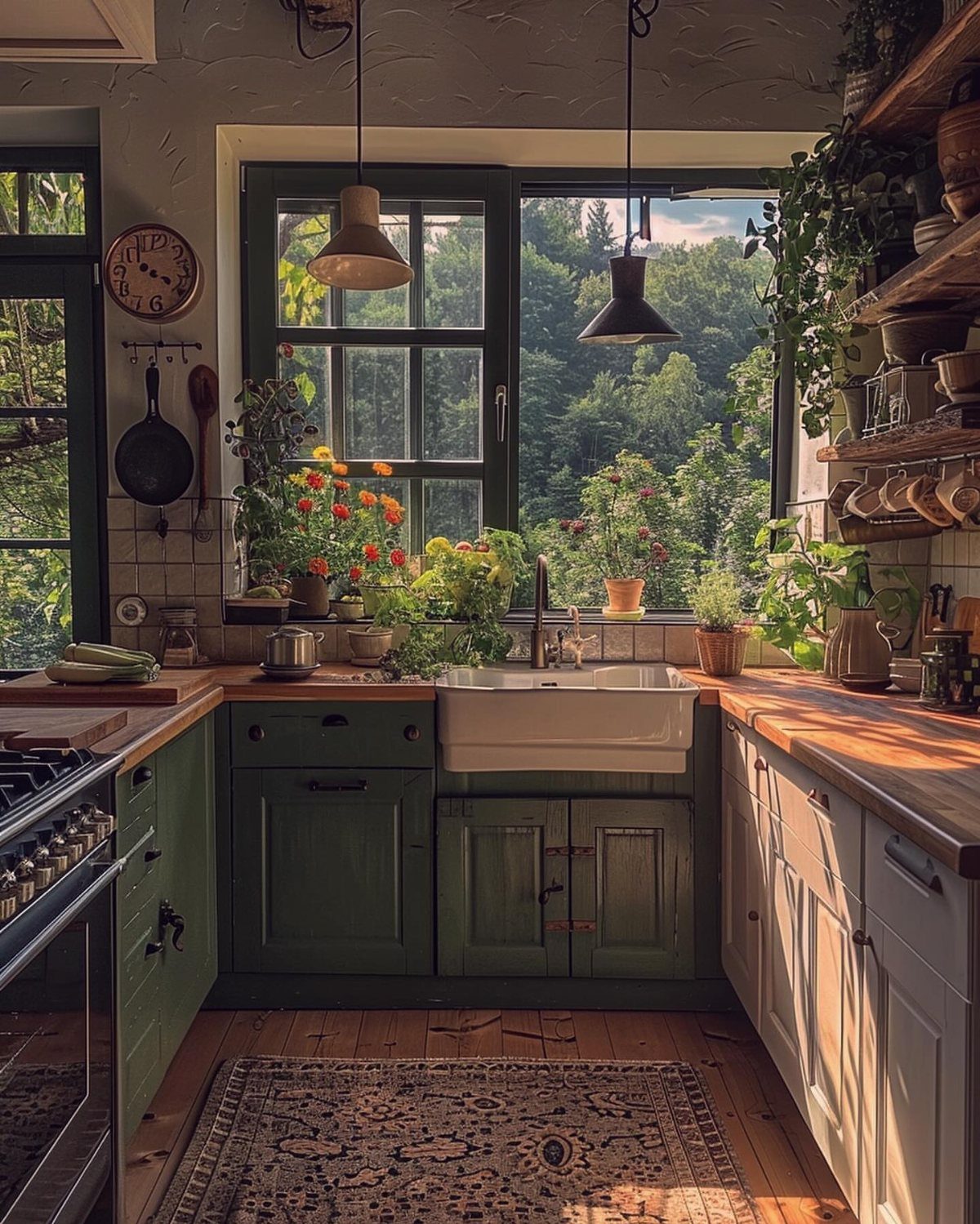
Green cabinets and raw wood countertops come from the same source, so they sit together without effort. A muted green is the right choice here, closer to leaf than to jewel.
A white farmhouse sink adds a clean break between all that natural material, and a few indoor plants carry the green into the room. Raw wood needs sealing near the sink, so I’d plan on regular upkeep.
12. Green Cabinets with Black Hardware
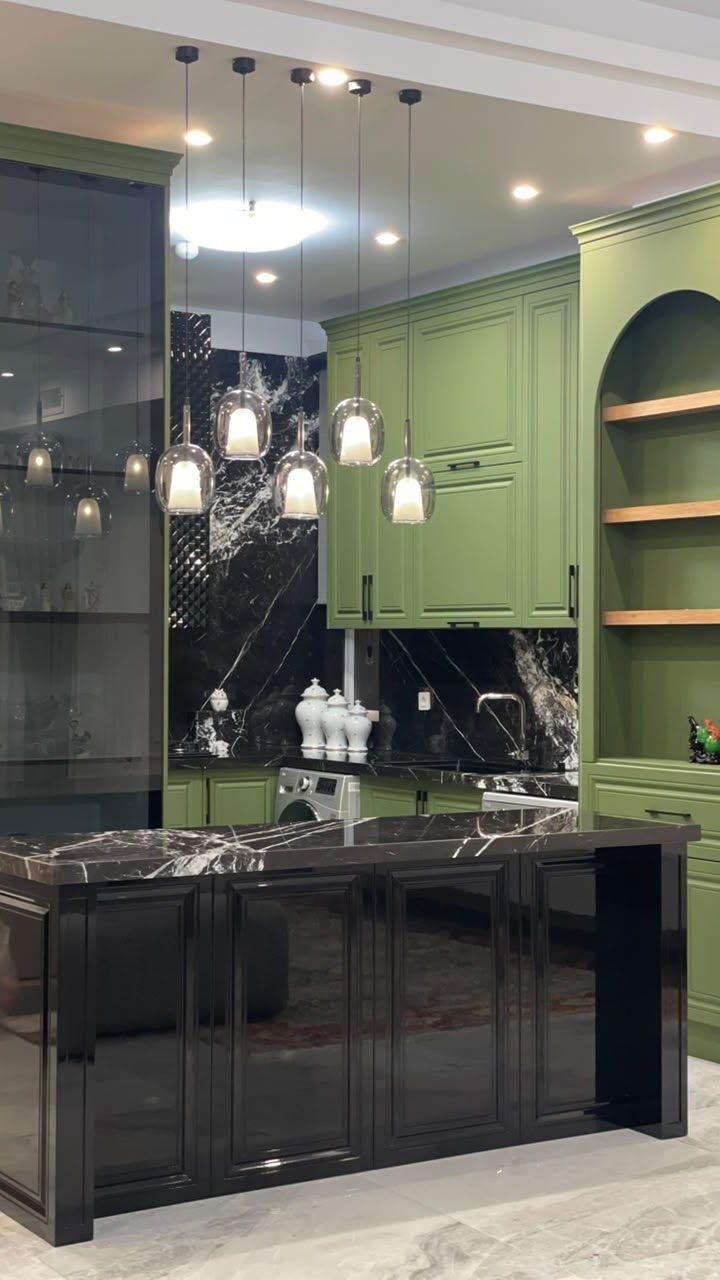
Black hardware gives olive upper cabinets a sharp, modern outline, like ink lines on a drawing. Repeating the black on the island and backsplash makes the hardware look planned rather than added.
If you only want the look on a budget, swapping the pulls is the cheapest step.
13. Forest Green Kitchen Cabinets
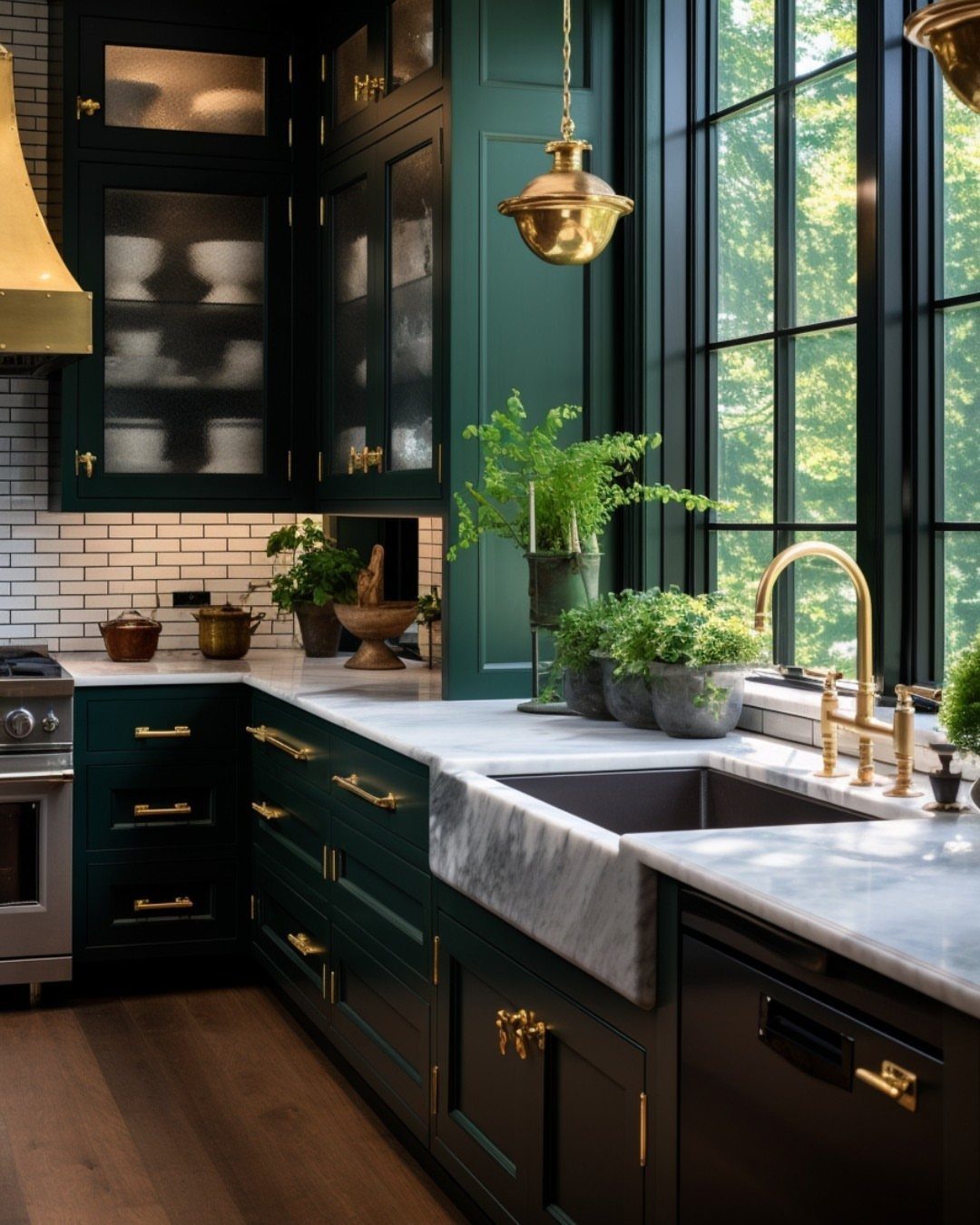
Forest green is the deepest of the earthy greens, dark enough to read almost like charcoal until light hits it. Large windows suit it well, because daylight keeps all that depth from feeling like a cave.
White marble countertops and white subway tile backsplash keep the room from feeling too heavy, while gold hardware brings warmth.
A dark sink with a gold faucet repeats the contrast, so the metal looks chosen. I’d keep the walls light and let the cabinets carry the drama.
14. Green Cabinets with Marble Countertops
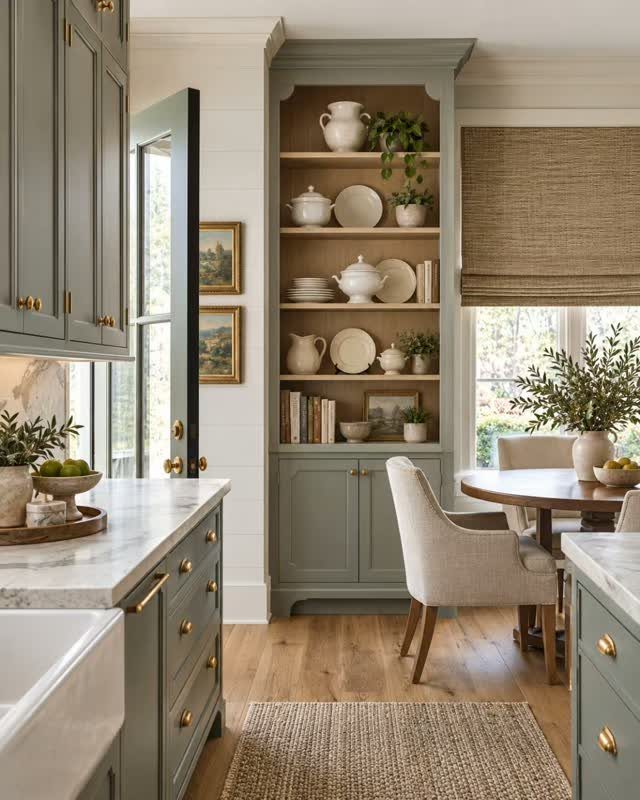
Marble is the luxe partner for green cabinets, and sage is soft enough to work with delicate veining. White marble with gray veining sits quietly against a muted green, so the countertop adds polish without competing.
Gold hardware warms the pairing, and a farmhouse sink fits the relaxed mood.
Real marble costs more than most kitchen budgets hold, so I’d choose a marble-look surface instead. Whichever you pick, choose the green and the veining together, holding the sample against the cabinet color.
15. Green Cabinetry with Patterned Wallpaper
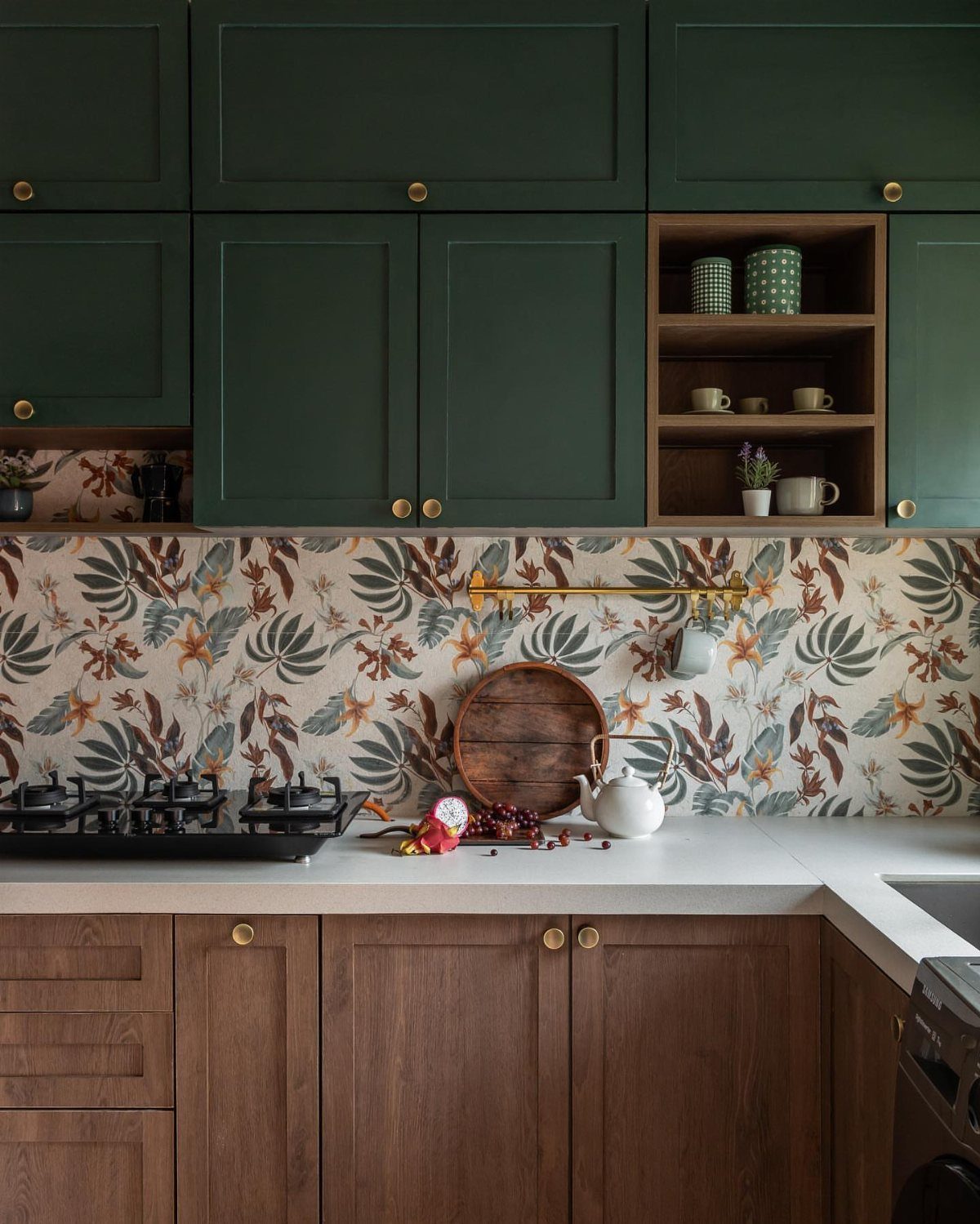
Wallpaper in a botanical leaf pattern turns the backsplash zone into the room’s loudest feature, and the green cabinets give it a reason to be there.
Pulling a shade from the leaves to match the uppers makes the whole wall look planned.
Wood lower cabinets keep the busy pattern grounded, and a plain white countertop gives the eye somewhere to rest.
Behind a sink or stove, I’d choose a wipeable, moisture-friendly paper and keep it clear of direct splashes. Wallpaper is also far cheaper and easier to change than tile.
16. Green Cabinetry with Open Layouts
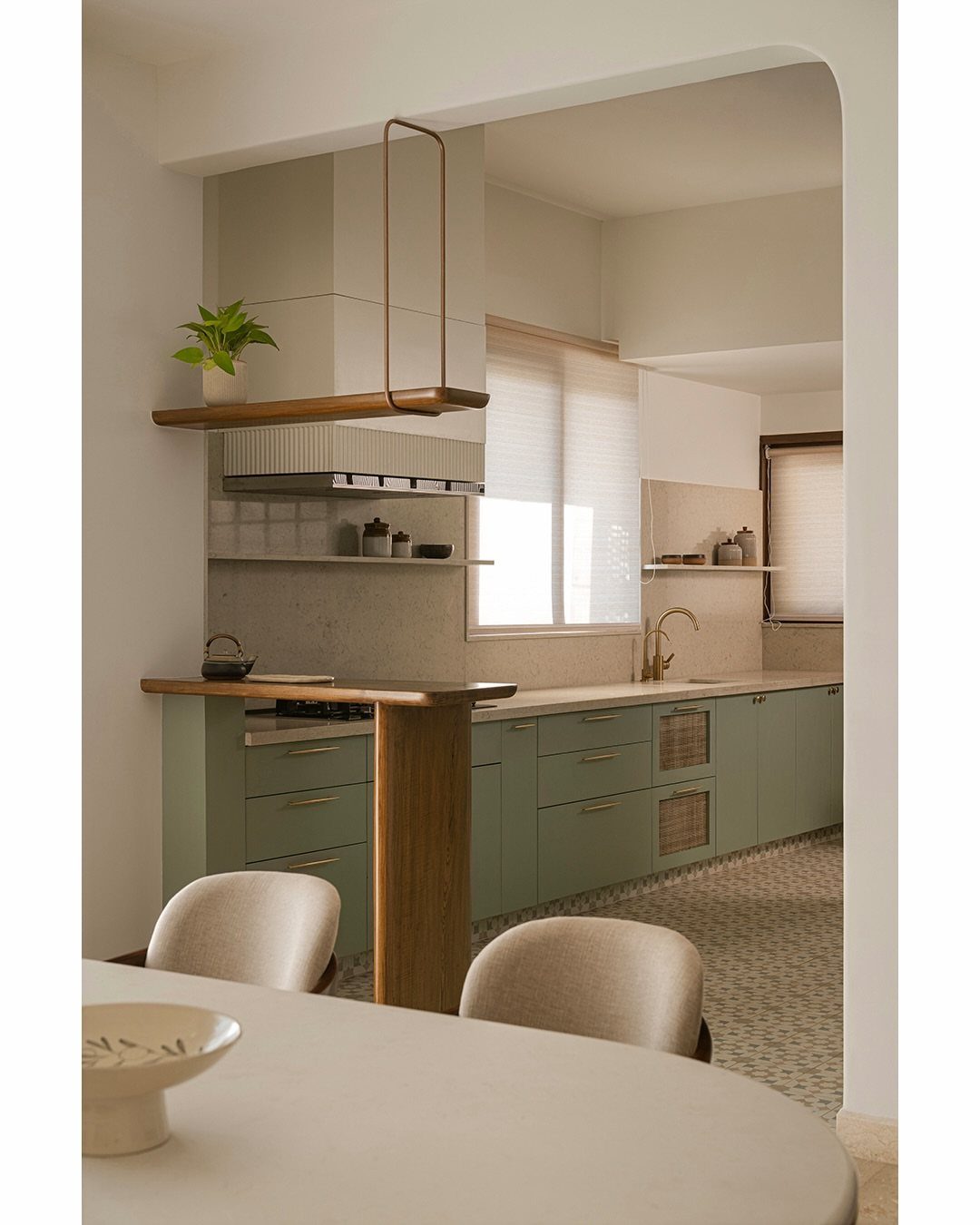
In an open layout, sage green cabinets are visible from the living area too, so the color has to work across both spaces. Sage is gentle enough for that, gray enough to sit near almost any sofa or rug.
A wooden breakfast bar marks where the kitchen ends without a wall, and a floating shelf keeps the sightline open.
I’d repeat the wood tone once elsewhere in the room, such as a chair or table, so the kitchen feels connected rather than boxed in.
17. Green Island with Neutral Cabinetry
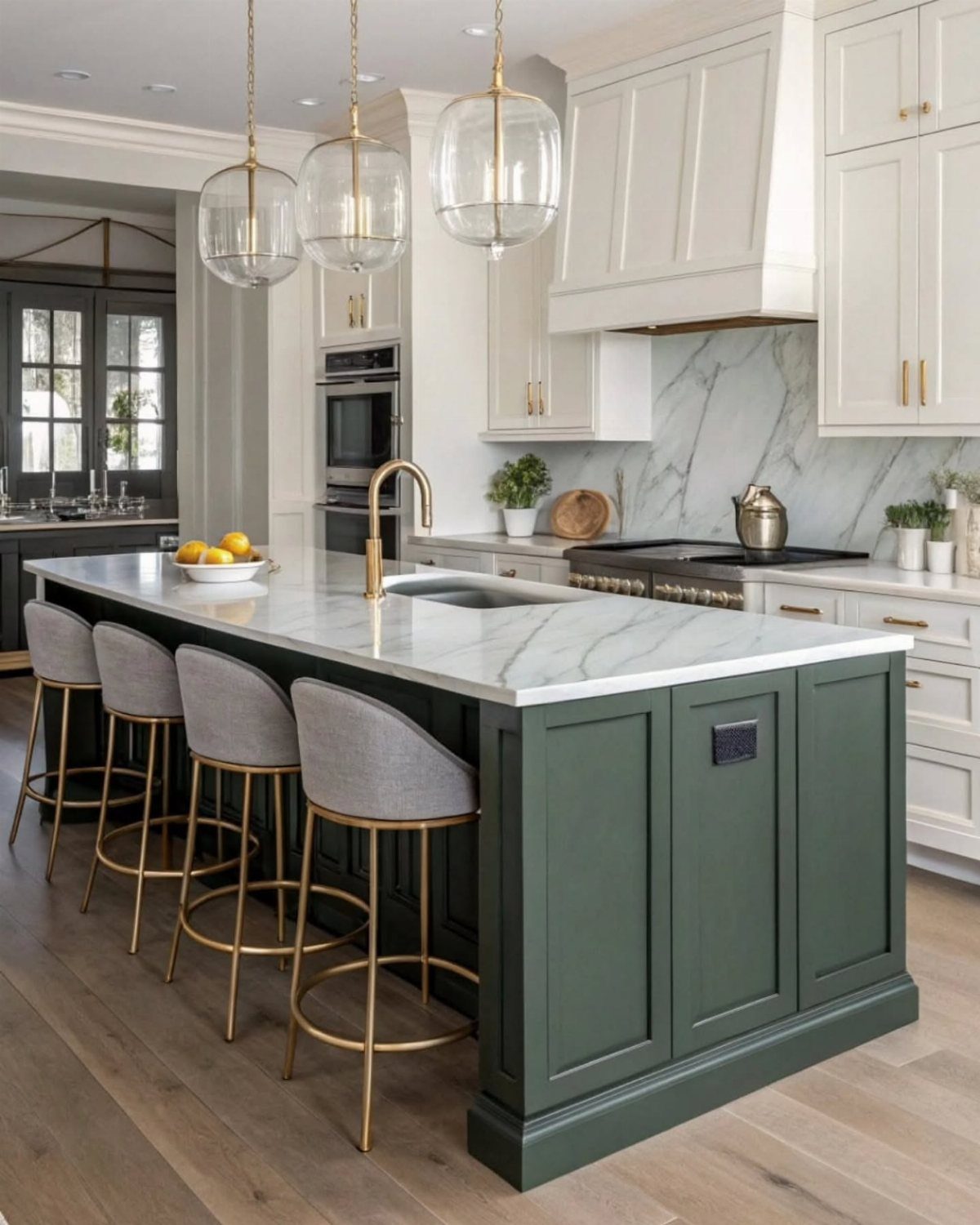
A dark green island with white perimeter cabinets gives the kitchen one clear focal point for the least paint. You only color a single piece, which makes this the easiest approach for testing deep green before committing to full coverage.
A white marble top keeps the island from looking heavy, and gold hardware ties it to the room’s other warm notes.
Pendant lights hung above it add to the focus. I’d keep barstools in a neutral shade, since the island already has the color covered.
18. Green Cabinetry with Glass Fronts
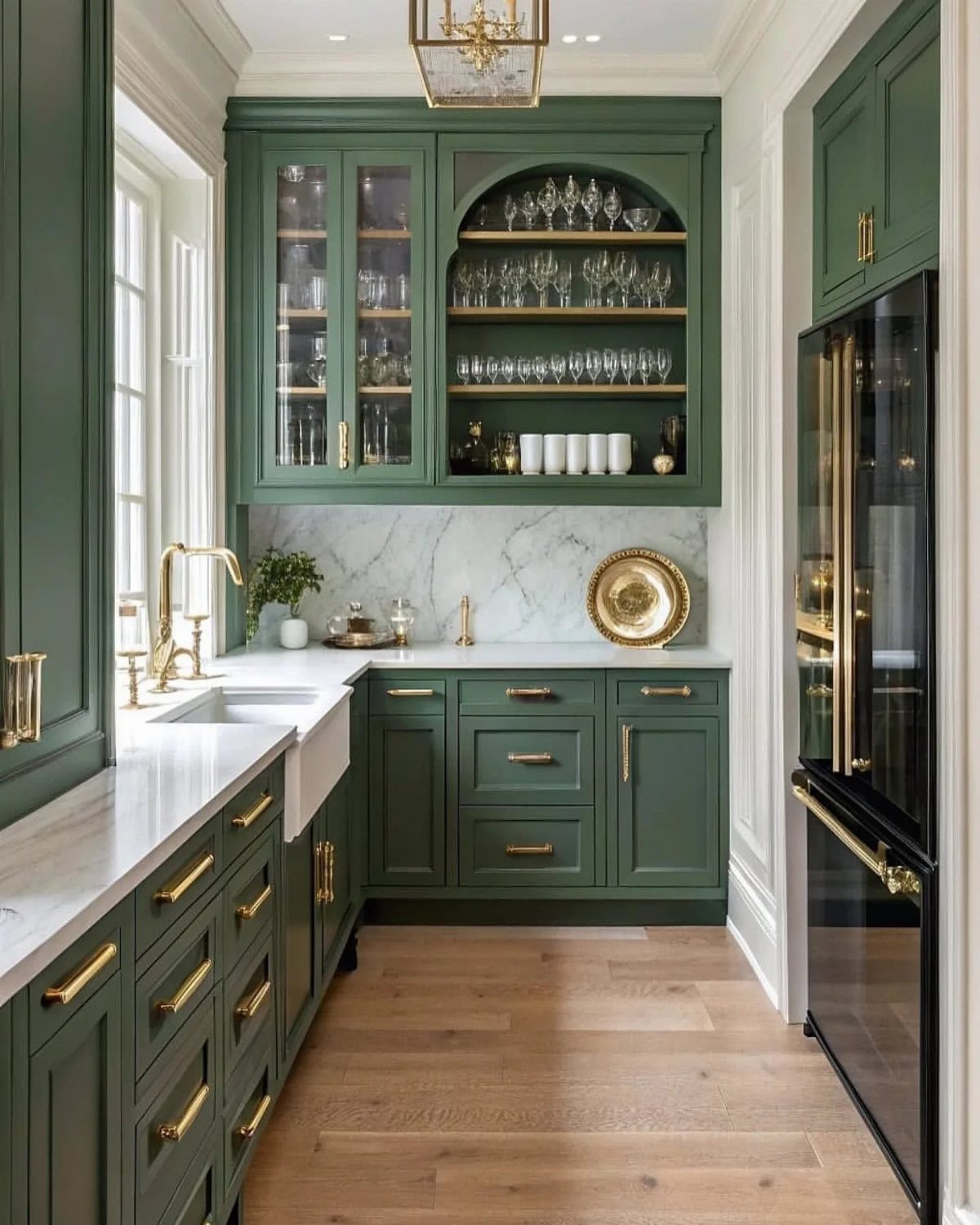
Glass-front uppers break up a long run of green and give glassware a place to be seen. In sage, they keep the wall of cabinets from feeling flat.
Display only works if the contents look tidy, so I’d stock them with matching glasses and leave the mismatched mugs behind solid doors.
Replacing a few solid doors with glass is a modest project compared with new cabinets. A small light inside each cabinet makes the glassware glow, and gold hardware plus white marble below keeps the palette calm.
19. Green Cabinetry with Textured Backsplashes
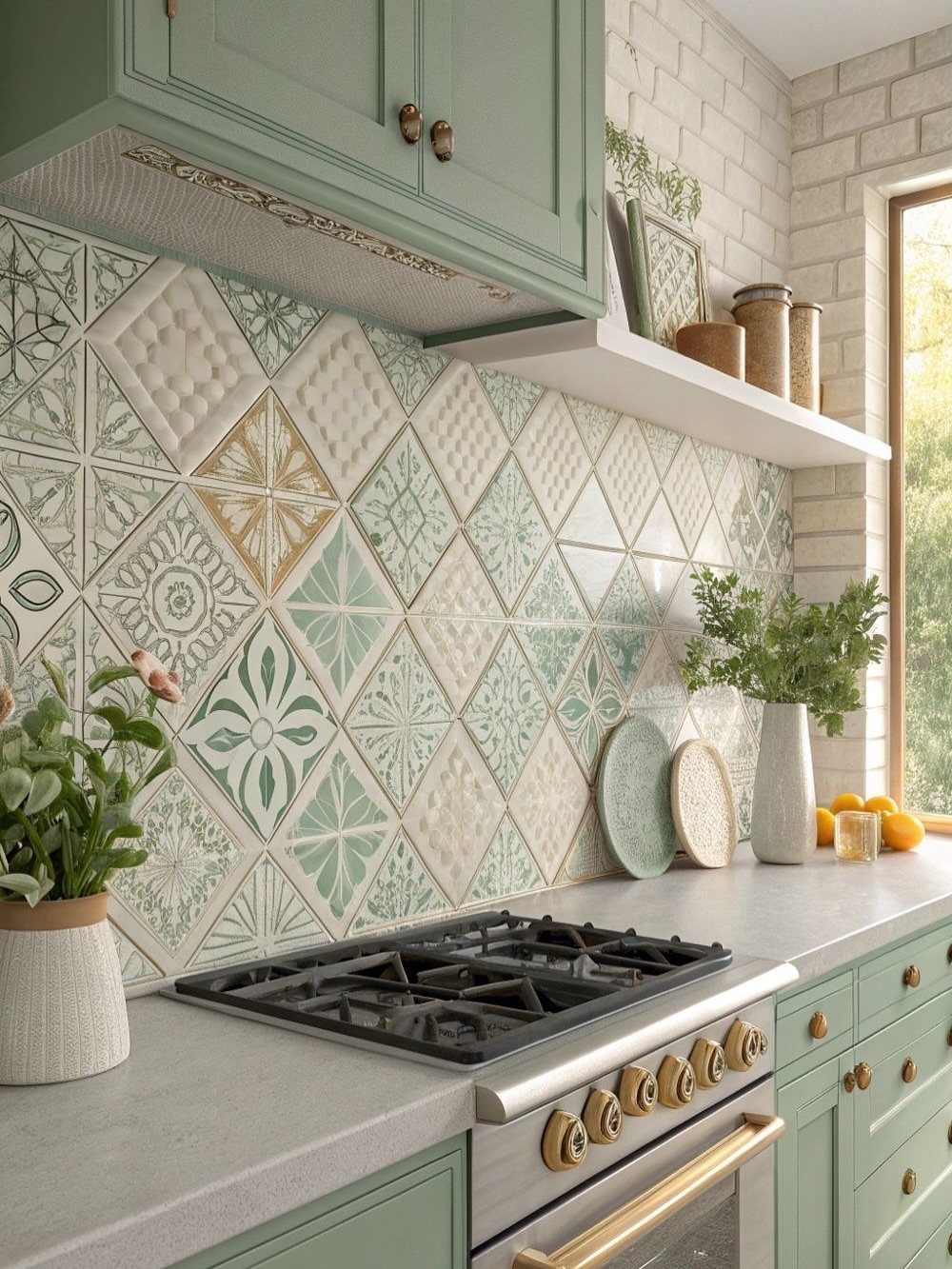
A diamond-patterned tile in green and cream gives sage cabinets something to push against, so the wall adds depth without a second color. Pattern and texture in the same family keep the room calm.
Gray countertops sit quietly beside it. I’d keep the cabinet color plain and let the tile be the one busy surface, and I’d hold a tile sample against the cabinet door before ordering.
20. Cabinets with Brick Backsplashes
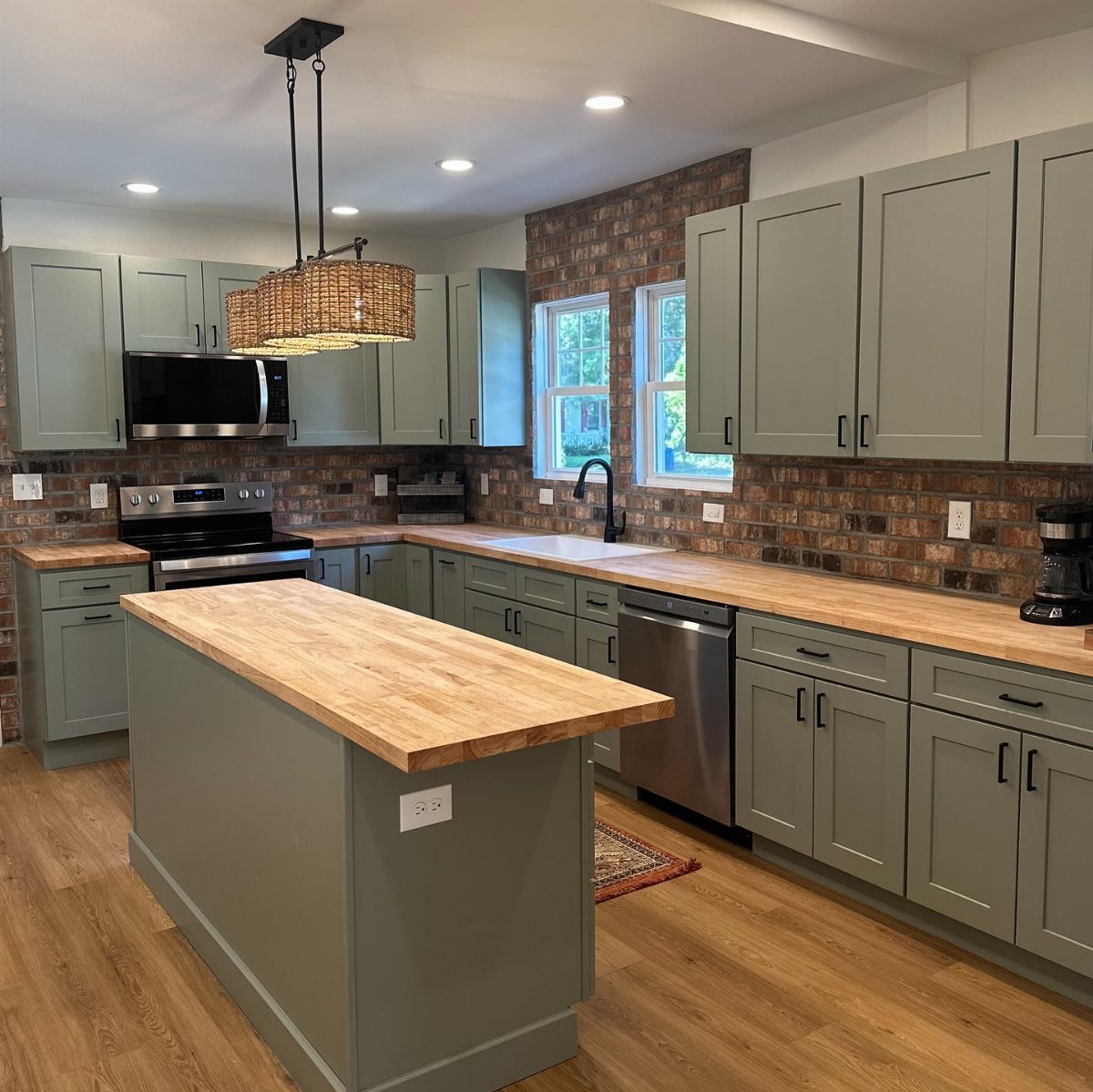
Red brick behind sage green is a warm, old-fashioned match, and light butcher block countertops tie the two together. Brick is the louder surface here, so I’d keep the cabinets a muted sage rather than a bright one.
A woven pendant over the island adds one more natural texture without adding color. If the brick is a lot of wall, I’d leave the other walls light.
21. Cabinets with Contrasting Black Island
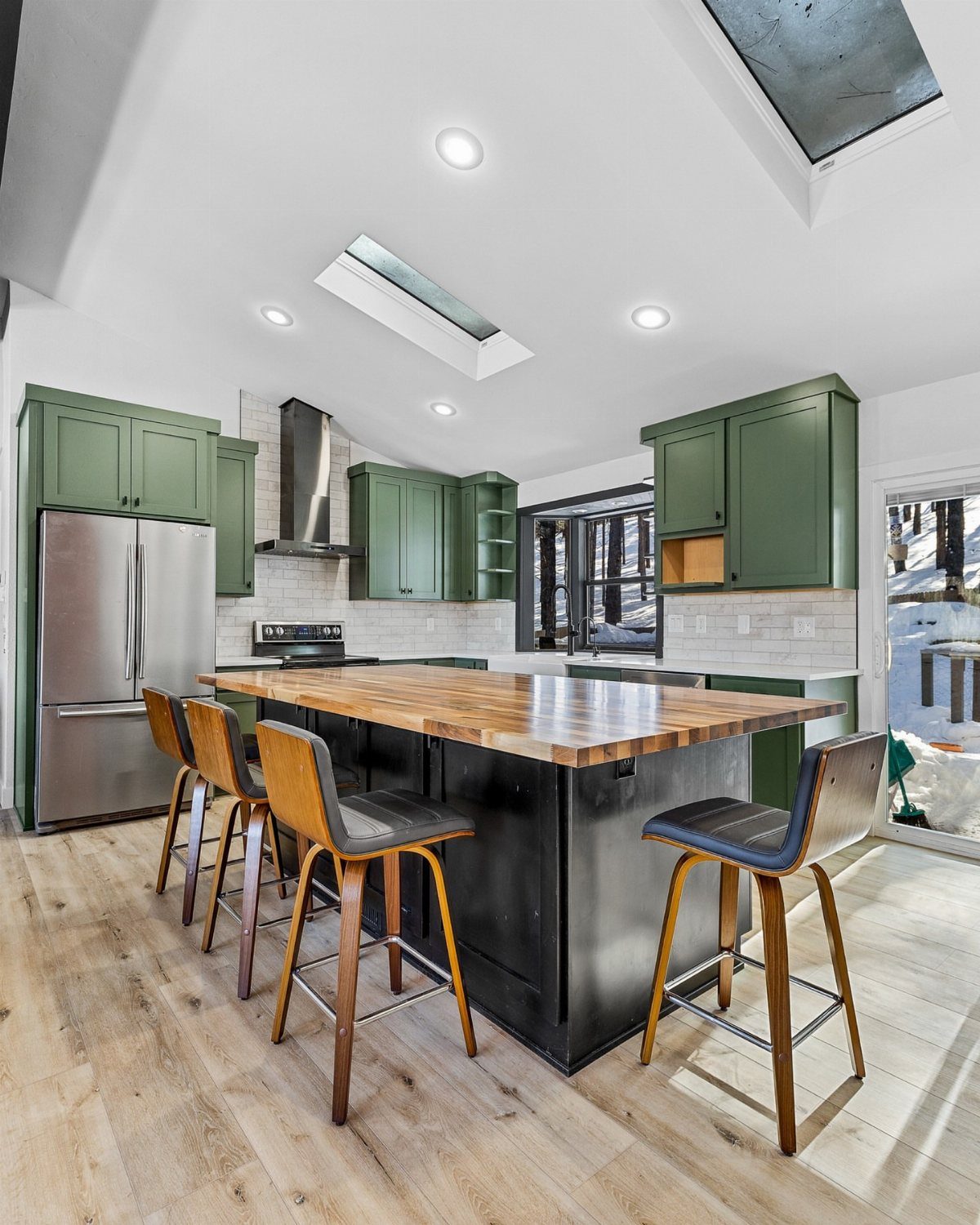
Painting the island black while the perimeter stays olive splits the room into 2 clear tones. A thick wood butcher block top warms the black, and it keeps the island from reading as a heavy slab.
Stainless appliances fit this mix without effort.
Skylights help too, since olive and black both soak up light. I’d choose wood stools to repeat the countertop.
22. Cabinets with Matching Green Marble
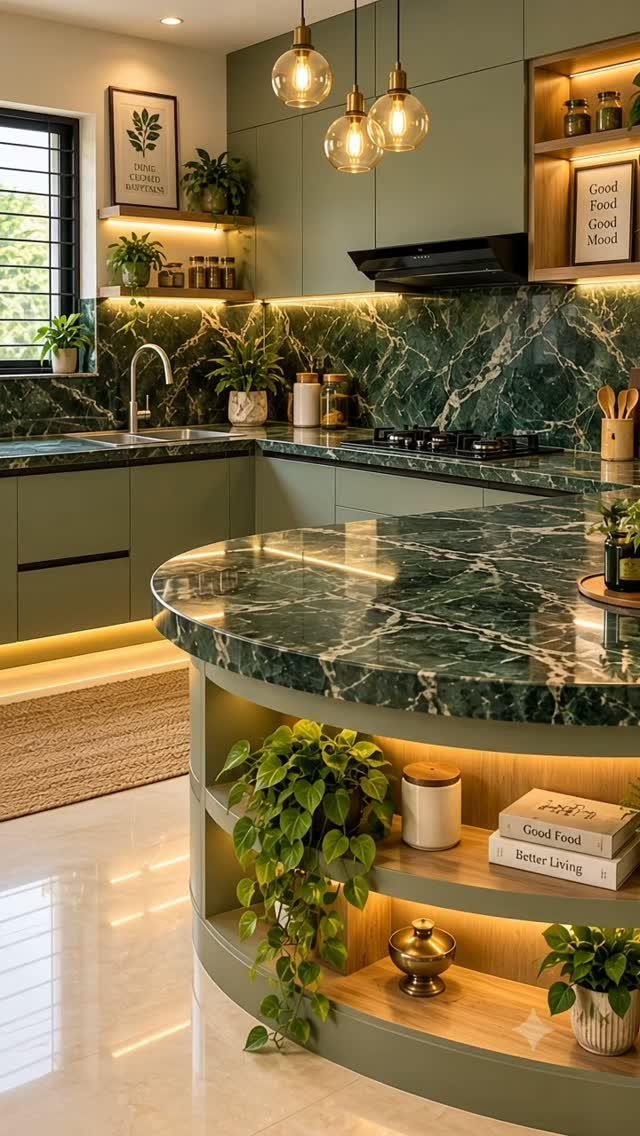
Dark green veined marble on a muted green cabinet is a tone-on-tone move: the countertop reads as a deeper cousin of the cabinets instead of a contrast. That makes the room feel quiet and layered.
Open wooden shelving above adds a lighter, warmer surface and a place for books and a sign or two. Real marble costs a lot, so I’d look at marble-look surfaces and check the sample against the cabinet paint.
23. Cabinets with Warm Wood Island
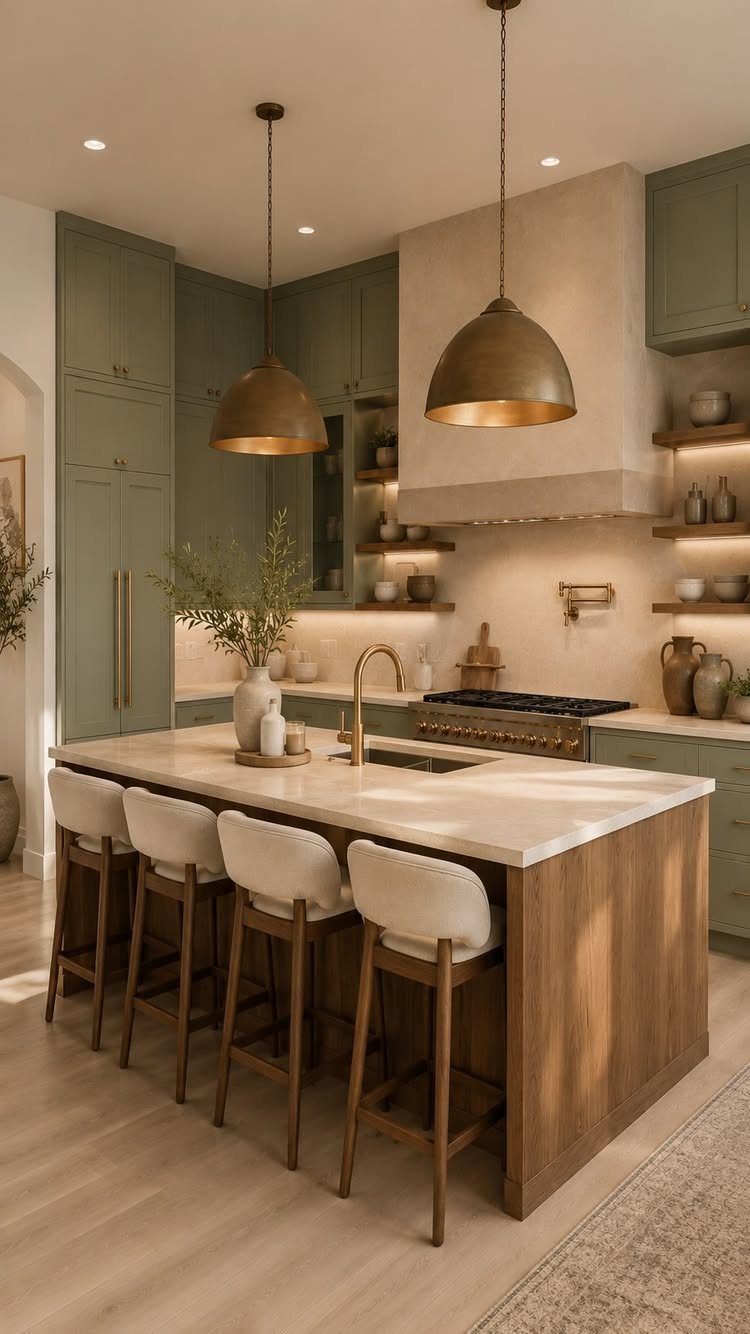
A natural wood island is the warmest partner for muted green perimeter cabinets, and the wood stands out because the surrounding color is so calm. White stools keep the island light.
Brass pendants above repeat the warm tone, and a beige range hood stays soft against the green. If a new island is out of budget, I’d start with the pendants, since lighting is the easiest warm note to add.
Choosing the Right Green Shade
Undertone decides whether a green looks calm or off. Yellow-leaning greens read warm and earthy, while blue-leaning ones read cooler and crisper, so look at the gray or brown hiding inside the color before you look at the green.
Light changes all of it.
Paint a sample board, not just a patch on the wall, and move it around the kitchen: beside the window, under the cabinet lights, and across from the stove. Check it in morning, afternoon and evening.
If the green shifts toward a color you dislike at any of those times, drop it. Pick the shade that looks good during the hours you actually use the room.
Green’s Timeless Appeal
Green is not a passing trend. Historic kitchens and English country homes have used it for decades, so you are borrowing from a long tradition rather than chasing a look.
Muted greens, especially sage and olive, work almost like neutrals. They adjust as your decor changes, which makes them a safe long-term bet if you plan to stay a while or want a kitchen that still pleases a future buyer.
If you worry about commitment, choose the muted version. Swap out towels, stools or art later, and the cabinets will keep up.
Green is mercifully easy to match with your existing finishes and fixtures, and a verdant coat on your cabinets is a surefire way to create a look that’s both trend forward and classic.
Pairing Colors and Materials
Green gets along with a short list of partners: warm woods such as oak, walnut and teak, crisp whites and soft creams, and natural stone. For metals, brushed brass or aged bronze suits it better than shiny chrome.
Decide how much contrast you want. A moodier kitchen works best when the counters and backsplash run darker too, so the whole room reads as one deep, layered tone instead of a green box with pale parts.
Woven textures also pair well with olive and moss greens, so a basket or a rattan stool adds warmth cheaply. Pick one or two of these partners and repeat them, rather than using all of them at once.
Frequently Asked Questions
What is the most popular green for kitchen cabinets?
Sage, olive and forest green are the shades people choose most.
Sage carries enough gray to sit comfortably next to white or wood, olive leans warm and grounded, and forest green goes dark enough to anchor a room the way black cabinets do.
If you want the safest pick, go with a muted, grayed version of any of them.
What kitchen cabinet colors will look outdated in 2026?
I can’t point to a color that is sure to date, but green is not a likely candidate.
Muted tones like sage and olive have sat in country kitchens and period homes long enough that they read as classic rather than trendy.
The pale mint shades are where I’d hesitate, because they can feel juvenile when they run from base to upper cabinets.
Are green kitchen cabinets a good idea?
Yes, especially in a muted shade. Muted greens flex with changes in lighting and decor, so they age well if you’re staying put and still appeal when it’s time to sell.
If you worry about committing, paint only the lower cabinets or just the island, and change towels, stools or art later.
What color countertops go with green kitchen cabinets?
White marble is a safe pairing, since the warmth in sage and olive keeps the combination from turning sterile.
Black adds contrast and makes green read richer, while soft gray veining ties into the cooler undertones already present in these colors. Dark counters anchor sage better than white, which can wash it out.





