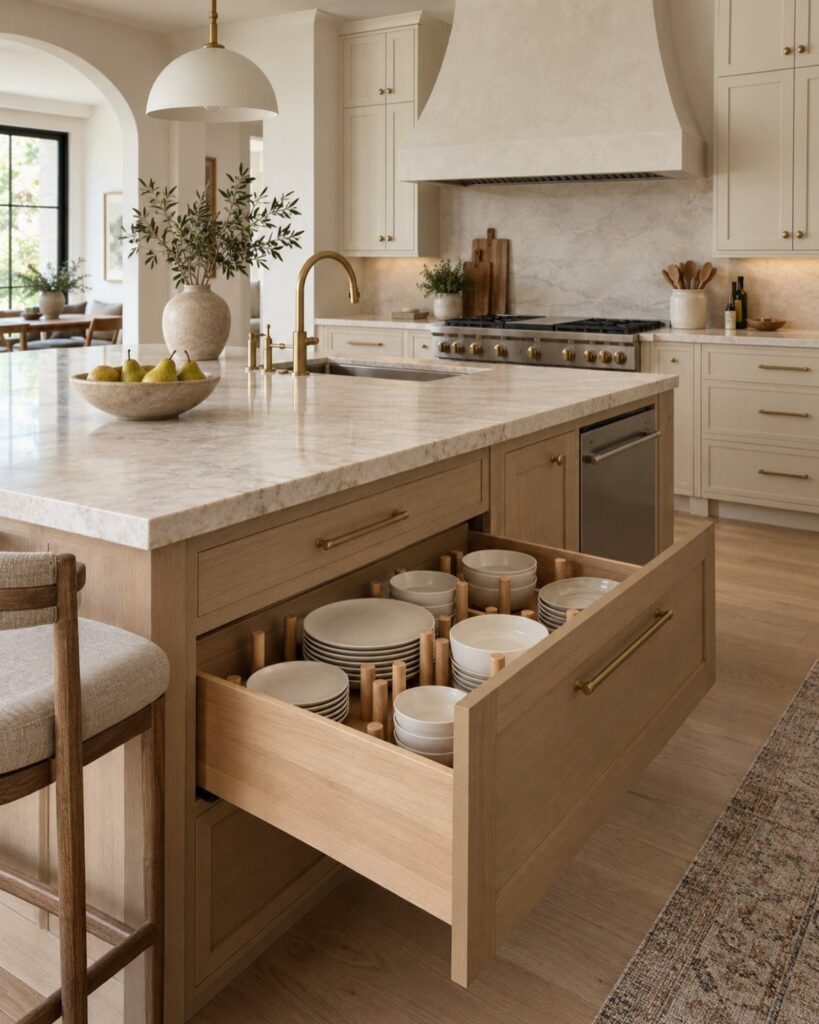
The ideas here run from a weekend of repainting the lowers or adding layered lighting to solid wood, natural stone and a full range hood built as a focal point.
Which one is yours depends on whether you can change the cabinet boxes or only what sits on and around them: owners can swap in full-overlay doors or pull-out drawers, while renters are mostly limited to paint, lighting and hardware.
Look at the 48-inch professional range, which needs a hood sized to match, and you can see how one appliance choice can set the budget for the entire room.
1. Warm Wood and Painted Cabinetry
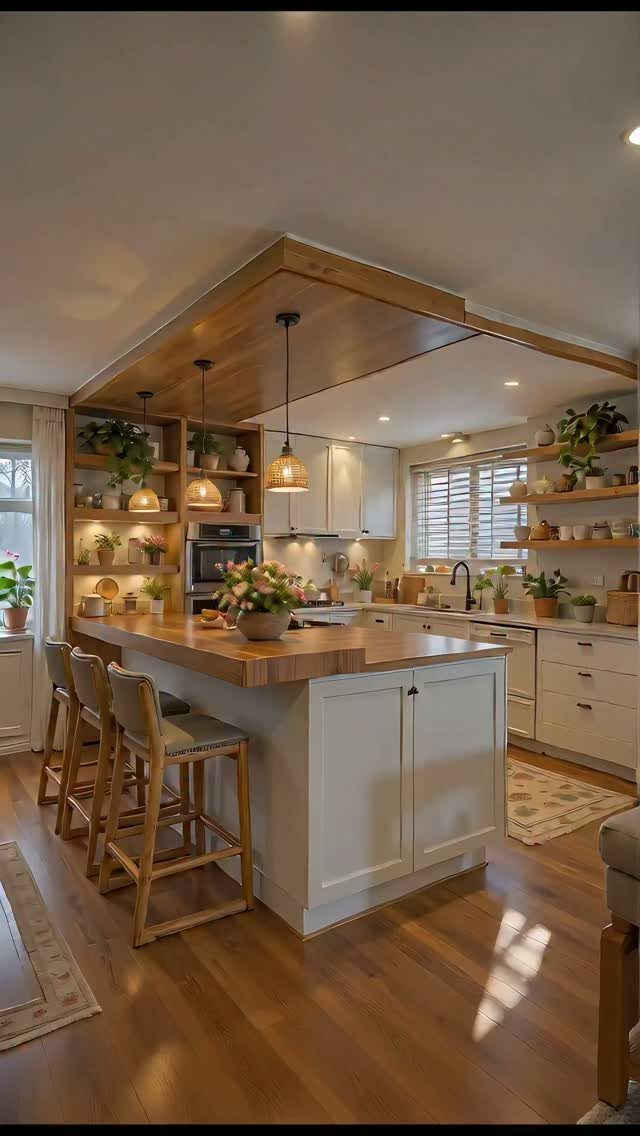
Wood and white work better as a pair than either does alone. Painted white base cabinets keep the room bright, and a thick wood countertop adds the warmth that paint can’t.
Open wood shelving is the cheap way to repeat the tone. On a budget, I’d start there, or with a butcher-block top, before touching any cabinet doors.
2. Natural Stone Surfaces
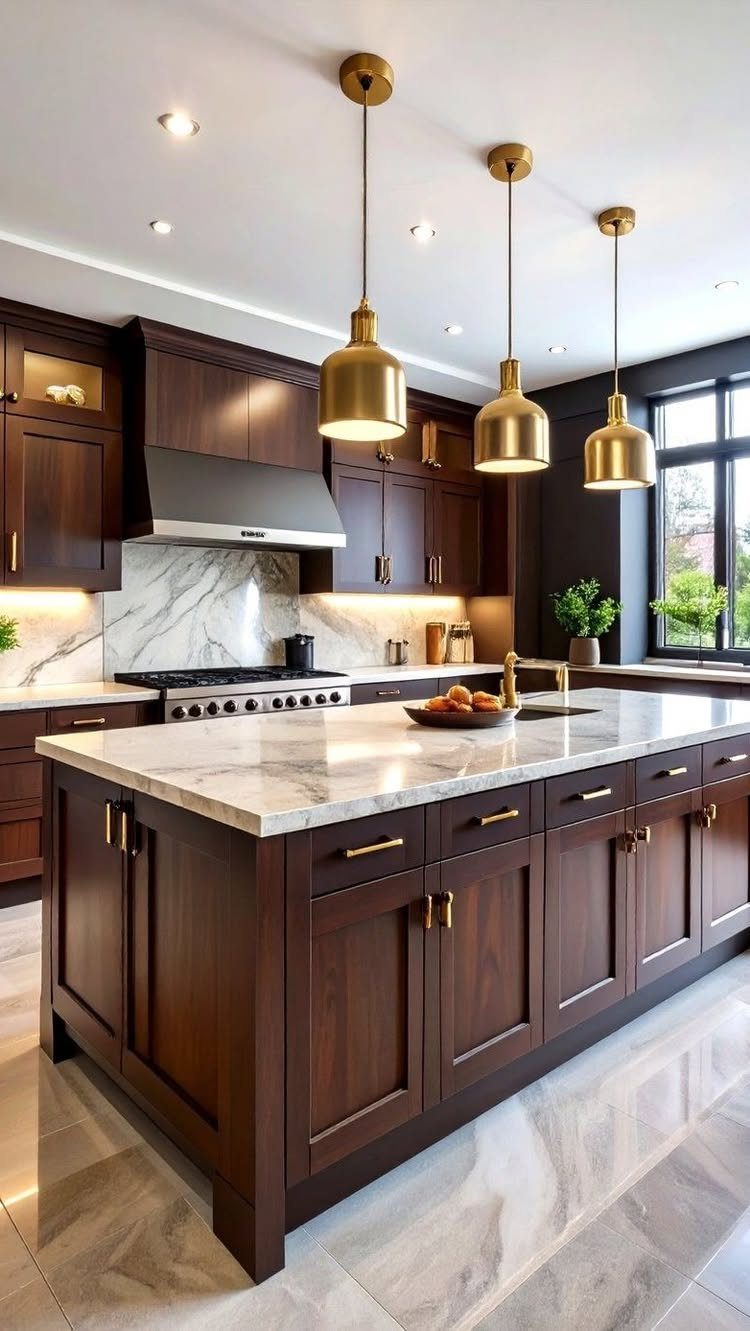
Marble on both the island and the backsplash makes one continuous surface, and that’s what keeps dark wood cabinets from feeling heavy. I like the contrast: the stone reads light and the wood reads grounded.
Natural stone is a splurge for most budgets, so I’d put it where the eye lands first, the island top, and keep the backsplash simpler if money runs short. Gold fixtures overhead tie the two together.
3. Range Hoods as Focal Points
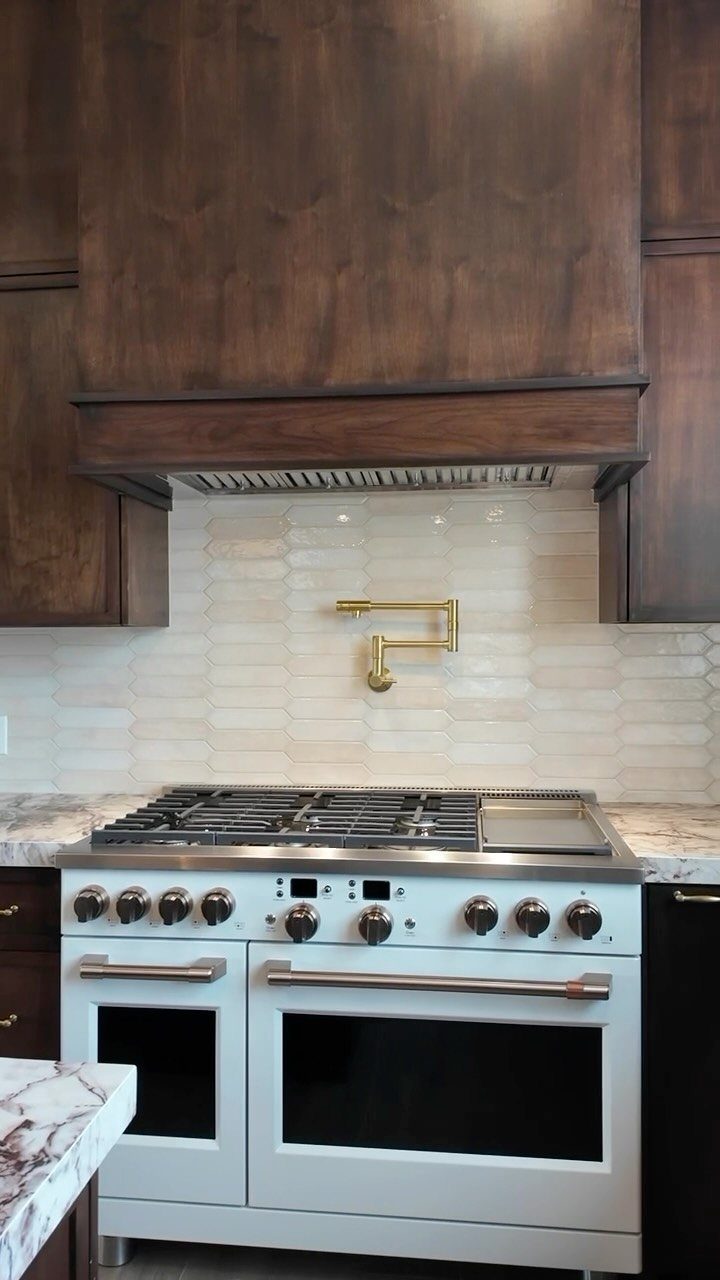
A wood hood in a species like white oak or walnut can set the tone for the whole room, so the cabinets around it can stay plain.
Against a plain white tiled wall, a dark wood hood becomes the one thing you look at, so the rest of the room can stay quiet.
A 48-inch professional range, as its maker described theirs, calls for a hood sized to match, which is a real expense. For a smaller budget, I’d wrap a standard hood insert in wood instead of buying a full custom piece.
4. Appliance Garages
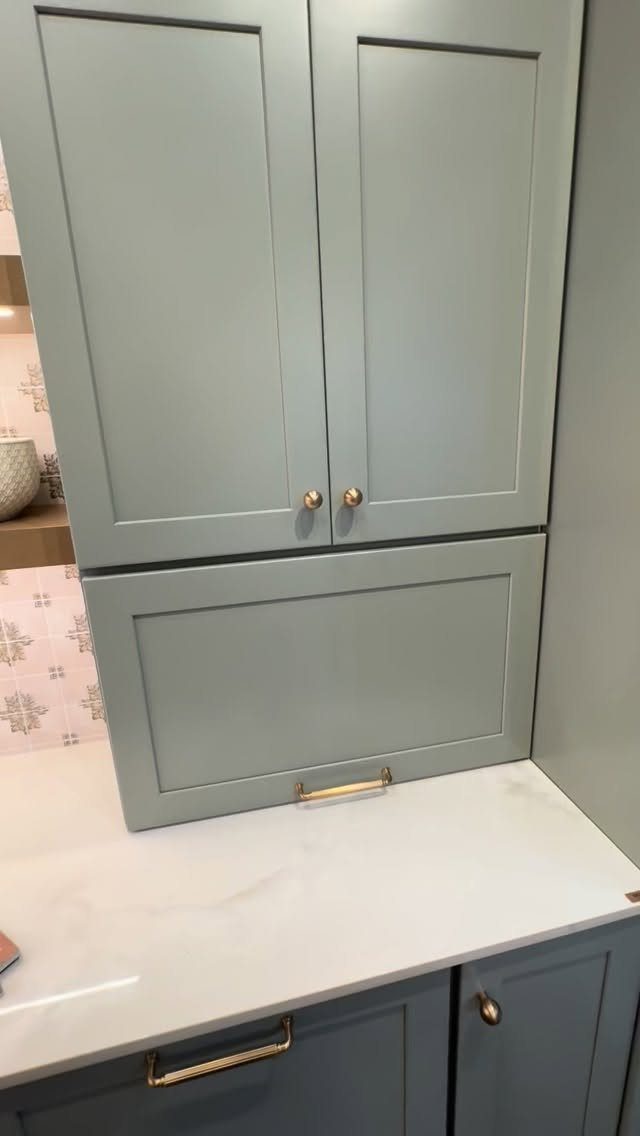
An appliance garage is a lift-up or roll-up door that hides the toaster and mixer on the counter. It sits between the countertop and the upper cabinet, so the counter stays clear.
Place it near an outlet, and give it a door that matches your cabinet color so it disappears. I’d pick a lift-up style if you use the appliance daily; the door tucks out of the way.
5. Deep Blue Cabinets
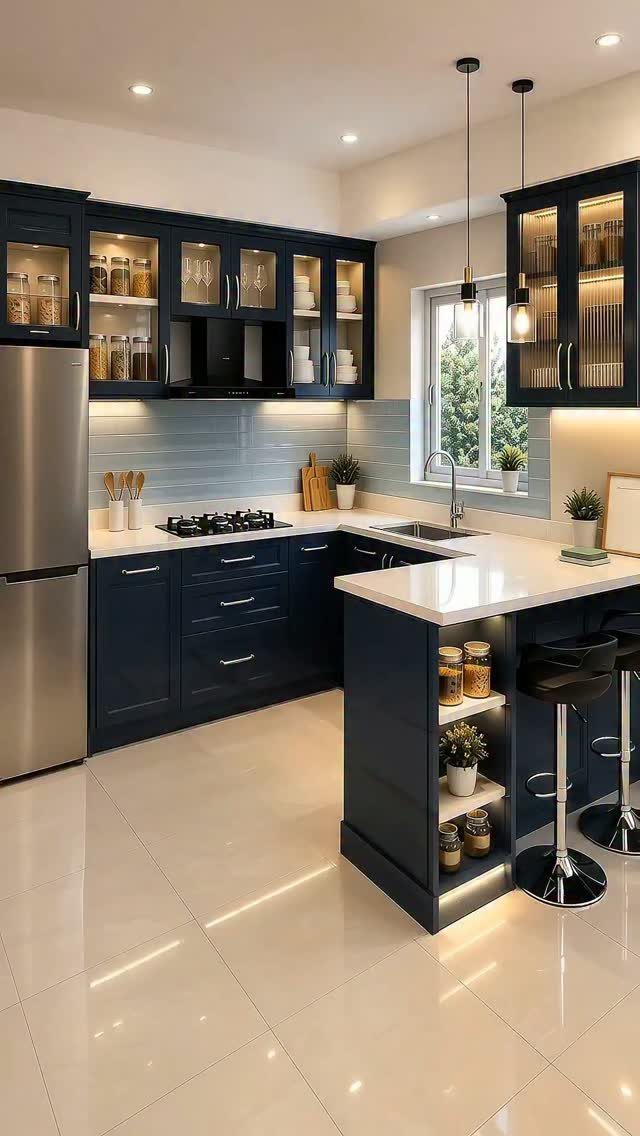
Deep blue is a bolder choice than gray, yet it behaves like a neutral against white countertops and stainless steel. I’d paint the base cabinets in it and leave the walls light.
Warm lighting built into the cabinets keeps a dark color from feeling flat at night. Add it, and the blue looks rich instead of heavy.
6. Traditional Kitchen Cabinets
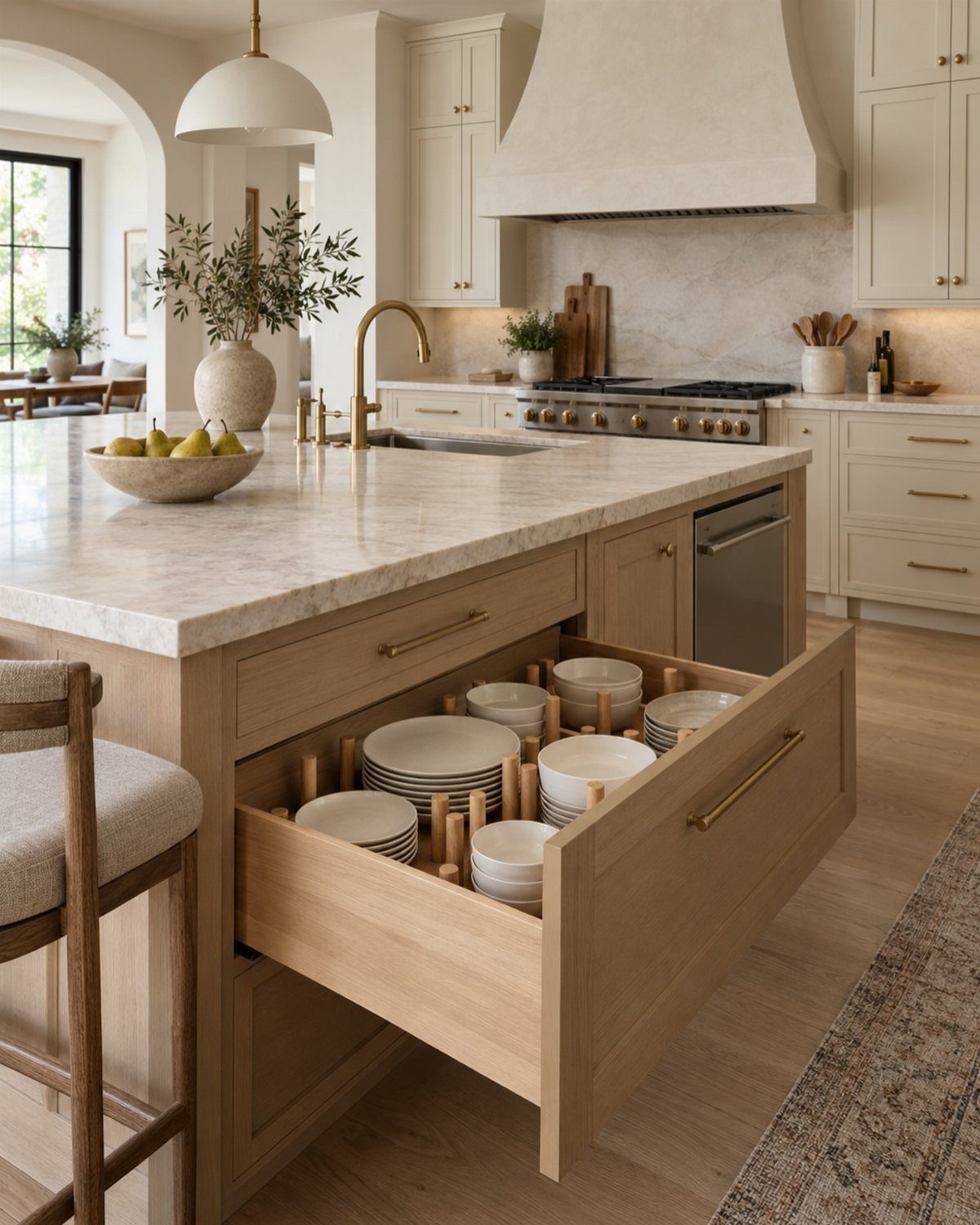
Cream cabinets with light wood read as classic without looking dated. Pairing them with marble and a large hood gives the kitchen a settled, timeless feel.
Inside matters as much as the doors.
The stark white cabinet trend has definitely had a strong hold on kitchens all across America in recent years. White may always be a timeless choice for kitchen cabinets, but lately, North Virginia designer Alicia Thomasson has noticed a slight shift away from it.
— AOL
7. Double Kitchen Islands
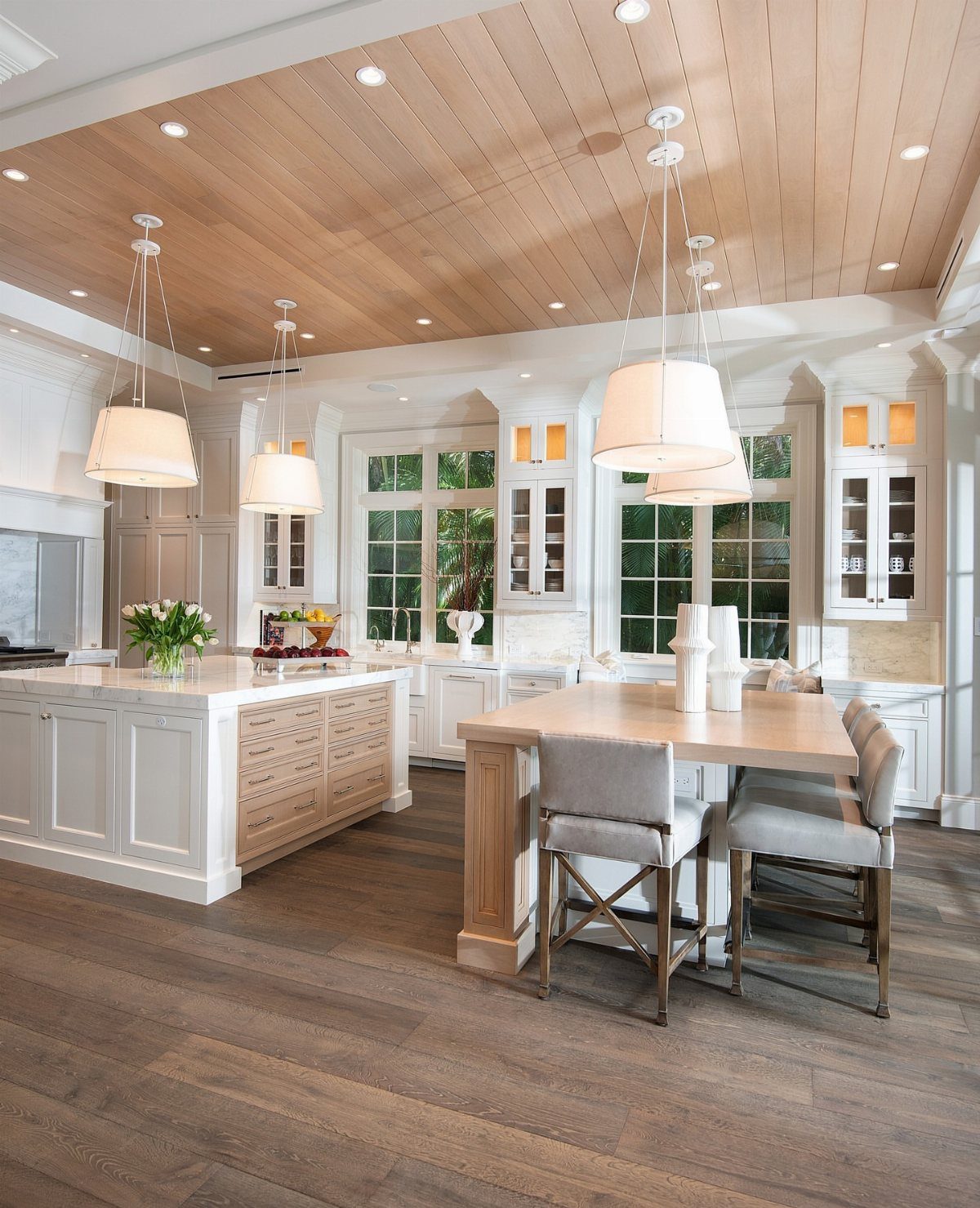
2 islands only make sense when the floor can take them. Leave enough room to walk, open the dishwasher and pass someone at the stove without turning sideways.
Splitting the jobs keeps them from competing: a white-base island for prep and a wood-base one with stools for sitting. I’d make the seating island the wood one, since people touch and lean on it most.
In a smaller kitchen, one island is the better choice.
8. Two-Tone Cabinetry
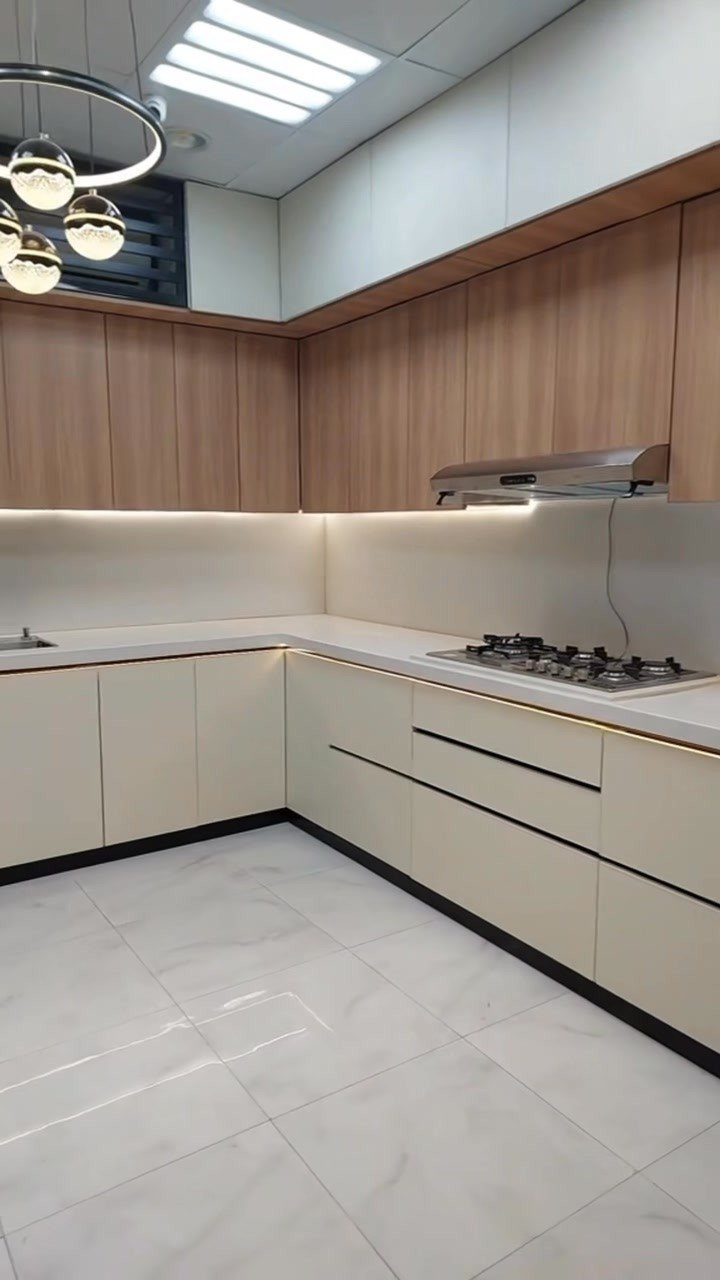
Light wood uppers over cream lowers put the visual weight in the right place: the wood lifts the eye, and the cream keeps the base calm and easy to live with. A white countertop between them bridges the 2 tones.
If you’re repainting rather than replacing, painting only the lowers is the cheaper route.
Choose one tone that is warm and one that is quiet, and stop at two. A third color starts to look like a mistake.
9. Full-Overlay Cabinetry
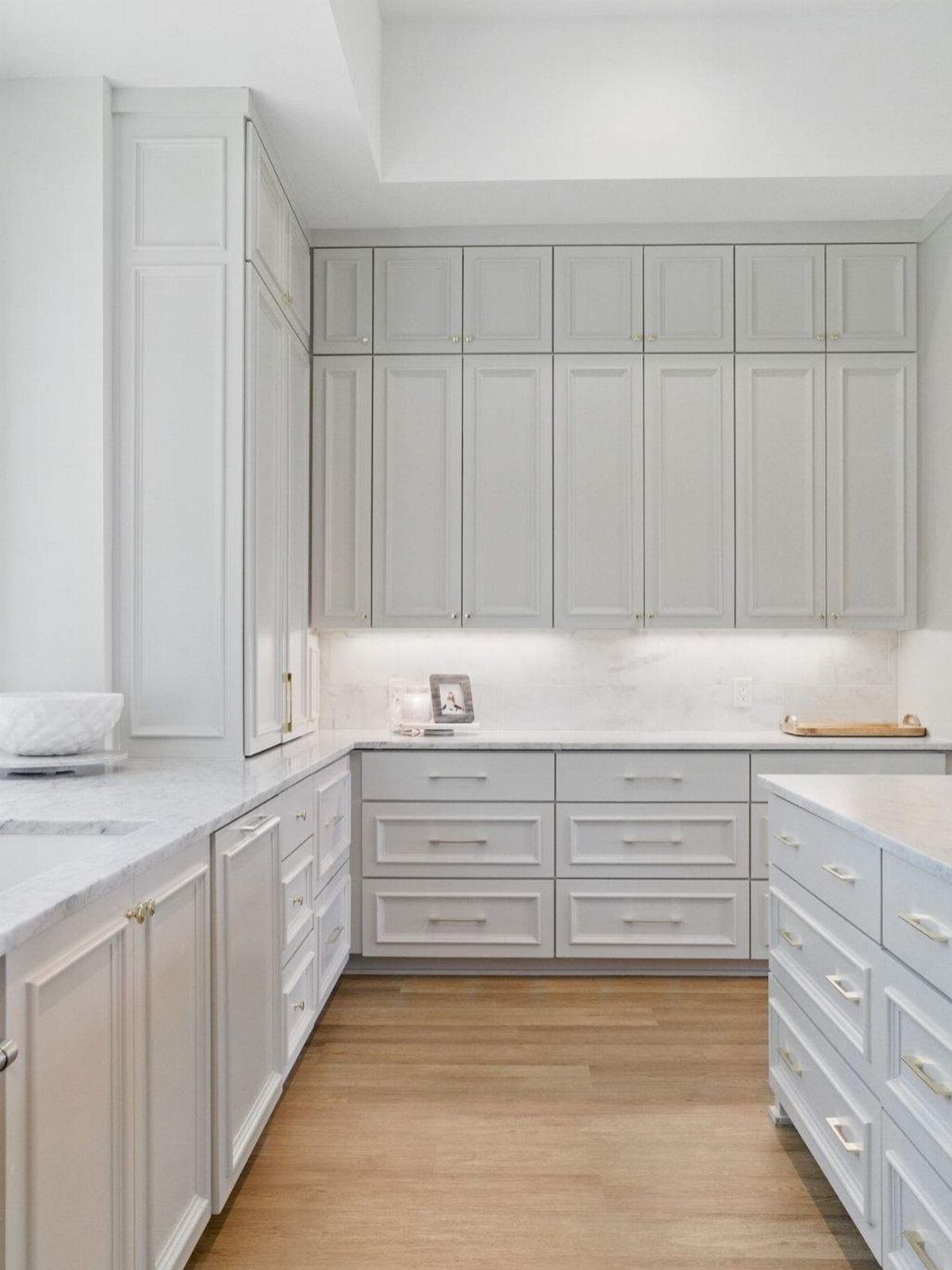
Full overlay means the doors cover the whole cabinet frame, leaving only thin gaps between them.
I like it for its tidy lines, but it asks for precise installation, because small gaps show every misalignment. Check hinge adjustment before you call the job done.
10. Burgundy or Magenta Cabinets
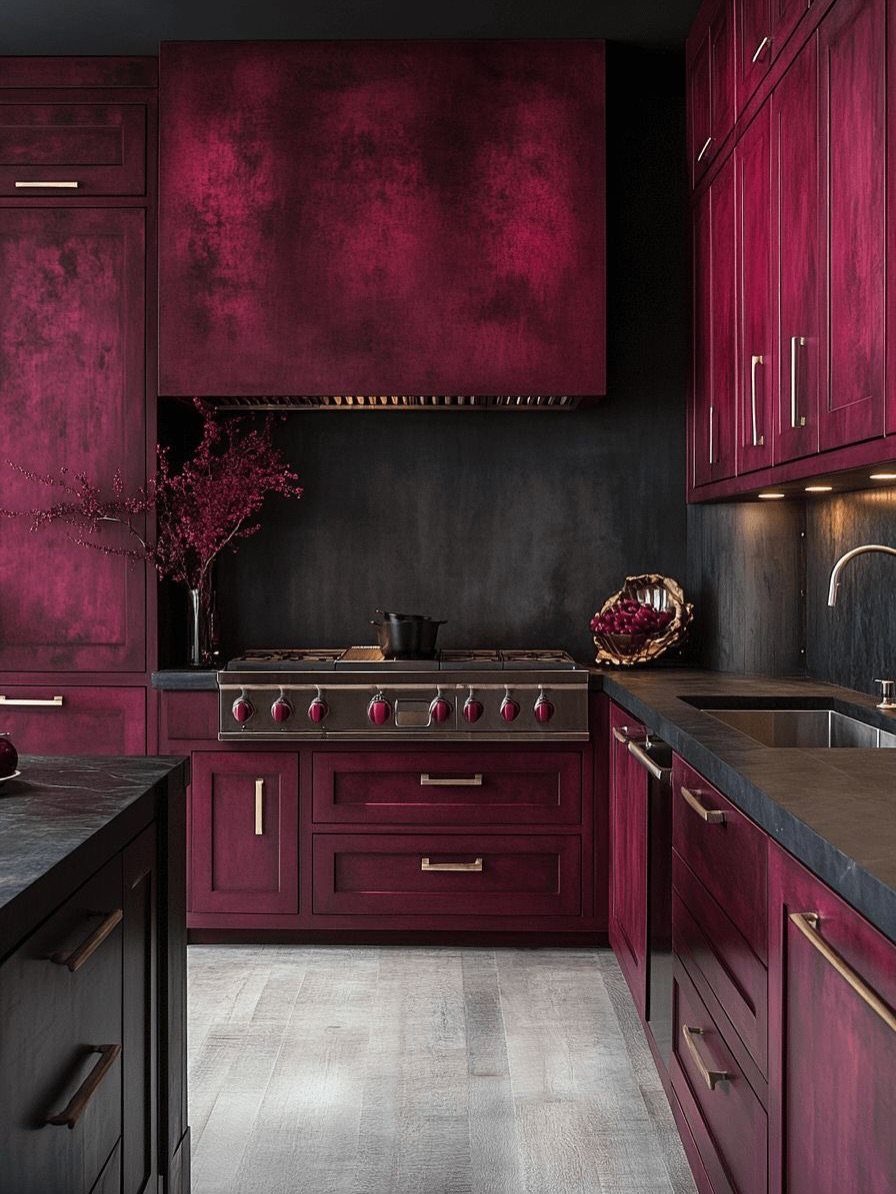
Deep magenta is a brave choice, and it works best when everything around it is dark and plain. Grey walls and dark countertops let the color carry the room without competing.
Painting the range hood to match the cabinets is the move I’d copy.
For a budget version, paint only the lower cabinets and keep the hardware simple. Burgundy is the safer pick if magenta feels like too much to live with.
11. Integrated Coffee Station Cabinets
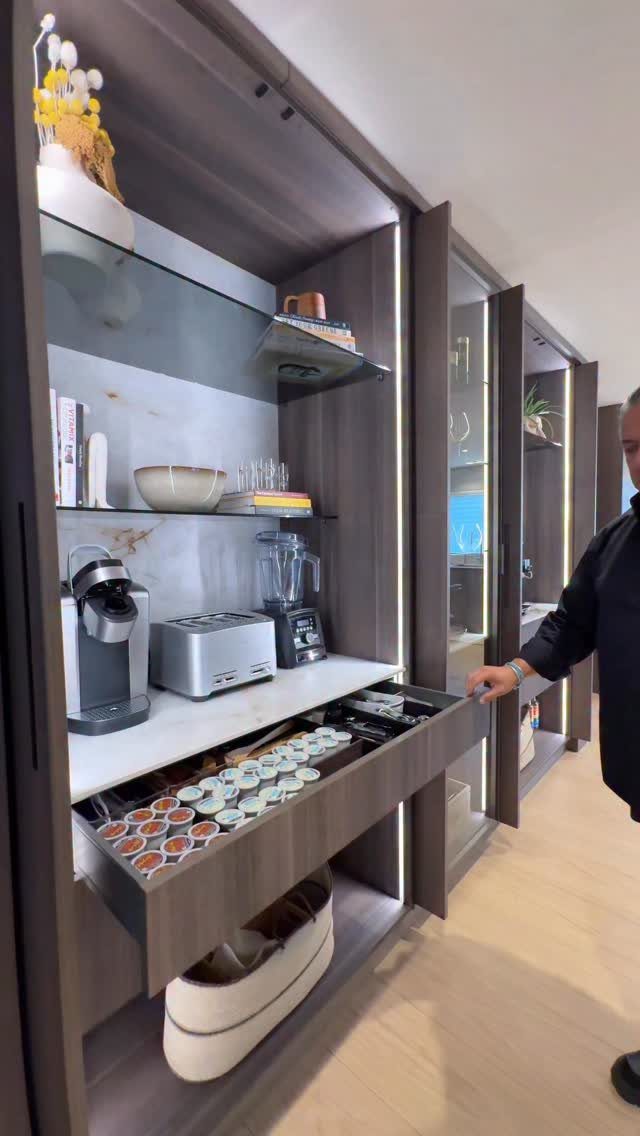
A coffee station works as its own cabinet zone: a coffee maker at counter height, LED lighting overhead, and a drawer for pods below. Everything for the morning cup stays in one spot.
A shallow drawer that holds pods flat is worth planning for, since loose pods pile up fast.
I’d add the lighting last, because it shows off dark wood so well. Put it near an outlet before you build anything.
12. Pull-Out Cabinet Drawers
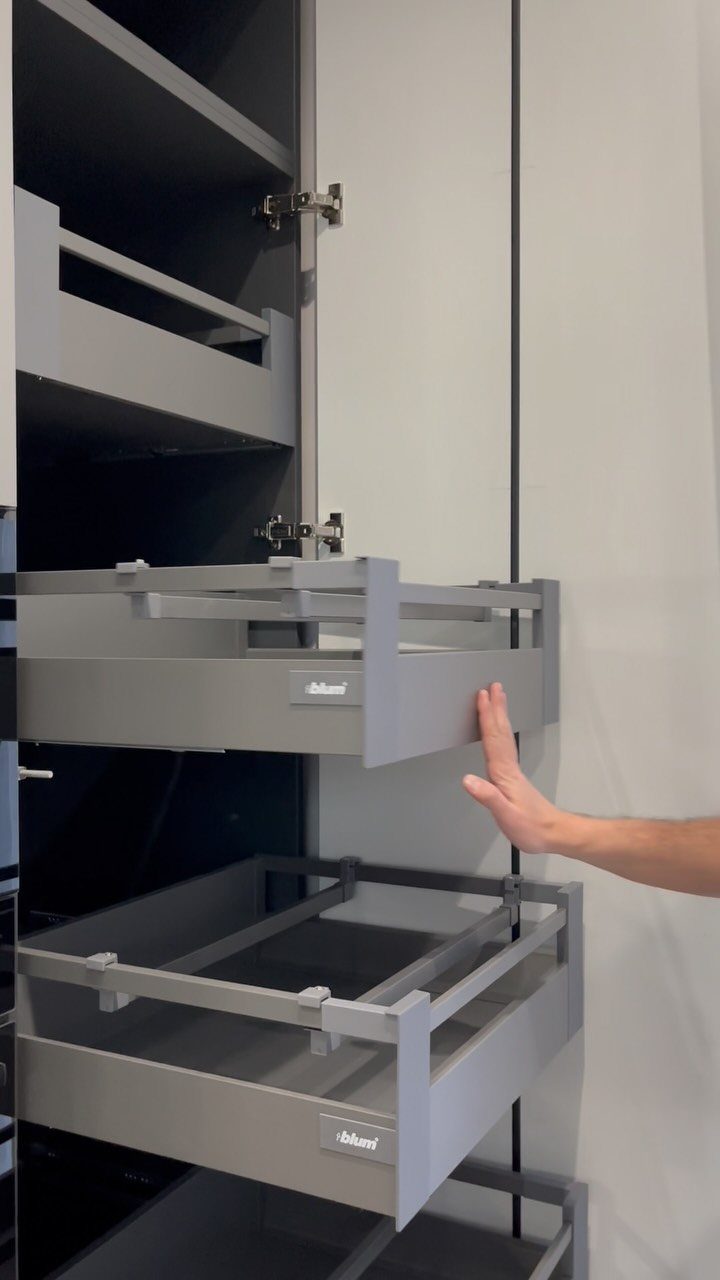
Drawers beat doors in base cabinets because you see everything at once and never reach into the back. Full-extension slides bring the whole contents out to you.
Soft-close hardware from a known maker, such as Blum, is worth the extra money, since drawers get opened dozens of times a day.
In dark grey cabinetry the clean fronts also hide the hardware inside. I’d convert the pots-and-pans cabinet first.
Focus on Quality Craftsmanship
Solid wood is the construction detail buyers are asking about most, and it pays to know what you’re looking at before you spend.
Check the box itself, not just the door: solid wood or plywood sides, dovetailed drawer boxes, and doors that sit square.
Most of us can’t afford a full solid wood kitchen, so spend where hands land. Wood on one run of tall cabinets, or a single stained island against painted perimeter cabinets, shows off the grain and keeps the cost down.
For solid craftsmanship, I look at white oak, walnut, and rift-cut grain first, ideally in a matte or satin finish that lets the wood show. Skip the gloss, and let the grain do the decorating.
Layered Lighting
One bright ceiling fixture flattens a kitchen and throws shadows on the counter right where you chop. 3 layers fix that: general light overhead, task light under the cabinets, and accent light for the pieces you want noticed.
Under-cabinet LEDs are the cheapest layer and the one that changes daily use most. Plug-in or stick-on strips fit a weekend job and a small budget, and renters can take them along.
For pendants, check the size, the hanging height, the brightness and whether your wiring can handle them. Treat a pendant as decoration on top of practical light, never as a replacement for it.
Put each layer on its own switch or dimmer, so cooking, dinner and a late glass of water each get the right light.
Timeless Design
A kitchen that lasts is built around how you actually use it. Cooking is only one job now; people also work, eat, gather and linger there.
Before you pick a color, ask what happens in the room on a normal day. Then spend on the pieces that serve it: clean lines, durable materials, storage that fits what you own, and good light.
Finishes are the easy part to change later, so keep the big, expensive elements calm and let color live in paint, hardware and accessories. A trend you can repaint in a weekend is a safe one to try.
I’d rather see a plain kitchen that works hard than a striking one that fights its owner every morning.
Frequently Asked Questions
What kitchen cabinet colors are trending for 2027?
Muted, grounded tones lead: deep greens, navies, warm greys and soft clay shades, often on an island against a lighter perimeter. Natural wood tones are returning as well, mostly stained white oak and walnut.
Are stained wood cabinets coming back?
Yes, but the look has lightened up from the dark, orange-toned stains of the 1990s.
It’s usually mixed with painted cabinets, so one stained island or a single run of tall cabinets against painted perimeter cabinets is a good way in.
Is the all-white kitchen going out of style?
Not really; white still sells, it just has to compete with other colors now. It stays bright, classic and resale-friendly, while color and wood tones are showing up as considered choices, most often on the island.
Painted white base cabinets paired with a thick wood countertop is one way to keep white and add warmth.
What color kitchen cabinets are out of style?
Stark, bright white is the one losing ground, as designers move toward cozy warm neutrals like beige and taupe.
White isn’t dead, though; it just isn’t the only safe answer anymore. Cream paired with light wood looks timeless, and I don’t see it dating the way stark builder white has.
What will all new kitchens look like in 2027?
Expect warmer, more personal rooms built for gathering, with natural materials like wood and stone, plus a few standout details rather than every trend at once.
Wood range hoods, two-tone cabinets, deep colors on the island and layered lighting all fit that direction. Keeping the big, costly pieces calm and putting color in paint and hardware makes the look easy to change later.





