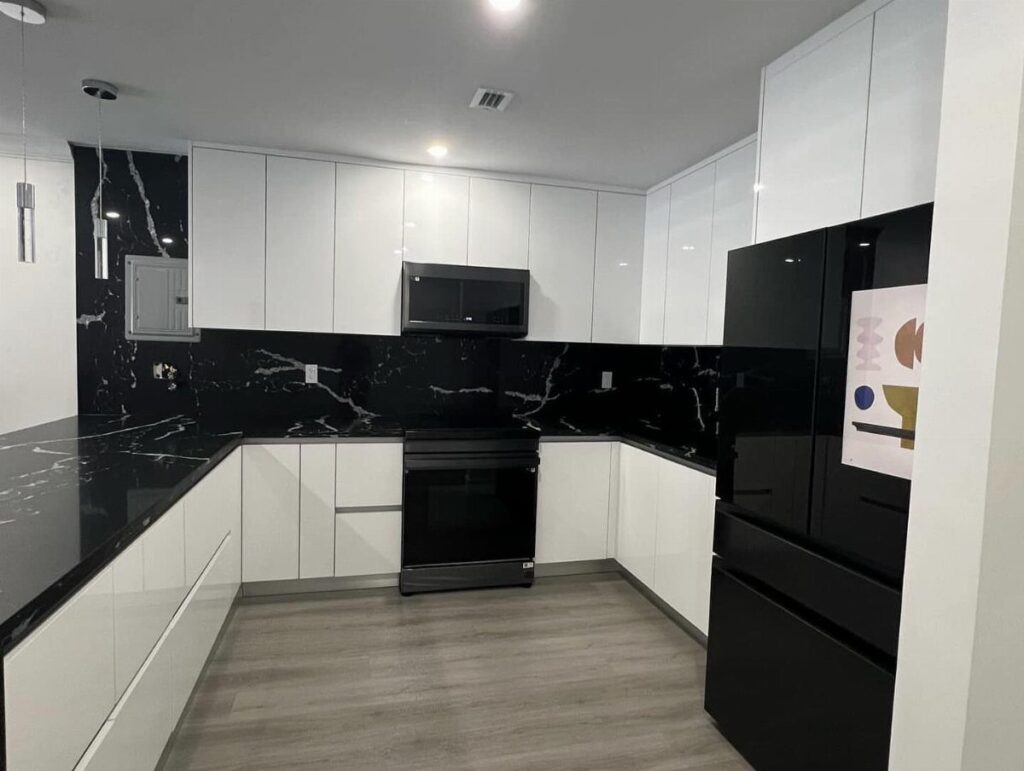
Which idea fits comes down to how much of the kitchen you can change: a renter or anyone on a tight budget can swap the hardware or fixtures in an afternoon, or hang pendant lights over a weekend, while owners with more room to spend can repaint the island, retile the backsplash, or commit to black countertops and a black marble backsplash.
The ideas run from a simple handle swap to full cabinet color splits, such as black uppers over white lowers, and light decides how much black a room can carry.
If the kitchen gets little daylight, favor white upper cabinets with black lower cabinets over the reverse.
1. Black and White Floor
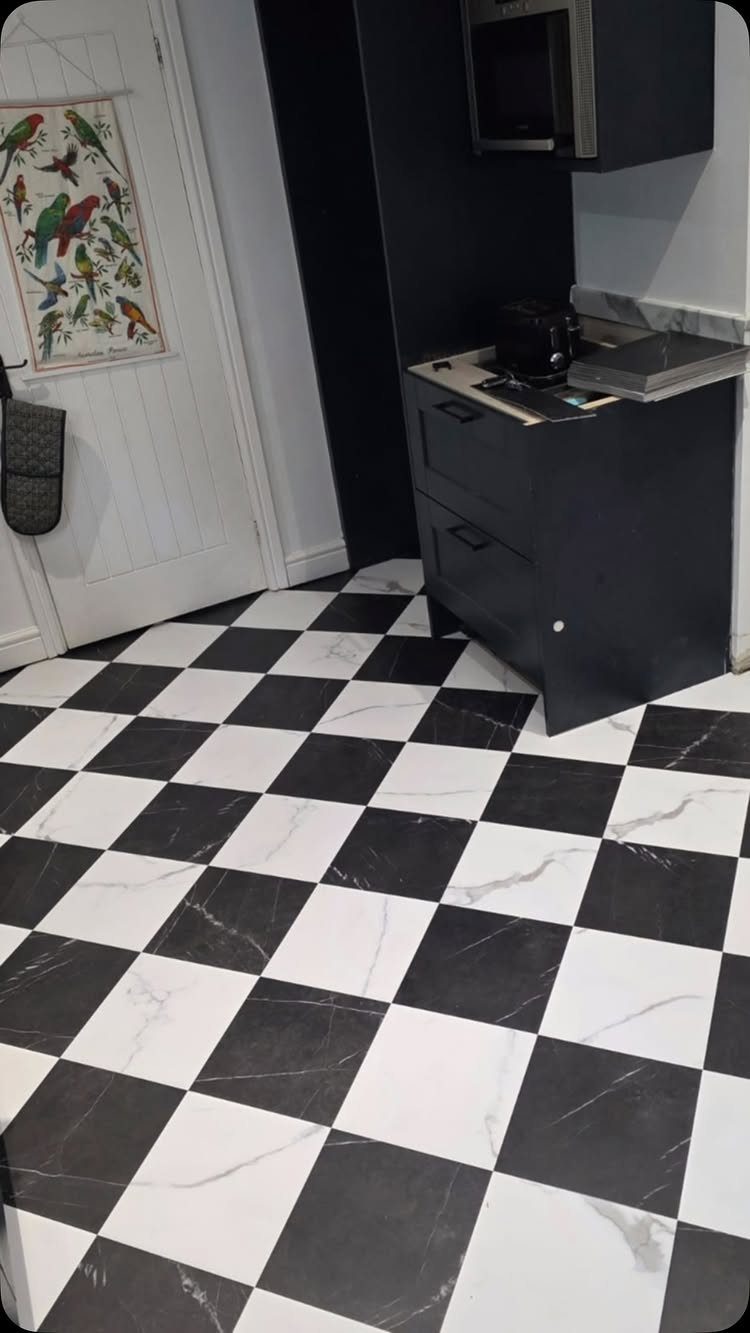
Checkered marble underfoot does the heavy lifting in a kitchen like this, so the cabinets can stay quiet. Dark grey cabinetry is a smart partner because it calms the pattern instead of competing with it.
Plain walls keep the room calm, so the floor is the only busy surface in the room. A bold pattern also forgives a lot of clutter above it, which suits a working kitchen.
Check the tile size before you buy. Larger squares read calmer, while small ones get loud fast in a small room.
2. Black and White Patterned Backsplash
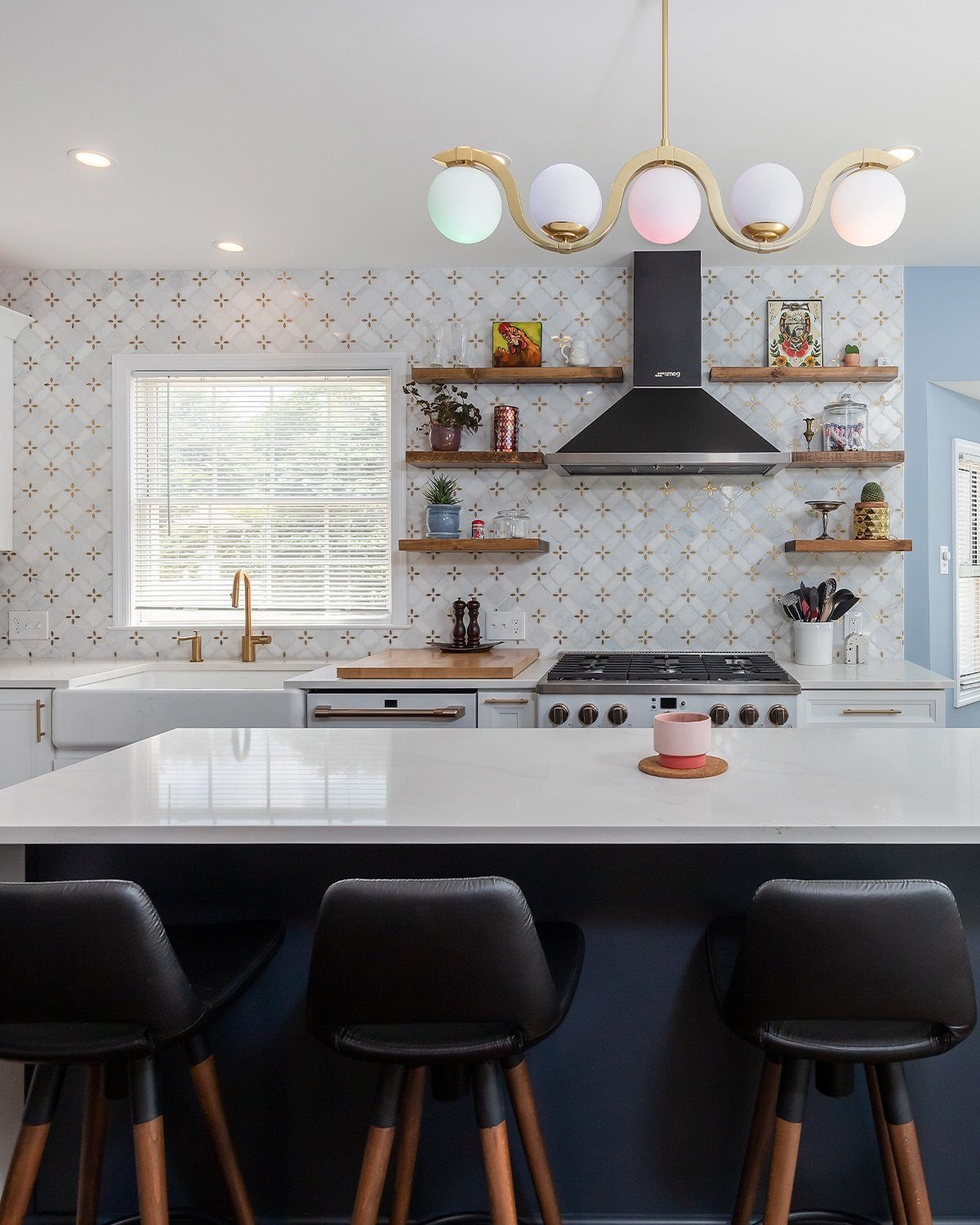
A patterned tile backsplash gives a kitchen one focal point without touching the cabinets, which makes it a budget-friendly place to take a risk.
The backsplash is a small stretch of wall, so you only need a modest amount of tile.
Keep everything around it simple. White counters, black stools and wood shelves let the pattern lead, and a gold light adds warmth without more print.
My advice: pick one patterned surface per kitchen. Two will fight each other.
3. Wood Accents in Black and White Kitchens
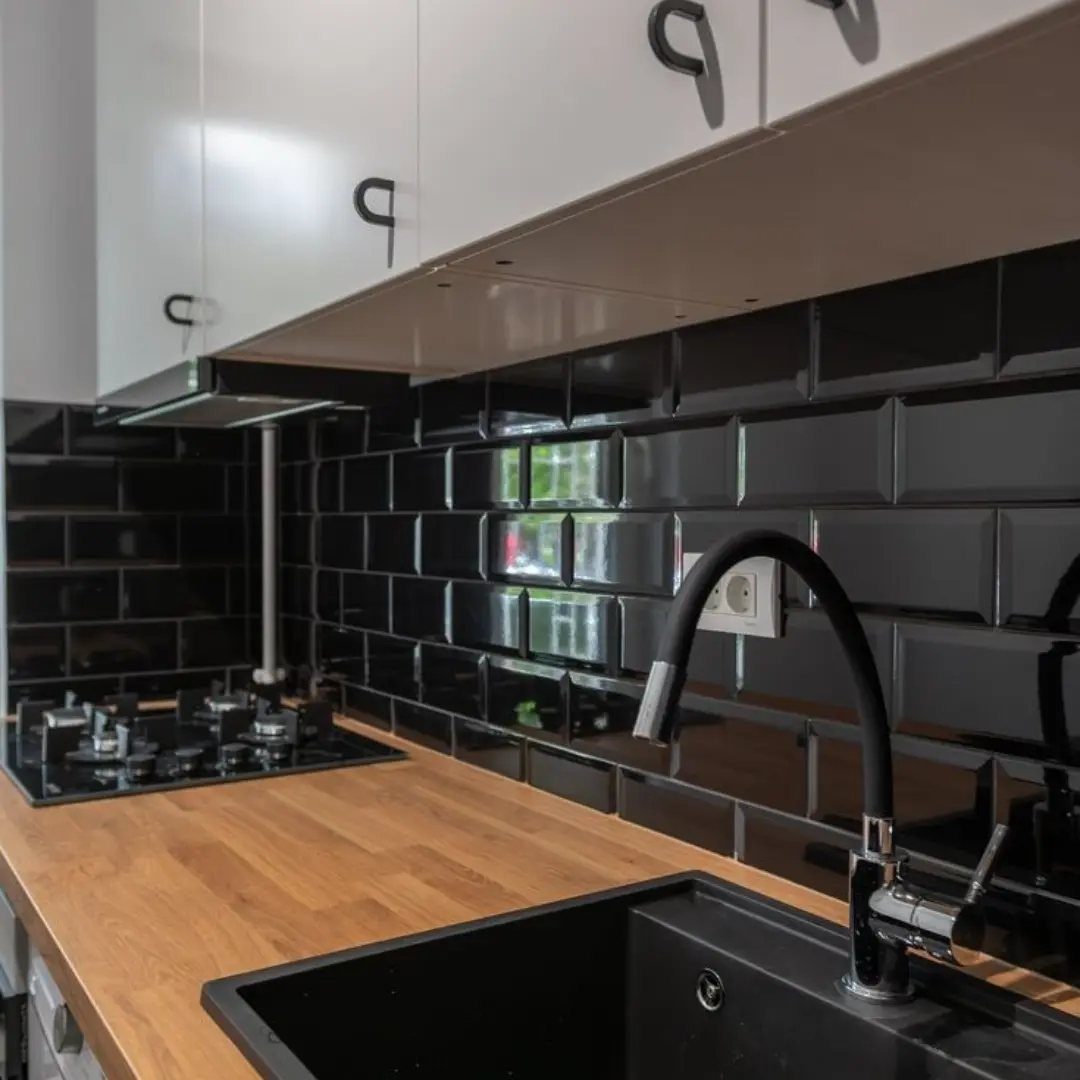
Black subway tile against white upper cabinets is stark on its own, and a light wood countertop is what softens it. Wood brings in warmth that neither black nor white can supply.
I like this when the tile is the darkest thing in the room, since the wood then reads as a deliberate third color instead of an afterthought. A black sink and faucet keep the palette tight.
If the room feels cold, add wood before adding anything else. A cutting board or open shelf gives a similar effect for far less money.
4. Black Cabinets with White Countertops
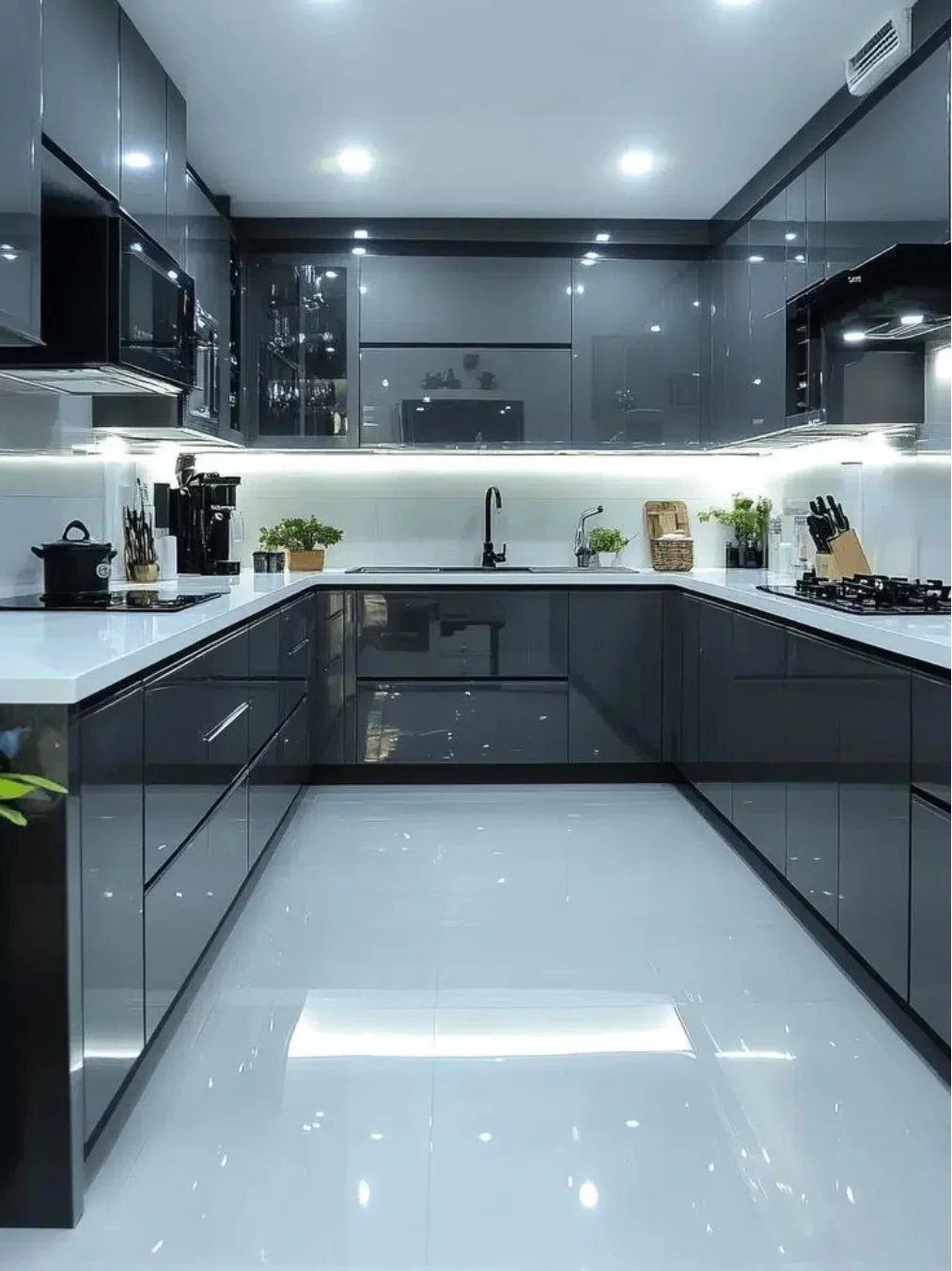
Glossy black cabinets with white countertops are about as high-contrast as a kitchen gets, and the shine bounces light around a U-shaped layout that might otherwise feel closed in.
White tile on the walls keeps the room from turning heavy. I would repeat white on every surface that isn’t a cabinet, so the black stays the single statement.
Gloss shows fingerprints, so expect to wipe the doors more often than you would matte ones. A satin sheen is the easier choice if fingerprints and smudges on a flat black door would drive you crazy.
5. Black Island in a White Kitchen
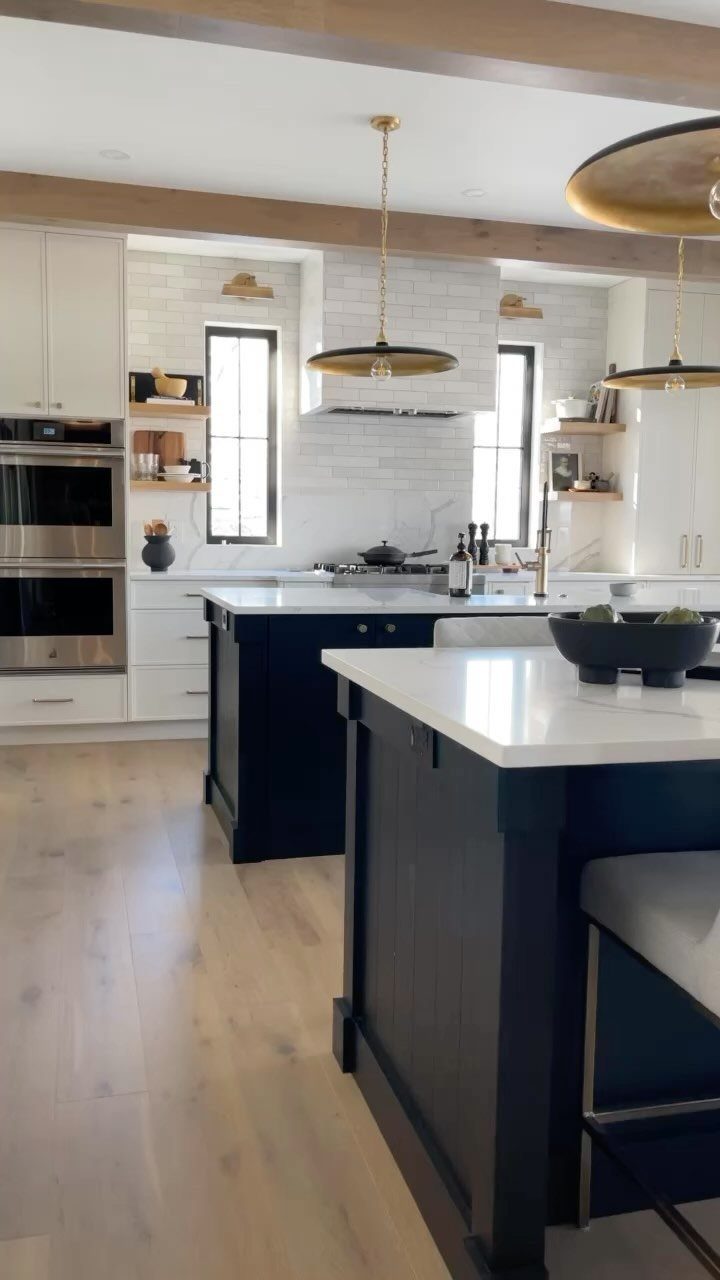
Painting only the island dark is the lowest-risk way to bring black into a white kitchen. The perimeter stays bright, and the island becomes the anchor of the room.
White countertops on top keep the island from looking like a heavy block. To warm up a black island, I like pairing it with light wood flooring and brass or gold pendants overhead.
If you rent or want to test the look, a single island is also far less to repaint than a full set of cabinets. Start there.
6. Matte Black Fixtures Against White Walls
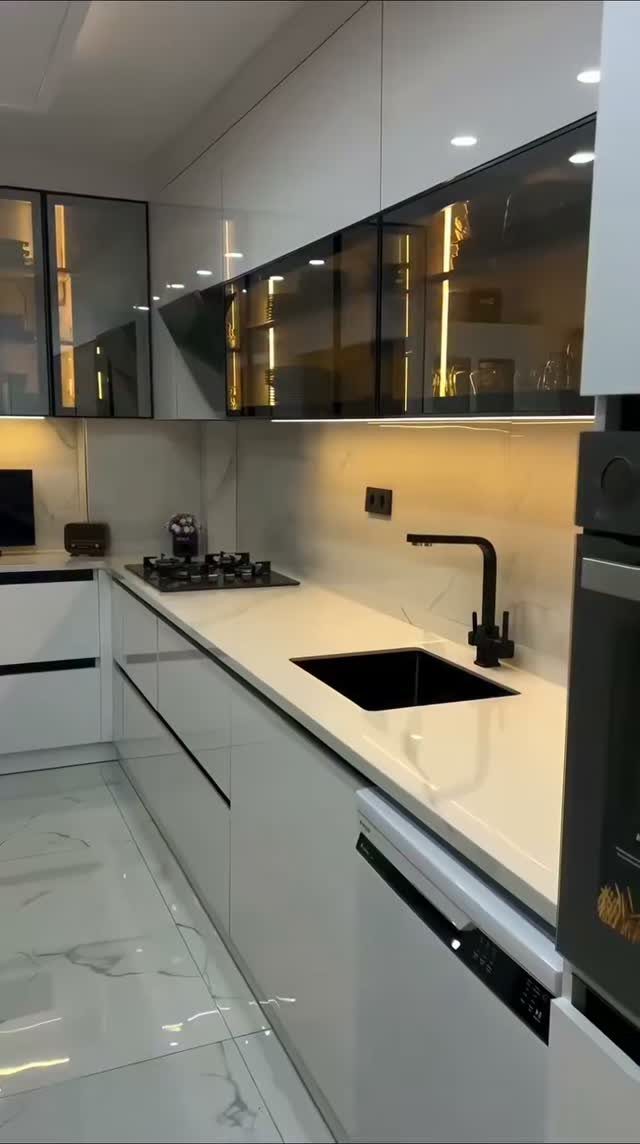
Matte black hardware earns its place by finishing a white kitchen: faucet, sink and stovetop read as crisp outlines against white countertops and walls.
I would choose matte over glossy for the faucet, since it looks softer and less like chrome gone dark. Repeat black in two or three places, no more, so it feels planned.
A faucet swap is the easiest weekend version of this idea. The sink and stovetop cost more, so treat them as a later upgrade.
7. Bold Black and White Kitchen
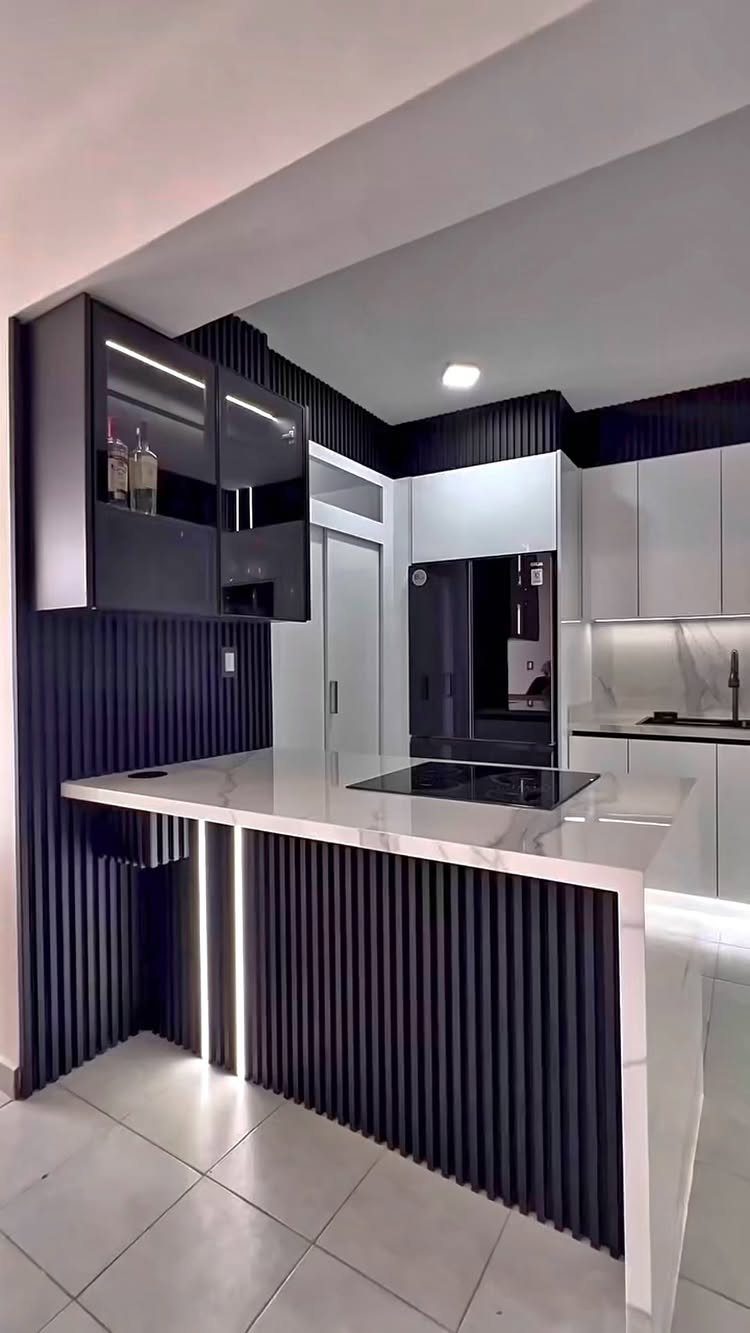
Black upper cabinets over white lowers make the room top-heavy in the best way, and a fluted black island with a white marble top ties the 2 halves together. The island repeats both colors, so the split feels planned.
I would keep the walls white and put the black fridge in the dark run, where it disappears. A bold kitchen like this needs one clear rule: black on the cabinets, white on everything else.
Dark uppers do close a room in, so this suits a kitchen with good light.
Let’s face it, black and white kitchen ideas are never going out of style.
8. White Kitchen with Black Pendant Lights
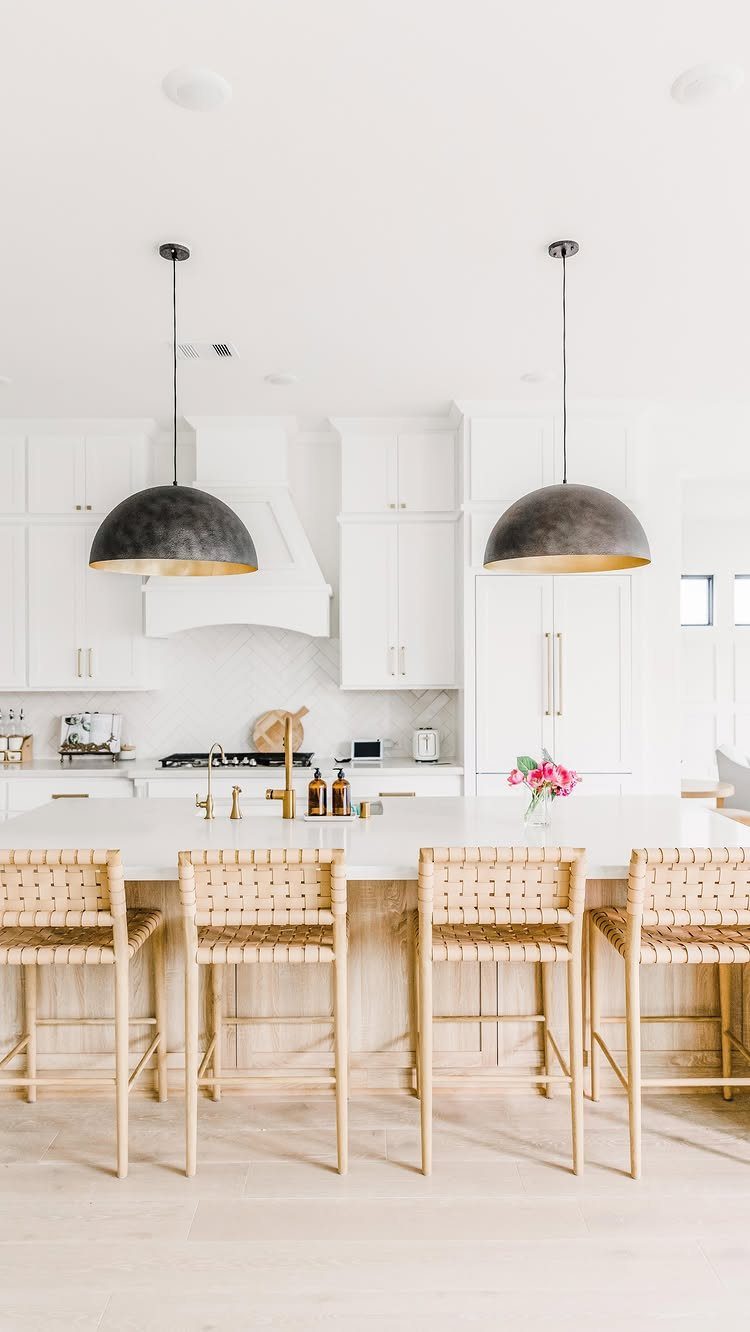
Two large black dome pendants over an island bring dark into a white kitchen, and they hang at a height that keeps sight lines open across the room.
Hanging them over the seating also marks the island as the place to gather.
Woven barstools add texture that keeps all that white from feeling flat. I would pick a wide dome over a thin fixture, since the size is what reads from across the room.
Swapping a pendant is a far easier weekend job than repainting anything, and it costs less too.
9. White Shaker Cabinets with Black Hardware
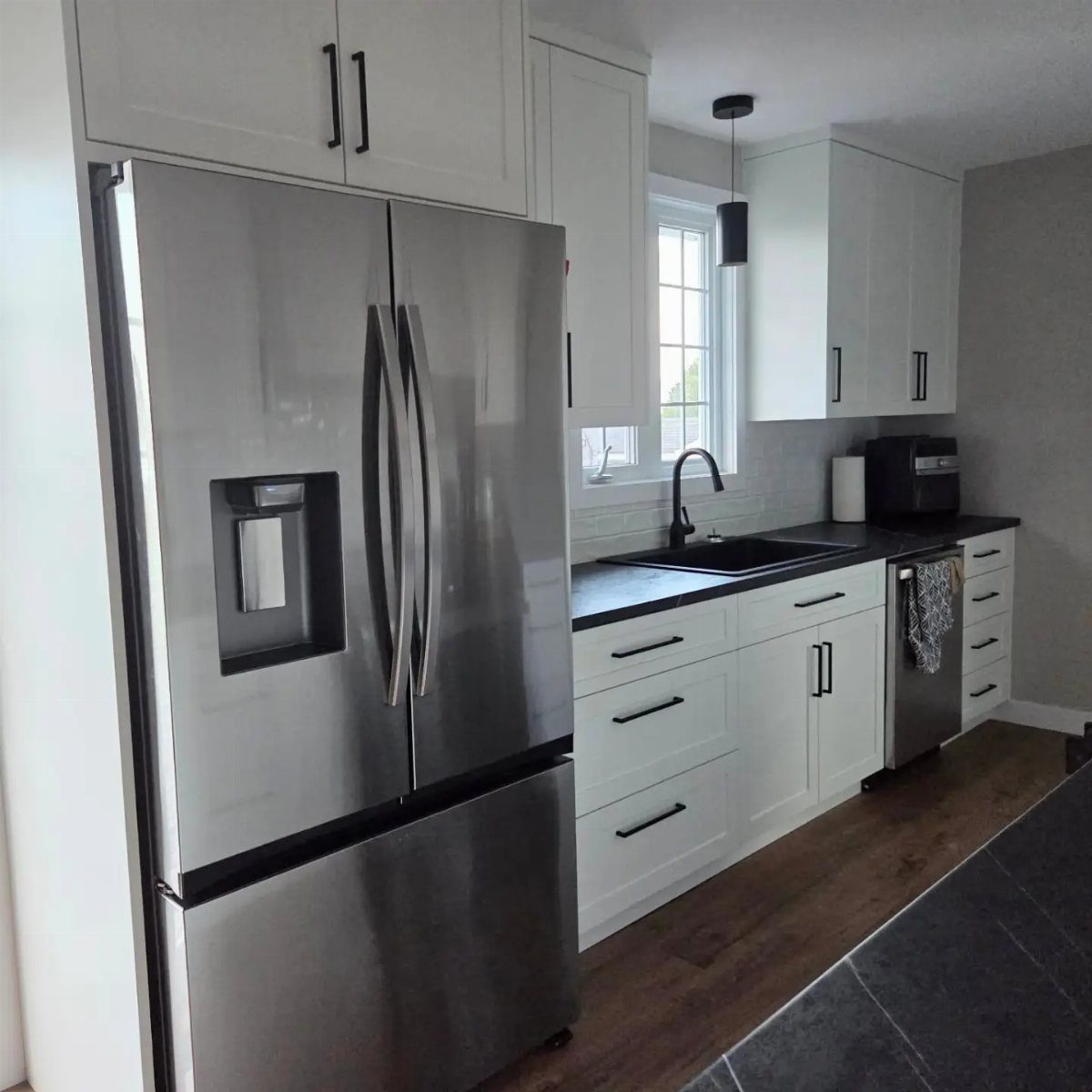
White shaker cabinets with black handles are the simplest way to keep a black and white kitchen from going bland. The recessed center panel keeps the door simple, so the hardware does the drawing.
Here the black countertops and black faucet repeat the handles, which makes the color feel deliberate.
Hardware is the cheap part: swapping handles costs little and takes an afternoon with a screwdriver. Measure the hole spacing on your current pulls first, so the new ones line up without drilling.
10. White Upper Cabinets, Black Lower Cabinets
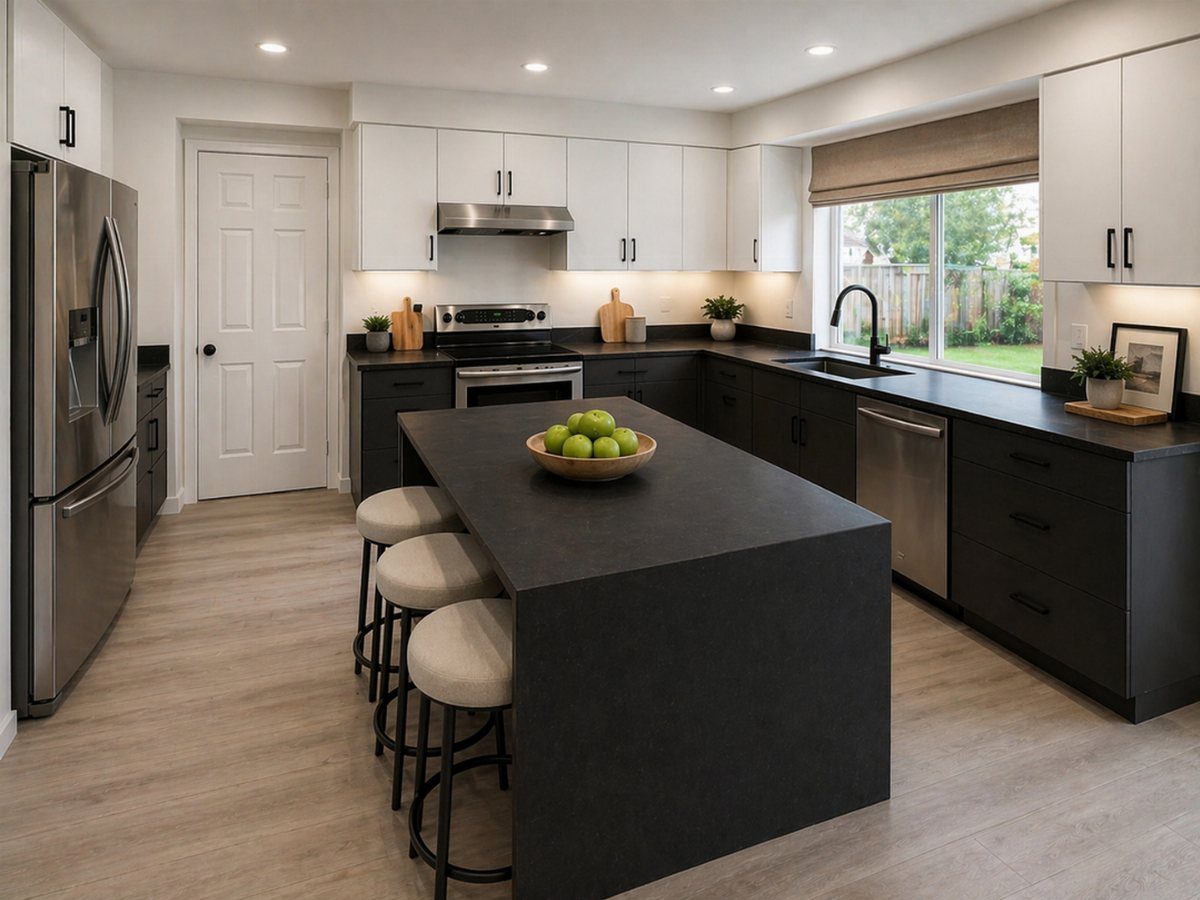
White uppers with black lowers keep the walls open while the dark base gives the room weight, so it feels grounded instead of heavy. A black island with 3 stools carries the lower color into the middle of the floor.
Light wood flooring is a smart partner, since it stops the black from pooling at your feet. Stainless appliances sit comfortably between the 2 colors.
I would choose this over the reverse if your kitchen is small, because the bright uppers keep the ceiling feeling high.
11. Gold Hardware in Black and White Kitchens
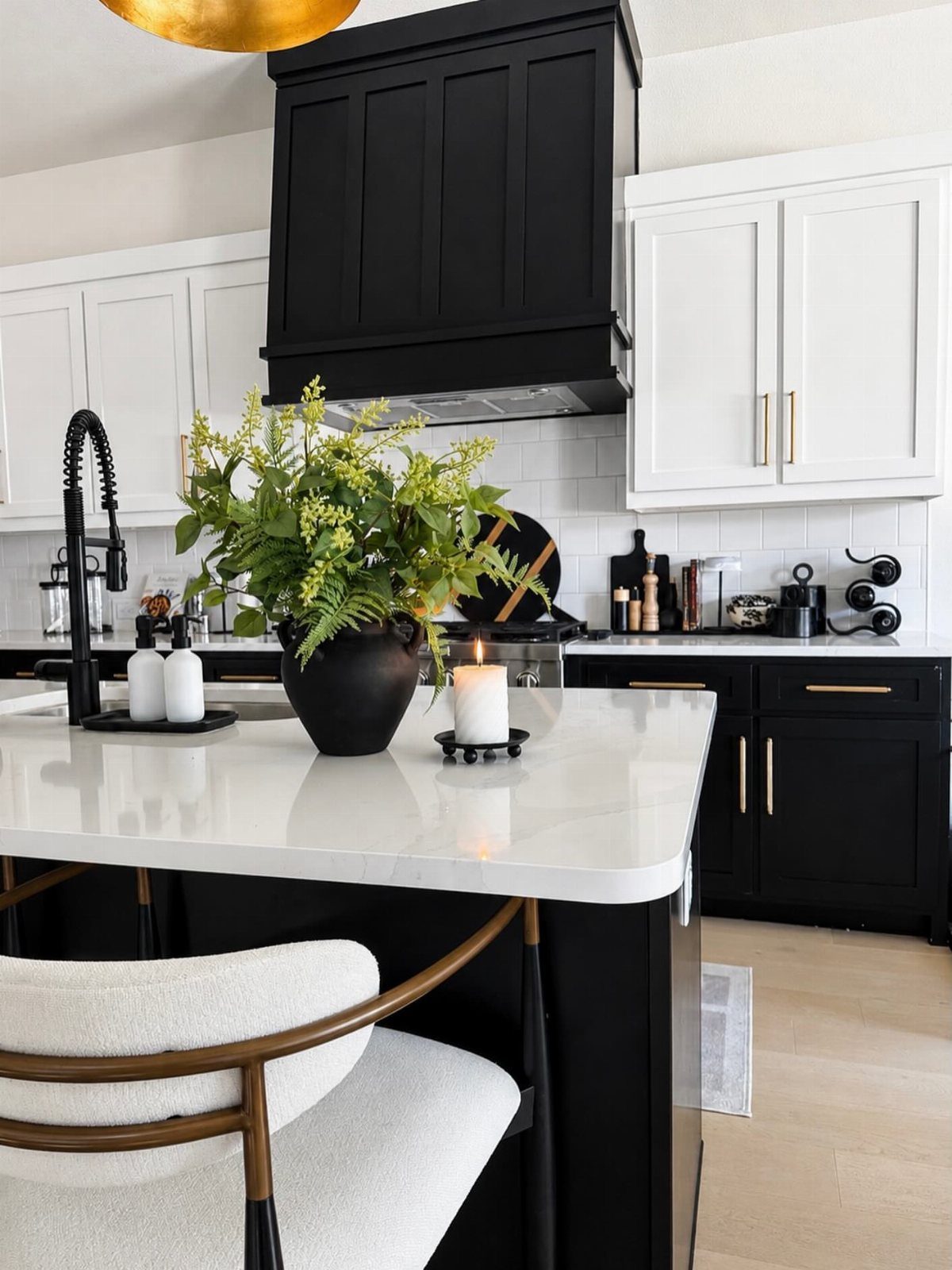
Gold handles on black and white cabinets add warmth that neither color can give, and they look like jewelry against the dark doors. A white marble island keeps the whole room bright around them.
I would pick a soft, brushed gold over a mirror shine, since it looks richer next to a matte black range hood. Keep gold to hardware and maybe one more spot, so it reads as an accent.
A plant adds green without competing. New pulls are an inexpensive upgrade to test the look.
12. White Cabinets with Black Countertops
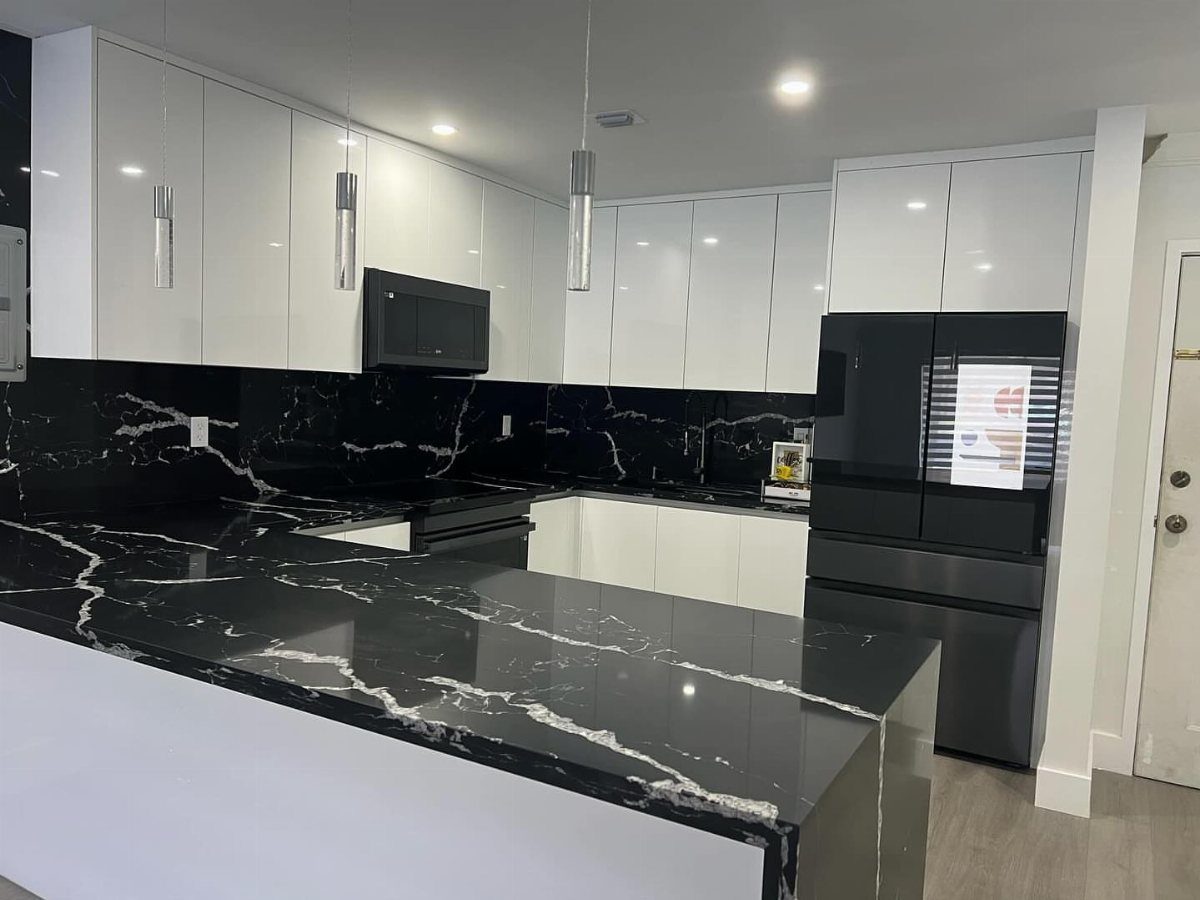
Glossy white cabinets over black marble countertops produce the sharpest contrast you can get, and the white veining in the stone stops the black from looking like a flat slab.
Carrying the marble up the wall as a backsplash makes it one continuous surface.
Gloss bounces light, which helps a dark counter feel less heavy. A black refrigerator and silver pendants keep the accents in the same cool family.
Black counters show dust and water spots, so plan on wiping them down daily. Matte white cabinets are the quieter choice if you dislike fingerprints.
13. Black Upper Cabinets with White Lowers
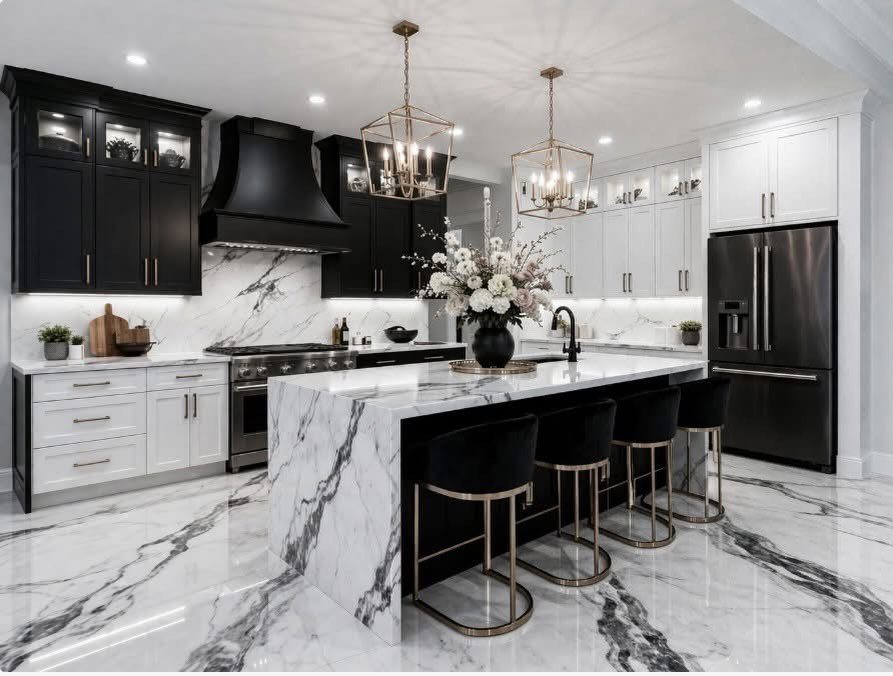
Dark uppers over white bases put the weight at eye level, and the white lowers keep the work surfaces bright where you actually chop and stir.
Here the marble island and floor carry white through the middle of the room, so the black reads as a deliberate band.
Black barstools repeat the color of the upper cabinets, which ties the island back to the walls and keeps a white base from floating on its own.
I would keep the floor light, since a dark floor under dark uppers leaves the room with no relief.
This layout asks for good light. Without it, the black uppers will close the room in.
14. Black Marble Backsplash
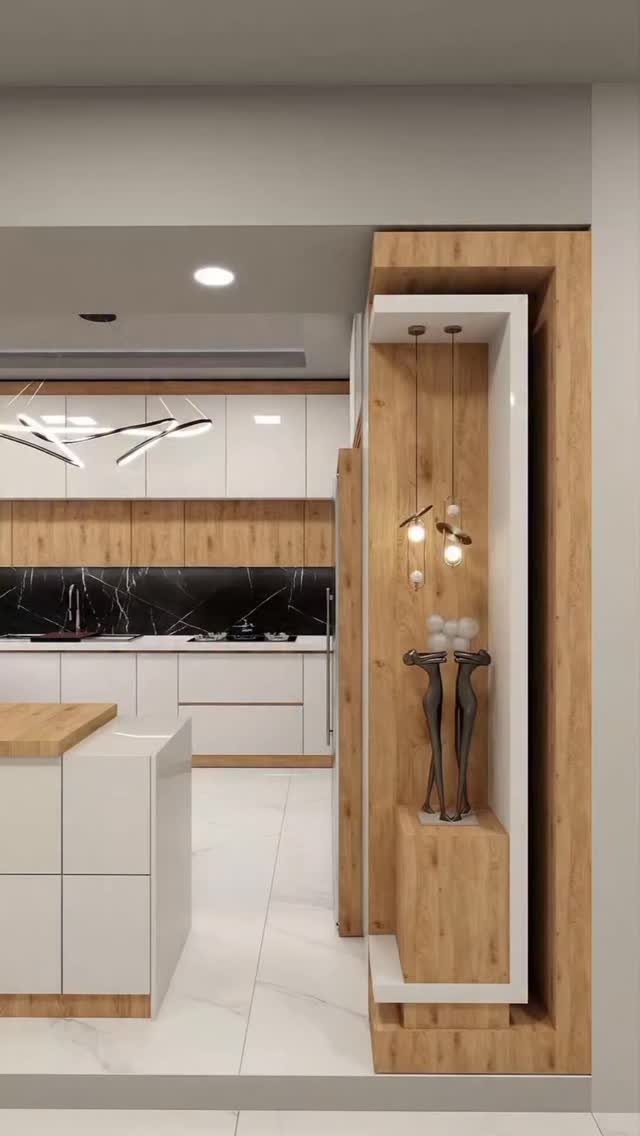
Veined black marble on the backsplash gives white cabinets a dramatic backdrop without a single dark cabinet door.
The stone is a narrow strip of wall, so the slab or tile you need is modest, and the pattern does all the talking.
Light wood and white around it keep the drama contained. I would leave the veining as the only pattern in the room, so nothing competes with it.
Check the veining in person before you buy, since every slab and tile of natural stone varies and a sample won’t show the full range. Marble tile costs less than a full slab if the budget is tight.
Balancing Black and White
A two-color room looks planned when each shade shows up in at least 2 spots, so a black faucet needs a black light fixture or stool across the room to answer it.
A single black element looks like a mistake, while two or three read as a plan.
Texture does the rest of the balancing. Without it, a black and white palette goes flat and feels more like a showroom than a home.
To soften all that contrast, bring in warm natural materials like oak floors, open shelves in a wood tone, marble-look counters in white, or a few woven baskets. Pick two of those and the room stops feeling like a drawing.
Keep the ratio in check as you go. If black covers most of the surfaces you can see from the doorway, lighten one of them before it overwhelms the space.
Lighting in Black and White Kitchens
Lighting decides whether black cabinetry feels rich or heavy, so plan it in layers instead of relying on one ceiling fixture.
A workable stack has 3 parts: recessed ceiling lights for general light, under-cabinet lighting for the counters, and pendants over the island. Each one fills in shadows the others leave.
Choose warm bulbs. Cool-toned bulbs in a kitchen with a lot of black can make the room feel dim and stark, and warm ones soften the contrast.
This matters most when the kitchen gets little natural light. With plenty of daylight, black and white does well almost on its own.
Under-cabinet strips are the easiest layer for a renter to add, since many plug in or run on batteries.
Choosing Materials
High contrast shows flaws. A chipped edge or a patchy finish stands out against crisp white or deep black far more than it would on a mid-tone surface.
Spend where wear is heaviest: cabinet finish and countertops. Kitchens take spills and splashes every day, so cheap cabinet finishes and thin, low-grade counters start looking worn fast, and black and white shows every flaw.
Choose the finish on purpose.
Polished stone gives a shiny look, while a honed finish gives a matte one. A textured surface is a third option and can look classy in this palette.
If the budget is tight, I would put the money into the counters and use paint or cheaper hardware elsewhere.
Frequently Asked Questions
Is a black and white kitchen in style?
Yes. Black and white is a classic pairing that doesn’t date quickly, and the pages covering it agree on that.
If you want to stay current, put the trends in cheap swaps like hardware, pendants or accessories, since those cost little to change later.
Are black kitchen cabinets a good idea?
They work best in a kitchen with good natural light, because dark uppers in a dim room close the space in.
Black base cabinets are the safer way to go, particularly in a compact room, since white or light uppers keep the eye moving up toward the ceiling. Glossy black shows fingerprints, so a satin sheen is easier to live with.
How do I warm up a black and white kitchen?
Add wood first: a light wood countertop, oak floors, open shelves or even a cutting board.
Soft brushed gold or brass hardware and pendants help too, and warm bulbs soften the contrast better than cool ones. Pick two or three of these so the room reads as planned.
What is the best color to paint a kitchen with dark cabinets?
White is the safest choice for walls and tile around dark cabinets.
Carry white through the walls, trim, and backsplash, and the cabinets stay the one bold move while the room keeps from feeling closed in. Light wood on the floor or counters gives the dark doors some relief.





