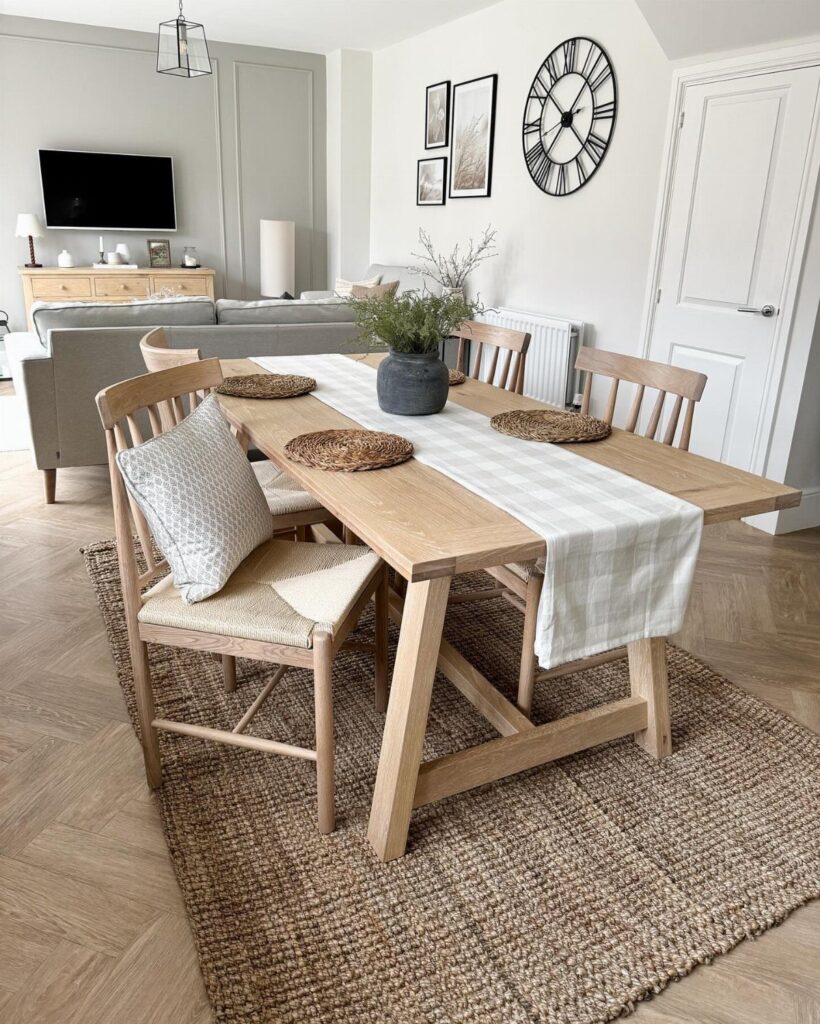
Table shape and how messy the meals get decide which rug is yours: a round table wants a round rug, a rectangle wants a rectangle, and a houseful of messy eaters should think twice about the light grey shag and the natural woven, since both hold crumbs.
The ideas range from a $39 5×7 in blue and white, cheap enough to treat color as an experiment, to a neutral pattern, a bordered rectangle, textured greys and a natural woven.
1. Rug with Color
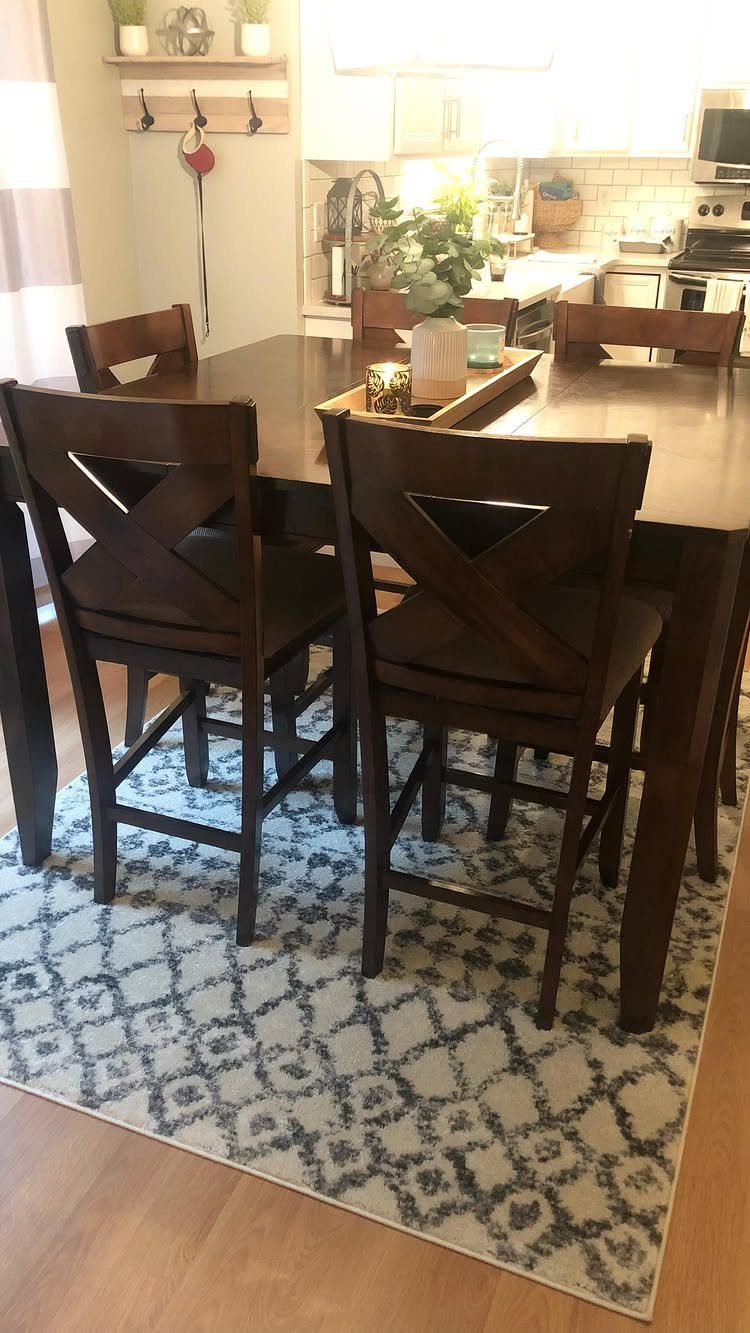
A 5×7 rug for $39 is the number that makes color a low-risk experiment under a kitchen table. A blue and white pattern costs less than most dining chairs, and swapping it out next year hurts nothing.
Dark wood furniture holds up well against a bold pattern, since the table keeps the room grounded. I would pick a rug with white in it, so the color reads crisp rather than heavy.
Check the size before you buy: a 5×7 suits a small table, and a bigger set needs a larger rug.
2. Tips for Choosing the Right Rug
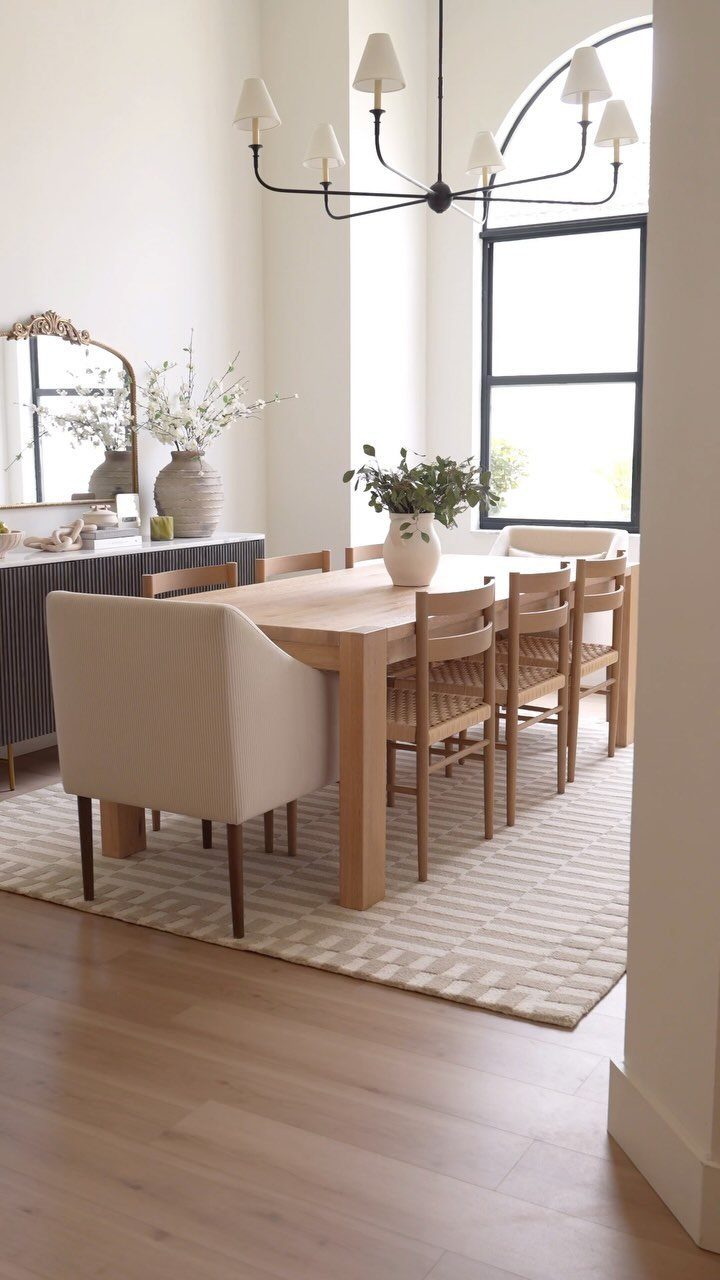
Size, shape and style decide the rug, in that order. Size comes first: every chair should stay on the rug when pulled back, so the rug needs to extend well past the table edges on all sides.
Shape should echo the table. A rectangle under a rectangular table is the safe match.
For style, a textured cream or neutral pattern hides crumbs better than a solid and pairs with almost any wood tone. Measure the table, then tape the rug outline on the floor before ordering.
Interior designer Artem Kropovinsky recommends the top of this range. ‘Ensure your chosen rug extends at least 24 inches beyond the chairs on all sides,’ he says.
3. Round Table with Round Rug
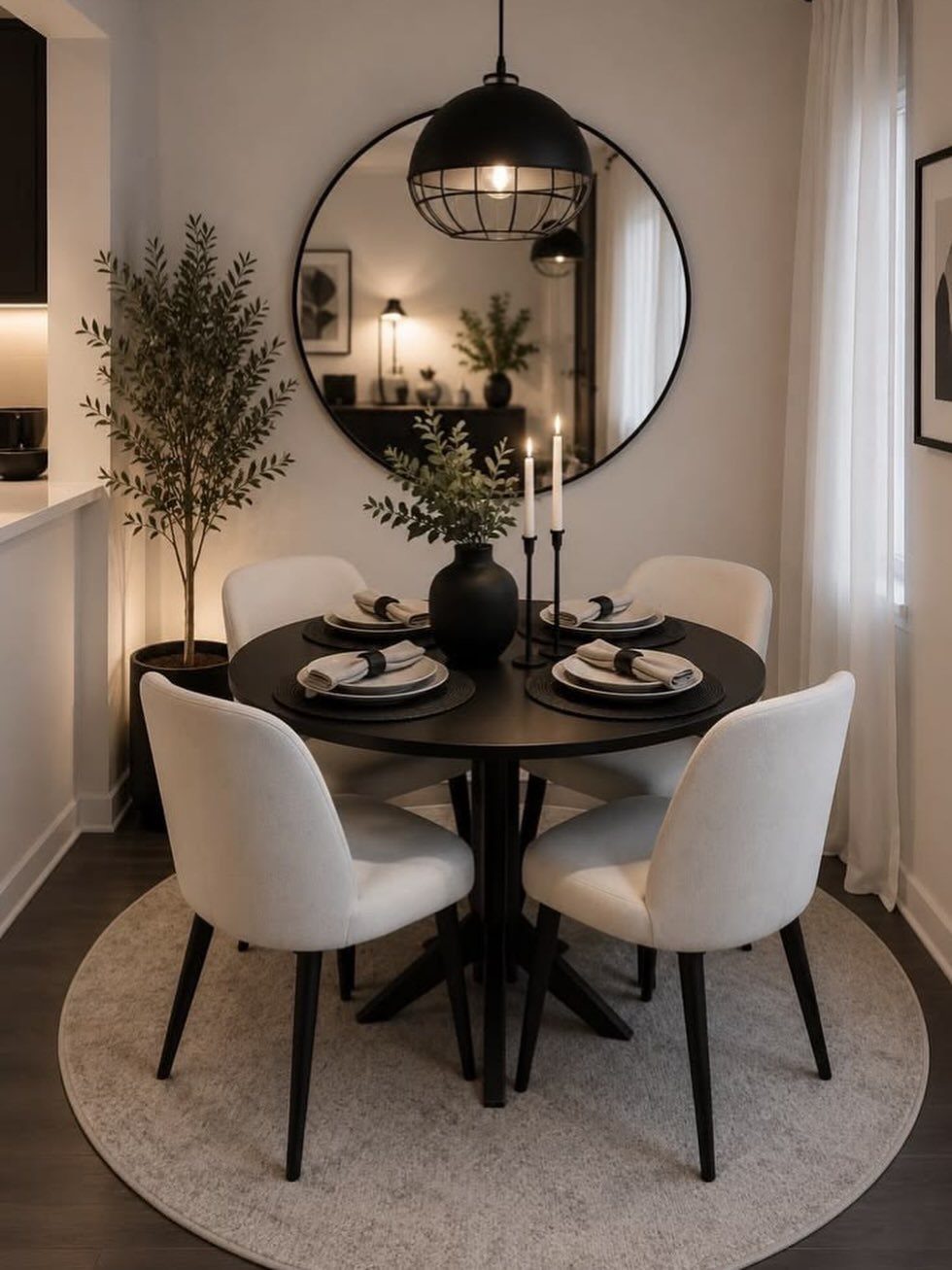
Round tables look best on a round rug, because a rectangle leaves awkward corners sticking out into the room. A circular grey rug repeats the table’s shape and gives the four chairs one clear footprint.
Pick a diameter that lets the chair legs stay on the rug when someone leans back to stand up.
Mark the circle on the floor with painter’s tape before you buy.
4. Neutral Patterned Area Rug
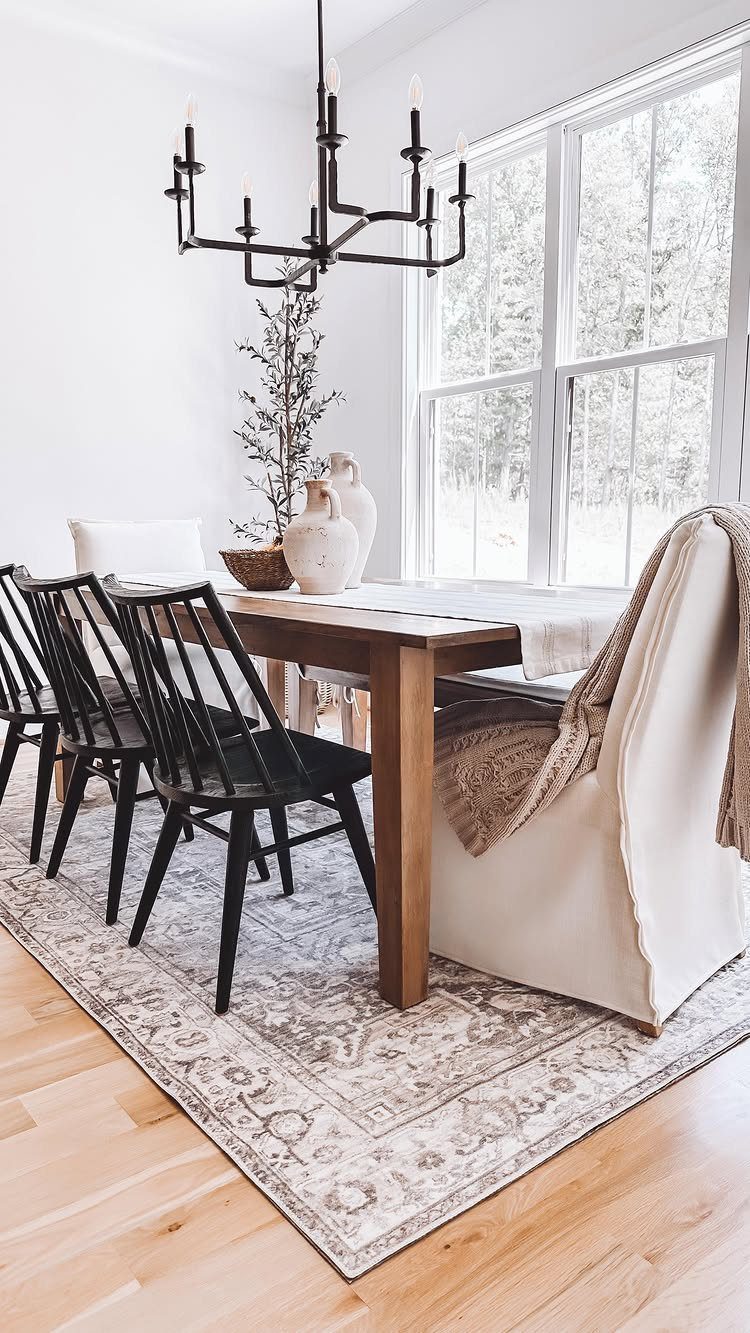
Grey and cream in a soft pattern is the rug I would choose for a table that sees daily use.
Pattern breaks up the look of spills and crumbs between vacuum passes, and the neutral palette lets wood and black chairs stay the focus.
Keep the pattern mid-scale. Tiny prints go busy, and huge ones get lost under chairs.
The rug should reach past the chairs on every side, bench included, so nothing catches on an edge when someone slides out.
5. Natural Woven Dining Rug
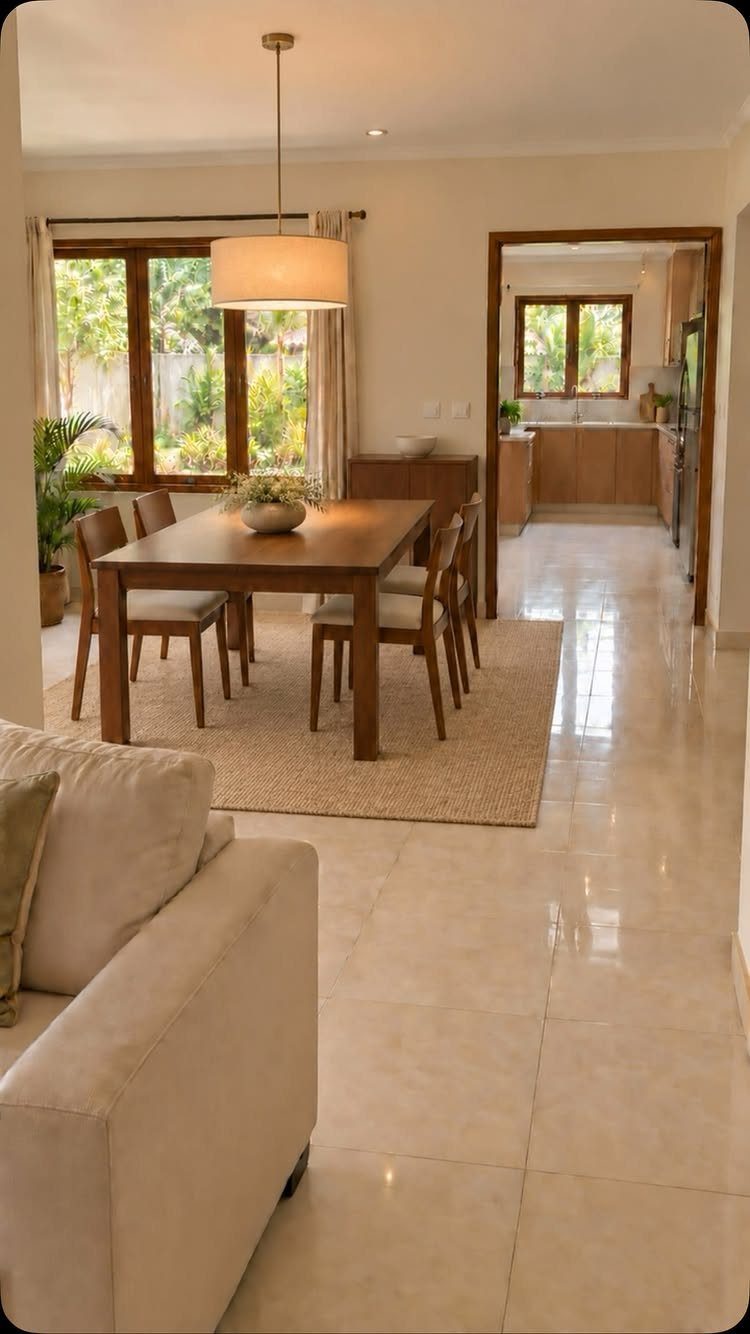
Tan woven texture warms a wooden table without adding any pattern, which makes it a calm choice when the kitchen is already busy with cabinets and lighting. Texture does the work color usually does.
Cleaning is where natural weave loses points: crumbs and spills sink into the fibers and are hard to lift out. Woven surfaces trap crumbs in the weave, so plan on regular vacuuming and keep a lid on messy dining.
Center the rug under the table so all chairs sit on it, and let the pendant light line up over the middle.
6. Bordered Rectangular Rug
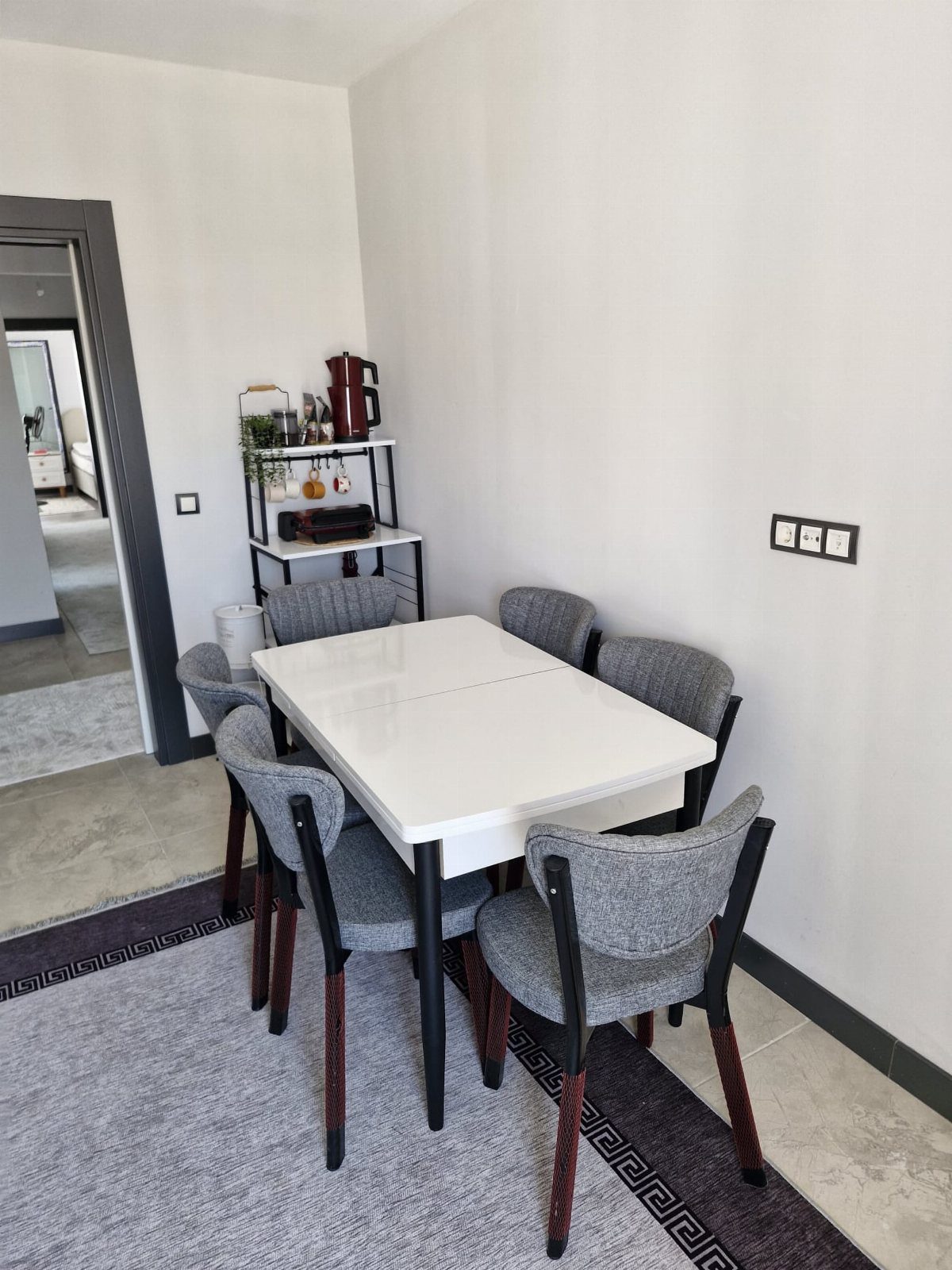
A Greek key border gives a plain white table and grey chairs a tailored frame. The border outlines the dining zone, so the rug reads as a deliberate boundary rather than a floor covering.
I like a border in a muted tone against grey, because it adds definition without taking over a room with white walls.
With a large set of chairs, size up so the whole border stays visible around the seating instead of hiding under the chairs.
Straight edges also make it easy to square the rug to the table.
7. Light Grey Shag Dining Rug
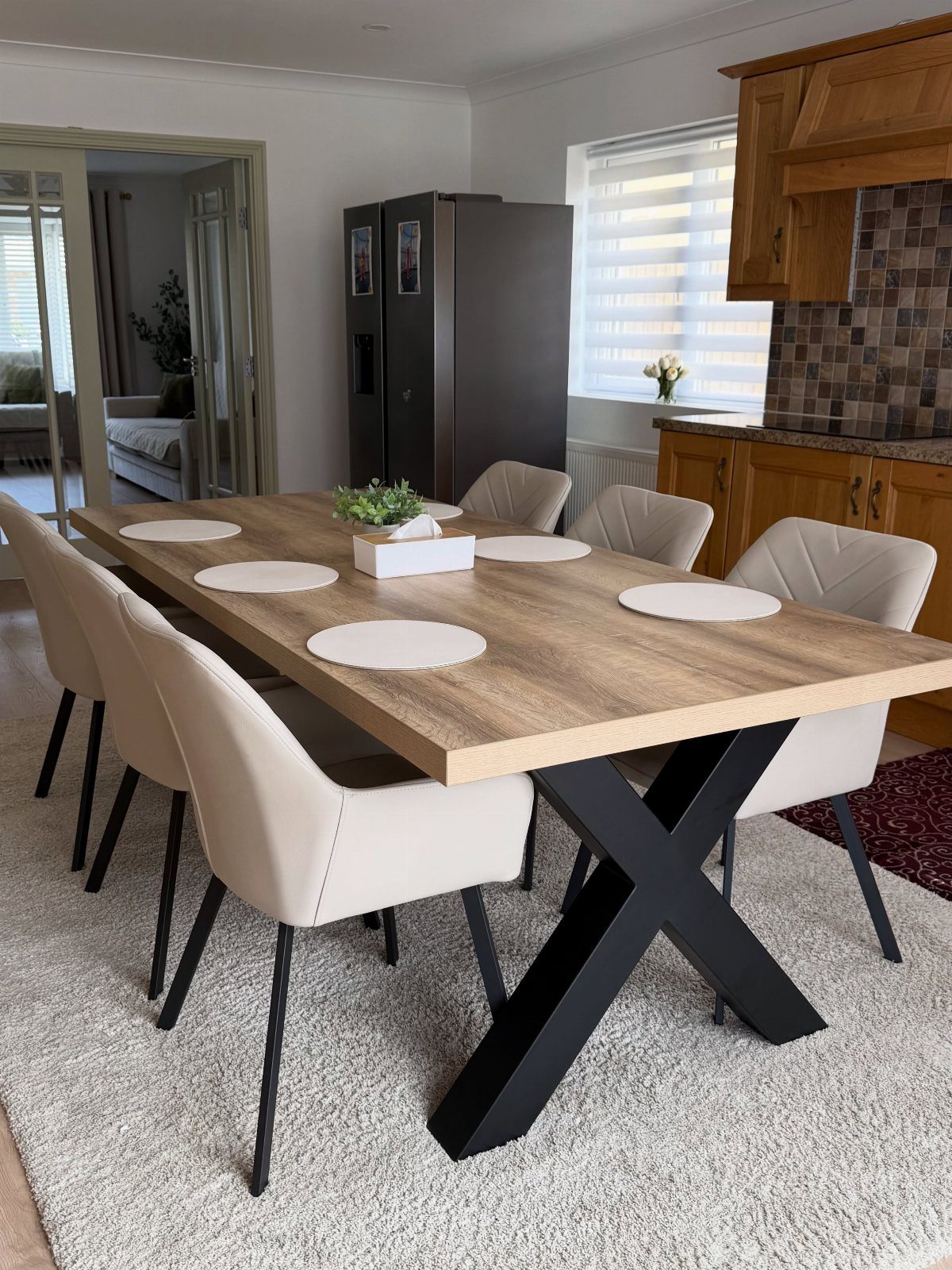
Shag gives a light wood table with black X-legs a soft base, and the pale grey keeps beige chairs from blending into the floor. Deep pile feels good underfoot, which suits a kitchen where people linger over coffee.
Dining chairs drag on thick pile, though, and crumbs sink to the bottom. Plan on frequent vacuuming, and choose this one for a table that sees light use rather than a houseful of messy eaters.
Size the rug so the chairs stay on it even when someone pulls out to sit down; a chair that catches the edge on every move gets annoying fast.
8. Grey Textured Area Rug
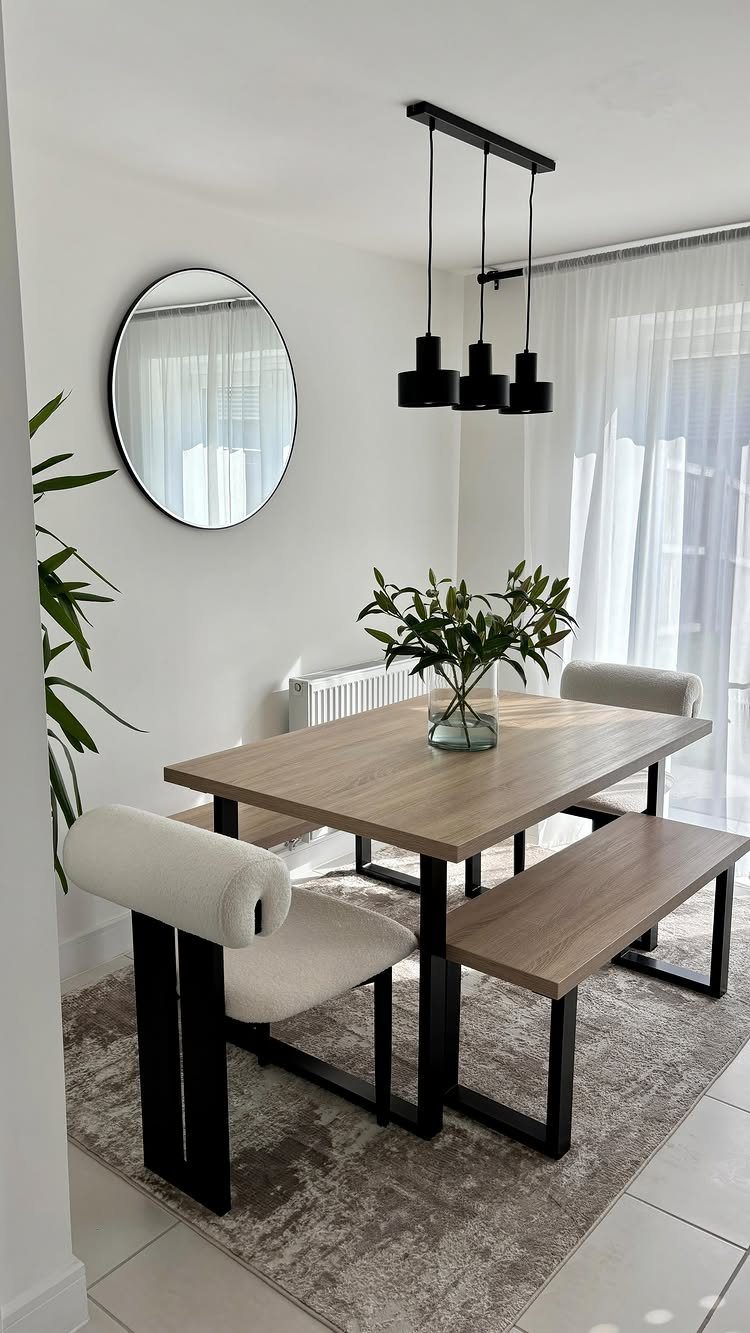
Grey with a woven texture gathers a pale wood table, a bench and a pair of white chairs into a single group, and the relief in the weave stops the color from reading flat.
Black light fixtures and a round mirror already bring contrast, so a mid-tone grey underfoot works well because it stays calm and lets them stand out.
I would pick this over a shag when a bench is part of the setup, since a flatter surface lets the bench slide in and out without snagging.
Make sure the bench legs and chair legs all land on the rug, not half on and half off.
Rug Pad Importance
A rug pad does 3 jobs: it stops the rug from slipping, keeps it from bunching, and protects the floor underneath.
Even a rug under a dining table can creep out of place, and a bunched edge is a slip waiting to happen.
Chairs make this worse than most spots in the house. Every time someone pulls out or slides in, the rug gets tugged, and a pad is what holds its shape through that.
Falls are a real concern at home, especially for older adults and small children, though anyone can catch a toe. A rug that lies flat and stays put is the simplest fix.
Buy the pad when you buy the rug, and keep the pad slightly smaller than the rug so its edges don’t peek out.
Check that the rug’s edge still sits flat, because a rug that rides up at the border can snag chair legs.
Frequently Asked Questions
What size rug should I use under my dining room table?
Measure from the table edge and add 24 inches on each side; that margin keeps all 4 chair legs on the rug even when someone slides back to stand up.
A rug that is too small lets chairs catch the edge on every move, and back legs that drop off the rug can tip a guest over backwards.
For a small round or 4-seat table, a 5×7 is enough, but a long table with 6 or more chairs calls for an 8×10 or larger. Taping the outline on the floor before you order shows you the real footprint.
Is a rug in the kitchen normal?
Yes, a rug under the kitchen table is a common choice, and it helps define the dining zone and adds color or texture.
Spills are the usual worry, and a low-pile rug with a busy or textured pattern hides them and cleans easily.
Washable rugs are another good fit for a messy spot. Skip deep shag or natural weave if the table sees heavy use, since crumbs sink into both.





