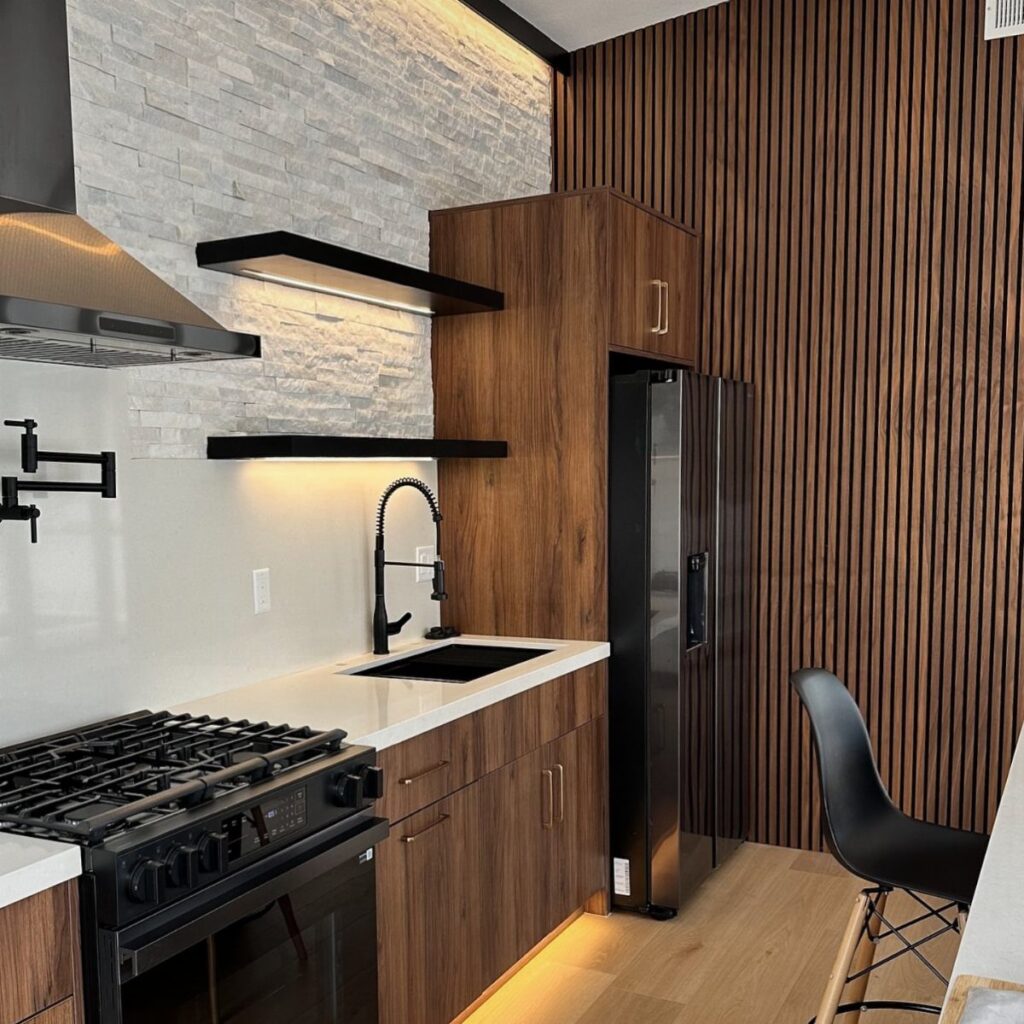
The ideas below run from a coat of paint and a big piece of art to tile, textured stone, brick and geometric wood paneling, so cost and effort swing widely.
Whether you can change the wall itself decides which one is yours: renters can hang oversized art and leave the surface alone, while owners can paint, tile, panel or add brick.
1. Painted Accent Wall
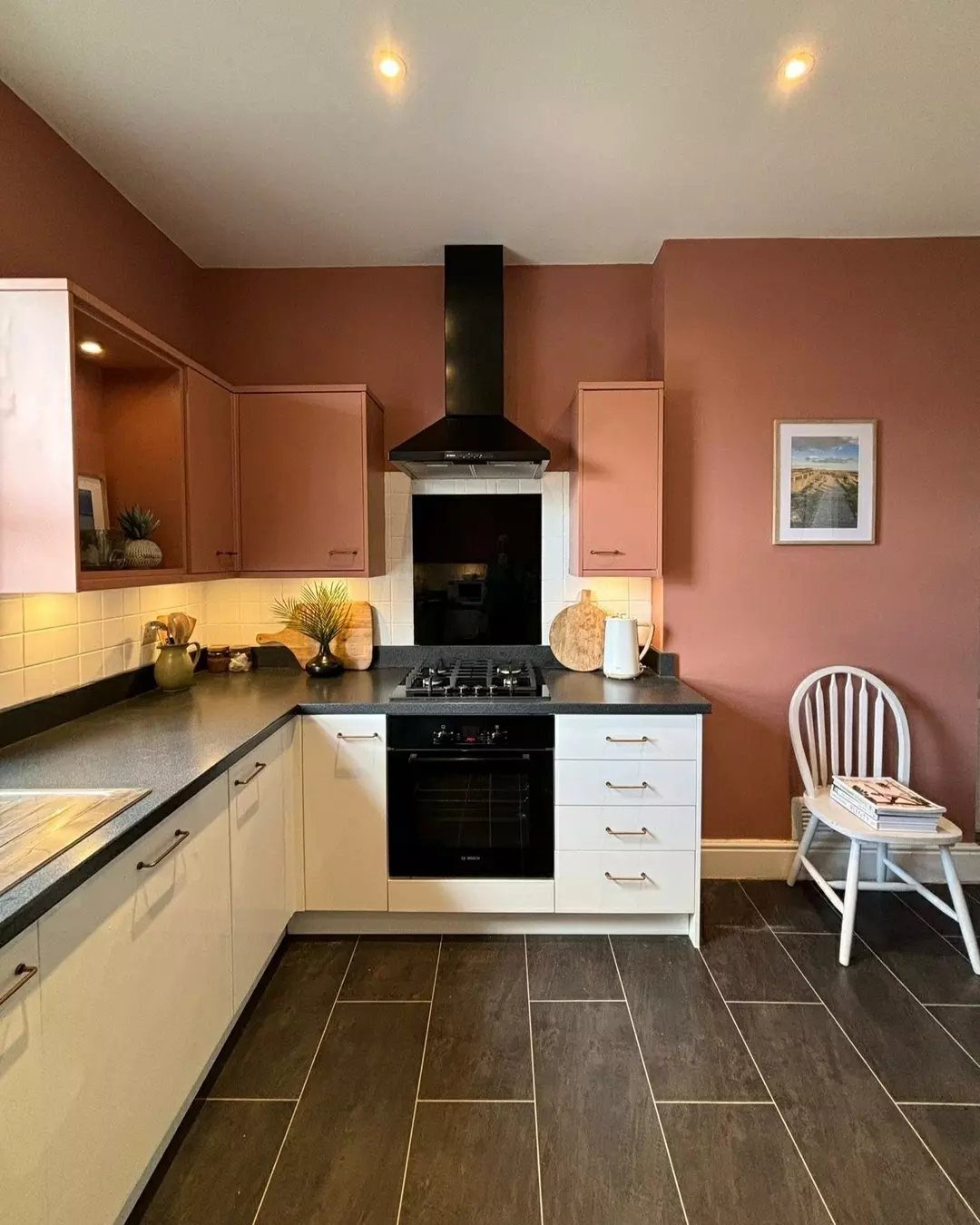
Paint is the cheapest way to give a kitchen a focal point, and the wall behind the range is the best place to spend it.
Paint the wall you see first from the doorway, and leave the rest white or a quiet neutral. One bold wall stays a feature; two start to compete.
Sample the color on the wall and check it morning and evening before you commit.
2. Tile Accent Wall
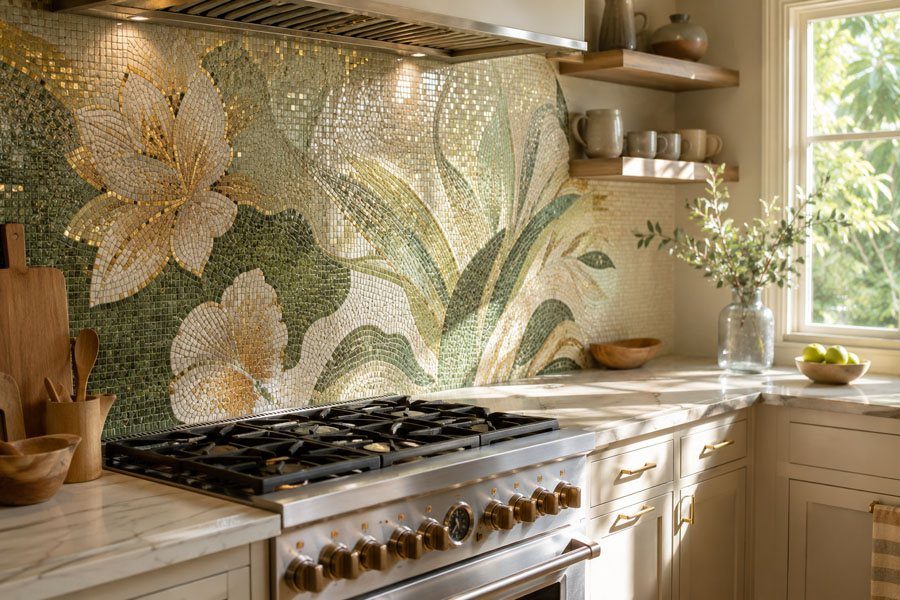
A mosaic backsplash that runs from the counter all the way to the ceiling turns the wall behind the stove into the room’s main pattern.
I like it most when everything around it stays quiet: a plain range, open wood shelving, a simple counter.
Small tiles mean a lot of grout lines, so expect more setting time than a standard subway tile job, and more cleaning behind the cooktop.
If the full height is more than your budget allows, tile only the zone behind the range and paint the rest.
3. Brick Accent Wall
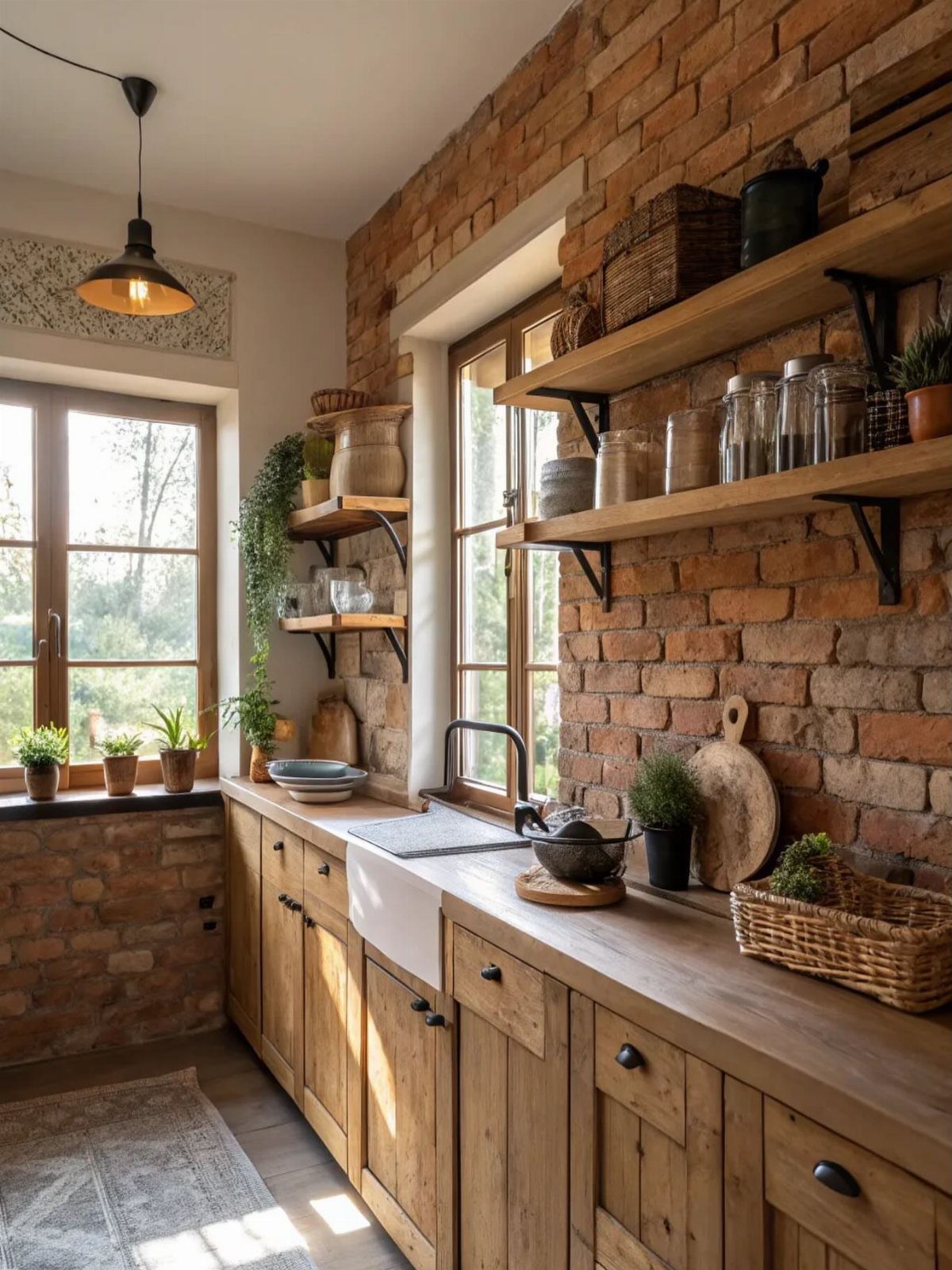
Exposed brick brings texture and a lived-in warmth that paint can’t copy. Brick reads softer when you pair it with wood counters, open shelves, or a white farmhouse sink instead of more hard surfaces.
If your kitchen has no real brick, thin brick veneer or a brick-look panel is the budget route for a weekend. Real or not, the wall behind a sink and counter gets splashes and grease, so wipe it down regularly.
Keep the upper shelves simple. Brick already supplies the pattern.
4. Chalkboard Accent Wall
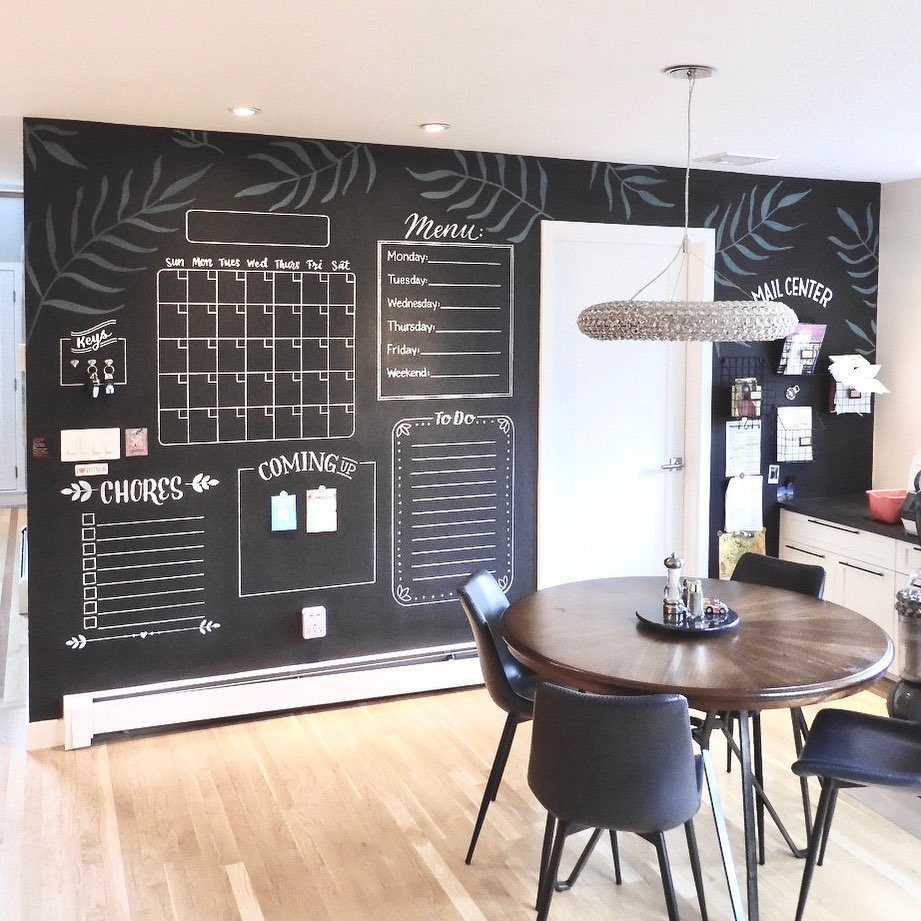
Chalkboard paint makes a wall earn its place: menu, calendar, chores list and a mail center all fit on one black surface. It suits a kitchen that doubles as the household command post.
Paint is the low-cost way in, and a dining-area wall that stays clear of the stove keeps chalk dust away from food. Set aside a small tray for chalk and an eraser so it stays tidy.
I’d give it a defined zone, not a whole room of black.
5. Large Colorful Kitchen Artwork
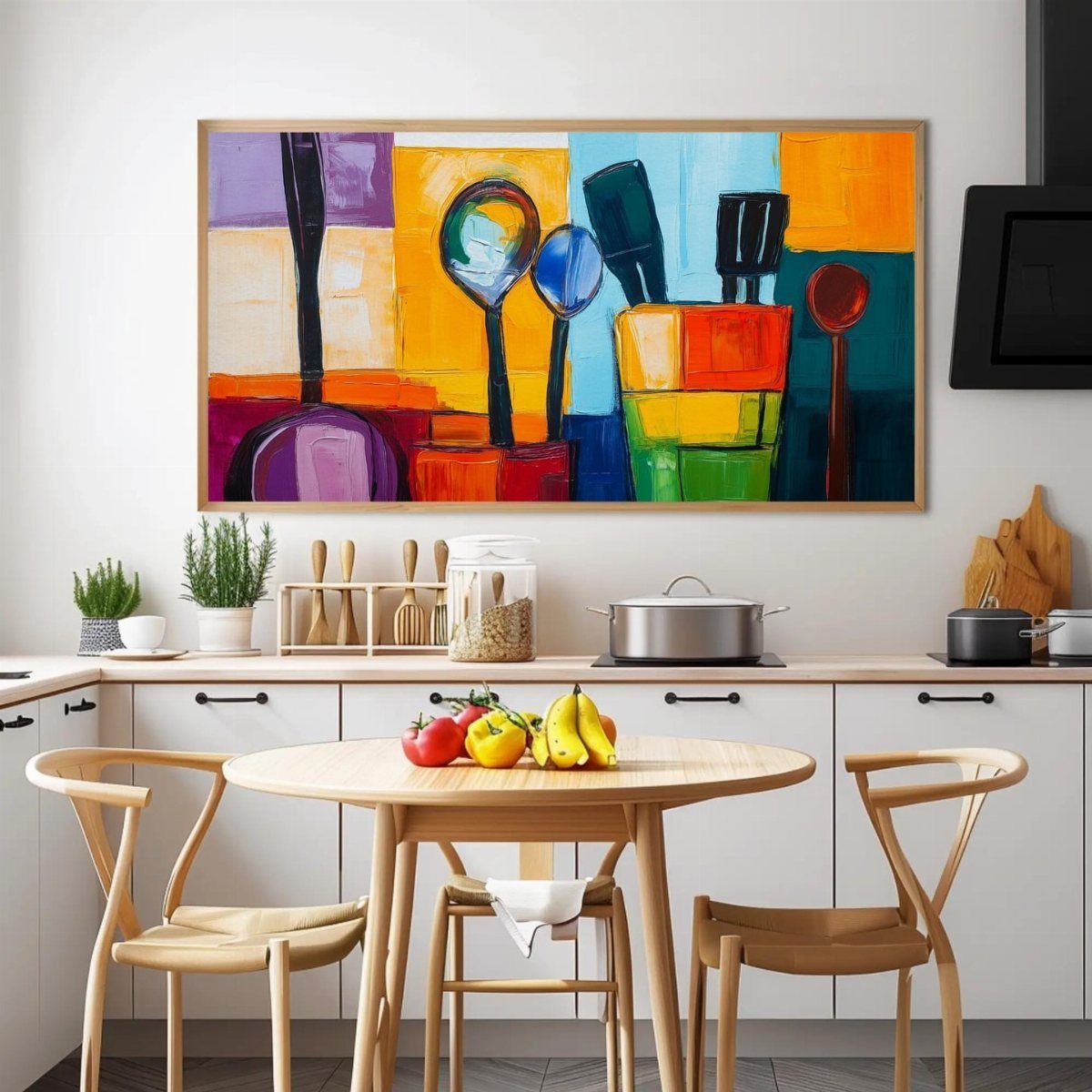
Oversized art is the no-commitment accent wall: no paint, no tile, nothing to undo when you move. A big, colorful abstract of kitchen utensils over a counter gives a white kitchen its personality in one hang.
Scale matters more than subject. Go larger than feels safe, since a small piece on a big wall looks lost.
This is my pick for renters. Use a hanger rated for the weight, and the wall stays intact.
6. Textured Stone Accent Wall
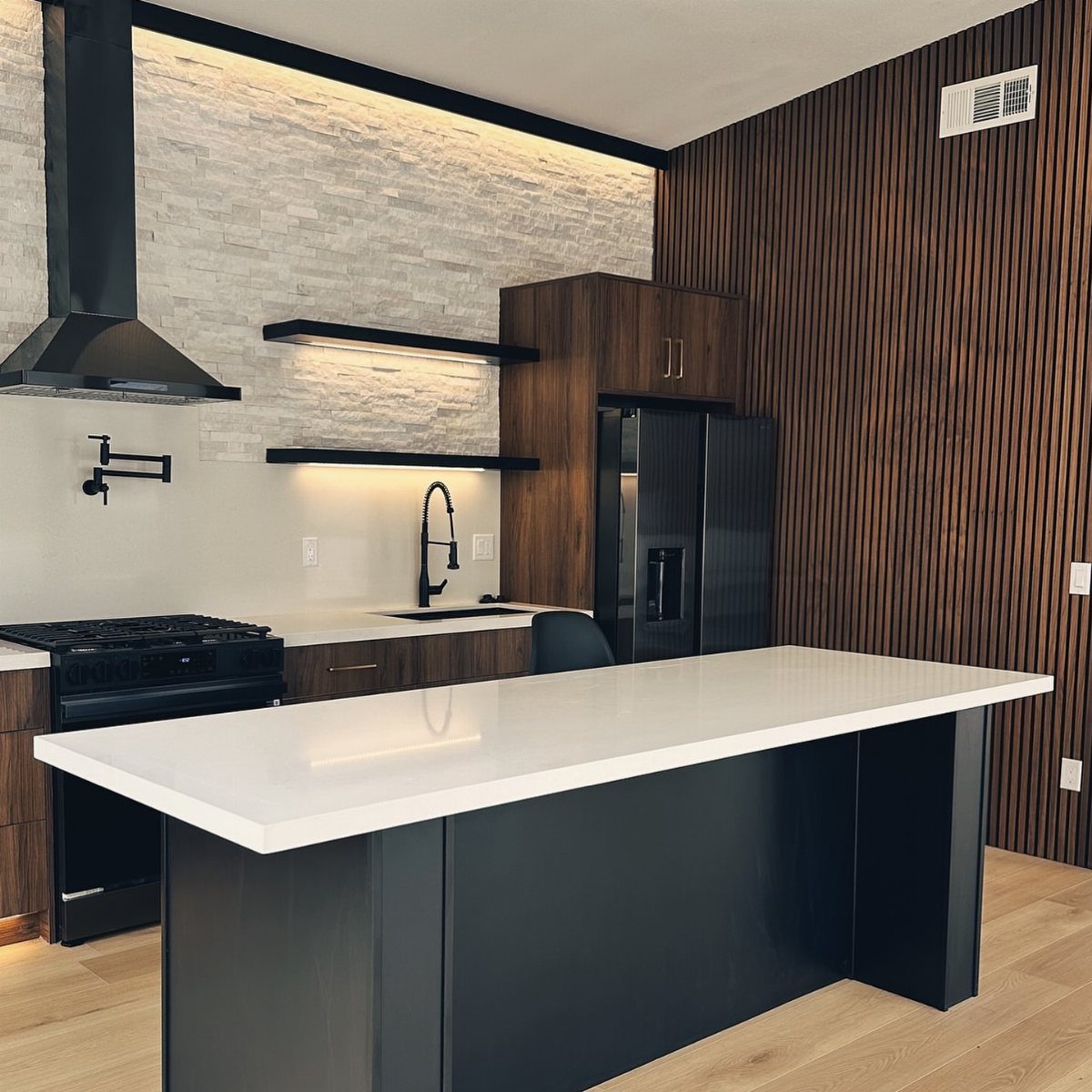
A white textured stone wall reads as sculpture, and it looks sharpest next to dark wood and black fixtures. Under-shelf lighting makes the surface worth the money, because light grazing across the texture shows every ridge.
Stone this deep is a bigger project than paint. Budget for materials and installation time, and consider a stone-look panel if the full thing is too much.
Limit the palette to two or three colors so the stone texture stays the focus.
7. Wood Paneled Geometric Wall
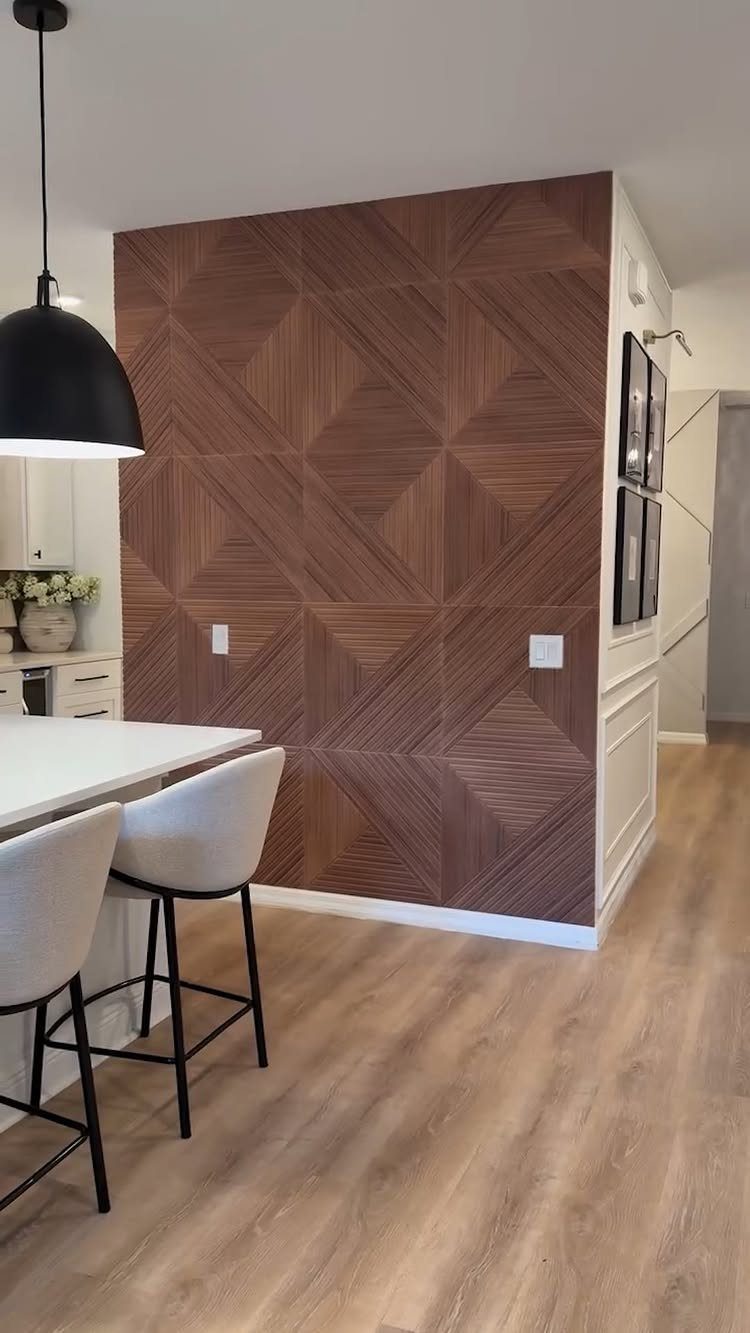
A wall of diamond-patterned wood panels behind the island gives the whole kitchen a focal point without adding a single color.
Brown wood against a white island and pale barstools keeps the pattern warm and the rest of the room calm.
Place it where people sit, since the island is where eyes land anyway. Keep the pendant simple and let the wood supply the pattern.
Geometric cuts mean more measuring and more waste than straight planks, so mock up the layout on the floor before anything goes on the wall.
8. Textured Metallic Accent Wall
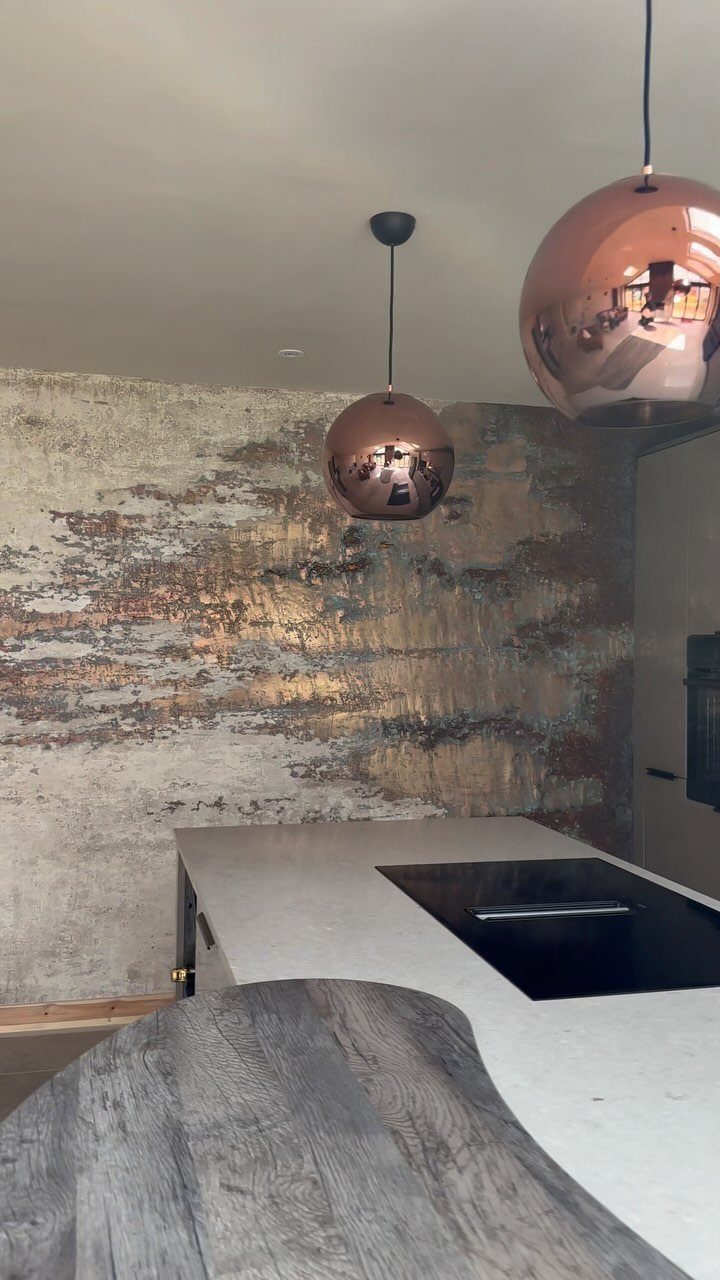
Metallic gold with a grey cast gives a wall depth that flat paint can’t, because the texture catches light and shifts as you move past it.
Copper globe pendants hung in front of it pull the same warmth into the room, and I like that the metals stay in one family.
Keep the countertop white and the cooktop black so the wall is the only shiny surface competing for attention. A wood breakfast bar softens all that sheen.
Test a sample patch first. Metallic finishes look different under your own lighting.
Choosing the Right Wall
Stand in the doorway and notice where your eyes go first. That wall is usually the right one: the spot behind the stove, the breakfast bar, or the dining area.
Look at how the light hits that wall at morning, noon, and evening, and only then buy the paint.
An accent wall needs to be well lit, because a feature sitting in a dim corner just reads as a dark patch.
Make sure the wall suits the rest of the room, too. It should relate to the cabinets, floor, and other walls instead of fighting them.
Also referred to as an accent wall, a feature wall is bolder than the other walls, whether through the use of a different colour and/or texture, to create a striking visual impact.
Accent Wall Colors
A bold color or an intricate pattern gives a kitchen a dramatic, personal look, and a single wall is a low-risk place to try one.
Give the wall a job. Color with a purpose looks planned.
Before choosing, look at what already stays in the room: cabinets, floor, counters. A deep color has to sit well against all of them.
I’d pick the color in your own room, in your own evening light. Expect the color on the wall to look darker than the little chip suggested.
Maintenance Tips
A quick dusting keeps the wall clean, and a damp cloth handles whatever dust leaves behind. Strong cleaners and scrub pads can wear through the finish, so leave them in the cabinet.
Good upkeep starts with the paint job. For a deep color like navy, green, or black, tint the primer gray.
A flat finish will stain and scuff fast in a kitchen that gets daily use.
Dark colors rarely hide the wall in one pass, so budget for a true second coat.
Take your time cutting in along the edge where the accent meets the neighboring color, since the eye goes to that line first. Keep a little leftover paint for touch-ups.
Frequently Asked Questions
What are some good paint colors for my kitchen accent wall?
Deep, bold shades like navy, sage green, charcoal gray, or black work well on a single wall. Tint the primer gray under a dark color, and plan on a true second coat, since dark colors rarely cover in one pass.
Test the paint on the wall itself and look at it after sunset with your regular lamps on, since deep shades usually read a step darker than the little chip did.
Where should you put an accent wall in a kitchen?
Pick the wall your eyes land on first from the doorway, most often the one behind the stove, the breakfast bar, or the dining area.
A wall that sits in shadow will swallow the color, so choose one that catches daylight or has a light fixture nearby.
A wall crowded with upper cabinets leaves only thin strips of open surface, and a painted accent there barely shows.
What are some good wall decor ideas for a kitchen?
Oversized, colorful art is the easiest, and it is my pick for renters because it needs no paint and leaves the wall intact.
If you can commit more, chalkboard paint, tile behind the range, or wood paneling give the wall a job or a pattern.
Are accent walls in style?
Yes, an accent wall is still a popular way to give a kitchen character, and it is a low-risk way to try a bold color or pattern.
Keep it to one wall, since two start to compete. Give the wall a purpose and it will look planned instead of trendy.





