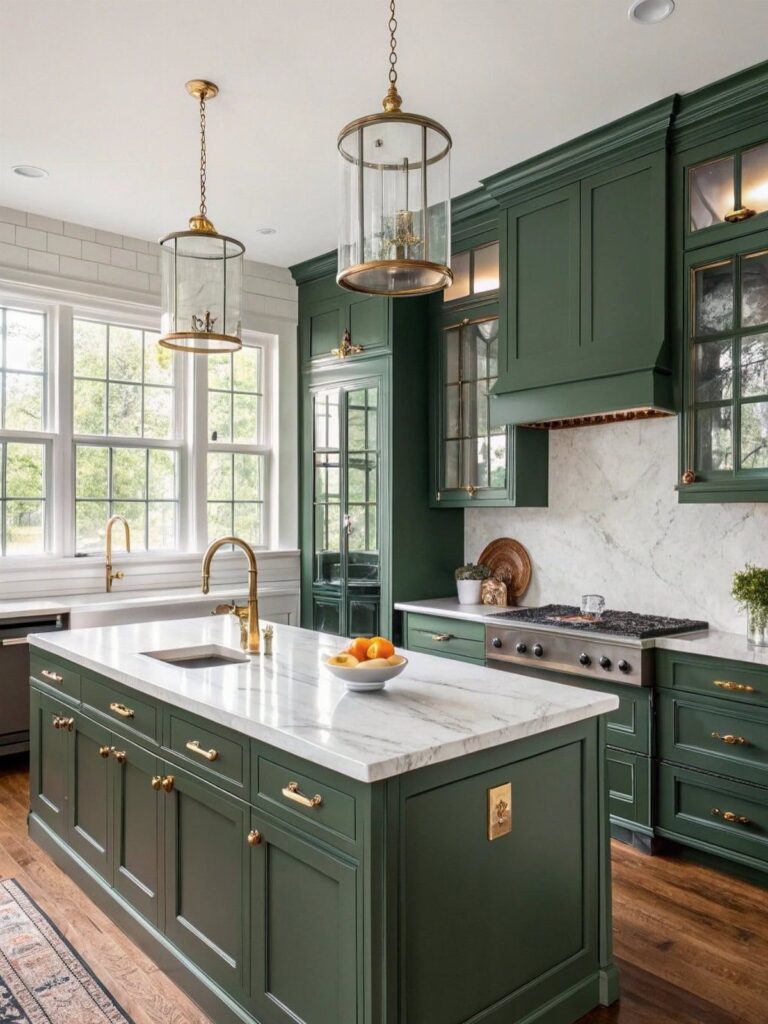
The ideas here run from a single accent wall and brass hardware to full cabinet runs in matte finishes, glass-front uppers and patterned tile backsplashes.
What decides which one works is the undertone of the green itself, because some pull warm and some pull cool, and one will sit better against whatever floor or countertop you already have.
1. Olive Green
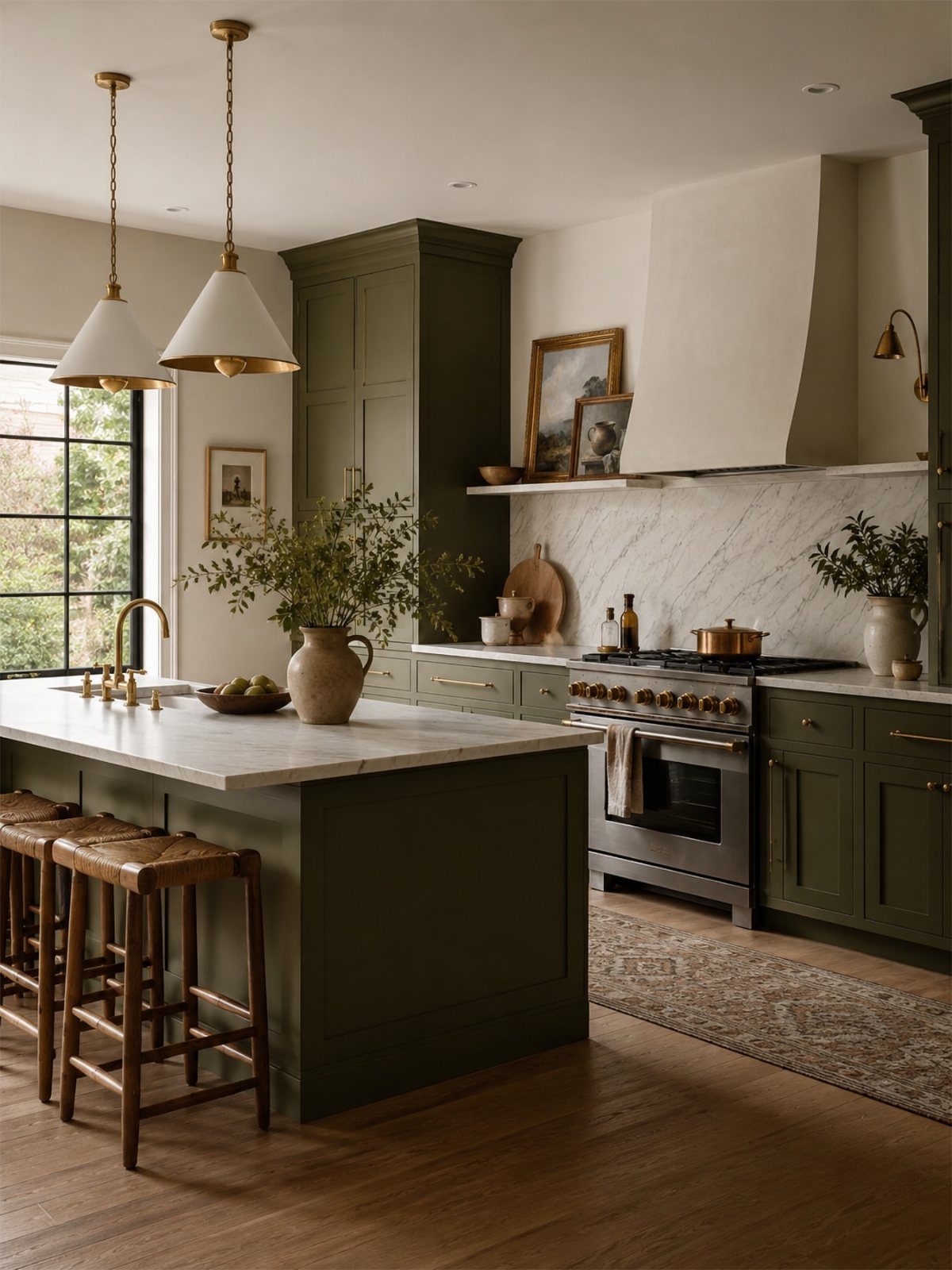
Olive reads softer than emerald or forest, and that is why it sits so easily next to brass pulls and warm wood stools.
Keep the countertop pale, as it is here with white stone, so the green stays the star without making the room heavy.
Wood is the piece I would repeat. Barstools, a cutting board or a shelf in a deeper brown echo the undertone of olive, which leans yellow-brown.
2. Dark Green Cabinets with Light Countertops
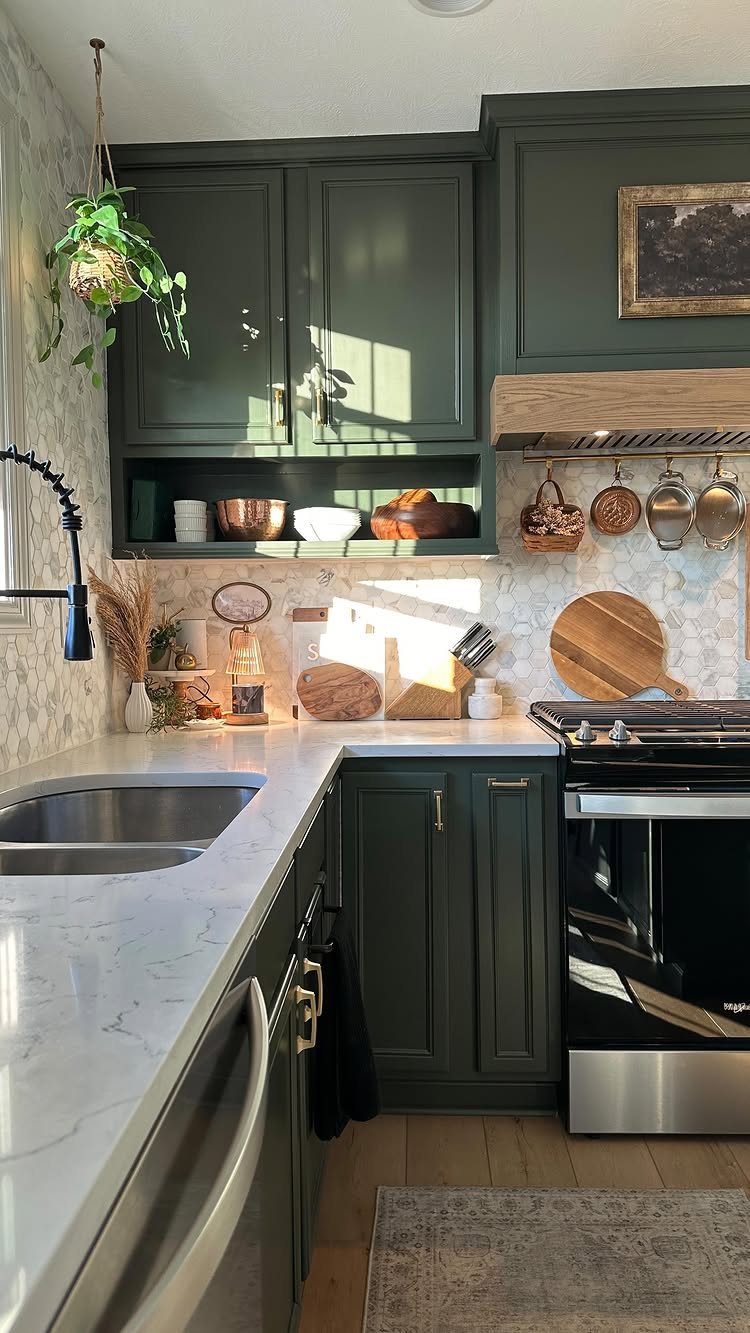
Dark green cabinets paired with white marble-style counters give you the strongest contrast a kitchen can have, and it keeps the room from feeling like a cave. A light backsplash does the same job on the wall.
On a budget, look at marble-look laminate or quartz instead of true stone; from a few feet away the veining carries the same effect.
I would pick a counter with soft gray veining over bold black, so the cabinets stay the focus.
3. Under-cabinet Lighting
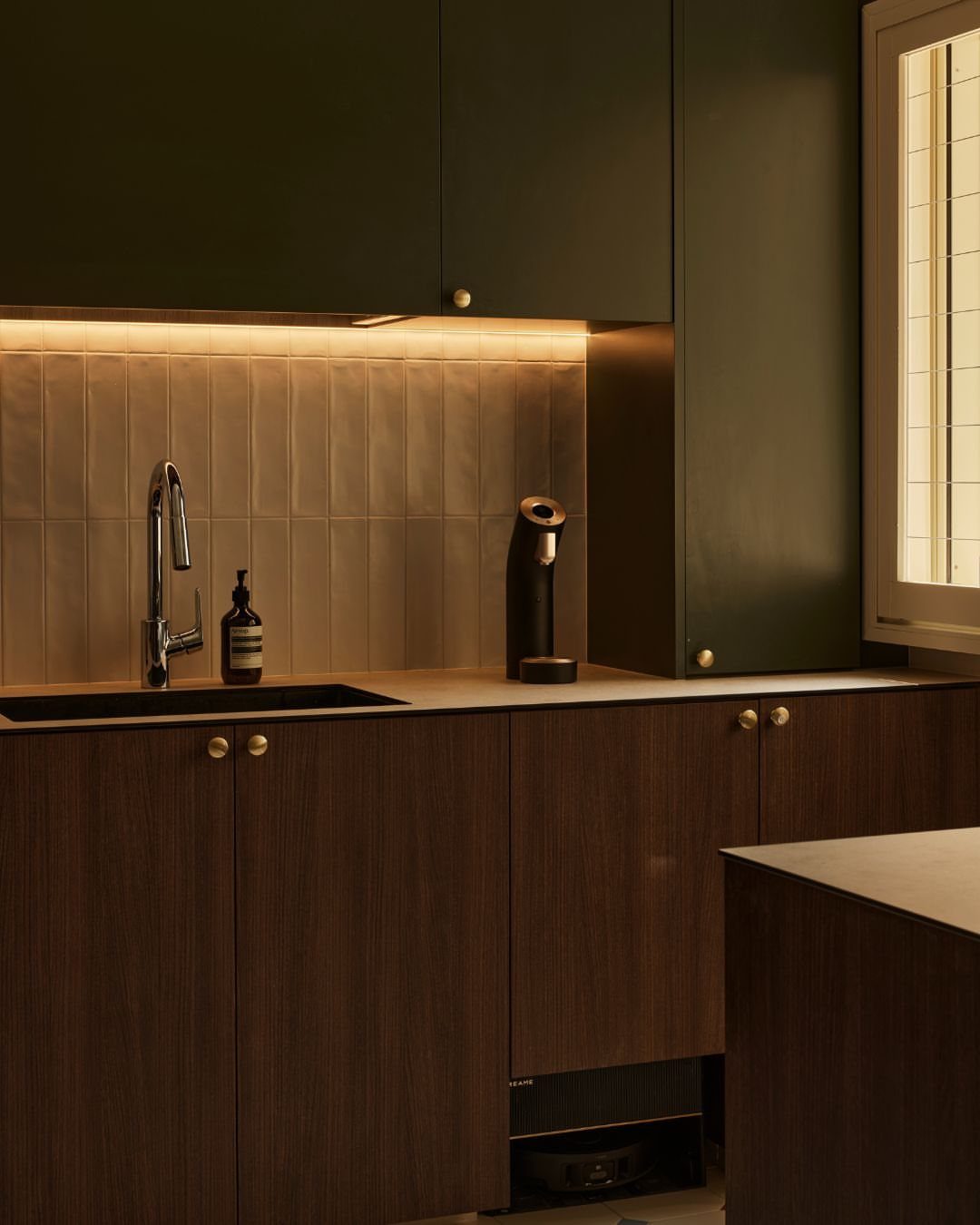
Dark green swallows light, so a strip under the upper cabinets does more here than any ceiling fixture. It washes the tiled backsplash and the counter below, and the green deepens instead of going flat.
Choose a warm white bulb.
Cool light turns green cabinets gray and makes the wood below look dull. Plug-in or battery strips are the weekend-friendly route for renters, since they need no wiring.
4. Dark Green Cabinets with Brass Hardware
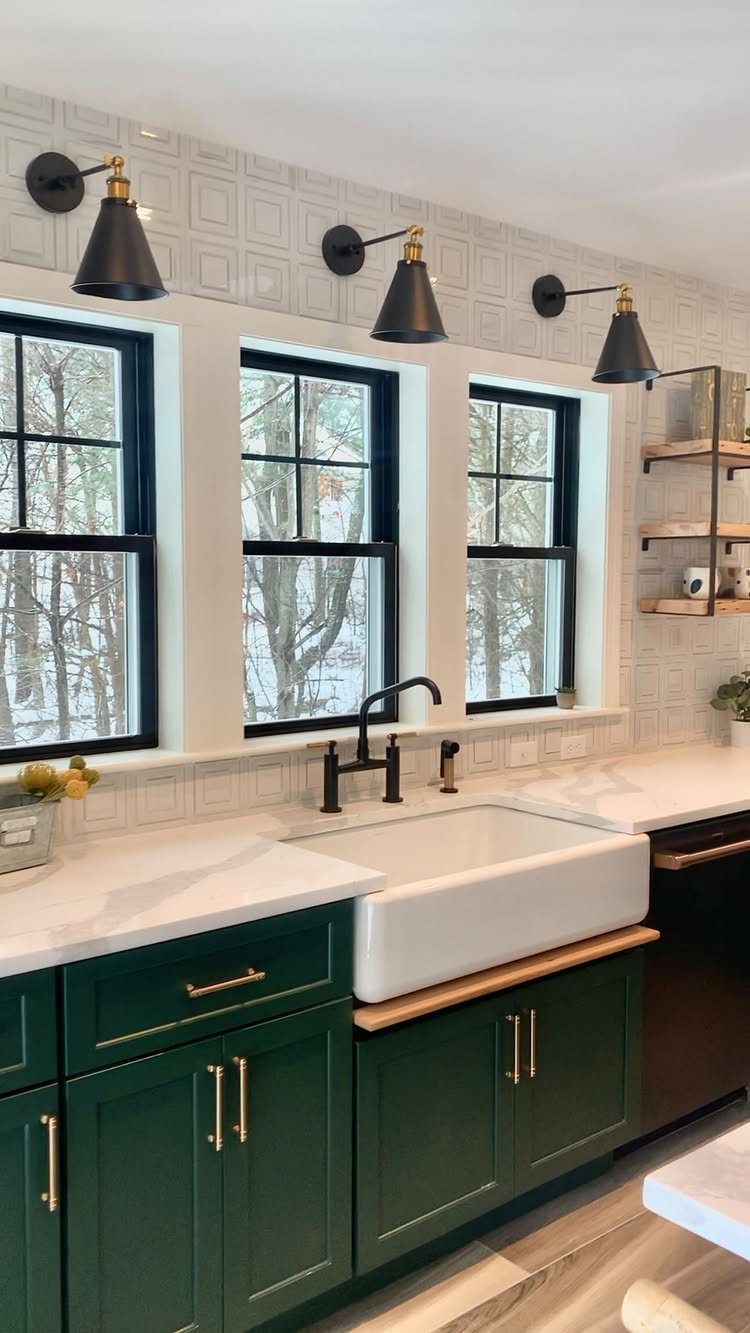
Brass pulls against dark green lower cabinets is a pairing I would pick again and again, and a white farmhouse sink and white counters keep it crisp. The metal gives the paint a focal point it would otherwise lack.
Swapping hardware is the cheapest change in this whole list, and it takes an afternoon with a screwdriver. Measure the distance between existing screw holes first, so new pulls line up without drilling.
5. Matte Dark Green Cabinets
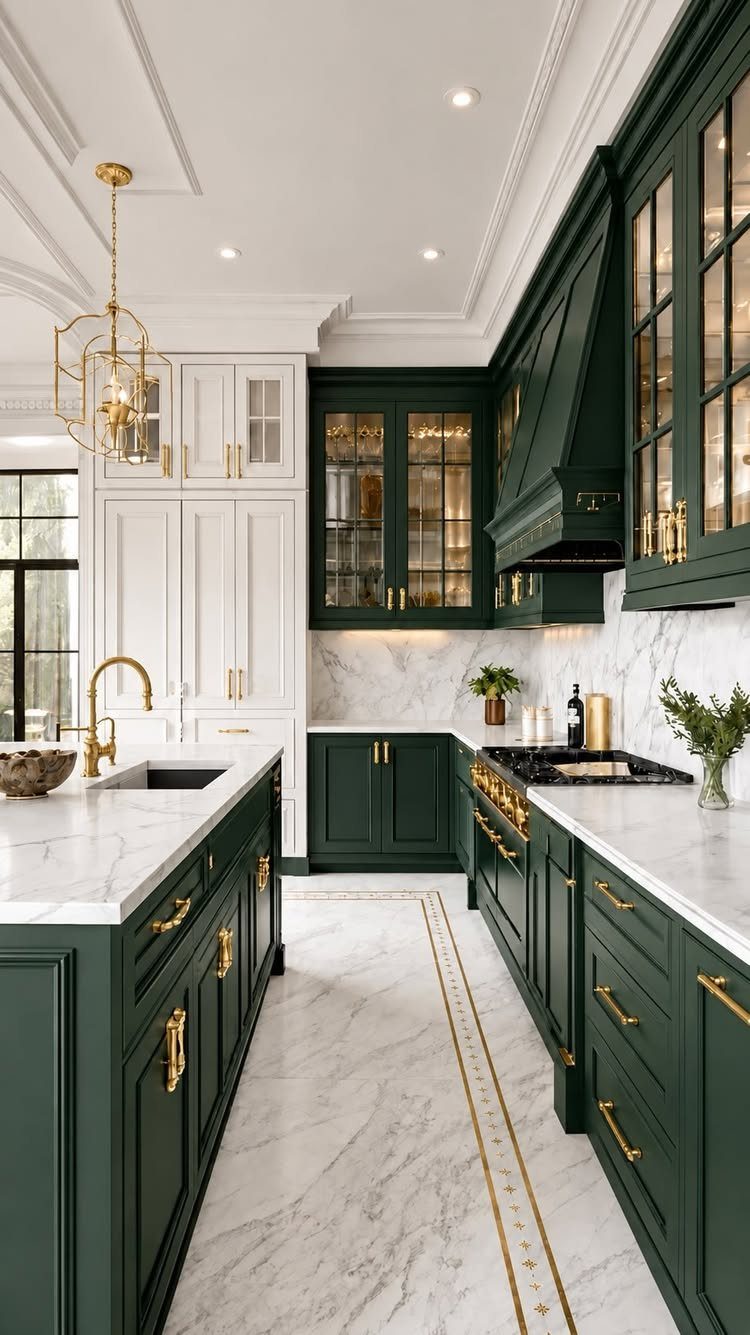
A matte finish absorbs light, so dark green looks velvety rather than glossy, and it hides the reflections that make a dark kitchen feel busy. White upper cabinets and marble counters stop that depth from feeling heavy.
Matte surfaces show smudges more than gloss does, and they need gentle wiping instead of scrubbing. Gold hardware adds a bit of shine to balance the flat paint.
6. Dark Green Cabinets with Natural Wood
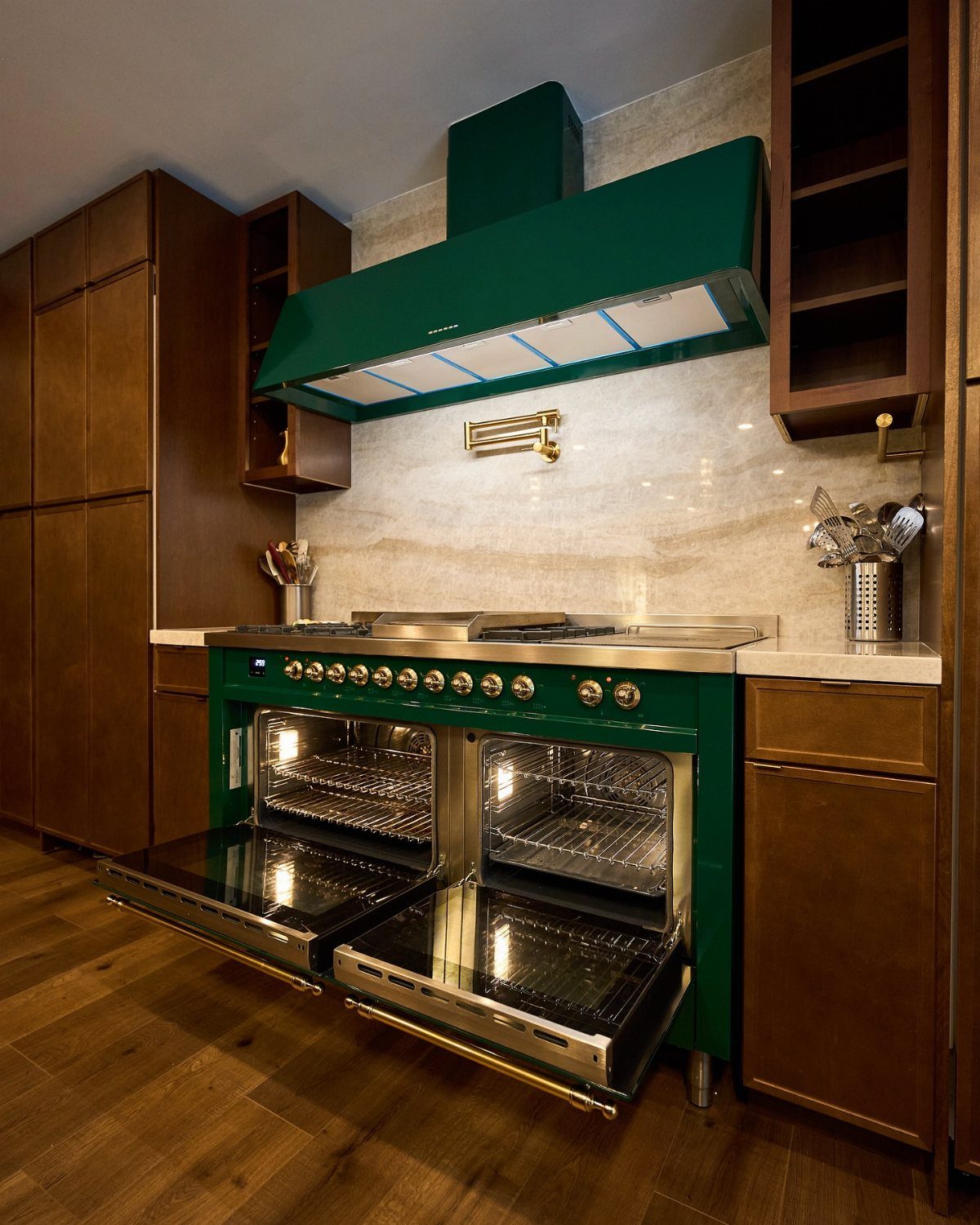
A dark green range and matching hood become the anchor when the cabinets around them are natural wood. Green and brown sit close together in nature, so the combination feels settled rather than loud.
If the appliance is out of budget, paint the hood or one cabinet run green and let wood handle the rest. A marble backsplash works as a neutral break between 2 strong colors.
7. Dark Green Accent Wall
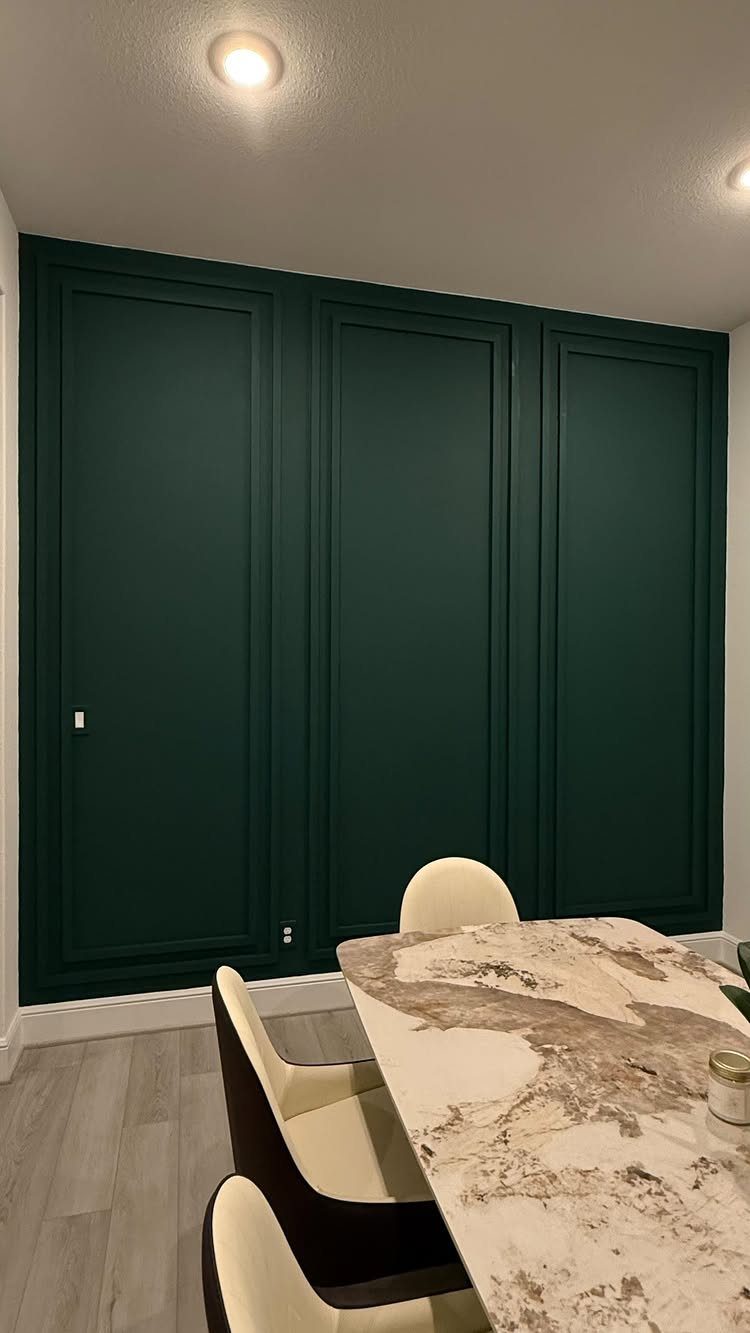
Painting one wall dark green is the lowest-risk way to try the color before committing to cabinets.
Molded panels give the paint shadow lines, and that is what makes a single dark green wall look built in rather than just painted.
I would choose a flat finish, since it hides wall flaws and reads richer than a sheen.
8. Contrasting Kitchen Island
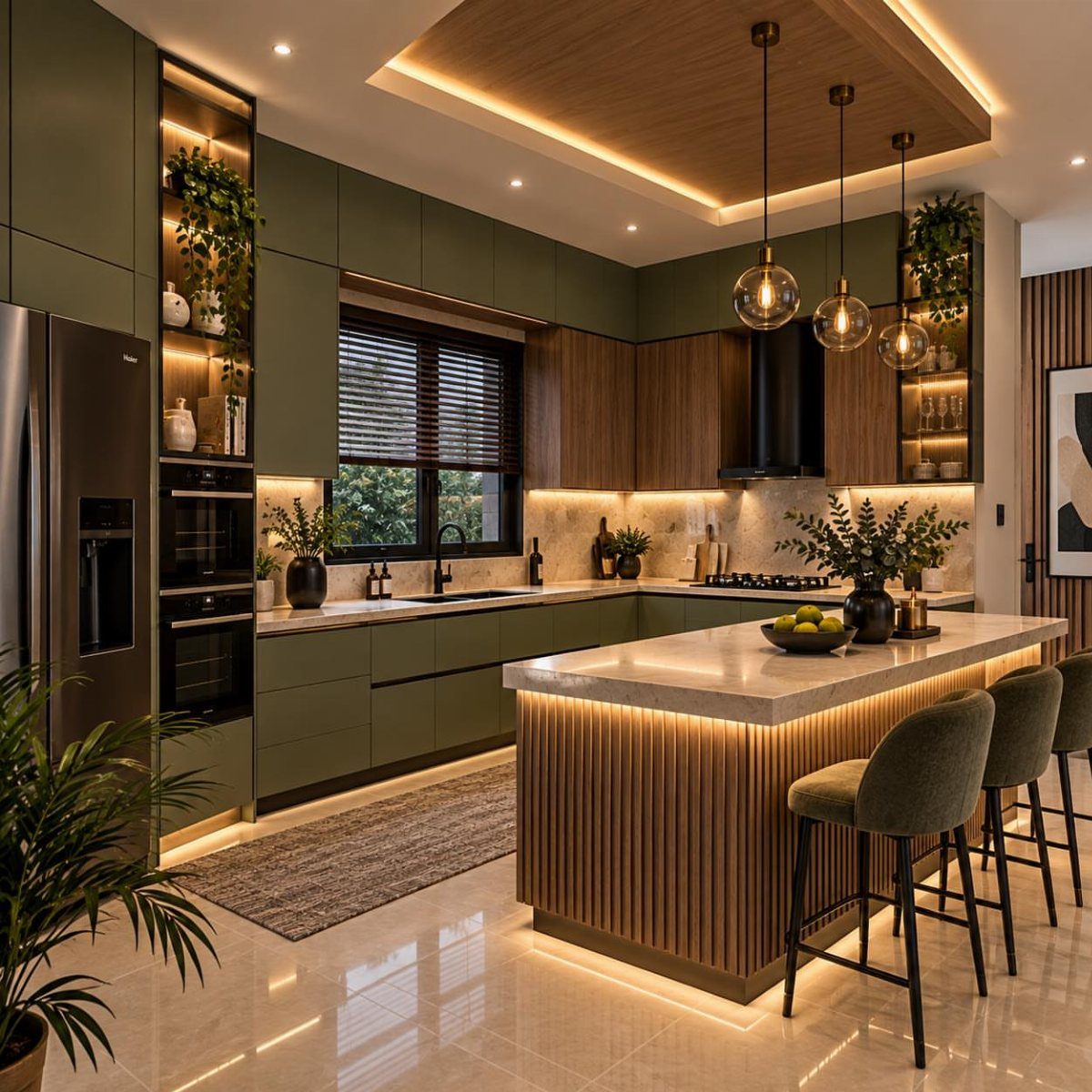
Dark green cabinets with a ribbed wood island make a split I like, because the wood breaks up the color and adds warmth, though a matching island is the safer choice if you want the whole room to read as one zone.
The slats add texture, and the white top ties back to the rest of the room.
For a weekend budget, a basic island can take wood slat panels on its sides, with a pale counter on top. Keep the wood warm so it sits well beside the green, and the stools can stay light.
9. Dark Green with Burnt Orange Accents
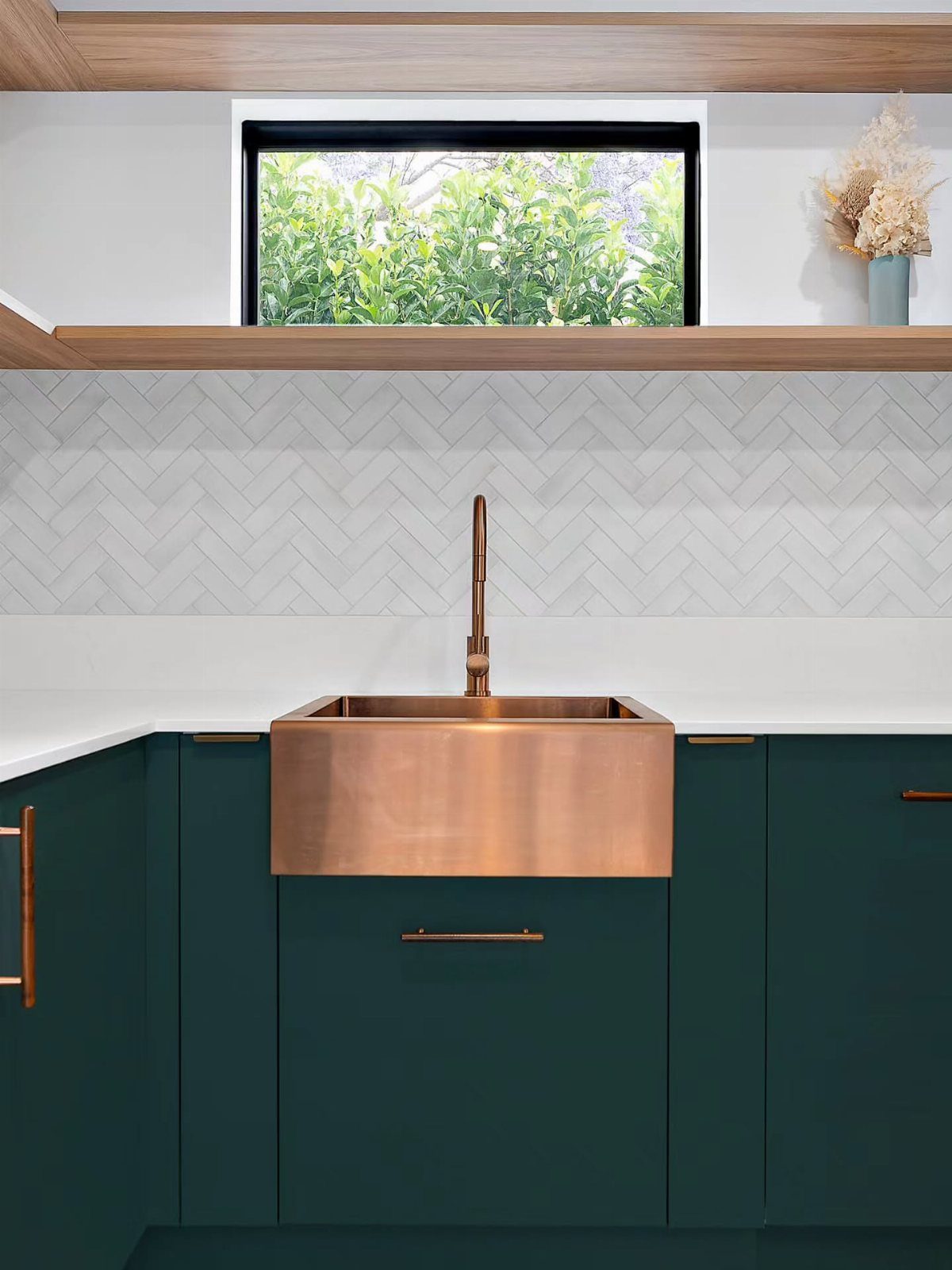
A copper sink and faucet give dark green a warm, burnt-orange note without a single painted surface.
If a copper sink is out of reach, a faucet or a few pulls in the same tone does the job. Pick one warm metal and stick with it.
10. Forest Green
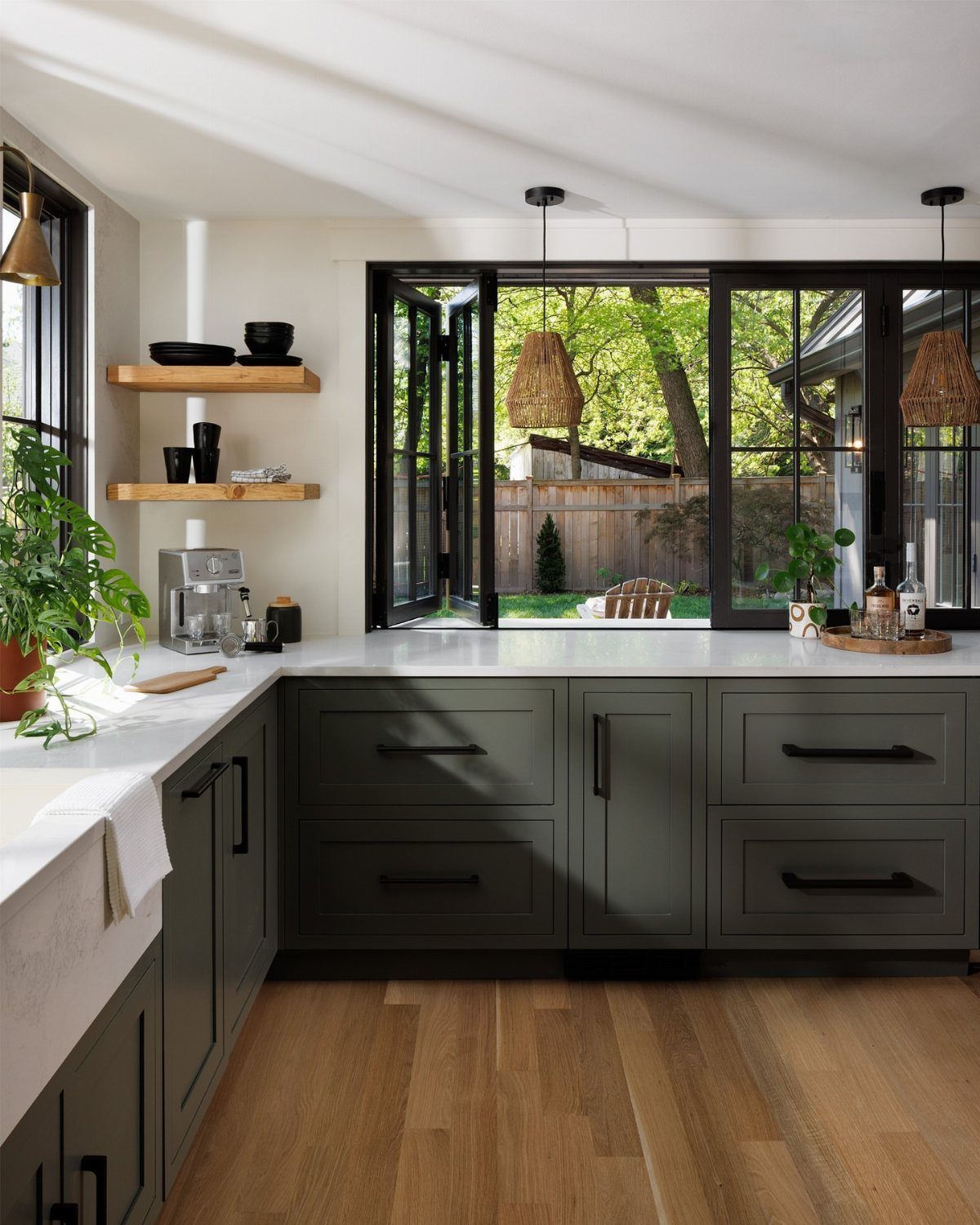
Forest green is the deep, earthy version, and it looks best when the room already has something natural to borrow from. Light wood floors and white counters keep it fresh, and a view of trees outside does the rest.
Open shelving above breaks up the dark run and lightens the wall. I would hold the shelves to a few plates and a bowl, so the green still reads as the main event.
11. Dark Blue-Green Kitchen
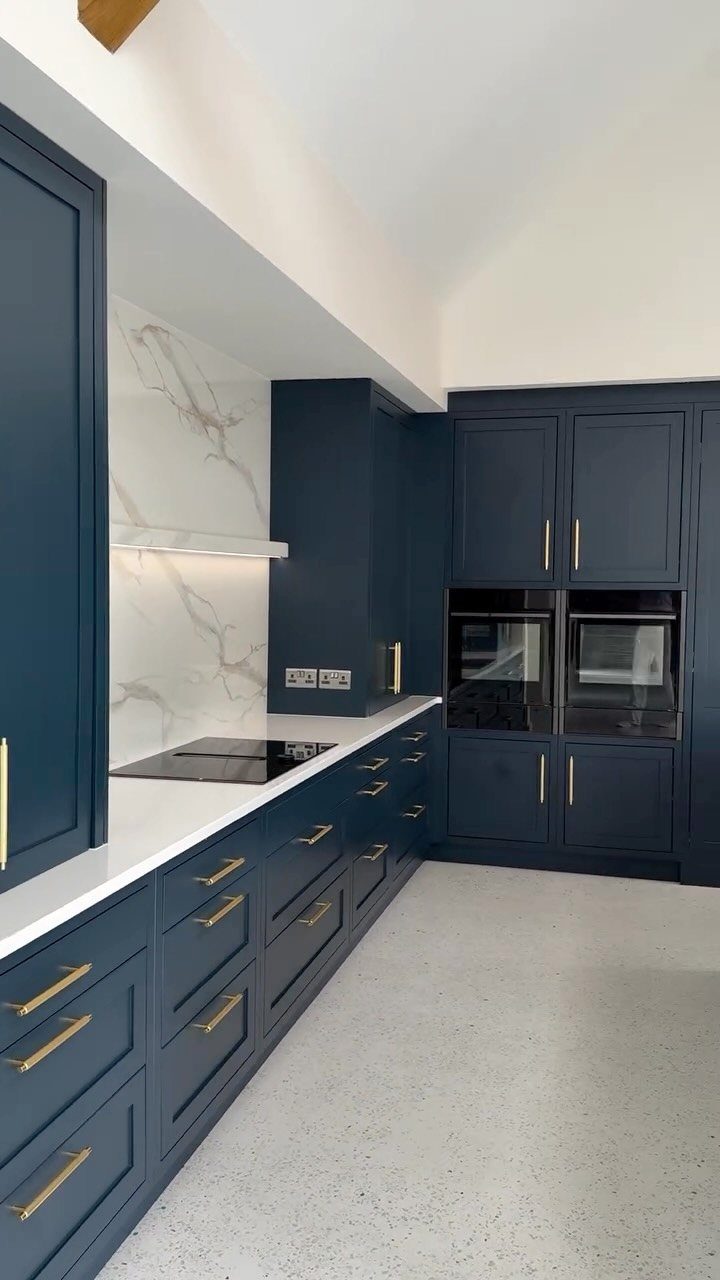
Blue-green sits a few steps from forest green and feels cooler and a little more modern. Gold handles warm it up, and a white marble backsplash keeps the shade crisp instead of moody.
Test a sample in your own light before buying a full gallon. Blue-green shifts between rooms, and I would rather find that out on a painted board than on every cabinet door.
12. Green Open-Plan Kitchen
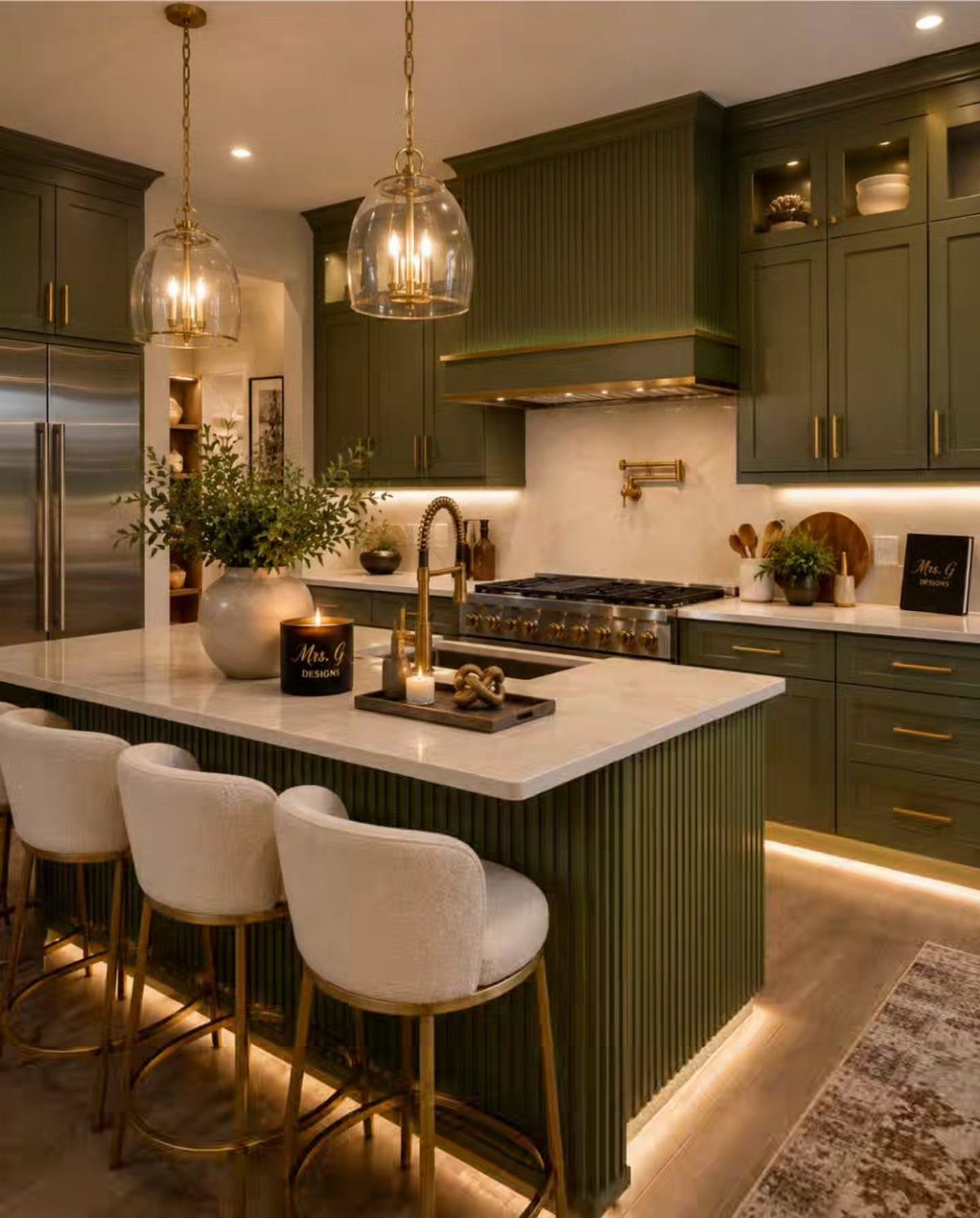
In a bright open-plan room, dark green cabinets and a matching island mark out the kitchen without a wall. A fluted island adds texture, and white marble counters give the green some relief so the room stays light.
Painting the island and base cabinets the same green is what makes it read as one zone. Gold hardware and pendant lights over the island add warmth, and white stools keep the sightlines open.
13. Popular Dark Green Shades
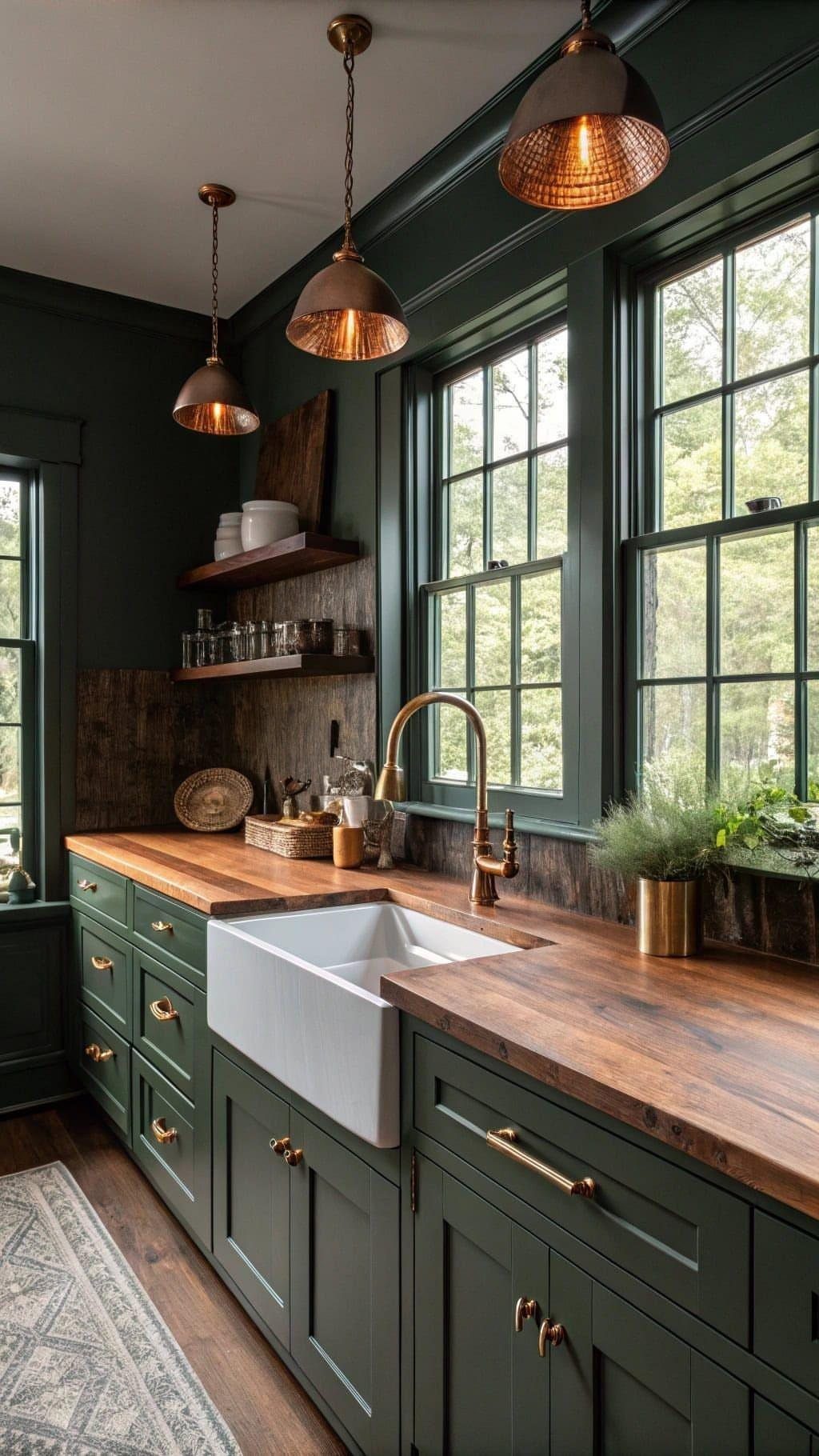
Undertone sorts dark greens into camps, and yellow-leaning olives like Sherwin-Williams Rookwood Dark Green warm up next to oak, brass and butcher block. A shade leaning yellow-brown suits wood countertops and brass; one leaning blue goes cooler and crisper.
Paint a sample board and hold it next to your countertop and hardware before choosing. I would pick the tone that agrees with your warmest material, since that is the one you will see most.
14. Glass-front Cabinets
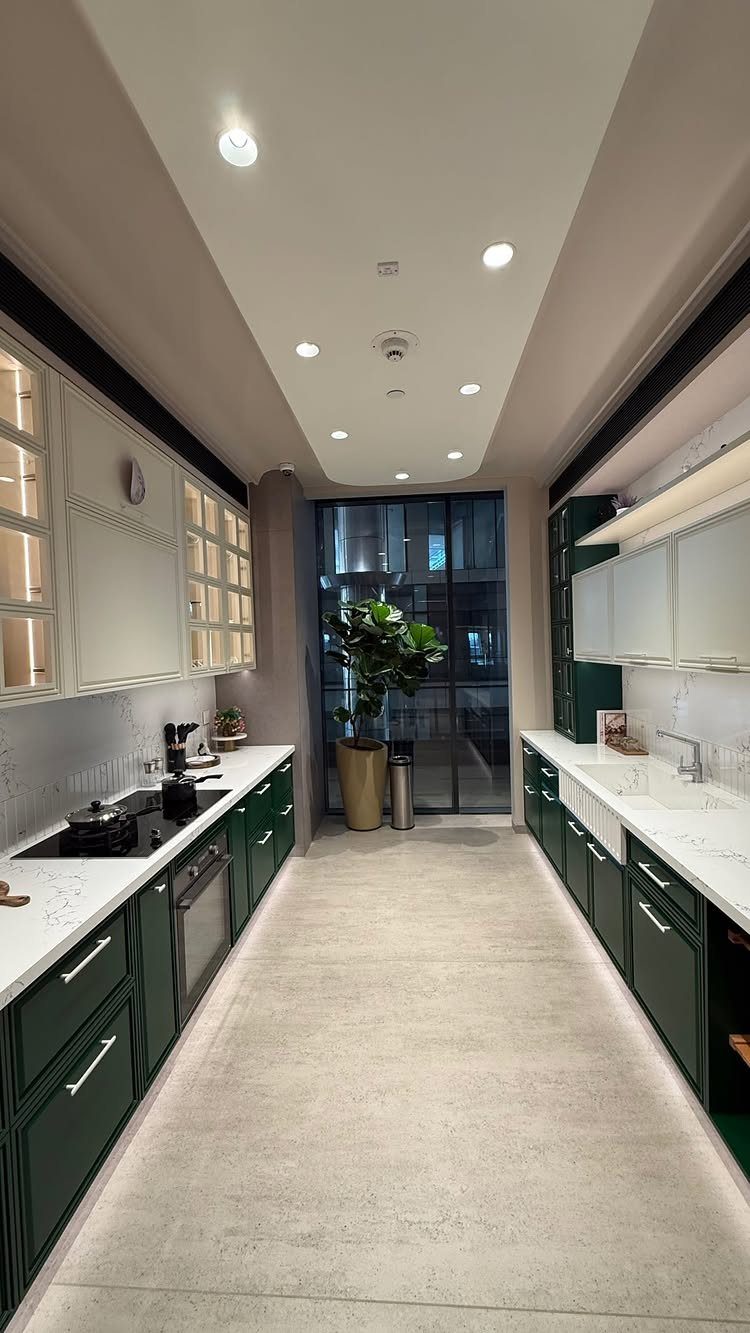
Glass fronts on the upper cabinets keep a dark green run from reading as one solid block. With green below and white above, the glass gives the wall some depth and a place for a few dishes.
I would keep the contents tidy and matching, since everything shows. A large plant at the end of a narrow room adds a final green note.
If you want the look cheaply, swap one or two upper doors for glass rather than all of them.
15. Dark Green Cabinets with Patterned Backsplashes
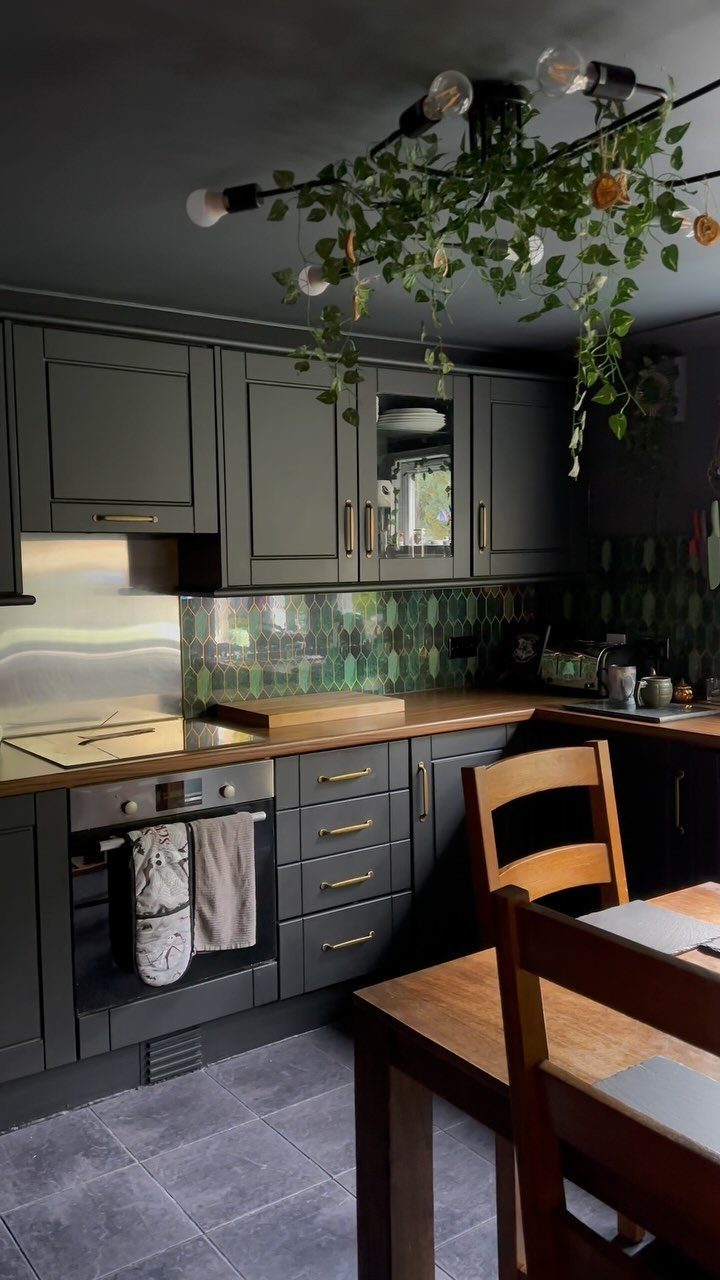
Green patterned tile behind dark green cabinets adds texture without bringing in a new color. The pattern does the talking, so wooden counters and a plain table can stay quiet.
Stay in the same green family as the cabinets, and let the pattern be the busiest thing in the room. I would skip a second pattern nearby.
On a budget, a small backsplash area is the place to spend, since a few square feet of tile go a long way.
16. Dark Green Cabinets with Indoor Plants
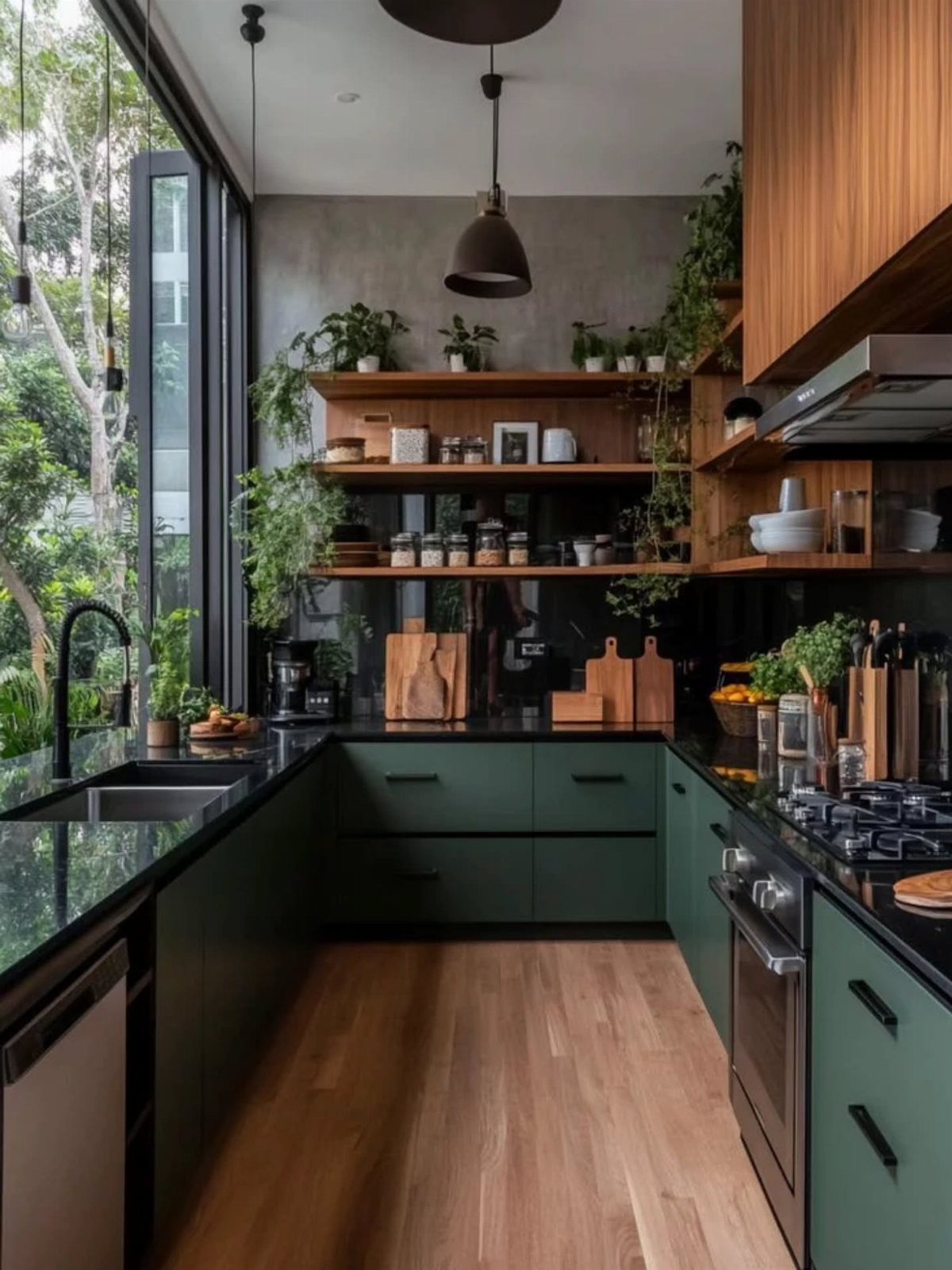
Plants on wooden shelves give dark green cabinets something living to echo, and they look best in a room with a big window.
Dark green cabinets look cleanest against black counters and pale wood floors, since the light floor keeps the lower run from swallowing the room.
Keep the shelves to a few pots, so the cabinets still lead. Trailing varieties soften the shelf edge, and I would pick pots in wood, terracotta or white.
Plants need light, so place them nearest the window.
17. Dark Green Cabinets with Vintage Fixtures
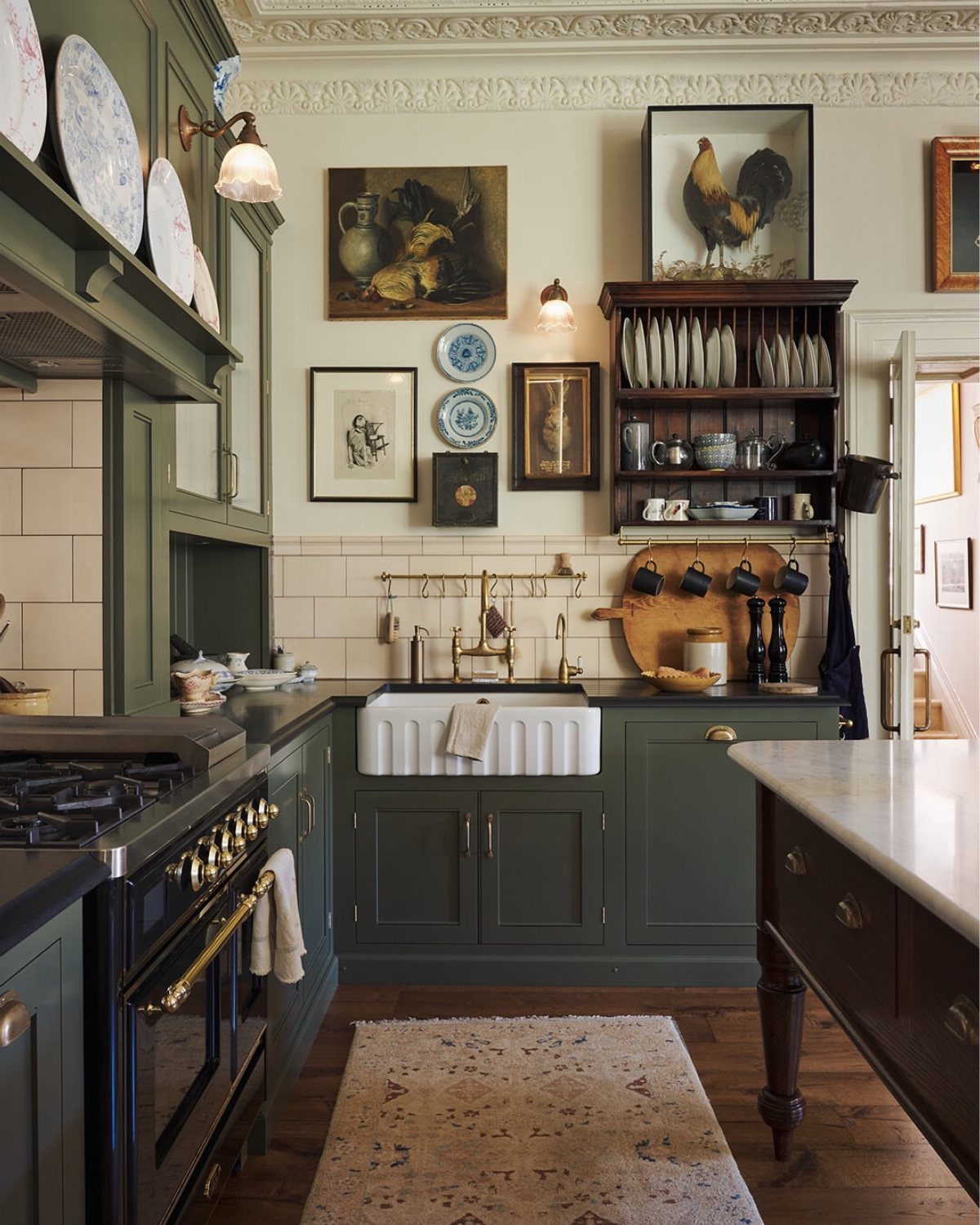
Vintage wall lamps and aged brass fixtures give dark green cabinets a lived-in character that new pieces rarely match.
A white farmhouse sink keeps dark green cabinets looking crisp, and a wall of framed art and plates above it adds the vintage layer without a single extra cabinet.
Choose one era of lighting and stay with it. I would match the lamp finish to the faucet and pulls, so the brass reads as a set.
Secondhand lamps are the budget route, though a licensed electrician should handle any rewiring.
Benefits of Dark Green Cabinets
A busy household will notice that within the first week.
The color also adapts to the style you already have. Modern, traditional and farmhouse rooms can all carry it, so a rental or first home with a mixed look won’t fight it.
Green tones read as natural and calming, which suits a room where you cook in the morning and unwind at night.
Paired with contrasting light counters or metallic accents, it gives the room depth and a richer, more layered feel, and it can make the space look larger than a flat mid-tone would.
Customization for Dark Green Cabinets
Dark shades show color variation more than light ones, so consistency matters. If you order custom cabinets, ask that every door and panel come from the same batch, and if you paint, mix enough for the whole job at once.
Custom work also lets you apply the green selectively.
For everything around the green, 3 groups work reliably:
- Butcher block counters and wood shelving bring warmth that balances the weight of dark green without competing for attention.
- Brass or gold hardware and fixtures
- Neutrals like white, cream or light gray, which let the green stand out
Long-term Appeal of Dark Green
Dark green holds up over time when you balance it. Pair it with light materials such as pale counters, a light backsplash or light flooring, and give it good lighting, so the color stays rich instead of heavy.
Because the green is grounded and adaptable, it doesn’t lock you into one style. You can change hardware, stools or paint on the walls later and the cabinets will still work.
If resale matters, that flexibility is a point in its favor. Dark green gives a kitchen a clear identity without going extreme, so it suits buyers who want character.
Frequently Asked Questions
What are some good green paint colors for kitchens?
Forest green, emerald, dark sage and deep olive are the shades that come up most. I pick blue-green for cooler schemes with chrome and marble, yellow-green when the rest of the room leans oak or brass.
What are the best cabinet colors for a dark kitchen?
Dark green works well, but it needs help from light surfaces and good lighting.
Pale counters, a light backsplash and light flooring keep it rich instead of heavy, and a warm white under-cabinet strip stops the green from swallowing the room. Cool bulbs turn green cabinets gray, so stay with warm ones.
What hardware color goes best with dark green kitchen cabinets?
Brass or gold is my first pick, since the warm metal gives dark green a focal point it would otherwise lack.
Matte black gives a bolder, more modern contrast, and chrome looks clean but cooler. Measure center-to-center on the old holes before you buy, or you’ll be patching and re-drilling.





