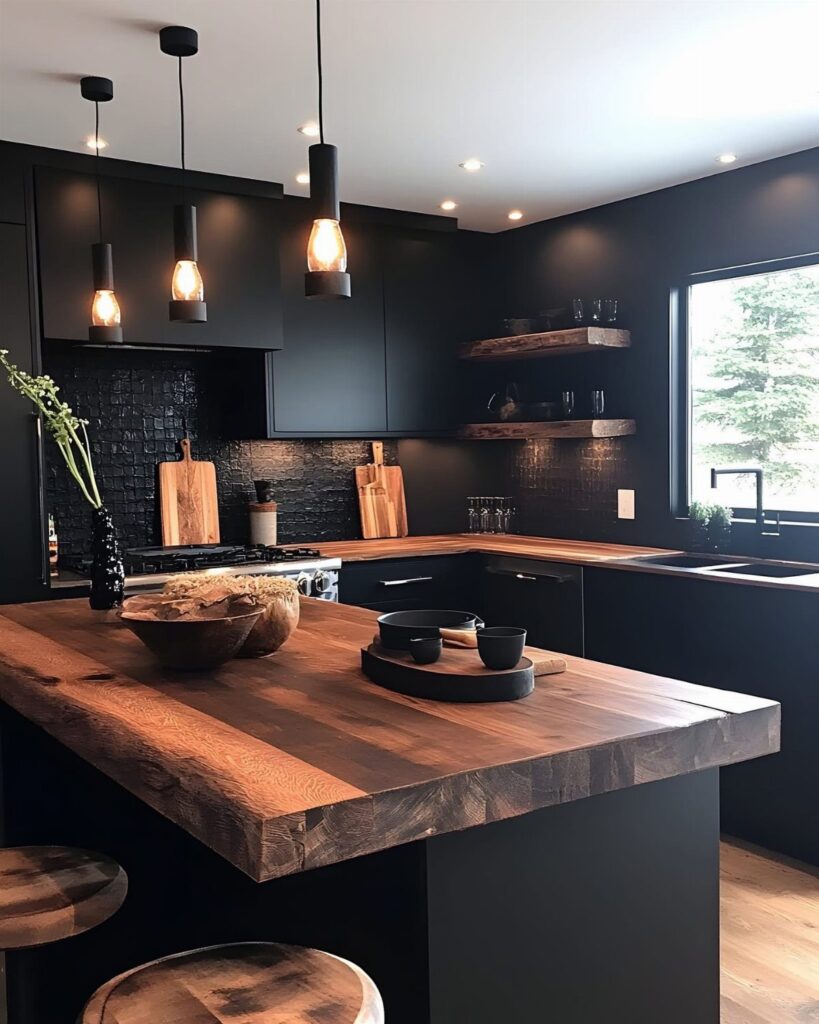
The light in your kitchen decides which of these palettes is yours: a room with weak daylight does better with white, beige, or taupe, while black or deep color needs a window and a big sample board taped up for a few days first.
1. Black Kitchen Cabinets
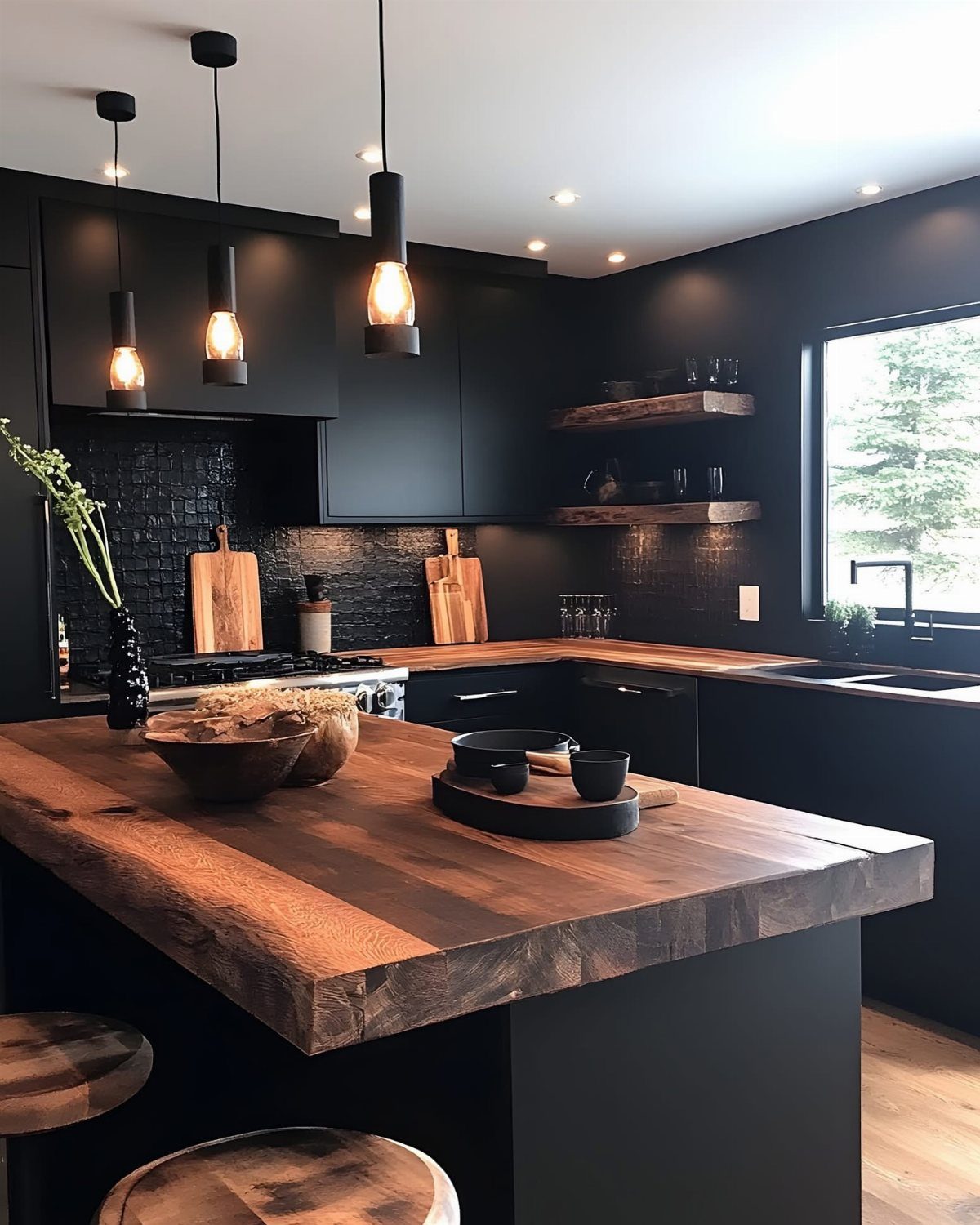
Matte black cabinets hide fingerprints better than gloss, and against a thick wood island the black reads warm instead of heavy.
I’d keep the wood as the one softer surface and let the pendants repeat the black so the room feels planned.
A window with greenery outside helps a lot here. Dark cabinets in a kitchen with little daylight will feel closed in, so test a large sample board on the wall for a few days before painting.
2. White Kitchen Cabinets
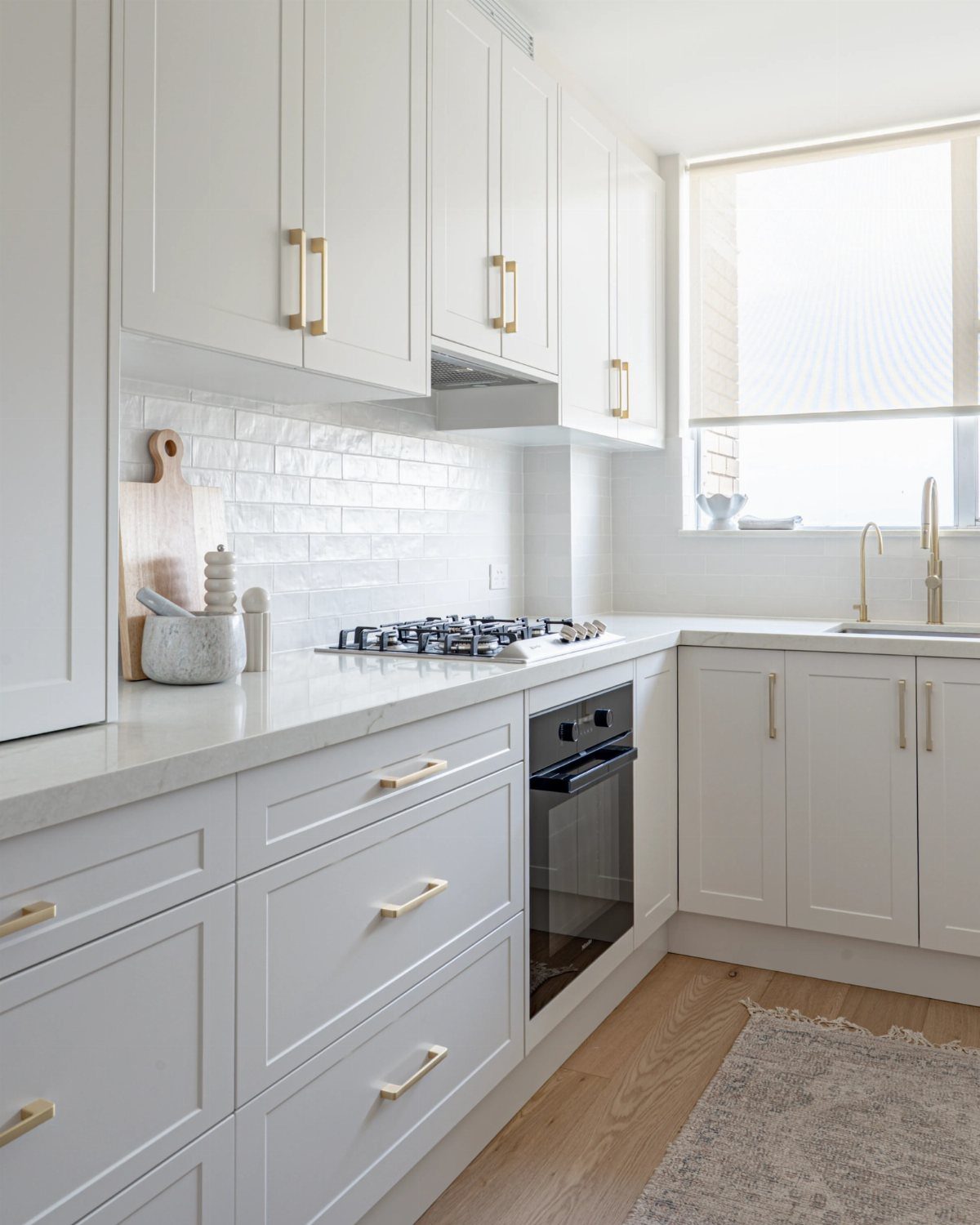
White shaker doors are the safest cabinet choice I know, and the easiest to change later. Swapping the hardware alone shifts the mood: gold pulls give white a warmer, slightly dressier look than chrome or black.
Pair them with white subway tile and the kitchen stays quiet, which suits renters and first-time owners worried about resale taste.
Pick a warm white if the room gets weak light, since cool whites can look flat and a bit clinical.
3. Green Cabinets
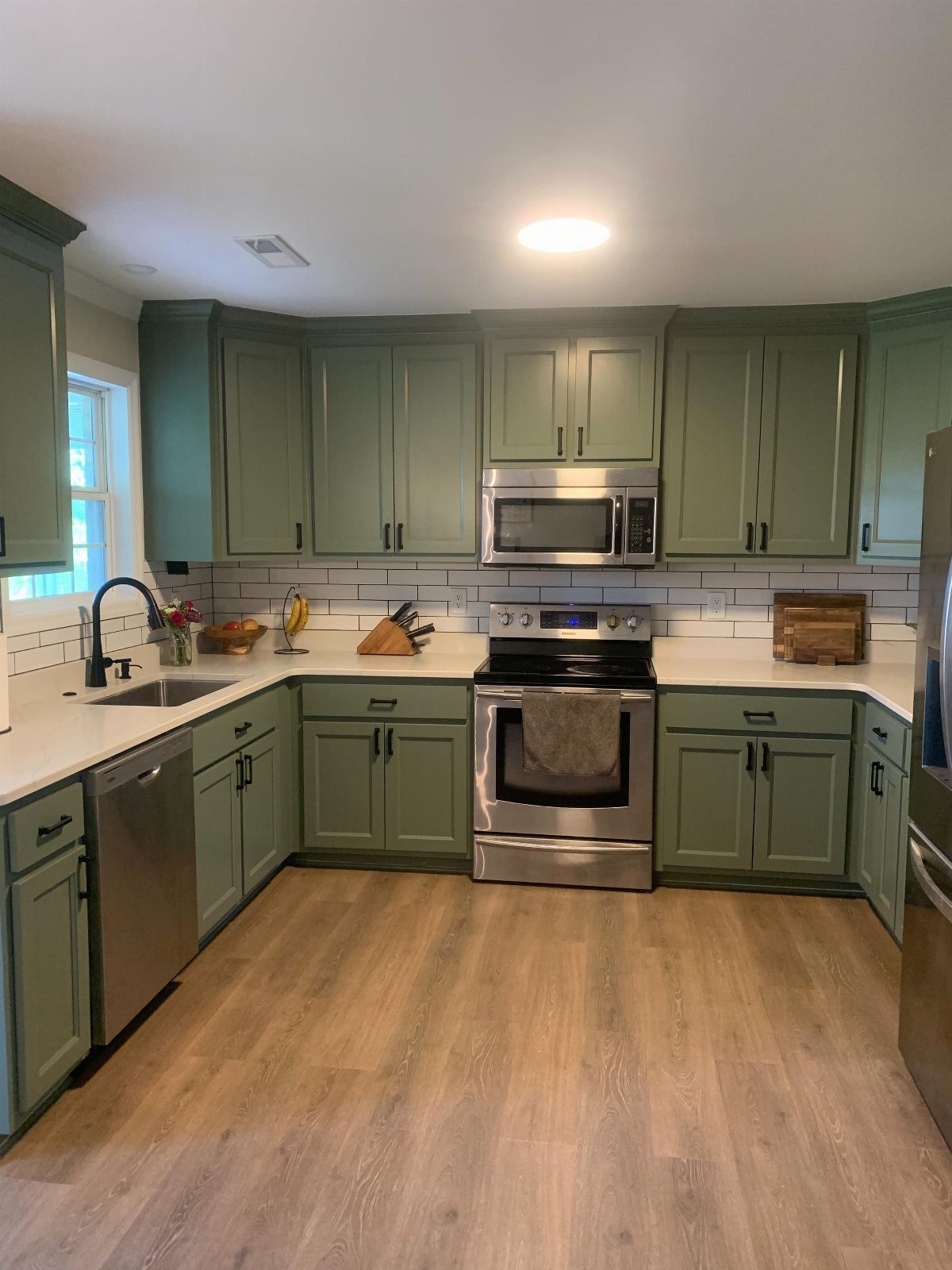
Sage green is a gentle way into color, and it behaves almost like a neutral beside white countertops and stainless steel appliances. I like it best with a light wood-look floor, which keeps the green from feeling cold.
For a weekend budget, painting existing cabinets is the cheapest route. Choose a soft, grayed green rather than a bright one, and let a white backsplash stay quiet so the cabinets carry the color.
4. Two-Tone Cabinets
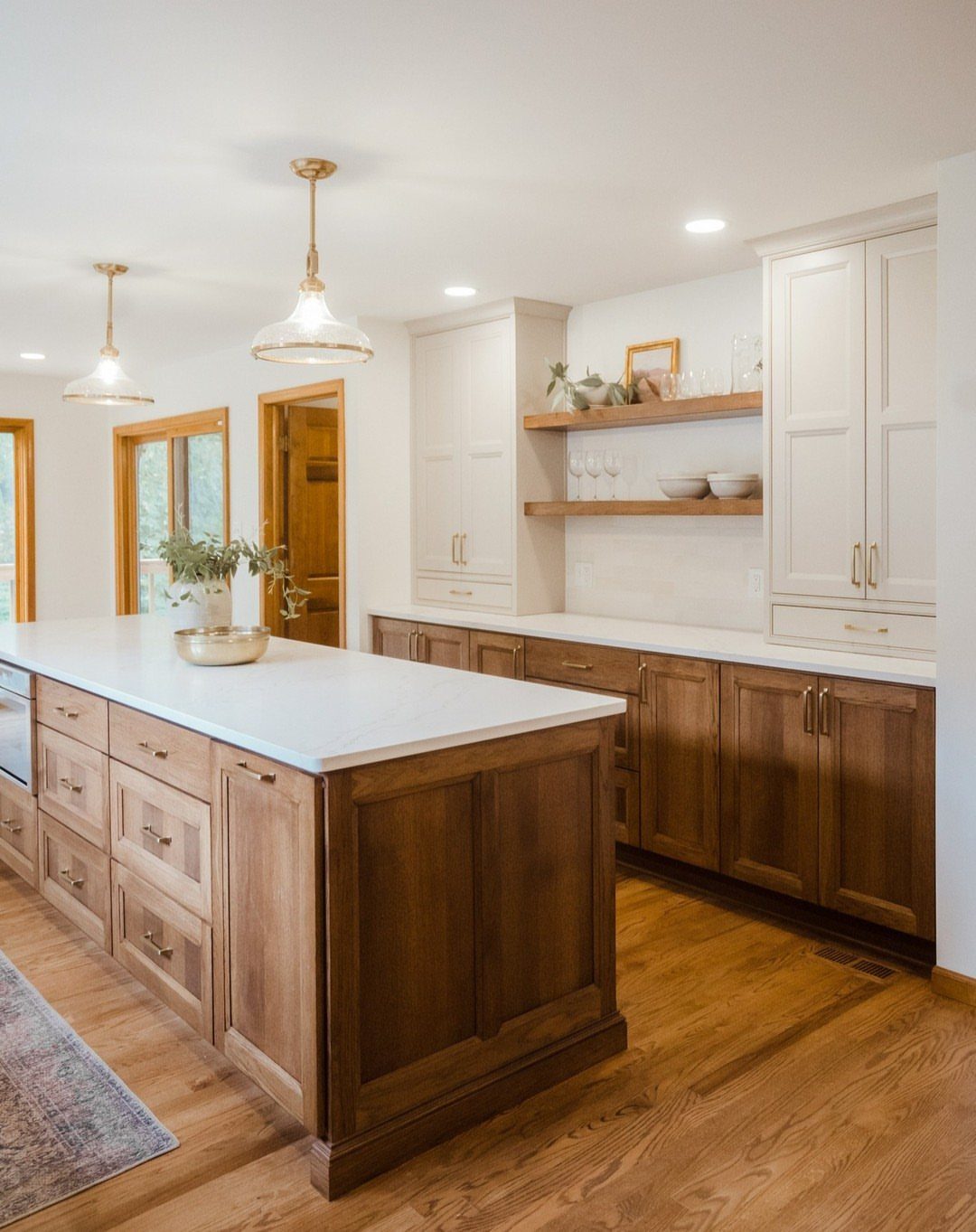
Splitting the colors, white uppers over wood lowers, solves a common problem: an all-wood kitchen can feel heavy, and all white can feel flat. Carrying the wood onto the island ties the 2 halves together.
Open shelving up top keeps the light side airy. On a tight budget, paint only the uppers white and leave sound wood lowers as they are, or the reverse if the wood is dated.
5. Wood Cabinetry
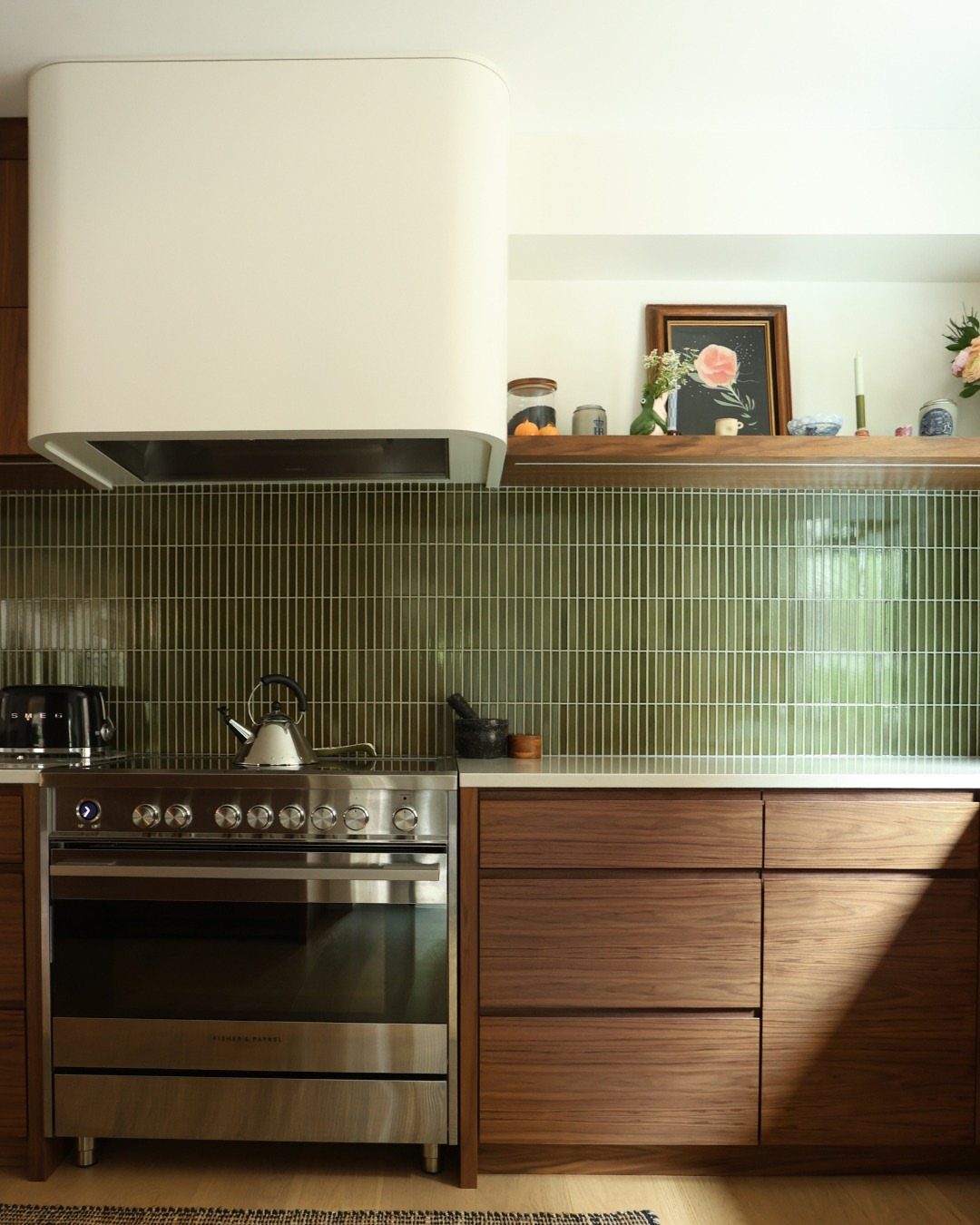
Walnut lowers with a matching open shelf give a kitchen depth that paint can’t quite copy. I’d go simple everywhere else, as here, with a white range hood and one accent like green tile, so the grain stays the star.
Wood tones are best repeated in small doses elsewhere, not matched exactly. Restaining or oiling existing wood cabinets costs far less than replacing them, so check what you have before ordering anything.
6. Blue Kitchen Cabinets
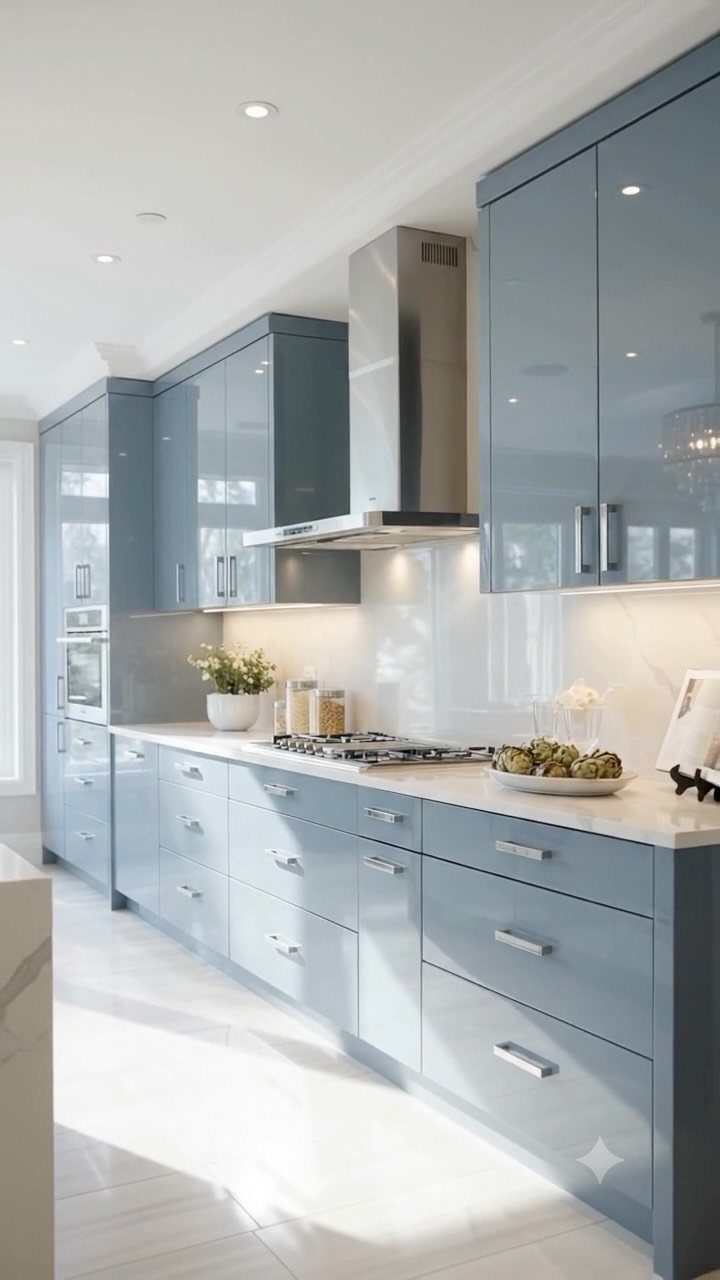
Glossy blue on both uppers and lowers is a confident move, and white countertops keep it from tipping into too much.
Gloss bounces light around a room, which helps in a smaller kitchen, though it also shows every smudge and wall flaw.
Prep and sand carefully before painting, because shine exposes brush marks. If that sounds like too much, a satin finish gives the same color with more forgiveness.
7. Beige and Taupe Kitchen Cabinets
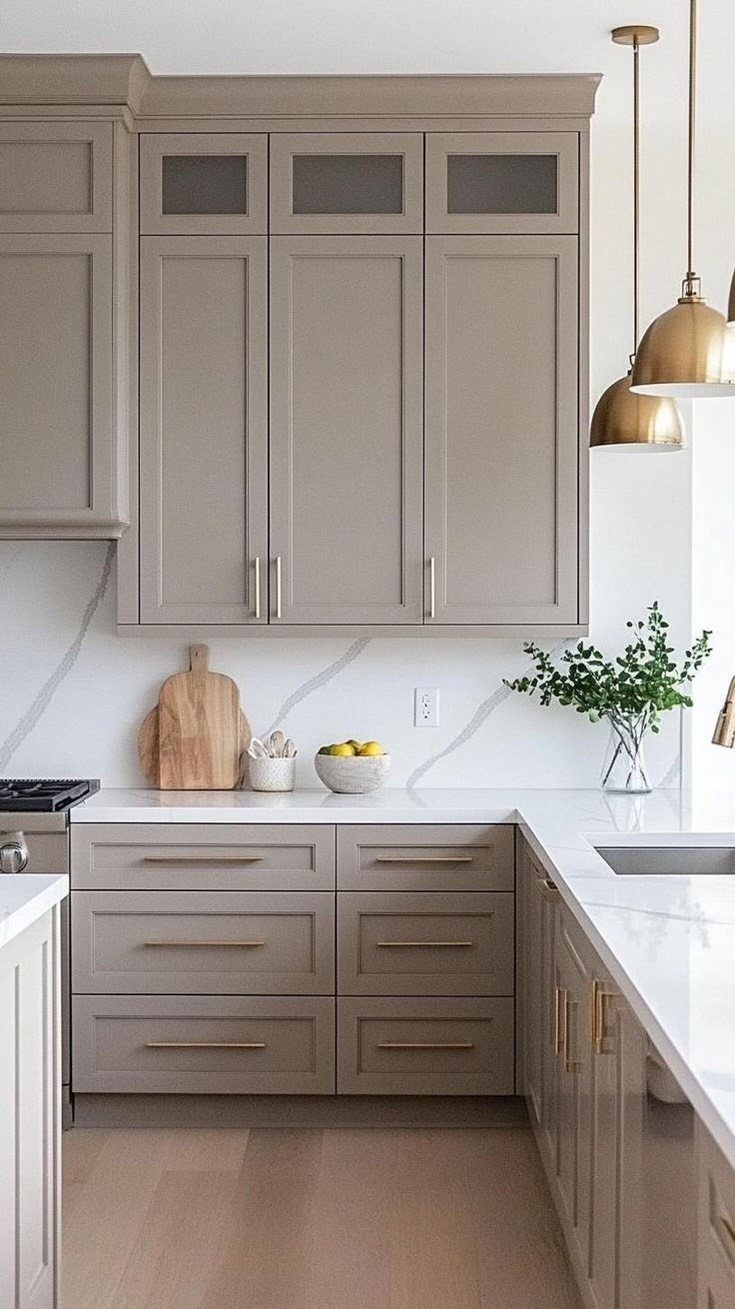
Taupe sits between beige and gray, which makes it forgiving next to white marble and a white backsplash. Gold pendants and gold hardware warm it further, so I’d repeat that one metal in both places and stop there.
Paint a large sample on the cabinet door itself and look at it morning and evening, since taupe leans pink or green depending on the light.
8. Bold Colors
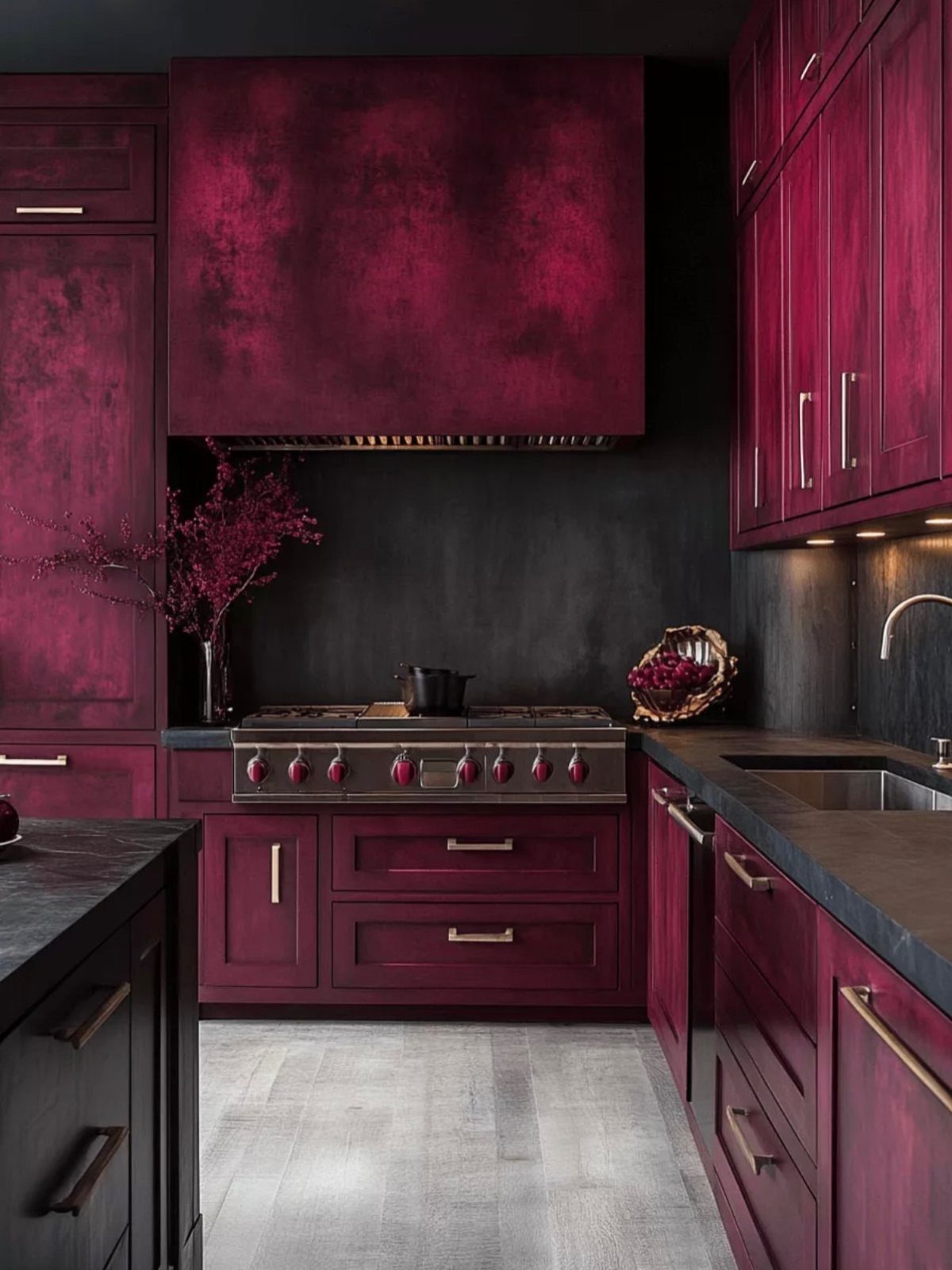
Deep magenta cabinets work best when everything around them stays quiet: dark gray walls, dark countertops and a black backsplash give the color a calm frame, and matching the range hood to the cabinets commits the whole wall to it.
Keep everything else this quiet, because a second loud color would fight it.
Paint is the cheapest way in. A sample board taped to the wall for a few days will tell you whether you can live with it, well ahead of the moment you’re hauling home gallons.
9. Grey Kitchen Cabinet Color Trends
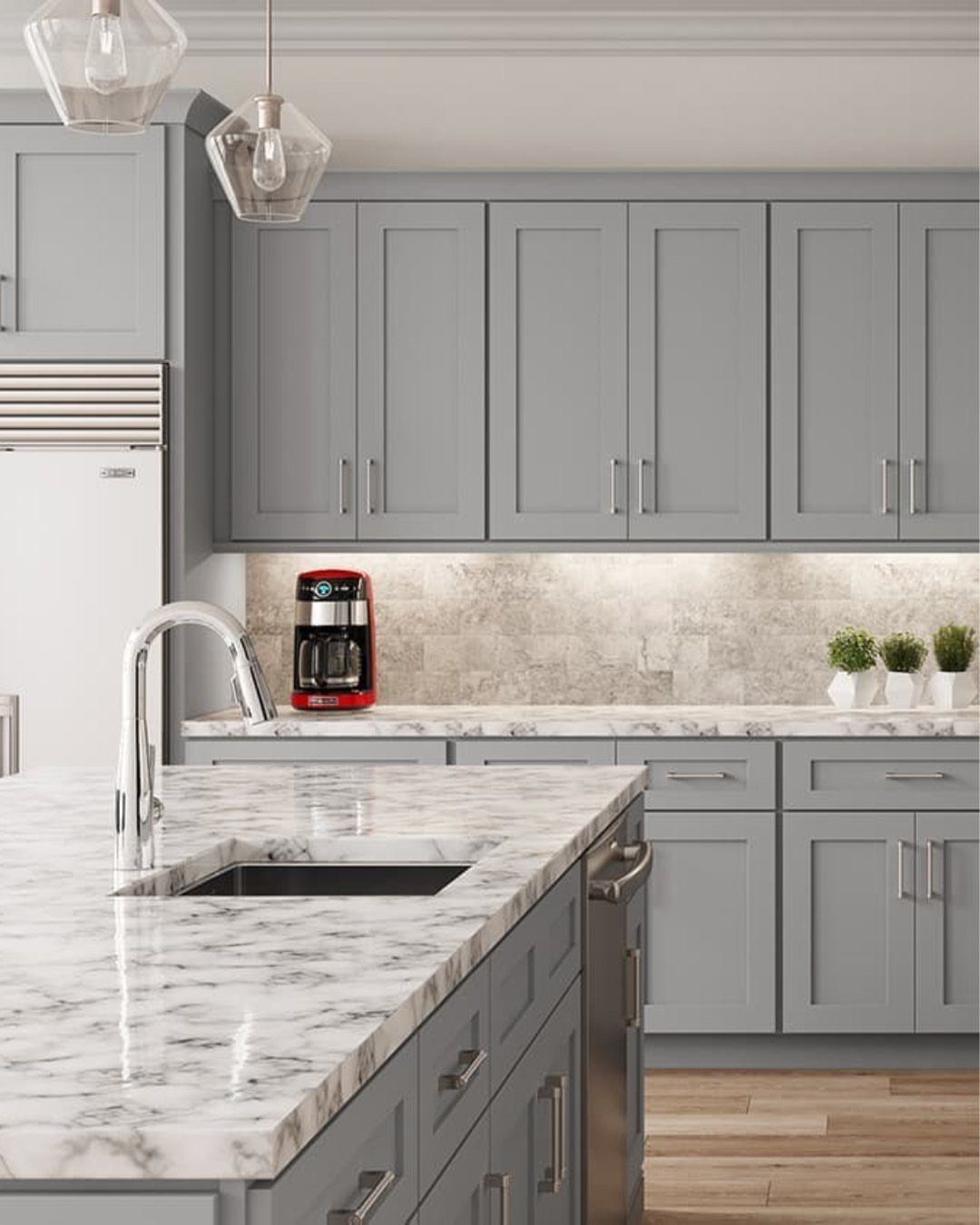
Grey shaker doors with white marble countertops read as crisp and a little formal, and a single bright object, like a red coffee maker, stops the palette from going flat. I like that approach better than adding more grays.
Pick a grey with some depth instead of a pale builder shade. Clear glass pendants and a stainless sink keep the look light, so the cabinets stay the main event.
Gone are the days of solely relying on all-white kitchens or natural wood cabinetry for kitchen color ideas.
Consider Lighting
Paint looks different at 8 a.m., at noon and under a lamp at night, so judge a color across a full day before you buy a gallon.
Check it again after dark with your regular kitchen lights on, since bulbs shift how any color reads.
Sample sheets with a sticky back from the paint makers make this easy, and they move from wall to wall without damaging anything. Stick them in several spots: near the window, beside the stove, inside a dim corner.
Hold one against your backsplash and your countertop too. Those surfaces change how the color looks, and a shade that seems right alone can clash with them.
Resale Value Considerations
If a sale is likely in the next few years, a neutral kitchen is the safer bet.
White cabinets bounce light around, so the room feels larger, airier and calmer. Buyers also read a white kitchen as a blank backdrop they can add their own touches to.
I’d start with these 2 whites:
- Farrow & Ball No. 1 Lime White, a soft white with a faint warm, creamy lean
- Benjamin Moore Simply White OC-117
Buy a sample of each and test them in your own light before committing.
Color Psychology
Color changes the mood of a kitchen as much as the look.
Brighter colors read as energetic and trendy right now, while neutrals feel calmer. Darker shades bring drama, polish and a luxe feel, but in a compact kitchen they can pull the walls inward.
Navy and green are popular at the moment. These are the sharp options I’d sample first:
- Behr Ultra Dark Cobalt Blue (PPU15-3)
- Benjamin Moore Backwoods (469)
Grays hold up over time, and a few of them carry a hint of blue, green or beige beneath the surface.
Frequently Asked Questions
What is the most popular color for kitchen cabinets?
White, beige and gray are the most common choices, since they suit nearly any style and bounce light around a room.
A warm white with a wood or greige island is the safest of these. Blue, green and black are the deeper colors people add for contrast.
What cabinet colors are timeless?
White, gray and soft neutrals like beige and taupe hold up longest, and muted navy or soft green can work too.
White shaker doors are the easiest to live with, and swapping the hardware changes the mood later. A neutral palette gives you the widest buyer appeal if you plan to sell soon.
How do I choose a cabinet paint color to match my backsplash and countertops?
Match undertones first. Match the undertone: warm backsplashes pair with whites, creams and taupes, while cool tiles look better with grays that lean blue or green.
Test the sample directly against both surfaces before you commit, because undertones shift the second you bring them into the same room.
What finish is best for kitchen cabinet paint?
Satin is the easy pick: it wipes clean, handles wear and forgives brush marks.
Semi-gloss or gloss lasts longer and bounces more light, but it costs more and shows smudges and wall flaws. If you go glossy, sand and prep carefully, because shine exposes every brush mark.





