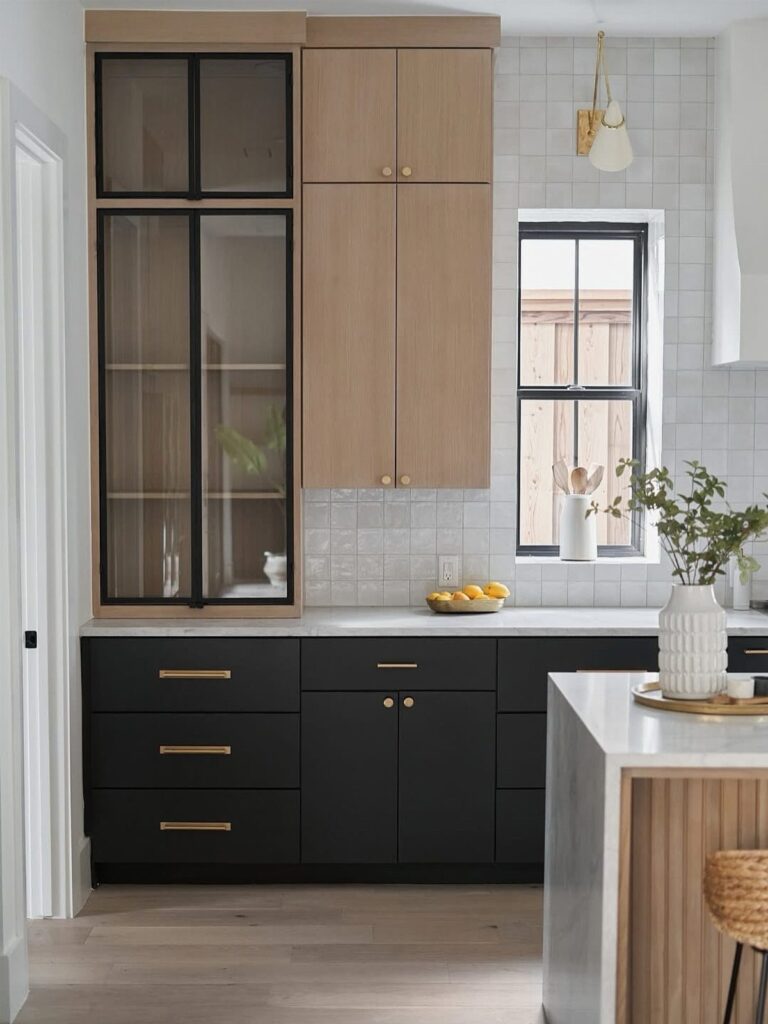
How much dark you can live with decides which of these kitchens is yours, and the ideas run from dark lower cabinets under lighter uppers, which is a one-weekend paint job, to black cabinetry paired with black granite countertops.
Anyone who rents or hates wiping will find light countertops, matte finishes and under-cabinet lighting the easiest to live with, while high-gloss fronts ask for regular wipe-downs.
Even the darkest versions here lean on one move: a pale surface or a warm light, like gold pendants or 3 of them over a marble island, to keep the color from closing the room in.
1. Dark Lower Cabinets with Lighter Upper Cabinets
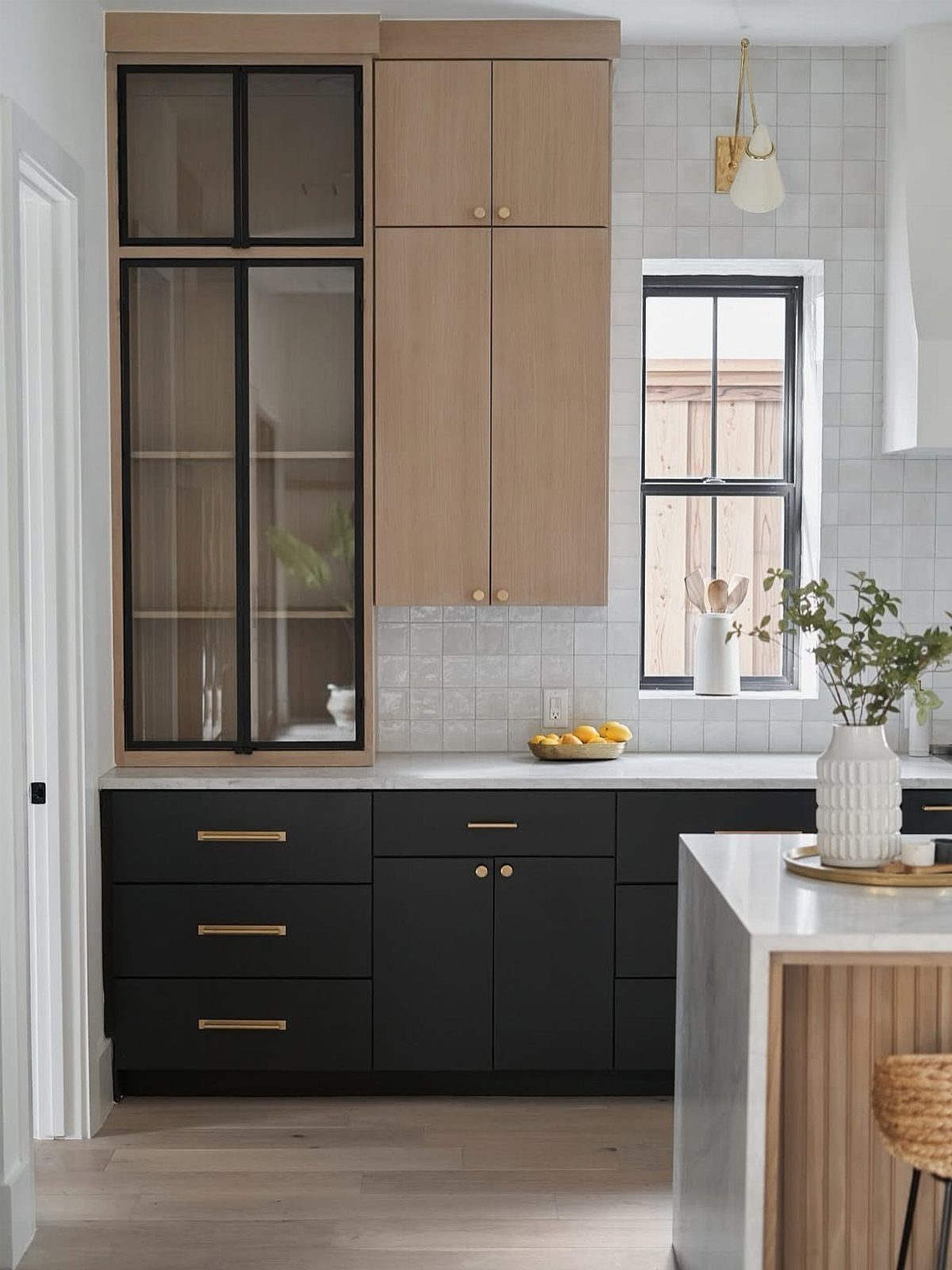
Black base cabinets paired with light wood uppers keep a kitchen from feeling top-heavy in the dark direction. The dark run grounds the room, and the wood overhead lets in warmth.
Gold pulls on the black doors are a nice touch, and I’d repeat that metal once or twice elsewhere so it looks planned. A glass-front upper breaks up the wood and gives you one place for display.
For a weekend project, painting only the lowers is the cheaper route.
“The dark hue gives cabinets a custom, built-in look that feels polished yet still warm and inviting,” he continues, noting he loves using black cabinets to create an upscale, elegant aesthetic in the kitchen.
2. Dark Cabinets with Light Countertops
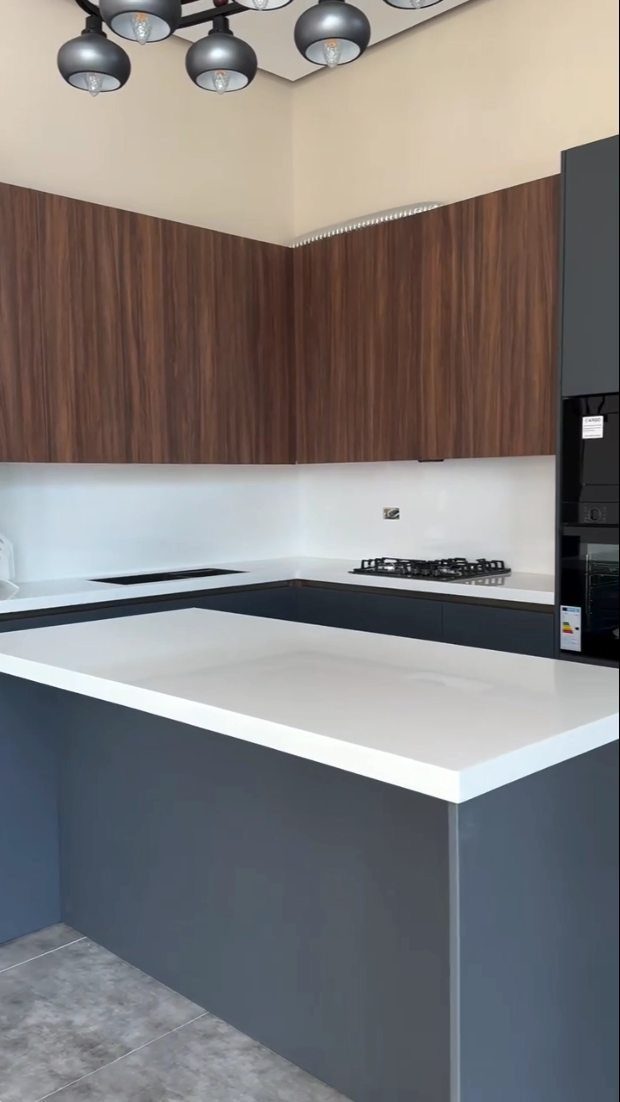
Dark grey cabinets and a bright white countertop make the cleanest contrast you can set up in a kitchen. The counter reads as a crisp line against the island and base run, so the room looks sharp without extra decoration.
If every surface runs dark, a light counter brings back brightness without much effort.
Pick a white with a slight warmth if your lighting is cool.
3. Dark Cabinets with Metallic Hardware
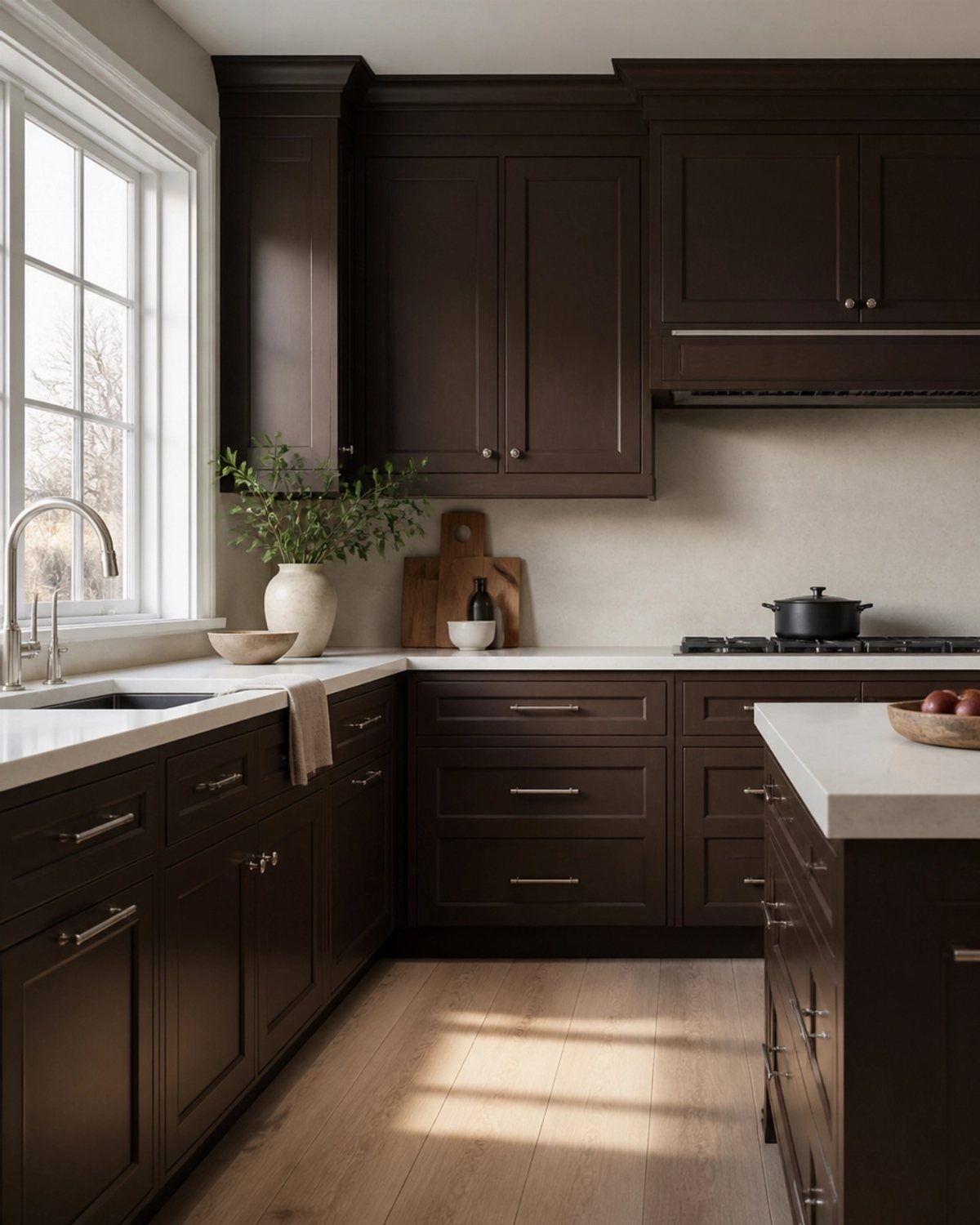
Silver handles on dark brown doors catch the light and work like jewelry on the cabinet run. Against that much brown, the cool metal stands out clearly.
I’d choose one metal and stay with it across every drawer and door, so the hardware reads as a single set. Mixing finishes on dark fronts tends to look busy.
4. Under-Cabinet Lighting with Dark Cabinets
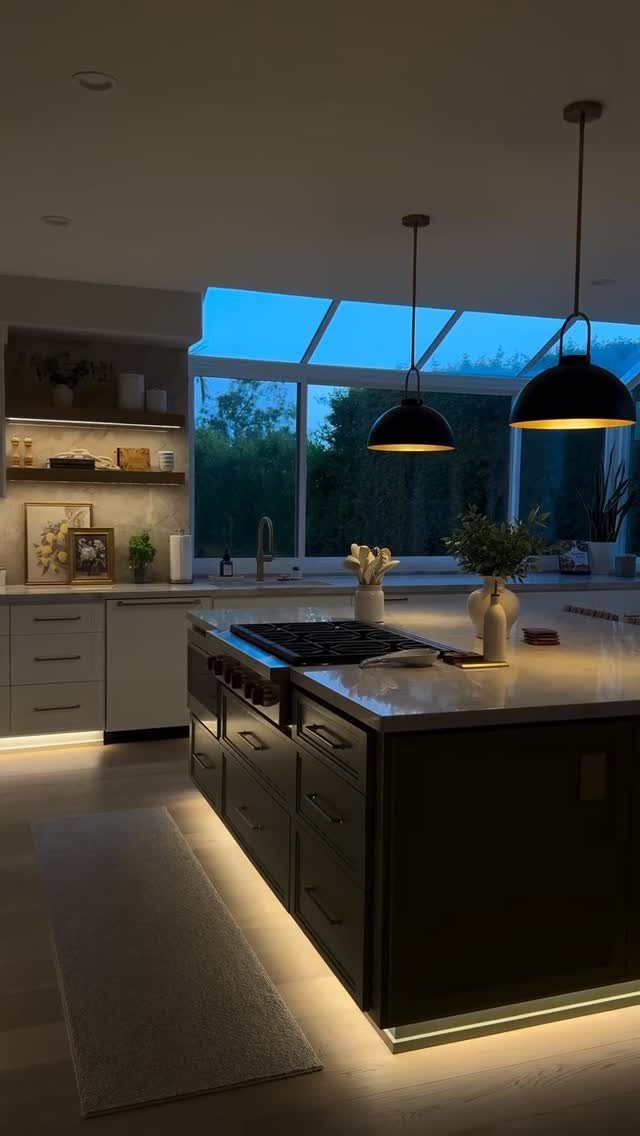
Warm LED strips along the underside of the cabinets, and even around the island base, give dark fronts a glow that overhead lights alone can’t deliver. Without them, dark grey doors tend to swallow the room at night.
I prefer a warm tone over a cool white, since it flatters both the cabinet color and the white counter. Lighting the island base also makes the whole piece look like it floats.
Strips are the budget-friendly pick, and plug-in versions skip the electrician, which suits renters.
5. Dark Cabinets with Open Shelves
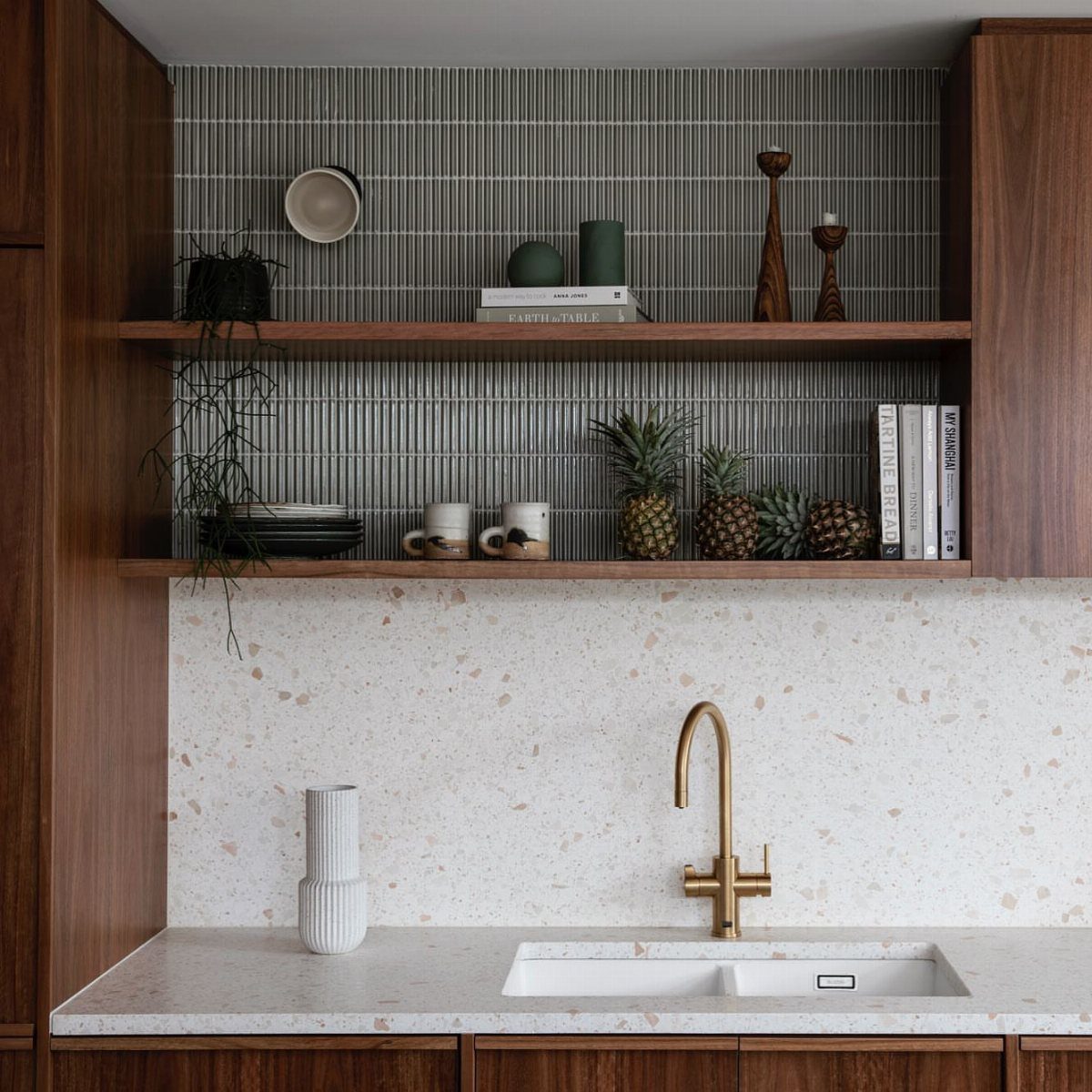
Floating wood shelves in place of upper doors lighten a dark cabinet run fast. Dark wood below and 2 open shelves above leave the wall visible, so the room feels less boxed in.
Keep the shelf contents limited and edit them often; open shelves show every mismatched mug. I’d stick to a few pieces in tones that echo the gold faucet, and leave real gaps between items.
You will dust more often, since nothing hides behind a door.
6. Dark Cabinets with Textured Materials
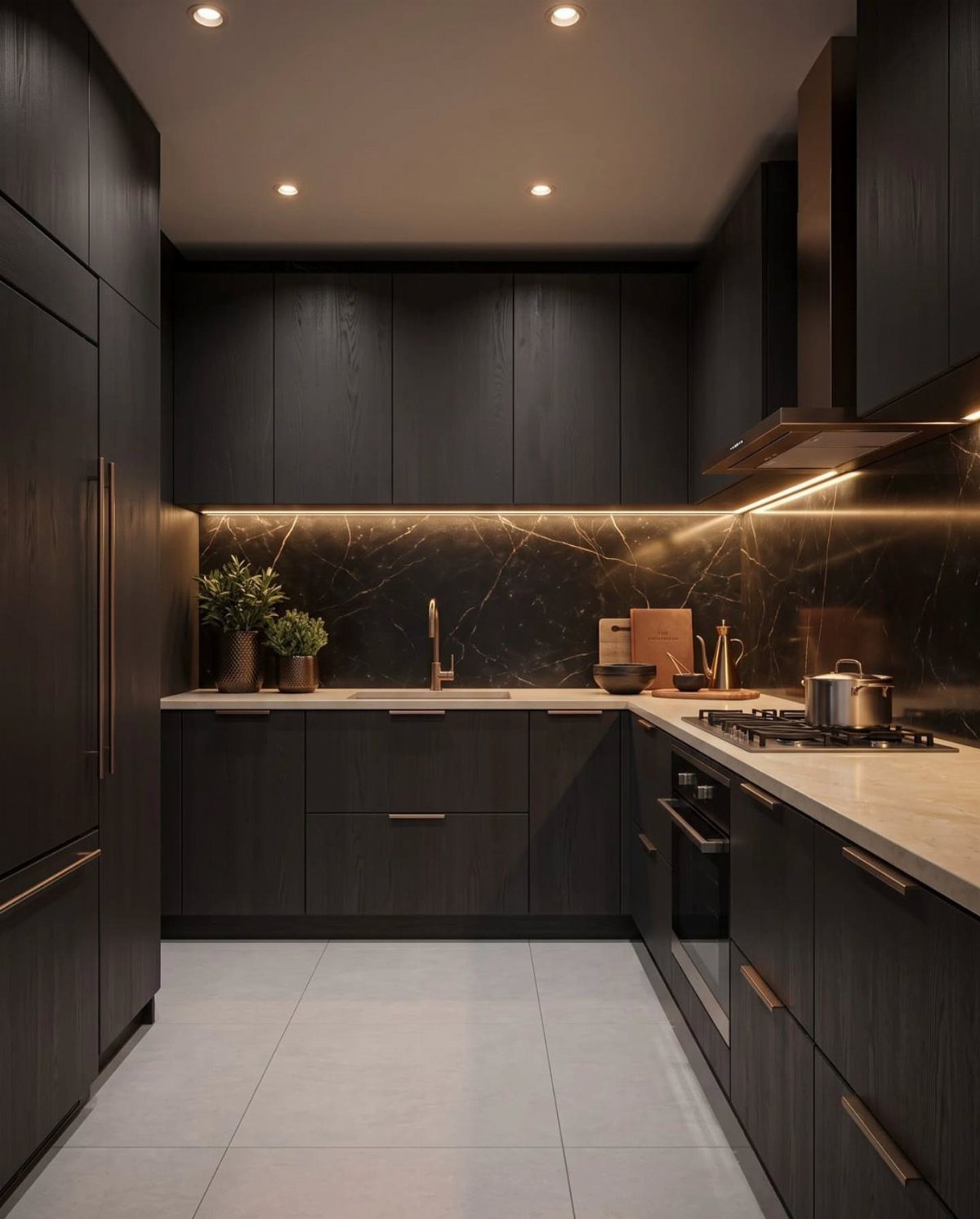
Wood grain on the cabinets, veined black marble on the backsplash and a smooth white counter give the eye 3 different surfaces to read, and that layering adds depth to a dark kitchen.
I’d keep the pattern in one place only. Here the gold veining carries the drama, so the cabinets can stay quiet in their grain.
Under-cabinet lighting helps because it rakes across the backsplash and shows off the stone. Sample every material together in your own light before buying.
7. Dark Cabinets with Matte Finishes
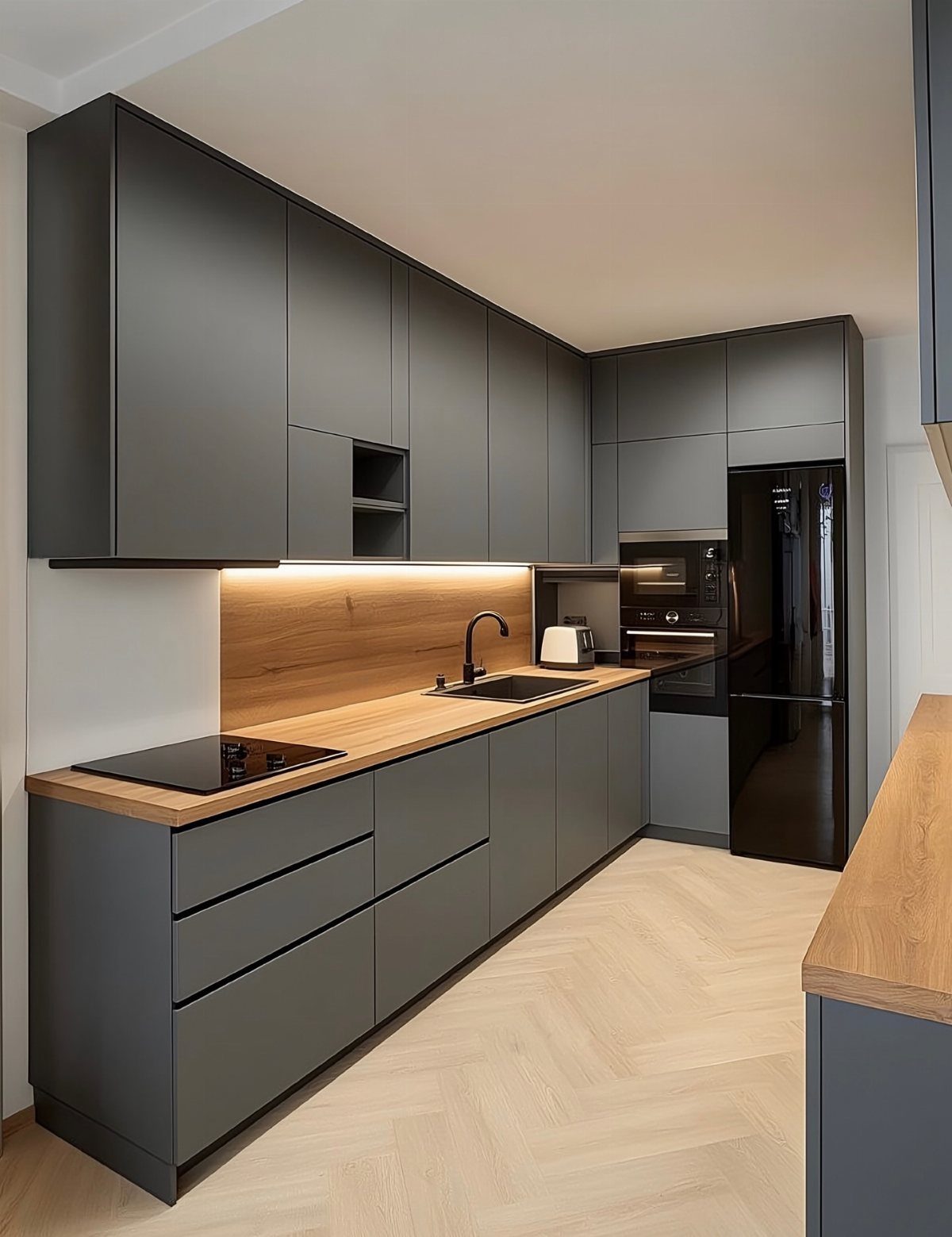
Matte dark grey doors soak up light instead of bouncing it, which keeps the cabinet run calm and lets the light wood counter and backsplash do the talking. The herringbone floor adds pattern, so the fronts can stay plain.
I’d choose matte for a kitchen with a lot of wood, since the flat finish sits quietly beside grain. Pairing it with a black fridge keeps the dark tones consistent.
Order a sample door and look at it in your own kitchen light first.
8. Dark Kitchen Island
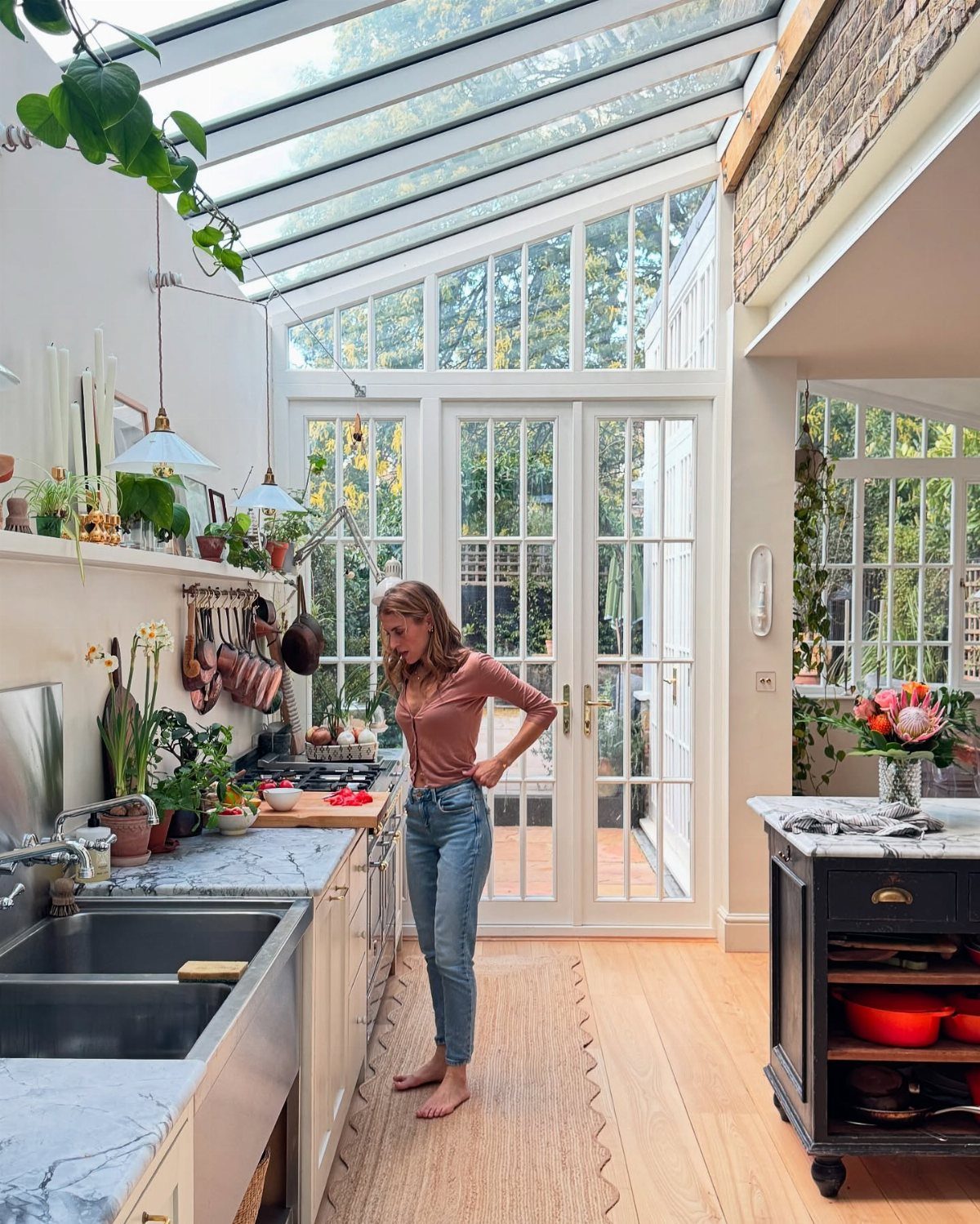
A dark island in an otherwise white kitchen works as the one anchor in the room. The marble top keeps it from reading heavy, and the white cabinets around it stay bright.
Pick a deep shade and leave everything else alone.
Keep the top light or veined so the island has contrast instead of turning into a dark block.
9. Dark Cabinets with Pink Elements
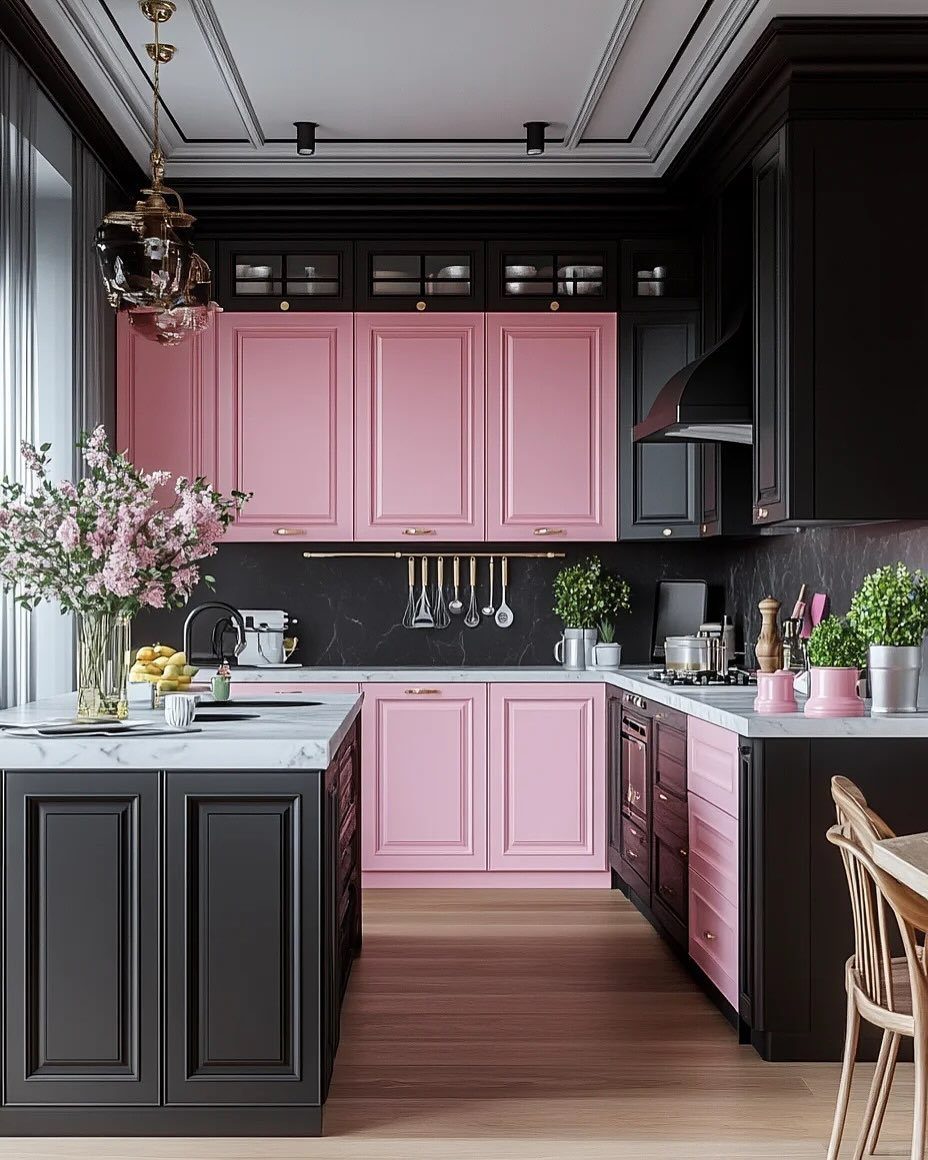
Pink doors mixed into matte black cabinets give a dark kitchen a soft, unexpected edge. Black cabinets work well with a few pink drawer or door fronts and a pale stone counter to break up the volume.
I’d limit pink to a handful of doors so it reads as an accent, not a second theme. A dusty tone sits better against black than a bright one.
Fresh pink flowers are a cheap way to test the color before you paint anything.
10. Black Cabinetry with Black Granite Countertops
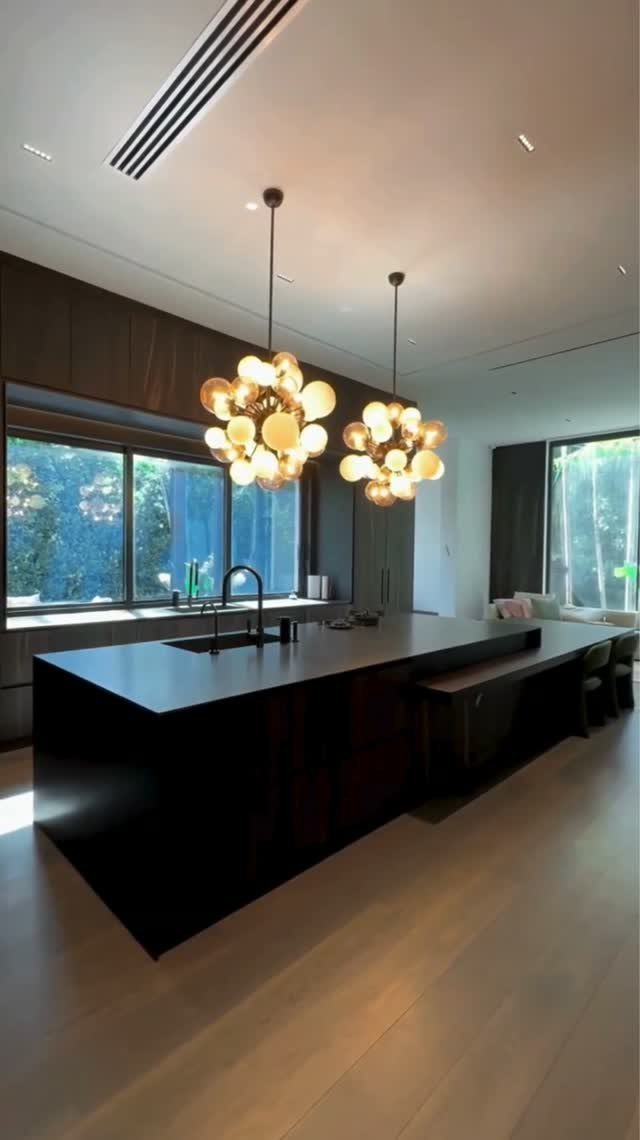
Black cabinets, a black island and a black countertop make one unbroken block of color, and that is the whole appeal. Nothing interrupts the surface, so the kitchen feels bold and cohesive.
Gold pendants over the island break up all that black, and I’d keep some metal in the room for exactly that reason. A window with greenery helps too, since daylight keeps the dark from feeling closed in.
Expect fingerprints and dust to show on black, so plan on wiping often.
11. Dark Cabinets with High-Gloss Finishes
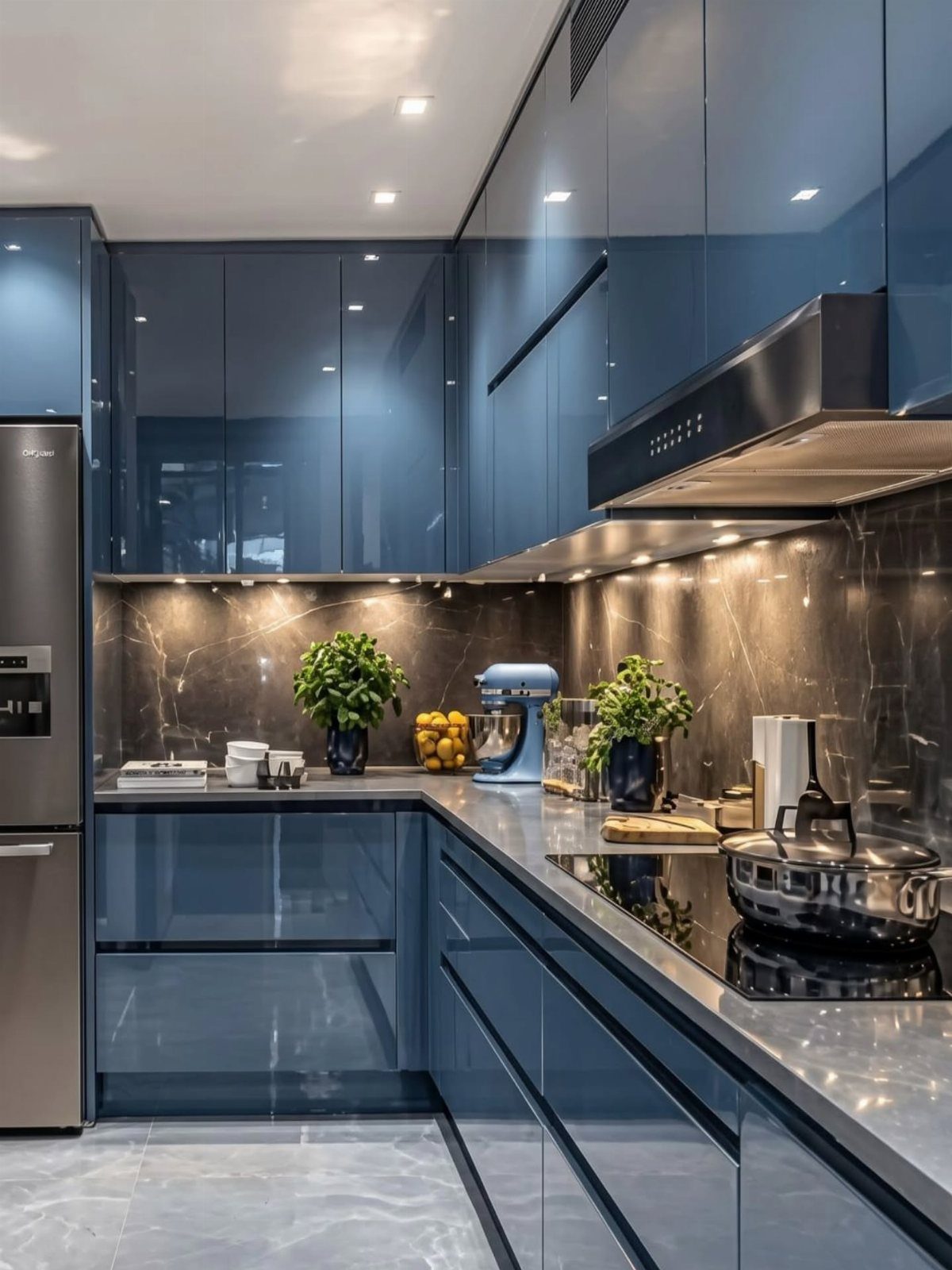
High-gloss navy cabinets reflect light and add depth that a flat finish can’t. With a grey counter and a marble-patterned backsplash, the shine gives the room a polished, almost lacquered look.
I’d use gloss on a smaller run of doors with plain counters alongside. A blue accent, like a stand mixer, picks up the cabinet color without extra work.
Gloss shows smudges and fingerprints, so keep a microfiber cloth handy.
12. Dark Cabinets with Pendant Lights
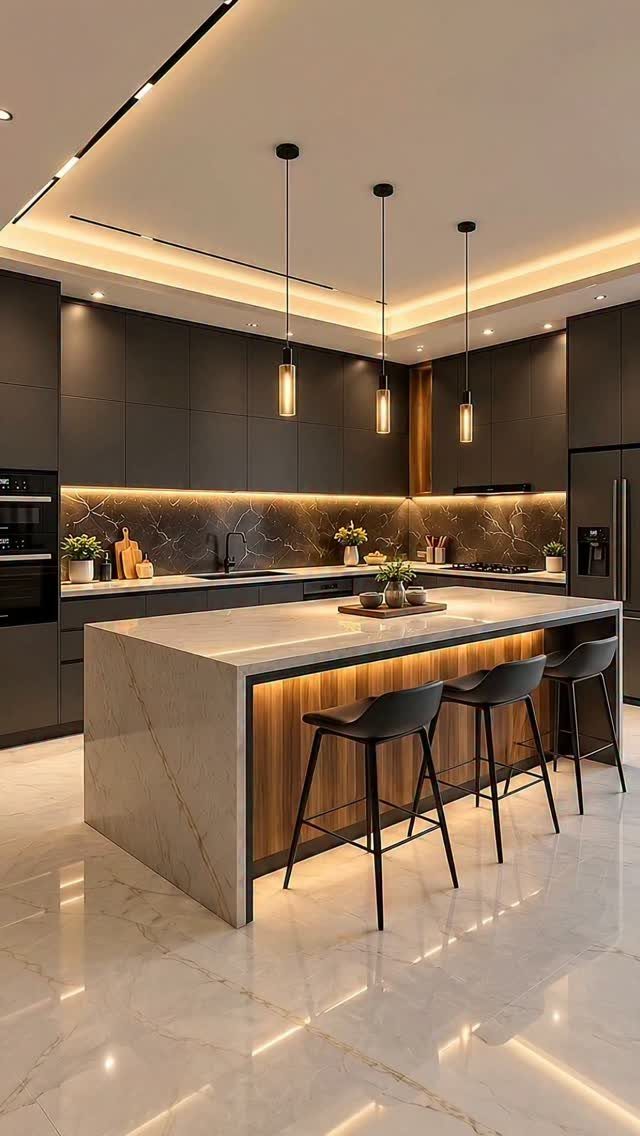
3 gold pendants hung over a marble island give dark grey cabinets a bright focal point. The gold warms the grey, and the lights draw the eye to the center of the room instead of the dark walls.
I like an odd number of pendants over an island, and three fits well here with three barstools beneath. Black stools keep the palette tied to the cabinets.
Hang them low enough to be seen but high enough that nobody bumps a head.
13. Dark Cabinets with Glass-Paneled Doors
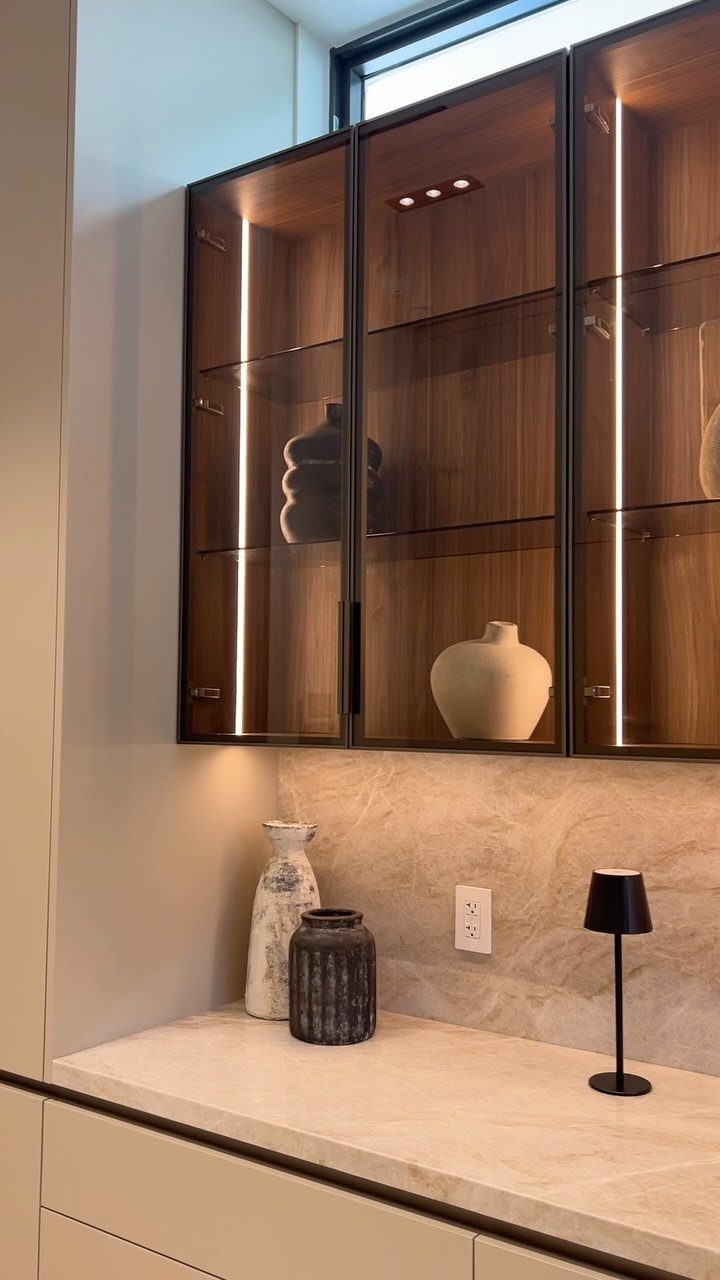
Glass-paneled doors on dark brown wood turn an upper cabinet into a display case, and the interior light is what makes it work.
Lit from inside, the glass reads as a glowing window against the dark frames, so the wall cabinets feel lighter than solid doors would.
I’d save glass for one or two cabinets rather than the whole run. Fill them with a few vases or a small lamp, as the marble counter below does, and edit the shelves hard, since everything inside shows.
Battery or plug-in puck lights are the low-cost way to get the glow.
Balancing Dark Cabinets
Dark cabinets feel heavy when every surface competes at the same depth, so give the eye places to rest.
A natural wood tone beside black or deep brown does this well, and a white stone top with crisp walls around it finishes the job.
Ratio matters more than any single product. Keep dark fronts to one part of the room and let the rest stay lighter, rather than splitting it 50/50.
Texture and light do the rest.
Practicality of Dark Cabinets
Dark fronts show dust, dirt and smudges more than lighter shades, and a kitchen is the hardest-working room in the house. Plan on regular wipe-downs rather than hoping the color hides things.
Fix chips and cracks early. On a dark door, bare material under a chip stands out fast.
Glossy dark doors show every fingerprint and water spot, so plan on wiping them down weekly with a soft cloth and applying a thin coat of cabinet polish every few months to revive the shine.
Dark wood, though, forgives everyday marks and wear better than pale cabinetry, so it suits a busy family kitchen. If you hate wiping, wood grain beats a solid painted finish.
Dark Cabinets in Small Spaces
Dark cabinets in a compact room can close it in fast unless something lighter pushes back, like pale walls, a light countertop, or open shelving. The fix is contrast: a light countertop, a light backsplash and light wall color.
I’d treat those 3 as a minimum. If one is dark too, the room closes in quickly.
Add lighting in layers, such as overhead light plus task light under the cabinets, so no corner sits in shadow. Between the light surfaces and the layered light, a small dark kitchen can feel open instead of cramped.
Frequently Asked Questions
Are black kitchen cabinets a good idea?
Yes, as long as you balance them. Black cabinets give a kitchen a bold, custom look, and the finish reads polished yet still warm when the walls and counters around it are soft.
Keep the black to one part of the room, add a light countertop or wood tone, and expect to wipe fingerprints and dust often.
Are dark wood kitchens coming back in style?
Yes. Dark wood also hides everyday scuffs and smears better than pale paint, which makes it a sensible pick for a busy household.
What is the best color to pair with dark kitchen cabinets?
Light colors give the strongest contrast, so a white or lightly veined countertop with pale walls is the safest pairing.
Under cool light, choose a white with a little warmth in it so the room doesn’t turn stark. Natural wood tones and one repeated metal, like gold, add warmth without clutter.
How do you keep a dark kitchen from feeling heavy or small?
Contrast does most of the work here: at minimum, keep the countertop, backsplash and wall color light. Let one of those go dark as well and the room starts to close in fast.
Are dark kitchen cabinets hard to keep clean?
Dust, crumbs and smudges show up faster on dark doors than on light ones, so plan on regular wipe-downs.
Glossy dark doors hold onto every fingerprint and water spot; a weekly pass with a soft cloth keeps them clear. Dark wood hides everyday wear best, so choose wood grain over a solid painted finish if you hate wiping.





