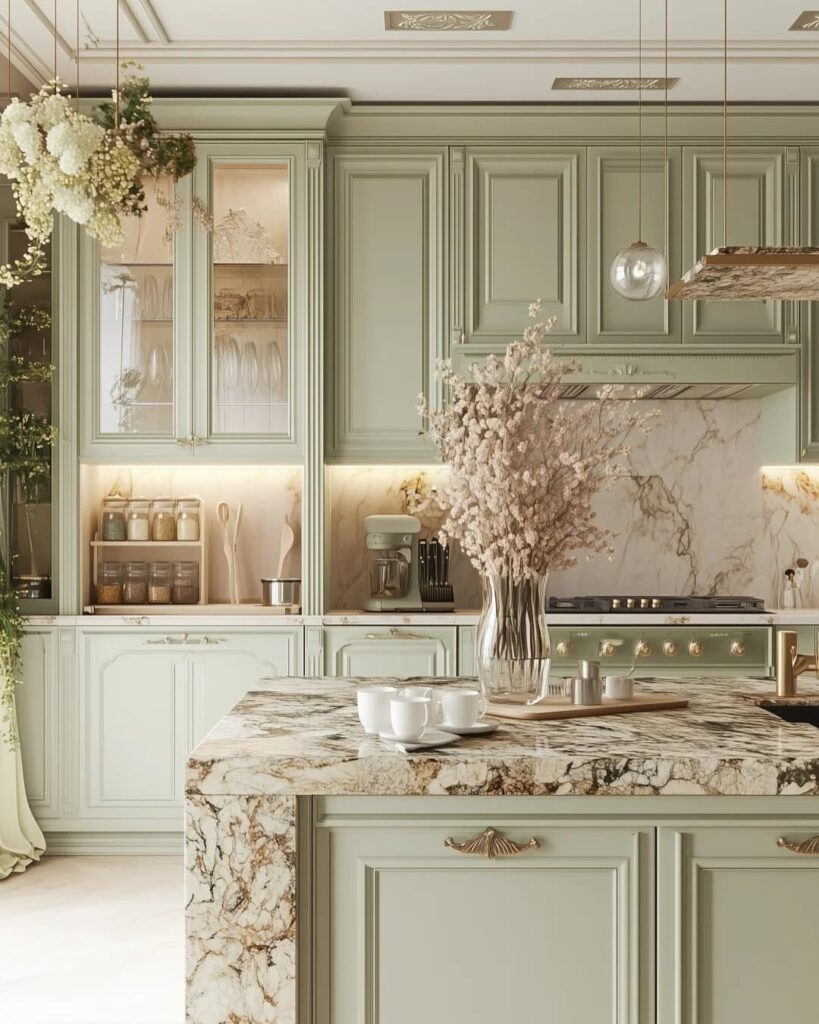
Which of these 11 ideas fits depends on how much light your kitchen gets, because green shifts from yellow under warm bulbs to blue in cool daylight, and a dim room can turn dark green heavy.
The ideas run from an afternoon of swapping brass pulls to painting only the lowers over a weekend, up to marble counters, which are a real splurge.
Test a large sample in your own kitchen first, then choose between pale green with white or a deeper shade.
1. Green Cabinets
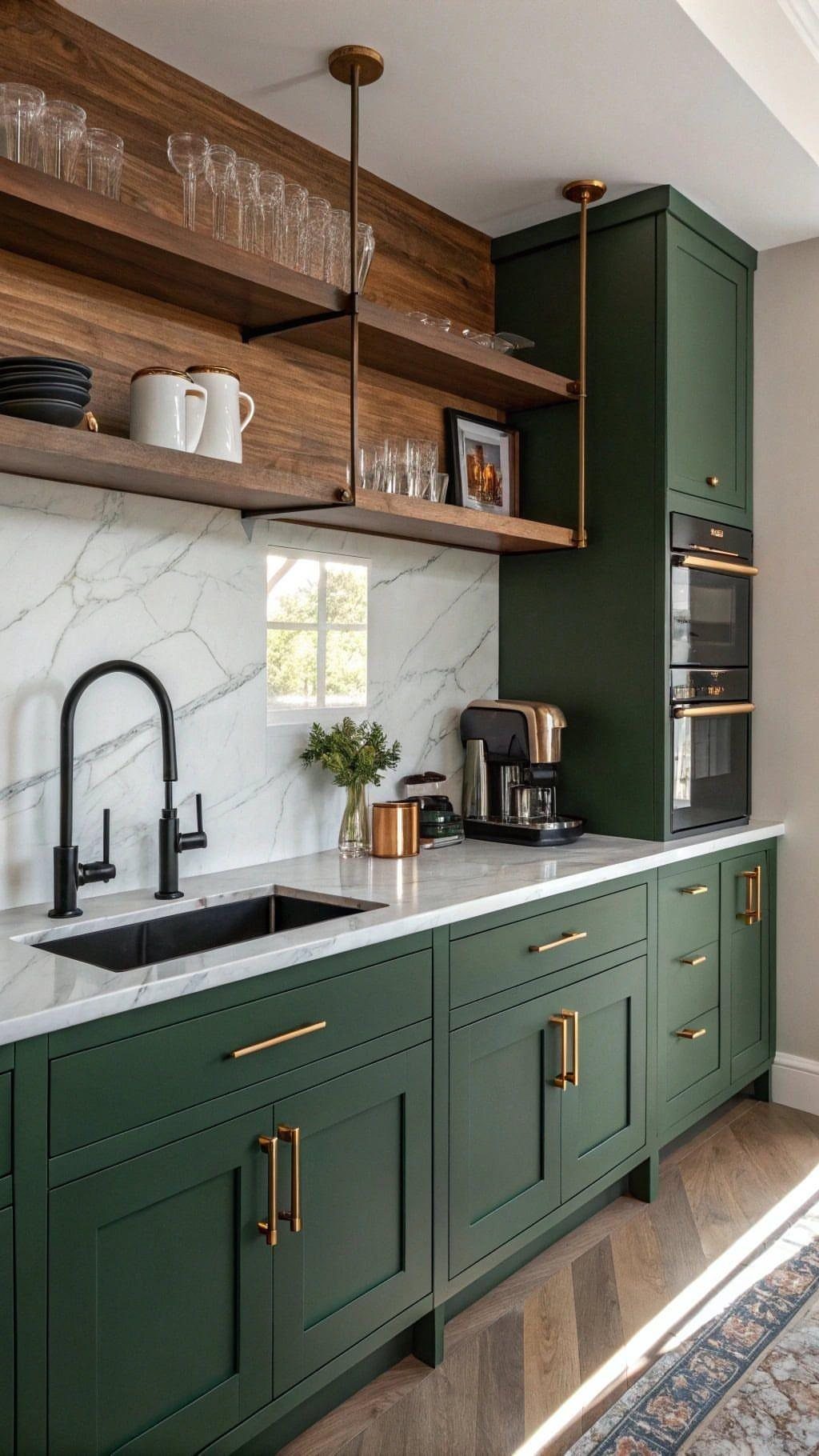
Deep green on the lower and tall cabinets gives a kitchen weight, and white marble on the counters and backsplash keeps it from going dark. Gold hardware warms the green without competing with it.
I like this pairing because the green does the heavy lifting and everything else stays quiet.
Skip extra decor here: a couple of wood shelves and a black faucet are all this kitchen needs. If you go this dark, keep the surfaces around it light, so the room still feels open.
2. Butcher Block Countertops with Green and White Cabinets
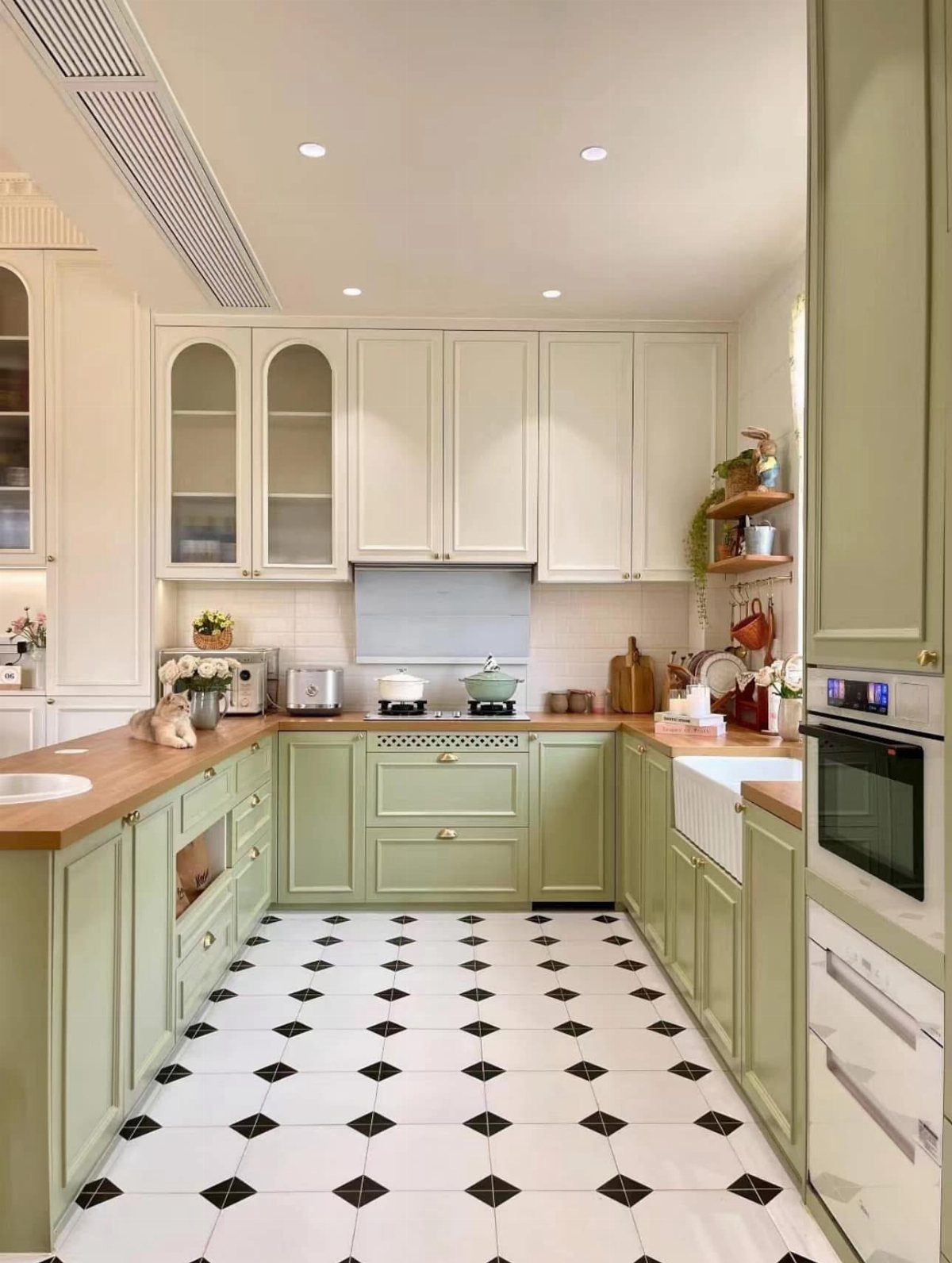
Wood butcher block against sage green lowers and white uppers adds the one warm, natural material this palette needs. The green and the wood both read as earthy, so they sit together easily.
On a budget, I would put the butcher block on the base run only, where it meets the green.
A black and white checkered floor adds pattern, but it gets busy fast, so paint the walls a plain color and leave the uppers simple.
Expect to seal and oil the wood now and then, since it is the one surface here that asks for upkeep.
3. Brass Hardware with Green and White Cabinets
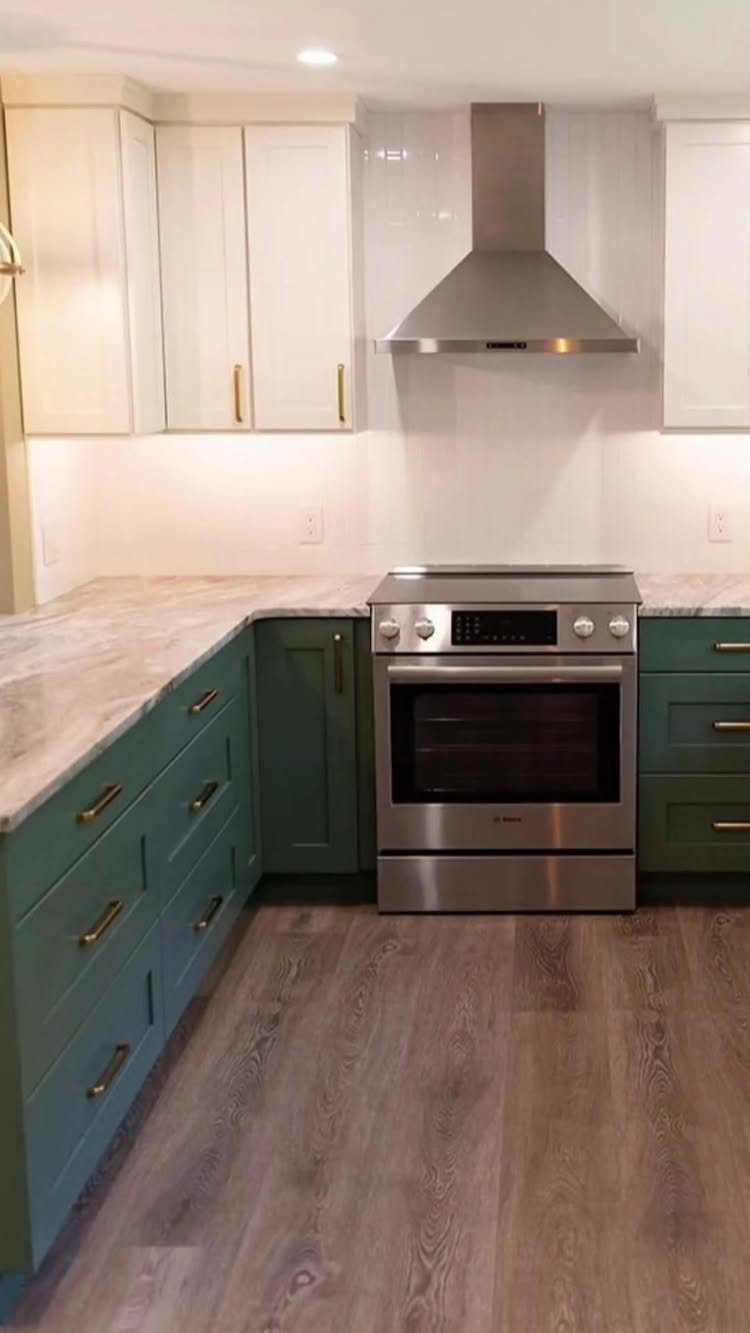
Brass handles are a low-cost fix that makes green and white cabinets look finished. Swapping hardware takes an afternoon with a drill and a screwdriver, and it costs far less than new doors.
With green lowers and white uppers, I would use the same brass on both so the two colors read as one design.
Marble counters and a stainless stove sit well beside it. Measure the distance between the existing screw holes first, so new pulls line up without any fresh drilling.
4. Open Shelving
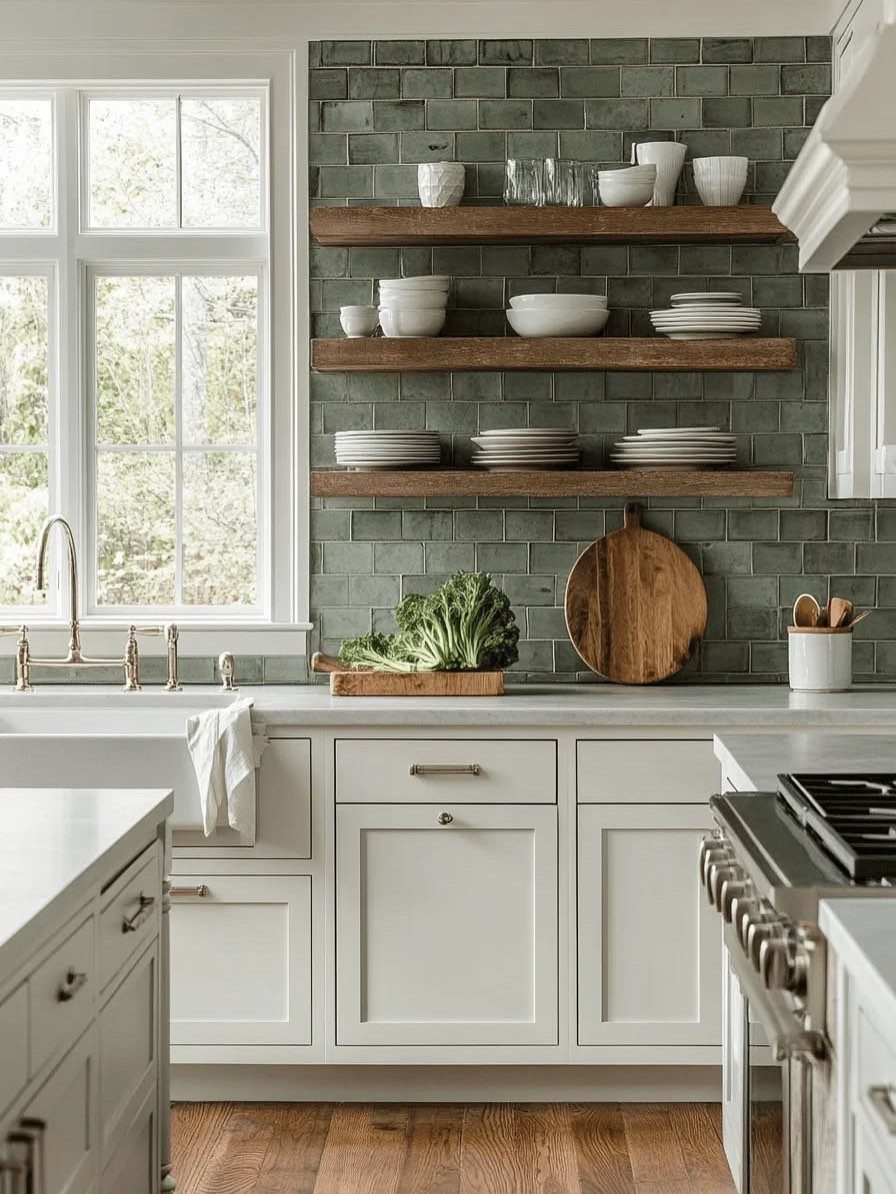
3 wooden shelves in place of upper cabinets turn white bowls and plates into the decor. Against a green tiled backsplash, plain white dishware stands out clearly, and the wood adds warmth.
This is a good weekend project for a renter or first-time owner, because shelves cost far less than cabinets.
Open shelving puts everything on display, so store only the dishes you use and like. Stick to one color of dishware, and the shelves look tidy without effort.
5. White Marble Countertops with Green Cabinets
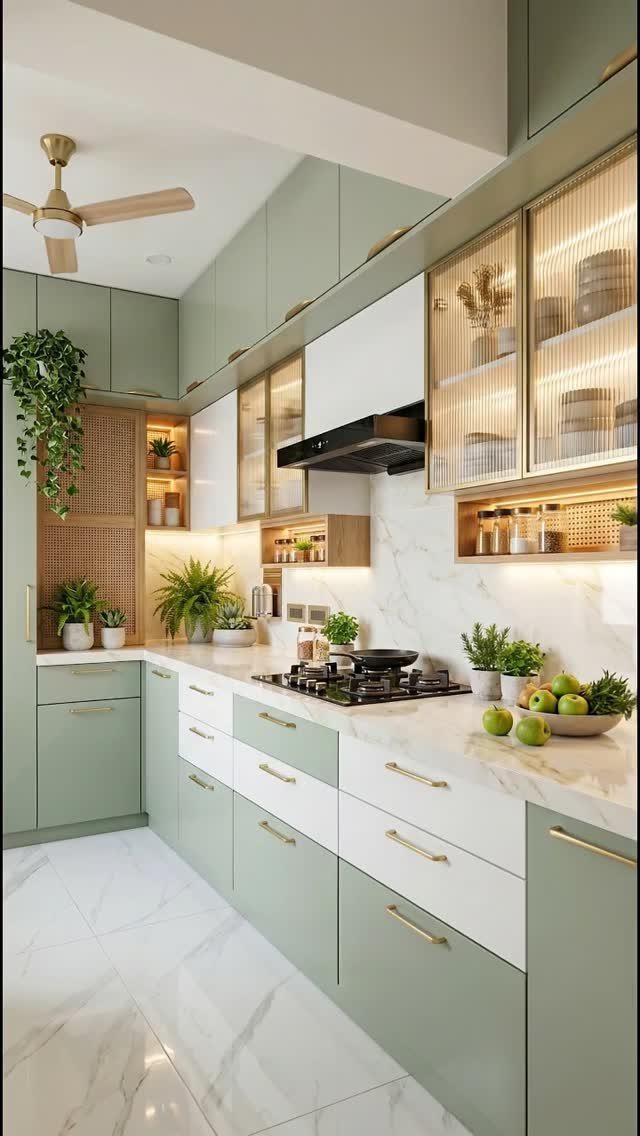
White marble counters are the safest partner for sage green cabinets, since the soft veining picks up the green without fighting it. Gold hardware ties in nicely, and a black range hood gives the eye something crisp to rest on.
I would choose marble when the cabinets are the color statement and you want the counters to stay calm.
Marble is a real splurge, so check samples next to your cabinet color before buying. If the budget is tight, a marble-look surface can give a similar effect.
6. Sage Green Cabinets
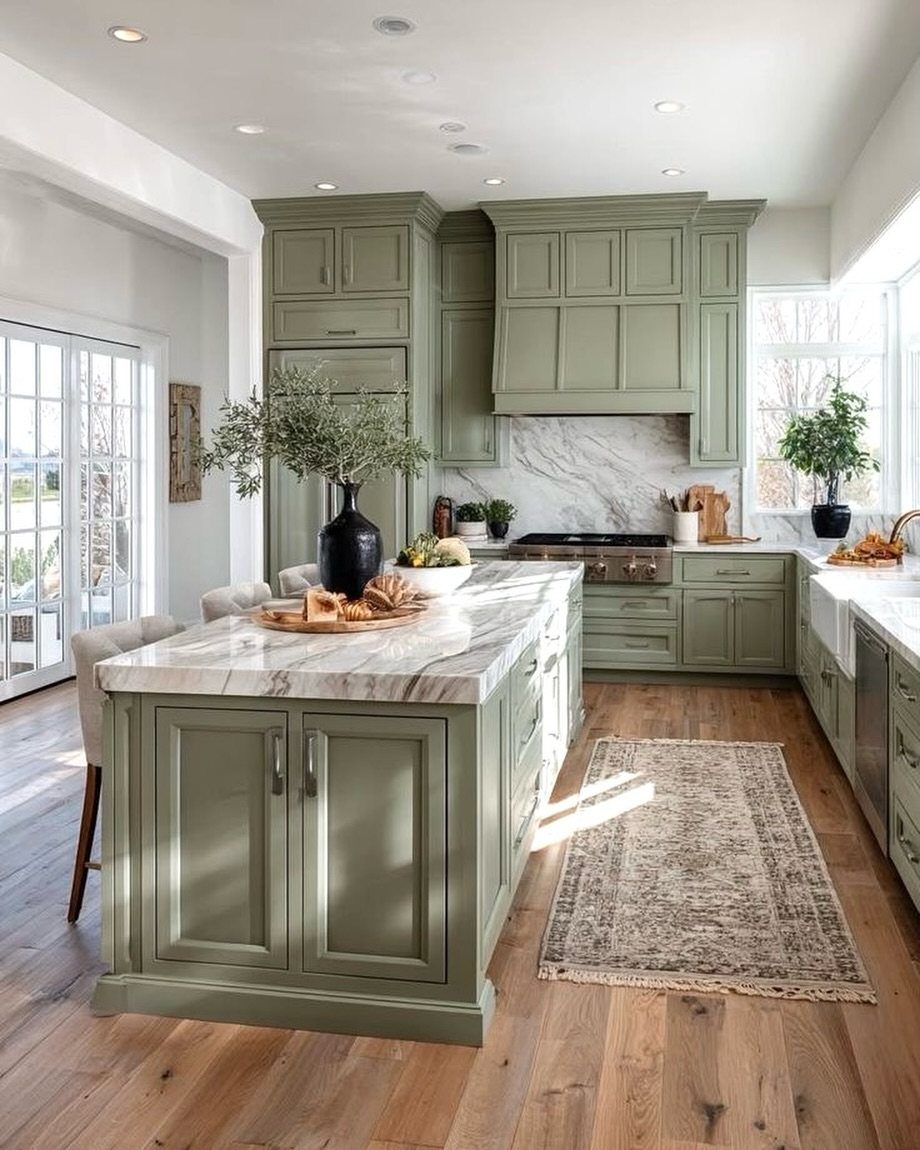
Sage green is my pick when a kitchen should feel calm. It is soft and slightly gray, so it reads organic rather than loud, and it works across a whole room of cabinets, including a large island.
A patterned rug adds some life without another paint decision. Paint a sample board and check it at different times of day, because sage shifts a lot with the light.
7. Green Lower Cabinets with White Upper Cabinets
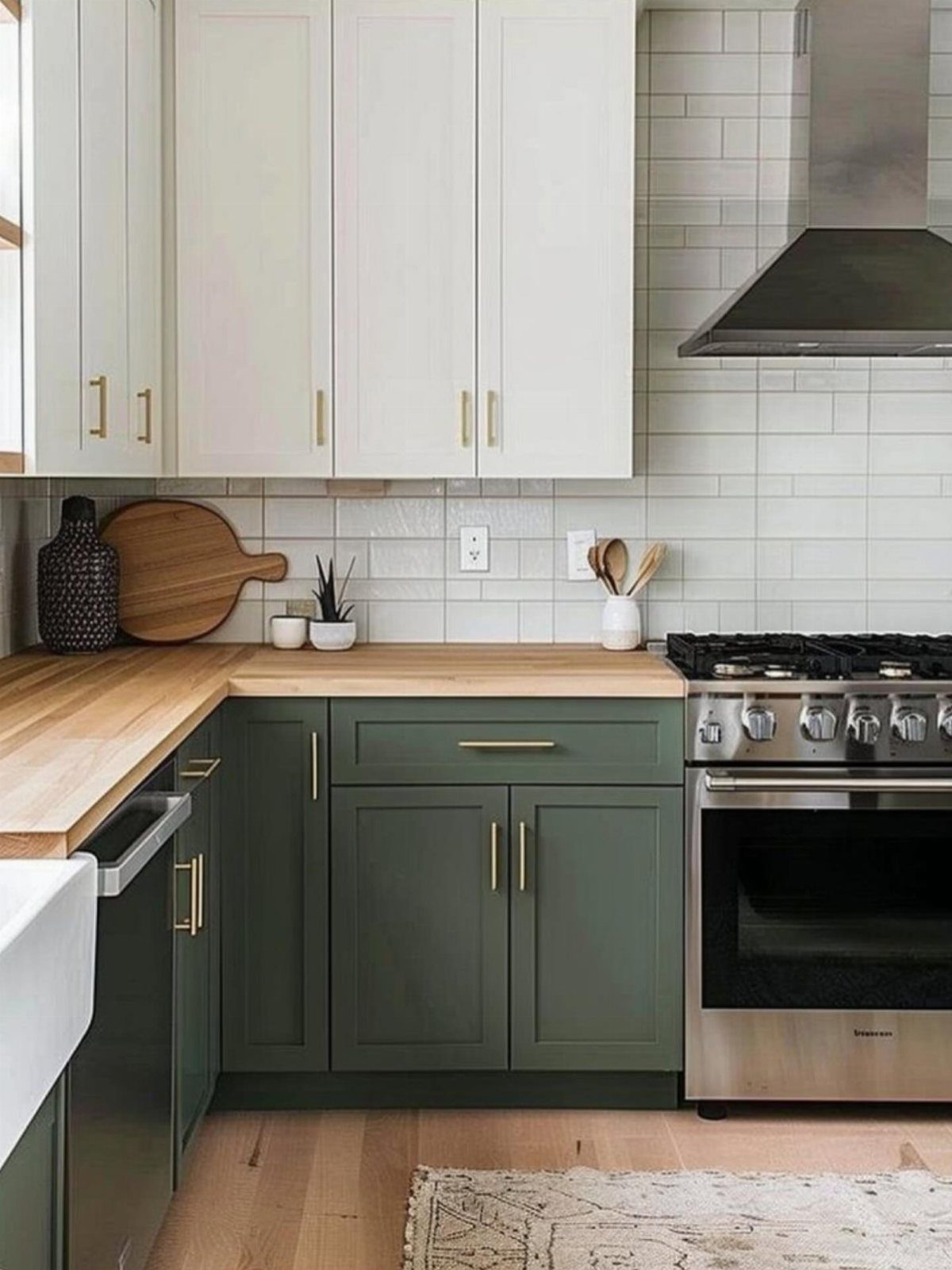
Green below and white above splits the kitchen into 2 weights: the color sits where hands, knees and scuffs land, and the brightness stays at eye level.
Light wood counters and a white tile backsplash keep the join between the two from feeling abrupt.
Gold pulls on both colors make the pairing read as one design. If you are painting rather than replacing, paint only the lowers and leave the uppers alone, which cuts the job down to a weekend.
8. White Cabinets with Green Island
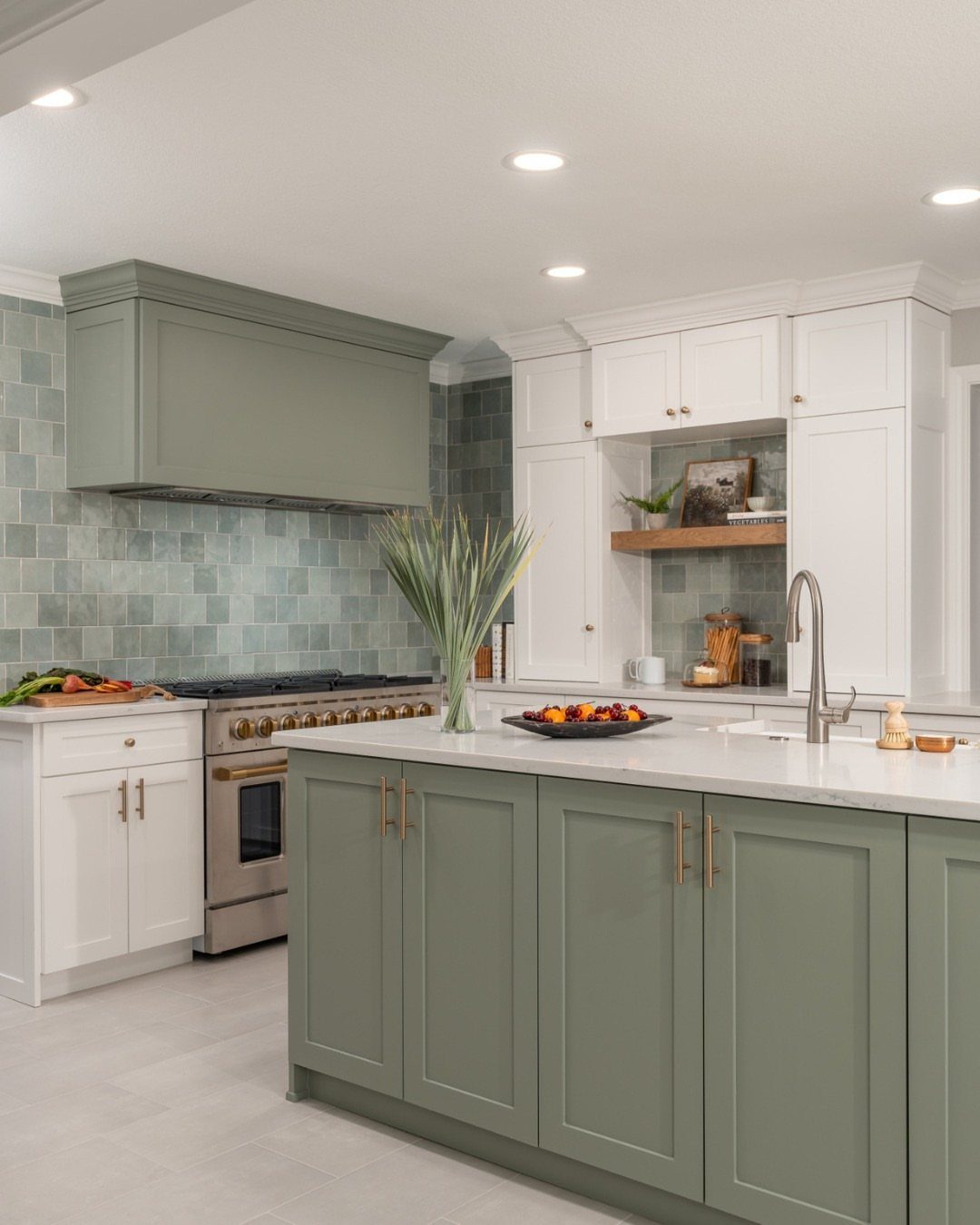
A sage green island with a range hood painted to match gives white perimeter cabinets a single focal point instead of a whole wall of color.
The hood is the detail I would copy first, since it repeats the island’s green high up and ties the room together.
Paint is the budget route here: one island and one hood take far less than a full set of cabinets. Keep the countertop and tile light, so the green is the only thing asking for attention.
9. Glossy Pale Green and White Cabinets
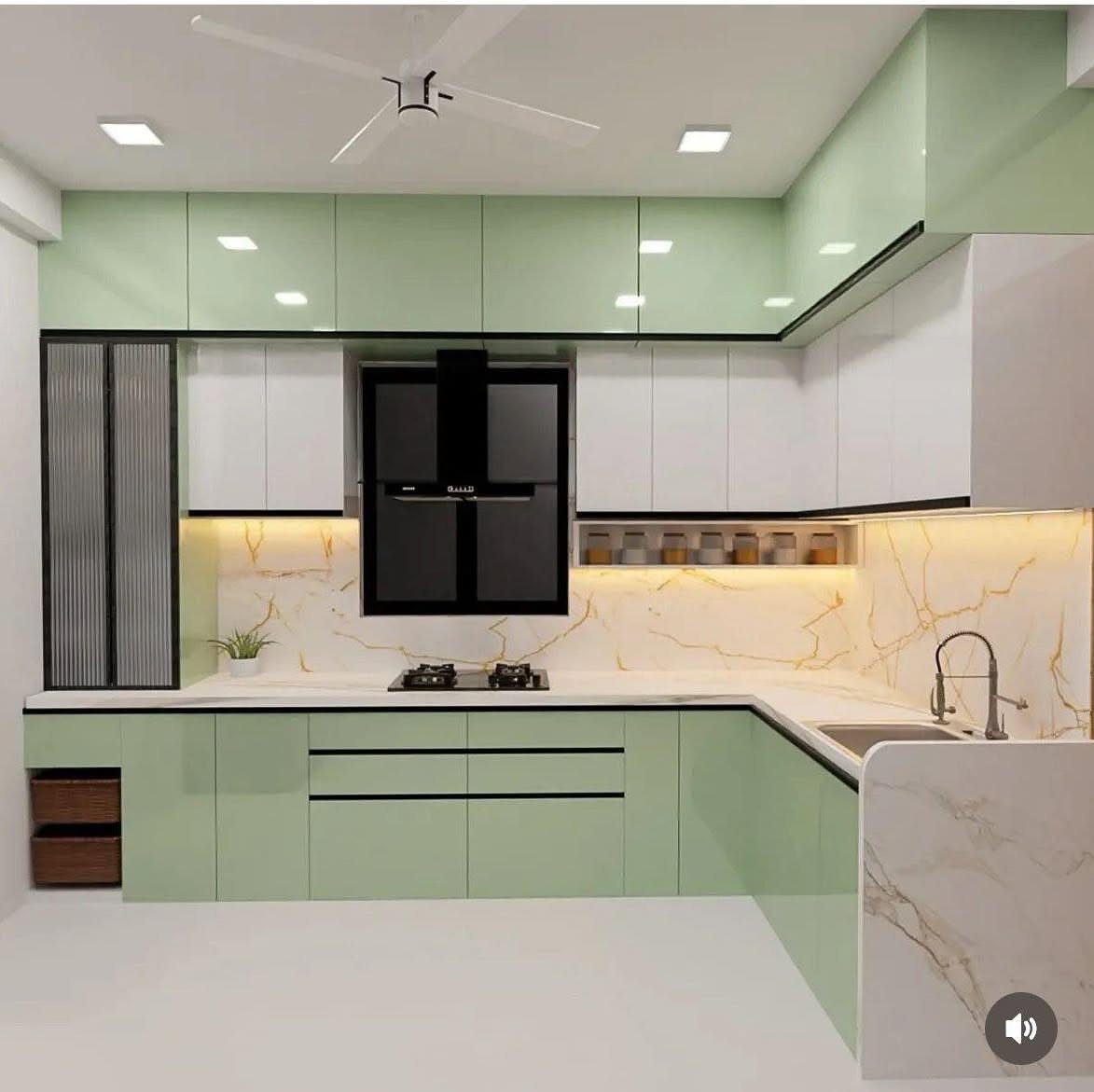
Gloss changes how green behaves: flat-panel doors in pale green and white bounce light around the room, and the finish makes a tight, compact space feel larger.
Gold-veined marble on the counters and backsplash gives the shine something quiet to sit beside.
Glossy fronts show fingerprints and smudges, so expect to wipe them down often. I would still choose gloss in a kitchen with little daylight, and a matte black range hood keeps all that shine from tipping into too much.
10. Green and White Cabinets with Black Countertops
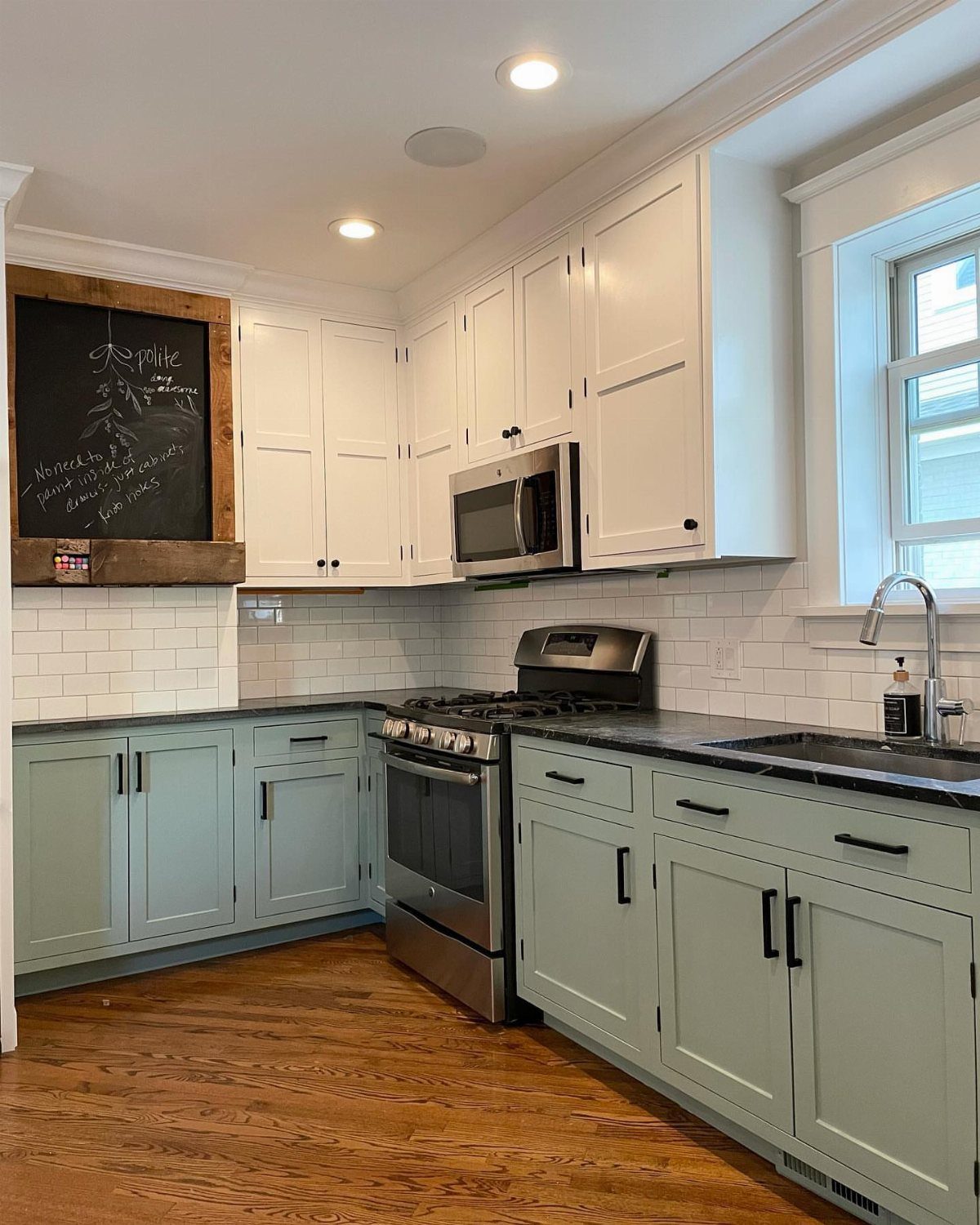
Black counters under sage green lowers and white uppers give this palette its sharpest edge. Black countertops ground a soft green, and white subway tile above keeps the room bright, so keep the tile light if the counters go dark.
I like this combination because the black does the contrast work, so the cabinets can stay gentle.
Pair it with stainless appliances and you have a kitchen with 3 tones and no fuss. A chalkboard on the wall is a cheap, easy addition for lists and menus.
11. Mint Green Cabinets with Contrasting Island
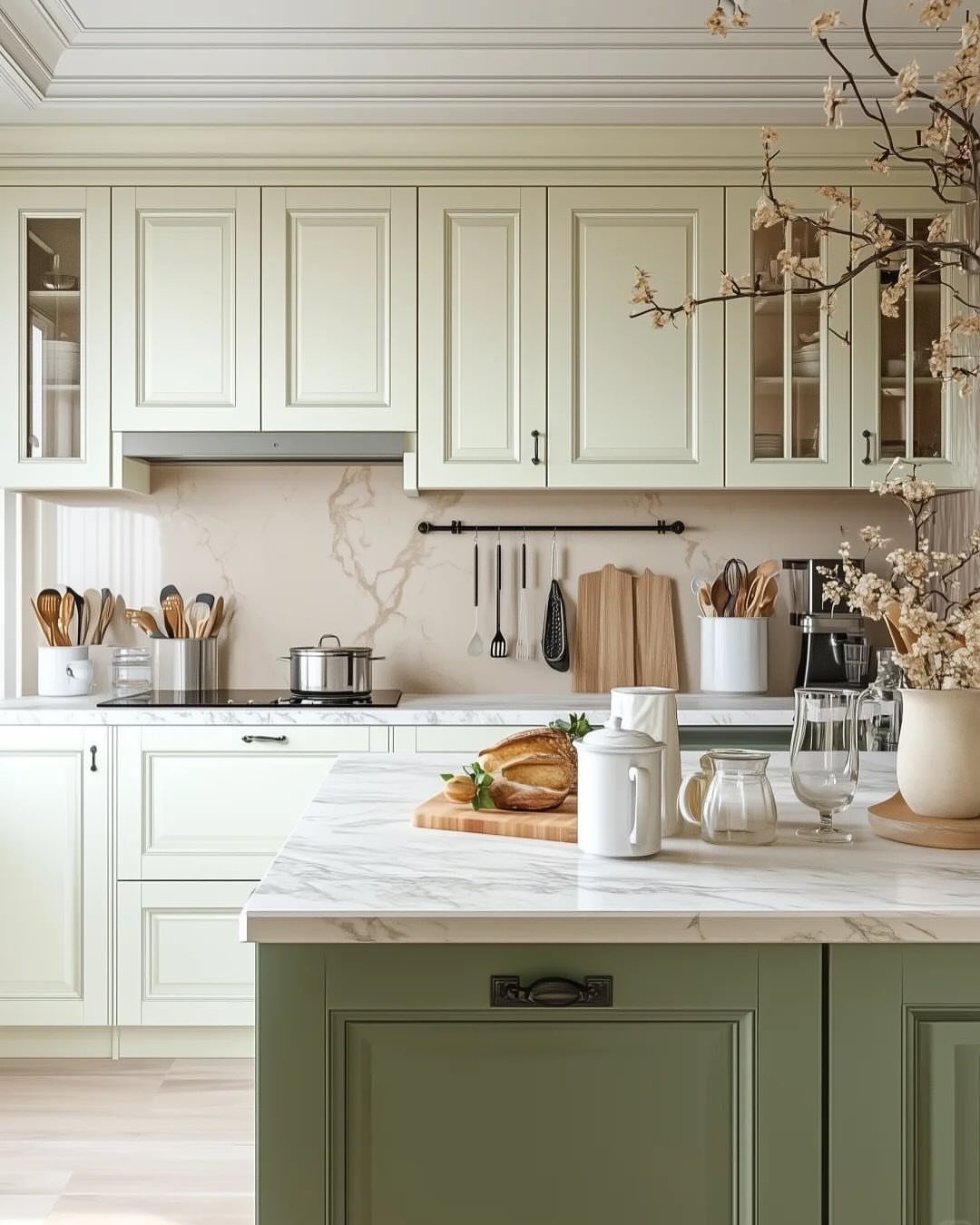
Pale mint on the perimeter cabinets with a darker sage island is a tone-on-tone idea: both are green, so the 2 read as related rather than clashing. A marble top on the island adds a crisp, light surface between them.
Paint a sample of each green side by side before committing, because the gap between the shades has to be clear enough to look deliberate. If the two sit too close, the island just looks like a paint mistake.
Maintenance Considerations
White cabinets pick up every smudge and stain, which means they work best when someone in the house can clean them weekly. Green hides minor marks better, and a matte finish hides the most.
Choose white only if you don’t mind the upkeep.
Green asks for more planning elsewhere. White works with almost anything, but green needs the countertops, flooring and other finishes to share compatible undertones.
A shade that looks right in a showroom can read too yellow or too blue at home, so look at a large sample in your own kitchen before you buy.
Resale Value Insights
White rates highest with buyers looking at resale comparisons. The color photographs cleanly in listings, appeals to a wide range of tastes, and agents I work with report that neutral kitchens shorten time on market.
Green is more polarizing.
Design-conscious buyers may love it and see it as premium, and it can set a home apart from standard offerings. A conservative buyer may see a repaint waiting to happen.
If you plan to sell soon in a conservative market, I would stay with white. In a competitive market, or if you plan to stay, green is the better bet.
Lighting Effects
Light changes green more than almost any other color. The same shade can lean yellow in warm bulbs and blue in cool daylight, so test it under the lights you actually use.
Dark green in a dim kitchen can turn heavy. Add under-cabinet lighting and check that the bulbs are bright enough for the room.
White reflects light and makes a dim, small kitchen feel brighter. If your kitchen gets little daylight, pick a lighter green or pair green with white.
Bright white is a great choice for creating crisp contrasts that will freshen and lift earthy greens.
Frequently Asked Questions
What kitchen cabinet colors will look outdated in 2026?
Overly trendy colors are the ones most likely to date, while classic white and muted, natural greens should hold up. Muted greens like sage have staying power because they read as soft and organic rather than loud.
Green has settled into the role of a neutral in a lot of newly finished kitchens, and that staying power makes it a safer pick than most trend colors.
Are green kitchen cabinets a good idea?
Yes, if you pick a muted shade and plan the surfaces around it. A good green adds warmth and some personality, and it sits easily next to wood tones, natural stone and brass or black hardware.
What makes a kitchen look cheap?
Poor color choices, mismatched styles and low-quality materials are the usual causes. Busy pattern is one way a kitchen goes cheap: a checkered floor adds interest but turns chaotic fast, so leave the walls and upper cabinets plain.
Pick one hardware finish and repeat it, say brass on both the green and the white cabinets, and the room reads as a single design.
Do white or green kitchen cabinets work better for resale?
For resale, white is the safer pick with most buyers. Green is more polarizing: design-conscious buyers may see it as premium, while conservative ones may see a repaint.
If you plan to sell soon in a conservative market, stay with white; if you plan to stay, green is the better bet.





