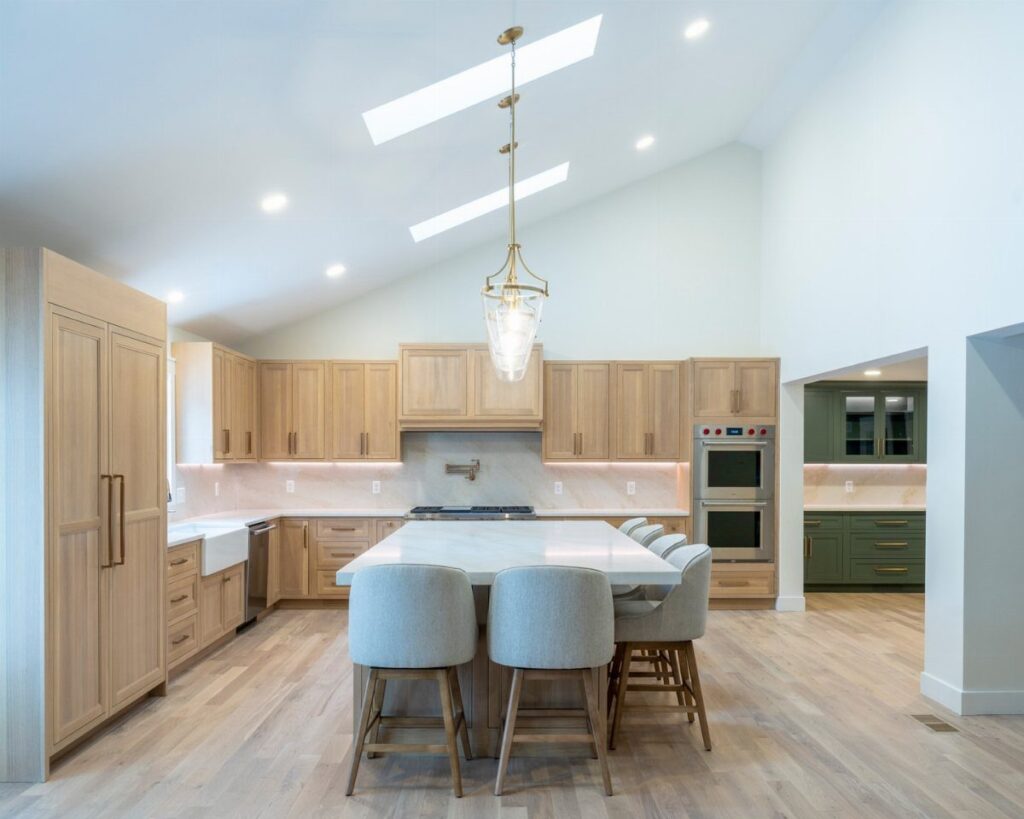
The ideas here run from a plug-in pendant light a renter can hang in an afternoon to a recessed tray ceiling with cove lighting that needs carpentry and wiring.
Crown molding is the cheapest way to dress a tall wall, but a single cabinet run can mean 50 miters and 54 separate pieces, so budget your patience along with your cash.
1. Crown Molding
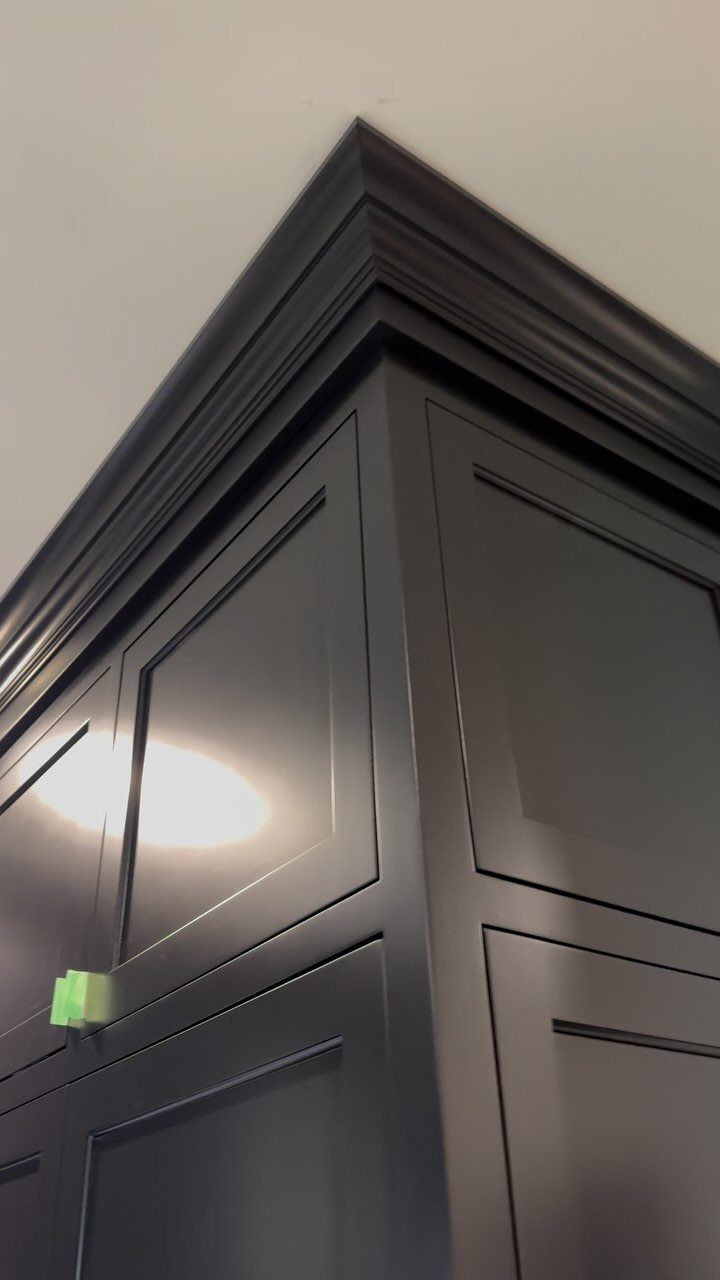
Crown molding is the detail that finishes the top of a cabinet run, closing the gap between the boxes and a tall ceiling.
Dark cabinets against a white ceiling make the profile read crisply, because the shadow line does the work.
Corners are where it gets slow.
The maker of this kitchen counted 50 miters and 54 individual pieces in the crown detail, so plan on a full weekend and cut a few spare lengths. Test every miter on scrap first.
I would paint the molding to match the cabinets, not the ceiling, so it looks like part of the cabinetry.
2. Cabinets That Extend to the Ceiling
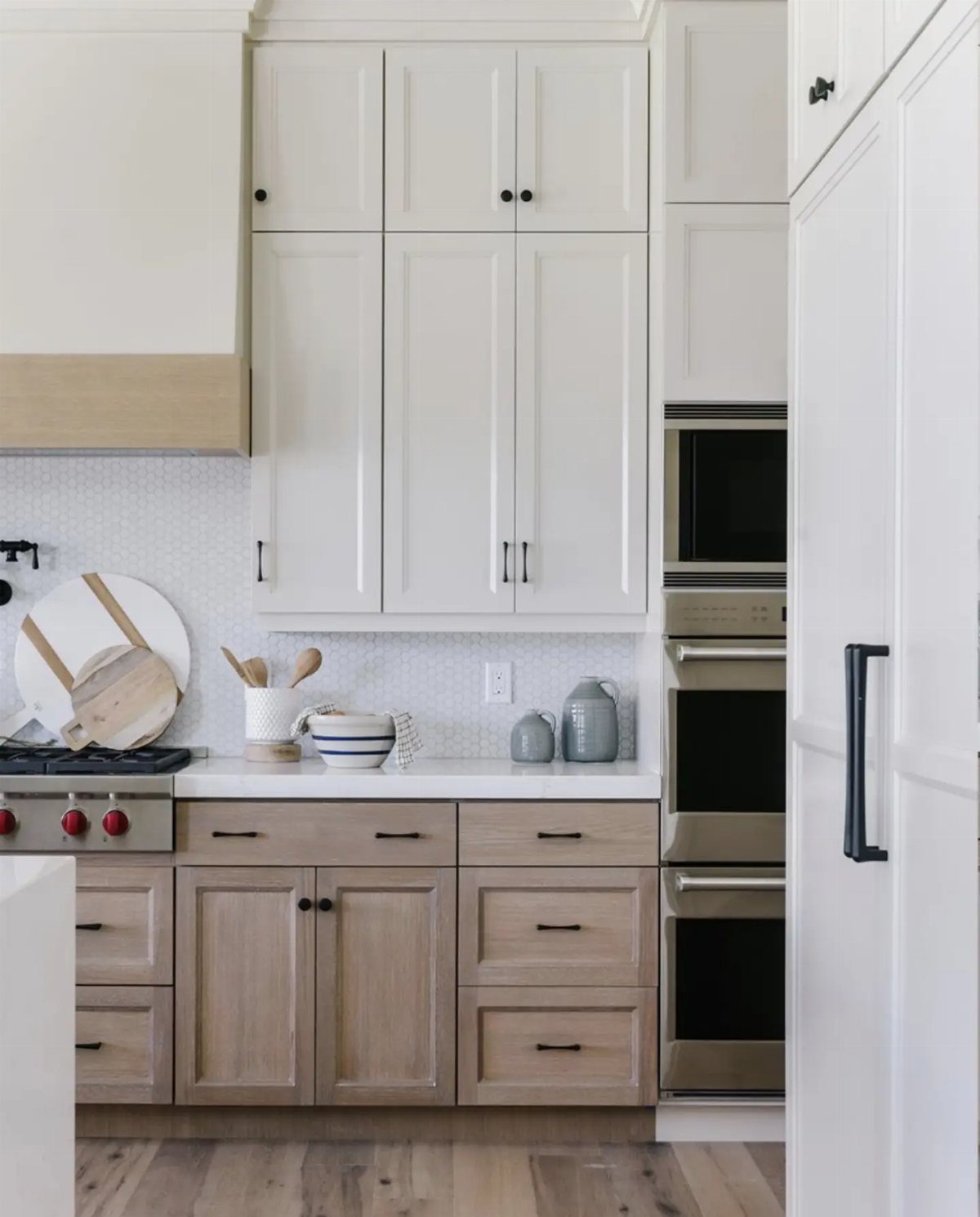
Taking upper cabinets all the way to the ceiling removes the dusty gap on top and gives you storage a standard-height cabinet wastes. White uppers keep the height from feeling heavy, and the light wood base cabinets below balance them.
I like using the top shelves for things you reach for twice a year, like roasting pans and holiday platters. Keep a sturdy step stool nearby, since you will need it.
3. Pendant Lights and Chandeliers
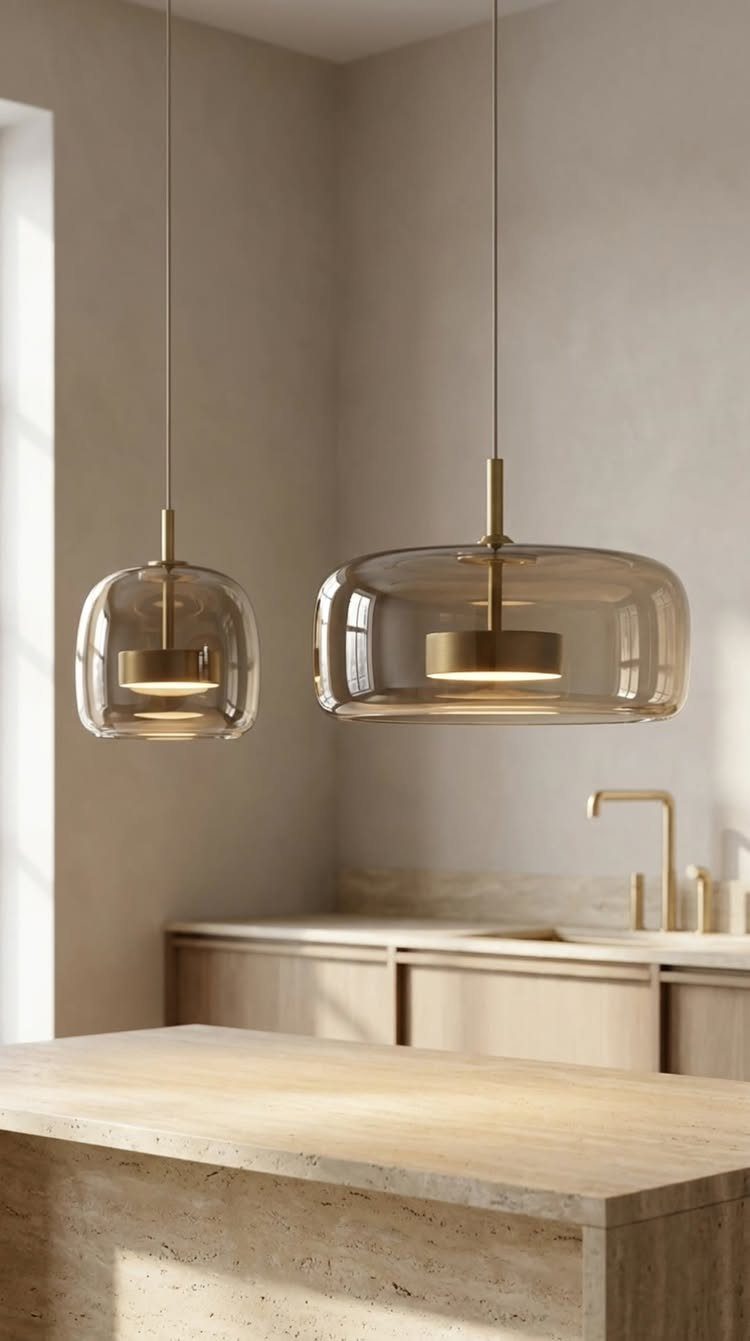
Over an island, 2 pendants with glass shades and gold fittings fill the empty air above the counter without blocking sightlines.
Hang them low enough to define the island but high enough that seated guests can see across it. Space 2 pendants evenly along the island’s length, so they look deliberate and not clustered.
If you are renting, a plug-in pendant kit can stand in until you own.
4. Open Display Shelves
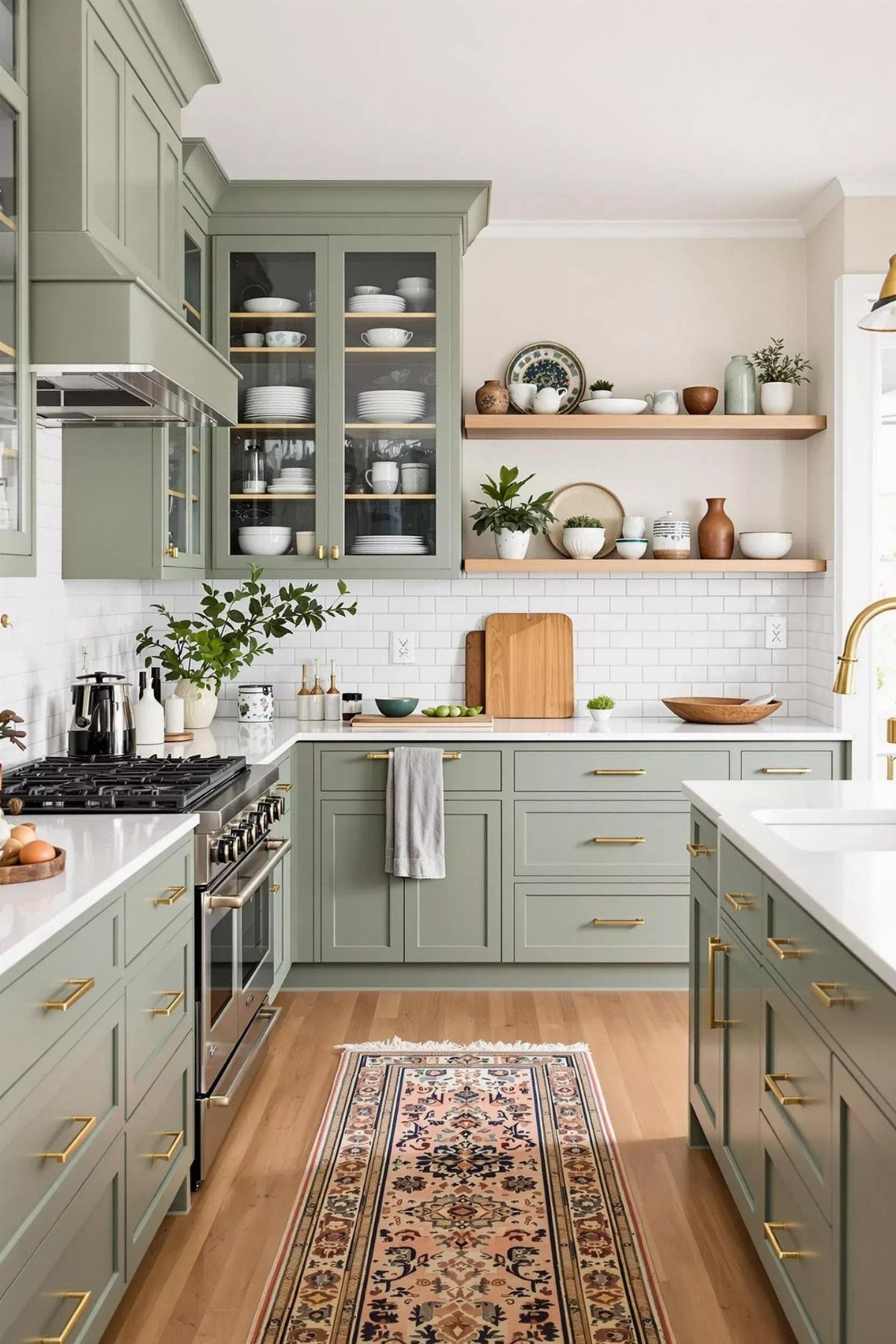
Two light wood shelves set between sage green cabinets put the pretty things where you can see them, while the closed cabinets still hide the clutter. That mix is why I prefer it to going fully open.
Keep the shelf contents to ceramics in a tight palette so the display looks calm, not busy. Wood shelves also warm up green paint nicely, and a white backsplash behind them keeps the color from feeling heavy.
Put daily plates on them only if you are fine with dusting.
5. Vaulted Ceilings
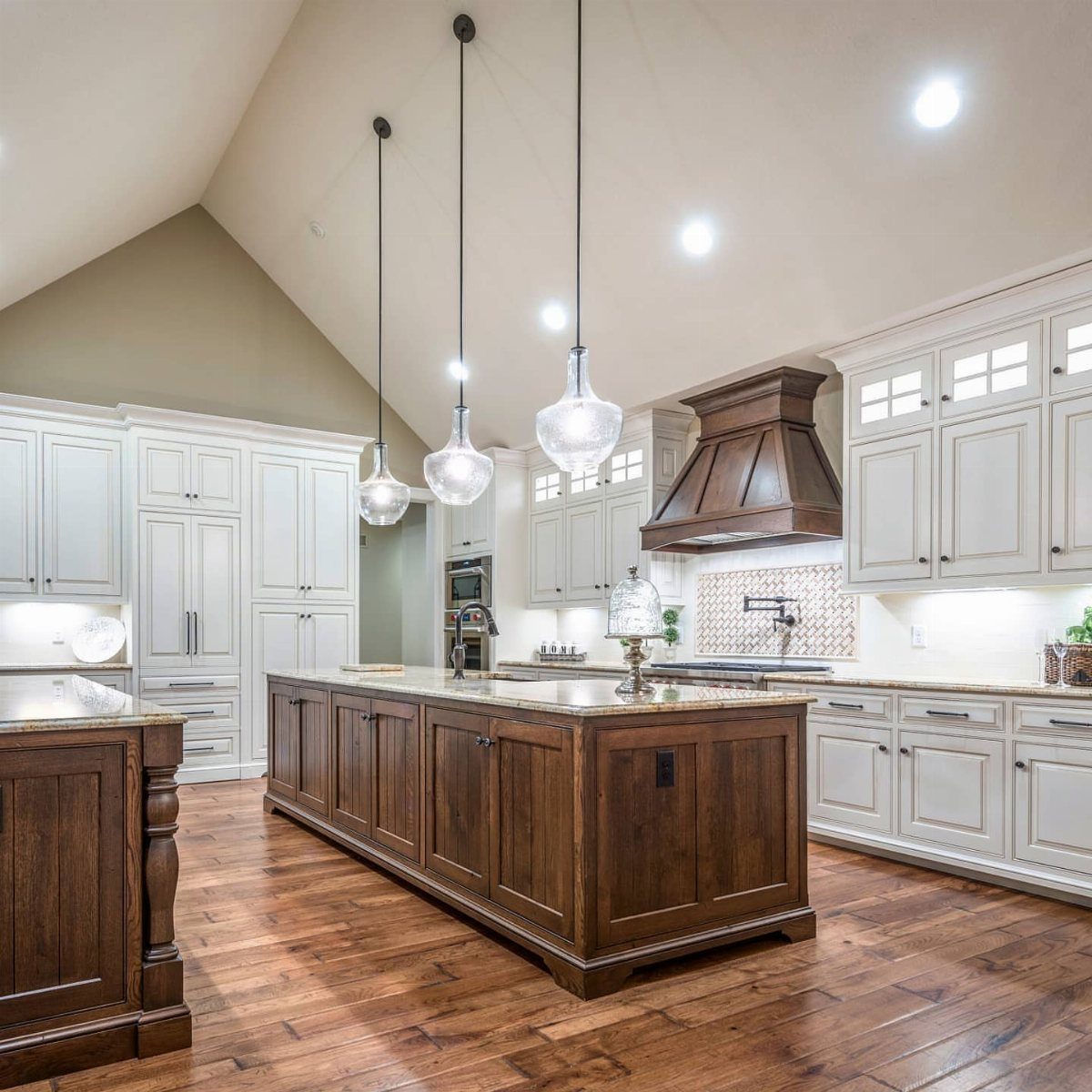
A vaulted ceiling can take several forms, from a simple sloped plane to exposed beams, and each changes how a kitchen feels.
The challenge is scale.
Repainting a vaulted ceiling is costly and slow, so pick a color you can live with.
6. Natural Light Utilization
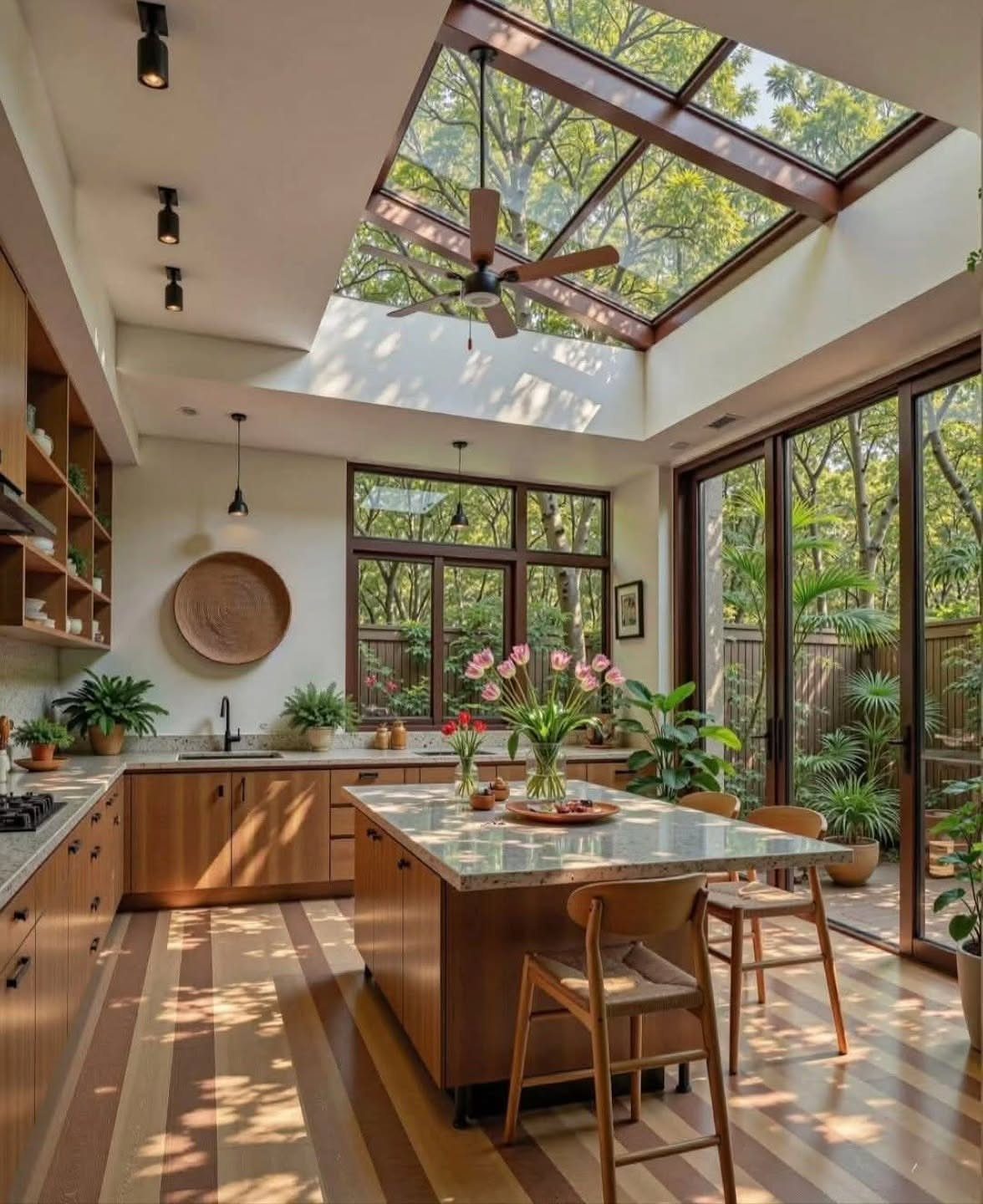
A skylight overhead and sliding glass doors to the trees bring daylight into a tall kitchen from 2 directions, which makes the space feel larger. Wooden cabinetry stays warm instead of dark when the light is this generous.
I would keep window treatments minimal and let the greenery outside act as the artwork.
Skylights and big glass doors mean more heat and glare, so consider shades you can close on bright afternoons.
7. Minimalistic Accessories
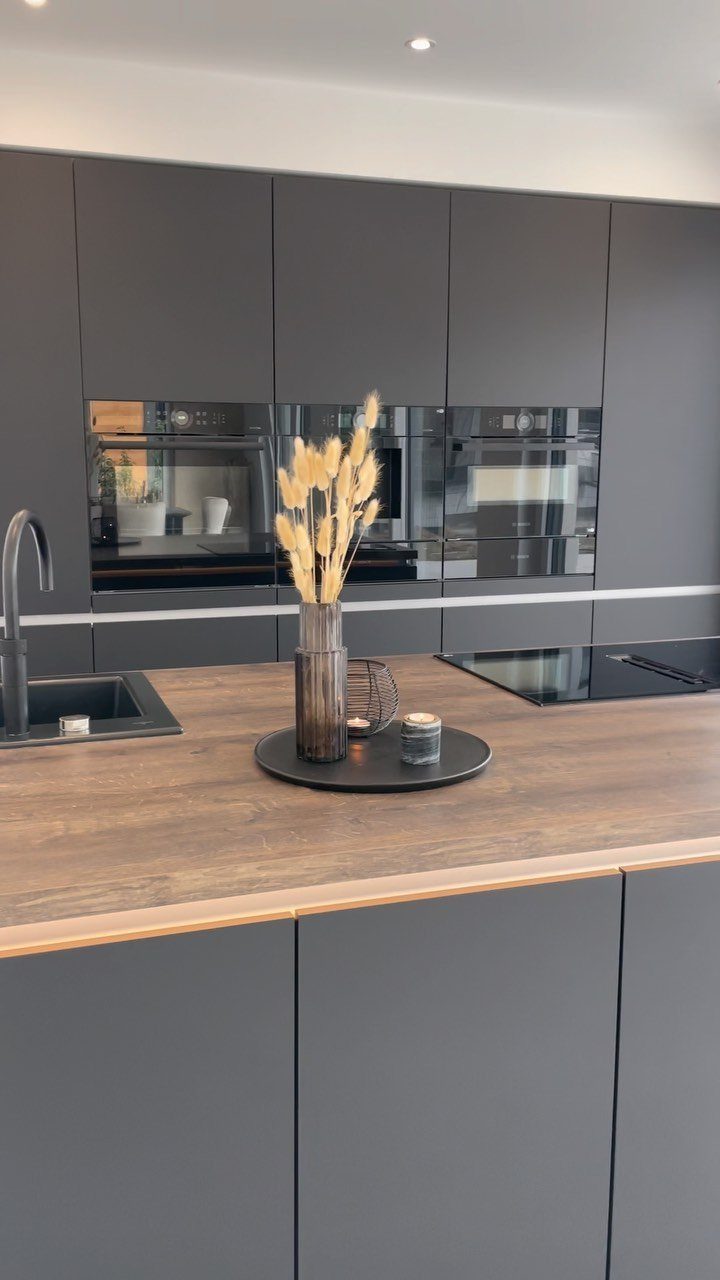
Against wood-look counters and built-in ovens, a single grouped arrangement reads as a decision, not leftovers.
Dried grass costs little and never needs water, which suits a kitchen where fresh flowers would get in the way of prep.
Clear counters make the biggest difference, so I would move the toaster before buying a single decoration.
8. Kitchens with High Ceilings
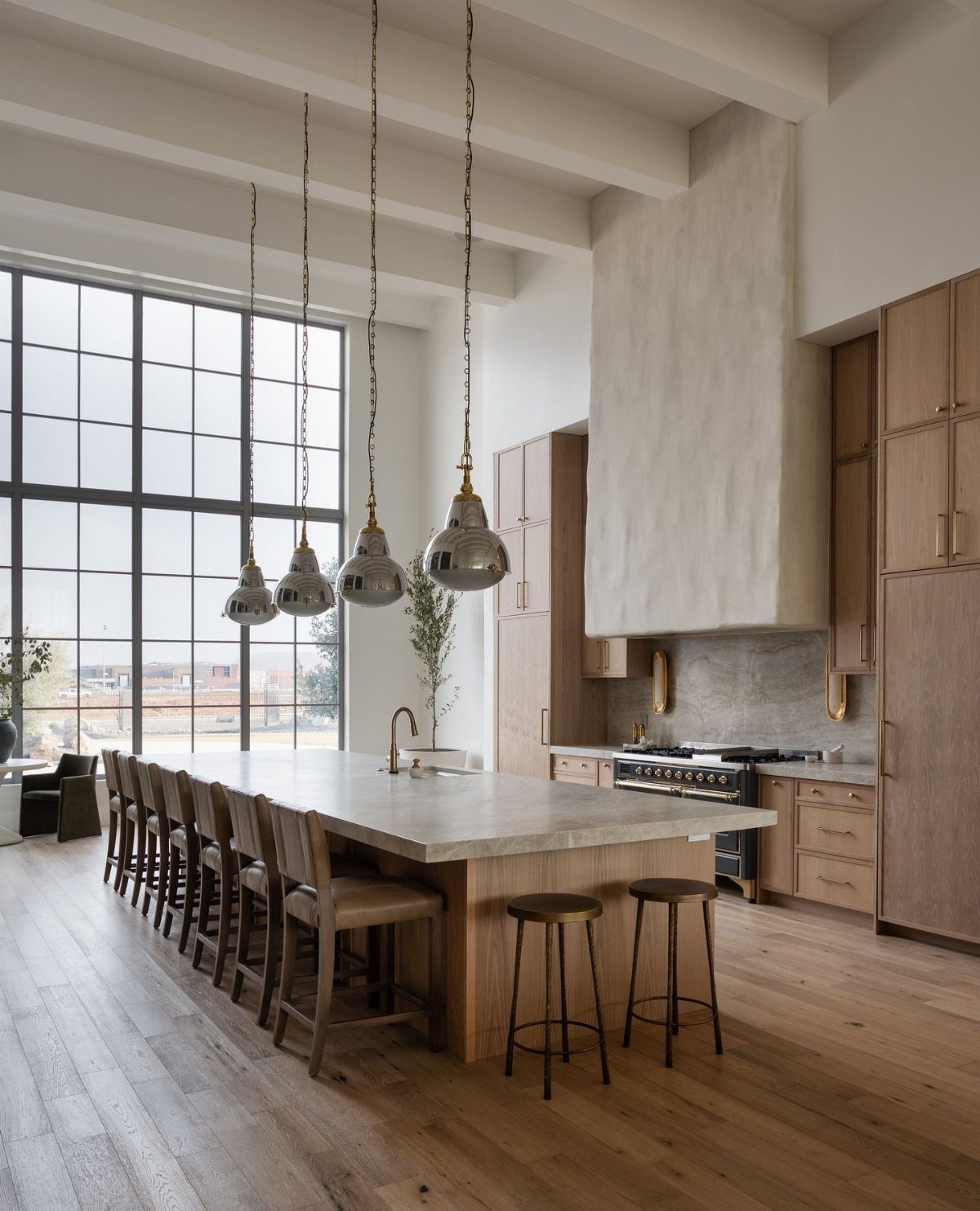
Height gives a kitchen room to hold a long island with several stools, and the island is what keeps that room from feeling empty.
A concrete top beside light wood cabinetry gives the space weight, so the ceiling doesn’t swallow it.
4 industrial pendants in a row fill the vertical gap and repeat the island’s length overhead. Pick a finish that sits close to the concrete, since mixed metals get busy fast in a big room.
Large windows do the rest of the work, so leave them bare.
9. Recessed Tray Ceiling with Cove Lighting
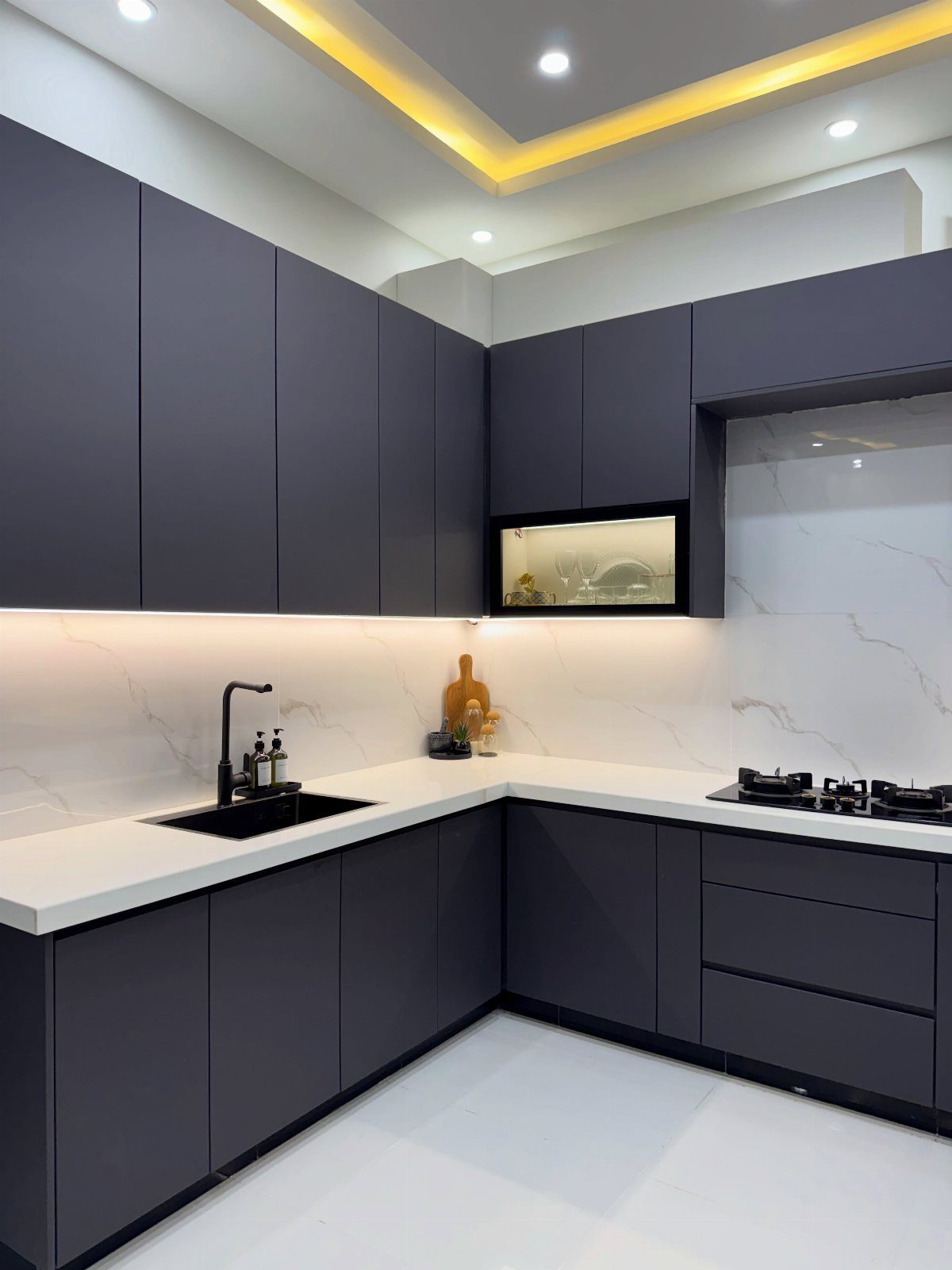
Against dark grey cabinets, the yellow light bounces off the white countertops and marble backsplash, which keeps the room from feeling closed in.
Recessed spotlights handle the task lighting underneath, so the cove can stay purely for mood. I would put the cove on its own switch, ideally a dimmer, so you can lower it at night.
This is carpentry and wiring work, not a weekend paint job, so get a price in hand first.
Advantages of Vaulted Ceilings
The added height can make a small room read closer to open-concept.
Heat is the practical gain. Warm air from cooking rises into the extra volume, so the cooking zone tends to stay cooler and the air moves better.
Lighting gets more room to work, too. A pendant or chandelier hung in that height becomes a focal point instead of just a fixture.
The look is also easy to tailor. Paint color, beams, and trim let you steer it toward your own style.
Designing with High Ceilings
Start with the cabinets, because they decide how the height gets used. Tall cabinetry can capture vertical space and make it practical instead of just impressive.
Then settle color and lighting together. Tall rooms can feel modern or contemporary, and your palette, fixtures, and furnishings carry that look through the whole kitchen.
I would pick one ceiling treatment, one dominant cabinet color, and one light source to lead, then let everything else support them. Too many ideas at that scale read as scattered.
Real-Life Kitchen Examples
Rough-hewn wood beams belong in a rustic kitchen, and a vaulted ceiling gives them an arch to follow, which is where they look best.
A groin vault suits a dressier kitchen, especially one with a big island: dark espresso base, smooth marble top, and a breakfast bar along one side. A chandelier over the bar keeps the eye moving upward.
Beige walls and tile floors fit that style. Make the countertop and floor tile match in tone so the room feels settled.
Frequently Asked Questions
What are high ceilings good for?
Height gives a kitchen room for tall cabinetry, larger lighting like chandeliers or a row of pendants, and extra daylight from skylights or big windows.
Even a modest footprint can feel more open when the walls run tall, because the eye keeps traveling upward instead of stopping at the cabinets.
What are vaulted ceilings?
A vaulted ceiling curves or slopes upward, often to a peak, so the kitchen gains a lot of volume that a flat 8-foot ceiling can’t give it.
It comes in several forms, including cathedral, groin, and barrel vaults, and each one changes the character of the room.
How does a vaulted ceiling impact my kitchen design?
It becomes the focal point, so the rest of the kitchen should support it. The height lets you hang a large pendant or chandelier, run cabinets higher, and add skylights or beams.
What is the best design for a kitchen with high ceilings?
Start with the cabinets, since they decide how the height gets used, then settle color and lighting together.
Pendants over a long island, three or more depending on its length, tie the room together by filling the empty air above the seating. For a modern look, clean flat-panel cabinets and under-cabinet lighting keep the focus on the ceiling.





