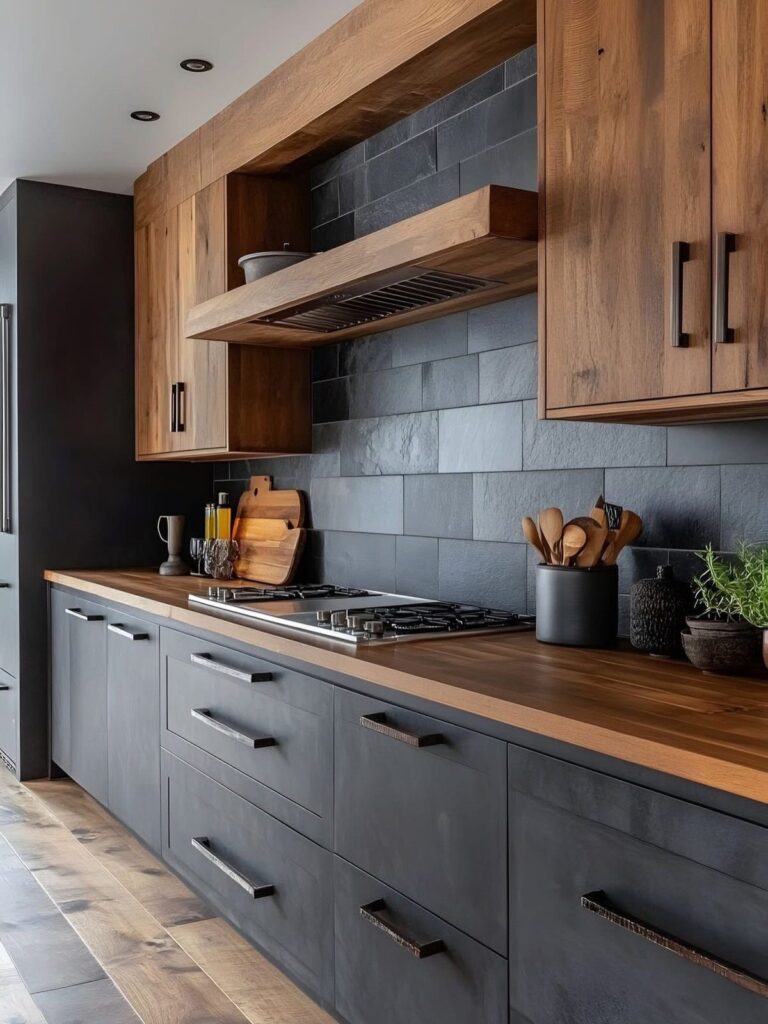
Door style decides how much work the wood grain does and how much wiping the cabinets need: flat-panel slabs show every fingerprint, while raised panels and vertical slats hold grease and dust in their grooves.
Your choice comes down to whether you own or rent: solid wood costs more than laminate or thermofoil, so it only pays off if you plan to stay.
1. Flat-Panel Cabinets
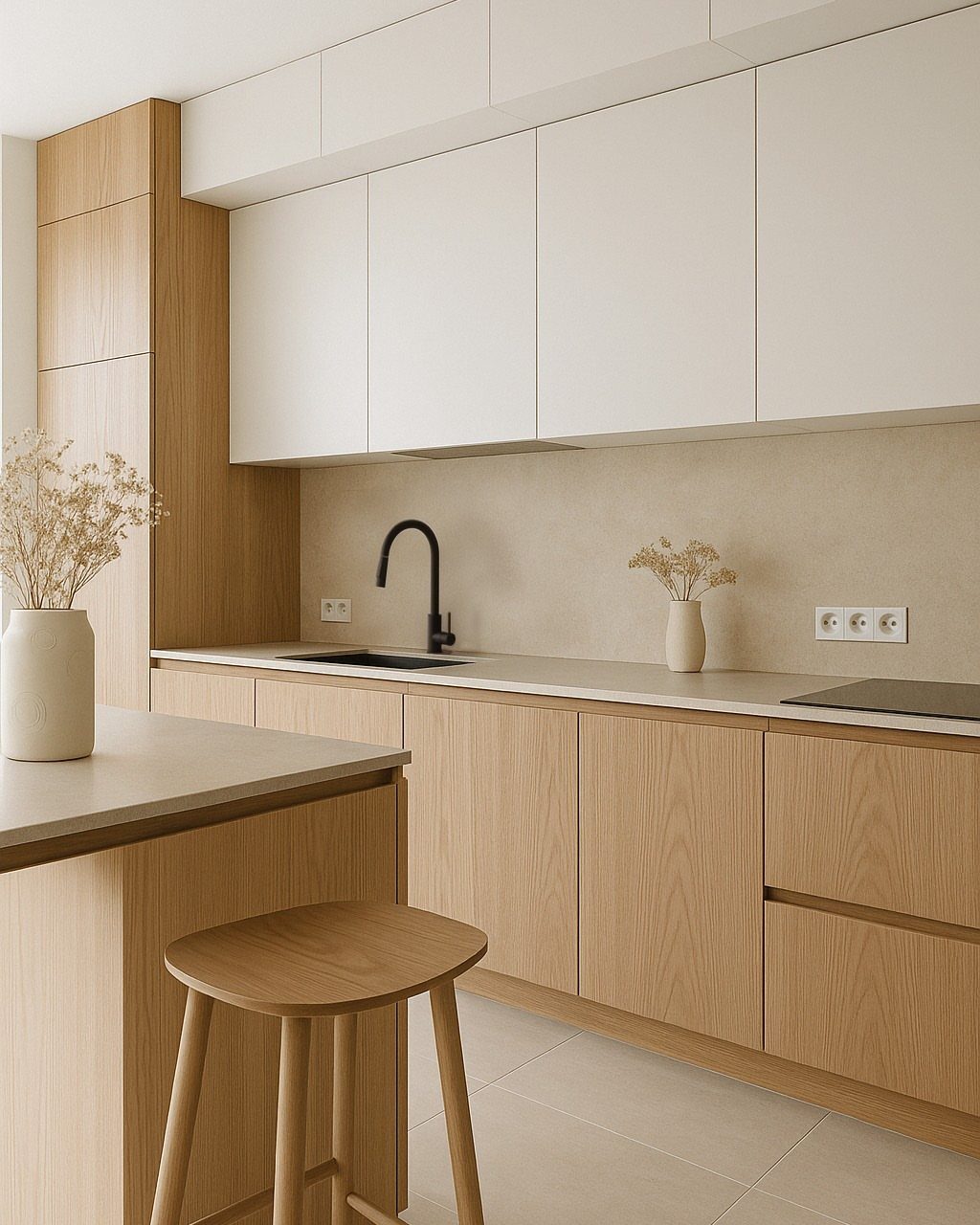
Flat-panel doors have no frame or profile, so the wood grain does all the work.
Pairing light wood base cabinets with white uppers, as above, keeps a small kitchen from feeling heavy, and I like how a black faucet and a gray countertop sharpen the look without adding clutter.
Skip the decorative hardware if you can. Slim pulls or a push-to-open setup keep the clean lines, though plain slab doors show every fingerprint and dent, so I’d pick a matte finish.
2. Rustic Solid Wood Cabinets
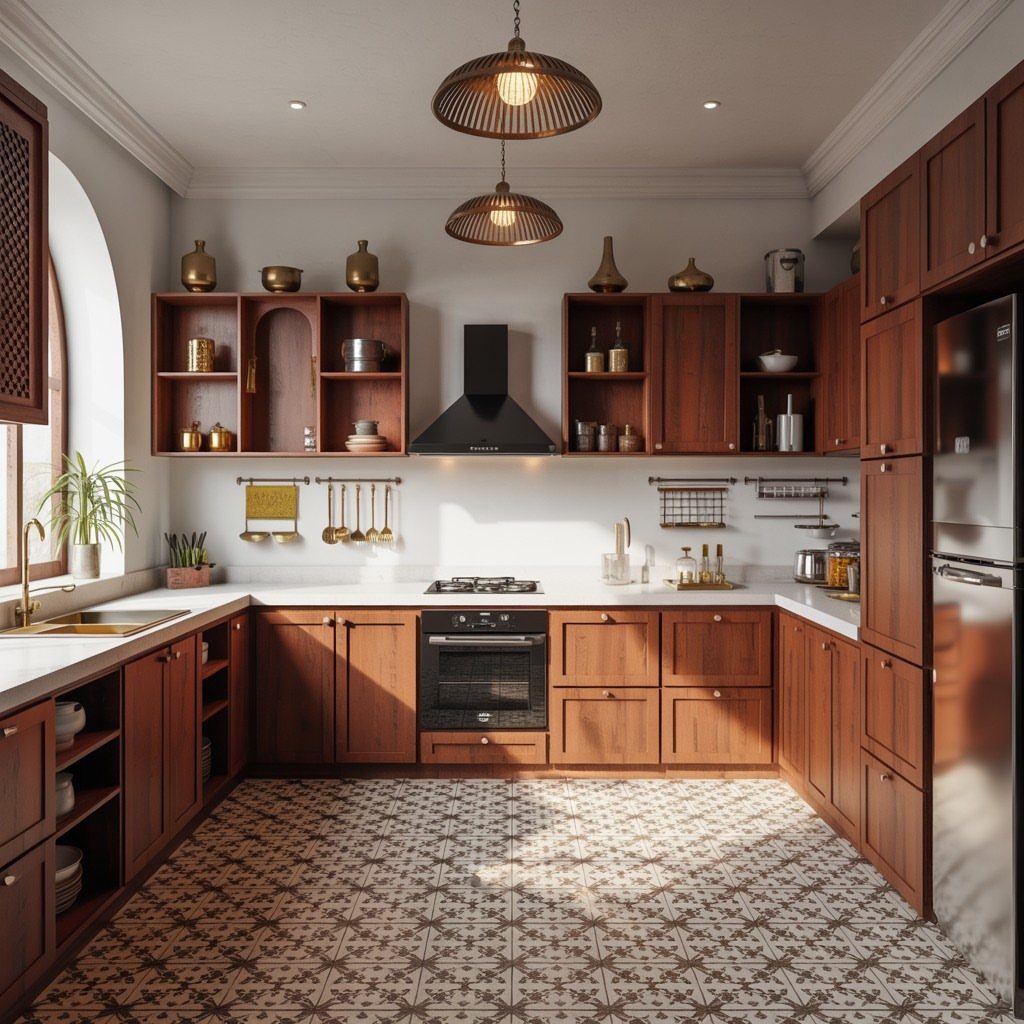
Warm brown solid wood is the easiest way to give a kitchen a lived-in feel from day one. Against white countertops, the dark tone reads as a deliberate contrast instead of a heavy block of color.
Keep the rest of the room simple.
If the budget is tight, refinishing existing wood doors gets you the same warmth for far less than new cabinets.
3. The Natural Oak Kitchen
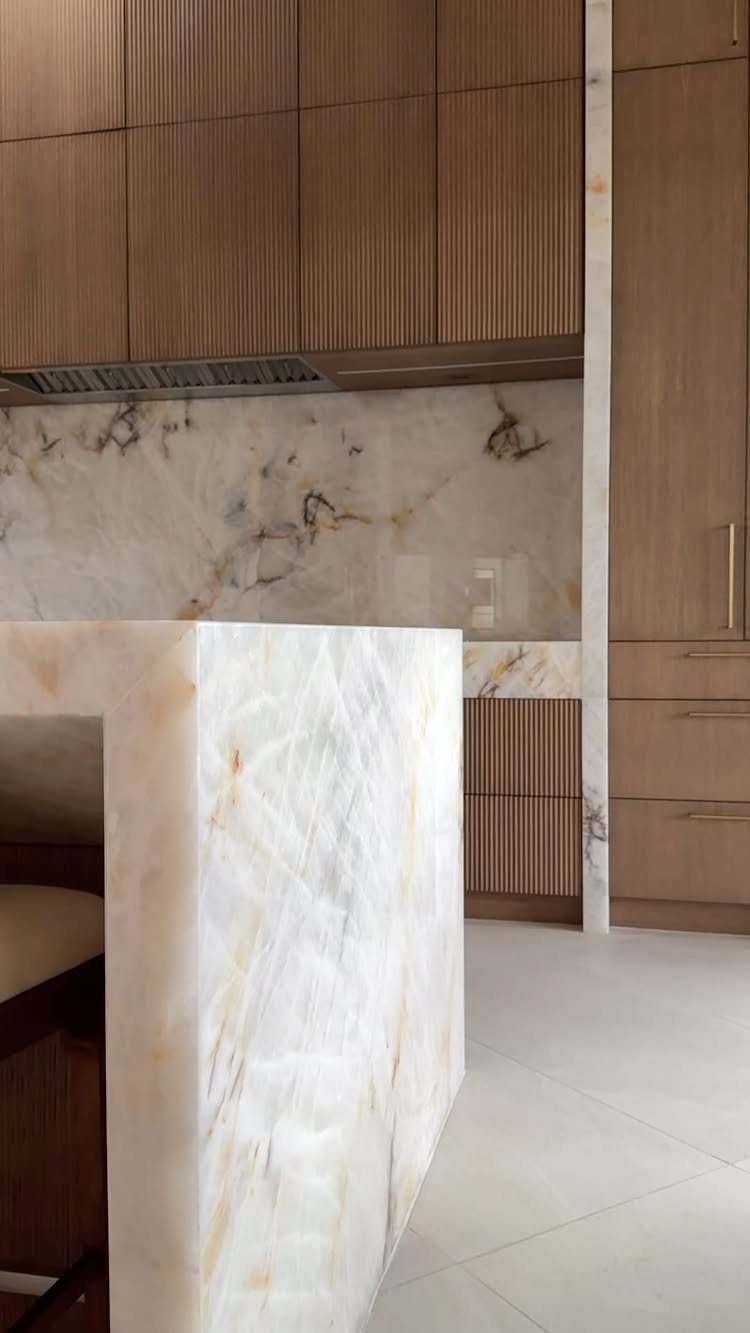
Natural oak with a ribbed, vertical-slat texture gives a flat wall of cabinets real depth, and white marble with gold veining lets it stand out without competing.
Before ordering, decide on the finish: stained, painted, or left natural. For oak like this, I’d go natural, because paint hides the very grain that makes the slats worth buying.
Order a sample door and look at it in your own kitchen light. Oak shifts from pale to honey depending on the bulb and the time of day.
4. Hardwood Cabinets
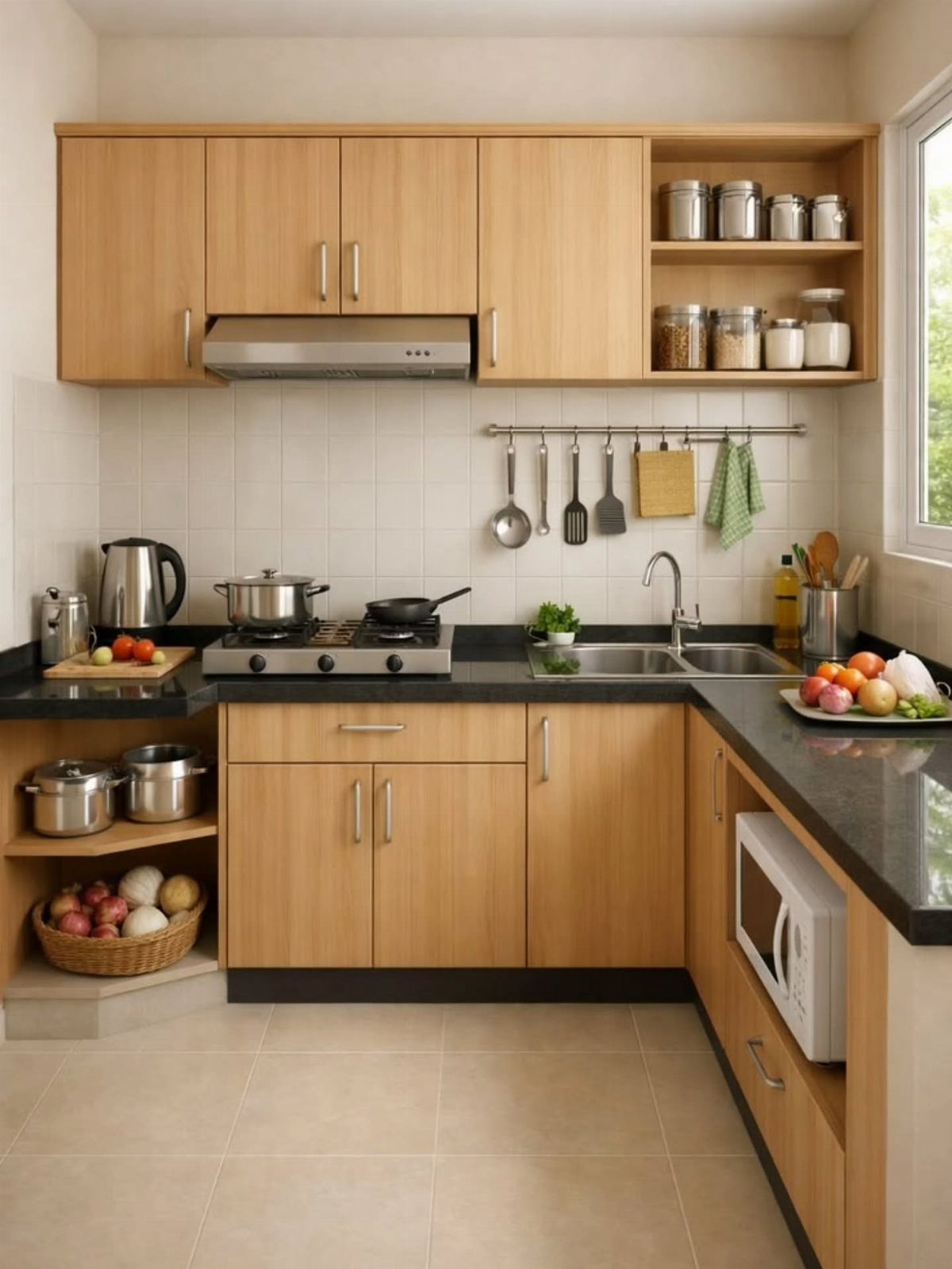
Light hardwood cabinets against black countertops make a high-contrast pairing that stays easy to live with. A white tiled backsplash between the wood uppers and lowers keeps the look bright instead of stark.
I’d lean toward this combination in a kitchen that gets daily cooking, since the busy counter holds utensils and food without looking messy against the dark surface.
Pick one wood tone and stay with it. Mixing 2 shades of wood on a single wall tends to look accidental.
5. Pull-Out Organizers
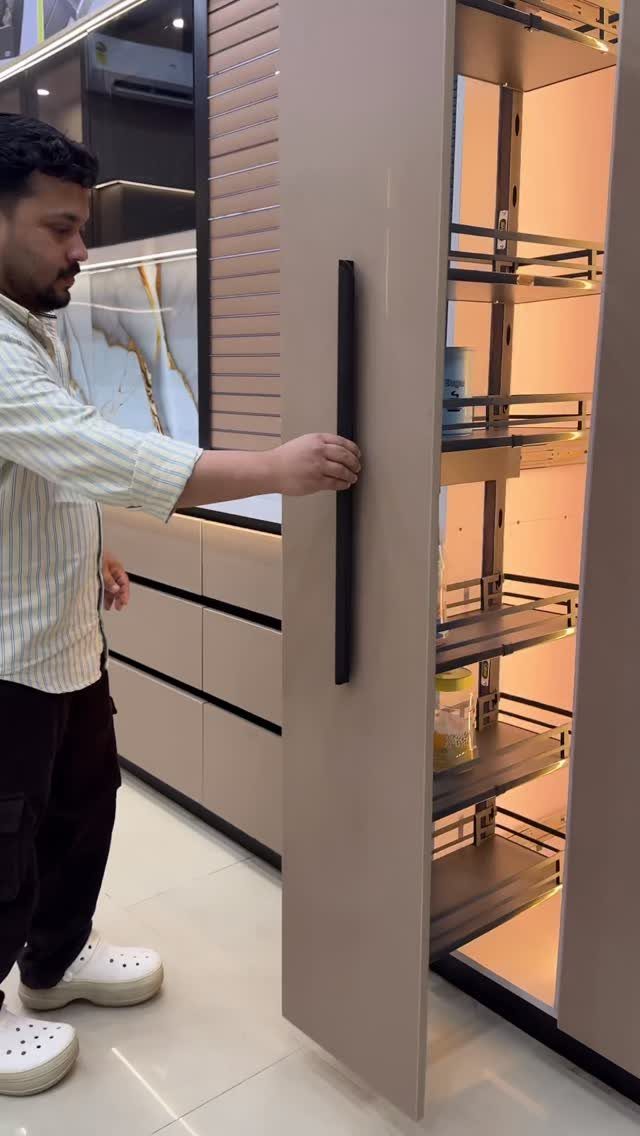
A tall cabinet fitted with a metal pull-out shelving unit turns a deep, dark pantry into something you can scan in one glance. Nothing gets lost at the back, because the whole shelf slides toward you.
I’d put one in the cabinet you reach into most, and pick a finish that matches your cabinetry, like beige on light wood, so it blends in.
Measure the opening width and depth before buying, since pull-outs need clearance for the hardware and the door swing.
6. Shaker-Style Cabinets
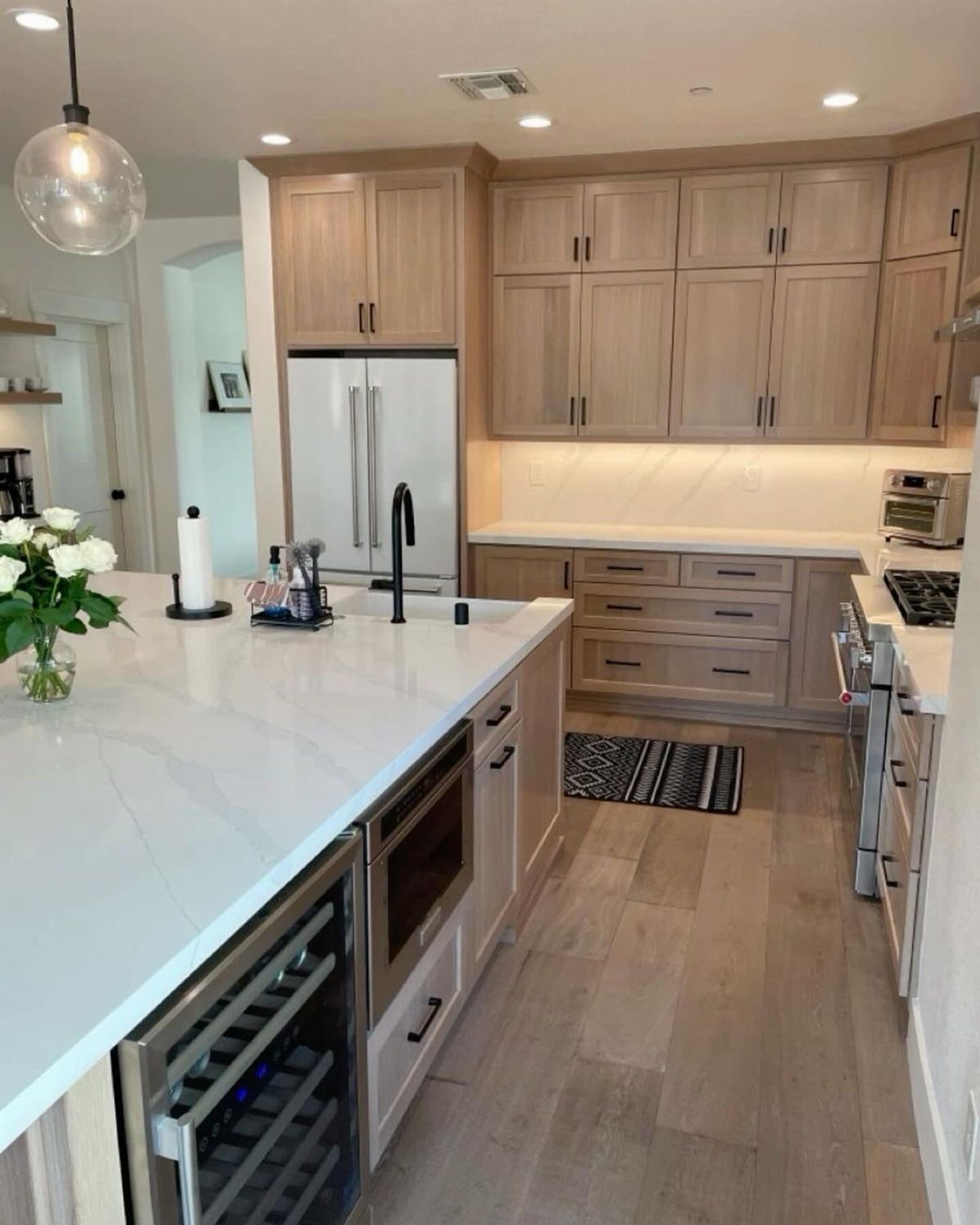
Shaker doors have a simple five-piece frame, which is why they blend old and new so easily. In light wood, they feel calmer and more current than the painted versions you see everywhere.
If you add an island, I’d echo the cabinet wood on it so the room feels planned.
Shaker is also a safe pick if you may sell someday, since the style rarely looks dated.
7. Raised Panel Cabinets
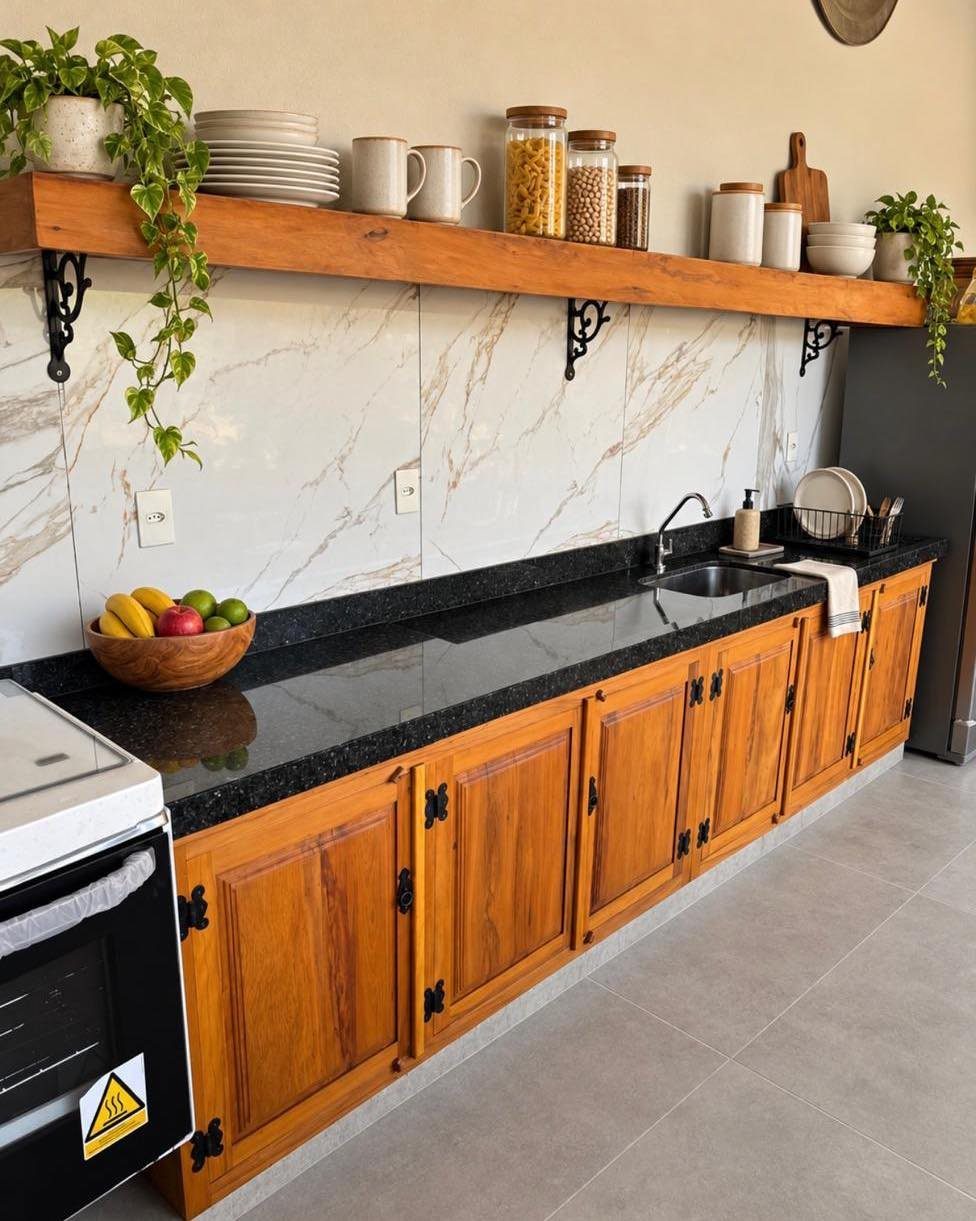
Raised panel doors have a stepped, beveled center that catches light and throws small shadows, which is where the depth comes from.
A floating wood shelf for dishes and jars, as above, breaks up the wall without adding another cabinet. I’d keep the hardware simple and let the door profile carry the detail.
The grooves in the panels collect grease and dust, so wipe them down more often than flat doors.
8. Vertical-Slat Wood Cabinets
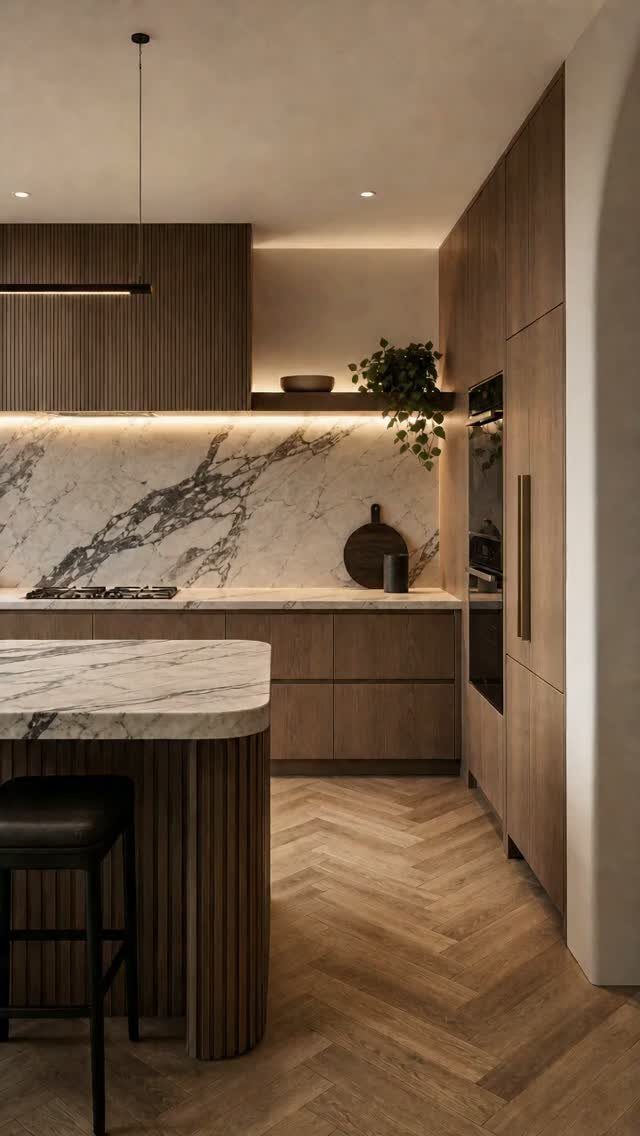
Narrow vertical wood slats wrapped around both the cabinets and the island make one continuous wood surface, and marble gives the texture a calm place to rest.
Herringbone floors add a second pattern, so I’d keep everything else plain: one wood tone, one stone, and little on the counters.
Order a sample slat panel before committing, because the gaps between slats are easy to underestimate in a photo.
Slatted fronts also catch crumbs and dust in the grooves, so expect a little extra wiping.
9. Dark Wood with White Marble
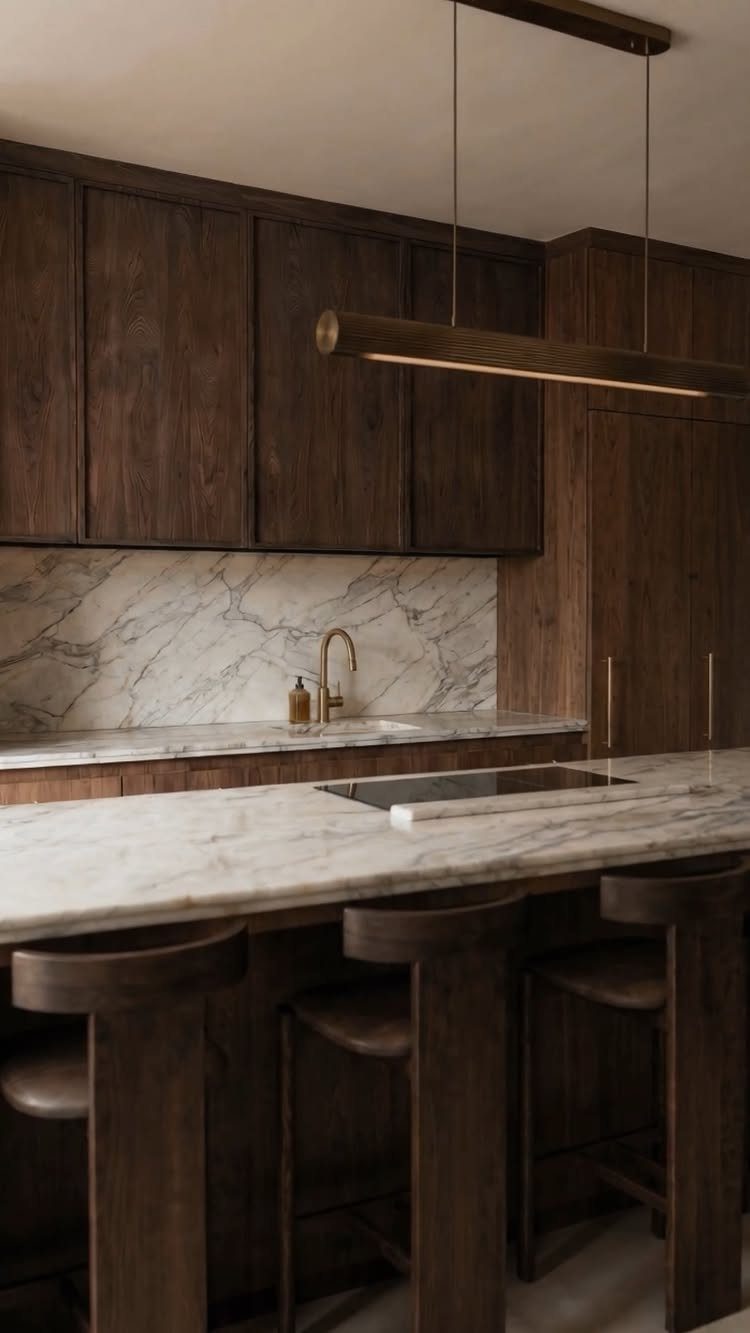
Dark brown cabinets and white marble work because each makes the other look cleaner: the stone brightens the wood, and the wood gives the stone weight.
Matching wood barstools tie the island back to the cabinets, and a gold faucet adds one small warm accent.
I’d stop at one metal finish. A linear pendant over the island keeps the lighting as tidy as the lines of the doors.
Dark wood shows dust and water spots, so choose a satin finish over a high gloss.
Maintenance Tips for Cabinets
Wipe wood cabinets with a soft, slightly damp cloth, then go over them with a dry one right away. Standing water is what lifts finishes and swells seams, especially around the sink and dishwasher.
Keep the doors beside the stove and toaster in mind too, since steam and heat wear a finish down faster there. A cloth after cooking costs nothing, and a trivet or the exhaust fan helps a lot.
Skip abrasive pads and harsh sprays. Mild dish soap and water handles most grime.
When the finish turns dull or worn in spots, refinishing is the move. It extends the life of the cabinets, and it costs far less than replacing them.
Investment Value of Wood Cabinets
Solid wood is built to take daily wear. Good hardwood resists warping and cracking better than cheaper materials, and that durability is the reason I treat it as an investment instead of an expense.
Over time, sturdy construction and a good look both support a home’s value. A kitchen that still looks sound years later is easier to sell than one with sagging, chipped boxes.
If you rent, this logic doesn’t apply to you, so don’t pay for it. If you own, put the money into the cabinets people open every day.
Cost Considerations
Expect to pay more for wood cabinets than laminate or thermofoil.
Since the upfront price is higher, decide where wood earns its place. I’d spend on the doors and drawer fronts you touch daily, and take a cheaper material for spots that get little attention.
Many makers offer one kitchen in several wood tones, so compare prices across tones before you settle on one. Request a written quote for the full set, not a single cabinet, so the comparison is fair.
Wood kitchens are generally more expensive than kitchens made with synthetic materials.
Frequently Asked Questions
Are wood kitchens still in style?
Yes. Wood kitchens as a whole don’t go out of style because they cover such a wide range of looks, though a few designs, like the Tuscan kitchen, have fallen out of favor.
Since a remodel is a big job, I’d lean toward timeless materials and colors.
What is the most durable wood for kitchens?
Hickory wins on hardness: it rates about 1,820 on the Janka scale, higher than oak at roughly 1,290 or maple at about 1,450, so it shrugs off dings from pots and kids.
It resists dents from heavy pots, pans, and appliances being moved around, and it’s less sensitive to moisture than many woods.
Are wood cabinets worth the money?
If you own your home, yes. Renters shouldn’t pay for it.





