Whether your ceiling can be cut open decides which of these lights is yours: recessed cans, linear ceiling strips and cove lighting all mean ceiling work, while under-cabinet lighting, a wall sconce by the sink or open-shelf accent lights stay a weekend job.
The list runs from under-cabinet strips to cove lighting, and in a galley the counters still need their own task light, since the cabinets overhead cast the shadows.
1. Under-Cabinet Lighting
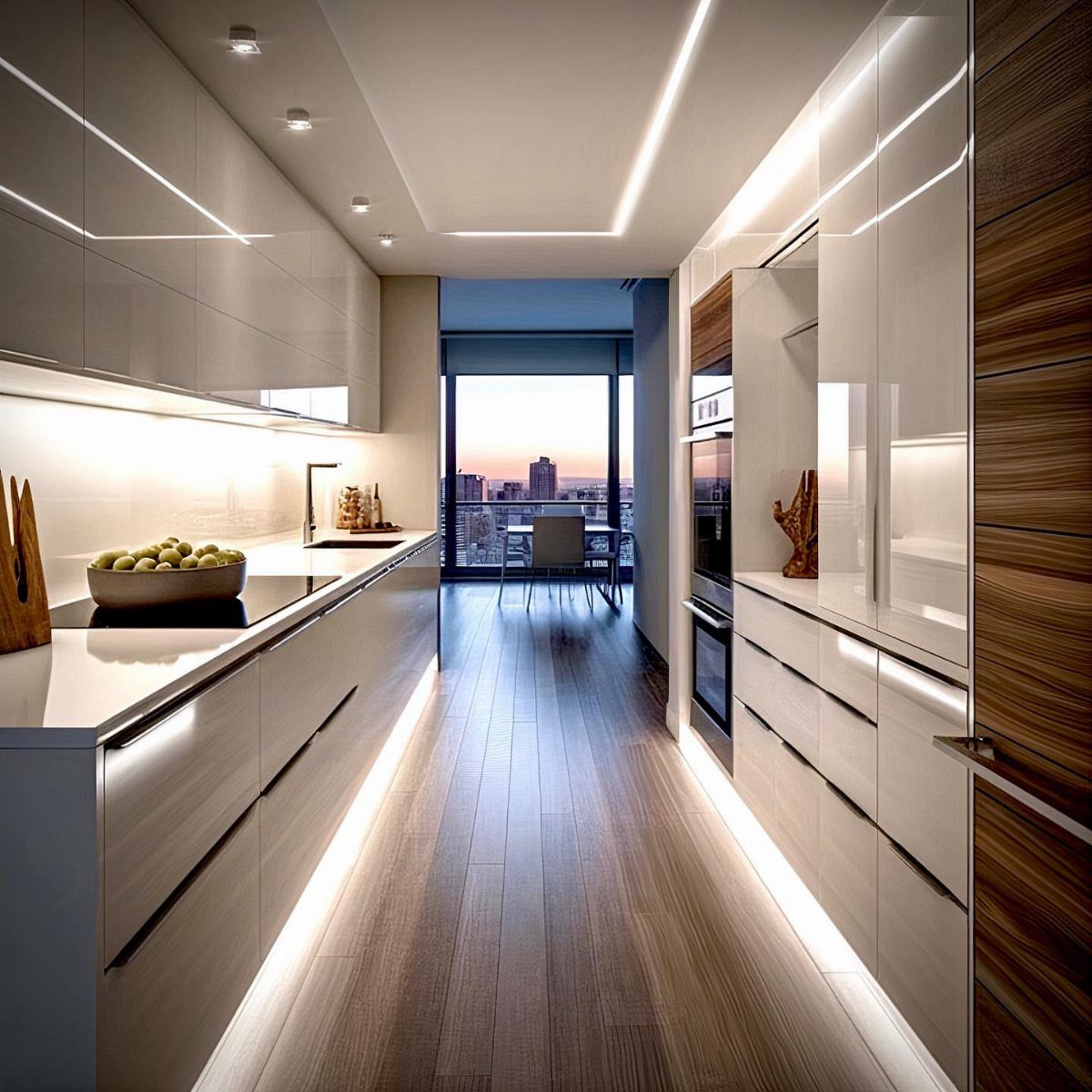
Shadows on a galley counter come from the cabinets overhead, and a light fixed to the underside of those cabinets cuts them off at the source. Your own body no longer blocks the ceiling light while you chop.
A slim linear LED strip tucked along the front underside of the cabinet is my pick here. It keeps the glossy white fronts clean, with no visible fixture breaking the line.
Run it on both sides of the galley so neither counter falls into dimness.
2. Corner and Open-Shelf Accent Lights
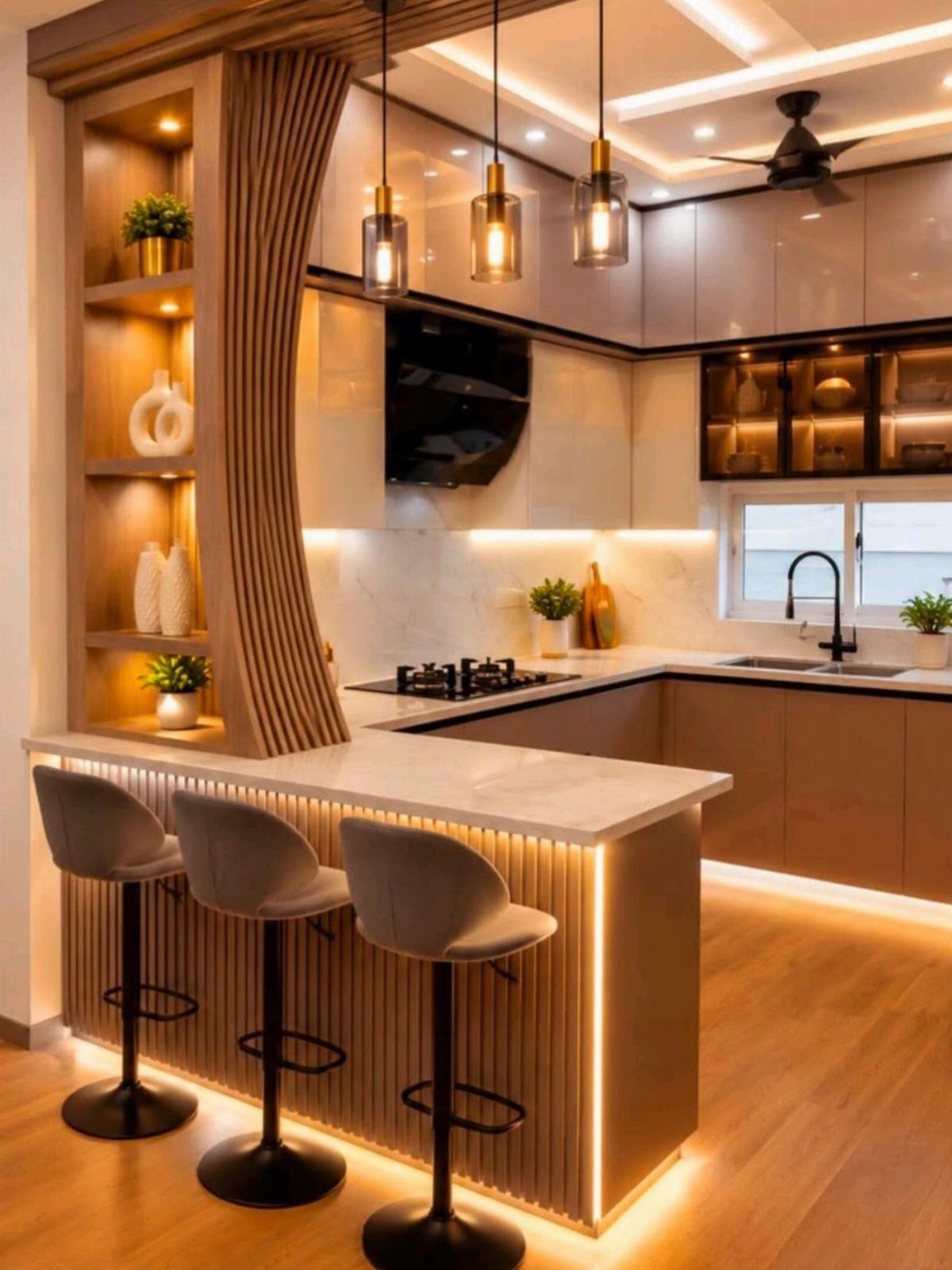
Not every light in a narrow galley has to point at a counter. Warm light tucked into open wooden shelves gives the room a glow and makes the shelves look intentional.
In a galley, this works because the eye gets something to rest on besides the work surface. I like it paired with task lighting overhead, so the accent can stay soft.
Keep the shelf lights warm in tone, and they will flatter brown cabinetry and wood floors alike.
3. Recessed Lighting
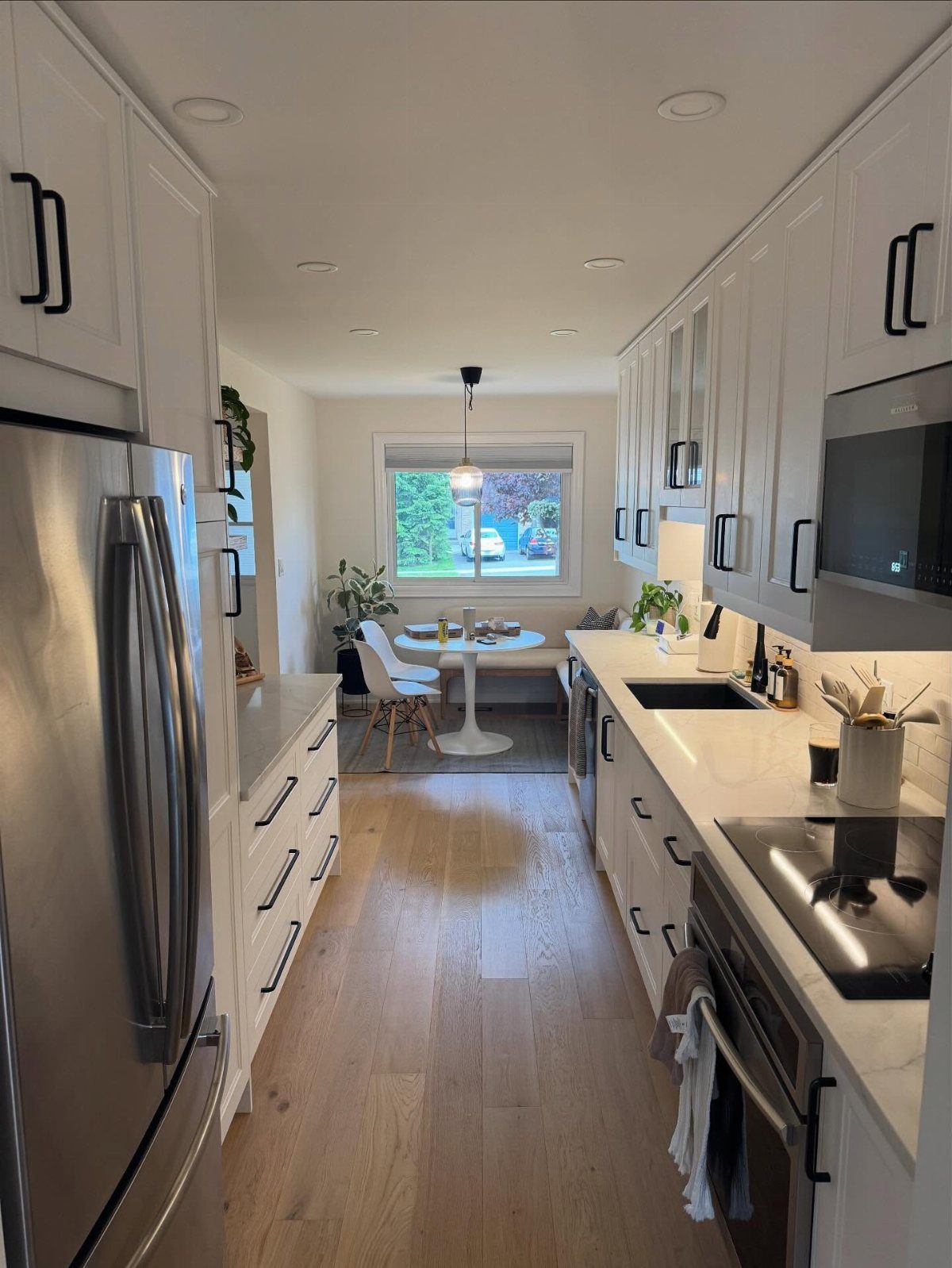
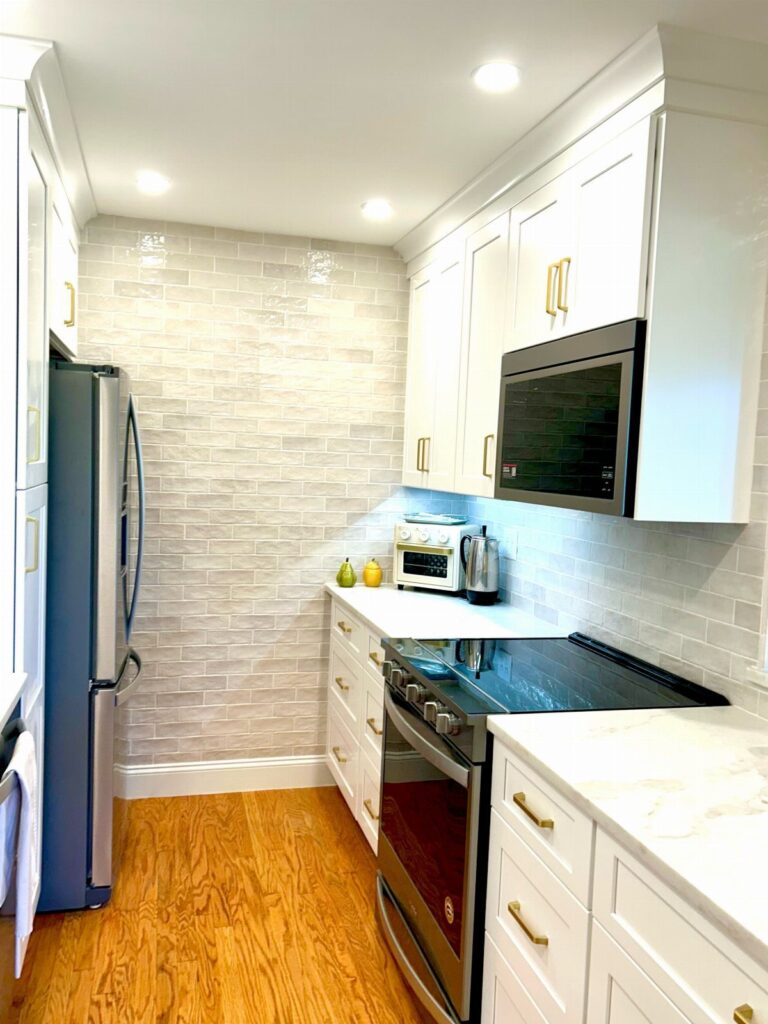
Round recessed lights keep the ceiling flat and plain, which suits a galley with white cabinets and stainless appliances. Nothing hangs down, so a narrow room feels less crowded.
Run them down the center of the ceiling, over the aisle, and the beams will land on both counters about equally.
Recessed cans give general light rather than focused task light, so I would pair them with a second source at the counter.
Installation means cutting into the ceiling, so it is a bigger job than most weekend projects.
4. Wall-Mounted Sconces
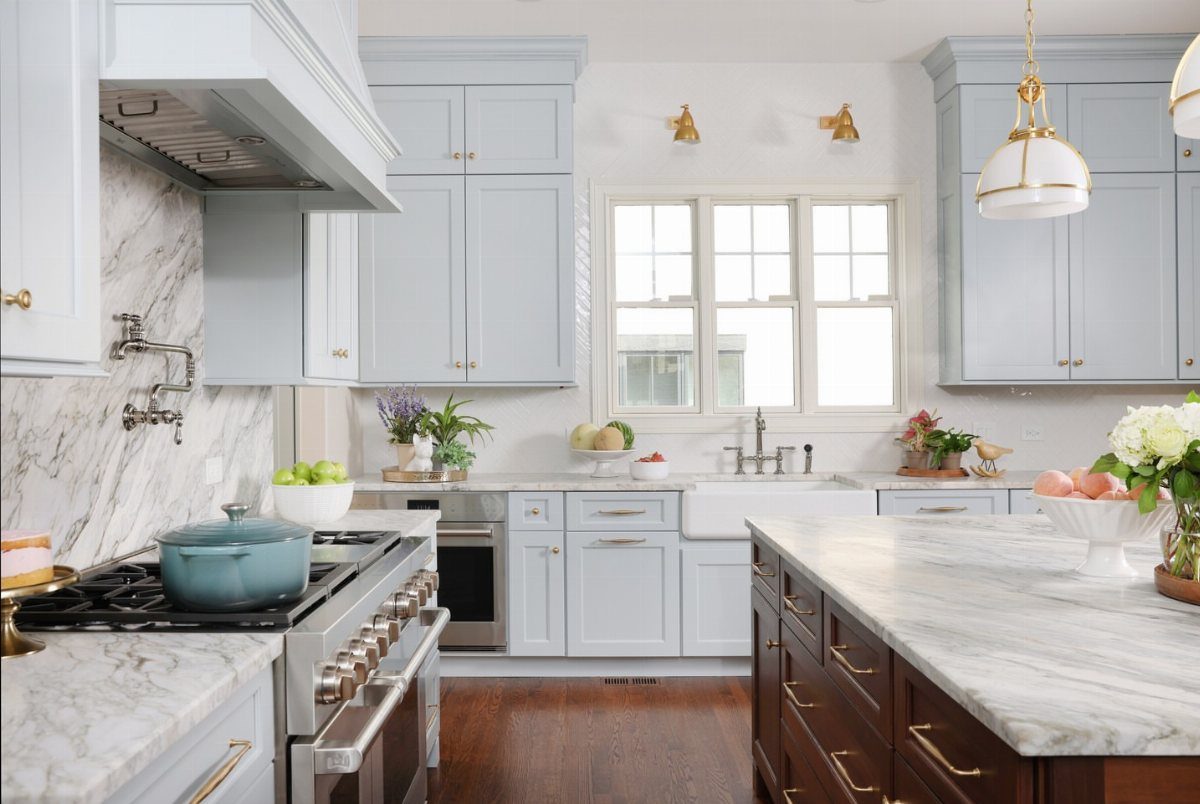
Gold sconces beside a window add light exactly where a ceiling fixture leaves a gap: at the sink. Wall-mounted, they take no counter space, and they light your face and hands as you wash.
Pick one finish and repeat it. Brass-toned sconces against light blue cabinets read as a deliberate pairing, and matching hardware ties it together.
Plan the wiring before you buy, since a sconce needs a power source at that spot on the wall.
5. Hanging Dome Pendant Lights
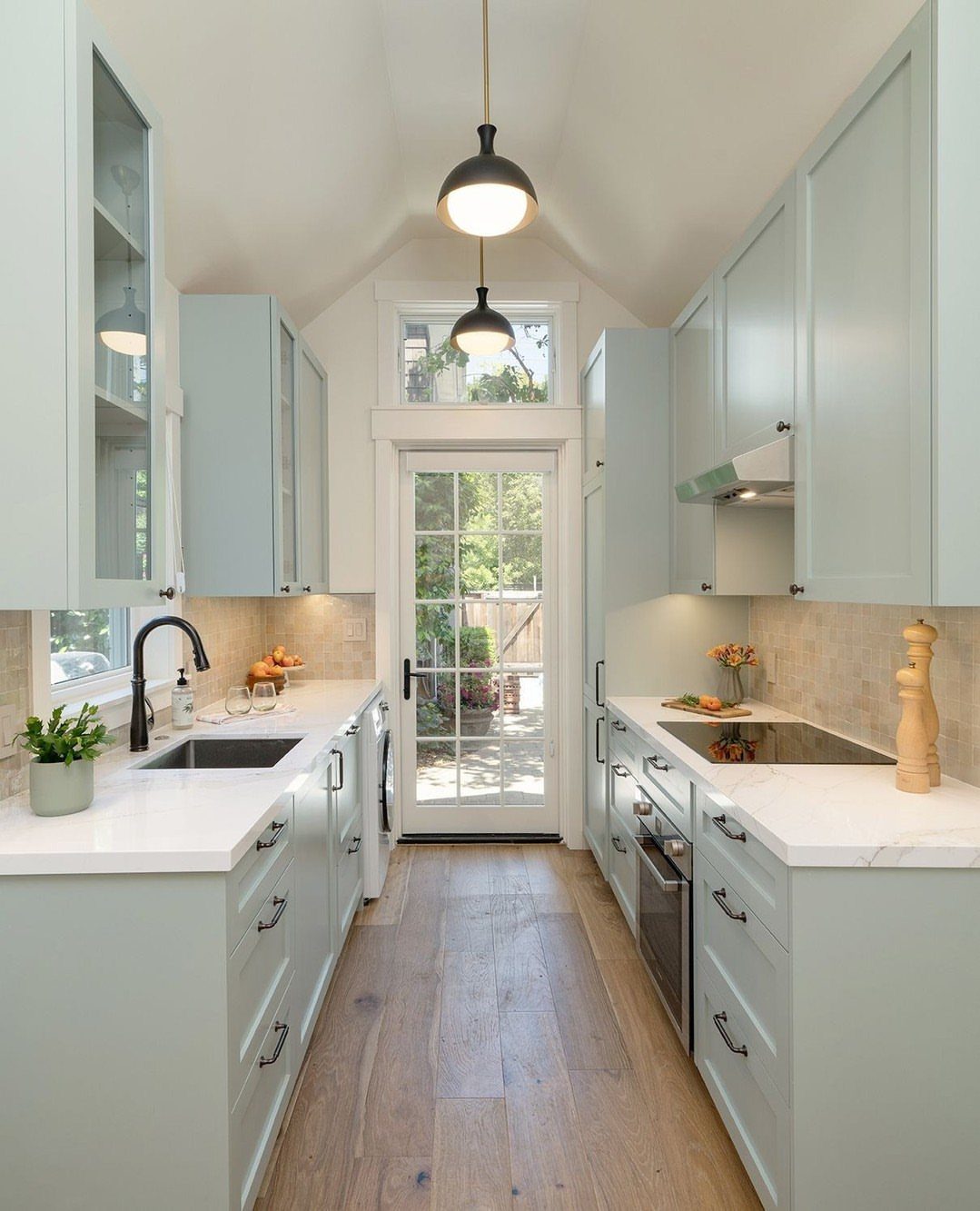
2 dome pendants hung down the center of a narrow galley do double duty: they light the aisle and give the ceiling a focal point. Black shades look crisp against light blue cabinets.
Hang them evenly along the room’s midline so each one covers its own half. With a vaulted ceiling, longer drops keep the shades at a comfortable height rather than lost overhead.
Domes direct light downward, which is good for the aisle but means counters may still want their own lighting.
6. Linear Recessed Ceiling Light Strips
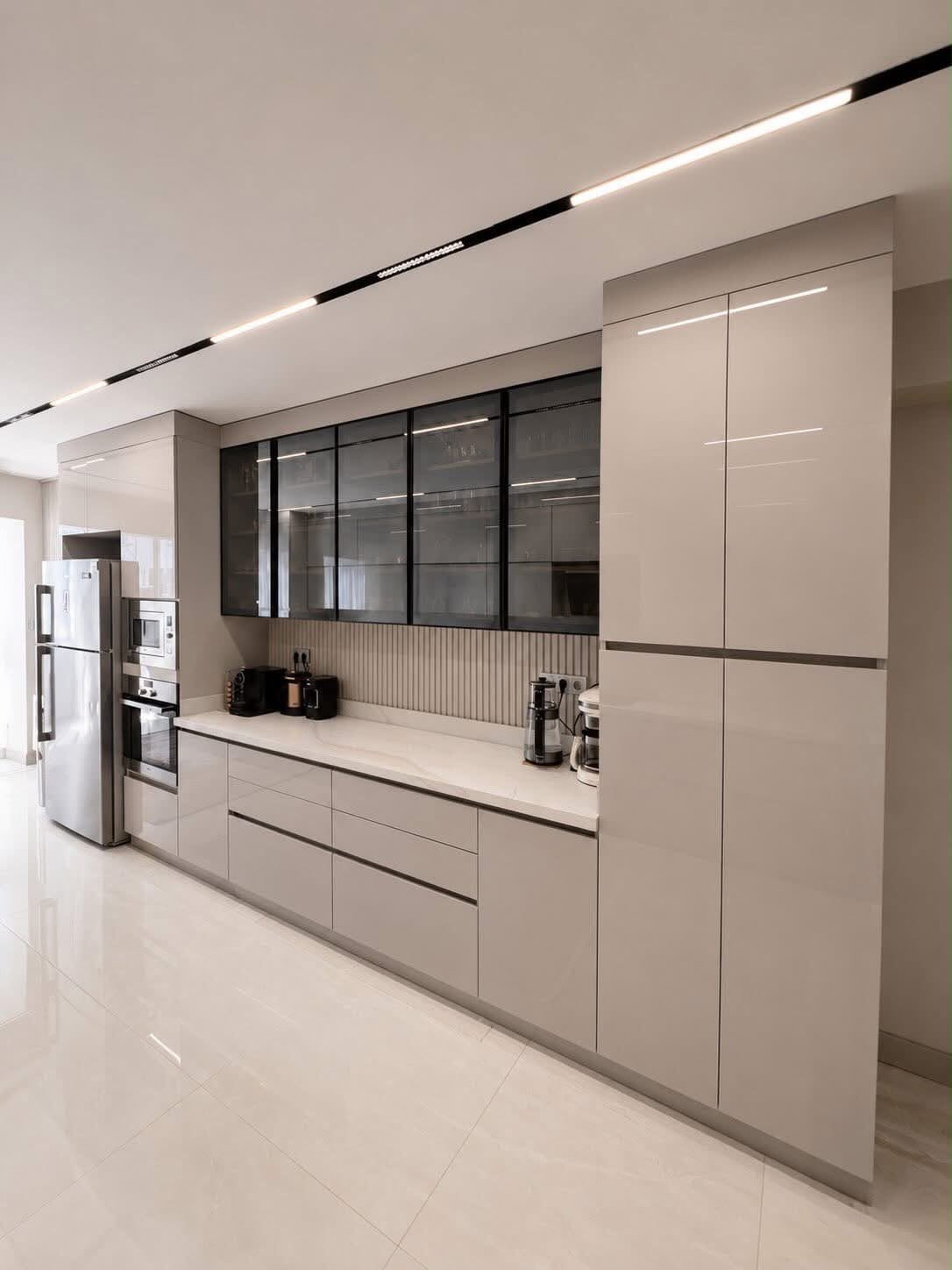
A single continuous LED channel set flush into the ceiling draws a straight line down the length of a galley, and the room’s shape does the rest. It looks clean against grey cabinetry and white counters.
Because the light is one unbroken line rather than separate spots, it spreads evenly with no bright and dark patches along the aisle. Mounting it flush leaves nothing protruding.
I would choose this over a row of cans in a very narrow kitchen. Like recessed lights, it needs ceiling work, so plan for that.
7. Recessed Cove Lighting
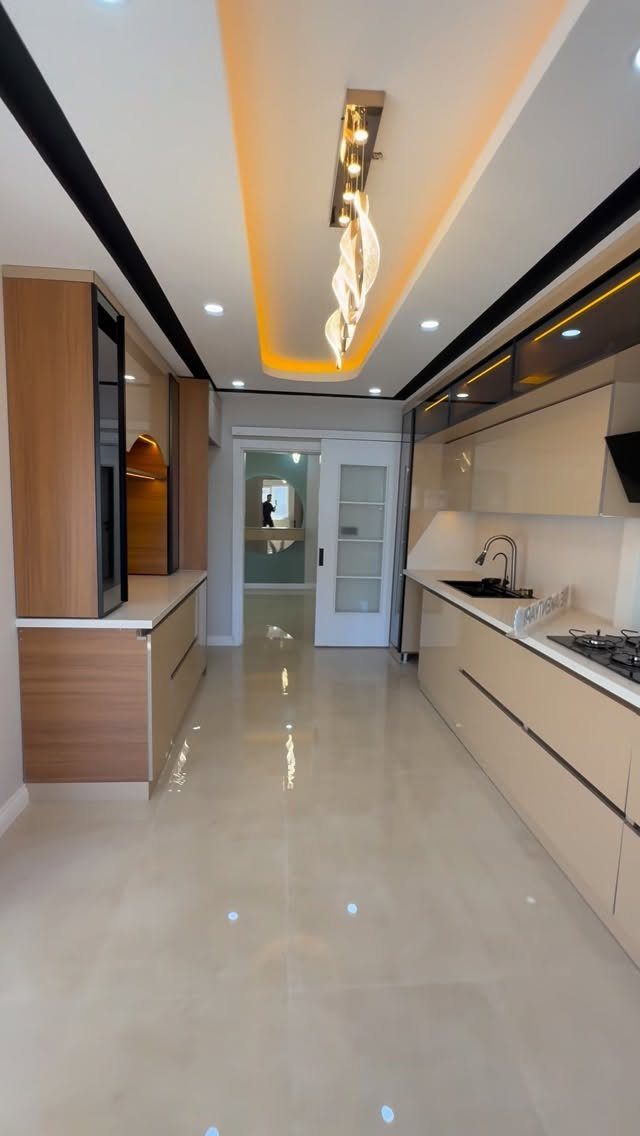
A cove hides the light source in a recessed channel in the ceiling, so the glow bounces off the surface and the room fills with soft, indirect light.
In a galley, cove lighting keeps the ceiling clear of fixtures that could crowd the aisle, and the indirect glow helps avoid hot spots on the counters.
Orange is a bold choice.
A warm white would keep the beige cabinets looking true to color, while orange tints everything it touches. I would treat it as a mood layer, not the main light.
Pair the cove with a central pendant, as here, and the ceiling gets a focal point while the cove handles the ambient glow. Like the other ceiling options, it means building the recess, so plan it as a larger project.
Layering Lighting Types
In a galley, I split the lighting into 3 jobs: a ceiling fixture so you can see the whole room, under-cabinet strips for the counters where you chop and read recipes, and a small accent light, like a glow inside a glass-front cabinet, to give the narrow space some depth.
A dim galley rarely gets better by stacking more ceiling fixtures on top of each other; it improves once each light has its own assignment.
Keep accent light restrained. Too much of it distracts from the features you actually want people to notice, and a few well-placed spots can make the room read larger than it is.
Under-cabinet lighting can pull double duty as accent light in areas where you rarely work.
Lighted switch plates and rope lights are small, playful touches, though they give off very little useful light. Treat them as extras after the main layers are in place.
Color Choices
Light paint on the walls and light-colored countertops bounce more of the available light around, which helps a narrow room feel less closed in.
In a galley, where 2 walls of cabinets already crowd the aisle, that reflected light does real work.
Choose bright wall paint first, since it is the cheapest change and a weekend job. Then let the counters follow if you are replacing them.
Aim accent lights downward or sideways at a wall instead of at eye level.
Aim for light that lands softly on the countertop or backsplash, because a bare bulb or strip visible from the far end of the room just bounces into your eyes as glare.
Placement Strategies
Put the strongest light where you do the most cutting and prep. High-intensity LED spotlights suit those zones, where bright task light matters more than mood.
Size anything you hang to the surface below it, not to the drama you want. Picking a fixture that’s too big for the room is the sizing error I see most in small kitchens.
Any spacing number you find online is a rough starting point, mine included. Measure against your own ceiling height and room dimensions, and trace where the wiring and joists actually sit, before you buy a fixture or drill a hole.
Frequently Asked Questions
What is the best lighting for a galley kitchen?
Layer 3 kinds of light: a ceiling fixture for the whole room, under-cabinet strips for the counters, and a small accent light for depth.
Recessed lights, pendants and under-cabinet strips all work in a galley. Giving each light its own job does more than piling extra ceiling fixtures on top of each other.
What type of lighting is best for low ceilings?
Recessed lighting is the best fit, especially with LED bulbs. The fixtures sit flush with the ceiling, so nothing hangs down into the aisle and the room feels less crowded.
Recessed cans only fill the room with general light, so put a second source right over the counter where the knife work happens.
What color is best for a galley kitchen?
Light colors work best, on both the walls and the countertops, because they bounce more of the available light around a narrow room.
A can of bright paint costs the least of any fix here and takes one weekend, which makes the walls the place to begin. If new counters are already planned, pick a light shade for them too.
What is the rule of thumb for kitchen lighting?
Give every light a job: general light overhead, focused task light where you cut and prep, and a soft accent layer. Put the strongest light over the prep zones and size any hanging fixture to the surface below it.





