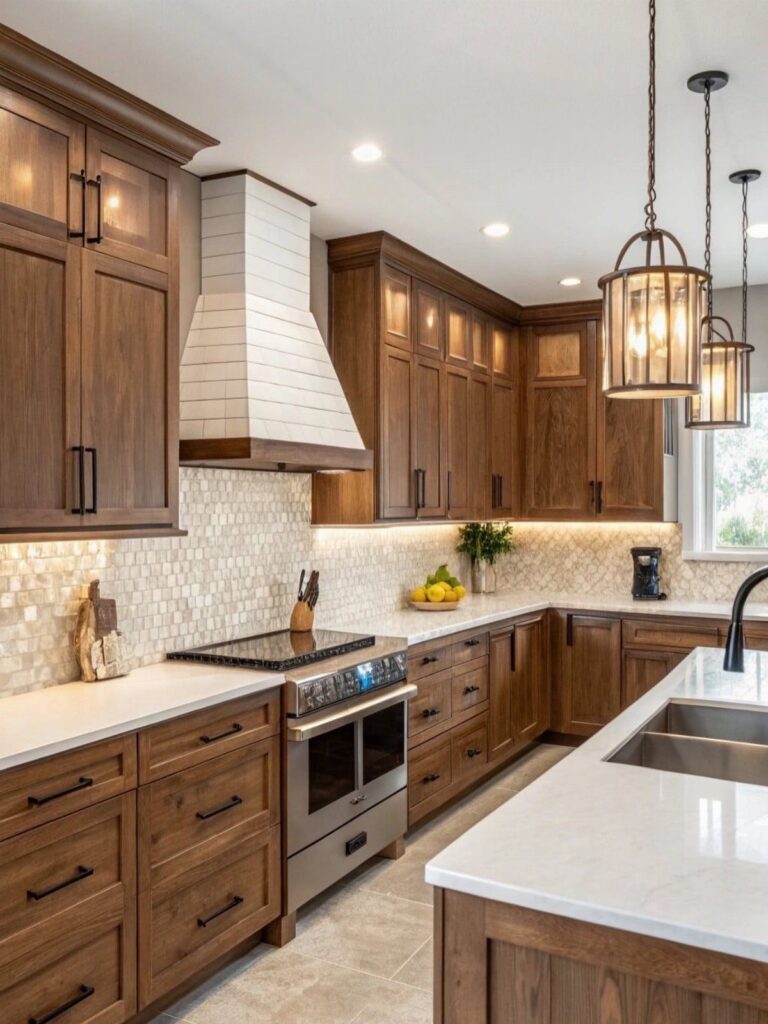
The right pairing for your space depends on which two-tone split or cabinet style fits the layout and budget.
A small or dim room does best with pale white oak under white uppers, while a bright one can handle chocolate brown against white marble.
The ideas run from two-tone splits that work with existing cabinets to full flat-panel or fluted installations that need proper lighting from the start. Sage green and honey sit in the middle, and each depends on the wood beside it.
1. Two-Tone Kitchens
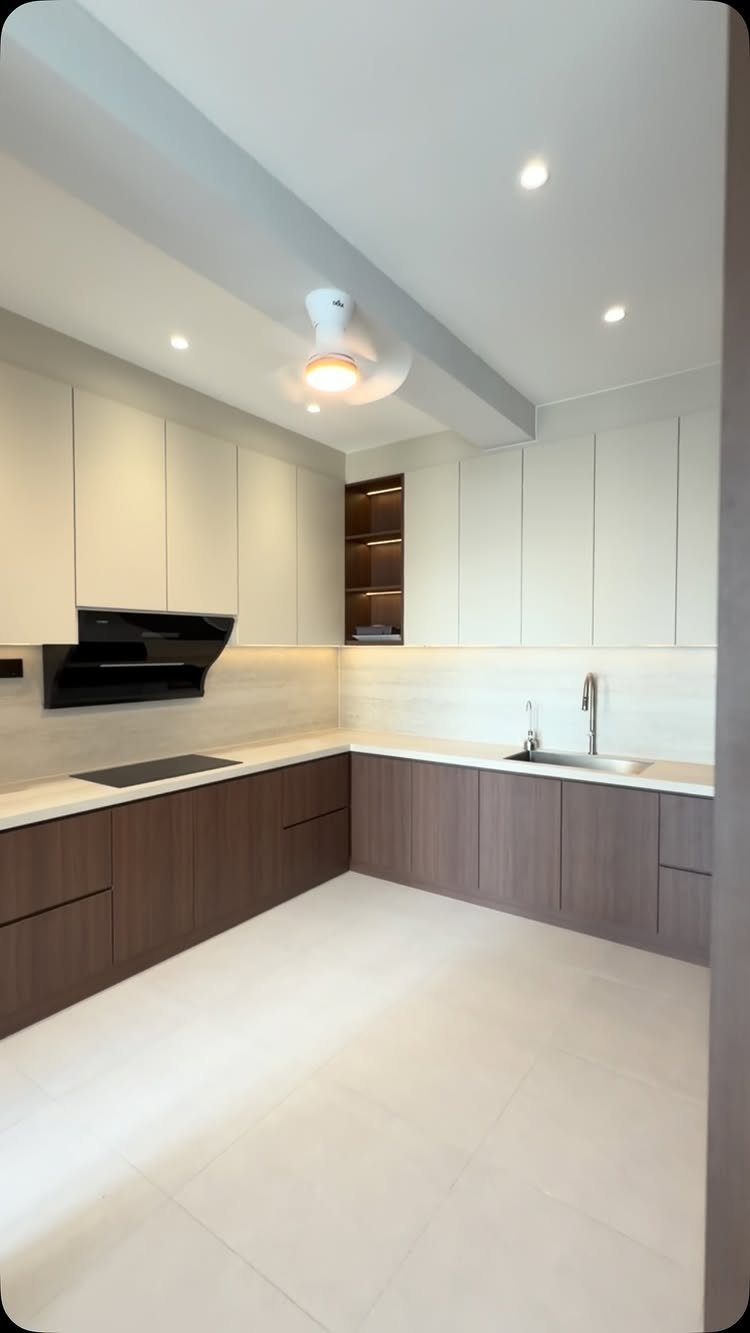
Dark wood below and white above is the version I’d pick for a kitchen that needs warmth without losing light.
The white uppers keep the walls open, while the brown base cabinets ground the room and hide scuffs near the floor.
Keep the walls and floor light, as they are here, so the dark run doesn’t feel heavy.
2. Honey-Toned Wood Cabinets
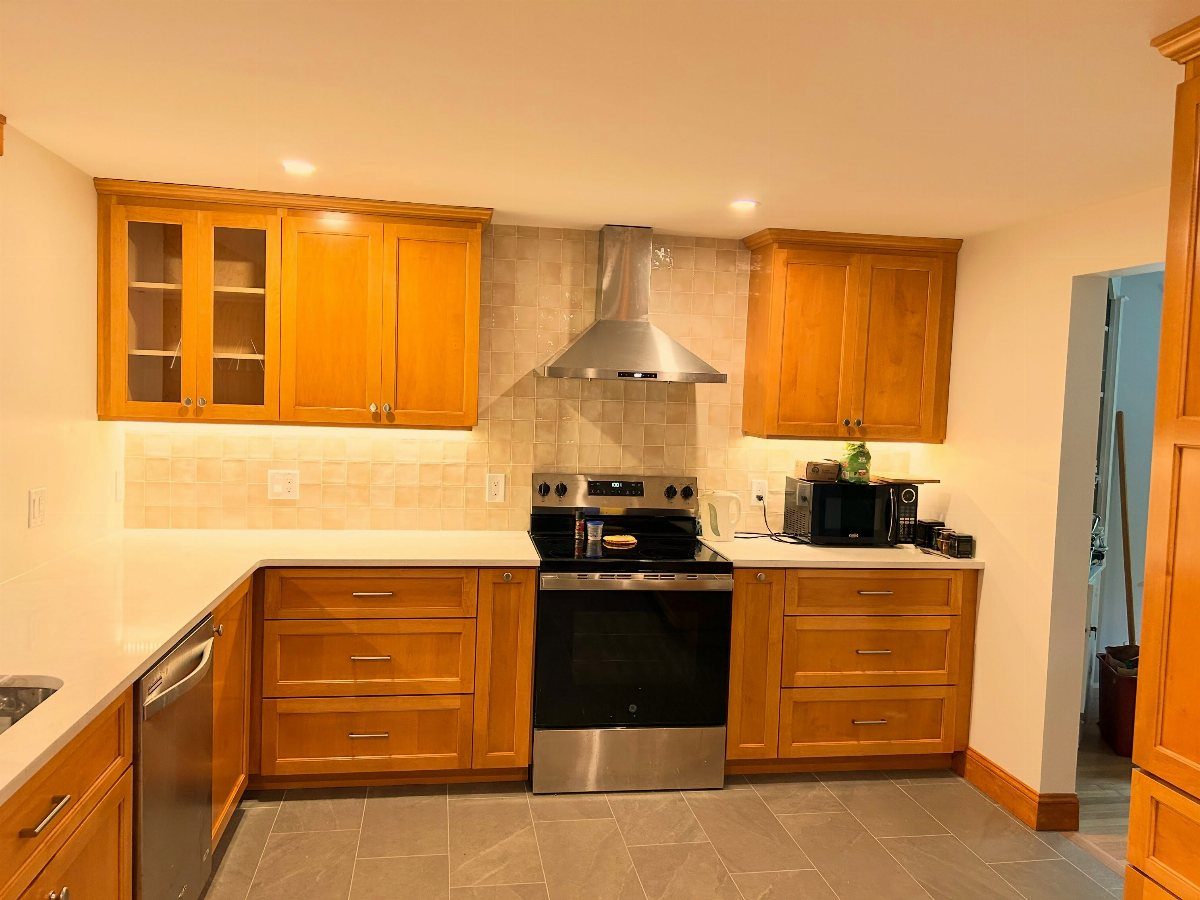
Honey wood reads as friendly before anything else, which is why it suits a family kitchen that gets used all day.
White countertops keep it from turning yellow or orange, and stainless appliances add a cool note against all that warmth.
Grey floor tile balances the color nicely. I’d skip a warm beige floor, since honey cabinets next to it start to blur together.
3. Mixed-Material Kitchens
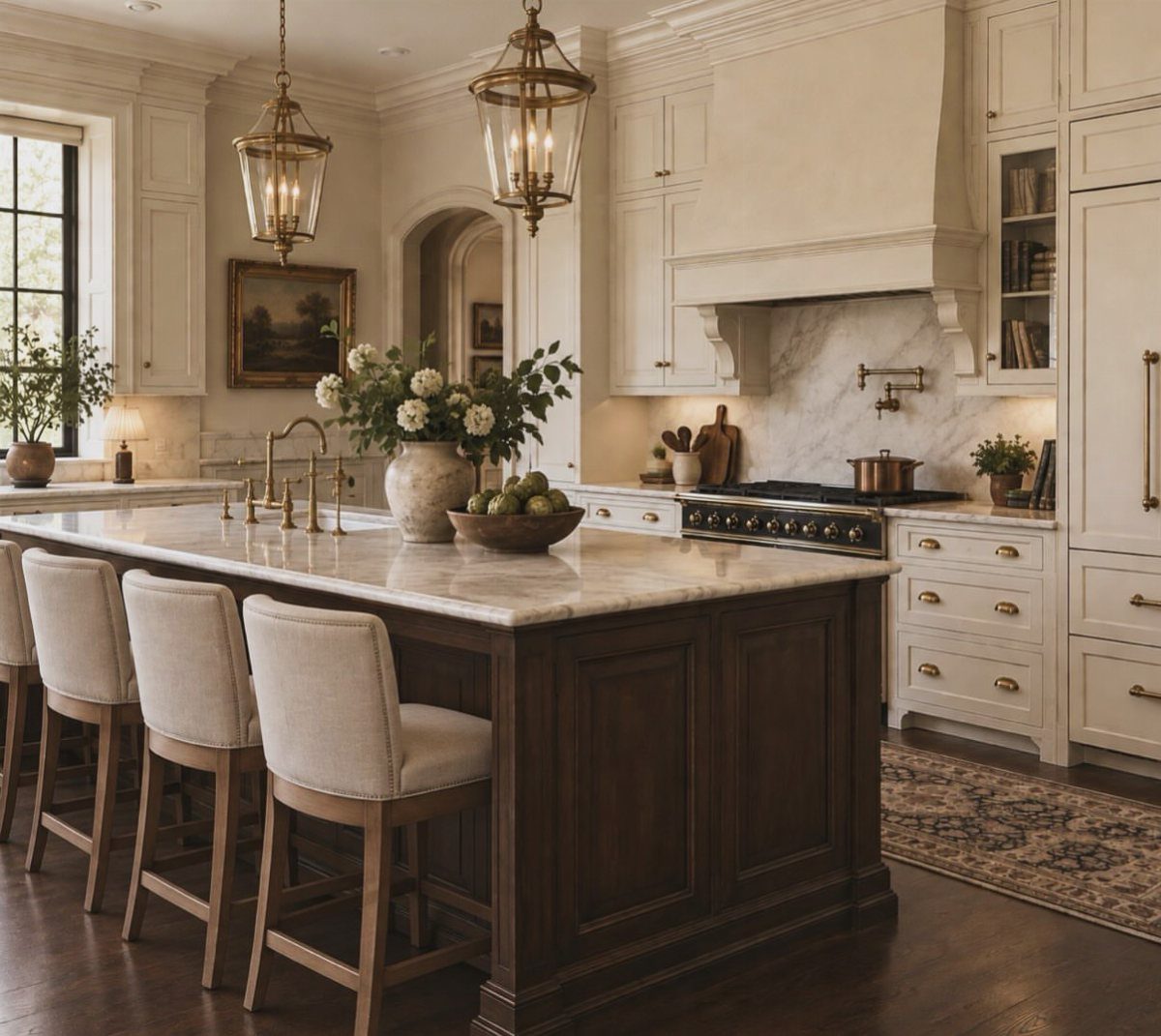
A dark wood island topped with white marble gives the eye 2 things to rest on, and neither fights the other. Cream perimeter cabinets and a marble backsplash let the island carry the warmth.
On a budget, you can borrow the idea in pieces: paint or stain just the island, then add a stone-look countertop. 2 hanging lanterns over it finish the effect.
4. Natural White Oak Cabinets
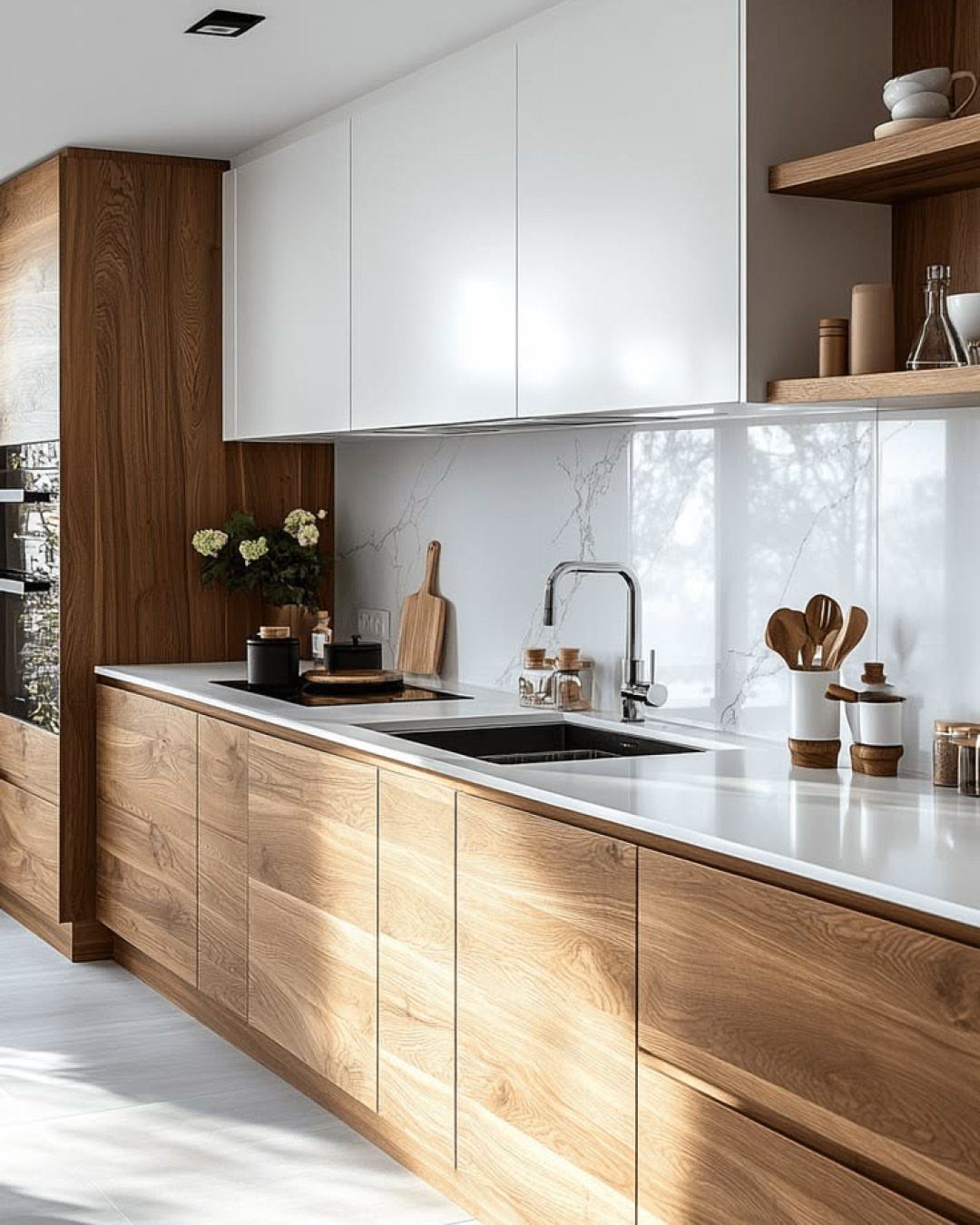
Natural white oak lower cabinets under white uppers give a soft, modern look that stays quiet. The pale grain warms a room more gently than walnut or cherry, so it suits small kitchens that can’t take much darkness.
I like carrying the oak into open shelving, as this kitchen does, so the wood looks planned rather than patched in. A white marble backsplash keeps everything crisp.
5. Flat-Panel Warm Wood Cabinets
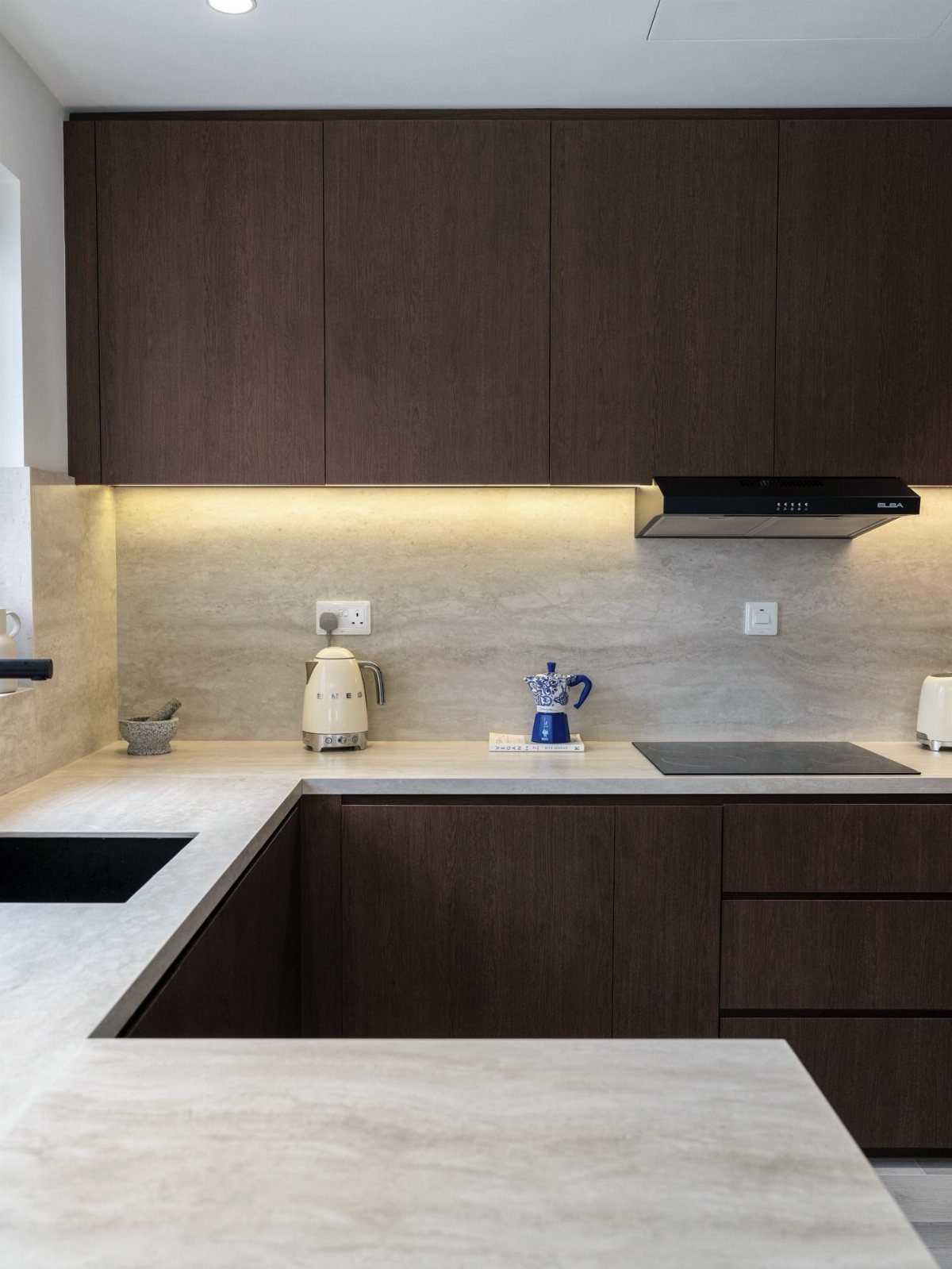
Flat doors with no profile give dark brown cabinets a clean, modern face, and there’s less to wipe down than with raised panels. Pair darker wood with a light countertop to stop the space from reading heavy.
Under-cabinet lighting matters more here than with paler wood, because dark fronts swallow light. Add it before anything else if your counters feel dim.
6. Warm Wood Cabinets with Fluted Details
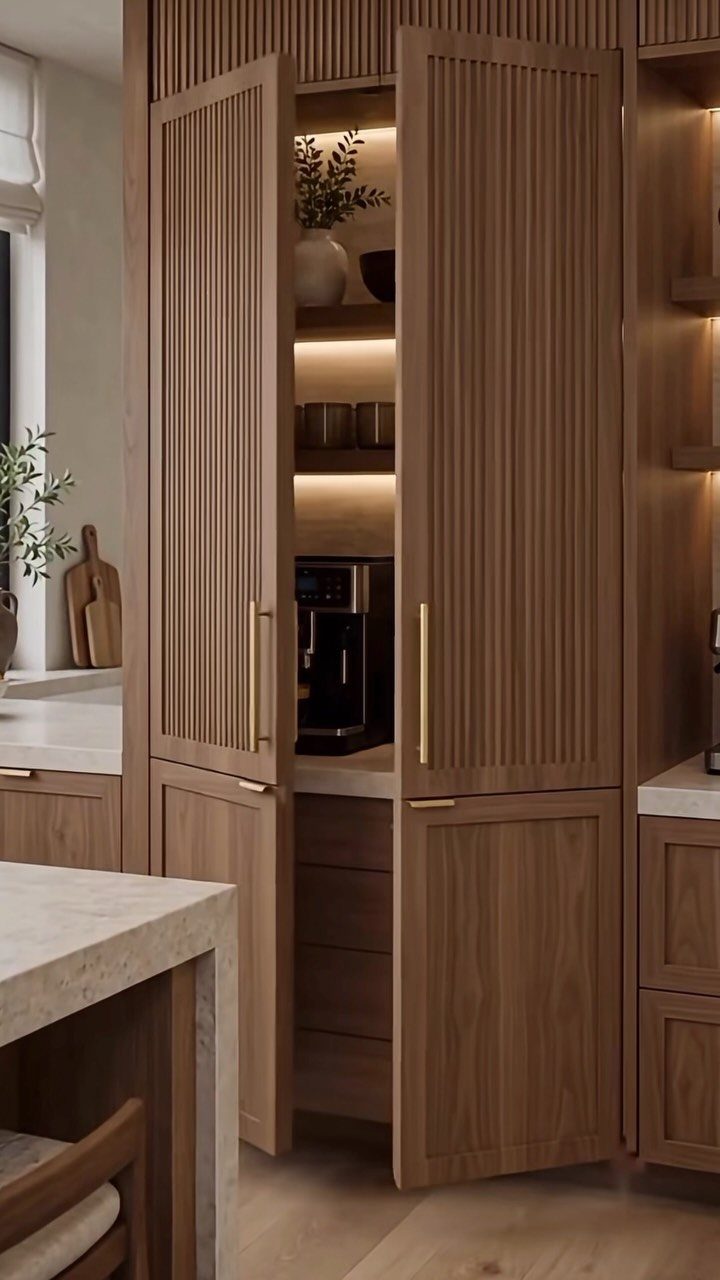
Fluted doors add vertical lines that catch light and shadow, so plain medium-brown wood gets texture without extra color. A coffee station is a smart place for them, especially with built-in lighting and a marble counter below.
I’d use fluting on a few doors or one section, not every cabinet. Too much ribbing competes with the grain and gets busy fast.
7. Curved-Edge Wood Cabinets
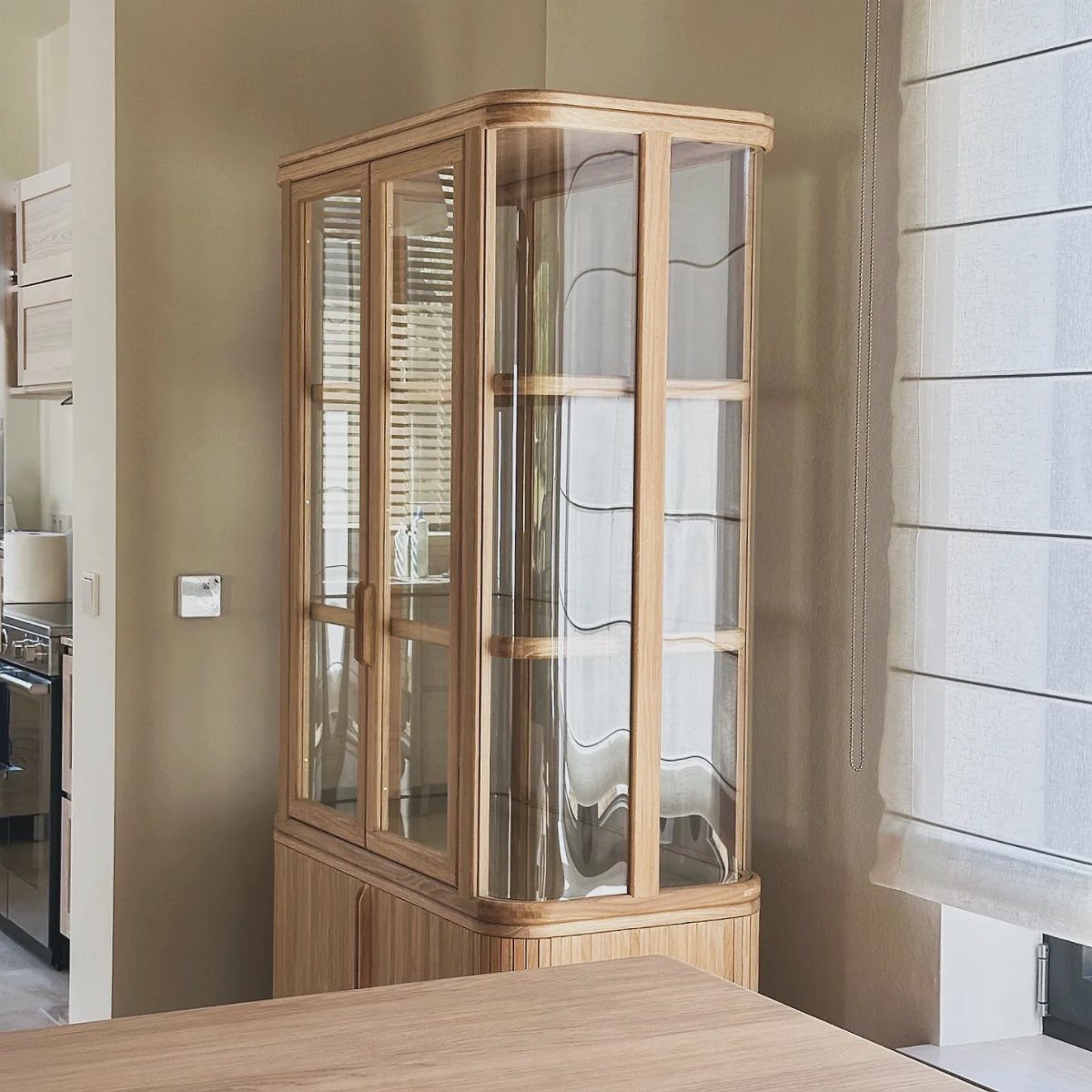
Rounded corners on a light wood cabinet take the edge off a kitchen full of squares. A glass-front door adds a second softness, since you see through it instead of hitting a flat wall of wood.
I’d use a curved piece as a single accent, like a hutch or a corner unit, and keep the rest of the cabinets plain. Beige walls suit it well, because nothing competes with the shape.
Curves are easy to overdo, so one is usually enough.
8. Sage Green Cabinets
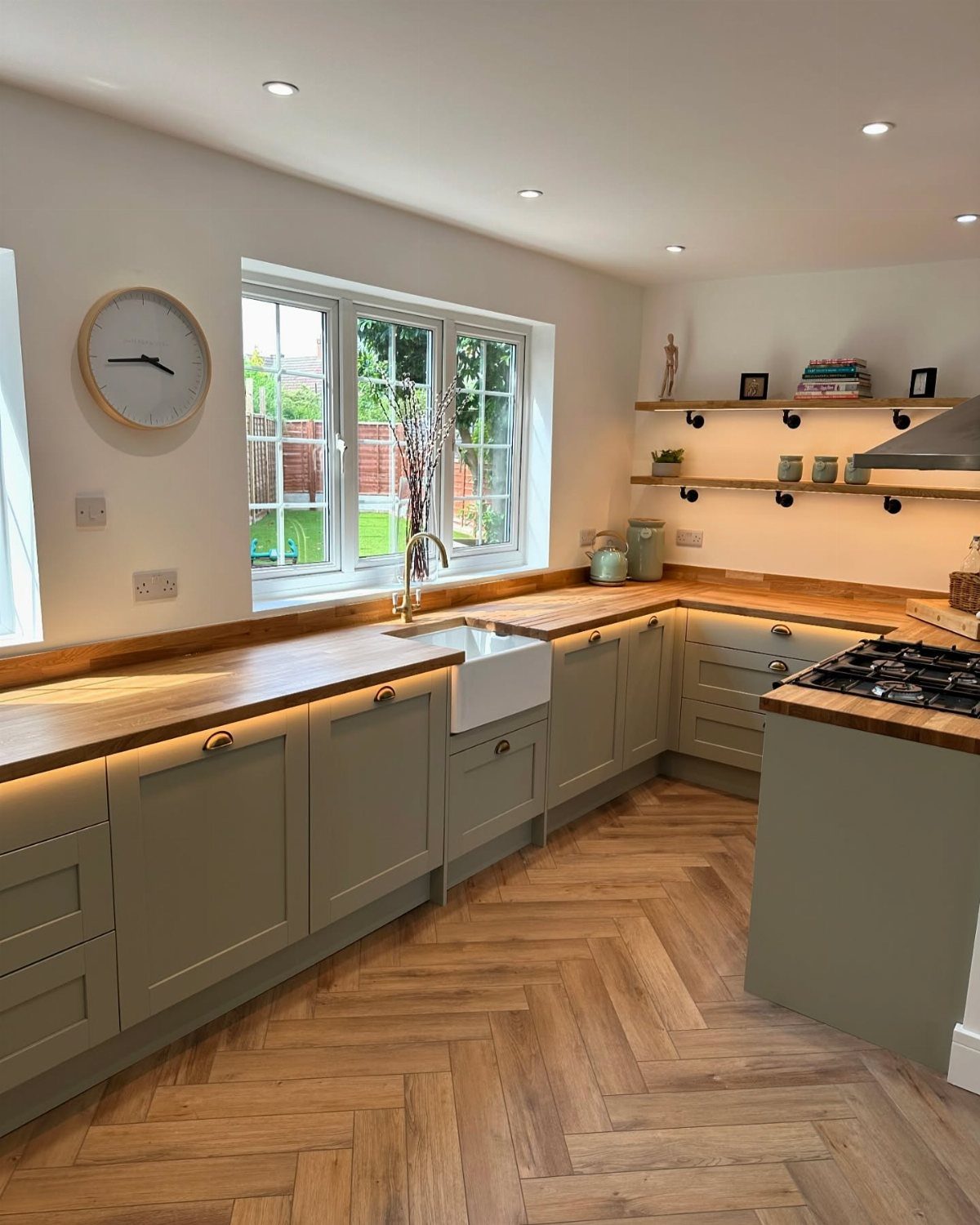
Sage green cabinets with warm wood countertops feel calm and a little grown-up, and the 2 colors share the same muted, earthy depth. A white farmhouse sink keeps the pairing from looking too dim.
Light wood flooring, herringbone here, completes the palette without adding a new color. I’d choose wood counters over stone with sage, since butcher block warms the green instead of cooling it.
If you’re painting, test the sage next to your wood first. Some greens lean gray and can look flat beside honey tones.
9. Taupe and Beige Cabinets with Wood Tones
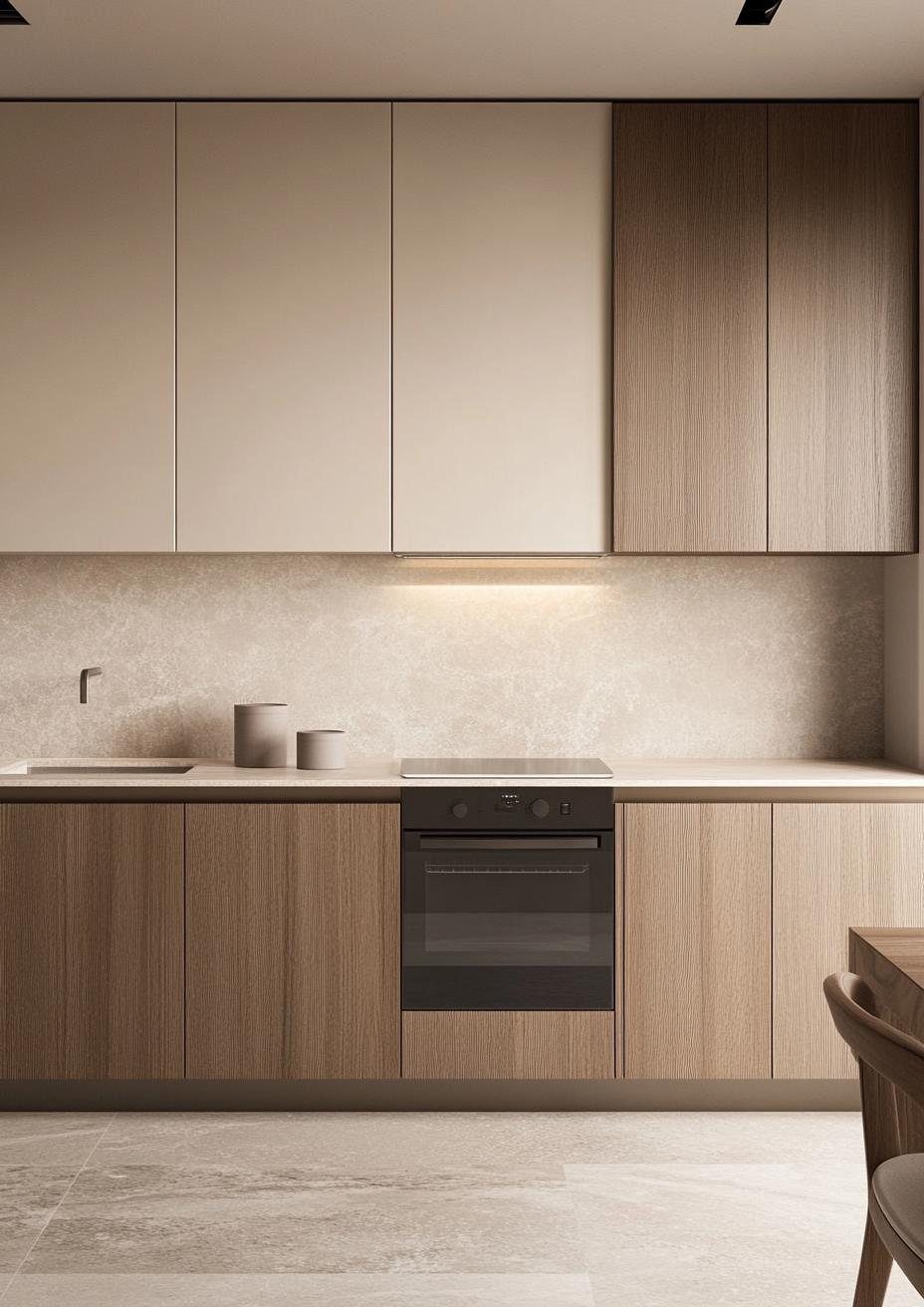
Beige and taupe uppers over light wood lowers make a kitchen that stays neutral without going cold. Warm wood at floor level anchors pale upper cabinets without competing for attention.
A neutral stone backsplash ties the two together, so pick one with both warm and gray notes in it.
Hold the cabinet fronts flat and plain, as in a minimalist kitchen, and the subtle shift between taupe and beige reads as intentional.
For a rental or a weekend project, paint the uppers and leave the lowers alone.
10. Chocolate Brown Cabinets
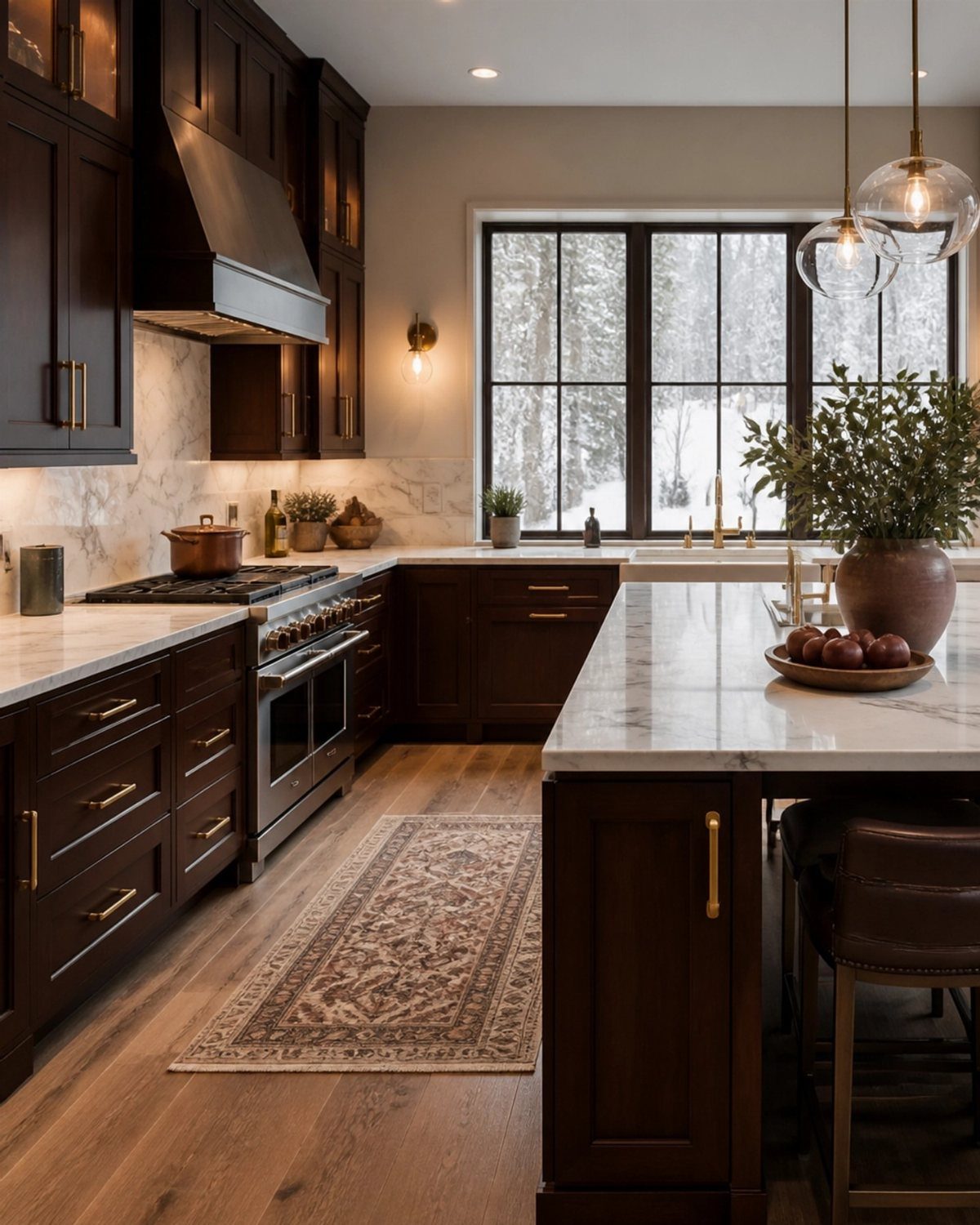
Chocolate brown cabinets are the boldest pick here, and they look sharpest against white marble, where the contrast does the decorating for you. A gas range and a few simple accessories are enough.
Dark cabinets absorb light, so a window helps a lot, and so does good task lighting.
A small patterned rug on wood floors adds pattern and softens the heavy color, and it’s the cheapest part of the look to try first.
Choose a matte or satin finish if you want it to feel rich, not glossy.
Importance of Warm Tones
Warm whites, taupes, greiges and sage greens work in almost any style, from modern to farmhouse to transitional, so they’re a safe base if you plan to sell or just change your mind later.
Pale greige adds a little warmth while staying neutral, and soft cream pairs easily with whatever else you bring in.
I treat these shades as a foundation. Once the walls and big surfaces are warm and quiet, you can layer in color through stools, textiles and small accessories without the room fighting itself.
Lighting Strategies
Under-cabinet LED strips are the cheapest way to bring out wood grain and color depth, and they stop deep tones from looking heavy.
Add task lighting over the cooktop and island as well; with dark cabinets, counters or walls, those extra lights matter even more.
Inside glass-front cabinets, a little interior light gives a soft glow and shows off what you store.
Motion-sensor lights suit pantries and deep storage, since they switch on when you open the door.
For personality, a freestanding hutch or larder in a distinct warm color breaks up a long run of cabinets.
Frequently Asked Questions
How to warm up a kitchen with white cabinets?
Bring in warm wood and soft lighting. A butcher block counter, open oak shelving, or a dark wood island all add warmth, and under-cabinet LED strips bring out the grain.
Neutrals like soft whites and warm grays hold the background steady, leaving room for personality in bar stools, dish towels and countertop finds.
What color wood kitchen cabinets are in style?
Natural white oak and warm honey tones are the safest picks right now, and dark brown or chocolate cabinets work if you want something bolder.
White oak brings warmth without weight, which matters in kitchens under 120 square feet. Balance dark cabinetry with pale stone or quartz and enough task lighting, or the space closes in fast.





