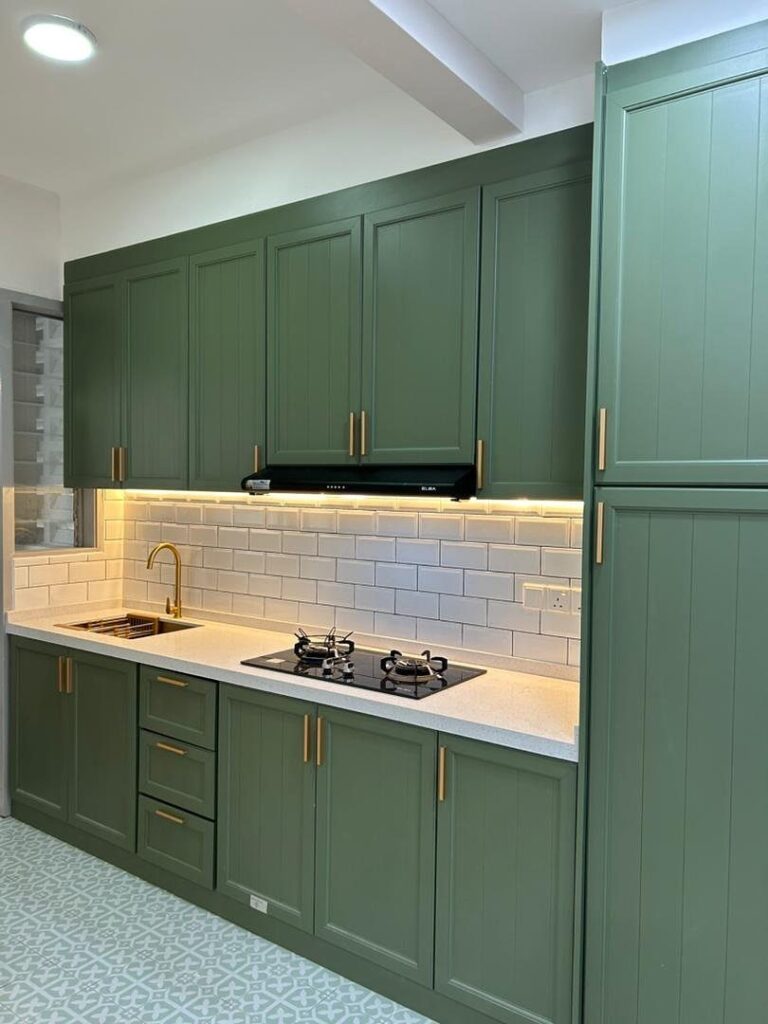
How much olive you commit to decides which idea is yours: a painted island or a two-tone setup with white uppers is one afternoon with a brush, while floor-to-ceiling cabinets and a built-in banquette mean living with the color all day.
The list also covers hardware swaps, brass or gold, that take a weekend, and shades from a light olive to a deeper one that holds up against black countertops.
1. Olive Green Cabinets with White Walls
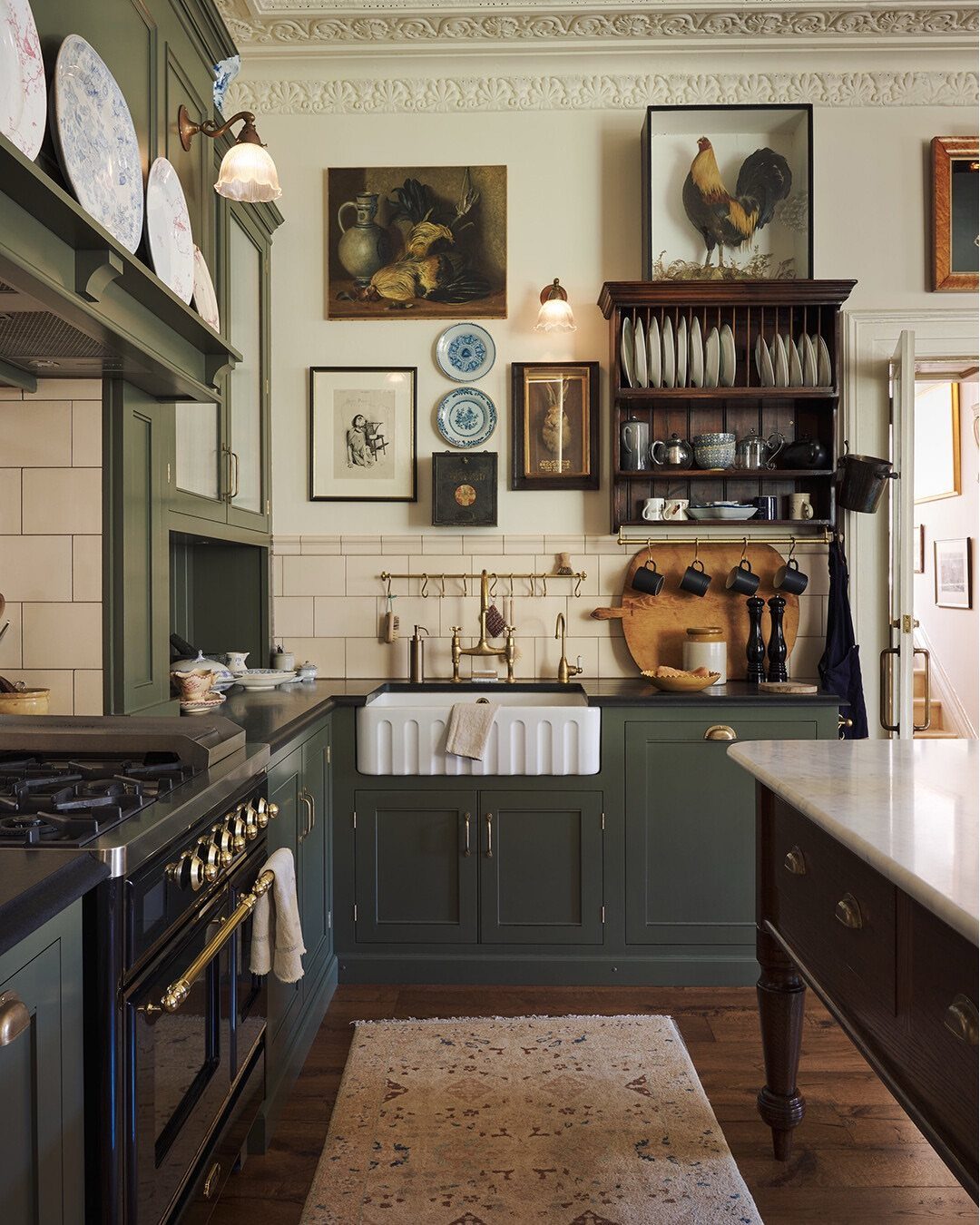
Olive green and off-white is the easiest pairing to live with, because the white keeps the green from reading muddy and the walls never compete with the cabinets.
The white walls and white farmhouse sink bounce light around, so the green reads as a color and not a heavy block.
A dark countertop, such as soapstone, black granite or honed black quartz, grounds the scheme and keeps the olive from feeling too soft.
I would pick a warm white over a stark one, since cool white can turn olive slightly gray.
Busy framed art on the walls adds personality without any extra paint.
2. Brass Hardware
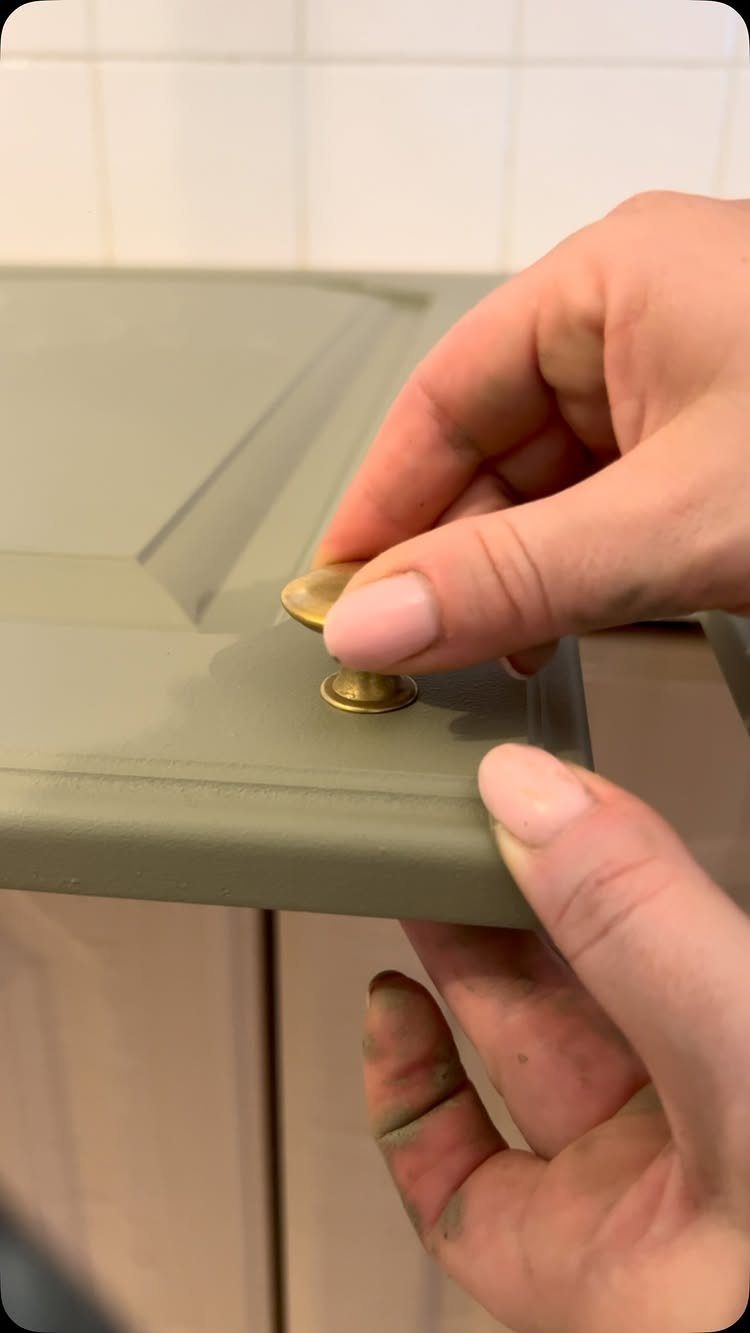
Brass knobs on olive cabinets look right because both colors lean warm and slightly yellow. A small round knob is the simplest version, and it is a quick swap on a weekend.
Hardware is the cheapest change you can make, so test one knob on a door before buying a full set. Hold it up in daylight and in evening light, since brass shifts from soft gold to coppery.
White tile behind the cabinets keeps the brass from getting lost.
3. Gold Hardware
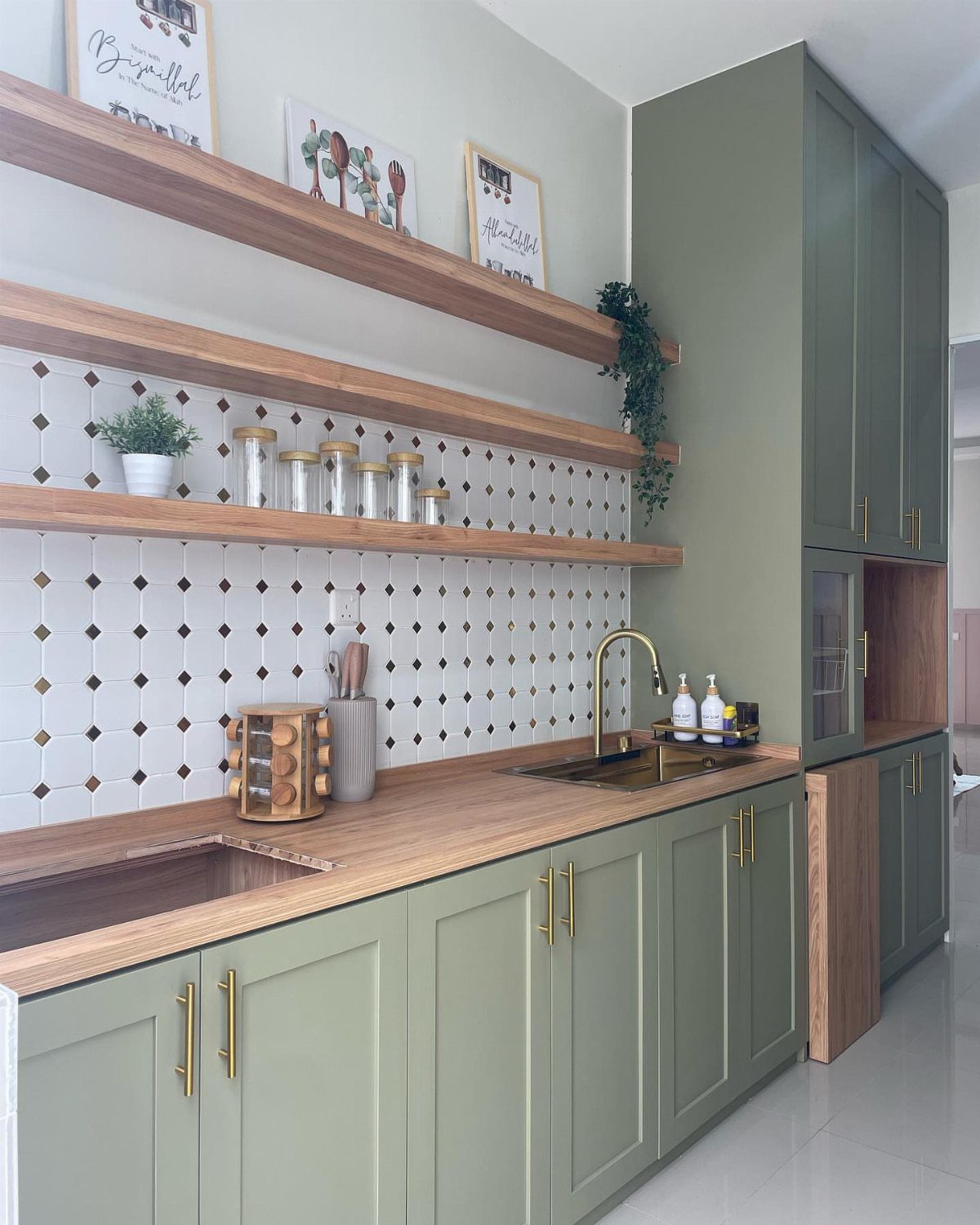
Gold hardware pushes olive green in a brighter, more polished direction than brass does. Sleek handles in a matching gold faucet finish tie the cabinets and the sink area together.
I like keeping every metal in the room to one tone: pulls, faucet and light fixtures all in the same finish. Mixing gold with chrome or nickel tends to look accidental.
Wood countertops and open shelves soften all that shine, so the gold feels warm instead of flashy.
4. Contrast with Black Countertops
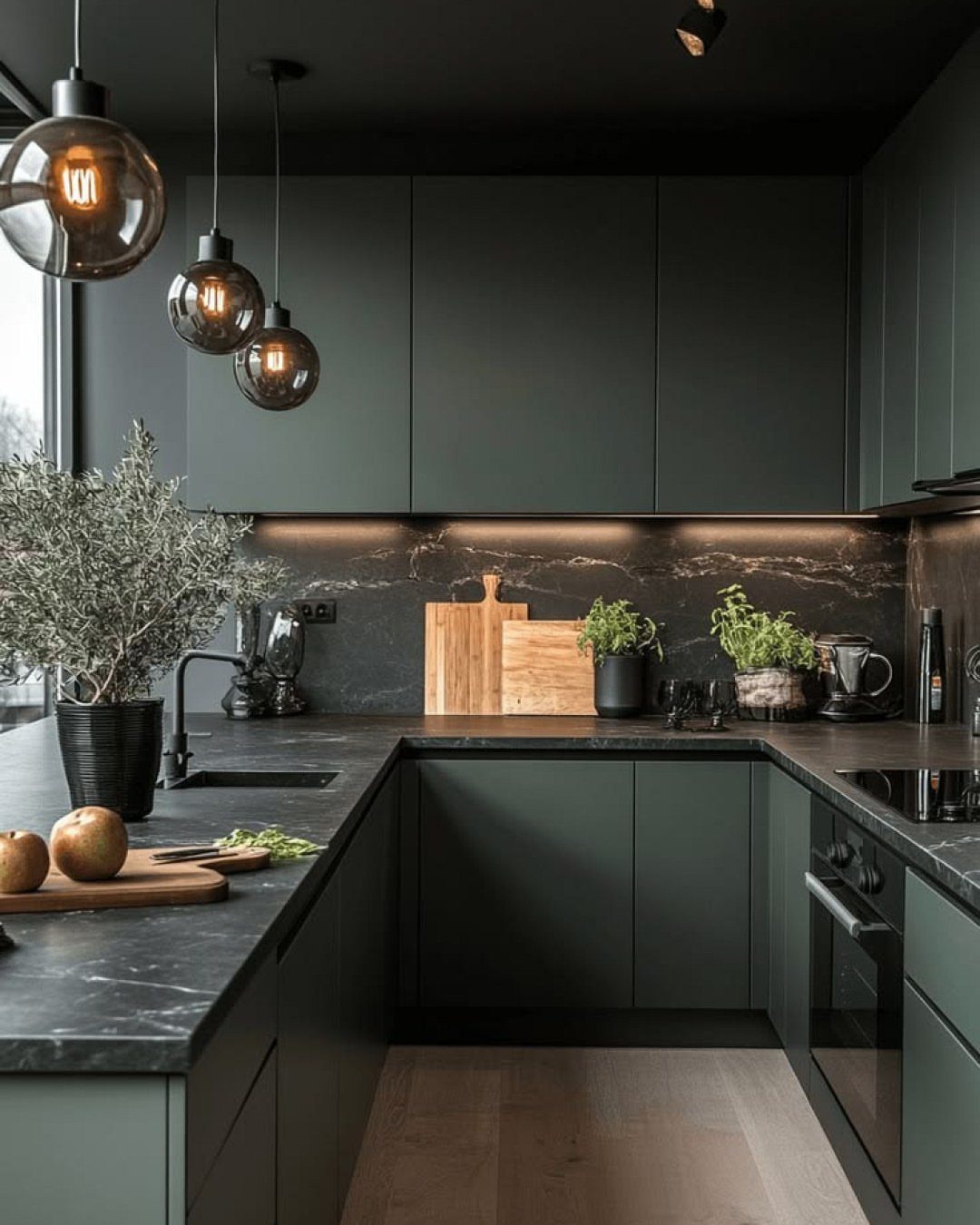
Black marble against dark olive is a moody, modern combination, and the veining keeps it from feeling flat. Because both surfaces absorb light, the room needs help: globe pendants overhead, as here, give it glow and a soft shape.
I would keep walls and any open space light, so the kitchen stays livable instead of cave-like.
Dark countertops hide small marks, but they show dust and water spots, so plan on wiping them down often.
5. Light Olive Green Cabinets
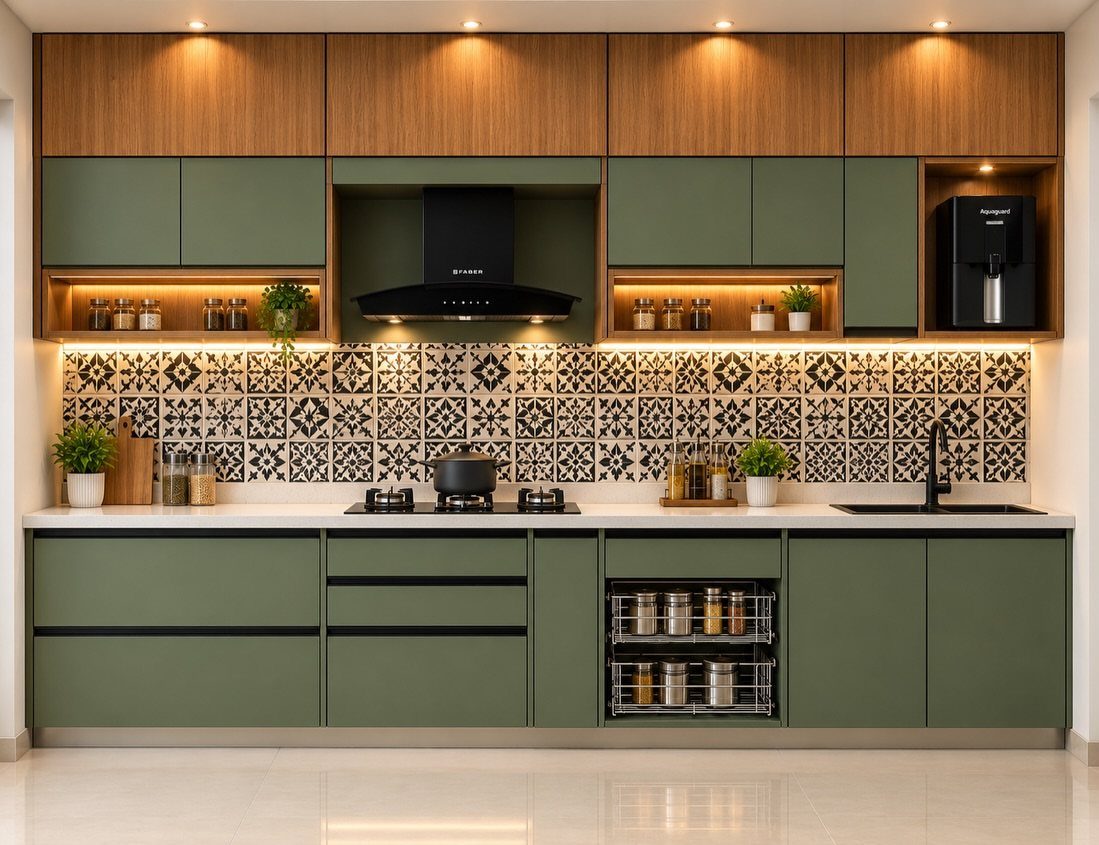
A lighter olive reads softer and more airy, almost sage, which helps in a kitchen that needs to feel larger. Paired with wood cabinets, it keeps the room warm without going heavy.
I would hold the pattern to the backsplash only.
Check paint samples on the wall for a few days, because light olive changes a lot with daylight.
6. Olive Green Cabinets with Soft Pinks
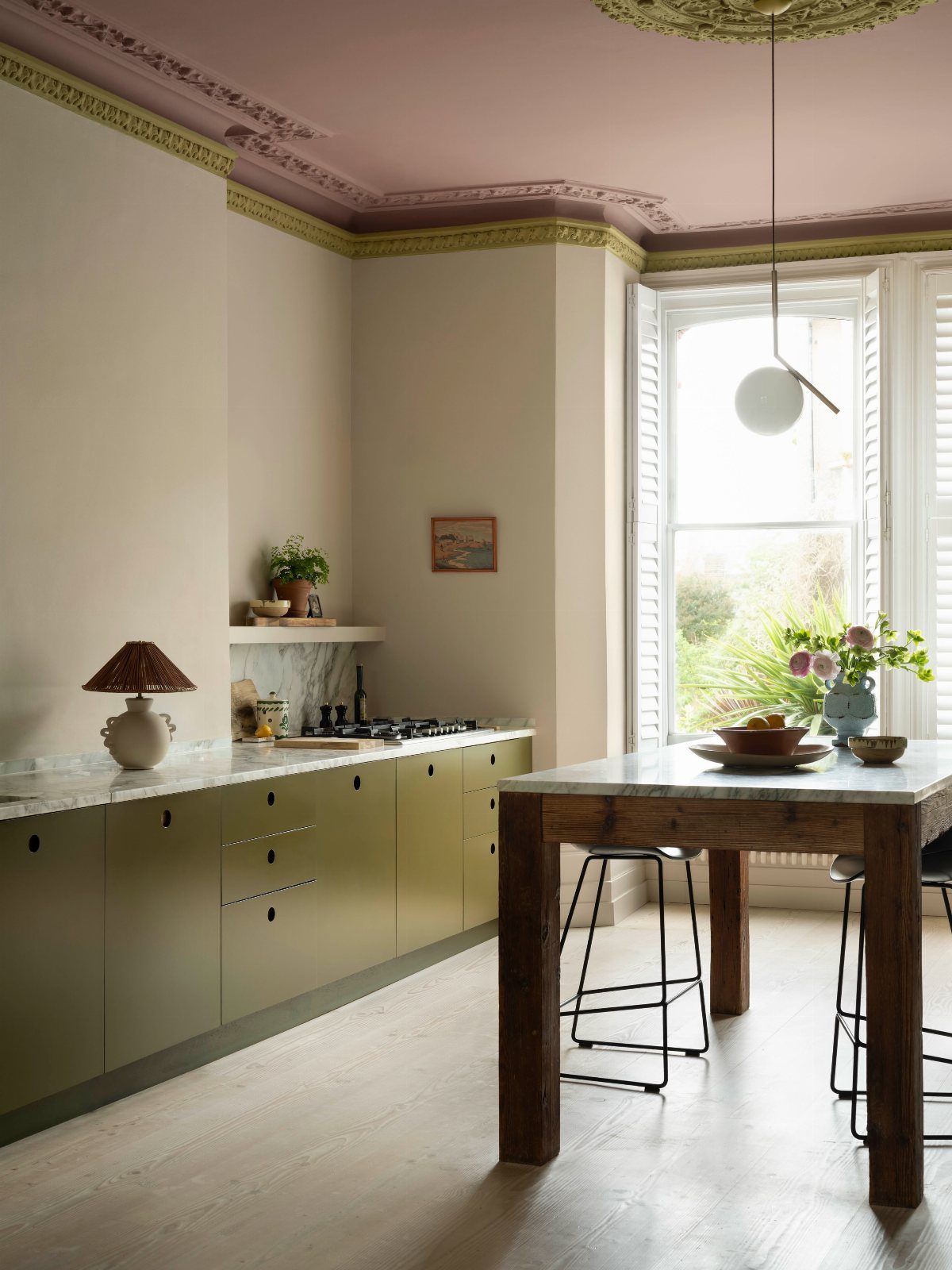
Pink above and olive below sounds odd until you see it: the two sit close on the color wheel’s muted side, so they feel calm together.
A soft pink ceiling with gold crown molding lets olive cabinets stay low and grounded, since the color overhead takes the attention.
Keep the pink pale and dusty. A brighter shade fights the green.
If a painted ceiling feels like too much, try pink on a single wall or in small accessories first.
7. Olive Green Cabinets with Creamy Beige
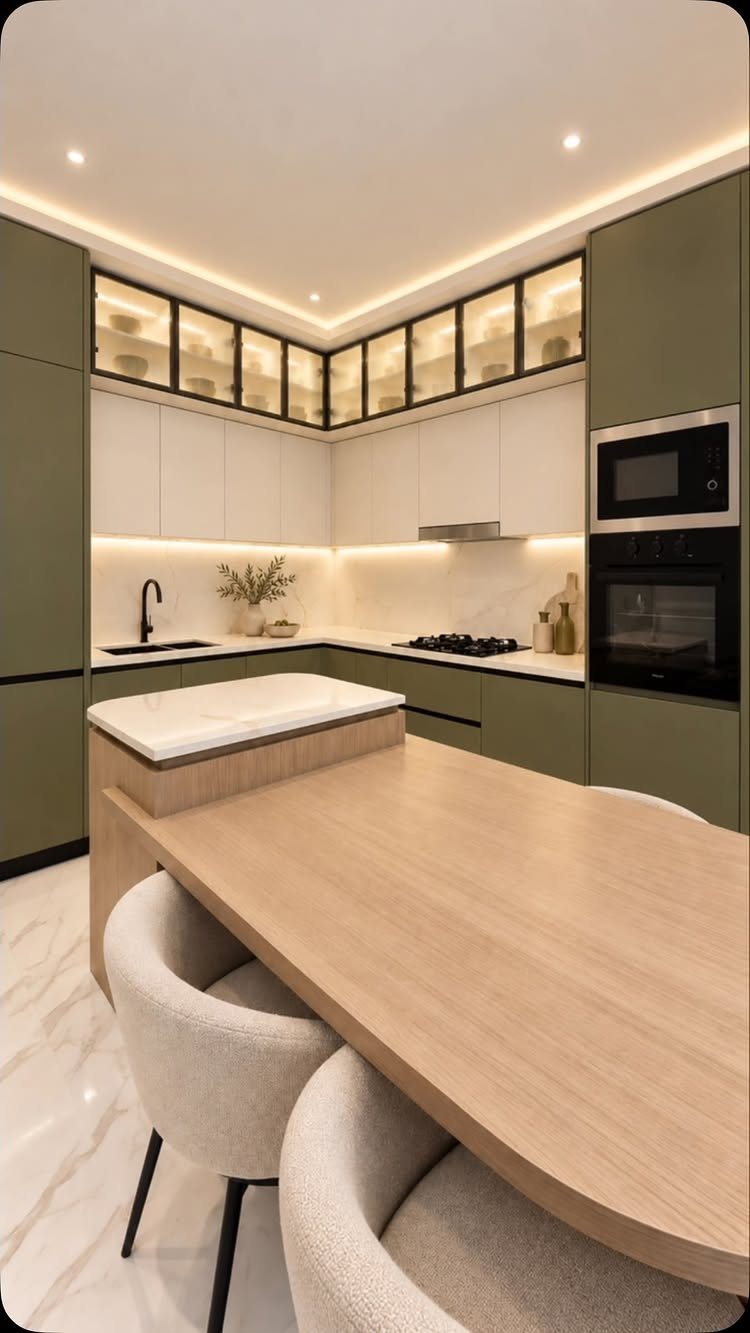
Creamy beige uppers over olive lowers keep the heavy color at the bottom and let the top half of the room stay light.
Beige is softer than white, so it sits comfortably beside olive without the sharp edge a stark white would bring.
A light wood dining table finishes the palette with a third warm tone. I would keep the beige on the yellow side of neutral; a pinkish beige turns the green dull.
Paint a sample board of both colors and view them side by side before committing.
8. Floor-to-ceiling Cabinets
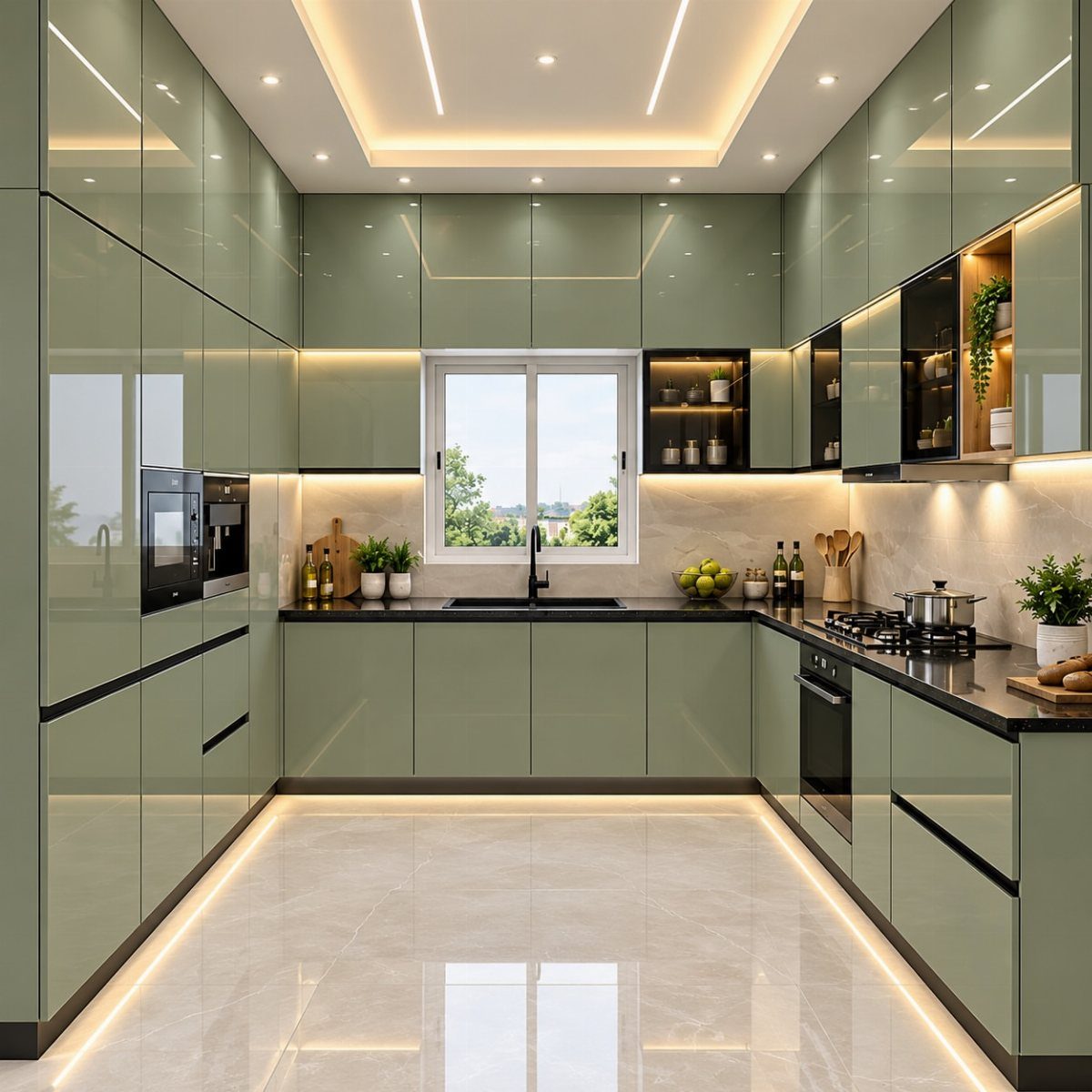
Cabinets that run all the way to the ceiling give you the most storage a wall can hold and leave no dusty gap on top.
Use the highest shelves for things you reach for twice a year, and keep a step stool in the kitchen.
A glossy finish on olive reads bolder and reflects light, but it shows fingerprints, so expect to wipe the doors often. Under-cabinet and ceiling LED strips keep a tall dark run from feeling like a wall.
Matte is the calmer choice if you cook a lot.
9. Modern Olive Green Cabinets
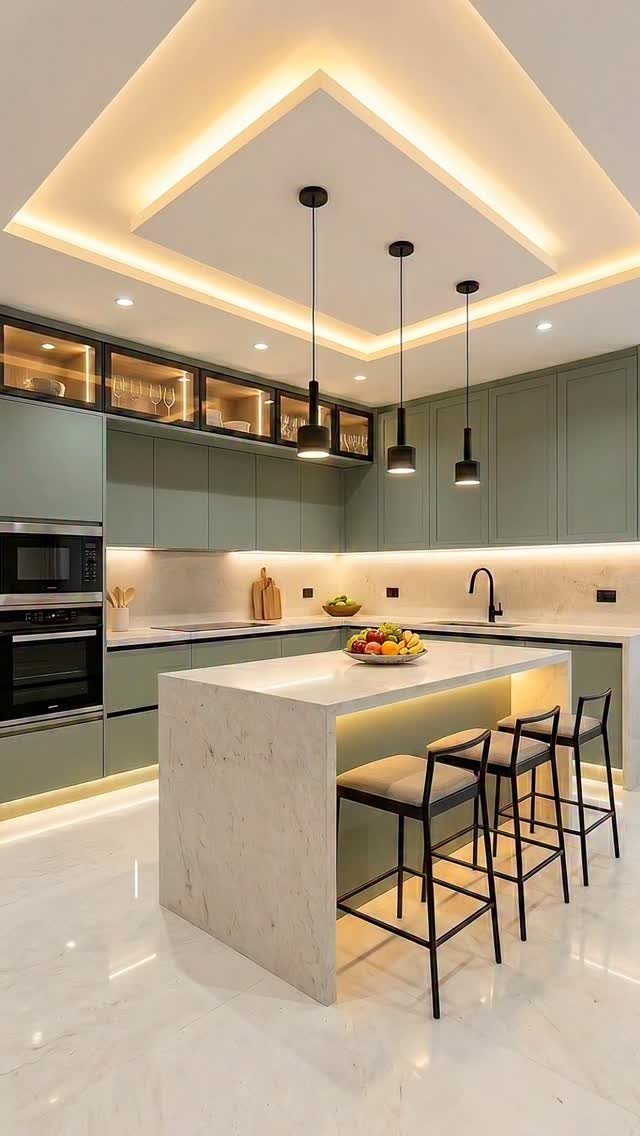
A white marble island is the cleanest partner for olive cabinets in a modern kitchen: the pale top breaks up the green, and the veining adds interest without pattern elsewhere.
Black stools tie it back to the dark side of the room.
I would choose flat, handleless or very slim hardware to keep the look plain.
Marble stains and etches, so seal it and wipe up lemon juice and wine quickly.
10. Farmhouse Kitchen with Olive Green Cabinets
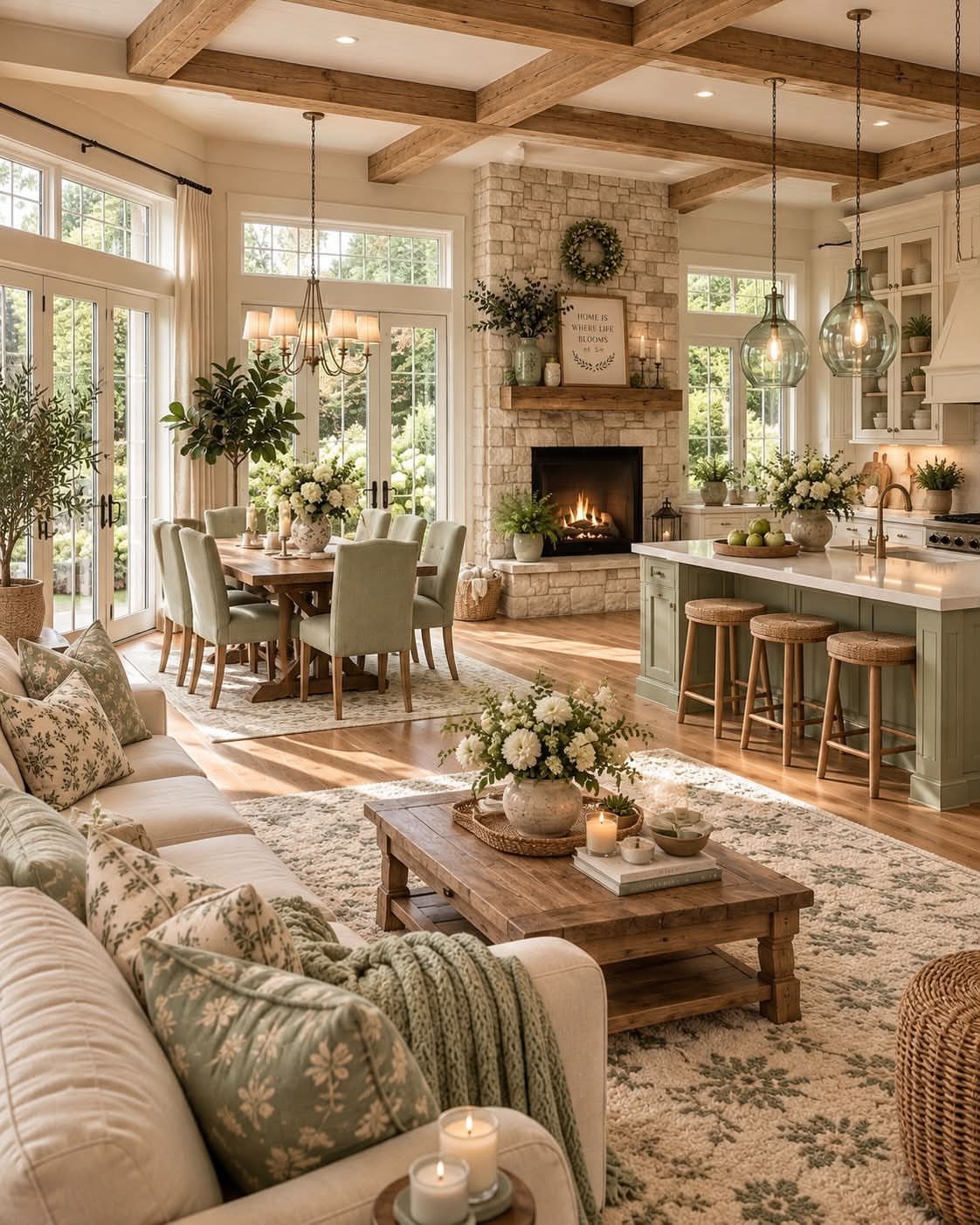
Olive green suits a farmhouse kitchen because it already looks like something from a field or a barn. An island painted olive, set against stone, wooden beams and a white sofa, anchors the open room and stays quiet.
Pick a slightly grayed olive rather than a bright one, so it sits easily with rough natural materials. Repeat the green once in the living area, as in pillows, so the island feels connected to the space.
Hardware in a simple, aged finish keeps it honest.
11. Natural Wood Accents
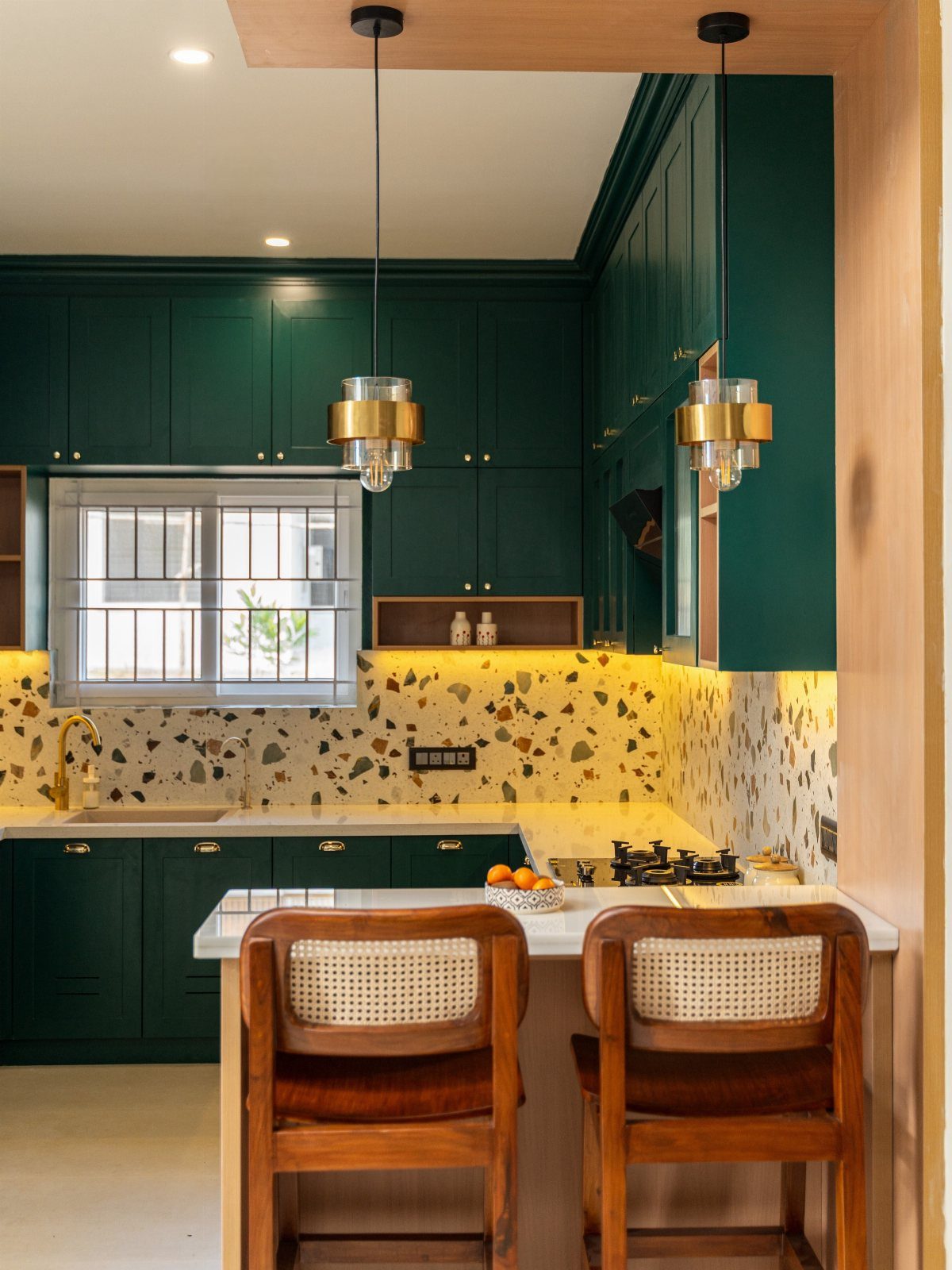
Wood is the easiest way to warm up dark olive cabinets.
I would limit wood to two or three spots so it reads as a choice and not clutter.
Open shelves cost less than more cabinets, and they are a weekend project, though anything on them stays on view, so keep it tidy.
12. Olive Green Kitchen Island
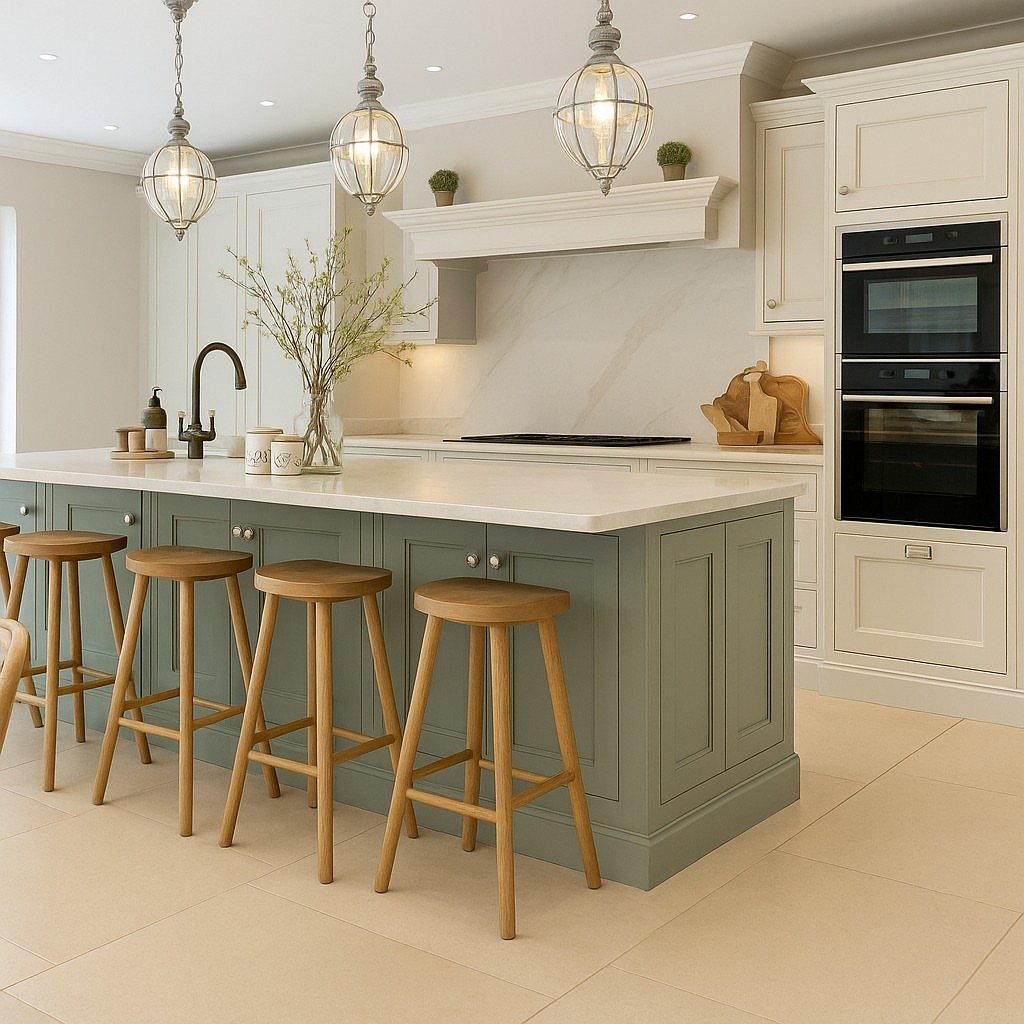
Painting only the island olive is the lowest-risk way to try the color: white perimeter cabinets stay bright while the island becomes the focal point. A white countertop on top keeps it light.
Wooden stools add warmth against the green, and 3 globe pendants hung over the island give it a visual center. Space the pendants evenly along its length.
If you are renting or unsure, paint a single piece first, since one island is far less work than a full set of cabinets.
13. Two-tone with White Uppers
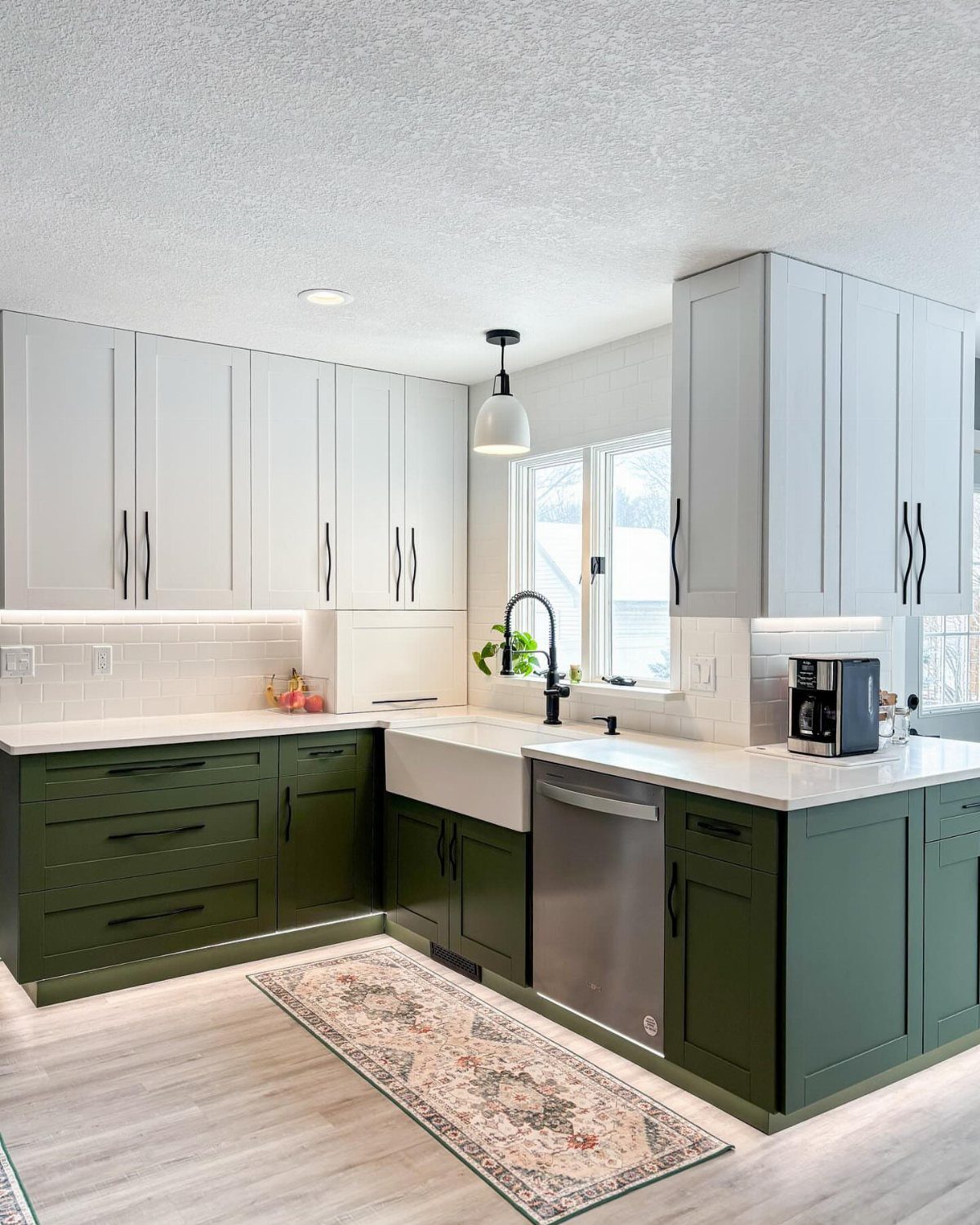
Dark olive below and white above splits the room’s weight sensibly: the heavy color stays near the floor and the upper half stays bright. White countertops carry that brightness down to the work surface, so the green never closes in.
Paint is the cheap way to try it. Many people can repaint just the lowers and leave existing white uppers alone.
I would choose a warm white for the uppers so they sit comfortably beside the olive.
14. Olive Green Cabinets with Range Hood
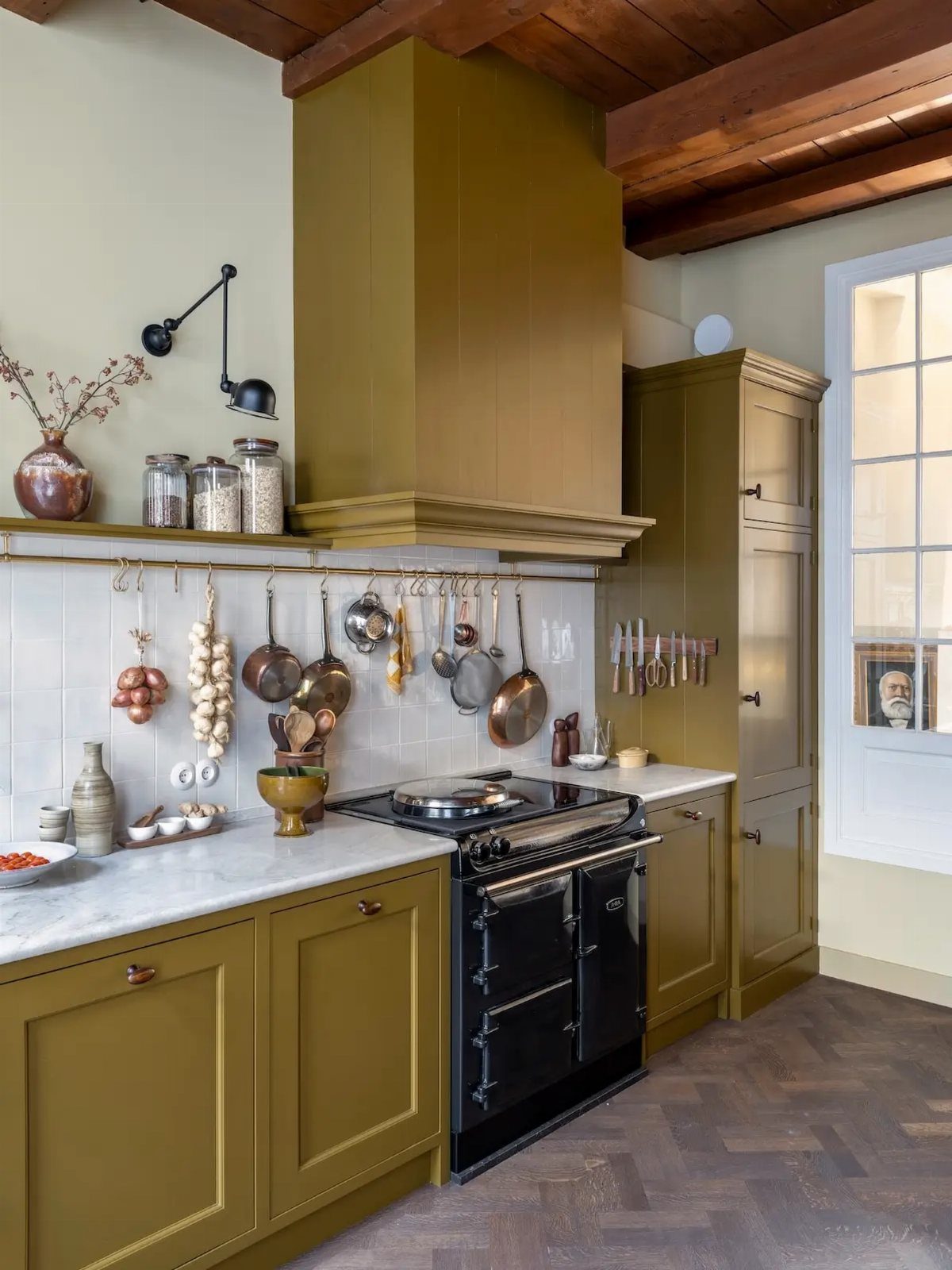
A range hood painted to match the cabinets turns a bulky appliance into part of the cabinetry. Olive on the hood, with a black stove below it, reads as one deliberate block.
Copper pots on a hanging rack add a warm metal that suits olive without extra hardware. Hang only what you use, since a crowded rack looks messy.
If a full hood in olive feels like too much green, keep the walls around it pale so the color has room to breathe.
15. Built-in Banquette Seating
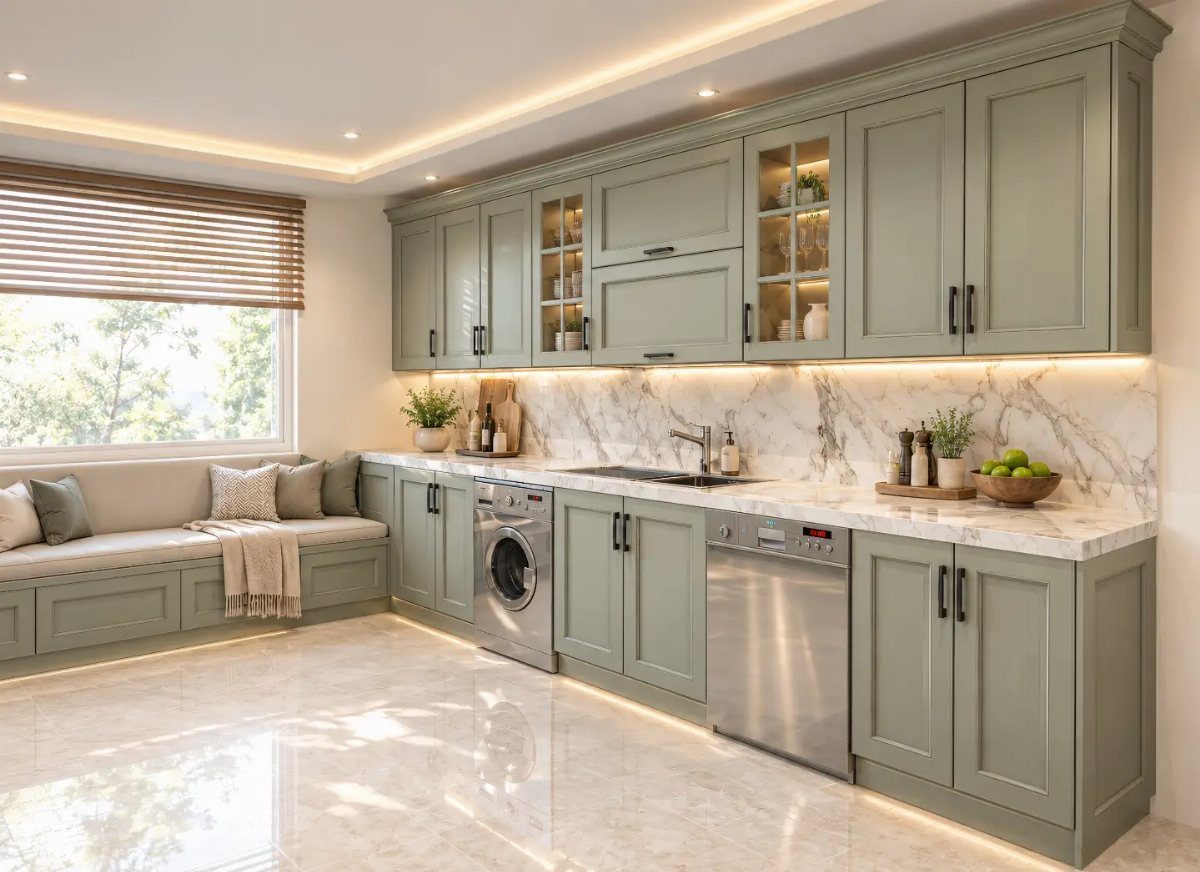
A banquette built in the same olive as the shaker cabinets makes the seating look like part of the kitchen and not an add-on.
Placed under a window, it gives you a spot to sit that needs no table legs in the way.
Pillows soften the hard bench, and they are the easiest piece to change later. Choose washable covers, since a kitchen bench sees crumbs and spills.
Marble nearby keeps the green from feeling heavy.
16. Paired with Glass Display Cabinet
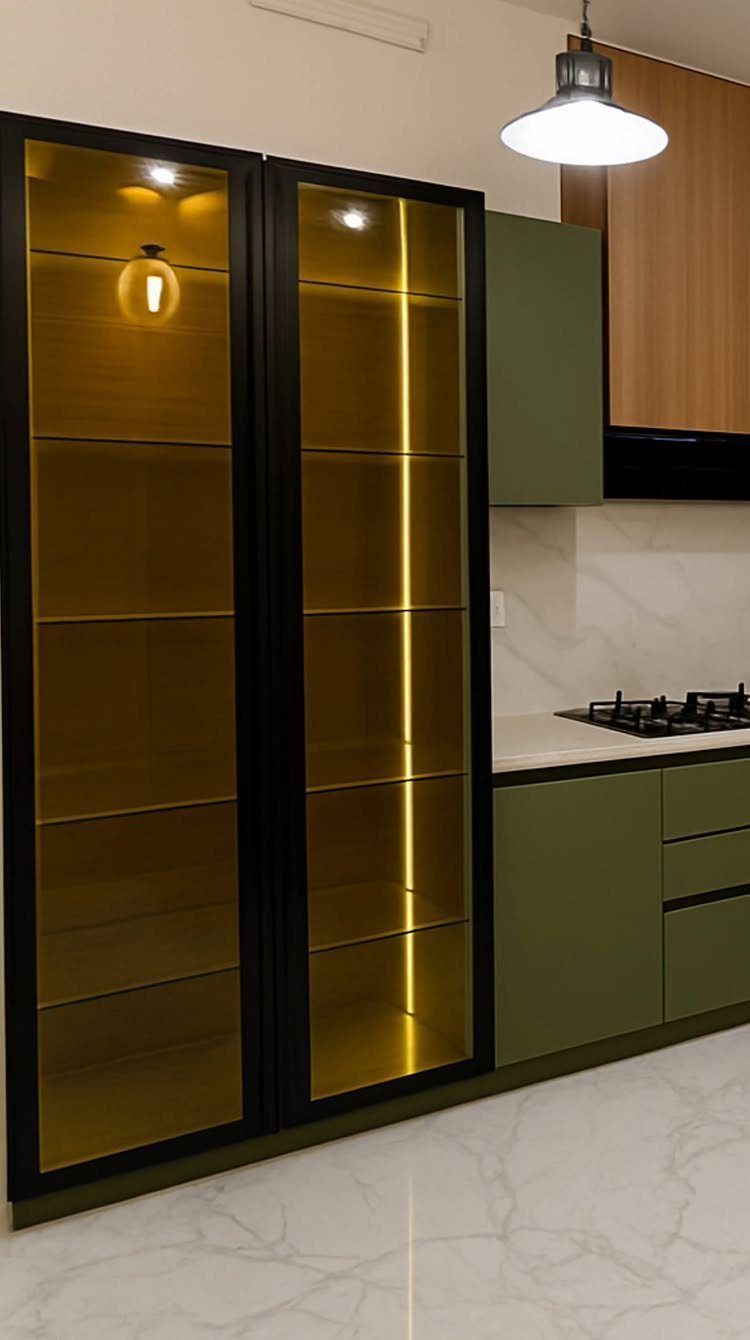
A tall glass cabinet with a black frame gives olive cabinets a showpiece to sit beside. Warm interior lighting makes whatever you put inside glow, so display only a few things you like, such as glasses or good dishes.
Black framing echoes dark hardware or fixtures elsewhere, which ties the piece into the room. A white marble countertop and floor keep all that color and shadow from getting too dark.
Expect to dust the glass shelves regularly, because everything on show also shows dust.
Benefits of Olive Green Cabinets
Olive green is a color that holds up over time, so a kitchen painted in it is unlikely to look dated in a few years. That matters when cabinets are the most expensive thing to redo.
The earthy tone is calming, which helps in the room that gets the most foot traffic. It also hides dirt and fingerprints better than white does, so busy households spend less time wiping doors.
Versatility is the other practical gain. Olive works with mid-century modern, farmhouse, industrial and Scandinavian styles, and it sits well beside marble and wood flooring.
Most kitchens default to white or gray, so olive gives a room character without needing anything else to carry it.
Considered by some to be a neutral shade, thanks to its earthy undertones, olive green is a great option for kitchen cabinetry.
Choosing the Right Shade
Light decides which olive you end up with.
Olive paint shifts with the light: sunlight brings out its yellow side, and a warm bulb after dark leans it toward brown, so one can can read as two different colors depending on the hour.
Before you buy a gallon, brush 2–3 sample shades onto an actual cabinet door and live with them for a few days.
Maintenance Tips
Wipe olive cabinets with a damp cloth to lift grease and spills before they set. Do it regularly, especially near the stove.
If the doors are wood, a protective finish helps prevent wear and tear.
Should the color fade over time, a fresh coat of paint brings it back. Choose a paint made for kitchen use so the new coat holds up to the same heat, steam and scrubbing.
Frequently Asked Questions
Are olive green kitchen cabinets in style?
Yes. Olive comes from the same earthy family as moss and sage, and those shades have outlasted several trends, so I wouldn’t expect it to look dated soon.
What color countertops go with olive green cabinets?
White, black and natural wood all work. Dark tops like soapstone, black granite or black marble ground the green, while white marble breaks it up in a modern kitchen.
Wood adds warmth. A veined marble that picks up the green is another good match.
What kitchen cabinet colors will look outdated in 2026?
Olive green is not likely to be one of them, because it is a lasting, earthy shade.
Because so many kitchens still land on white or gray, an olive run of cabinets stands out and gives the room a point of view before you add a single accessory.
Whatever color you choose, test samples on an actual cabinet door for a few days before buying a gallon.





