Where the cabinet will sit decides which of these fits: a living room or bedroom suits the oak two-drawer or the teal piece on gold legs, a garage takes a bank of workshop metal cabinets, and a tight home office does well with a file cabinet tucked under the desk or a white metal one on wheels.
The ideas run from a bright yellow painted metal cabinet to a vintage wooden card catalog, so the cheap routes and the furniture-style ones are both covered.
1. Campaign Dresser Inspired Filing Cabinet Makeover
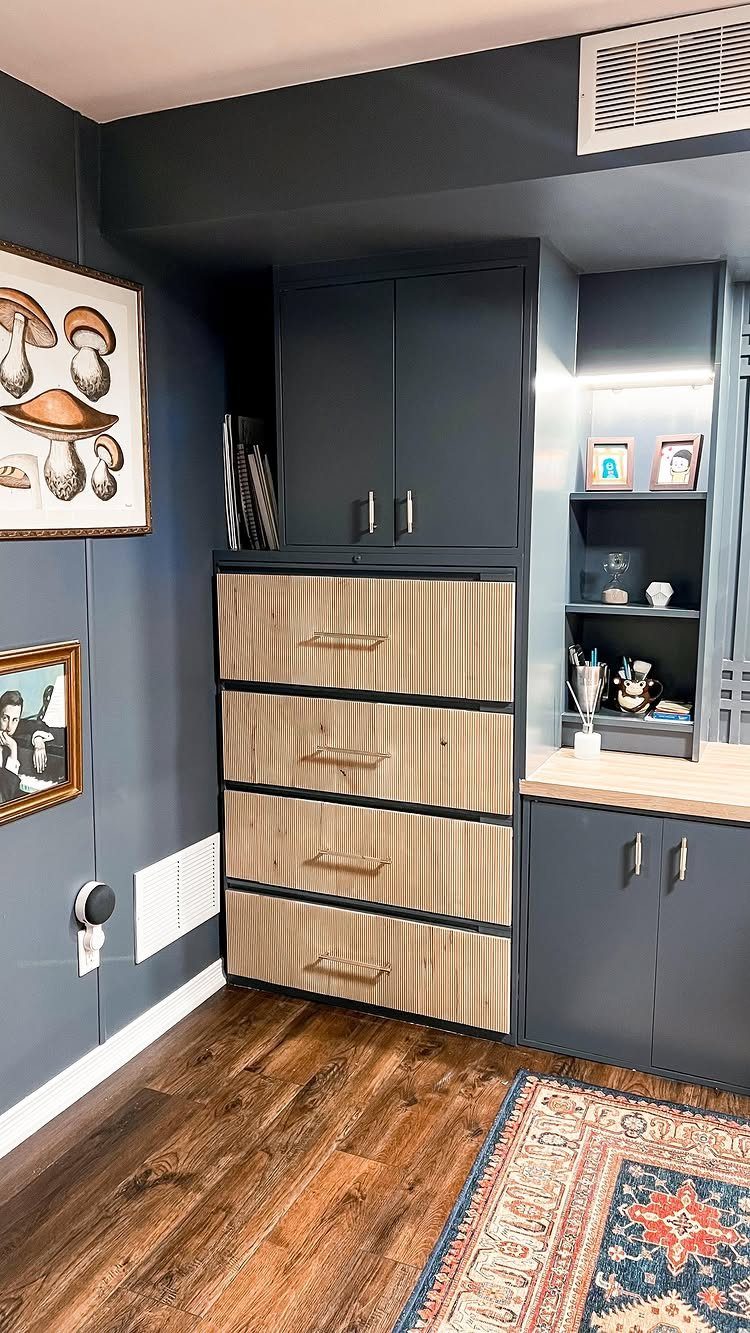
Painting the cabinet body a deep navy and leaving the drawer fronts in light wood is what sells the campaign dresser look, so keep the 2 tones sharply different and let that contrast carry the design. Gold handles finish it.
I would pick a deep navy or a similar dark shade for the surround so the wood reads warm instead of washed out.
Swapping the original pulls for brass-toned ones costs little and changes the look more than any other single step.
Building the cabinet into a run of cabinetry, as here, makes it look planned rather than added.
2. Colored Labels and Folders for File Cabinets
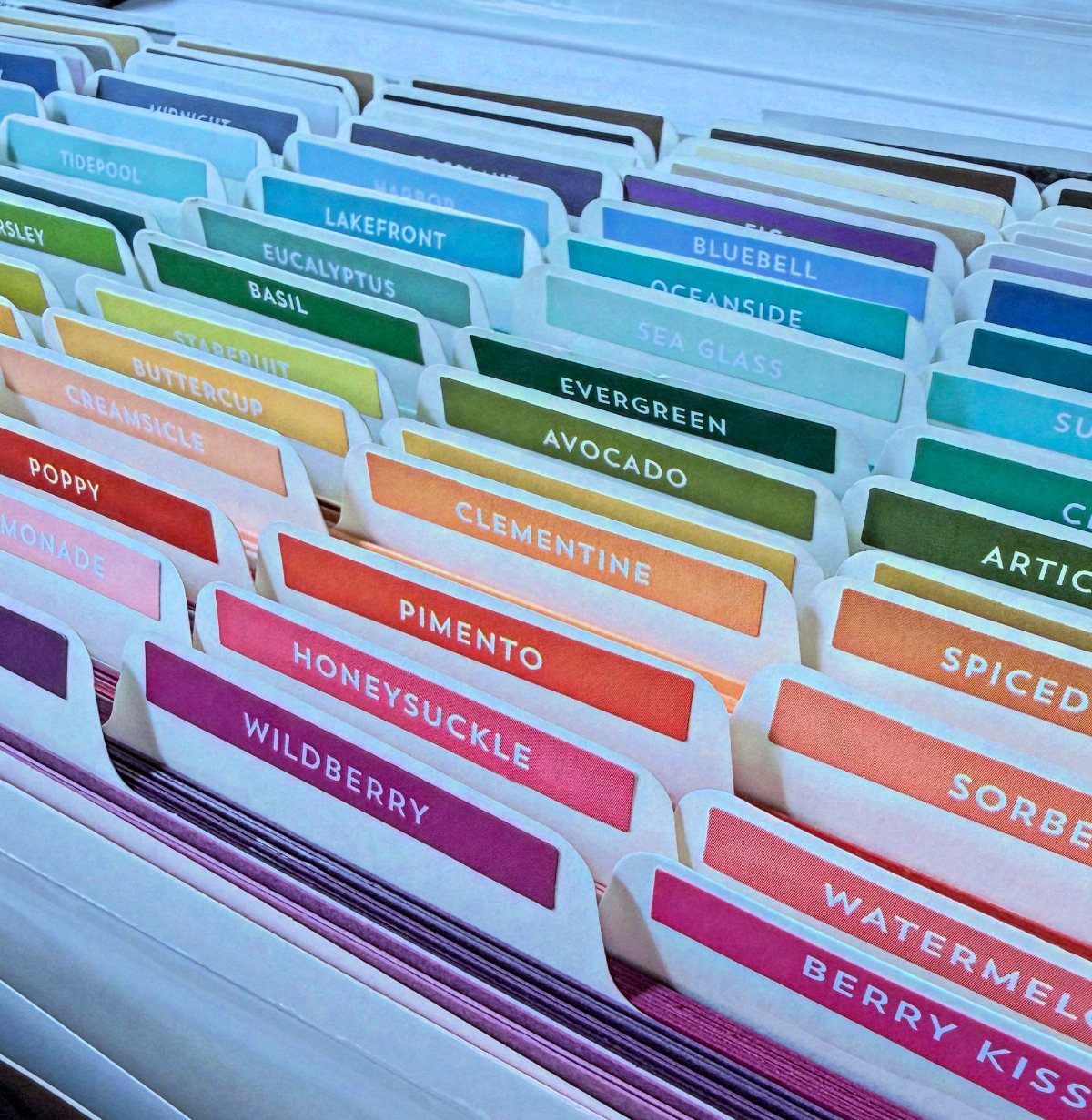
Color coding is the cheapest upgrade a file cabinet can get, and it takes an afternoon. Hanging folders in a rainbow gradient, each with a labeled tab, let you find a category by color before you read a word.
Give each category its own shade, then write labels in the same style throughout. Names like Tidepool, Evergreen and Wildberry are easier to remember than "blue 2."
Keep the gradient in order, and a misfiled folder stands out at once.
3. Vintage Wooden Card Catalog Cabinet
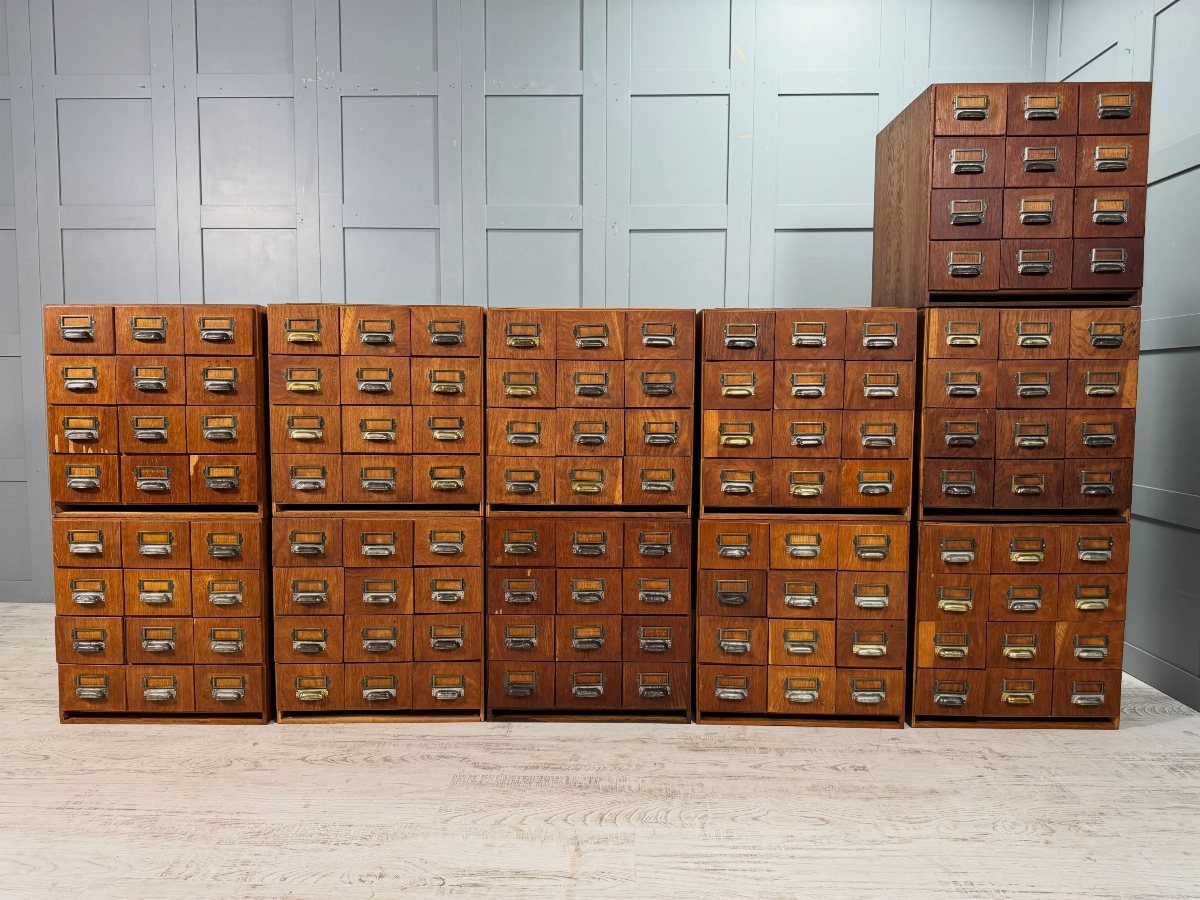
Small drawers with metal pulls turn a vintage wooden card catalog into storage for the things a standard file drawer swallows: receipts, stamps, index cards, school supplies. Each drawer holds one category, so nothing gets buried.
I like several cabinets lined up together, as against a grey paneled wall, because the wood grain looks richer in a group. Add a small label holder on each pull if you can’t remember which drawer is which.
They suit letter-size paper poorly, so use them for small items.
4. Bright Yellow Painted Metal Cabinet
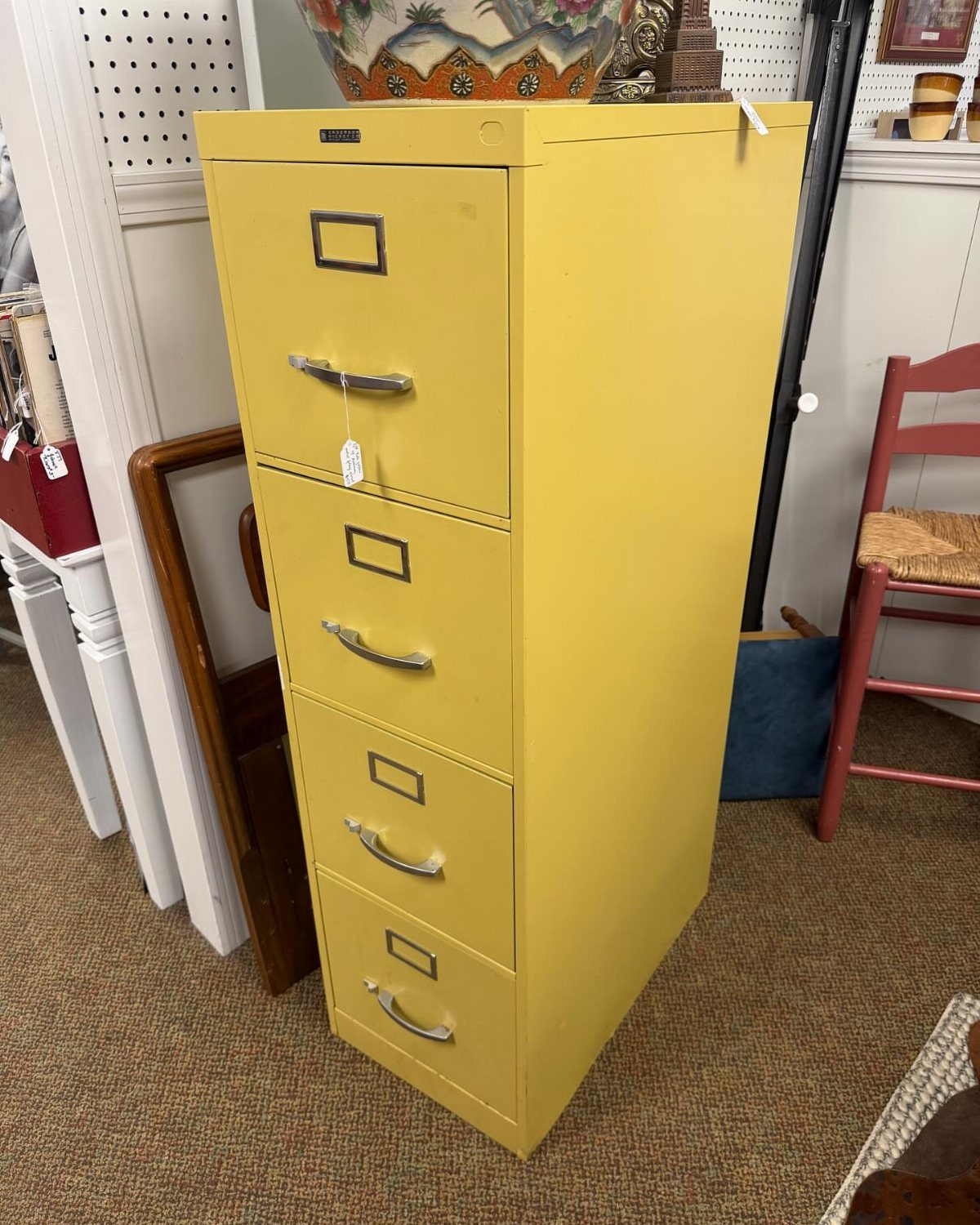
Bright yellow paint is the fastest way to rescue a dull four-drawer metal cabinet. Silver handles stay put and look sharp against the color.
Clean the metal well, scuff it lightly, and use paint made for metal so it sticks. Spray cans give a smoother finish than a brush, and thin coats beat one heavy one.
I would paint it in a spot with good airflow, then let it dry fully before loading the drawers. A cabinet this loud can anchor a plain room, so keep the nearby furniture simple.
5. Storage Chest Filing Station
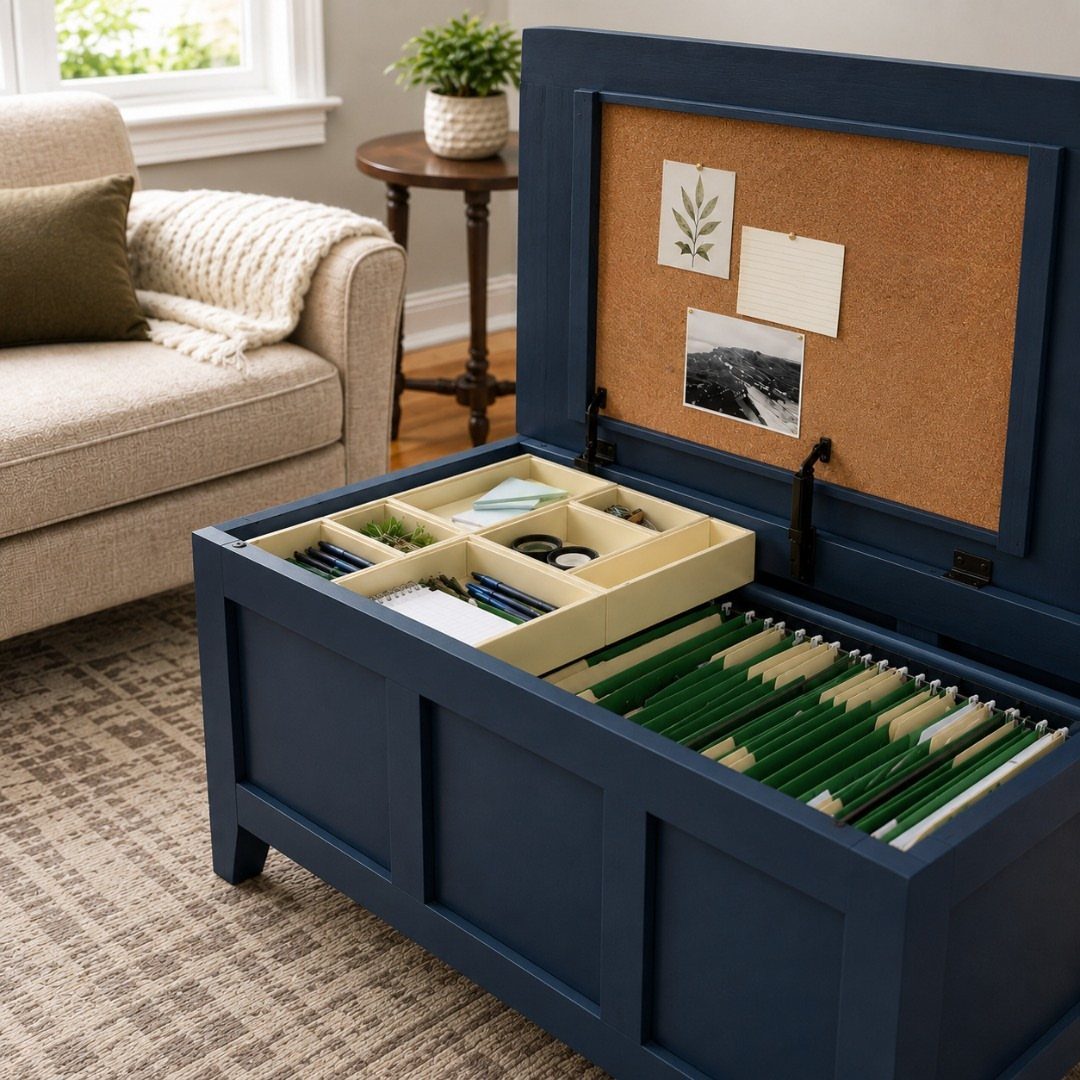
A storage chest can hold hanging files if you fit it with rails, and then it passes for living room furniture.
A corkboard lid adds a pinboard for notes, and an organizer tray keeps pens and small supplies from sinking to the bottom.
This works well for renters short on space, since it sits beside a sofa and nobody guesses it is a filing system. Pick a color that matches the room; navy is easy to live with.
Fit the rails before you load any files so the folders hang evenly.
6. Mobile White Metal File Cabinet
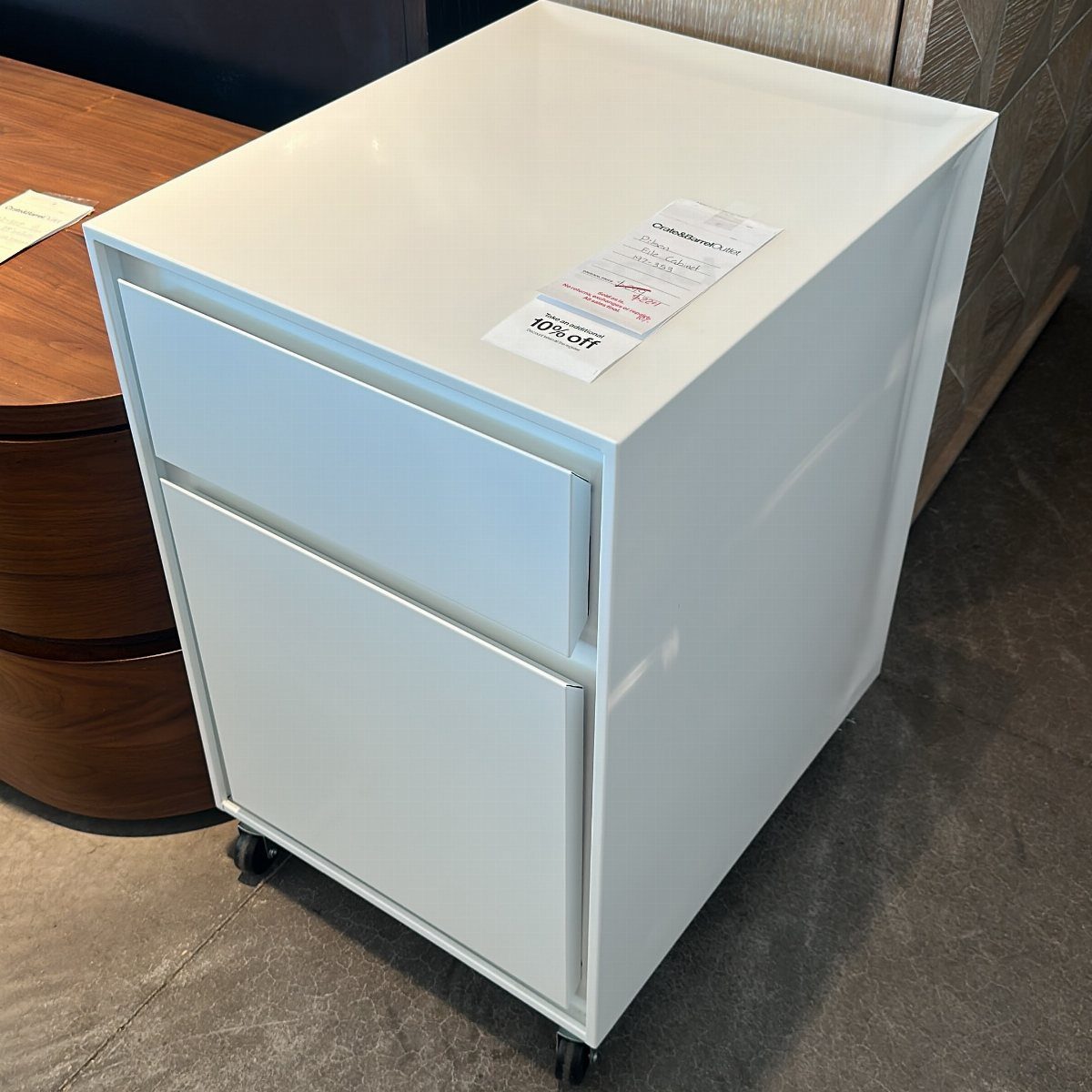
Caster wheels make a compact two-drawer white metal cabinet something you can roll to wherever you work. Slide it beside a table when you need it, then tuck it into a corner when you don’t.
Look for a model with locking wheels, since a loaded drawer can nudge a cabinet that rolls freely. White metal suits nearly any room and costs little, which is why I would start here for a first home office.
Keep the heavier files in the lower drawer for steadier rolling.
7. Double-Column Low File Credenza
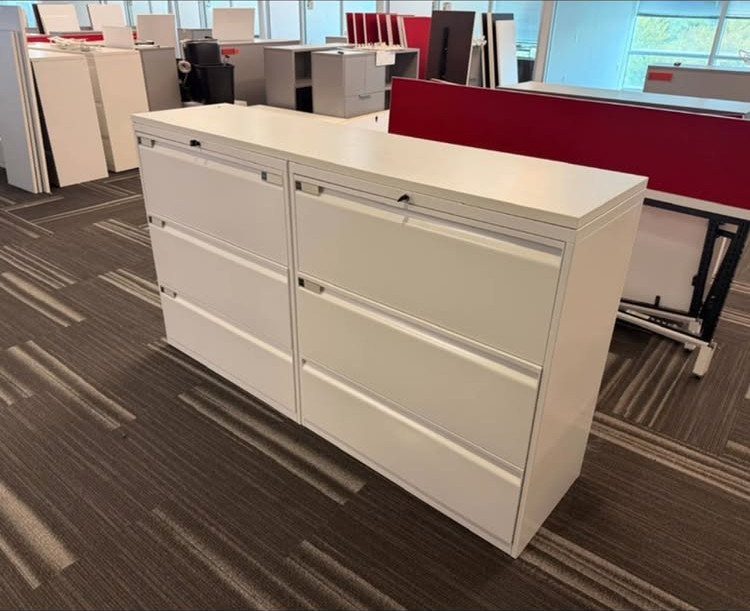
A wide two-column cabinet gives you a flat top that works as a worktop, so the cabinet does double duty as a printer stand or a spot for a tray of mail.
White metal keeps it neutral enough to blend into almost any room.
2 columns of drawers also let you split categories by side: household papers on the left, projects or school files on the right.
A low credenza like this suits a home office with wall space to spare better than a tight corner.
Clear the top weekly, or it turns into a pile.
8. Oak Two-Drawer Wood Cabinet
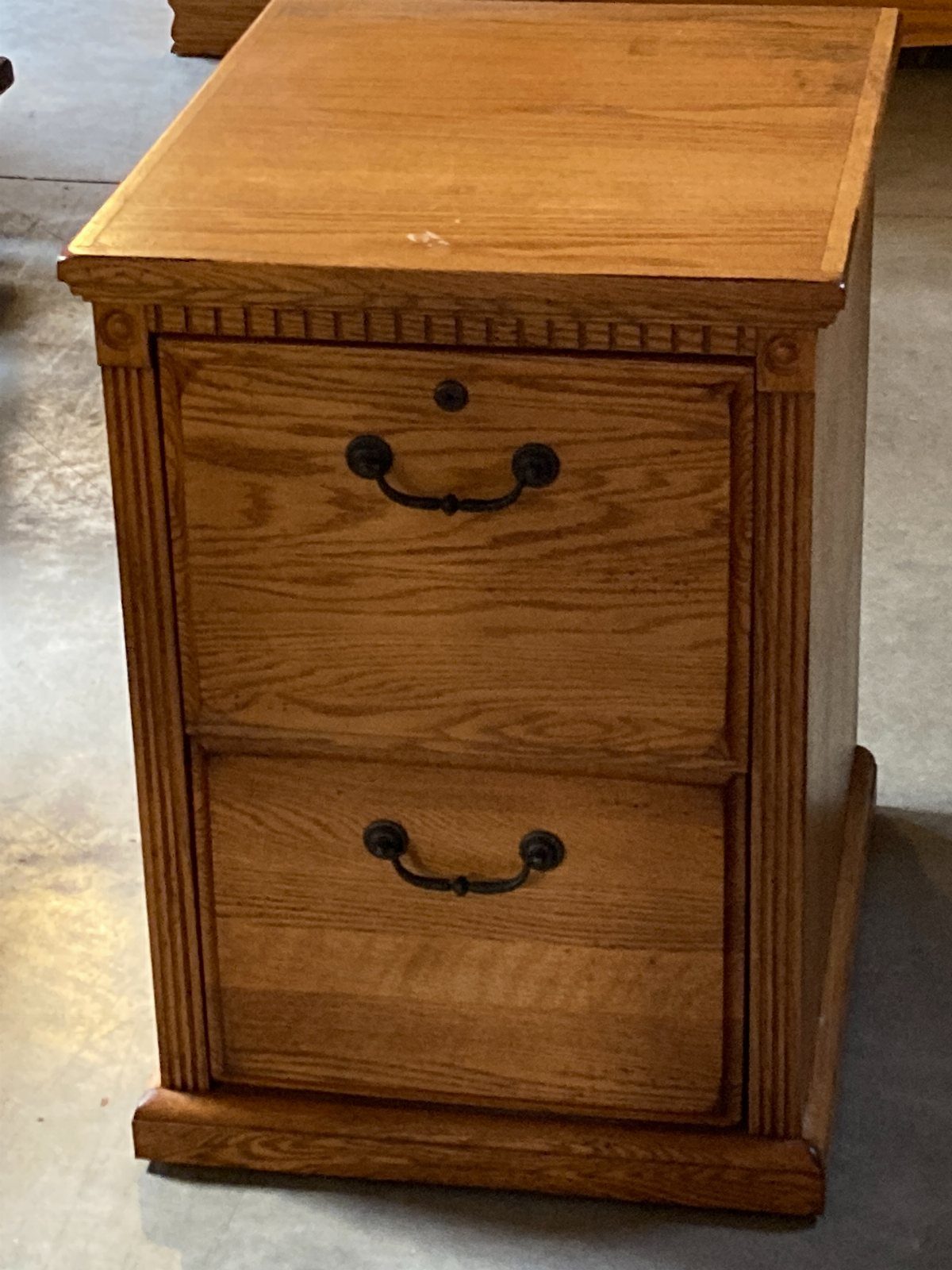
Light oak with dark handles makes a two-drawer file cabinet that looks like furniture, not office gear. The fluted side detailing adds some character without needing any paint or hardware work.
I would choose this over metal for a living room or bedroom, where a gray steel box looks out of place.
Black pulls give the pale wood a clean edge, and if you ever want a change, new pulls are an inexpensive swap.
Two drawers hold less than four, so sort out old paper first and keep only what you actually file.
9. Teal Painted Cabinet with Gold Legs
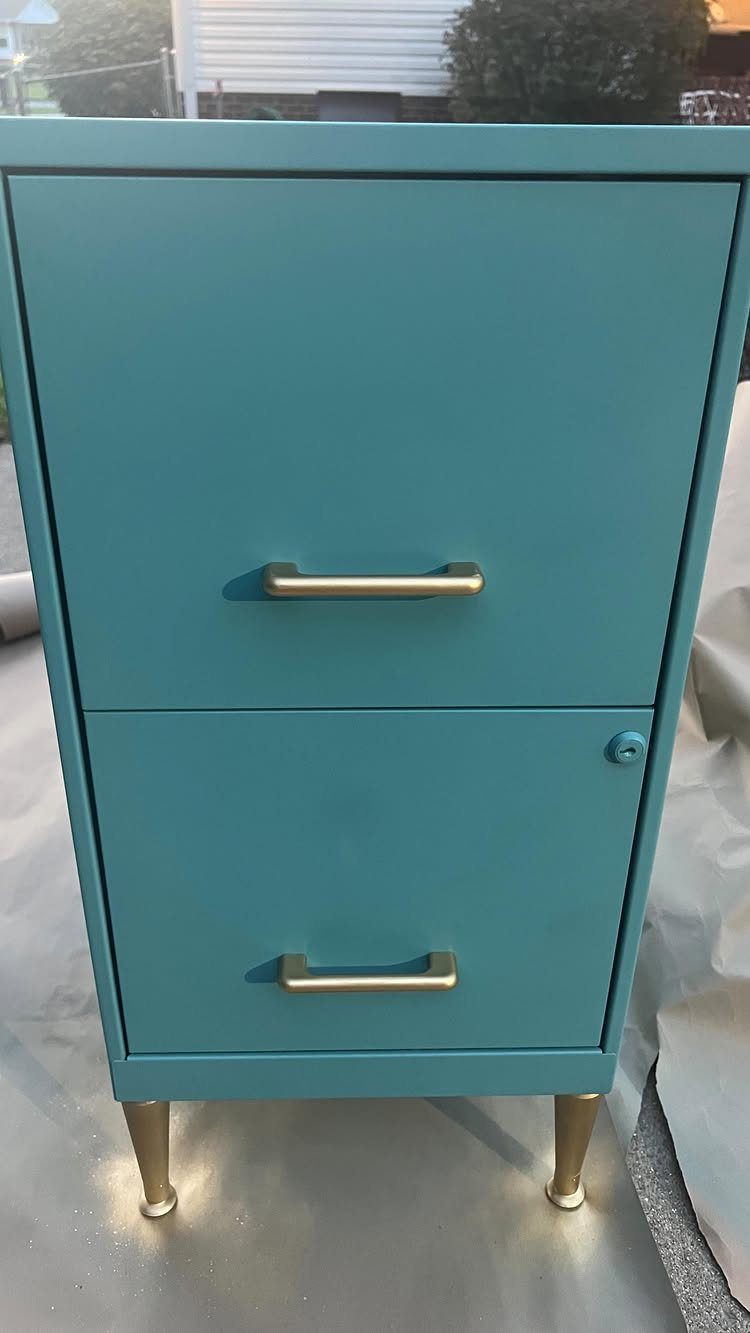
Teal paint, brass-toned handles and tapered gold legs turn a plain two-drawer metal cabinet into a mid-century style piece. The legs lift the box off the floor, which is what changes its whole shape.
Painting it on a drop cloth, as here, keeps the mess contained. Use paint made for metal, applied in thin coats, so the finish levels out and doesn’t drip or chip at the edges.
I like teal with gold because both colors are strong enough that nothing else in the room needs to compete. Put it where people will see it, not behind a door.
10. Tucked Under Desk File Storage
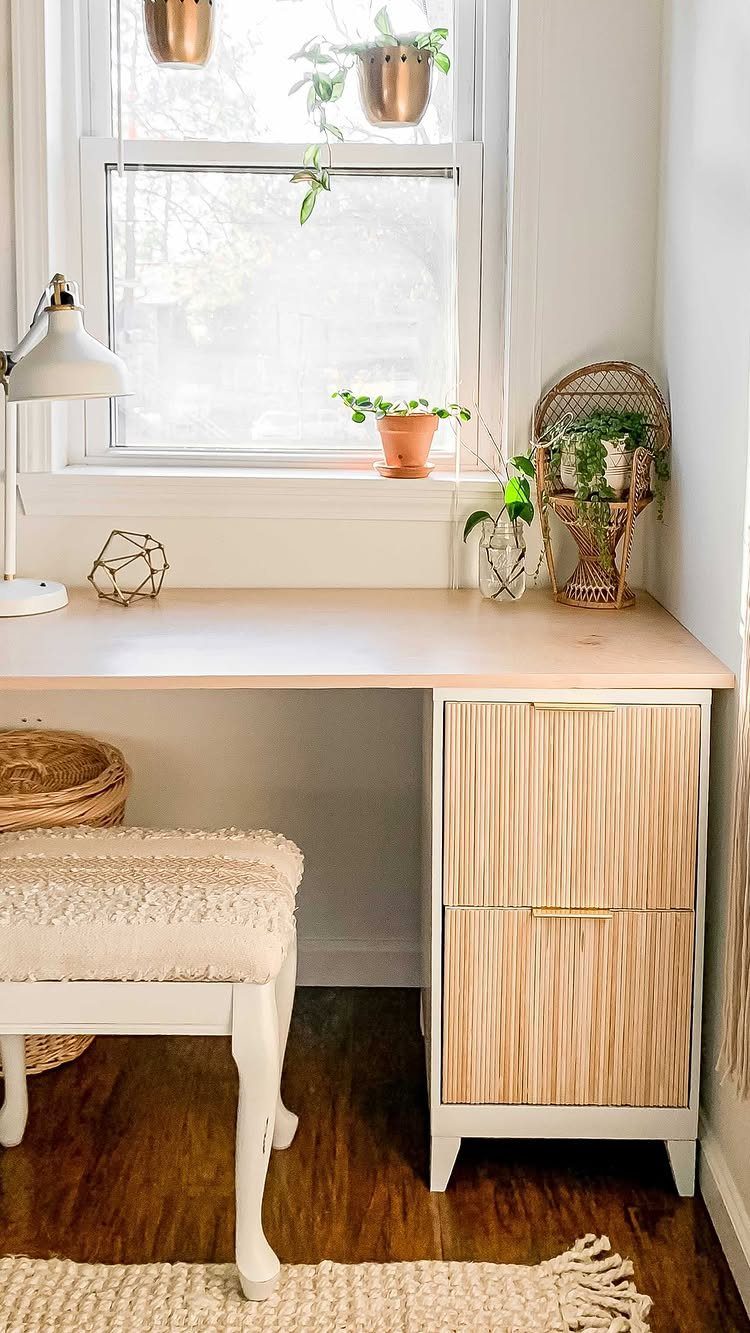
A white two-drawer cabinet slid beneath a light wood desk keeps files within arm’s reach and uses floor space that would otherwise sit empty. The fluted wood detail on the front softens the white.
Measure the gap under the desk before shopping, and check that you can still open the drawers fully with a chair pulled in.
A cabinet in a pale color disappears against a pale desk, which keeps a small home office calm.
Put the files you touch weekly in the top drawer.
The ivory-and-white motif of the Laura Davidson Stockpile file cabinet is a reprieve for anyone tired of looking at basic white or drab black storage options. With 10 other color options, you can select one that suits the personality of your home office the most.
11. Garage Workshop Metal Cabinet Bank
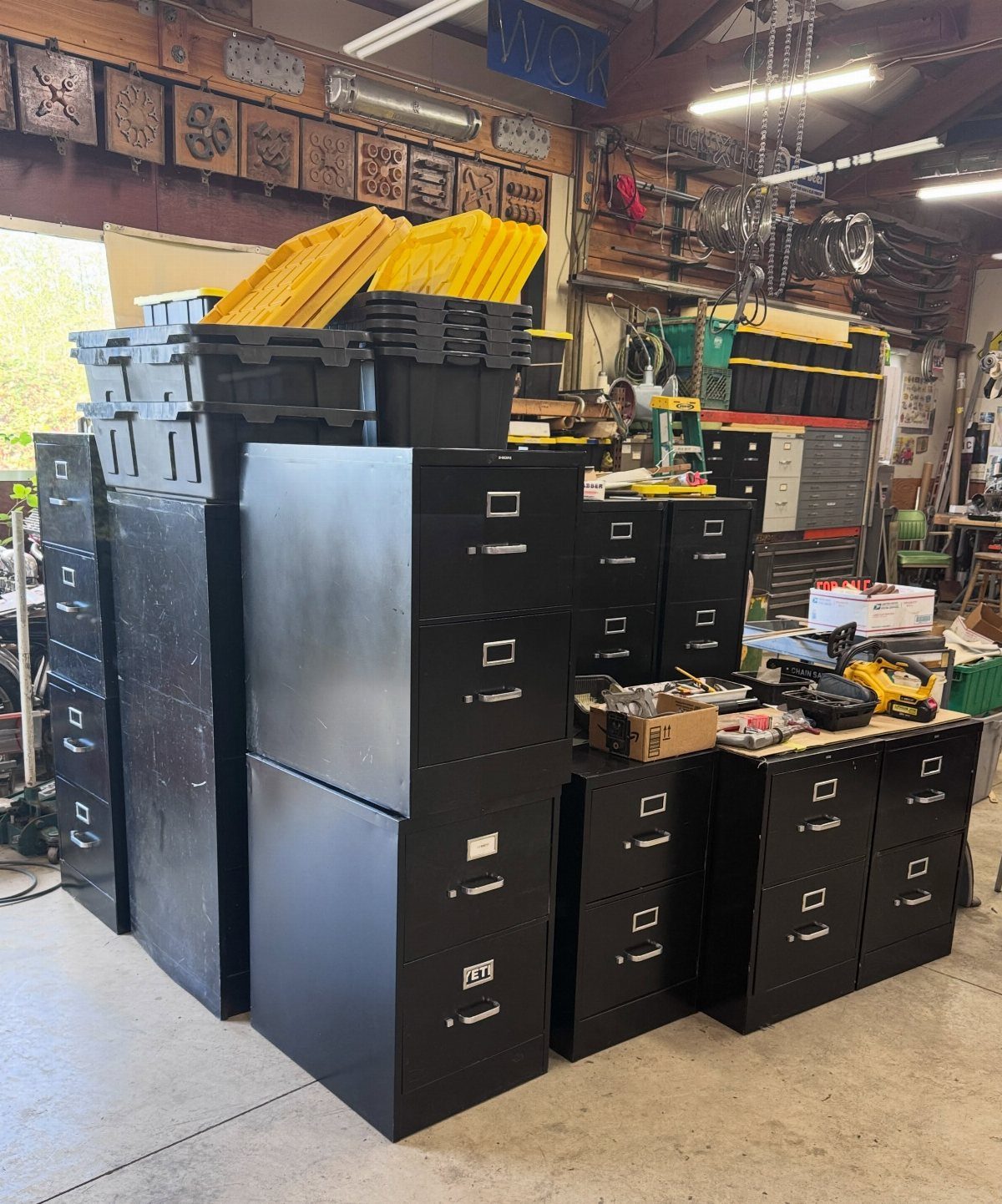
Black metal file cabinets grouped in a row are a good fit for a garage, holding screws, fittings and small tools in drawers that slide shut.
Bought used, they cost little, and a mismatched set still looks fine in a workshop.
The flat tops are useful too: plastic bins sit on them, which adds storage without extra shelving. I would label each drawer by contents so you stop opening one after another while hunting for the right bit.
Metal wipes clean when the shop gets dusty.
Frequently Asked Questions
What can I turn a filing cabinet into?
A two-drawer metal filing cabinet set on tapered gold legs reads as a mid-century piece once it’s painted teal.
Both work because the cabinet stops looking like office gear. Adding brass-toned handles is a cheap step that changes the look more than almost anything else.
What can I use instead of a file cabinet?
A storage chest fitted with hanging-file rails works well, especially for renters, since it sits beside a sofa and looks like furniture.
A vintage card catalog cabinet also stands in, but its drawers are too small for letter-size paper, so use it for receipts and small items.
Screw the hanging-file rails in place and check them with a level while the box or drawer is still empty, so every folder sits at the same height once the paper goes in.





