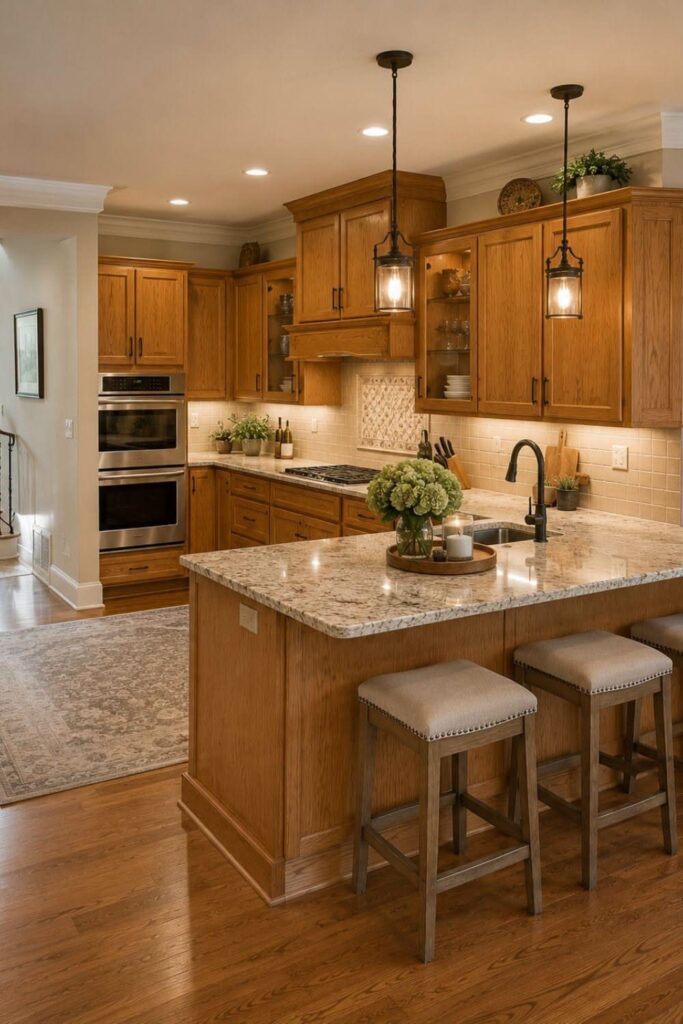
Wood cabinets and a wood floor look planned or accidental depending on one fact: how far apart the two tones sit.
Whichever pairing you pick, whether gray cabinets over light brown planks or dark brown cabinets over a dark floor, the woods need to be clearly different or matched on purpose, never a near miss.
1. Gray Cabinets with Light Brown Floors
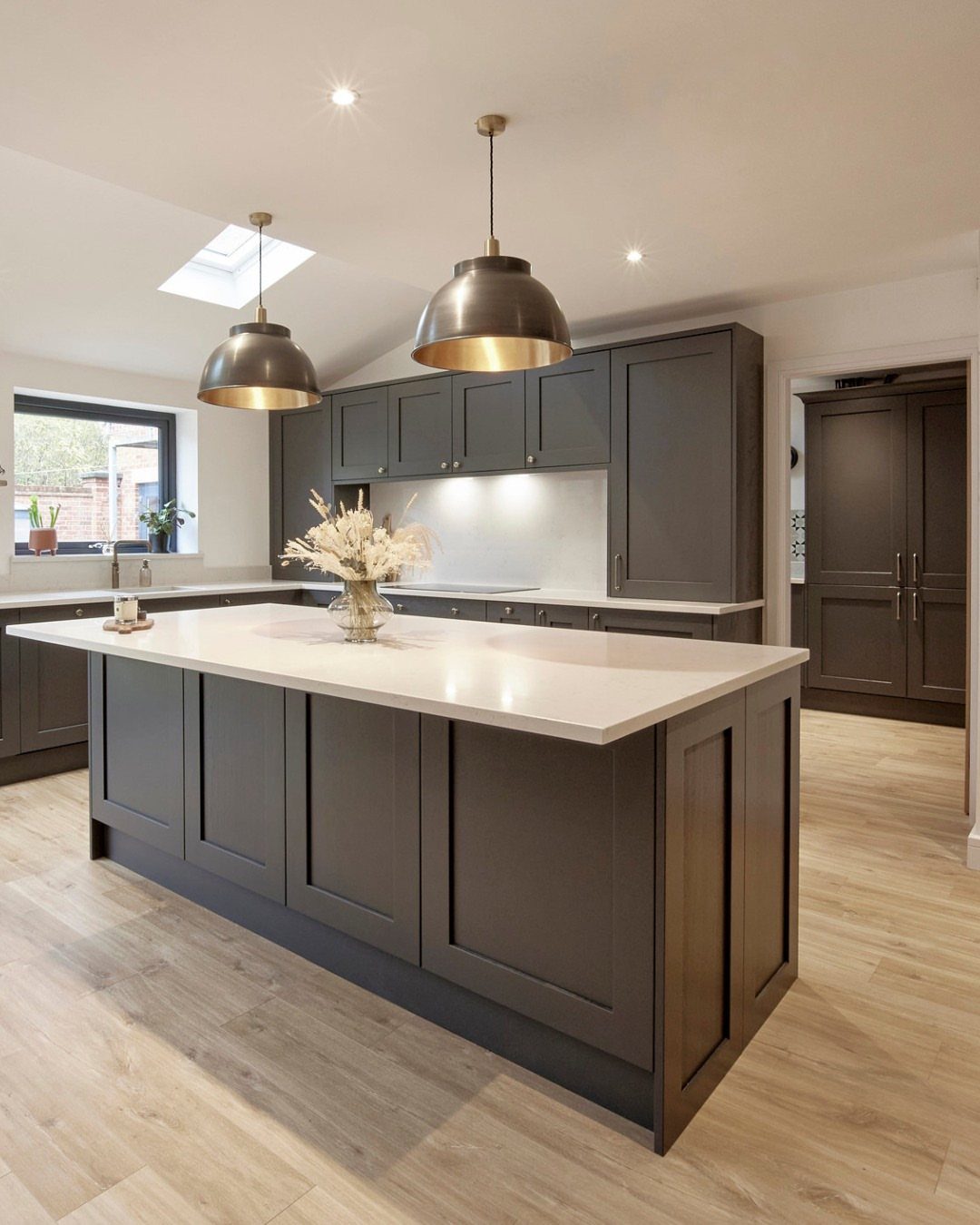
Dark gray shaker doors look best against a floor with some warmth in it, and light brown planks supply exactly that. The gray stays crisp instead of turning cold.
Keep the island top white so the dark cabinets don’t swallow the room. Gold-toned pendants are a small step that ties the warm floor to the cool gray.
If your floor leans orange, hold a gray sample against it in daylight first.
2. Wood Elements with Countertops Hardware and Backsplashes
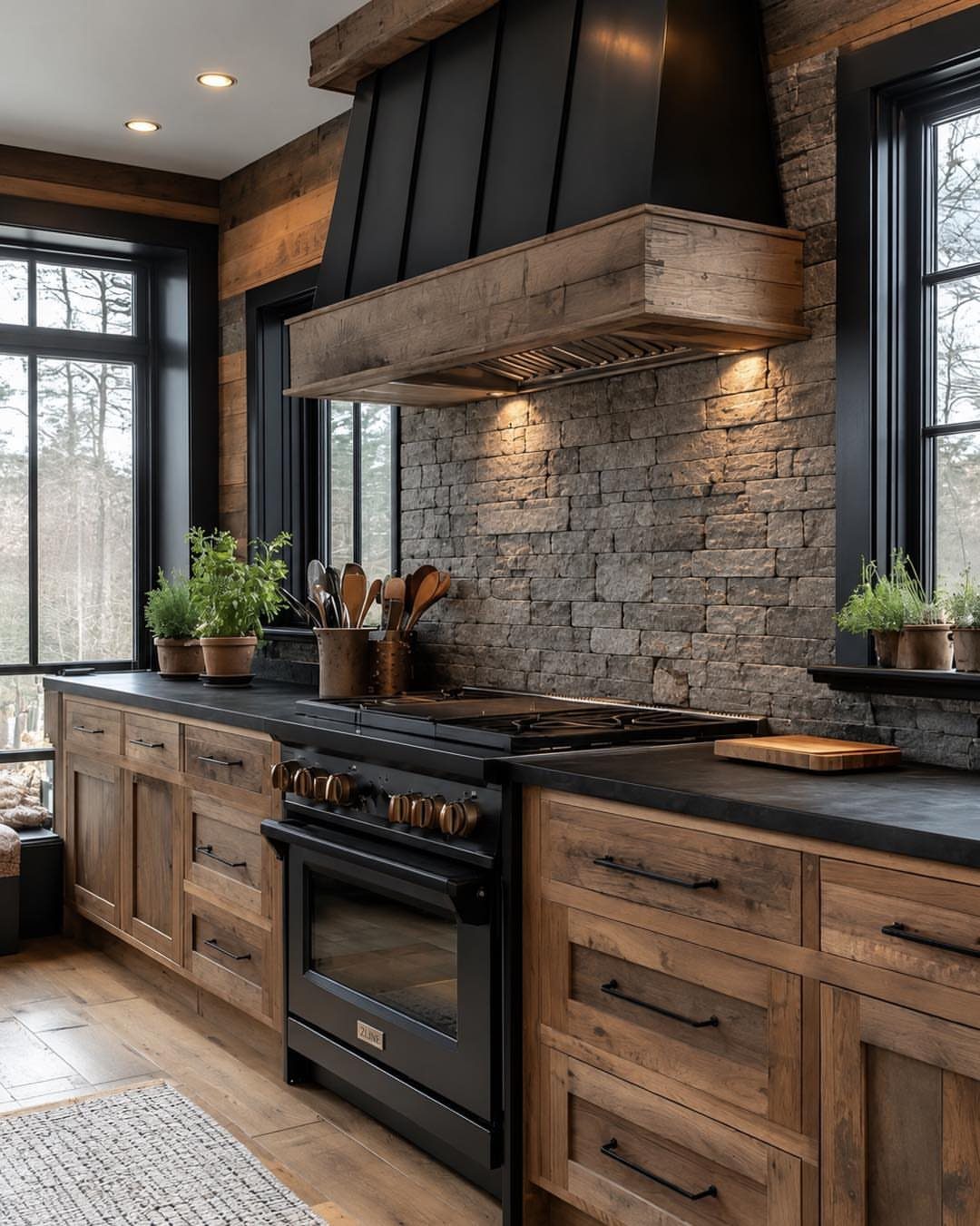
Black hardware, dark countertops, and a stone backsplash give a wood-on-wood kitchen the contrast it needs to avoid looking like a cabin interior from edge to edge.
Repetition makes it look planned.
For a budget weekend, swap the pulls first. It costs the least and shifts the whole mood.
Dark counters hide crumbs but show water spots, so keep a cloth handy.
3. Matching Cabinets and Floors
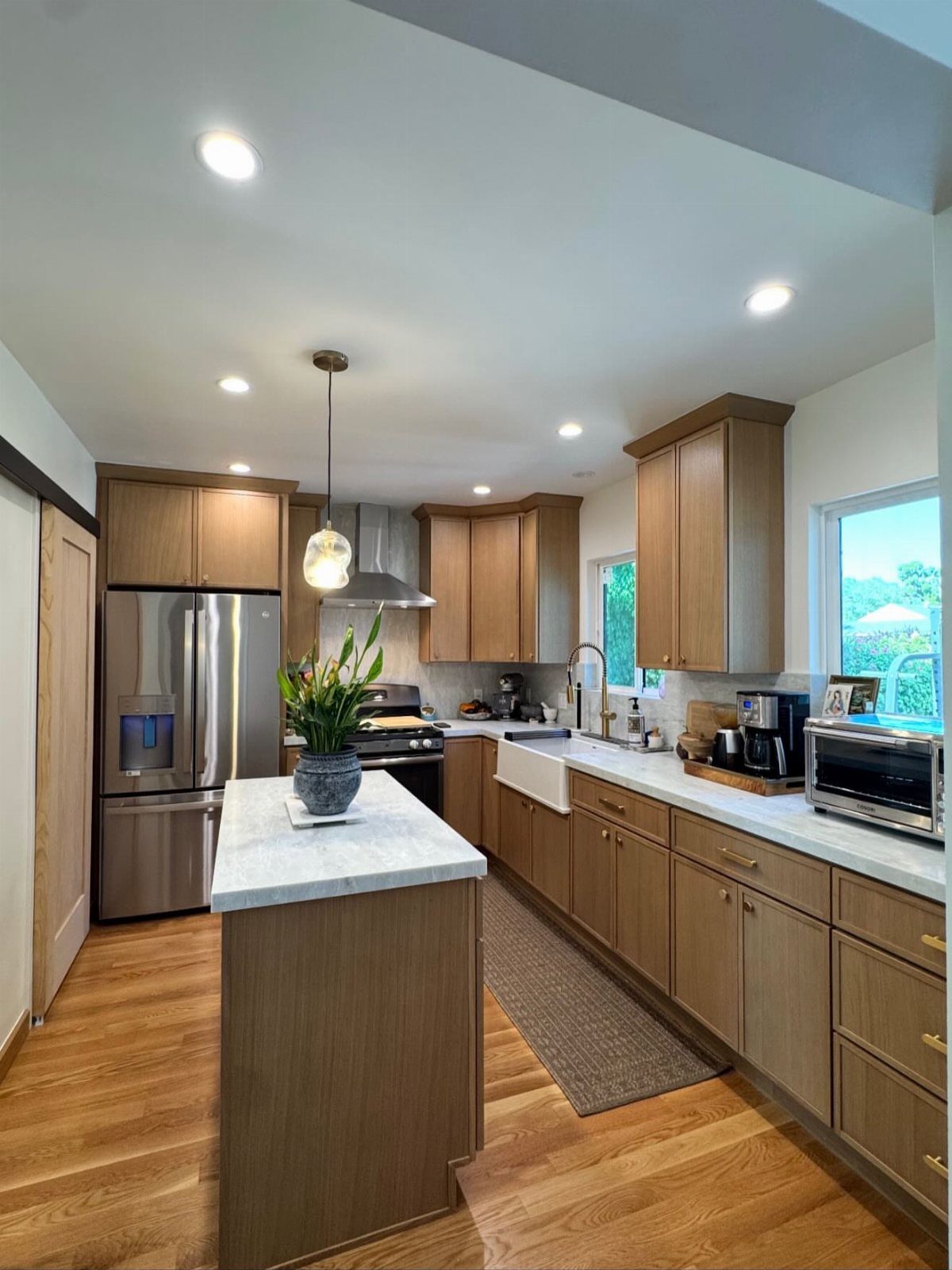
Cabinets and floors in the same light brown read as one calm surface, and that works best when the two woods differ slightly in tone rather than match exactly. A perfect match often looks flat.
Try putting a floor sample against a cabinet door in natural light. If they fight, go a shade apart instead.
4. Smooth Cabinetry with Distressed Flooring
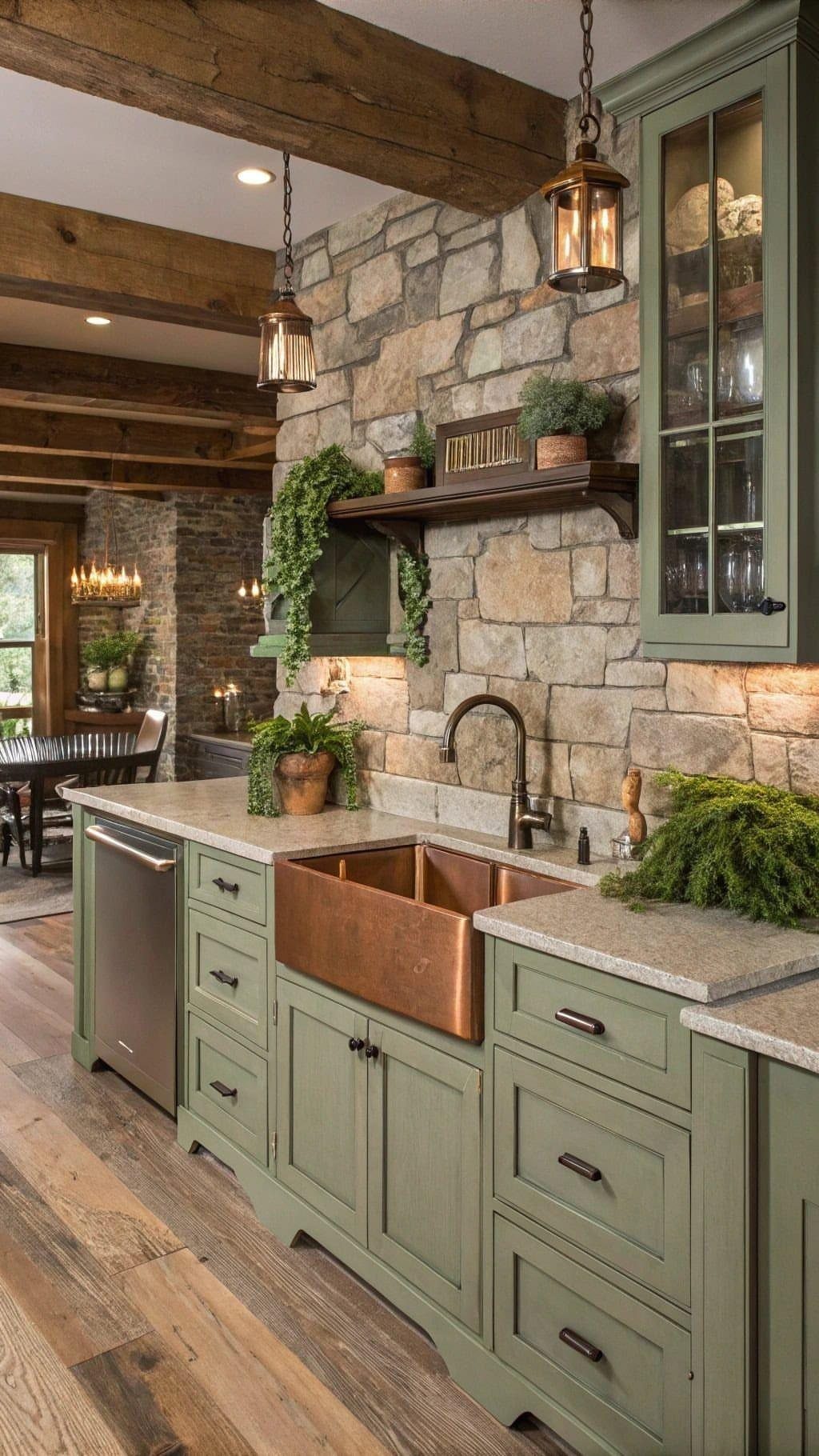
Flat, smooth-front cabinets painted sage green sit well above a distressed floor, because the floor carries the texture and the doors stay quiet. Each side balances the other.
If the room already has stone walls and beams, keep cabinets and countertops plain.
I’d choose a matte or satin finish on the doors. Gloss would compete with the worn look underfoot.
5. Wood Cabinets with Herringbone Floors
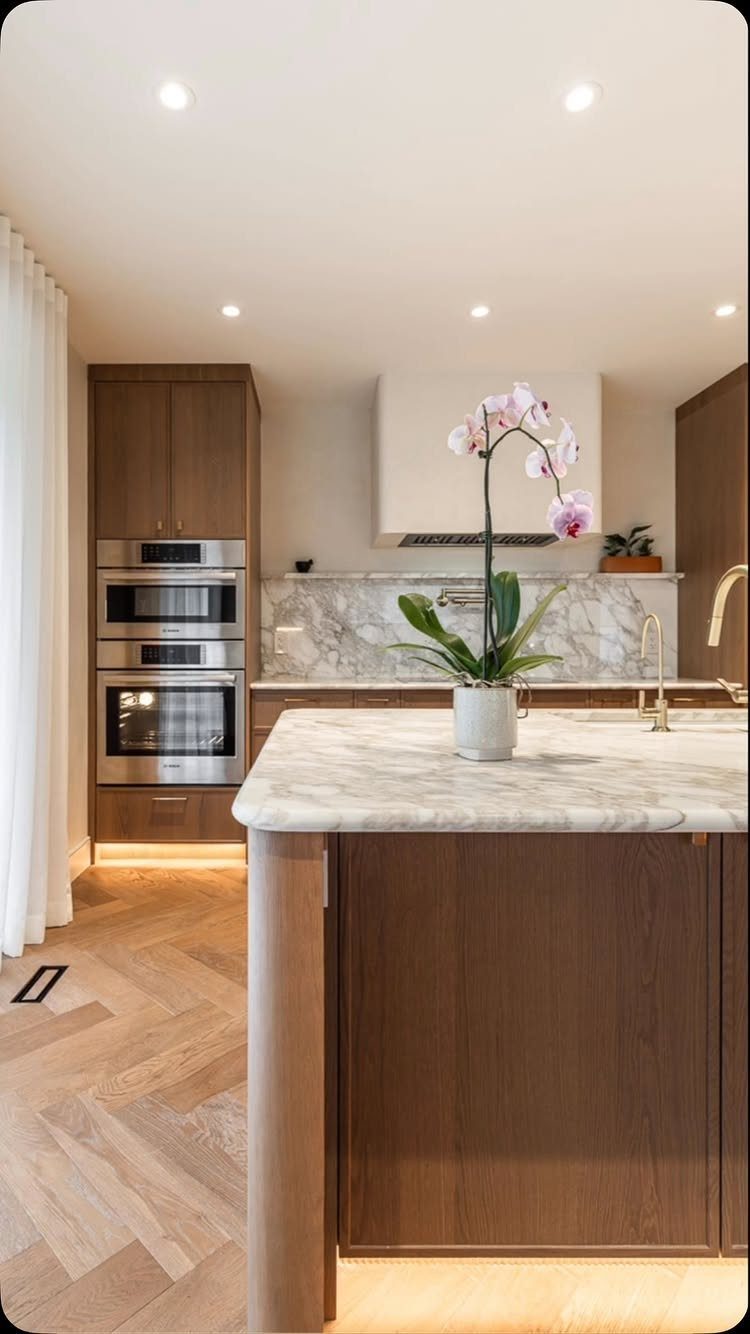
Herringbone flooring gives a kitchen pattern without adding color, so the cabinets can stay a plain, solid brown wood. That’s the pairing I’d choose.
Keep the rest quiet: a white marble island and marble backsplash let the floor be the detail. Adding a busy backsplash too would crowd it.
Herringbone costs more to lay than straight planks, since the cuts take time. Expect that on the quote, and consider it for a small kitchen first.
6. Brown Cabinets with Dark Floors
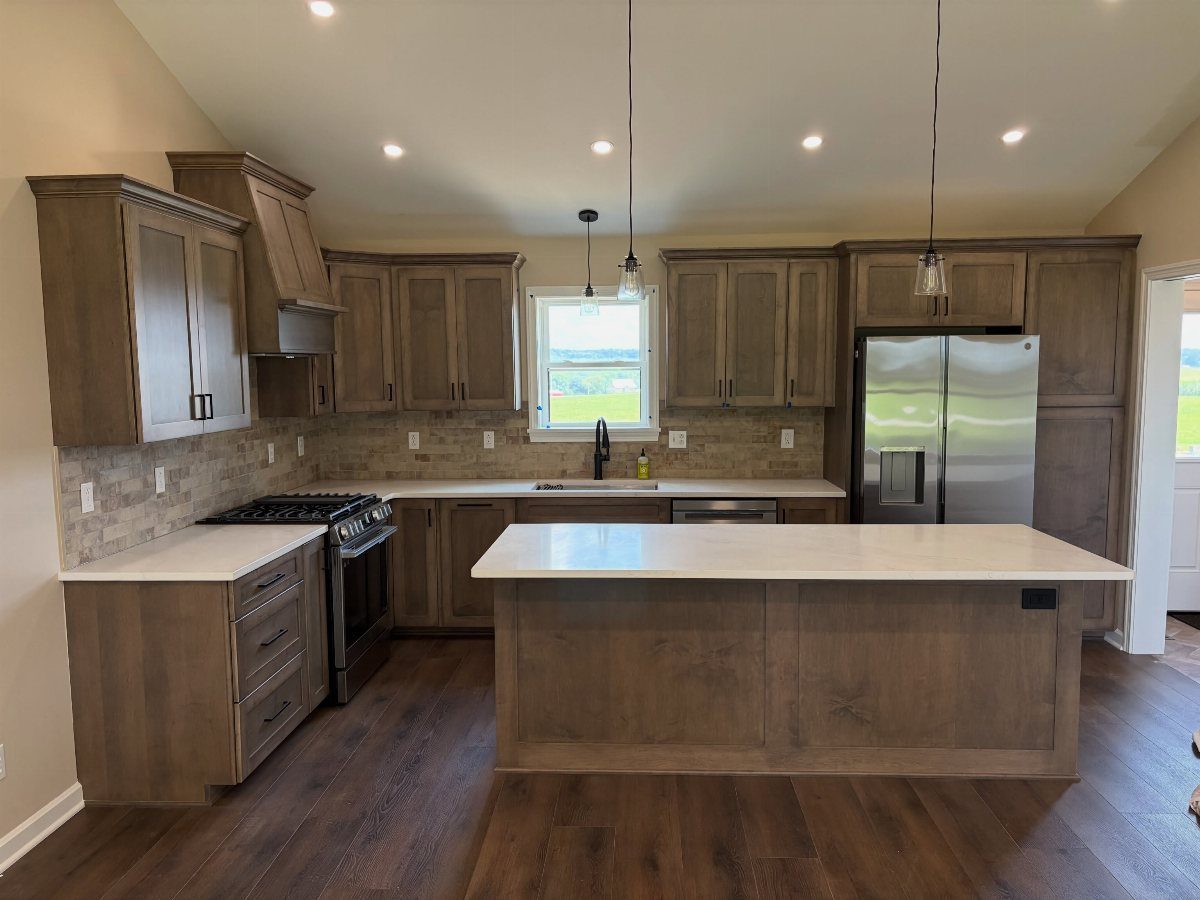
Brown cabinets over a darker brown floor only work when the floor is clearly deeper than the doors. A close call looks like a mistake.
White countertops fix it. They bounce light back up and keep a dark-on-dark room from feeling heavy, and a stainless fridge adds a cool break.
Dark floors show dust and pet hair fast, so plan on frequent sweeping. In kitchens with little daylight, I’d pick a lighter floor instead.
7. Dark Wood Island with Light Floors
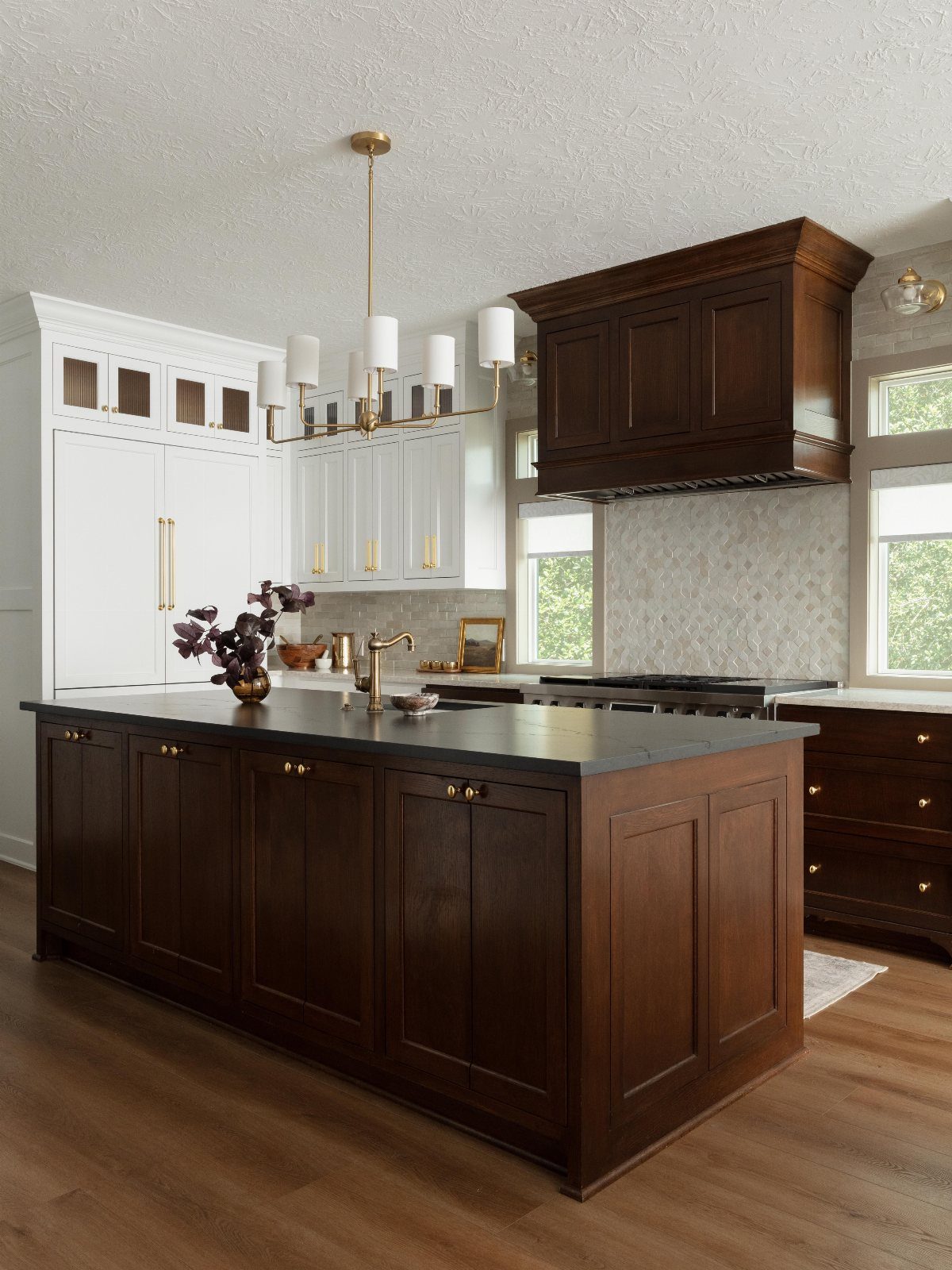
A dark wood island and matching range hood anchor the room, and the light brown floor keeps all that depth from pulling the whole kitchen down. White upper cabinets do the rest of the lifting.
I like that the darkest wood sits in 2 spots instead of everywhere. When your cabinets are already light, staining just the island borrows this look for the least money.
Hang a warm metal fixture over it, since gold reads well against dark grain.
8. Medium Wood Cabinets with Light Floors
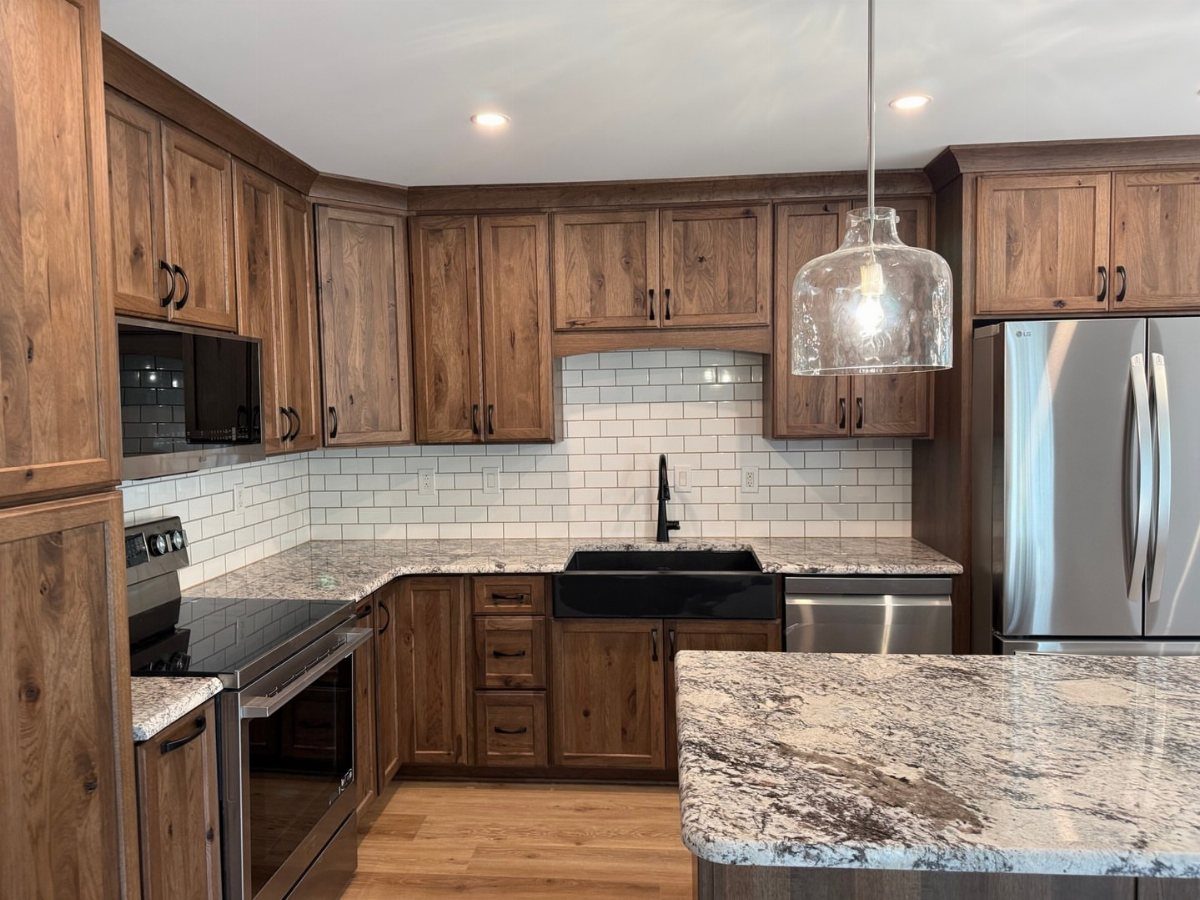
Medium-toned wood cabinets over a lighter plank floor give you two woods that are clearly different, so neither one gets lost. That separation is what I’d aim for.
Granite counters, a black farmhouse sink, and stainless appliances all sit comfortably here because the wood tones stay in the middle range. Nothing needs to be dark to look finished.
If the floor looks only a hair lighter, go up a shade.
Designing with Wood
Mixing species gives a wood-on-wood kitchen a personal feel, and the easiest way to do it is to let one wood lead.
Pick a floor and a cabinet that are clearly different species, or match them on purpose, but avoid landing in between.
Color on the cabinets works with wood too. A painted lower run or a single colored section against a warm floor adds contrast, while the wood grain keeps it from looking loud.
Pick the finish before the color. Stains on oak, maple, or walnut look different even when the label says the same shade, so test each one on a scrap.
Maintenance Tips
Wood is one of the few kitchen materials you can redo instead of replace. Good hardwood like oak, maple, or walnut handles wear well, and a sanded and restained surface can look new again.
That also means you can change the color later without a full remodel. If the style of your kitchen shifts in a few years, a new stain or finish can do the job.
Refinishing floors and cabinets is also something buyers tend to appreciate, since a well-kept wood kitchen reads as a solid investment.
Test any stain on a hidden spot first, like the inside of a cabinet door or a floor patch under the fridge, so a bad color costs you a scrap and not a whole room.
Kitchen Renovation Advice
Choose the species first, because the wood decides how stain behaves and how the grain looks.
Red oak shows a bold, open grain with a lot of character, and it tends to read warm with a slight pink-orange cast.
White rift oak is cut so the grain runs in tight, straight lines, which gives it a lighter, cleaner look that feels more modern.
Alder is a fairly soft hardwood with a fine, even grain, so stain goes on smoothly and takes color without much blotching. Maple is hard, fine-grained, and light enough to brighten a small room.
Walnut is rich and dark, and cherry deepens to a warm reddish patina as it ages, so its color will change after you install it.
Using the same species on cabinets and floors gives a matched, calm look, though mixing 2 species can work if the tones are clearly different. Whichever you choose, get a sample of each wood into the room before ordering.
Frequently Asked Questions
What is the best type of flooring to have in a kitchen?
Hardwood such as oak, maple, or walnut holds up to kitchen traffic well, which is why I’d put it on the short list.
It also has a practical edge: a sanded and restained floor can look new again, so you can redo it instead of replacing it.
Are cabinets installed on top of hardwood floors?
Yes, cabinets are typically installed on top of hardwood floors. That is one reason to settle the floor and cabinet colors together before ordering, since the two woods will sit side by side.
Hold a floor sample up to a cabinet door in daylight, and you’ll see right away whether the two get along.
What are some creative kitchen ideas using natural wood cabinets?
Contrast does the heavy lifting here: dark counters, black pulls, and a stone backsplash stop a wood-on-wood kitchen from reading as a cabin.
Another option is a dark wood island with white upper cabinets, so the deepest tone sits in only one or two spots. On a tight budget, new pulls cost the least of any change and shift the mood the most.
Should wood cabinets and wood floors match?
Matching is allowed, though an exact match tends to look flat. If they fight in natural light, go a shade apart, and make sure the two are clearly different rather than landing in between.





