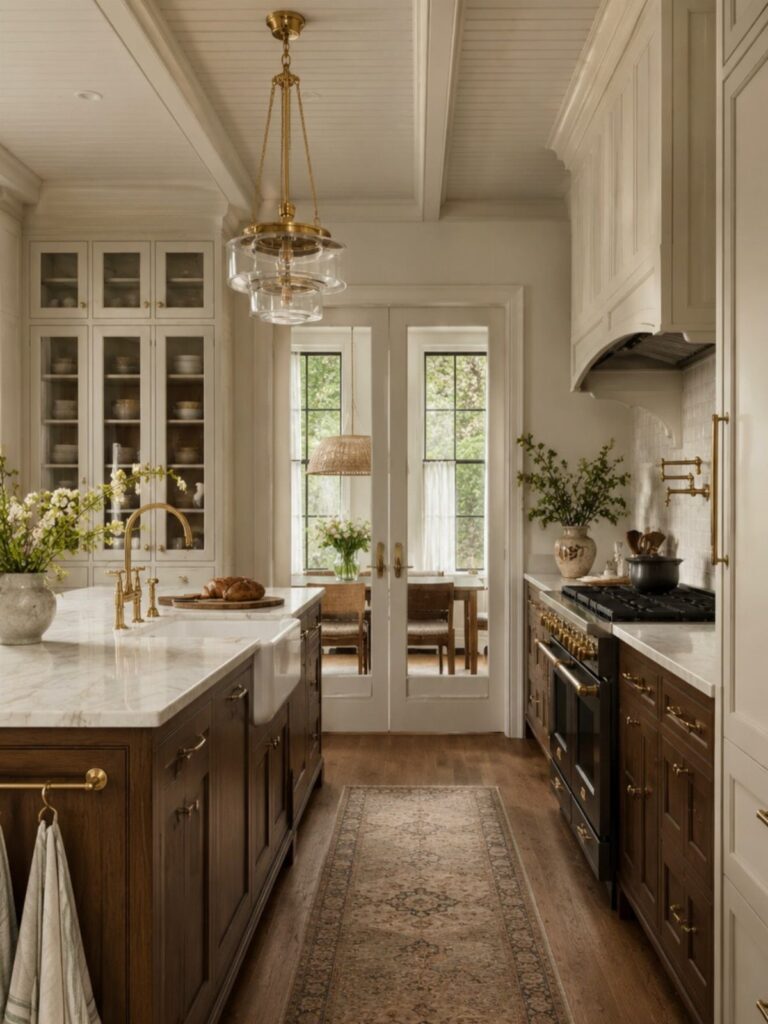
Where the dark color goes depends on your room’s light: in a small or dim kitchen, the dark belongs on the base cabinets with white above, and black or olive at eye level only works where lighting is good.
The ideas run from one coat of paint on a black island to wood doors, greige combinations and open shelving beside closed cabinets, so the budget can stay near a weekend of painting or stretch to swapping materials.
1. Blue and White
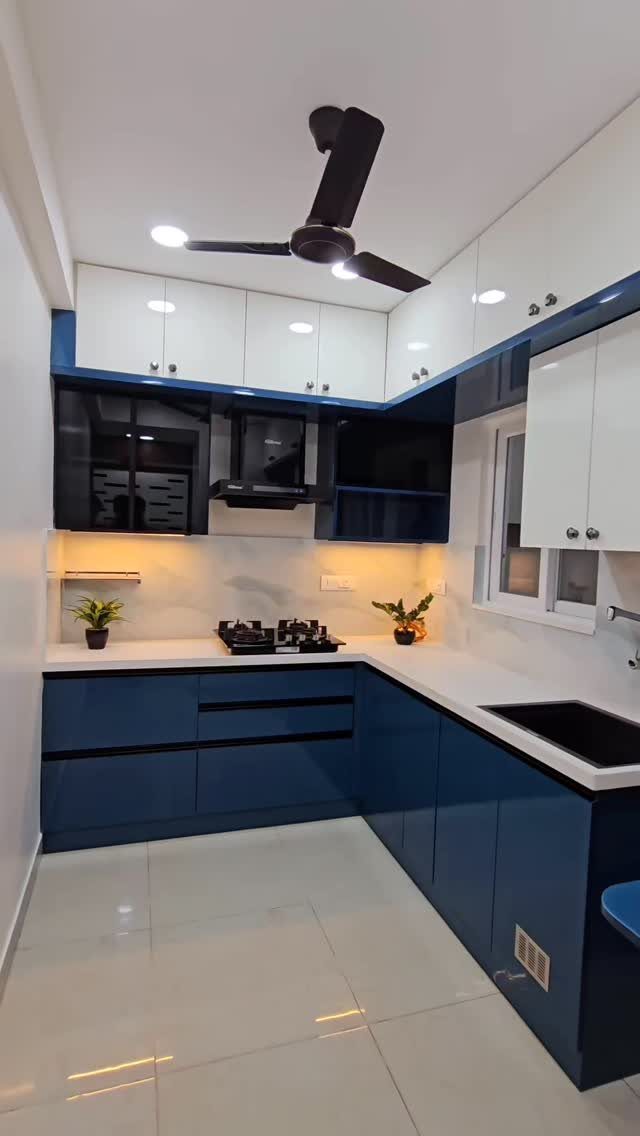
Navy below and white above gives a kitchen a coastal feel without a single seashell. The dark base grounds the room, and the white uppers stop it from feeling closed off.
White countertops, as in this kitchen, bridge the 2 colors, so the navy reads as a deliberate choice rather than a clash.
For a weekend budget, painting the lower cabinets alone is the cheaper route, since the uppers can stay as they are. I would pick a deep navy over a mid-blue, because it hides scuffs near the dishwasher and floor.
2. White Upper Cabinets and Dark Lower Cabinets
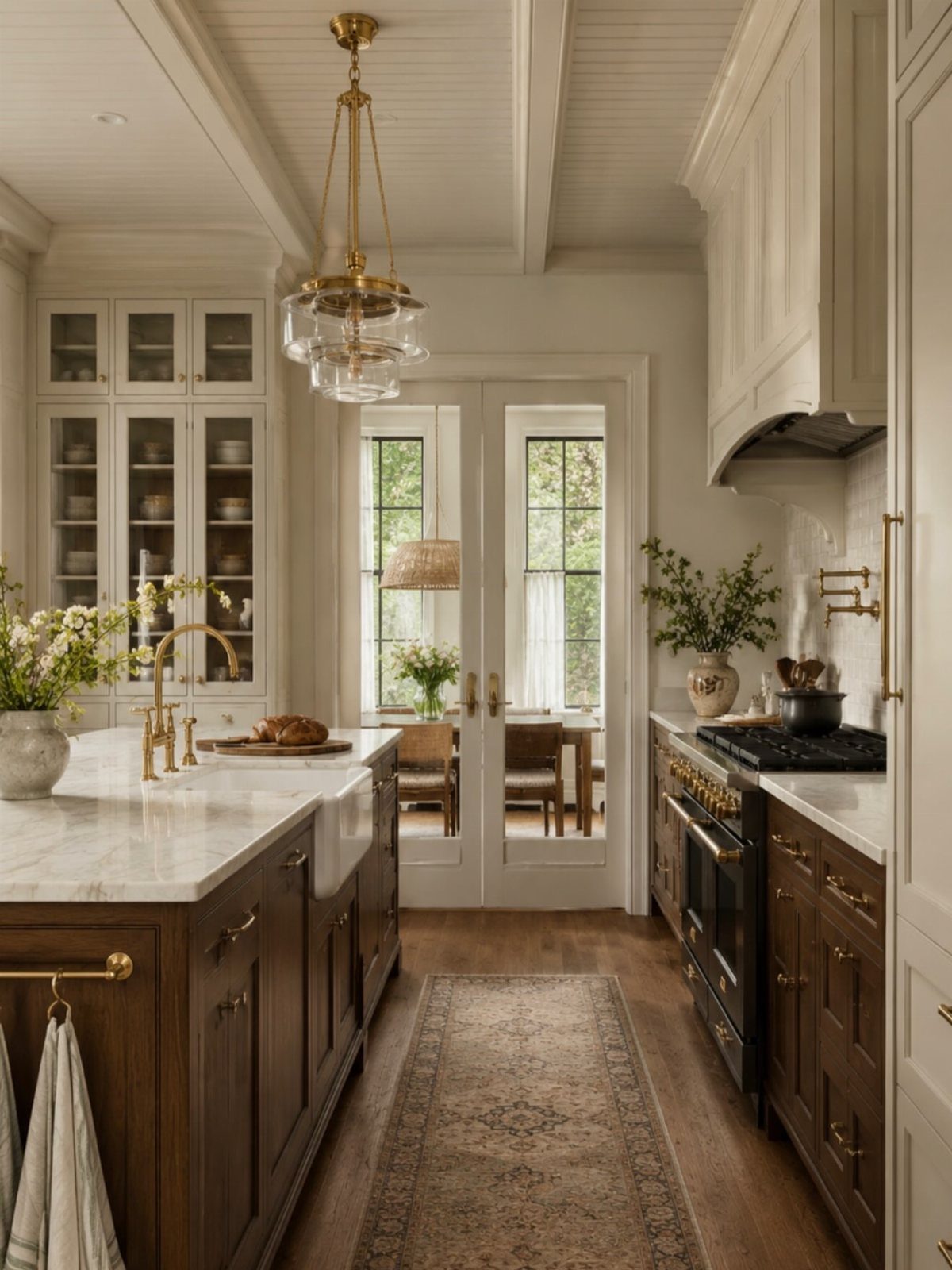
Dark lowers with white uppers is the most familiar two-tone setup, and it stays popular for good reason: the heavy color sits where the eye lands last, and the light color keeps the upper half open.
Matching the island to the dark lowers, as this kitchen does, ties the room together.
Marble-look countertops sit between the 2 tones and soften the contrast. If your kitchen is small, I would keep the dark on the base cabinets only, and let white carry everything at eye level and above.
3. Natural Wood and White
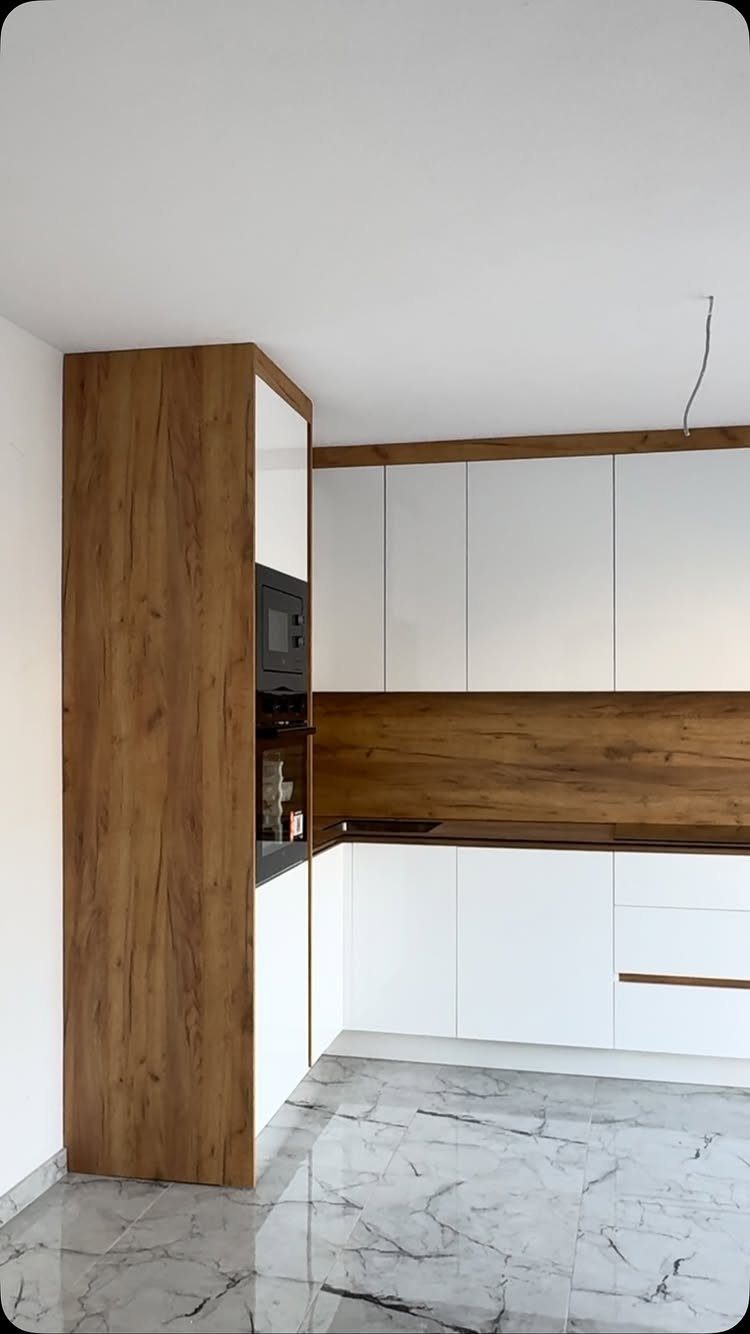
Wood grain next to white cabinets adds warmth where a fully white kitchen can feel flat. A modern slab-front style keeps the pairing crisp instead of rustic.
You can use the wood in small doses: a side panel, a backsplash, or a few doors.
That is the budget-friendly way in, since a little wood goes a long way against white. Keep the grain tone consistent across every piece, because mismatched wood reads as a mistake faster than mismatched paint does.
4. Greige and White Cabinet Combo
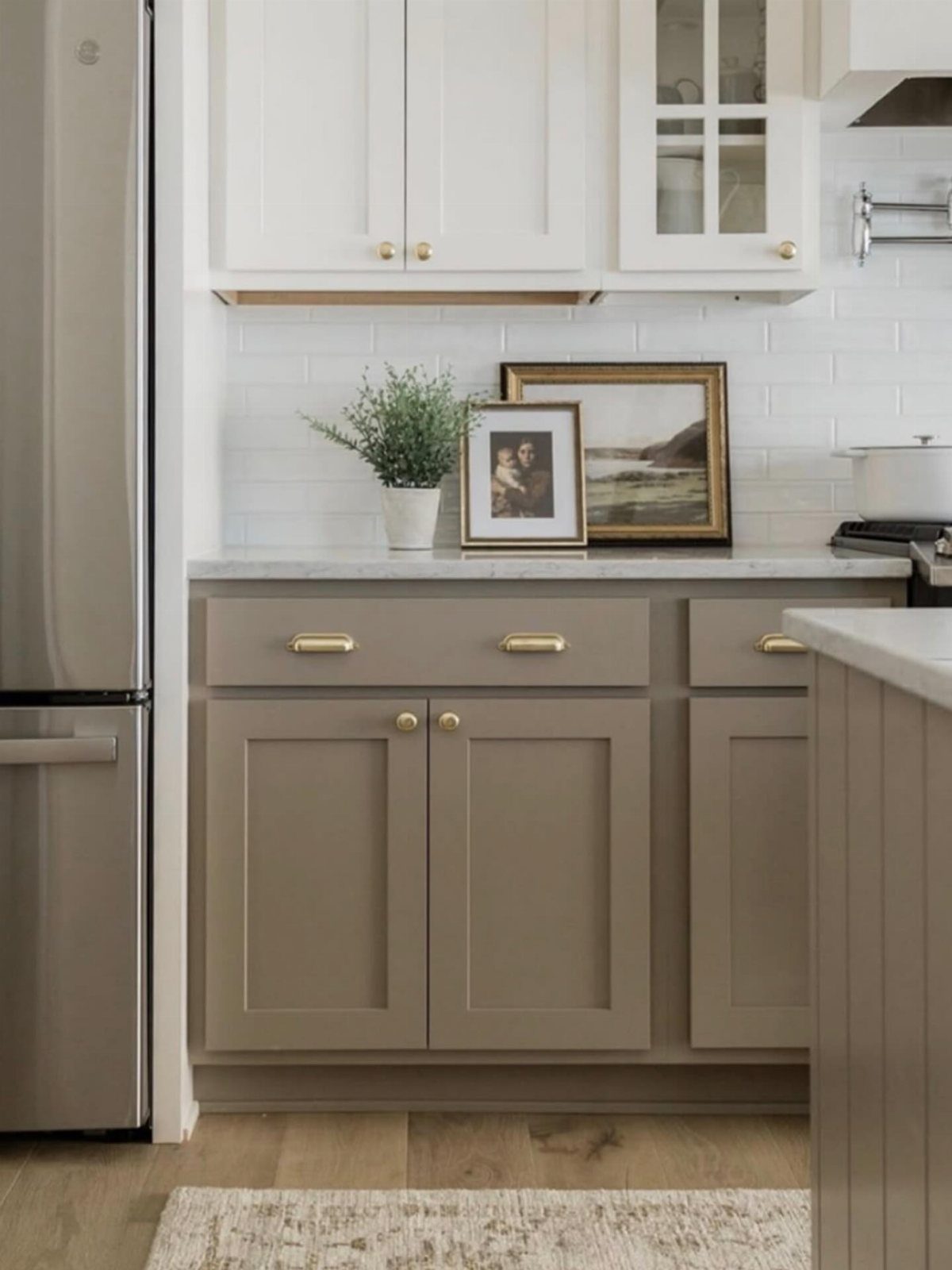
Greige is the safest dark-ish choice for lower cabinets, because it sits between warm and cool and works with most whites. Paired with white uppers, it looks calm rather than stark.
Gold hardware, as in this kitchen, adds a little glow against the gray-beige.
Before buying a gallon, test sample swatches on a cabinet door and check them in different light, since greige can lean tan or gray depending on what hits it.
5. Sage Green and Dark Wood
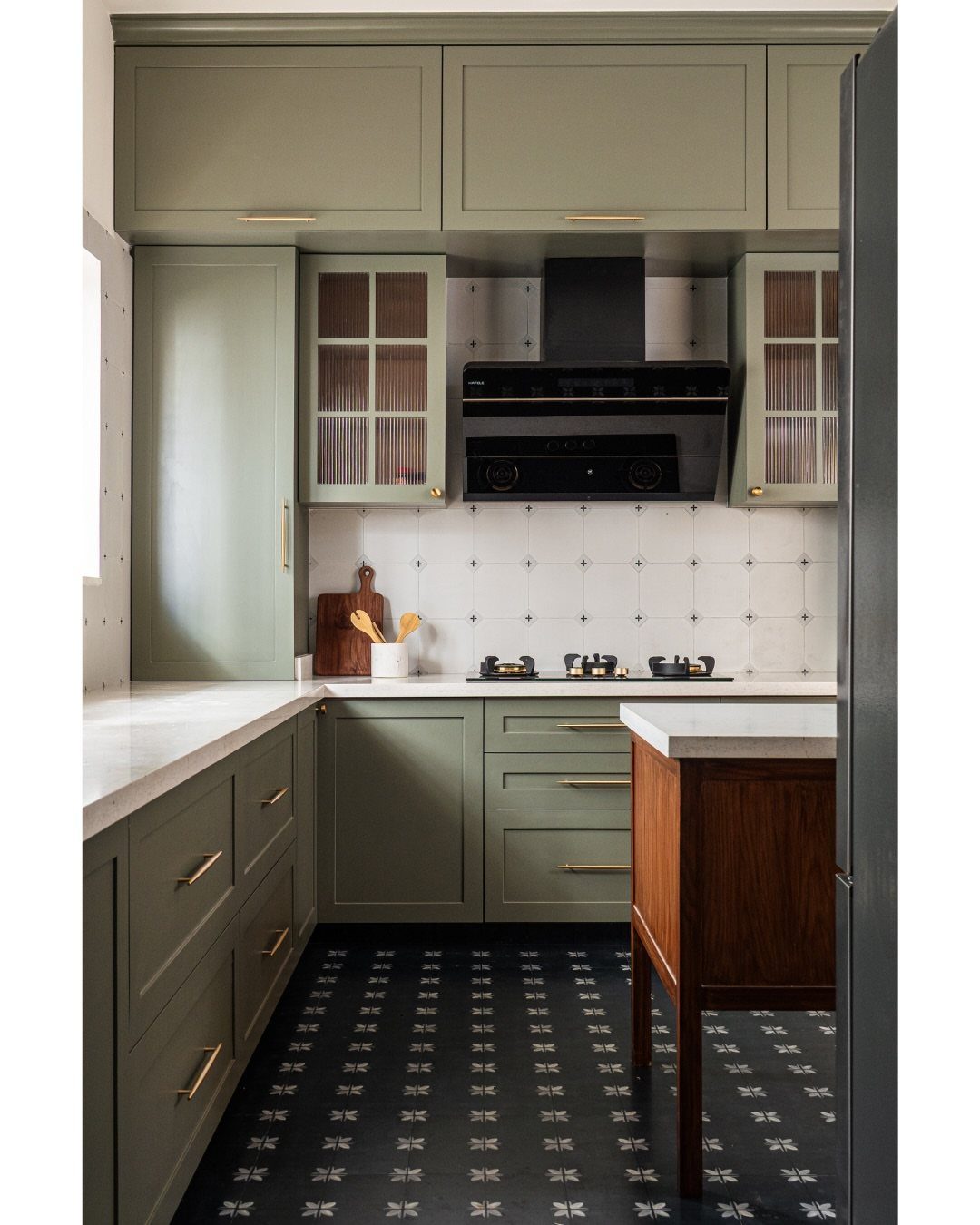
Sage green cabinets with a dark wood island give the room 2 clear jobs: green sets the mood, and the island anchors it. The wood has to be noticeably darker than the green, or the island blurs into the rest.
6. Grey and Natural Wood
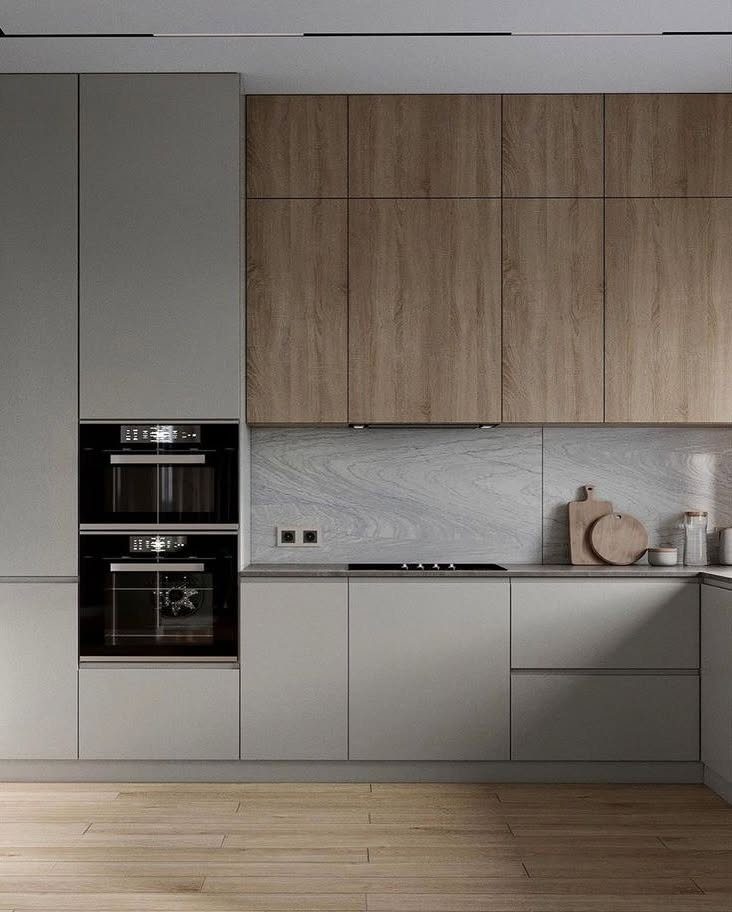
Grey lowers topped by light natural wood uppers flip the usual rule: the cool, sleek color sits low and the warm wood sits at eye level. It feels softer than the typical dark-below, light-above setup.
If you are working with a modest budget, I would use wood only on the uppers and paint everything else in one color family so the combination stays calm.
7. Black and Light Wood
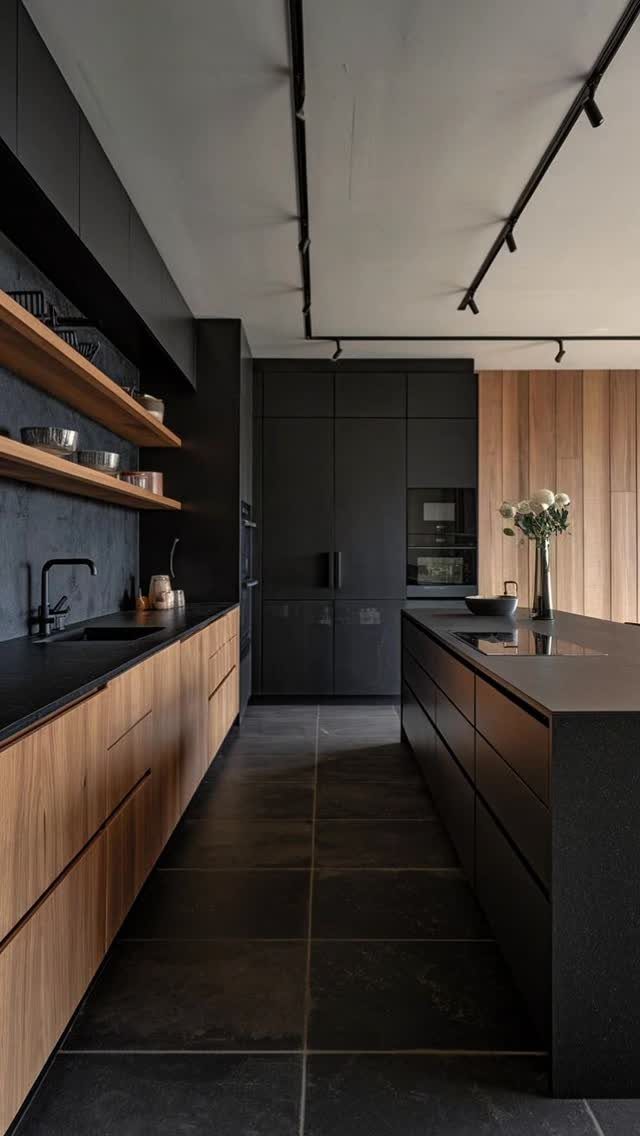
Matte black uppers and a matching island, balanced by light wood below, put the weight overhead and the warmth within reach.
Black on top can close a room in, so the wood base and open shelving do the work of keeping it airy.
Keep the wood tone pale and the grain quiet, so the black stays the one loud thing in the room.
8. Light Blue and Natural Wood
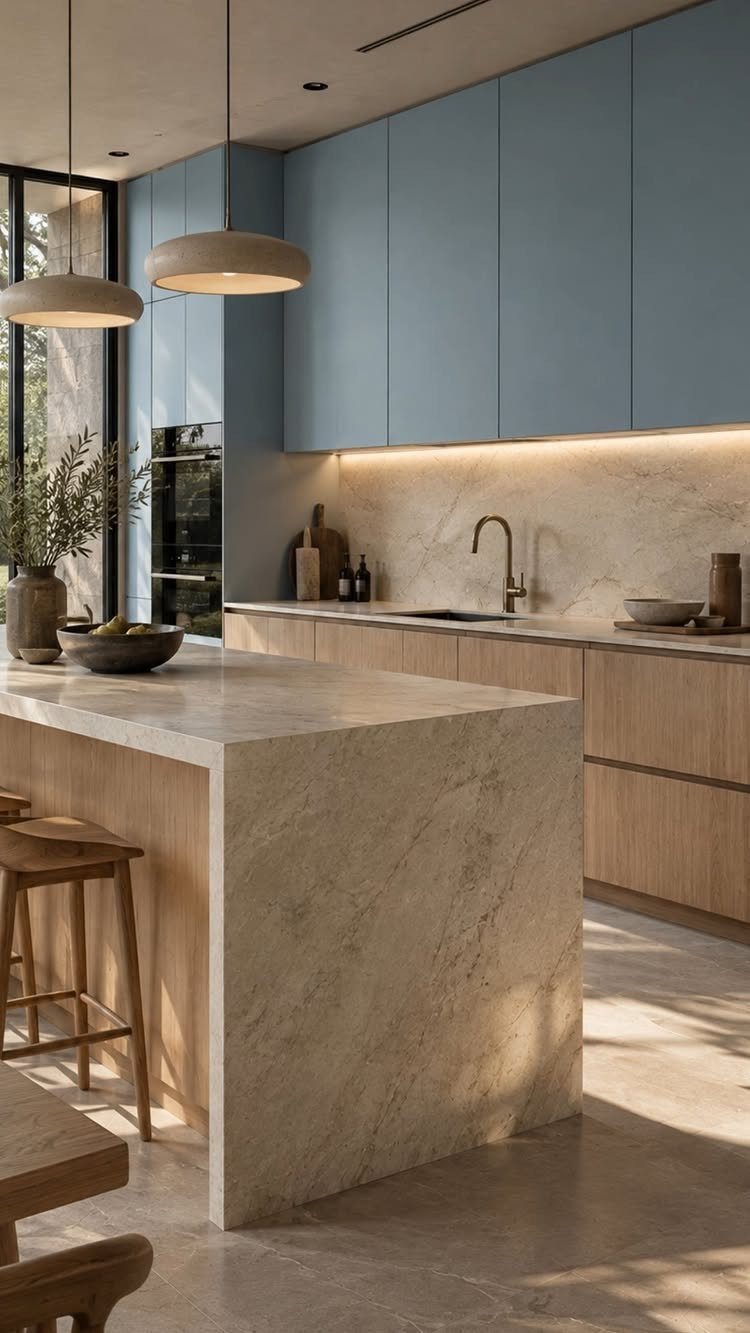
Pale blue uppers over light wood lowers read soft and airy, and they suit a kitchen with a window.
For a weekend job, paint is the budget route for the uppers. Choose a blue with a little gray in it, because a clear sky blue can look childish next to real wood.
9. Beige and Wood Grain
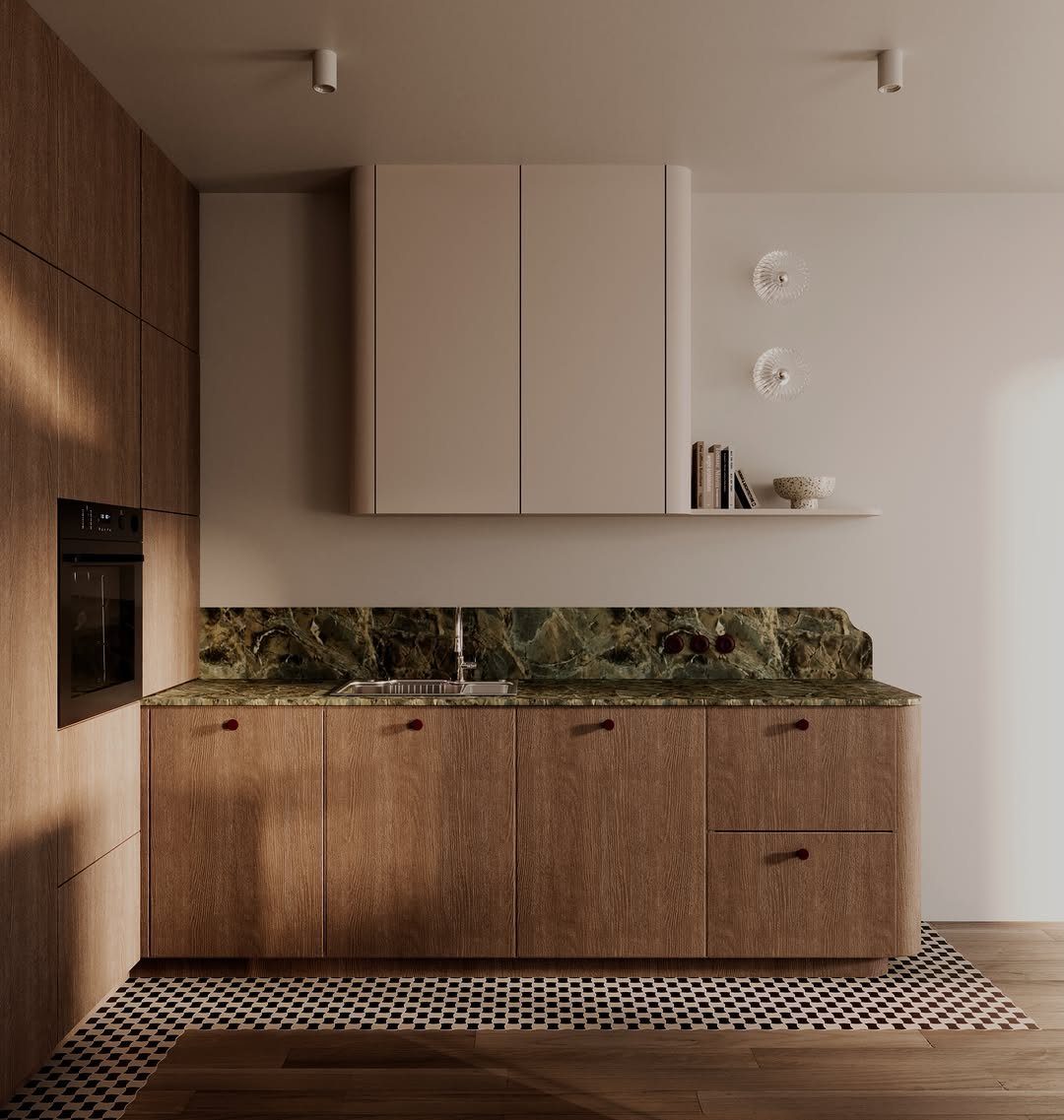
Beige uppers over wood-grain lowers is a quiet pairing, and a strong accent keeps it from going flat. Green marble does that here, picking up warmth from both cabinet tones.
I would keep the accent to one or two surfaces, such as the backsplash and countertop, and let the cabinets stay quiet.
Hold up a paint chip beside the wood before buying, because beige can turn yellow or pink next to certain grains.
10. Olive Green and Light Wood
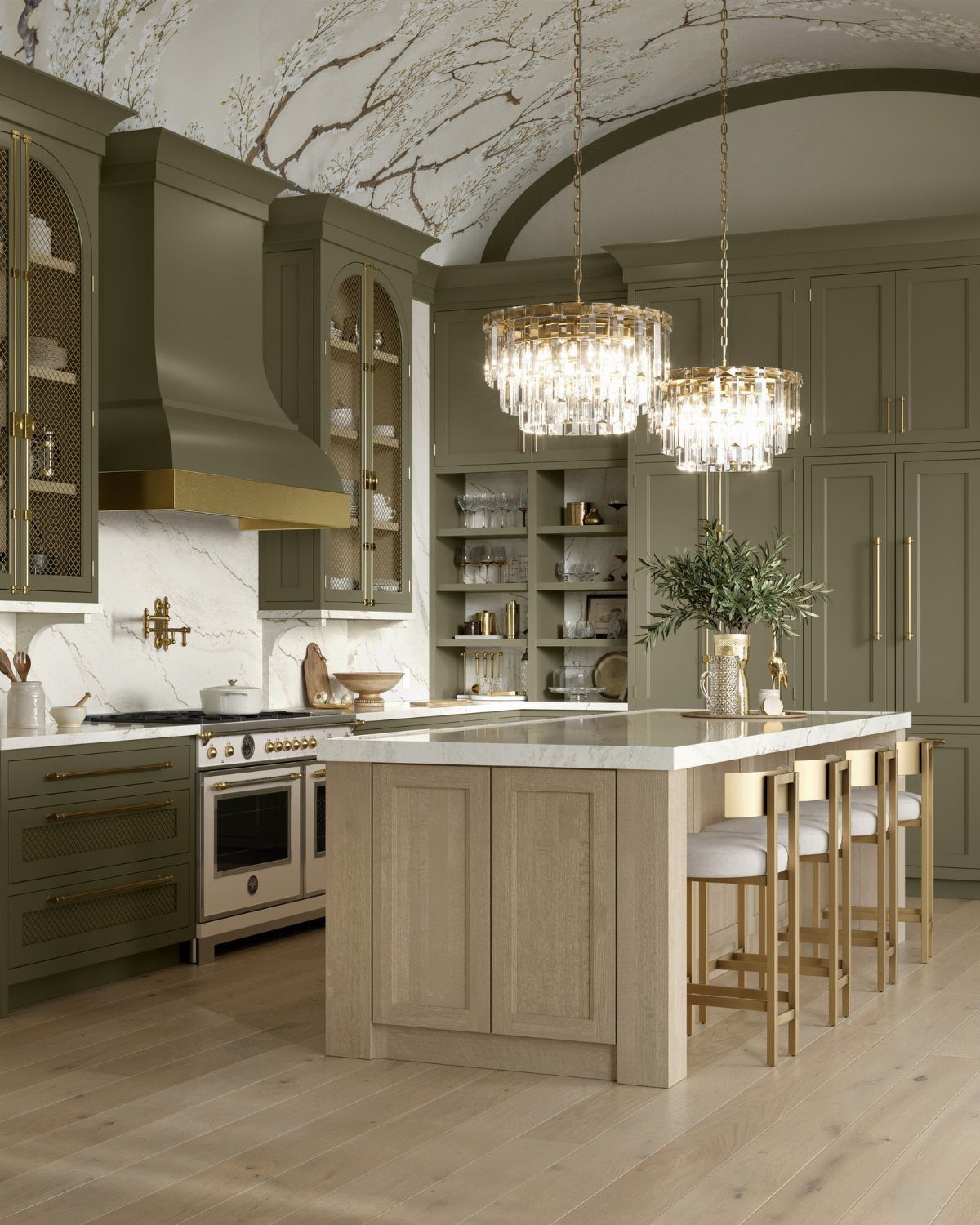
Olive green on the perimeter with a light wood island lets the island act as the room’s centerpiece. The green frames the walls, and the pale wood pulls the eye to where people gather.
If you have a limited budget, paint the perimeter cabinets and leave the island wood. Olive can go muddy in a dim room, so I would choose a slightly warm shade and test it on a door first.
11. Black Island with White Cabinets
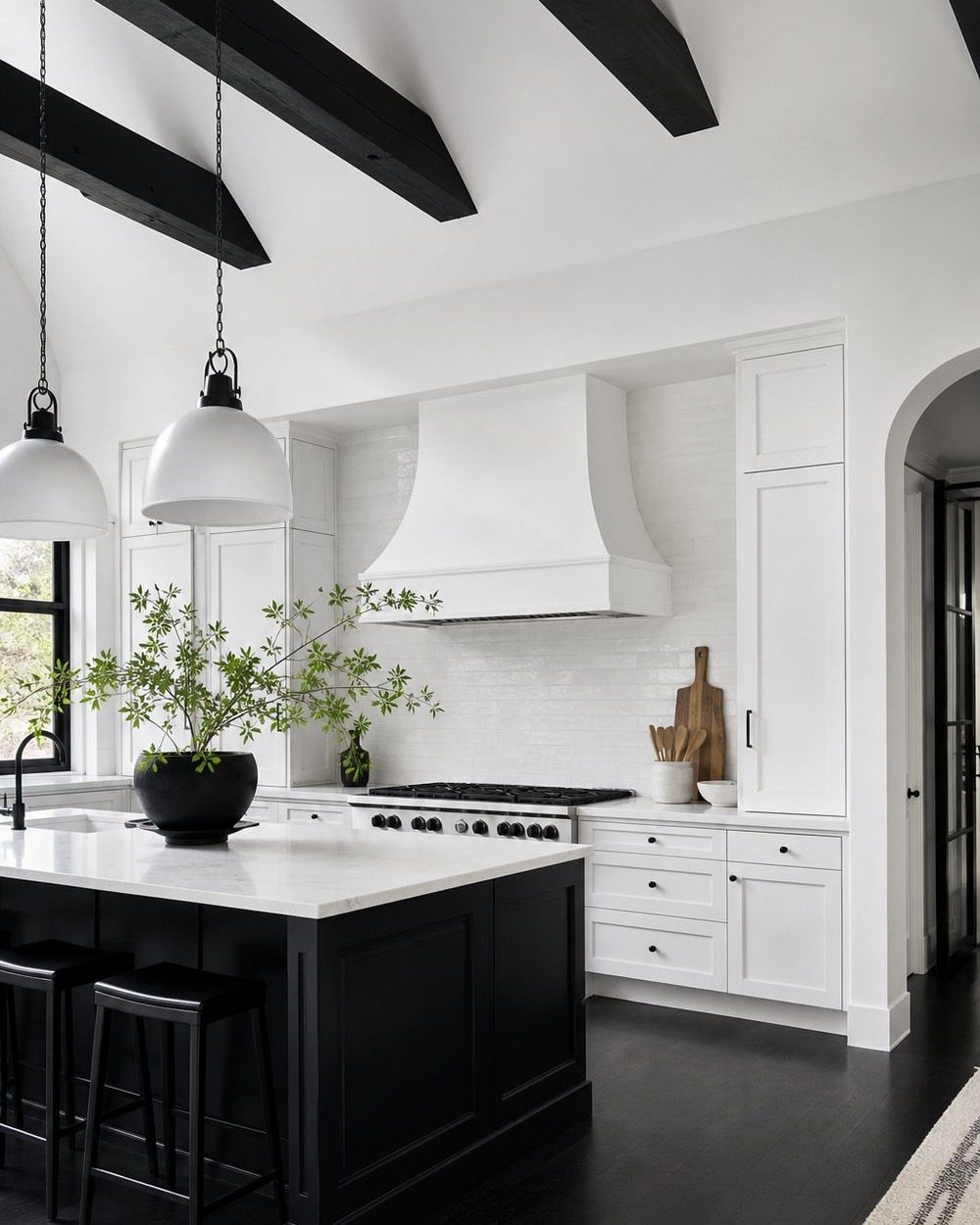
In an all-white kitchen, painting just the island black adds contrast for the price of one quart of cabinet paint and a weekend of work. The perimeter stays bright, and the island becomes the anchor.
White countertops on the island, as in this kitchen, keep the black from looking heavy. I would use a durable cabinet enamel on the island, because it takes the most daily bumps and fingerprints.
12. Black Upper and White Lower Cabinets
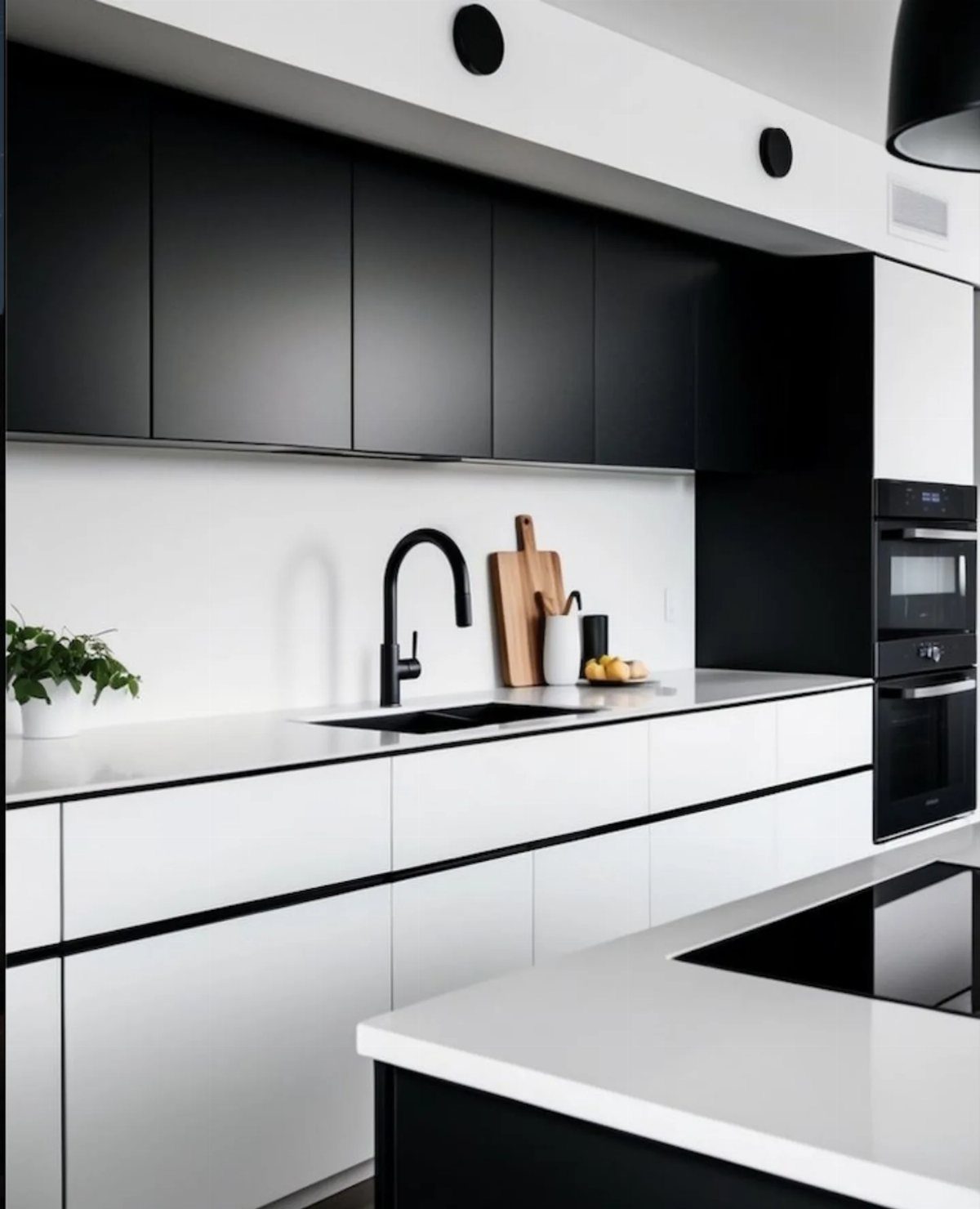
Matte black uppers over white lowers and white counters flips the usual dark-below rule, and it is bold. The white base keeps the work surfaces bright, which matters when the uppers absorb light.
I would try it only in a kitchen with good lighting, since black at eye level can feel heavy in a dim room. A black faucet repeats the upper color and makes the scheme look planned.
13. Grey and White Cabinets
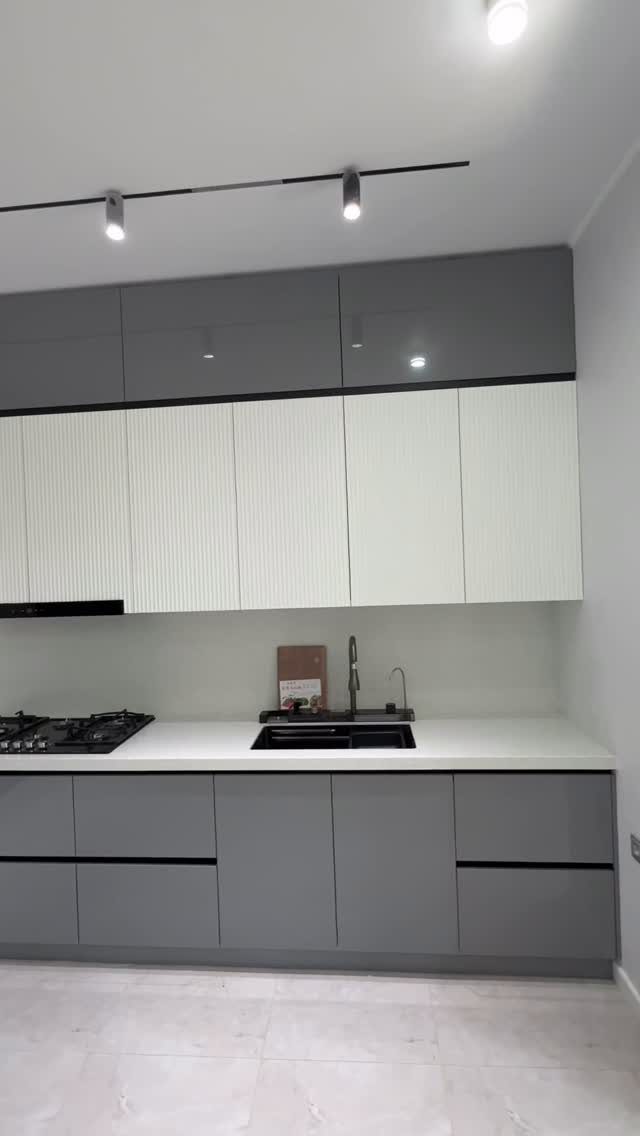
Grey on both the top and bottom runs, with a white ribbed band between them, makes one color feel like two. The white section breaks up a long wall of grey and puts the texture exactly where the eye lands.
White countertops keep that middle band from looking like a stray stripe.
I would paint the grey and leave the ribbed section as is, or add ribbed panels in white if the doors are flat. Pick a grey with a slight warm tint so it doesn’t turn cold next to the white.
14. Closed Cabinets with Open Shelving
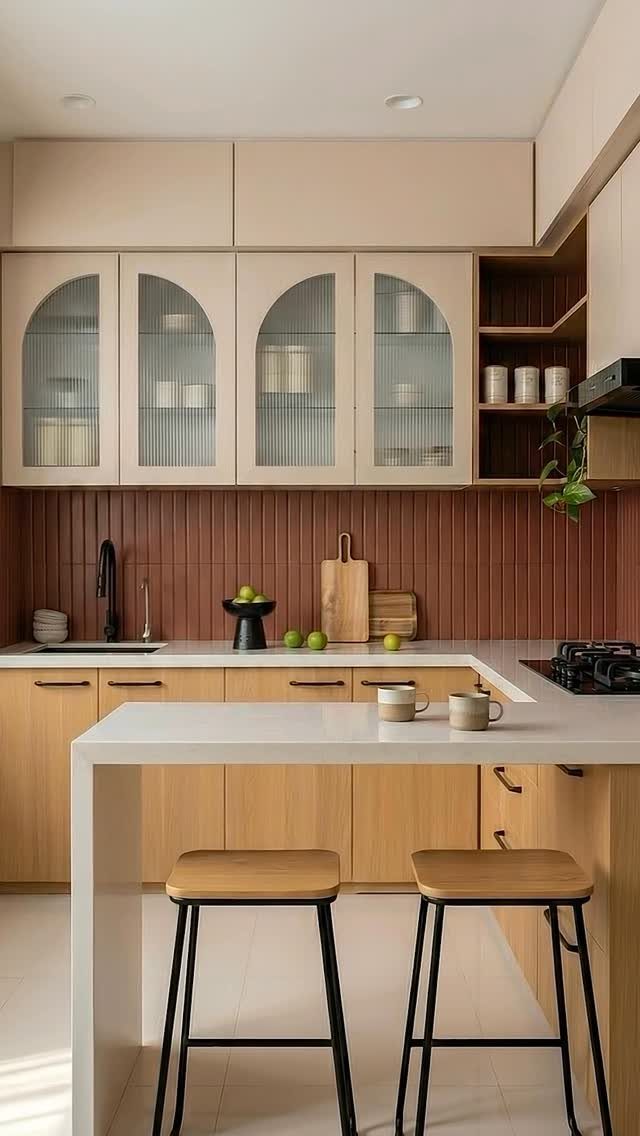
Closed cabinets with a stretch of open shelving give you a place to hide clutter and a place to show a few good things. Fluted glass doors sit between the two, since they blur what’s inside instead of exposing it.
For a weekend budget, take off one or two upper doors and add wood shelves in their place.
I would keep the open section short and limit it to everyday dishes you actually like looking at. Too much open shelving turns into a dusting chore.
Benefits of Two-Tone Cabinets
Two tones do a job that one color can’t: they mark off zones. Paint the perimeter one color and the island another, and the island reads as its own spot in the room.
Color placement also manages light.
Pale uppers reflect it and open the room, while darker lowers add weight and ground everything. That helps a small kitchen feel larger and keeps a big one from feeling lopsided.
A neutral base color has a quiet bonus. Later on, you can refresh the room with accessories or a new coat of paint on one set of cabinets, without redoing the whole kitchen.
Shaker doors gain too, since 2 tones can pick out their lines.
With the right colors, two-tone kitchen cabinets can be timeless. This popular design choice can bring depth and interest to the kitchen, creating some distinction between upper and lower cabinets or define different sections of the room.
— Bob Vila
Choosing Colors
Loving 2 colors separately doesn’t mean they’ll look good side by side on cabinet doors. Test both together before you buy gallons.
Start with the style of the room, then the size.
In compact rooms, I put the lighter tone on the uppers and the darker one on the base cabinets. A larger kitchen gives you more room to experiment.
Contrast needs a decision. Light against dark is the clearest pairing, while 2 related colors look softer.
Look at your countertops and flooring, and pick a pair that agrees with them.
When the two colors aren’t from the same family, pair a warm one, like greige or sage with a yellow base, with a cool one, like navy or slate, so neither fights the other.
Last, put samples on the doors and watch them through the day. Lighting changes how a color reads more than most people expect.
Common Mistakes to Avoid
Too much contrast for the room is the most common misstep. In a small kitchen, a stark split can chop the space into pieces, so soften it by choosing tones closer together.
Skipping the lighting check is next. A color that looked right in the store can shift once it’s under your own windows and bulbs.
Stop at 2 cabinet colors.
Cabinets also have to get along with the countertops and flooring, so judge all three together before you paint.
Finally, be careful chasing a trend. Pick colors you will still like in several years, since repainting cabinets is real work.
Frequently Asked Questions
Can you paint upper and lower cabinets different colors?
Yes, and it is one of the most common ways to do a two-tone kitchen.
If you own the place, painting just the lower cabinets is the fastest route in, since you can leave the uppers alone and still split the tones.
Test both colors together on a door first, because 2 shades you love separately can clash side by side.
Are two toned cabinets timeless?
They can be, if you choose the colors with care.
Neutral tones, wood finishes and classic Shaker doors give the look staying power. Choose colors you can live with for a few years at minimum, because stripping and recoating cabinets later is a multi-day job.
Should the darker color go on the upper or lower cabinets?
Put the darker color on the lowers in almost every case.
Light uppers pull the ceiling higher visually, which matters most when the kitchen runs small. Dark uppers can work in a bright room with good lighting, but they can close in a dim one.
Should the island be a different color from the perimeter cabinets?
Yes in most cases, and it gives you the safest test run for a two-tone scheme. An island already stands separate from the wall cabinets, so a new color reinforces that boundary instead of fighting it.
A black island in an otherwise white kitchen takes roughly a quart of paint and one full day of work. Use a hard enamel formulated for cabinets, because islands collect more wear than any other surface in the room.
Can you mix cabinet materials in one kitchen?
Yes, as long as you keep one thing consistent. Natural wood brings warmth when white feels too clinical, and you can limit it to a few doors, a side panel or a short run of open shelving.
Match the grain color across every wood surface, because mixed wood tones read as a planning error much faster than mixed paint colors do.





