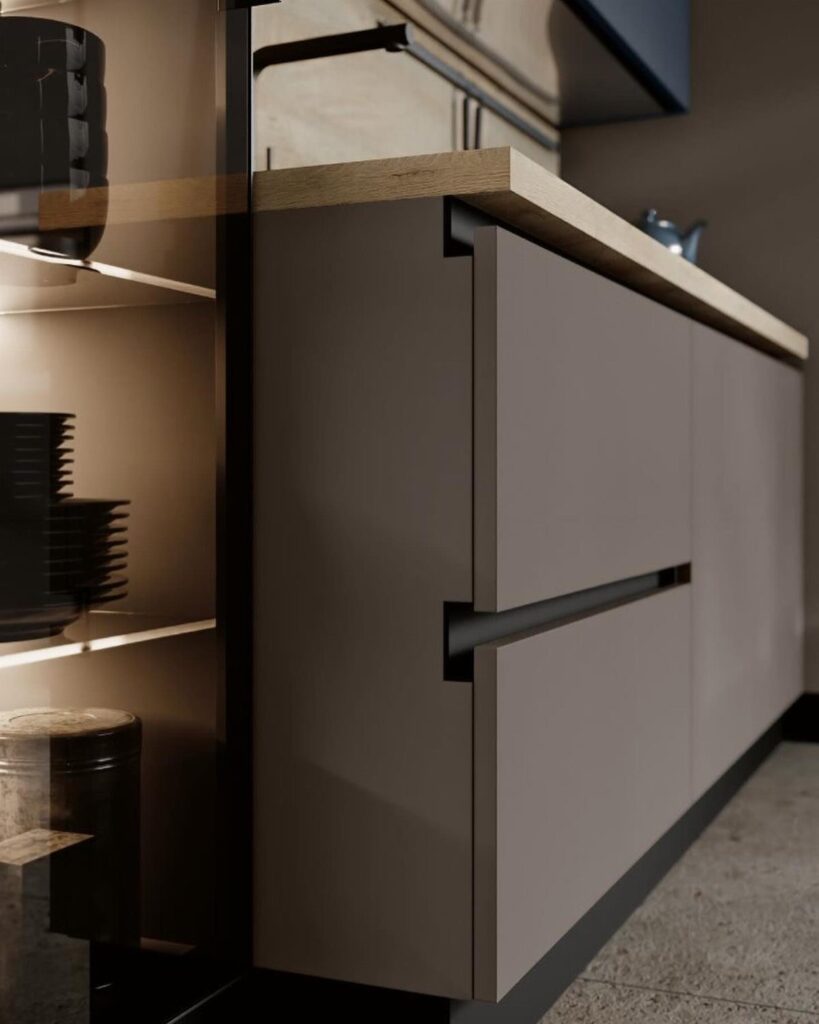
The ideas here run from push-to-open fronts with no hardware at all to a Gola profile or an integrated J-pull cut into each door, and what separates them is how your fingers will open the cabinet.
Whoever uses the kitchen should pick the style: long fingernails or limited hand strength can make a J-pull edge frustrating, while a push-to-open front needs only a light press.
1. Push-to-Open Handleless Kitchens
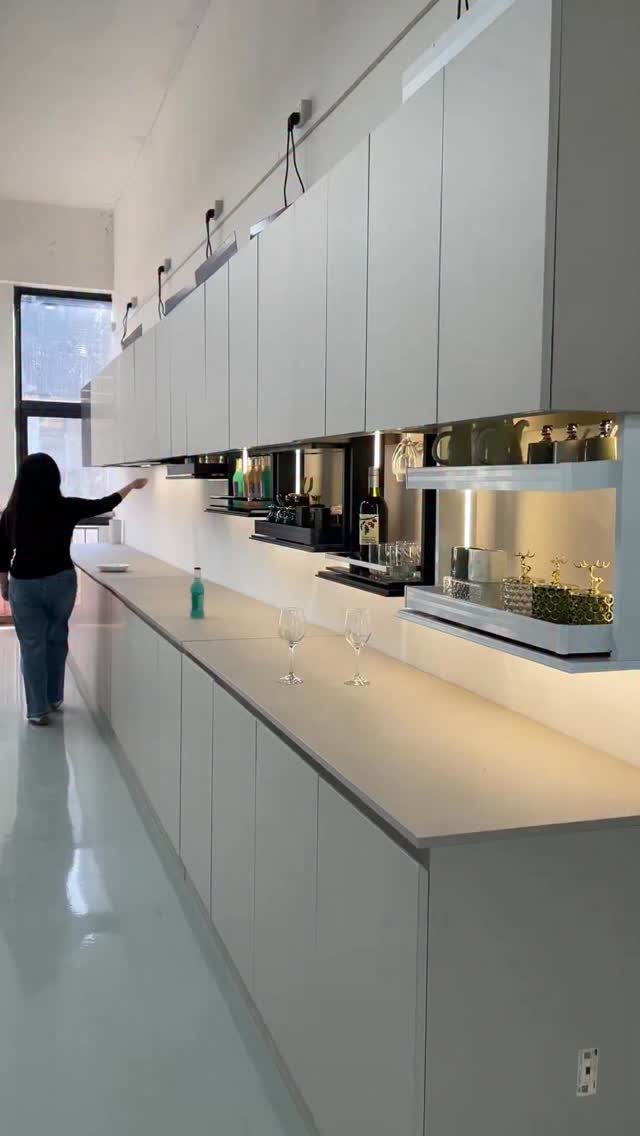
A light press on the door front is all a push-to-open kitchen asks for, which is why the fronts stay completely flat and uninterrupted. For anyone chasing a minimalist look on a budget, that smooth surface is the whole appeal.
Keep your hands in mind before committing. Fingerprints show on flat white fronts, so I’d keep a microfiber cloth in a drawer nearby.
Push the door near its edge rather than the center; it feels more natural and avoids smudging the middle of the panel.
2. Gola Profile Kitchen Cabinets
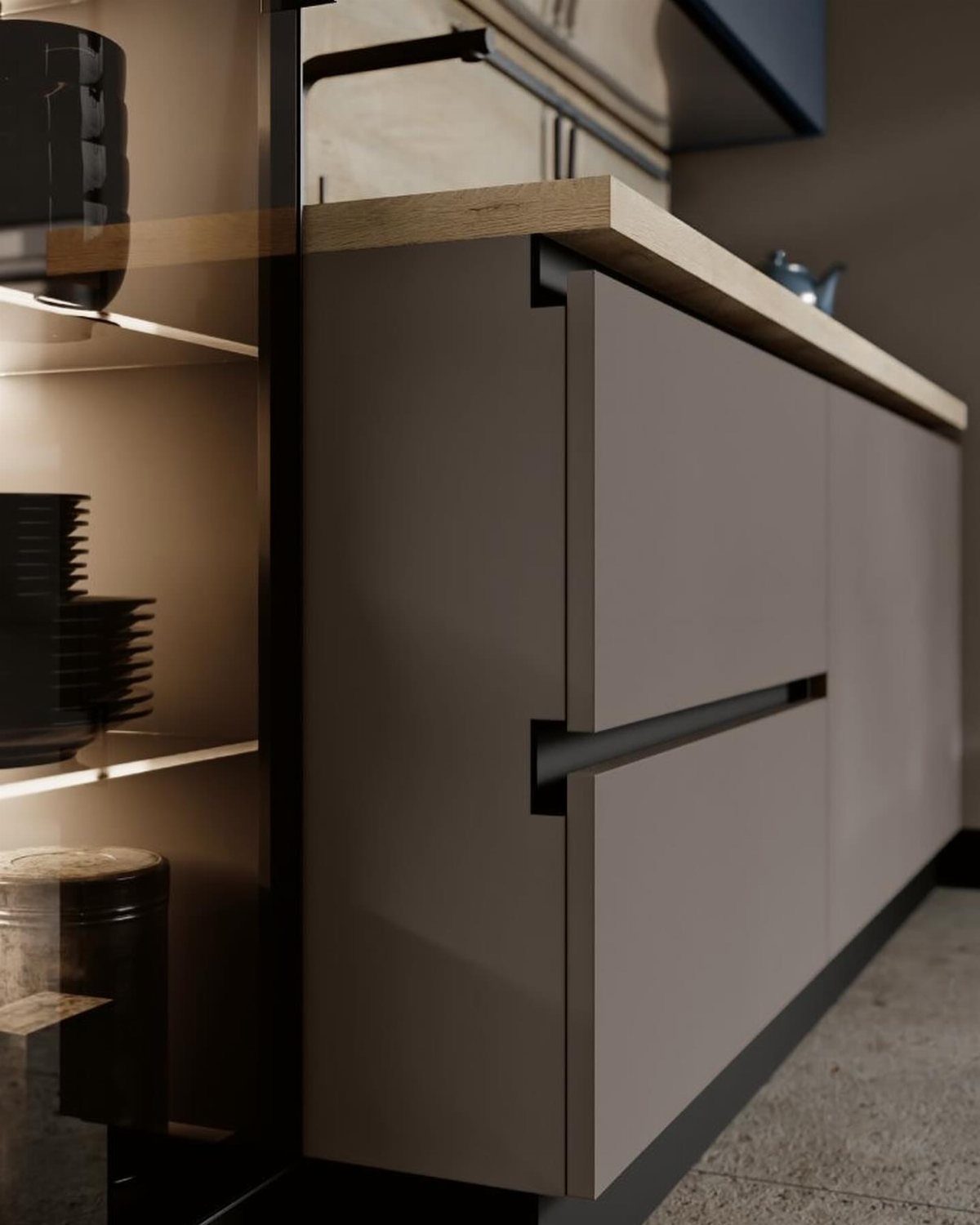
A Gola profile is a metal rail that runs along the cabinet edge, giving your fingers something to hook without a single knob on the door.
A black rail against matte grey cabinets reads as a deliberate line instead of hardware, so pick a rail color that contrasts with the door rather than matching it.
I like it because the rail doubles as a design detail, so the kitchen doesn’t look bare. Pick the rail color first, then match your faucet or lighting to it so the black repeats.
A light countertop keeps the dark rail from feeling heavy.
3. Two-Tone Kitchen Cabinets
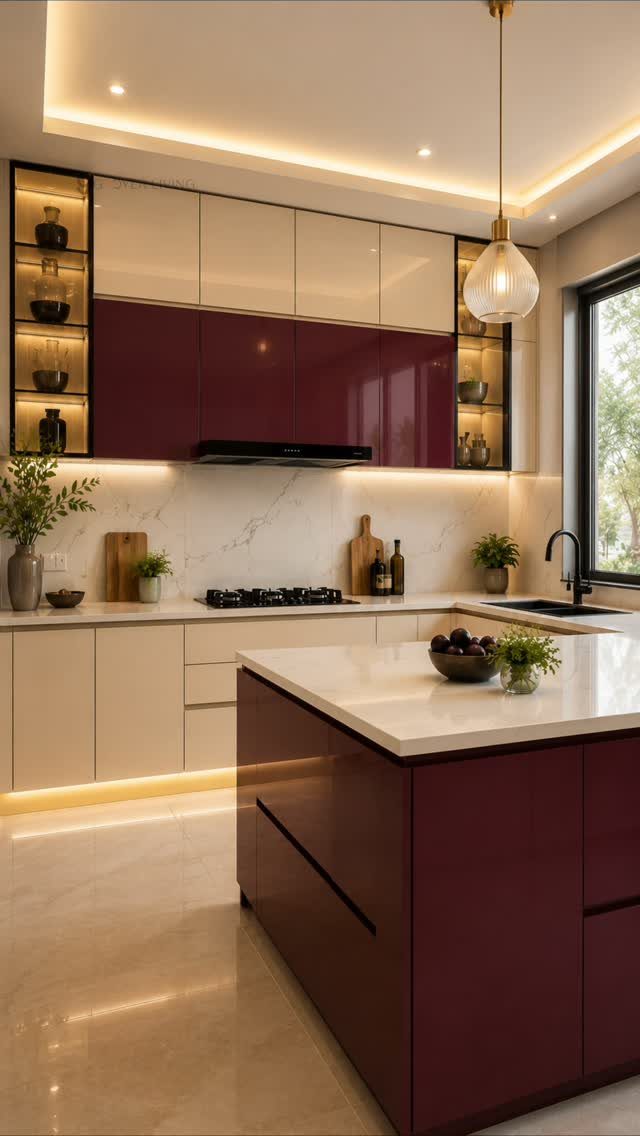
Burgundy below and cream above is the kind of pairing that makes handleless doors feel warm instead of stark. 2 colors give your eye something to land on when there’s no hardware to do it.
Put the deeper shade on the base cabinets and the island, then keep the lighter one up top. That keeps the room from feeling heavy, and the island can echo the lower color so the layout reads as one plan.
Add one metal accent, like a gold pendant, and stop there.
4. Matte and Glossy Handleless Cabinets
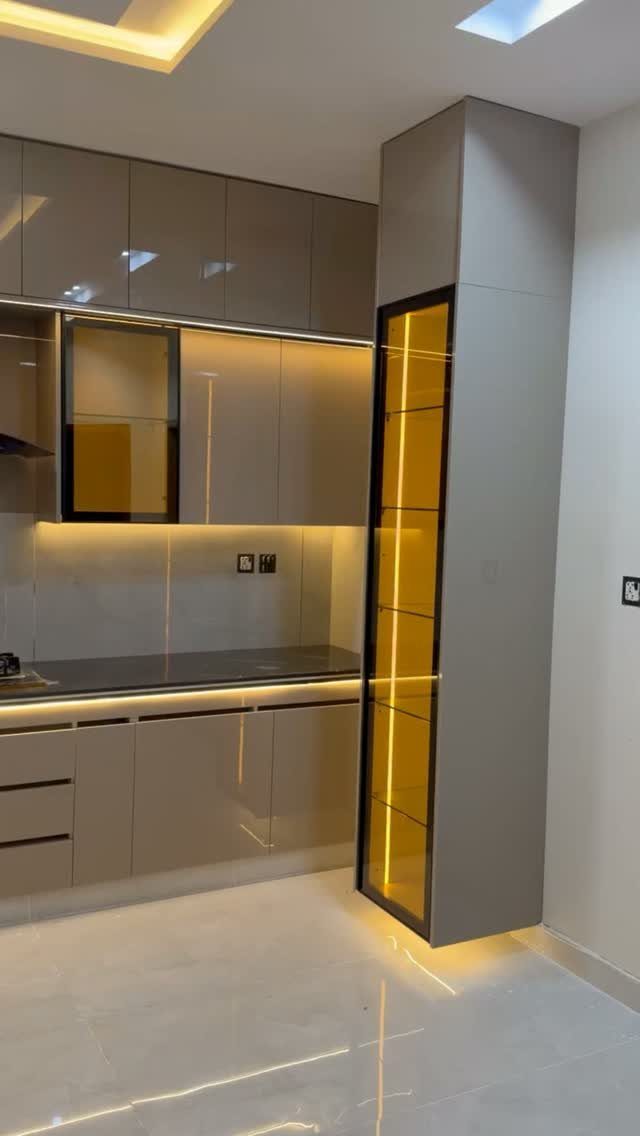
Mixing matte and glossy fronts lets one color behave like two. Gloss bounces light around the room and matte hides smudges, so I’d put gloss where you want brightness and matte on the cabinets you touch most.
Matte and glossy fronts look best when something nearby gives the contrast a place to show, such as a tall glass-fronted cabinet with interior lighting or a dark countertop.
Keep the palette to one color family, such as grey or beige. The finishes then supply the variety, and the kitchen stays calm instead of busy.
5. Open Shelving Accent Cabinets
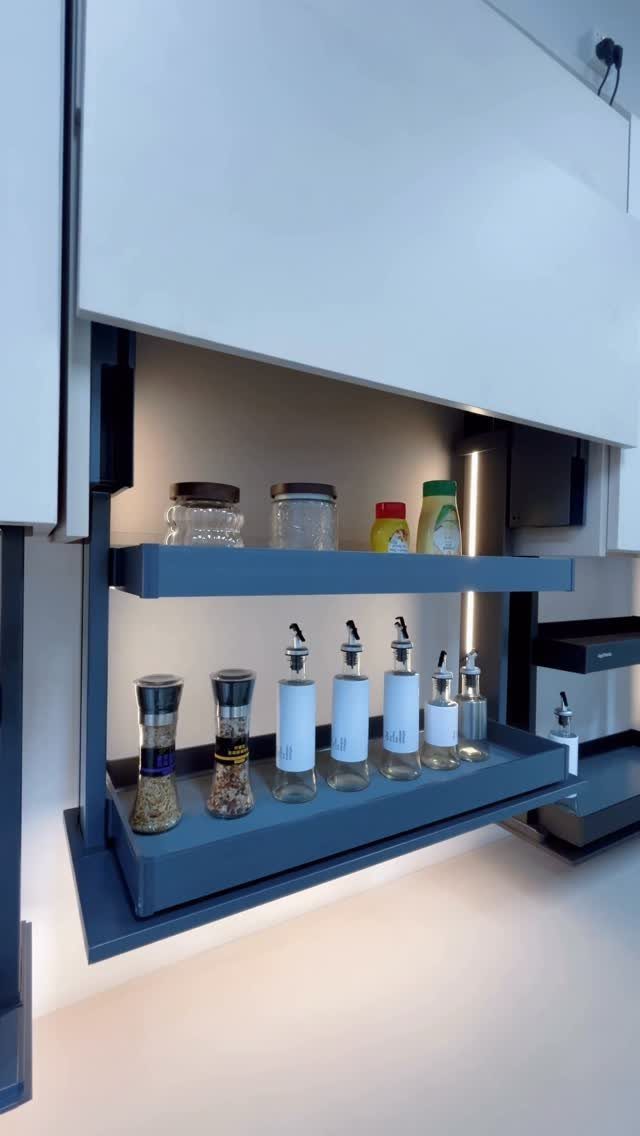
Swapping a few upper doors for one open shelf breaks up a wall of closed fronts. A blue-grey shelf between white handleless cabinets adds color without a single extra knob.
I’d use it for the things you grab daily: spice jars and oil bottles within reach of the stove. Closed cabinets hide the clutter, while the shelf shows only what you’ve chosen to display.
Matching jars help a lot here, because open shelves make mismatched labels obvious.
6. Integrated J-Pull Wood Cabinets
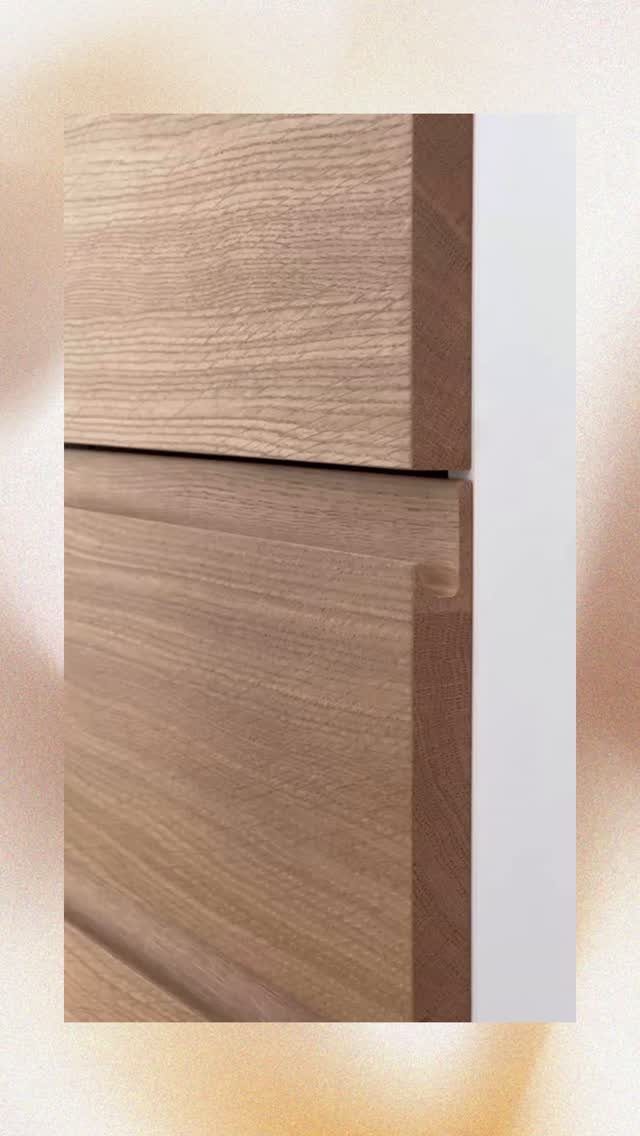
Cut into the top edge of each door, a J-pull channel gives your fingers a built-in lip to catch, so light natural wood keeps its grain unbroken by hardware.
It’s my pick for anyone who wants handleless without a cold, glossy look.
Wood grain does the decorating, so keep the countertop and walls simple. Pale surfaces let the grain stand out.
Before ordering, test the grip depth with your own hand; the channel needs to feel easy for everyone using the kitchen.
7. Minimalist Grey Flat-Panel Cabinets
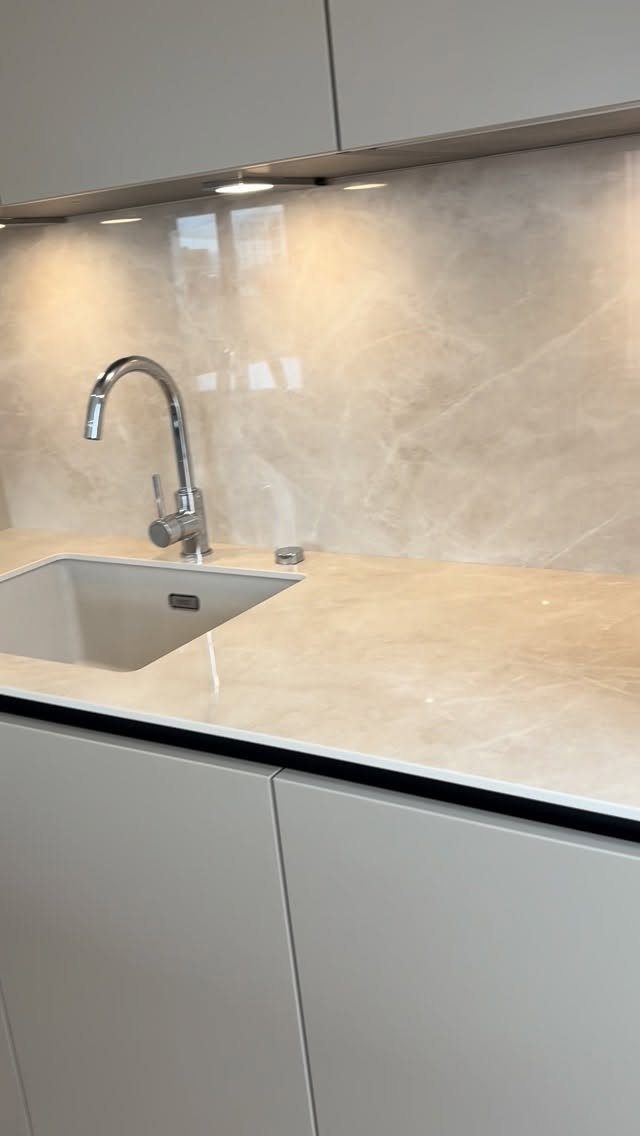
Grey fronts with a beige marble-effect countertop and matching backsplash make a calmer pair than grey with white. The warm stone softens the cool cabinets, so a flat-panel door with no hardware feels restrained instead of cold.
I’d carry the beige up the wall behind the sink, as this look does, so the counter and backsplash read as one surface. Chrome is the metal to pick here; it stays quiet next to grey.
Choose a mid-grey rather than a very dark one if your kitchen is small.
8. All-White Handleless Kitchen Cabinets
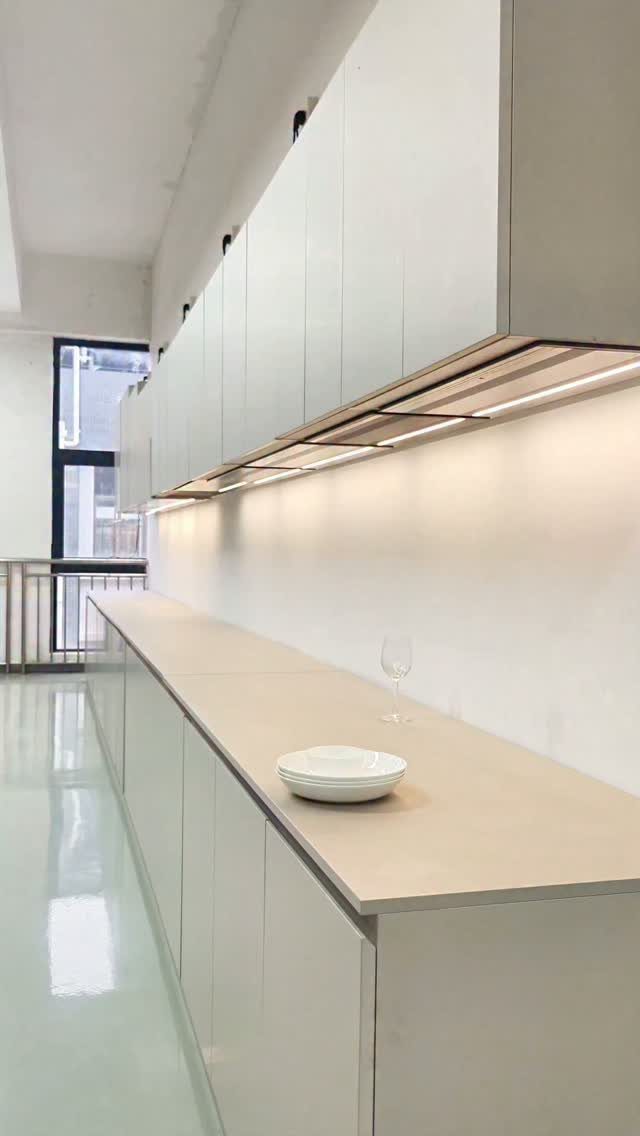
Under-cabinet lighting does the work hardware usually does in a white handleless kitchen: it draws a line along the bottom of the uppers and gives the long, flat fronts some depth.
Without it, an all-white run can look like a plain wall.
Pair the white with a light countertop, and keep the counter nearly clear. A single plate or glass is plenty.
White shows every smudge on flat fronts, so I’d choose a finish that wipes clean easily.
9. Cream Handleless Cabinets
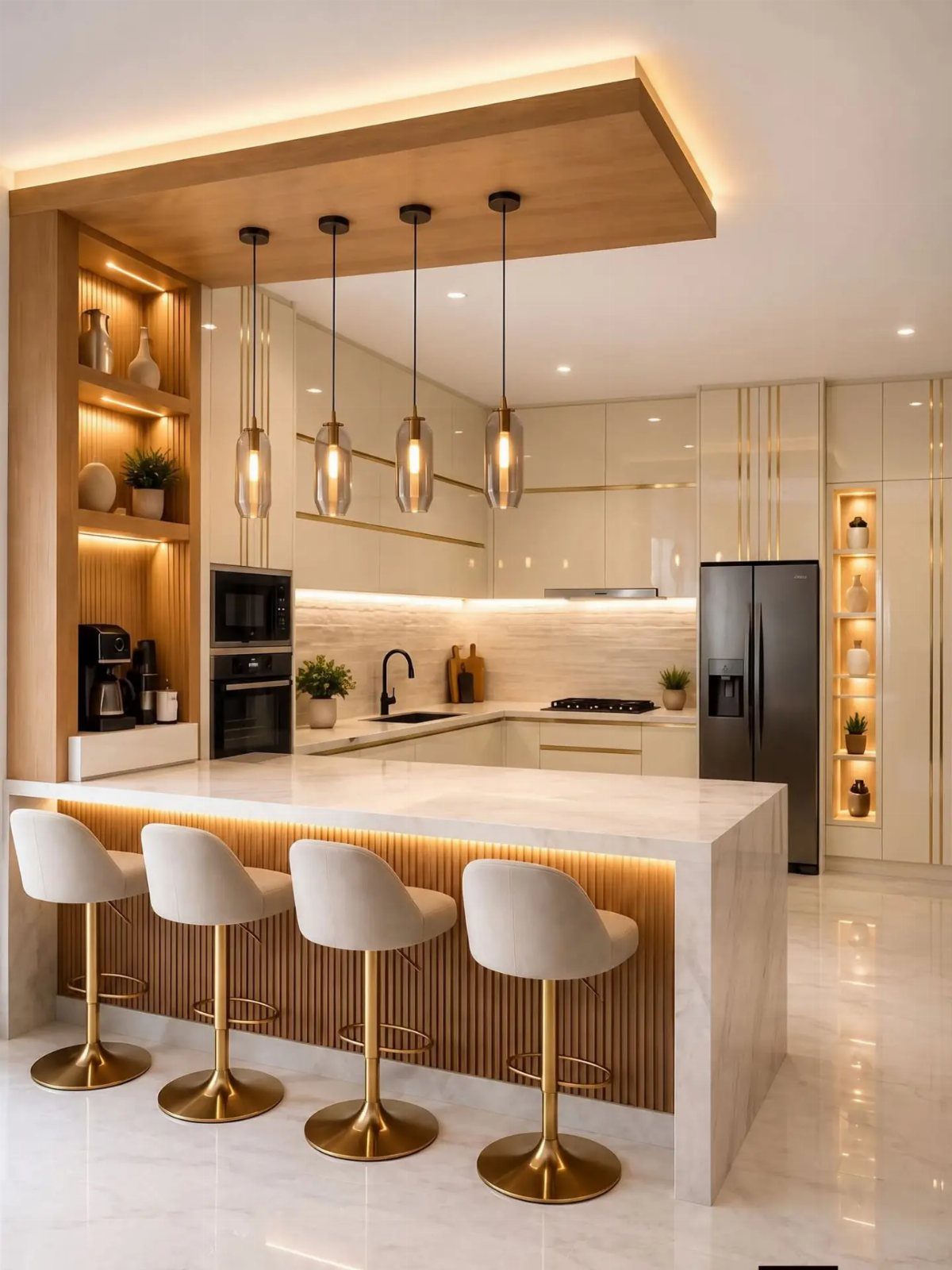
Cream is white with a little warmth, and on handleless doors that warmth keeps a big run of cabinets from looking clinical. Against a white marble island, the two tones stay close enough to feel like one palette.
Gold-based barstools and warm pendant lights pick up the yellow in the cream. I’d hang one pendant per stool so the island has a steady rhythm.
A black refrigerator gives the soft palette one dark anchor, which I like. Skip it if you want the room as light as possible.
Pros of Handleless Kitchens
Cleaning is the biggest everyday win. With no handles to work around, one swipe of a cloth covers the whole front, and nothing collects in the spots a sponge can’t reach.
Small kitchens gain the most. Without handles, there’s nothing to stub a hip on or snag a sleeve on, which matters even more with kids running through.
A smooth run of fronts also reads as one calm surface, so the kitchen blends into an open living area instead of competing with it.
I’d call it the better pick for tight layouts and open plans. The look takes a little getting used to, but the daily benefits show up fast.
Cons of Handleless Kitchens
Cleaning is where handleless kitchens can work against you. Dust, crumbs and fingerprints settle into the grooves and show up on high-gloss surfaces, so a handleless kitchen in gloss gets wiped down more often than one with matte doors.
If that bothers you, choose push-to-open. It has no recessed grooves, so there’s nothing for crumbs to collect in.
Cost is the other drawback, since handleless systems usually run higher than standard doors with hardware. Set your budget before you fall for a style.
Plan for a short learning curve too. Guests and family members used to handles may fumble at first, so show them where to press or pull.
Practical Considerations
Before you commit, think about everyone who’ll use the kitchen. Long fingernails can make a grip-style opening frustrating, and limited hand strength can make some types harder to work than others.
I’d test a sample door or a showroom display with the hands that will use it daily. Open and close a drawer a dozen times, with a full load if you can.
If one style fails the test, don’t give up on the look. Several handleless options exist, and one of them will likely suit your household better than the first one you tried.
Frequently Asked Questions
Do kitchen cabinets need handles or no handles?
Neither is required; it depends on the look and the household.
No handles gives a cleaner, calmer surface and suits small kitchens and open plans. Handles suit traditional or farmhouse styles and people who prefer something to grab.
Long nails or weak grip strength can make finger-pull and edge-grip openings frustrating, so try a sample door first and open it a dozen times before you commit.
What type of cabinet has no handles?
Handleless cabinets, which open through a built-in feature instead of a knob or pull.
Common versions are push-to-open doors that release with a light press, Gola rails (a metal channel along the edge your fingers hook into), and J-pull doors with a channel cut into the top edge.
Each keeps the front smooth and uninterrupted.
How do you open a cabinet with no handle?
It depends on the system. Push-to-open doors respond best to a light press near the outer edge, away from the center, and that spot also keeps fingerprints off the middle of the panel.
On Gola or J-pull cabinets, hook your fingers into the rail or channel and pull. Show guests where to press or pull, since they may fumble at first.





