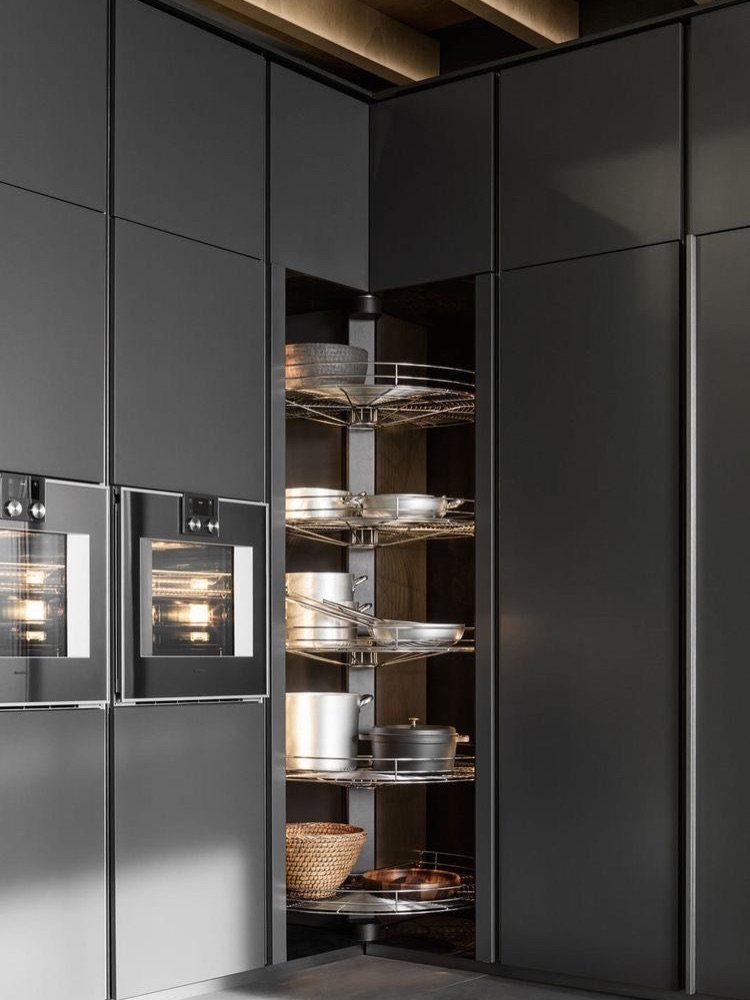
Corner fixes in this list run from open shelves, which cost a fraction of a cabinet with moving parts, to a magic corner that pulls multi-tiered storage out of a blind cabinet and costs more than fixed shelves.
What you keep in the corner decides which one is yours: heavy pots call for a pull-out or fold-out shelf, small jars for a pull-down rack, and wine bottles for a dedicated wine rack cabinet.
1. Lazy Susan
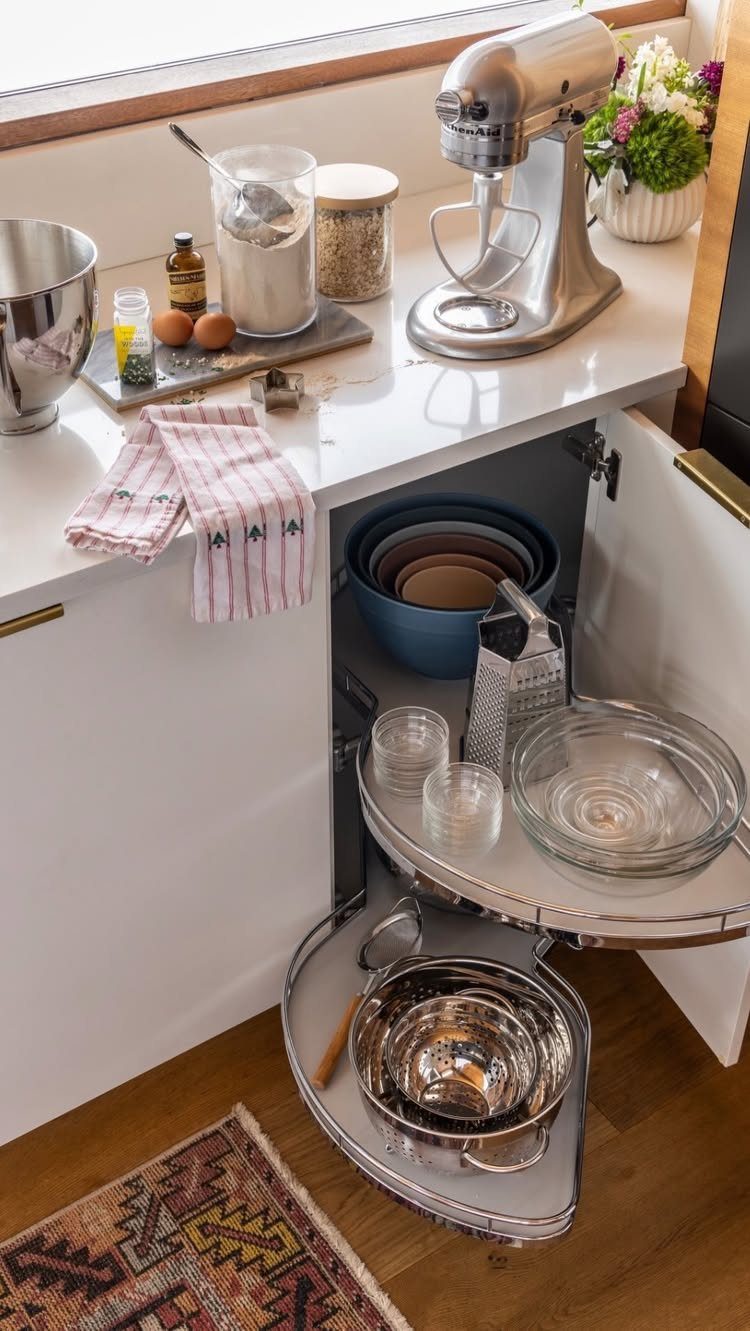
A Lazy Susan turns a dead corner into a spin-and-grab shelf, and for bowls, glasses and baking gear it’s the version I’d choose first.
Round or kidney-shaped shelves bring the back of the cabinet to your hand, so nothing gets lost behind the front items.
Heavy mixing bowls belong on the lowest shelf, with lighter glasses above, so the turntable stays balanced and spins easily. A metal finish wipes clean easily after baking spills.
2. Corner Drawers
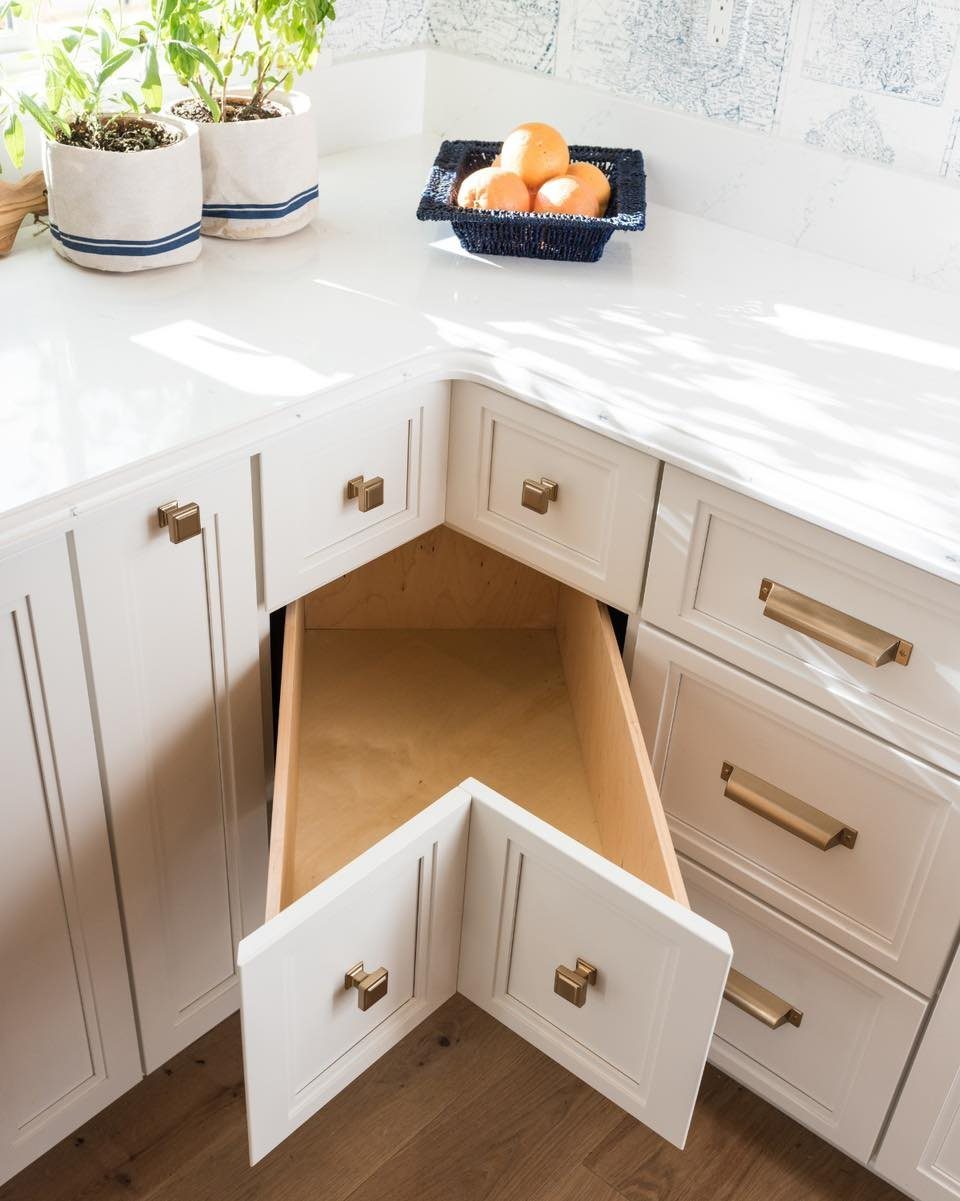
Drawers that fan out from the corner give a V-shaped pull, so you see everything from above instead of reaching into a dark cavity.
Pots, lids and bakeware suit this setup better than small items, which slide around in the angled space.
Gold hardware like this adds a finishing touch, but any pull works. Plan the layout before ordering, since the angled drawer needs clear floor space in front to open fully.
3. Corner Shelves
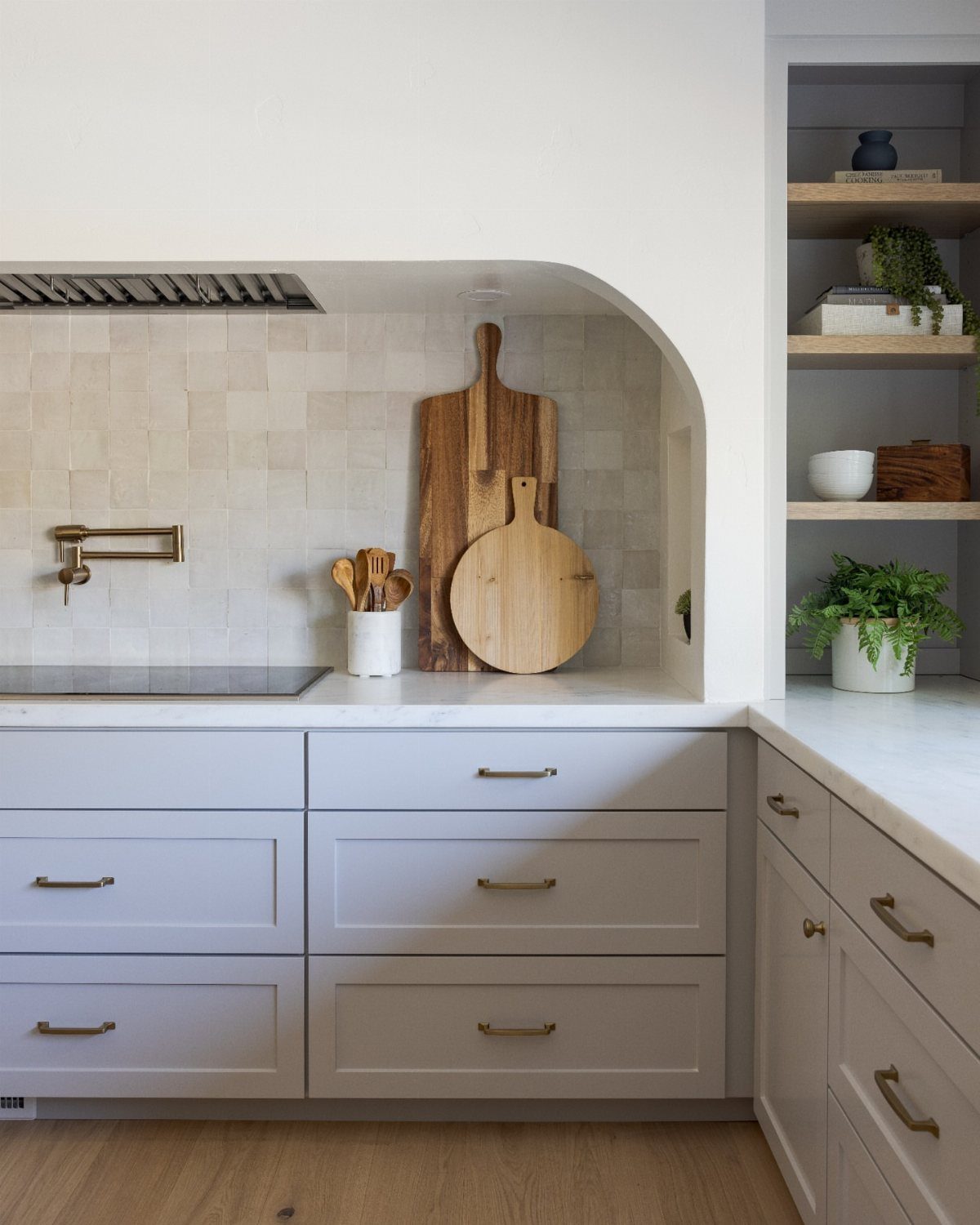
Open wooden shelves wrapped into a corner swap closed storage for a display spot. Plants, books and a few bowls look good here, and open shelves run a fraction of what a cabinet with moving parts costs.
I’d keep it to everyday dishes and a couple of decor pieces, because open shelves show clutter instantly. Dust and grease settle on them too, so expect to wipe them down regularly.
4. Magic Corner
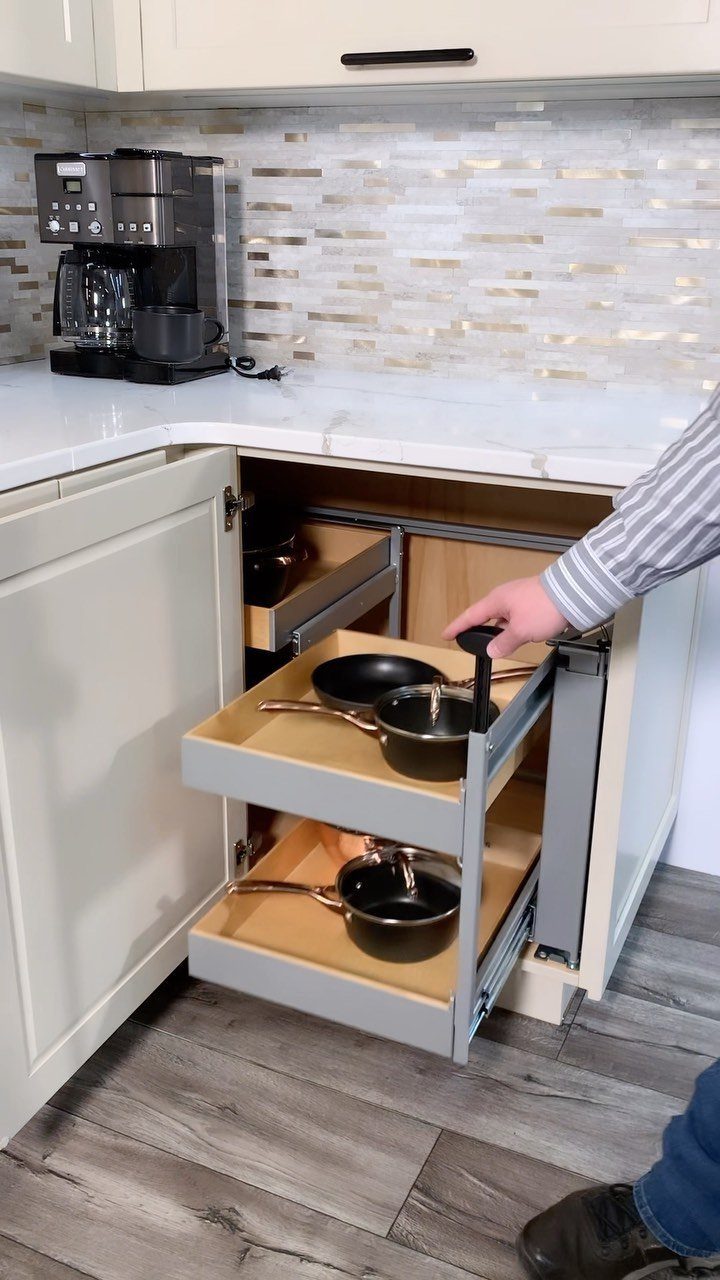
A magic corner pulls multi-tiered shelving out of a blind cabinet so the deepest pans come forward to you. Frying pans and heavy cookware sit well on the tiers, and you never have to kneel and reach.
If you’re renovating, choose this over a plain blind cabinet. It costs more than fixed shelves, but the stored items stay usable.
5. Blind Corner Pull-Out
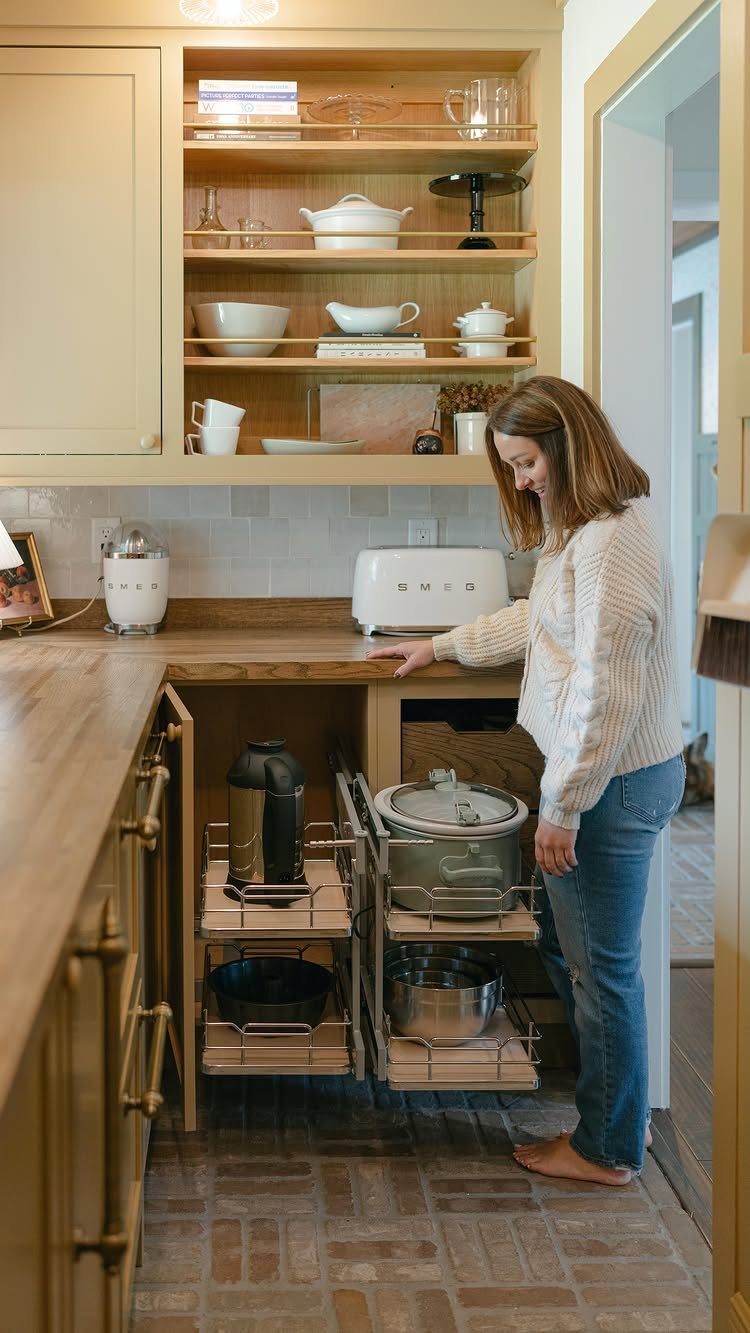
Hidden corner space is only useful if you can reach it, and a blind corner pull-out slides a tiered metal rack out to meet you.
It suits cabinets where the door opens onto a deep, narrow gap that otherwise swallows pots and pantry items.
Measure the opening before buying, since the rack must clear the door frame. Metal tiers handle weight well, so stack the heaviest items low.
6. Pull-Down Mechanism
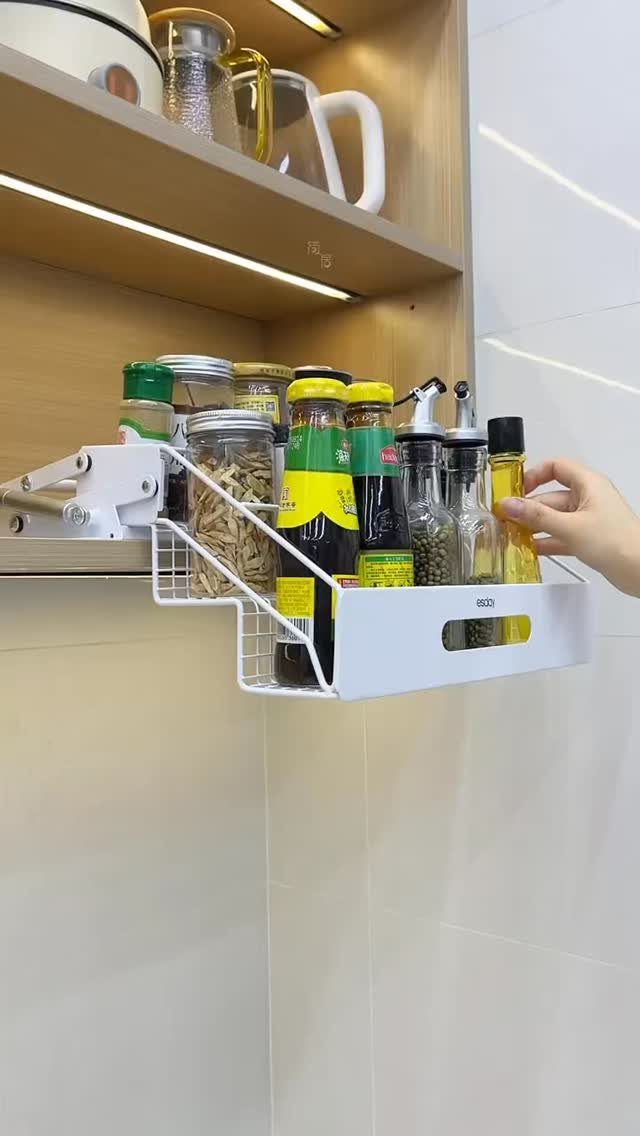
Under a wall cabinet, a pull-down shelf lowers condiments and jars to counter height, so high storage stops being a stretch. A pull-down rack suits bottles and small jars best, since the shallow shelves can’t hold anything bulky or heavy.
I’d save this for items you grab daily, like oils and sauces. Check that the cabinet interior is deep enough for the shelf to swing down without hitting anything.
7. Appliance Garage
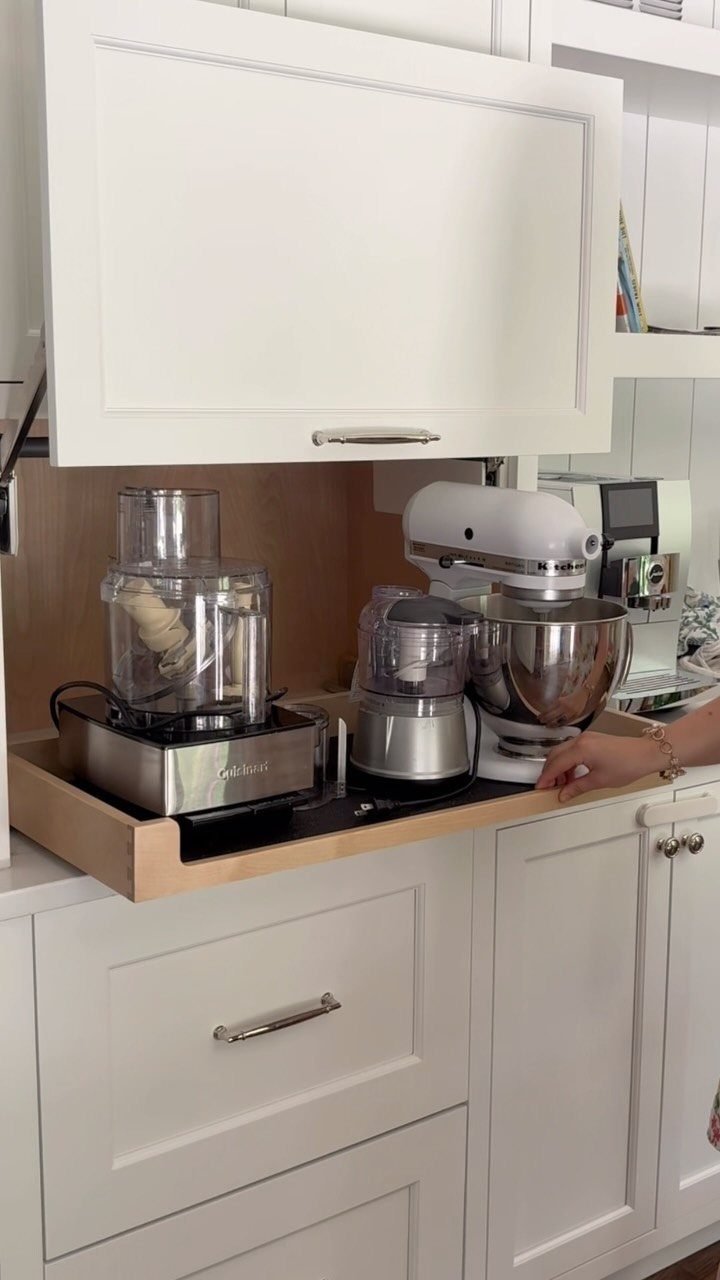
A lift-up door turns a corner cabinet into a hideout for the mixer and food processor, so the counter stays clear and the heavy machines stay within reach.
Lifting the door and sliding the appliance out beats hauling it down from a high shelf.
Leave the machines where you use them most, and keep the cords tucked inside. Measure the mixer’s height with its head up before you settle on the shelf spacing.
8. Fold-Out Corner Shelves
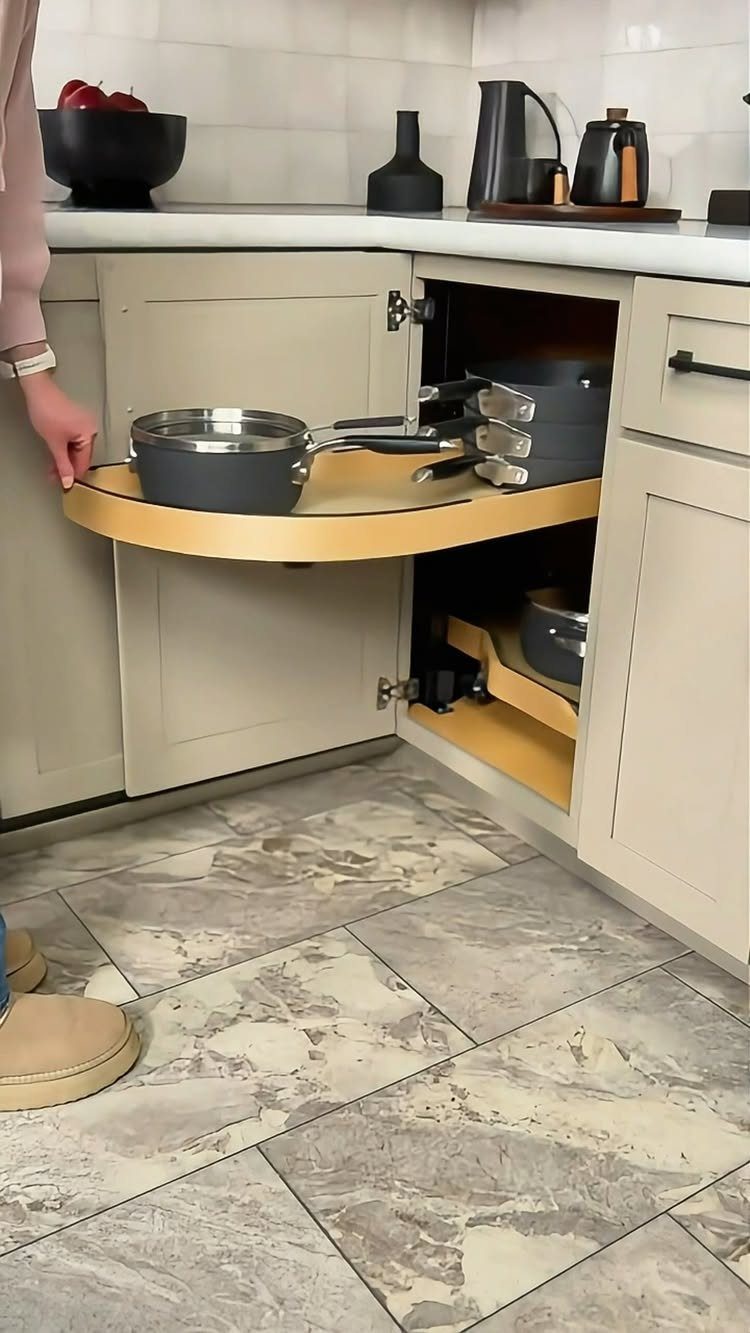
Shelves that pivot out on a hinge bring pots and pans to the front of a corner cabinet, so you stop crouching to reach the back.
Grey cookware like this sits well on a fold-out shelf, since the weight rests low and close to the door.
I’d pick this over a fixed shelf if the cabinet is already deep. Check the door swing first, because the shelves need room to open fully.
9. Glass-Front Cabinets
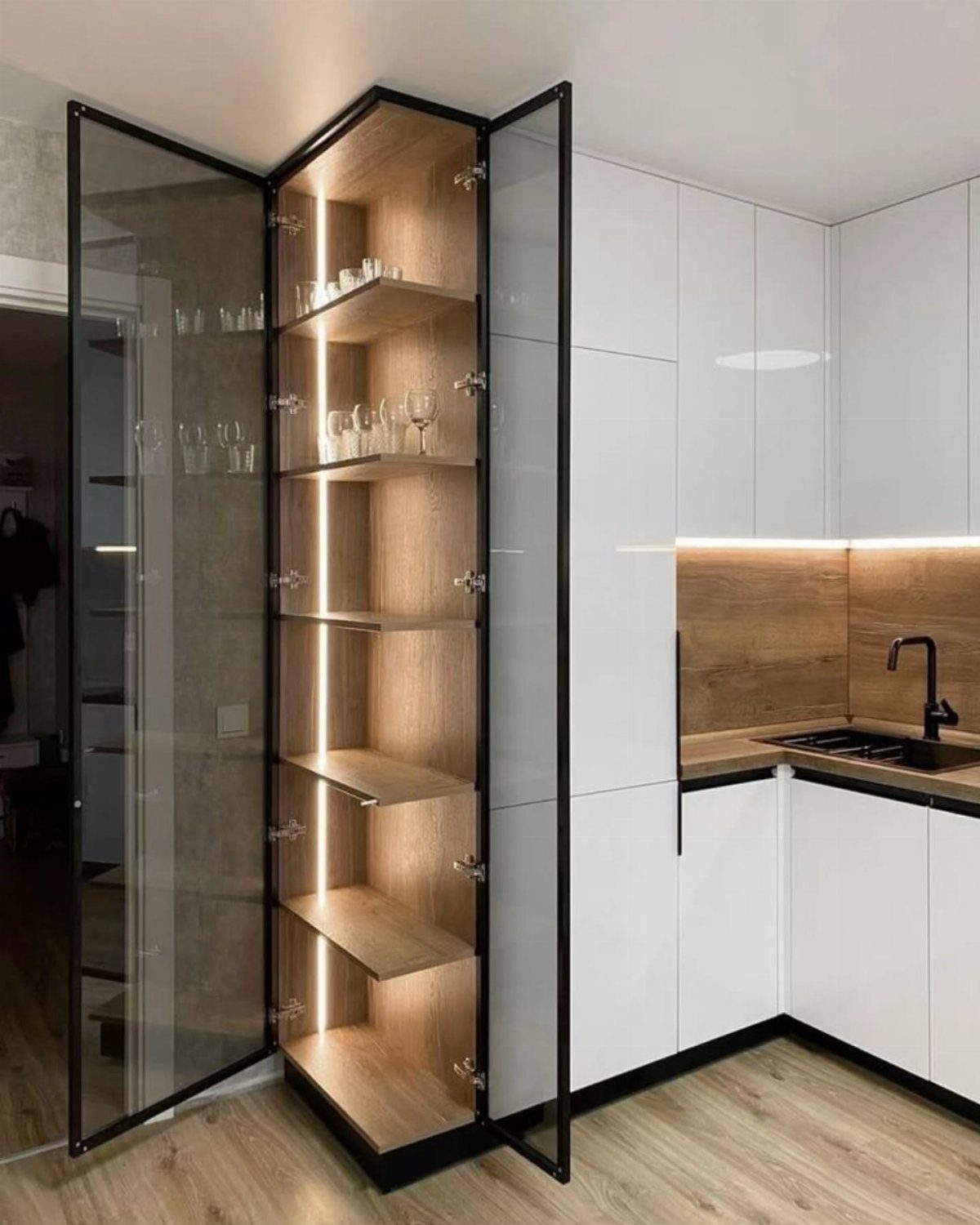
Glass doors with built-in lighting make a corner cabinet a display, and wine and water glasses are the right thing to put behind them. Light passing through stemware looks better than a stack of plates ever will.
Keep the contents tidy, because everything shows.
I’d store only matching glasses here and put mismatched mugs behind solid doors elsewhere. Wipe the glass regularly, since fingerprints show against the light.
10. Corner Pantry Cabinet
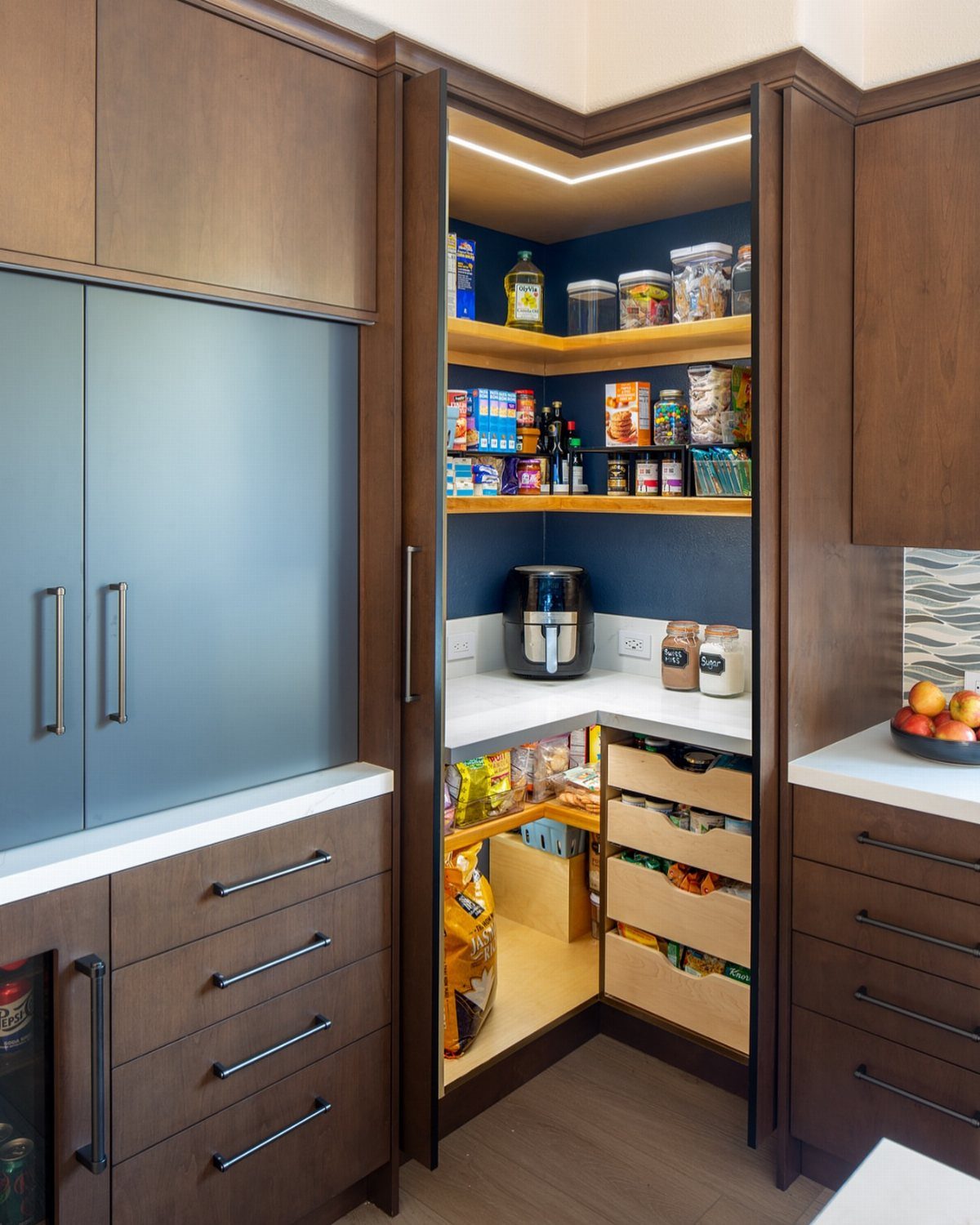
A tall corner pantry gives dry goods a home with shelves for boxes and cans, plus pull-out bins for loose items. Putting a coffee maker on one shelf also makes it a small station.
Group the food by use: breakfast things together, baking supplies together. Keep everyday items at eye level and place the bins low, where you can see into them from above.
11. Corner Sink Cabinet
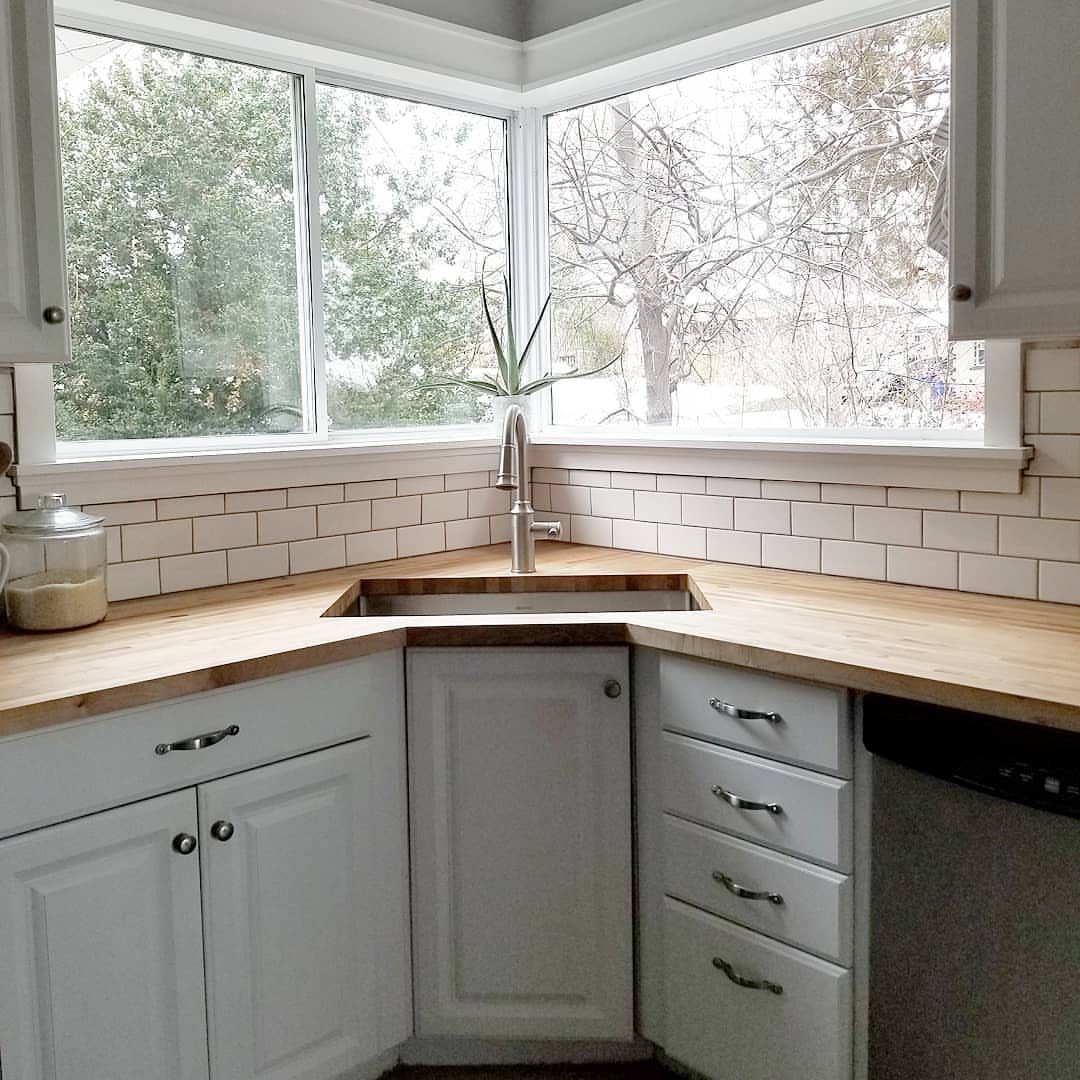
Putting the sink in the corner makes the most of space that is otherwise awkward, and it sets the basin right under a pair of windows.
Wood near a sink needs a good sealant, so seal it well and wipe up standing water. I’d choose this layout when the windows are already in the corner.
12. Triangular Base Corner Cabinets
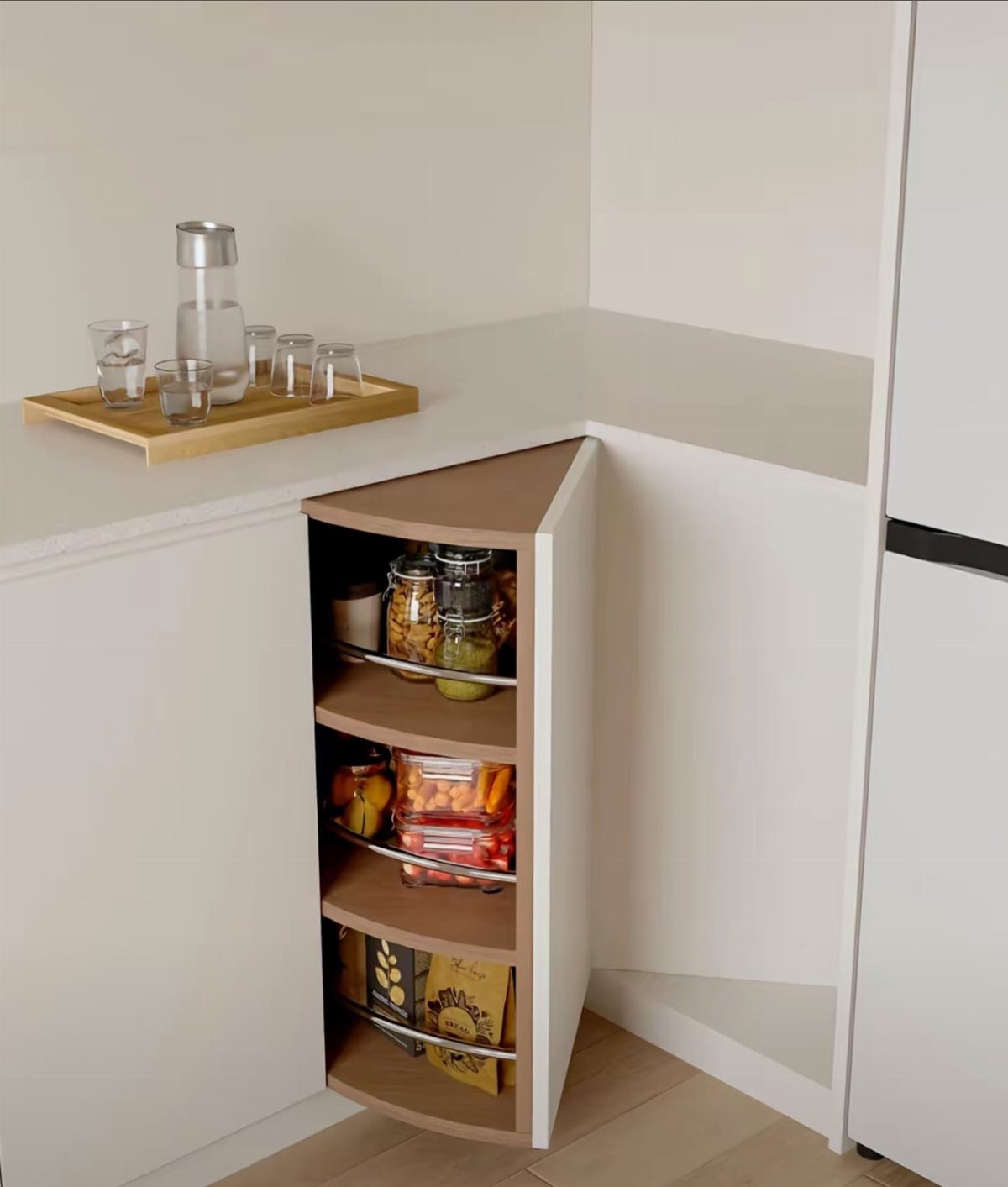
A triangular base cabinet with curved shelves follows the corner’s shape, so jars and food containers sit in easy reach rather than disappearing into a square box. The open front keeps everything visible.
Use matching jars to make the geometry look intentional.
13. Corner Wine Rack Cabinet
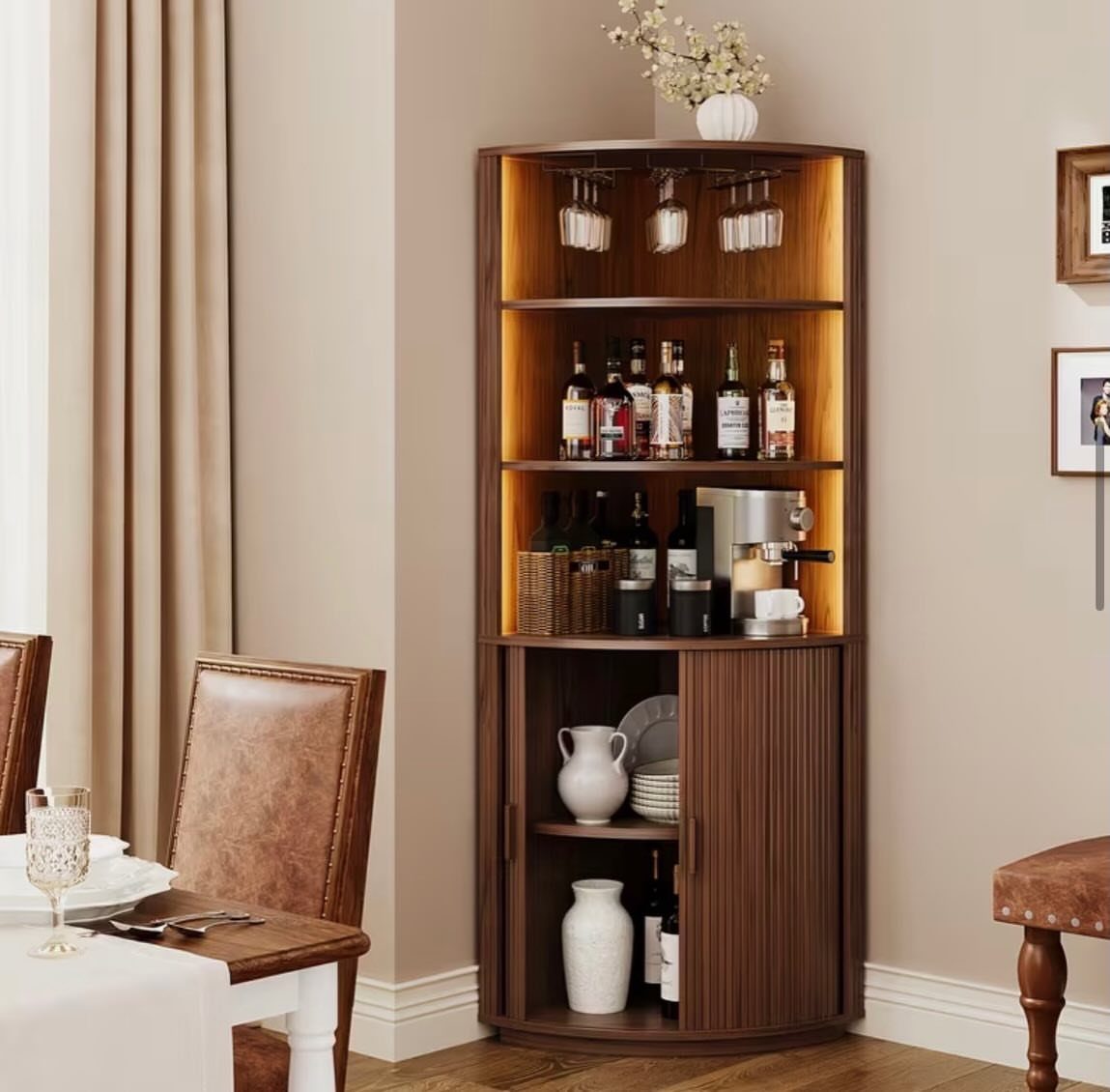
A curved wood unit can turn a dead corner into a small bar, with open shelves sized for wine glasses, liquor bottles and a coffee machine side by side.
Built-in lighting makes the bottles glow, which is why this suits a dining area better than a working kitchen.
I’d keep the glasses up front and the bottles behind them. Wood this dark pairs best with a lighter table nearby, so the corner stands out instead of weighing the room down.
14. Curved Pull-Out Drawer
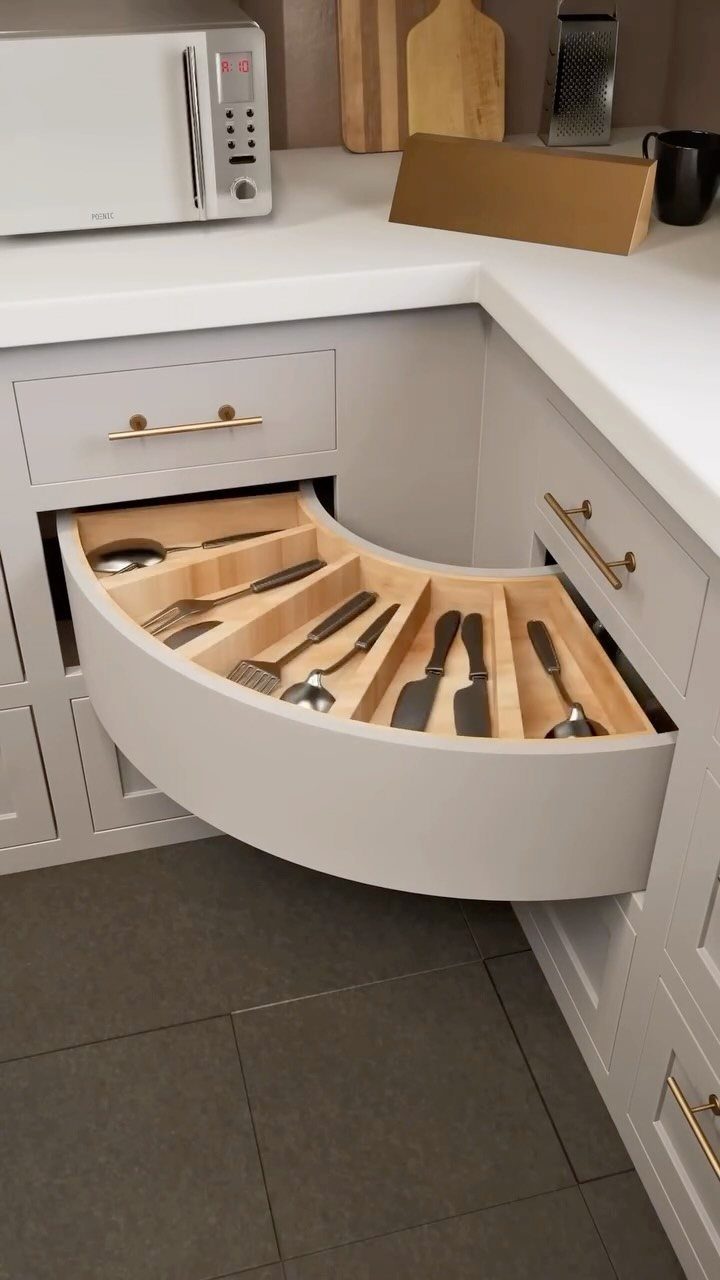
Cutlery gets its own curved drawer here, and the rounded front follows the corner so the spoons and forks come out to you instead of hiding in a blind cabinet. Grey fronts with a white countertop keep the look calm.
Use a divided tray inside, since loose cutlery slides to the curve and tangles. I’d put the drawer closest to the dishwasher so unloading takes a single step.
15. Integrated Coffee Station Corner Cabinet
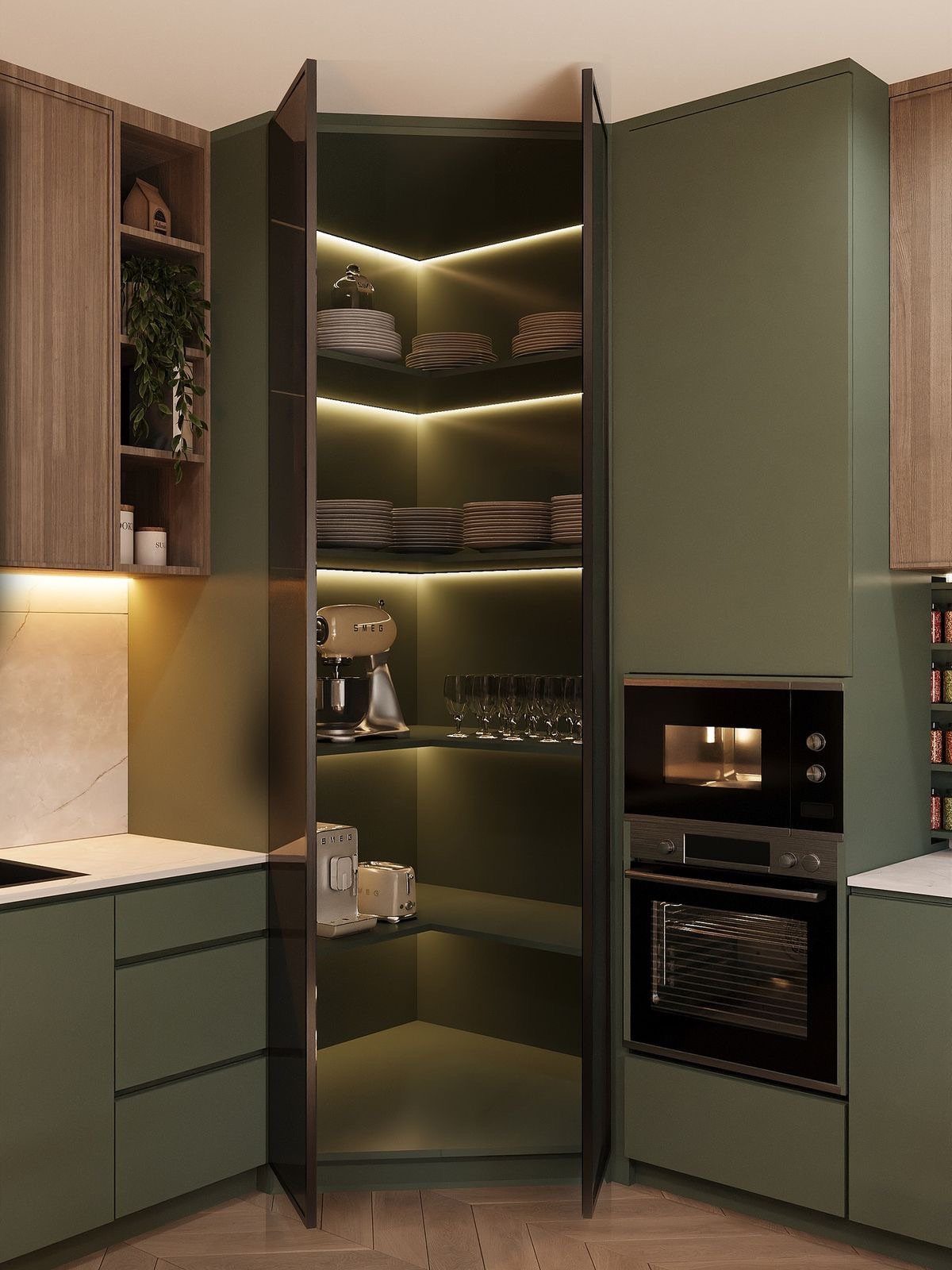
Olive green cabinets frame an open corner with LED lighting, and the shelves hold plates, glasses, an espresso machine and a toaster, so breakfast happens in one spot.
Sitting beside the built-in oven, it reads as part of the cabinetry, not an add-on.
Keep the machines on the shelf you can reach without stretching.
Improved Accessibility
Reach is the real measure of a corner cabinet. A deep corner is only storage if you can get at what’s inside without kneeling and feeling around in the dark.
Lazy Susans come as full circles or kidney shapes, and the choice depends on your cabinet.
Pick the shape that fits the opening and the interior. They work in both base and wall cabinets, so a high corner can be just as easy to use as a low one.
Picture the item you reach for most, then ask where it would sit once the corner cabinet is in. If the answer is the back, the corner needs one of these systems.
Design Considerations
Corner storage should match the rest of the kitchen, so settle the look before you pick a mechanism.
Cabinet style and finish carry most of that, whether the kitchen leans traditional or modern. Hardware comes next: choose pulls and hinges that suit the doors and hold up to daily use.
Soft-close hinges and smooth-glide slides are worth the extra cost, because a corner door or drawer gets opened constantly and the mechanism sets how the cabinet feels.
Dividers, racks and pull-out systems add organization inside, so decide on those at the planning stage rather than after.
Measure the corner accurately first.
A cabinet that is off by even a little will rub, jam or leave gaps, and that matters most if the corner holds a sink. Sketch the dimensions, then choose the style around them.
Frequently Asked Questions
Are corner cabinets still in style?
Yes.
They keep showing up in L-shaped and U-shaped layouts because they make use of space that would otherwise sit empty. Most now come with pull-out shelves or carousels that bring the back within reach.
What to do with corner cabinets in a kitchen?
Put a reach-in system inside so the back of the corner comes to you. A Lazy Susan suits bowls, glasses and baking gear, while a magic corner or blind corner pull-out brings heavy pans forward on tiers.
What is the best way to use a Lazy Susan in a corner cabinet?
Keep the heaviest items, like mixing bowls, on the lowest shelf and lighter glasses above.
That keeps the turntable balanced so it spins easily. Choose a full circle or a kidney shape based on the opening and the interior of your cabinet.





