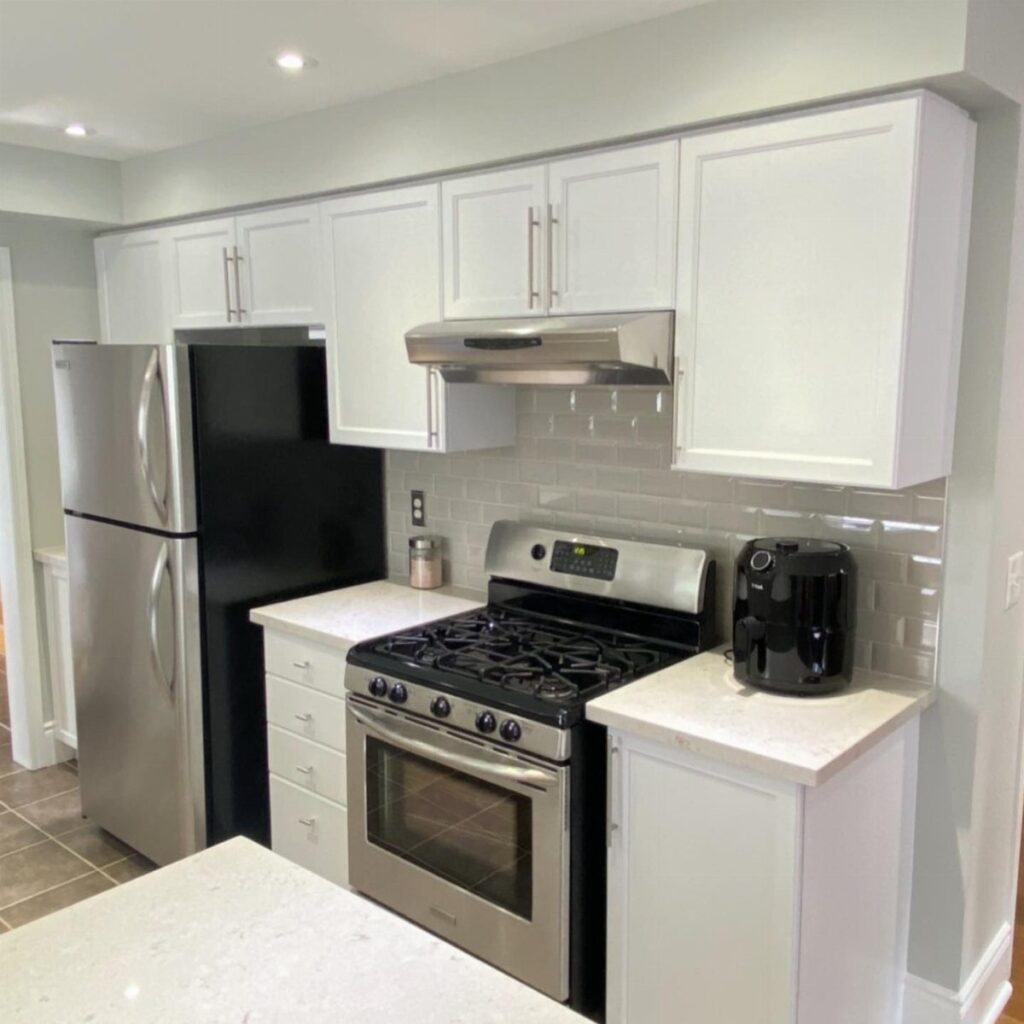
The wall color that works depends on your cabinet white, because the wall has to answer to the cabinet and not the other way around.
Cool whites like Extra White or Chantilly Lace stay crisp against warmer grays and greiges, while warm whites like Alabaster or White Dove suit softer, creamier walls.
The options run from crisp white on white to sage green and pale yellow, and every one is a weekend repaint with a gallon or two of paint. Holding printer paper against a cabinet door shows which base you have.
1. Warm Beige Walls with White Cabinets
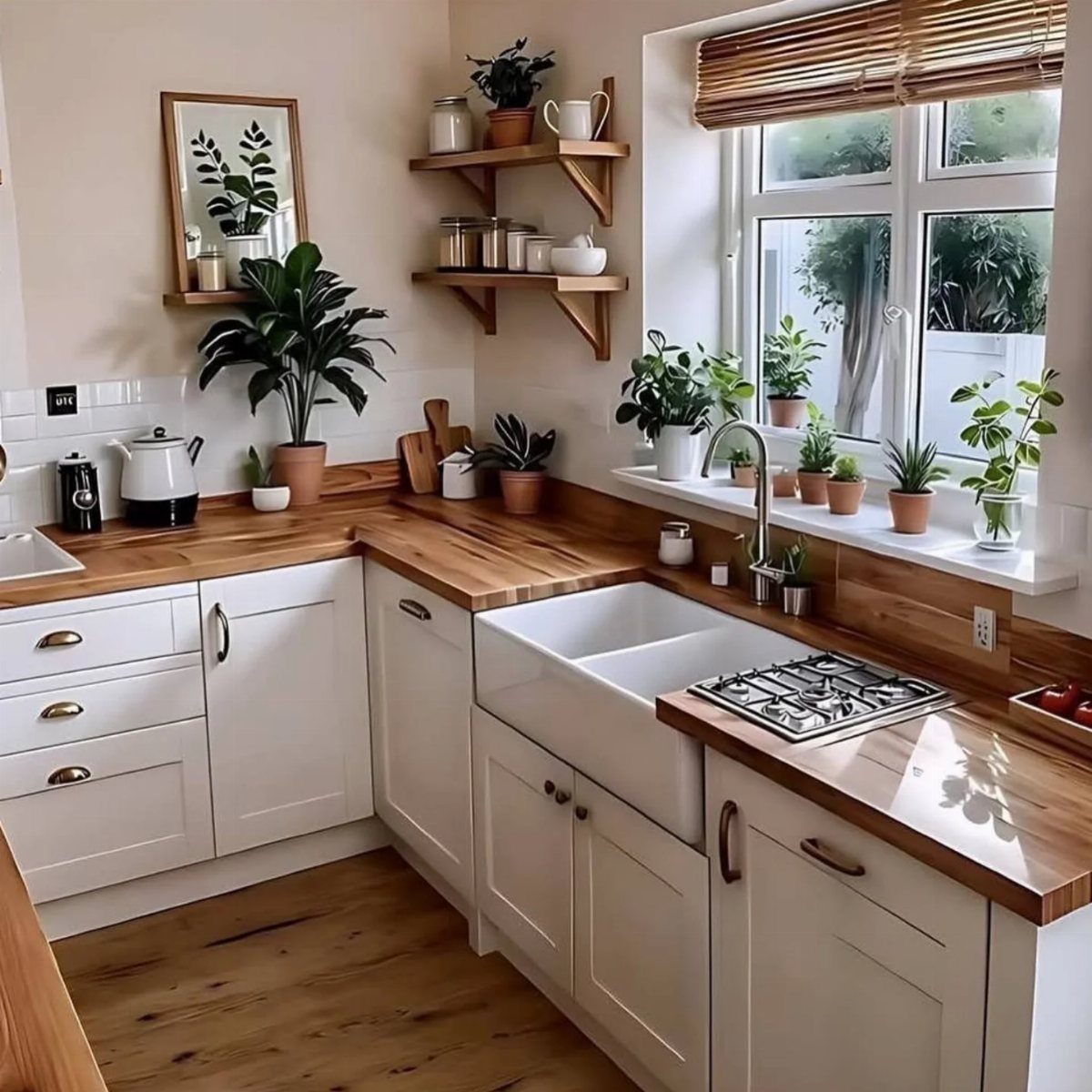
Warm beige walls soften white cabinets so they read creamy instead of stark, and the wooden countertops and plants in this kitchen lean into that.
Pick a beige with a yellow or pink undertone rather than a gray one, or the white cabinets will look cold beside it.
Brush a sample patch next to a cabinet door and check it in morning and evening light, then decide on a gallon.
Beige is an easy repaint for a weekend, and it suits renters who want a calm base they can add plants to.
2. Light Blue Walls with White Cabinets
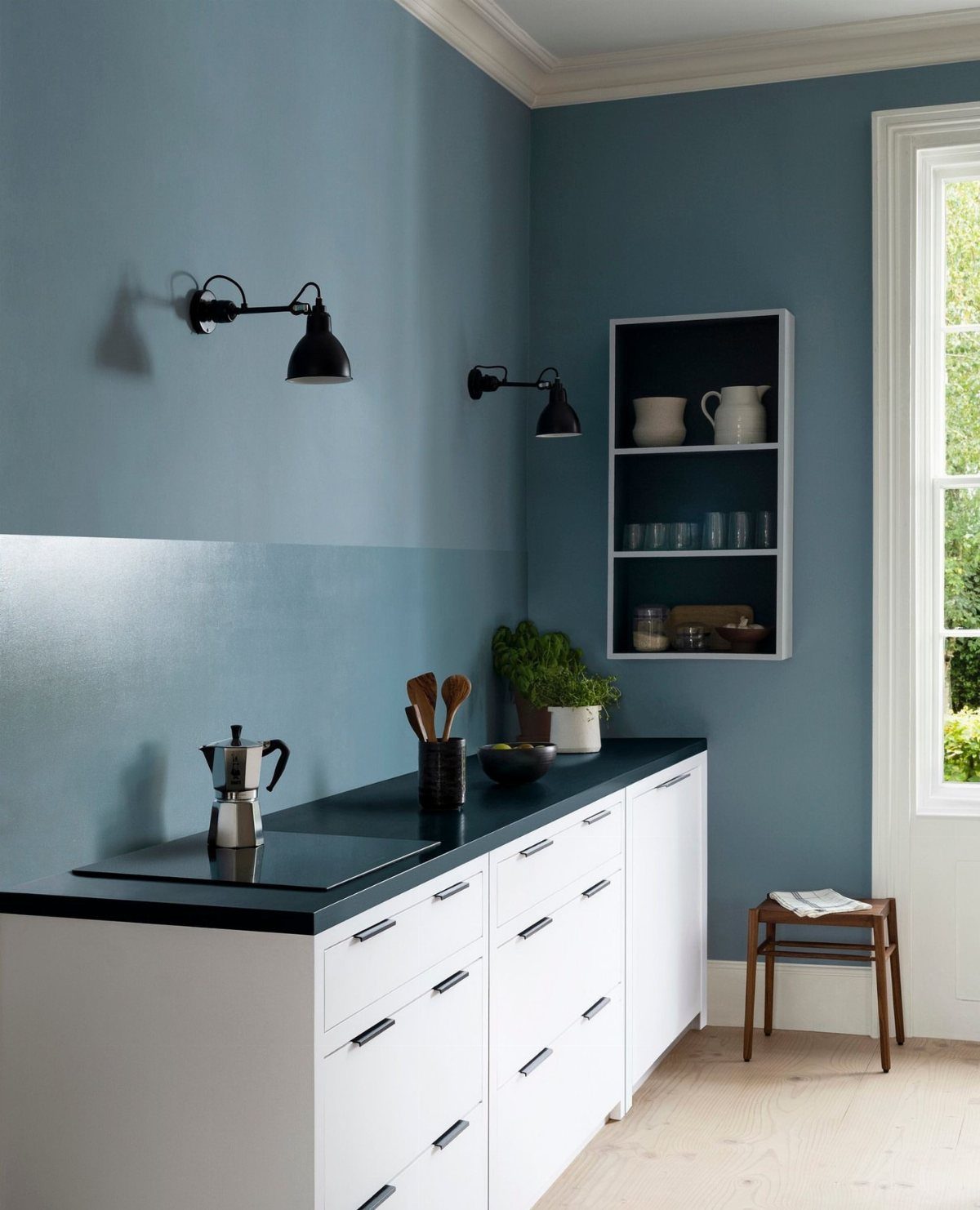
A muted light blue on the walls gives white lower cabinets a clear, cool backdrop, and a black countertop sharpens the contrast.
I like this pairing in a room where the cabinets are the only white, since the blue keeps them from blending into the wall.
Keep the blue dusty rather than bright; a saturated shade fights with black. Matching the wall shelf to the cabinet white ties the two together.
A sample quart on the wall will show whether the blue turns icy in your light.
3. Soft Gray Walls with White Cabinets
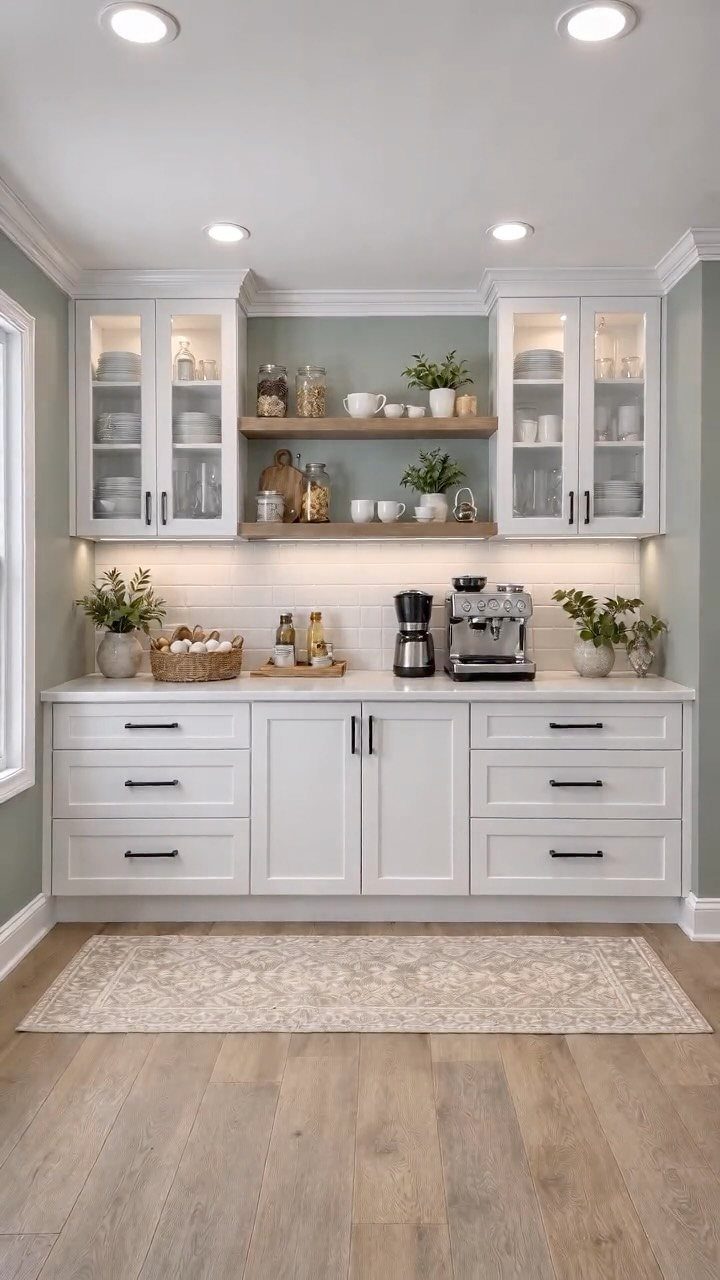
Soft gray walls make white cabinets look deliberate, and that is why this combination holds up so well around a coffee station or a run of open shelving.
Wood shelves and a light rug add warmth, which gray needs to avoid feeling flat.
Pick a gray with enough depth that the white cabinets read as a clear step lighter than the walls, since a gray too close to white blurs the contrast.
Check it beside your backsplash tile, because some grays pull blue next to bright white and others pull green.
If your kitchen faces north, lean toward the warmer grays.
4. Crisp White Walls with White Cabinets
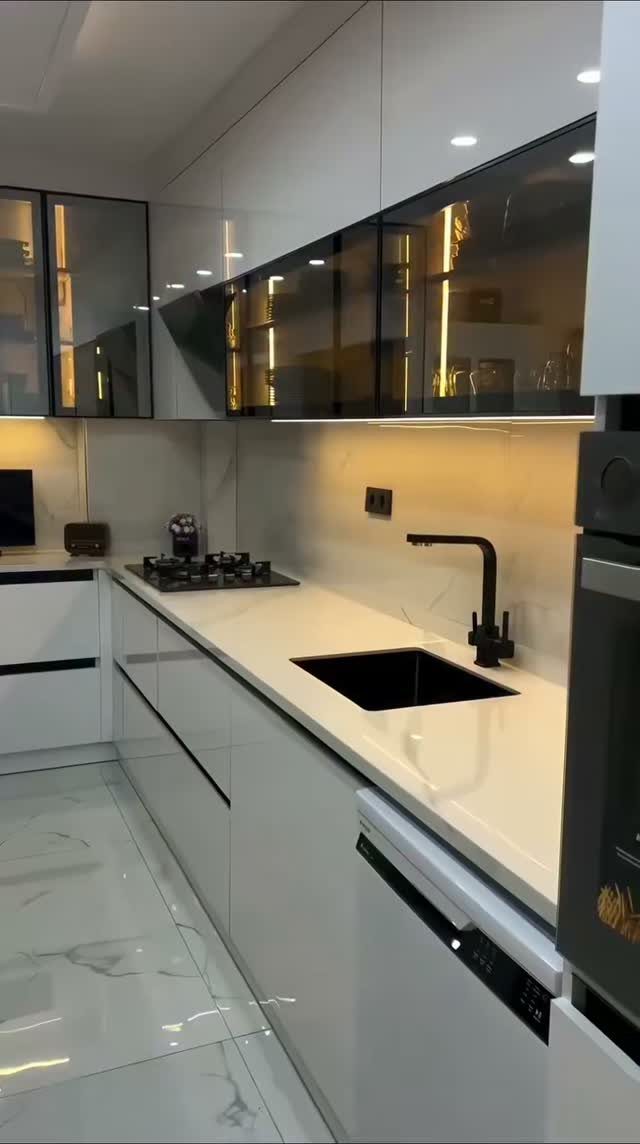
White on white works only when you vary the finish, since a single flat white everywhere reads like an empty box.
For a budget version, paint the walls in an eggshell or matte white and keep the cabinets in satin or gloss, so the surfaces catch light differently.
Add one dark element, such as black hardware or a faucet, to give your eye somewhere to land.
This is the boldest choice here and the least forgiving of scuffs and smudges.
5. Sage Green Walls with White Cabinets
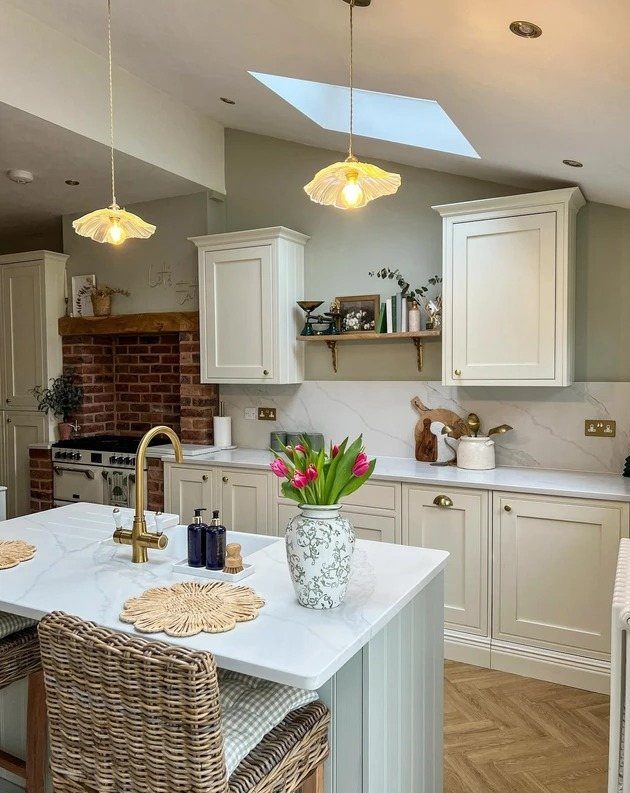
Sage green is my pick when white cabinets feel too plain but you don’t want a loud color. It’s a soft, gray-leaning green that makes marble, brick and fresh flowers look planned.
Go for a shade with some gray in it; a brighter green will look like mint and crowd the cabinets. A paint sample on the wall for a few days tells you how it behaves next to your counters.
A weekend and a gallon or two of paint are enough for most kitchens, which makes repainting the walls the lowest-cost route to this look.
6. Pale Yellow Walls with White Cabinets
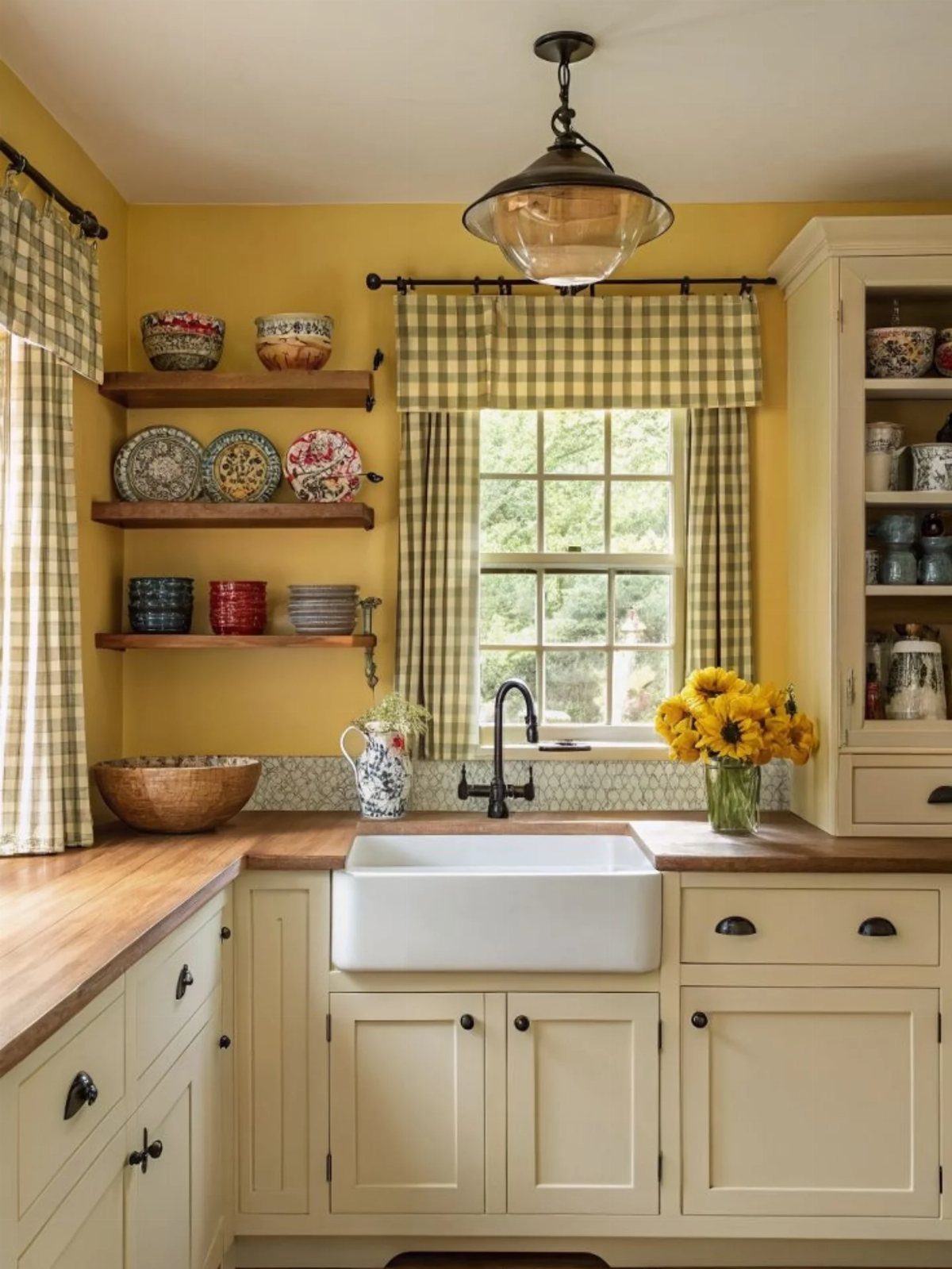
Pale yellow is the friendliest wall color to pair with white cabinets, and it suits a farmhouse sink and wooden counters particularly well. It warms the room without the weight of a deeper shade.
Keep the yellow soft and buttery; a strong lemon tone turns harsh next to white.
Sample it first, since yellow looks stronger on a full wall than on a paint chip.
Undertones Matter
Cabinet whites are not all the same white, and the wall color has to answer to the cabinet, not the other way around.
Cool whites like Extra White or Chantilly Lace stay crisp against warmer grays, greiges, or a bolder accent that keeps the room from feeling sterile.
Warm whites like Alabaster or White Dove read soft and creamy. A neutral white like Pure White works with warm or cool walls.
Hold bright white printer paper against a cabinet door to spot the undertone. If the cabinet reads yellowish next to the paper, the base is warm.
Consider Lighting
Light changes paint more than most people expect, so judge the color by the room’s exposure.
Pale walls and cabinets open up a compact kitchen or one that gets limited daylight. White and cream also hold up as a classic look.
Dark walls are a fair option in a kitchen with plenty of daylight.
They give the room a richer, more dramatic feel, and the light keeps them from closing the space in. I’d try one dark wall first rather than painting every wall.
Testing Colors
Buy sample pots of your top choices and brush them on the walls, in more than one spot. A patch near the window and one in the darkest corner will rarely look alike.
Make the swatch big, at least 2×2 feet, so you can see how the color meets the cabinets. Small chips mislead.
Check the color in morning light, midday sun, and evening before you decide. Look at it beside your countertops, backsplash, and flooring too.
Sheen changes the look as well, so test matte, eggshell, satin, or semi-gloss side by side. Durability matters in a kitchen, and this is where you balance it against looks.
Frequently Asked Questions
What color walls look best with white cabinets?
Warm beige, soft gray, dusty light blue, sage green and pale yellow all work well.
Pick the shade by the cabinet’s undertone: beige with a yellow or pink base keeps white from looking cold, and a gray with some warmth avoids a flat look.
Sage gives just enough color without shouting when plain white feels too cold.
Should walls be lighter or darker than cabinets?
Either can work, so decide by how much daylight the kitchen gets.
Pale walls with white cabinets open up a compact or dim kitchen, while dark walls look richer in a room with plenty of daylight. If you want to try dark, paint one wall first instead of all of them.
Can you use white walls with white cabinets?
Yes, if the sheen varies, otherwise the room flattens into one tone with no depth.
I use matte or eggshell on walls, satin or semi-gloss on cabinets, so each surface reflects light its own way. One dark element, like black pulls or a matte faucet, breaks up all that white, but fingerprints show faster.
How do I test paint colors in a kitchen with white cabinets?
Brush sample patches at least 2×2 feet in more than one spot, such as near the window and in the darkest corner.
Check them in morning, midday and evening light, next to your countertops, backsplash and flooring. Chips lie, and sheen shifts color badly, so I paint four strips, one in each finish from matte through semi-gloss.





