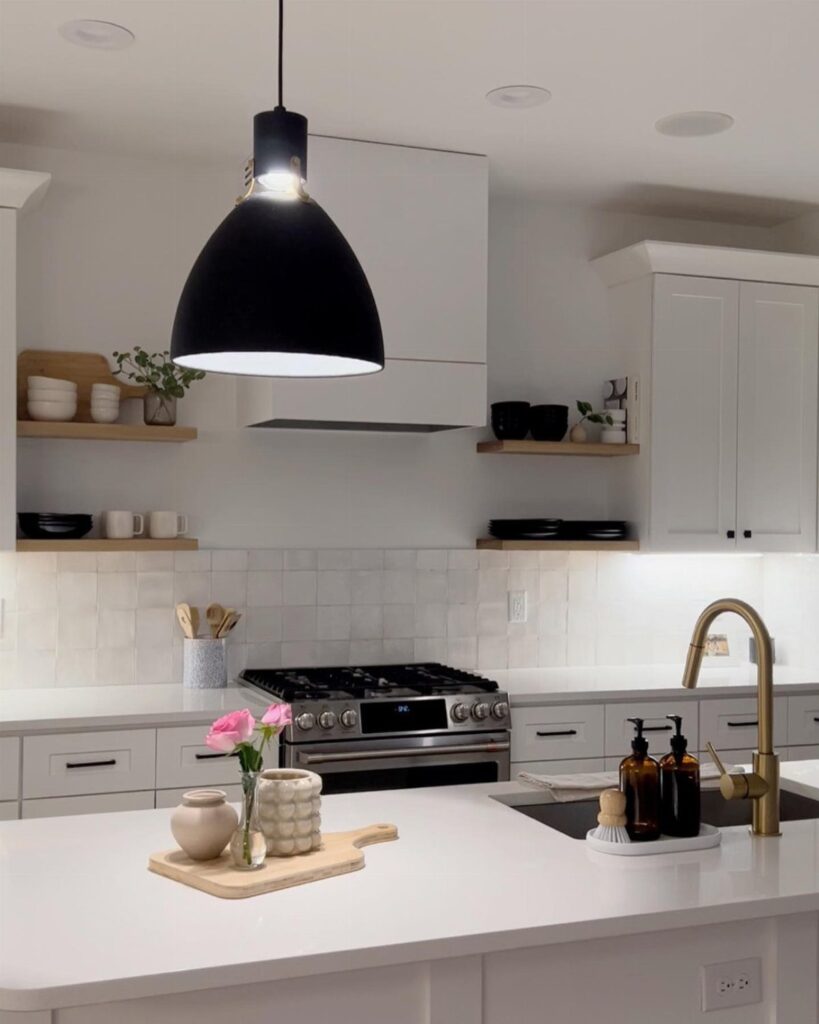
In this list, open shelving spans from a single shelf above the sink to a full wall of exposed storage, with ideas that include LED-lit shelves, scalloped trim details, and integrated niches.
Mixed layouts that pair one or two open shelves with closed cabinets give you visibility where you want it while keeping clutter out of sight, though dust still finds its way to anything left in the open.
1. Accessibility
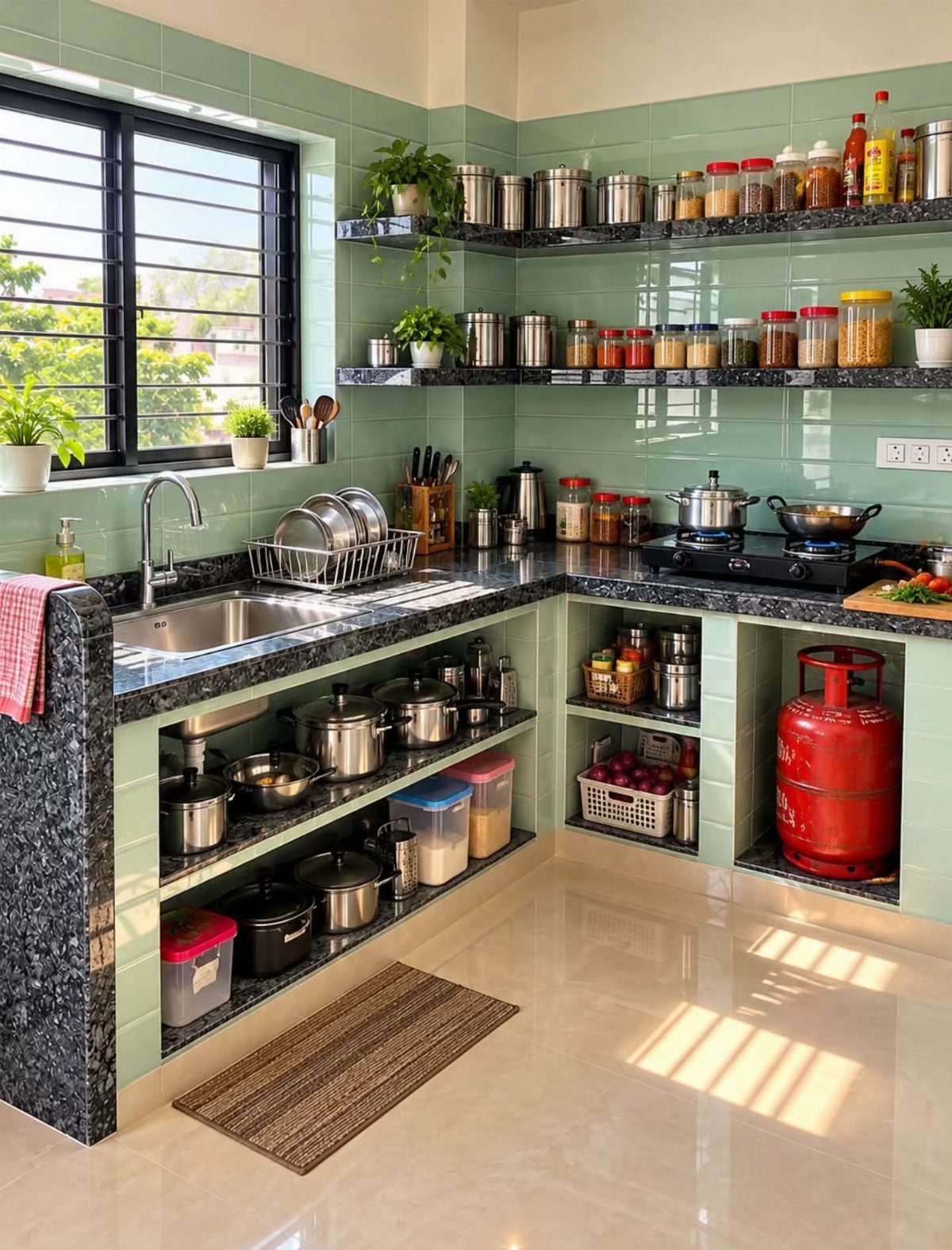
Pots, pans and spice jars hung or shelved at arm’s reach save the trip into a cabinet, and that matters most at the stove.
Black shelving against pale green tile keeps everything easy to spot, so you grab the right jar without hunting.
Put the items you use daily on the shelves and send the rarely used ones elsewhere. Open storage only stays tidy when it holds less than you own.
2. Open Pantry Shelves
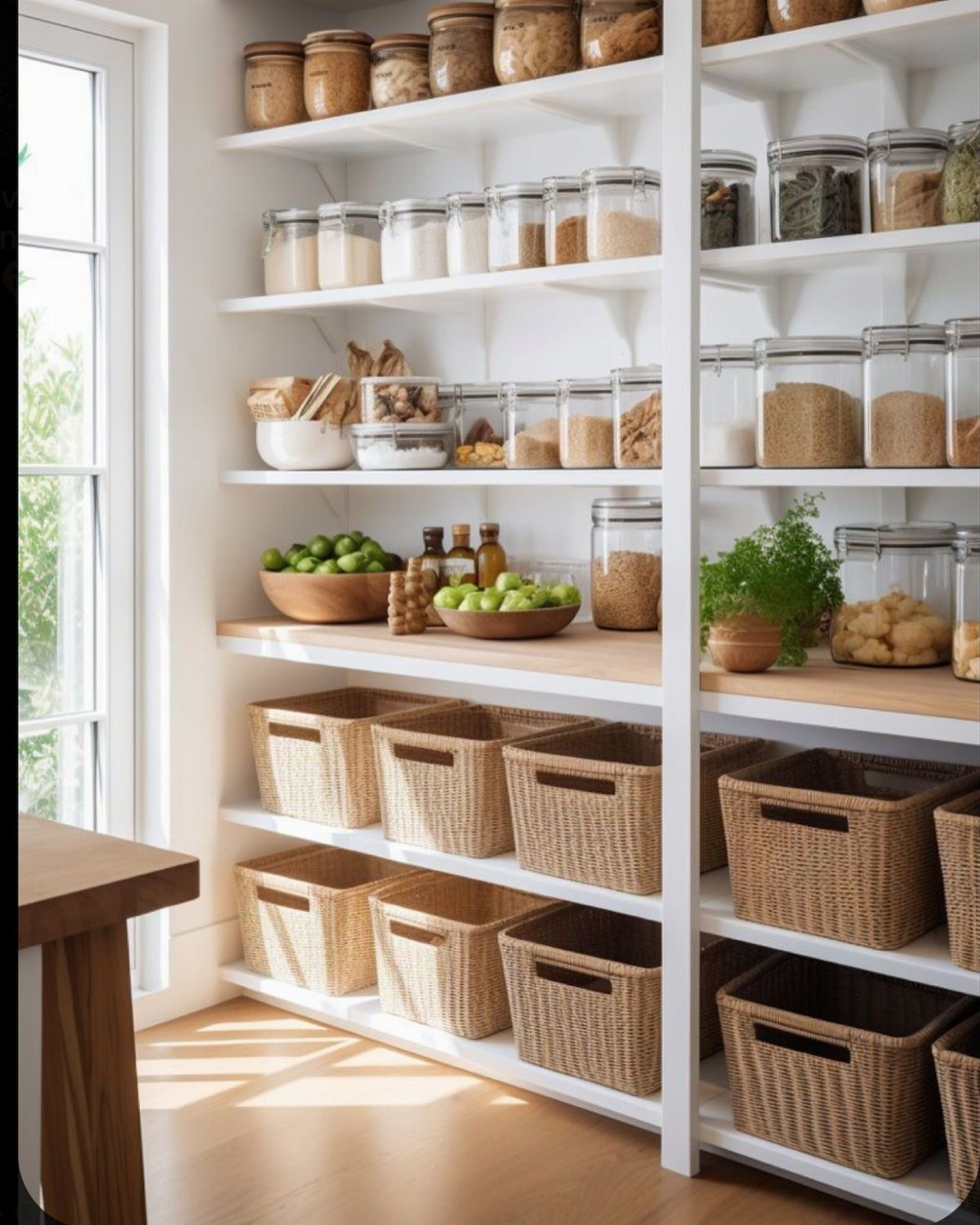
White open shelves make a workable pantry when the dry goods live in glass jars and the rest in woven baskets. Jars let you see when flour or rice runs low, and baskets hide the packaging that looks messy.
Decant only what you reach for weekly; a jar for every box gets expensive fast. Baskets suit odd shapes like bagged snacks, and a bowl of fruit on a shelf doubles as decor.
3. Above the Sink
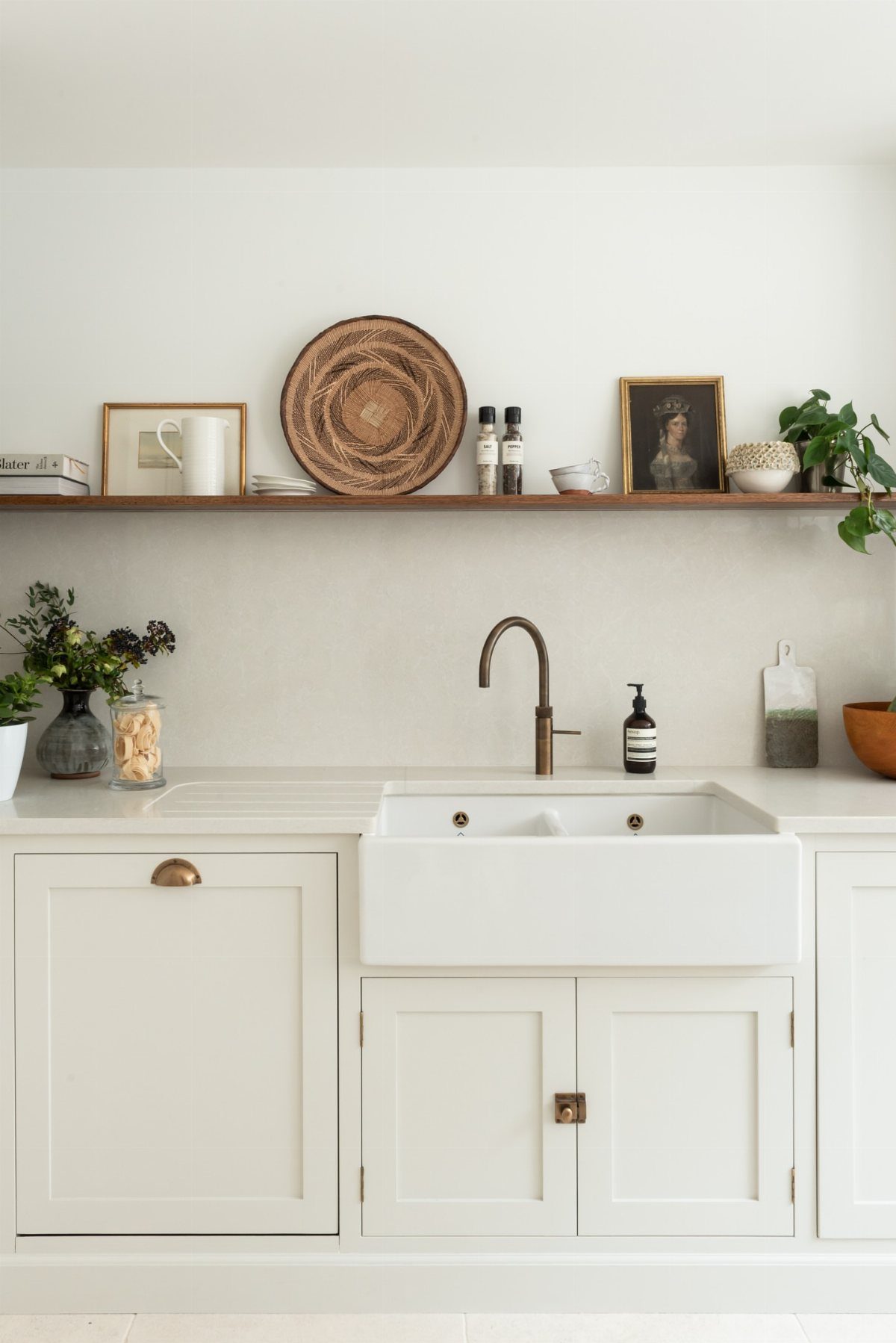
A single wooden shelf above the sink holds a few dishes you use daily, plus whatever small piece makes the wall feel less blank.
One shelf leaves the window clear; stacking three closes in the faucet and shrinks what little wall you had.
Keep the items light and dry-friendly, since splashes reach this spot. I like wood against white because it adds warmth without adding clutter.
4. Open Shelves and Closed Cabinets
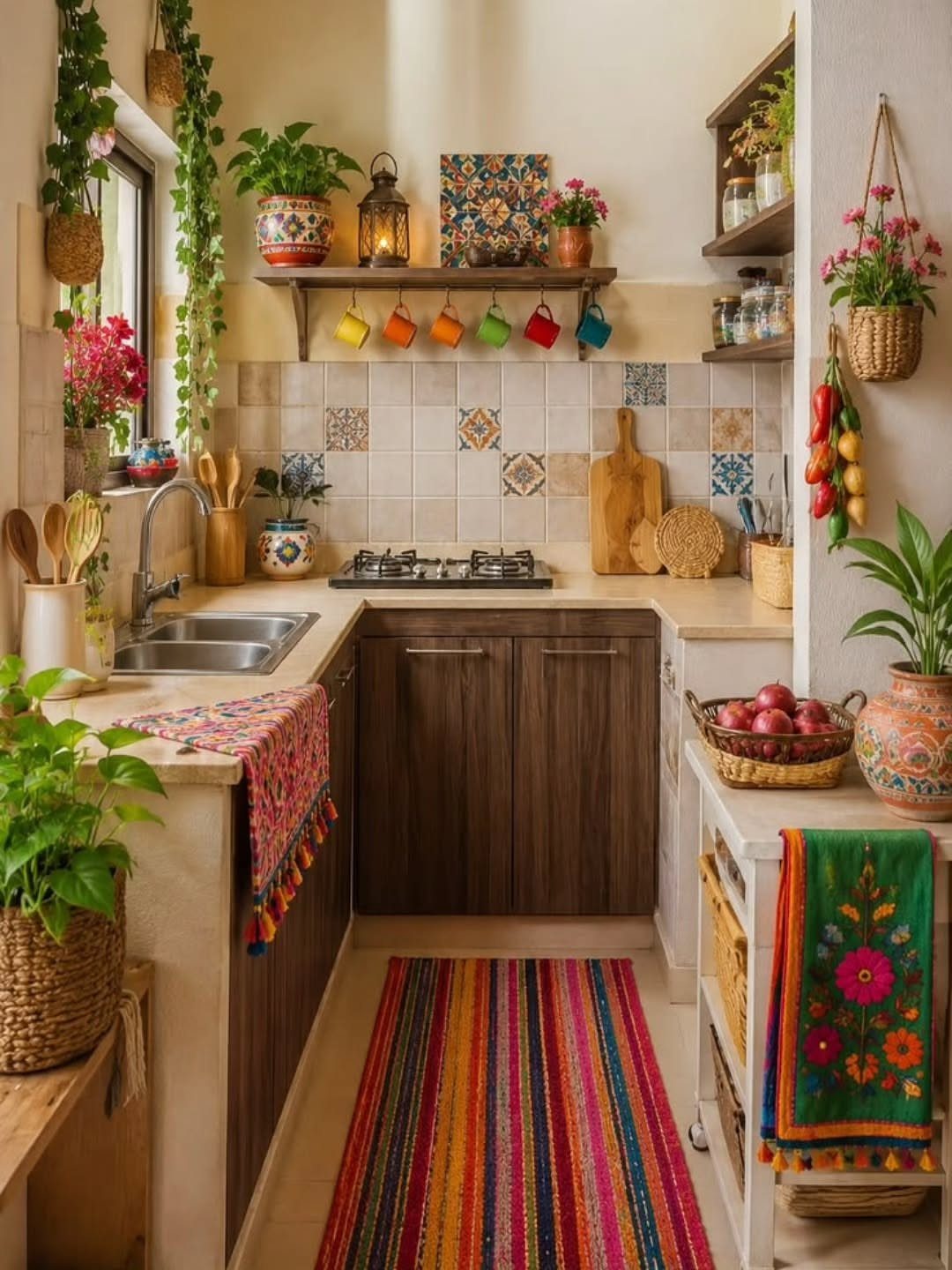
Mixing open shelves with closed cabinets is the easiest way to try open shelving without committing the whole kitchen to it.
Reserve closed storage for appliances, food boxes and anything ugly, then use the shelf for what actually looks good. In a small kitchen, I’d choose one or two shelves over a full wall of them.
5. Under-Shelf Lighting
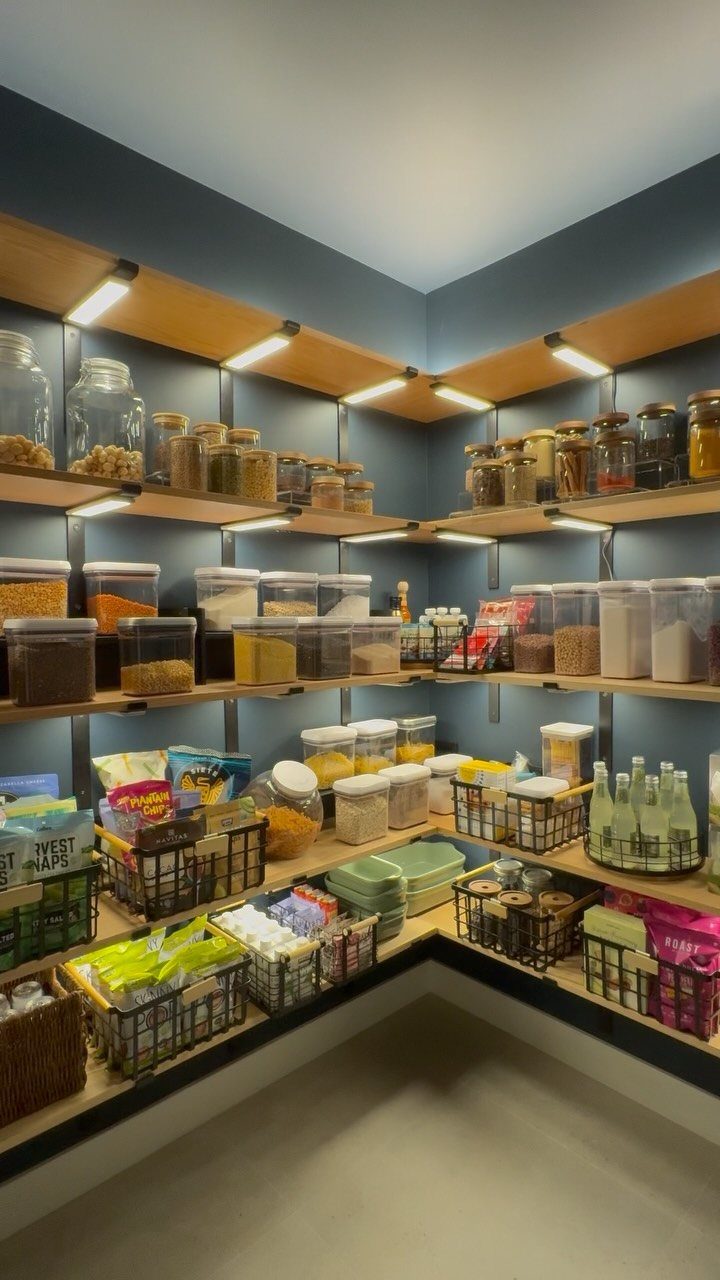
Lighting tucked under wooden pantry shelves lets you read labels and see the back row without a flashlight. Without it, deep shelves turn into dim corners where food gets forgotten.
LED strips are the budget route, and a weekend is enough to fit them along the shelf fronts. Mount them near the front edge so light falls on the containers instead of into your eyes.
6. Glass Shelves
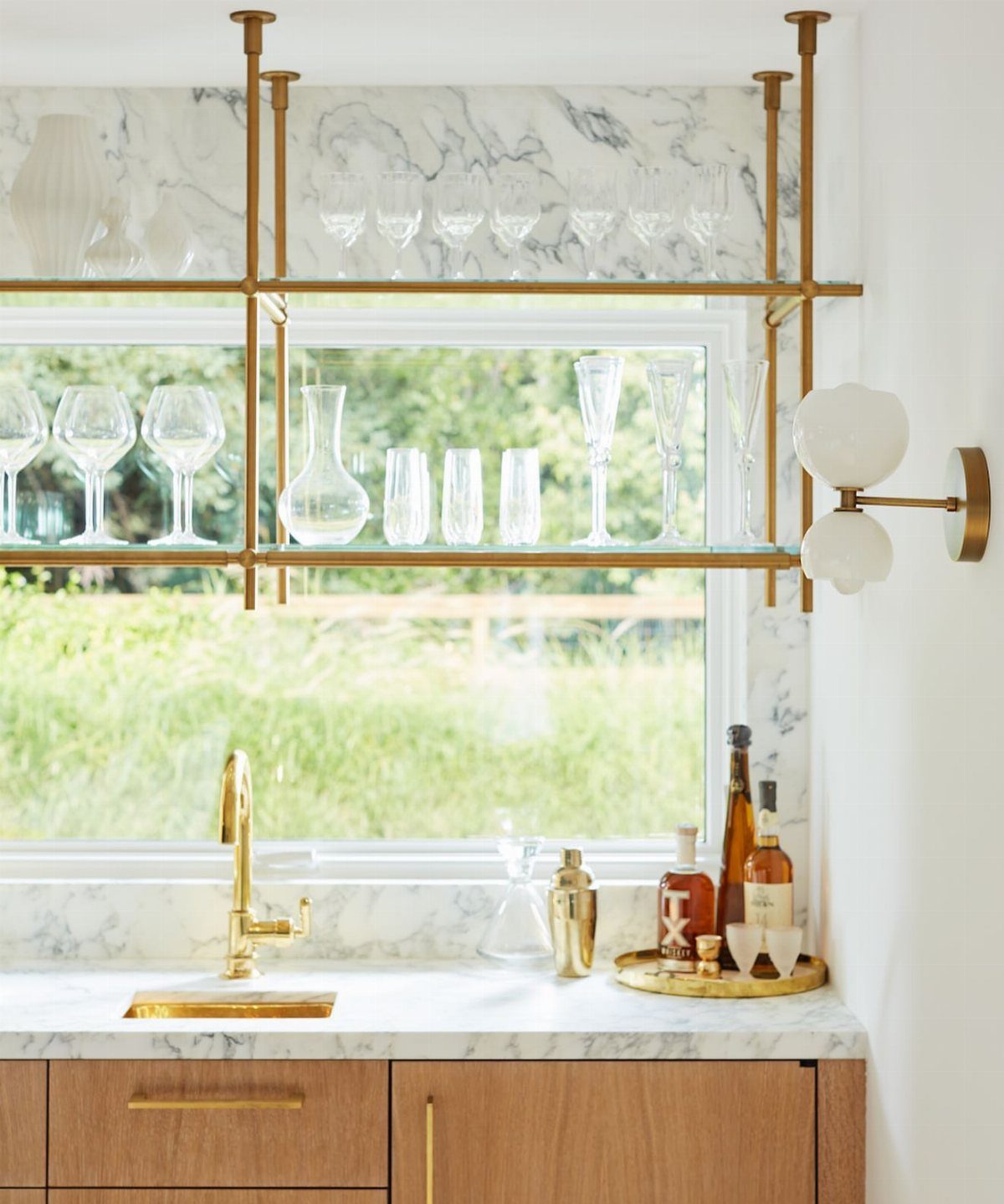
Glass shelves in a slim gold frame keep a wall light, since you see through them to what is behind.
They suit glassware best, and when the countertop is marble or the faucet is gold, the same polished look runs through the whole setup.
Fingerprints and dust show on glass, so expect to wipe it often. If you cook a lot of greasy food nearby, I’d choose wood instead.
7. Rustic Wood Shelves
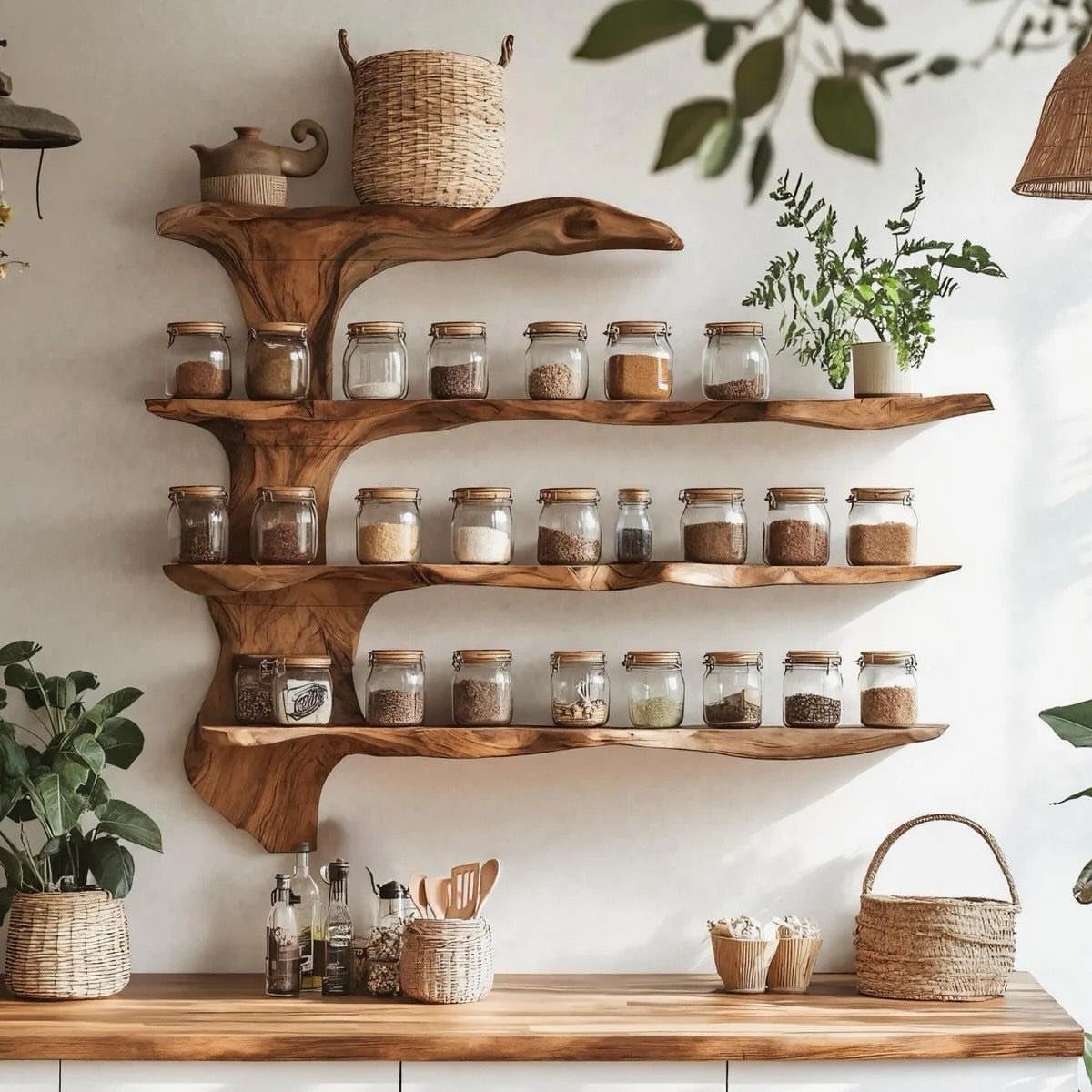
Live-edge shelves bring warmth to a white wall because the uneven, natural outline breaks up all those straight lines.
Glass jars and a basket work well on rustic wood shelves, since the grain already supplies the decoration and you can skip extra accessories.
A wood countertop below picks up the same tone, which ties the wall to the work surface. I’d keep one wood tone across both rather than matching two different stains.
Seal the wood well, since steam and splashes will reach it.
8. Open Shelving Units
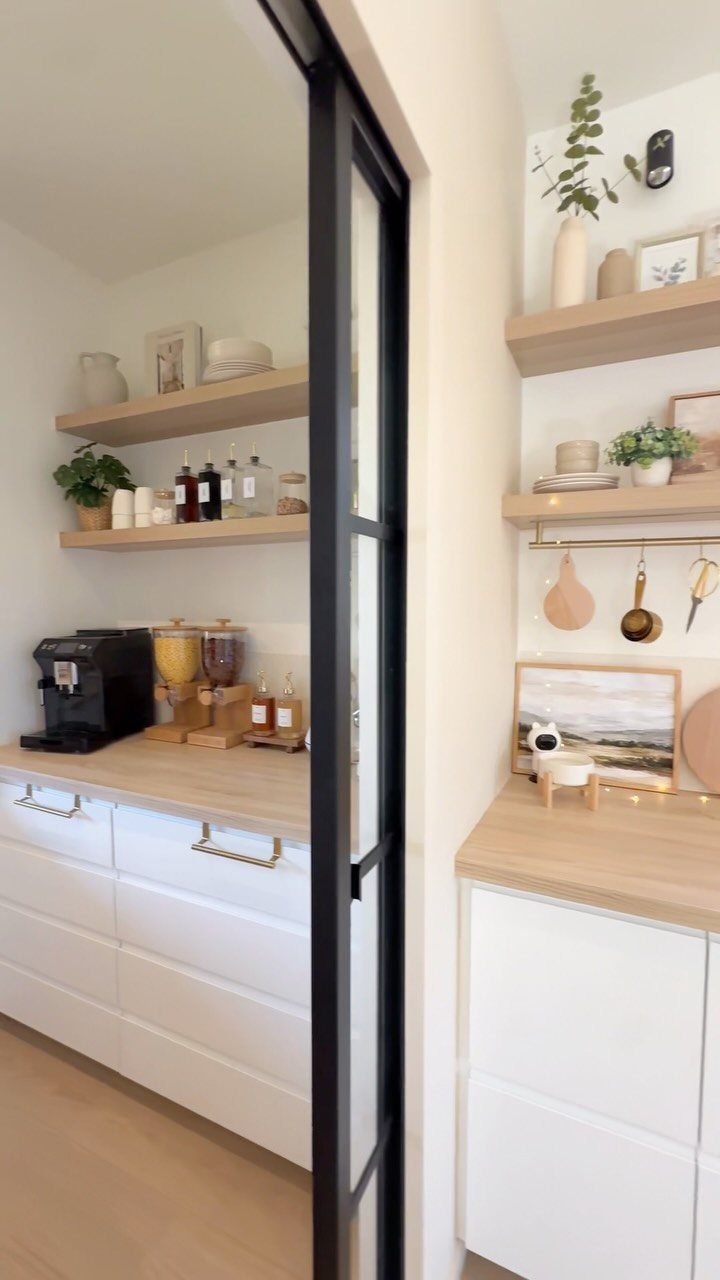
Taking down the upper cabinets and putting light wood shelving units in their place is the boldest version of open shelving, and it changes the whole wall at once.
Keep the white drawers and base cabinets below, so the dishes you don’t want on display have somewhere to go. Then fill the shelves with jars, a few plants and the plates you use every day.
Expect to patch and paint the wall where the cabinets hung. I’d only commit this far if the base storage can absorb what the uppers held.
9. Visual Openness
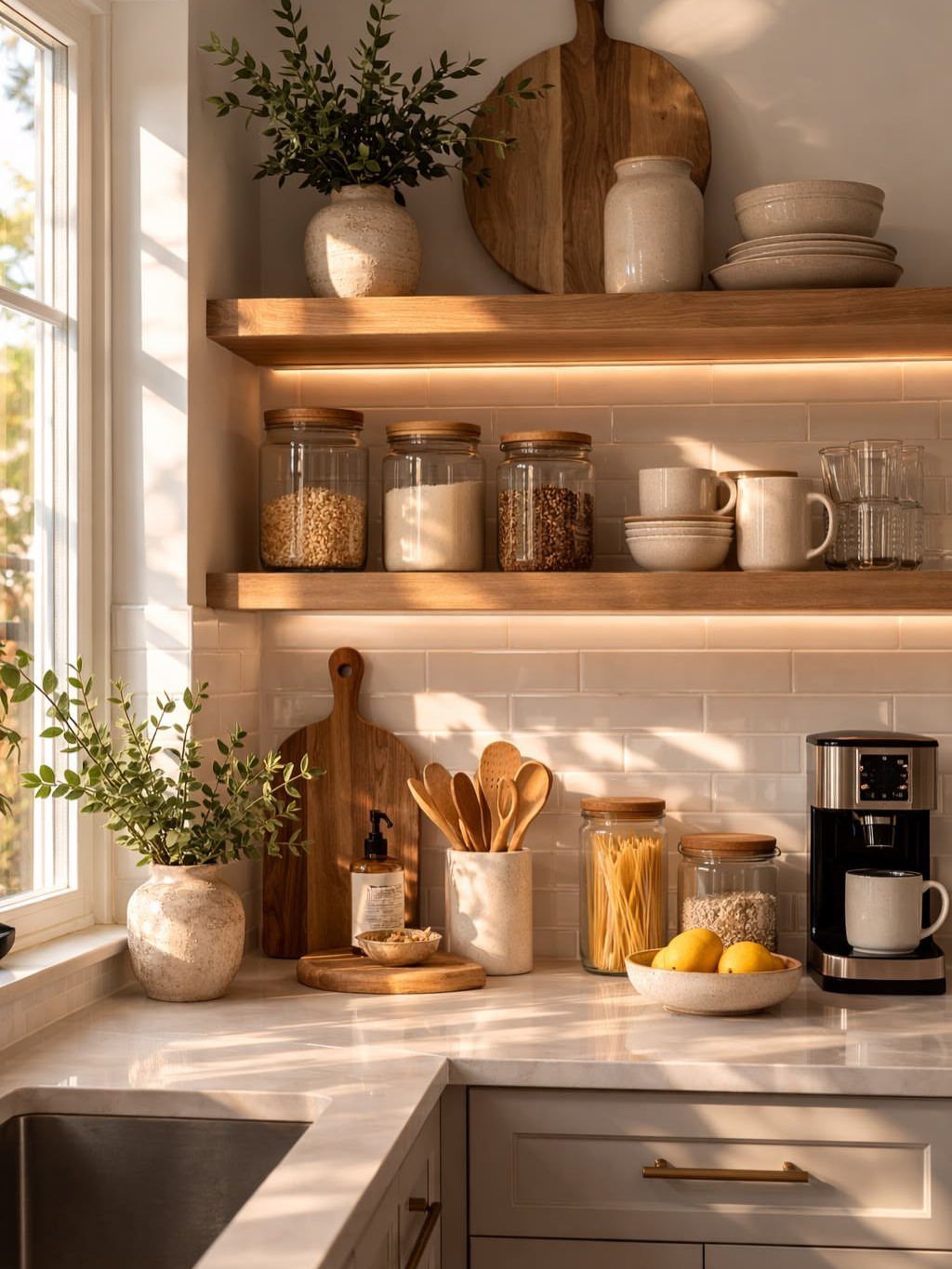
2 wooden shelves on a white tiled wall leave a kitchen feeling airy, because the eye reaches the wall instead of stopping at a row of cabinet doors.
Leave gaps between the jars, bowls and plants so the tile still shows. Crowding the shelves cancels the effect you wanted.
Keep the countertop below just as loose. Pasta, lemons and a coffee machine are plenty before the surface starts looking busy.
10. Styling Flexibility
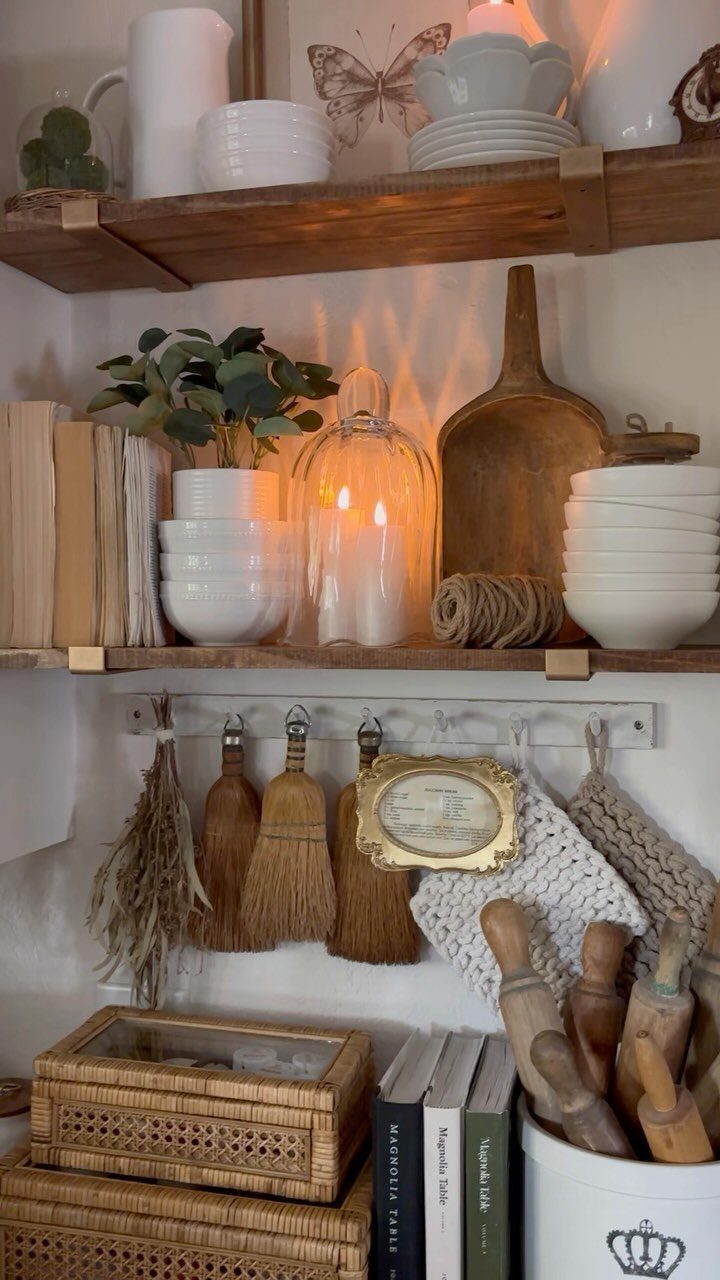
Open shelves are the one kitchen storage that doubles as a display, so you can restyle them whenever your taste shifts.
White bowls and pitchers keep a rustic wooden shelf calm, and one candle, plant or wooden peel adds personality without clutter.
Stack cookbooks on a lower shelf for height variety. Hanging brushes from the shelf edge puts a tool within reach and fills dead space.
Change one or two items a season rather than everything. A cheap, quick swap keeps the shelf feeling fresh.
11. Integrated Kitchen Shelving
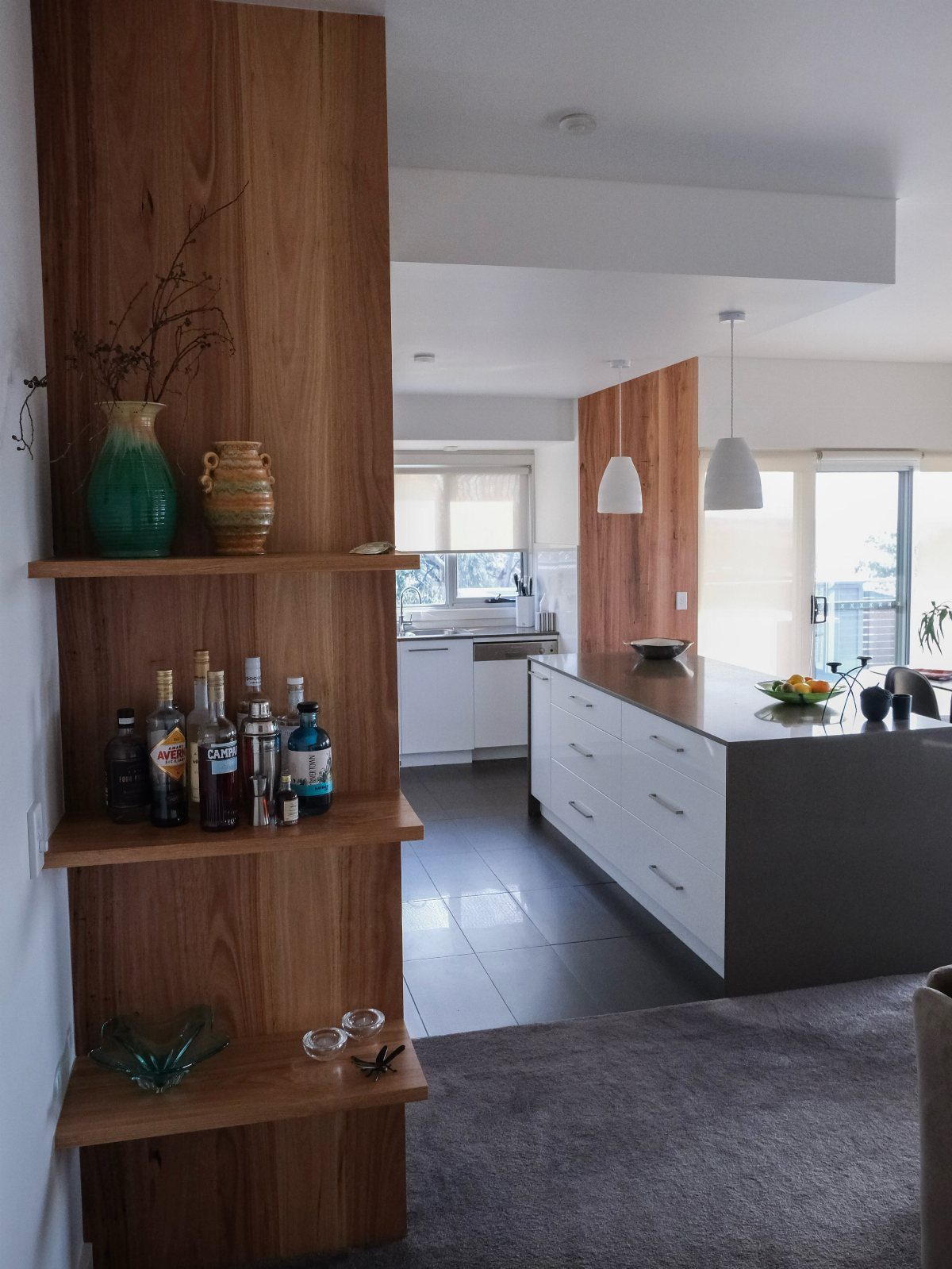
Building open shelves into a wood-paneled wall of cabinetry makes them look planned rather than added on. Bottles and vases sit in the cutouts, and the shelves read as part of the room’s architecture.
This suits a kitchen with an island, where the paneled wall can act as a backdrop. I’d keep what’s on the shelves sparse, since built-in niches look best with a few good pieces.
It costs more effort than hanging floating boards, so plan it during a cabinet project.
12. Floating Shelves with Brass Rails
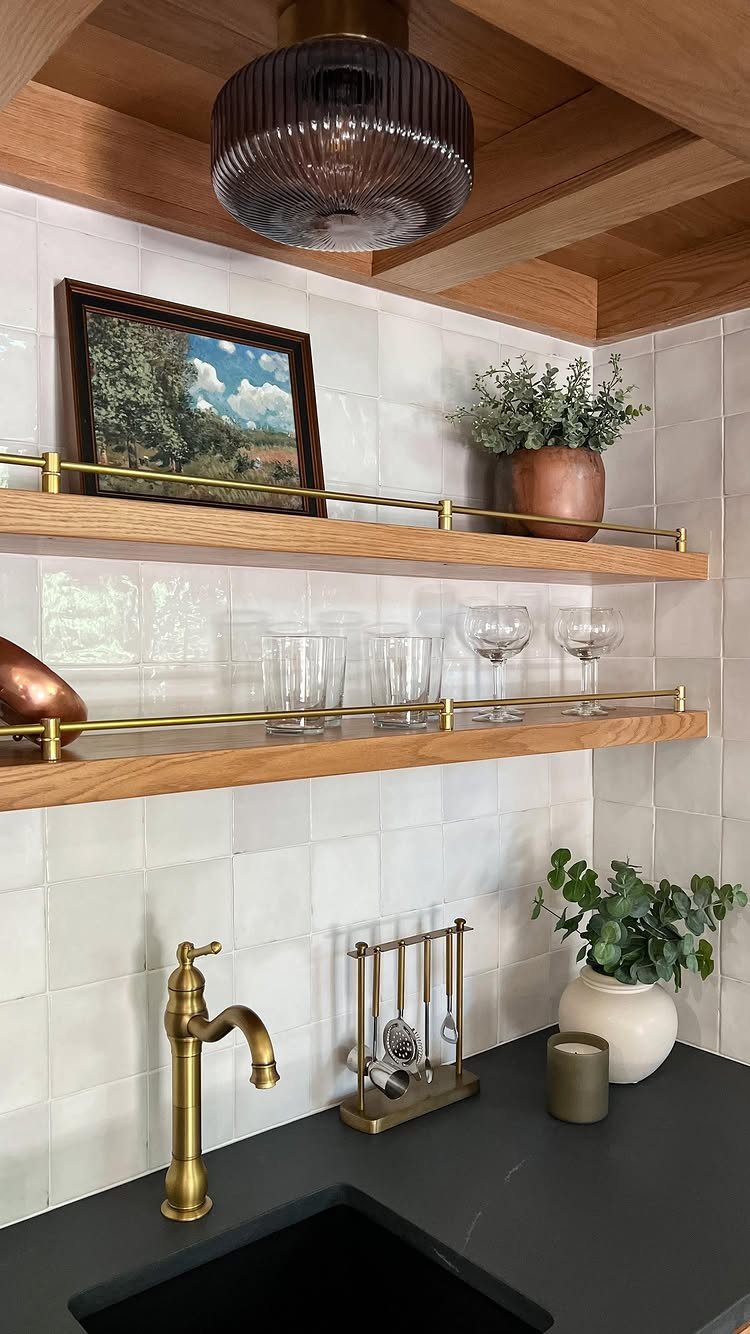
Gold gallery rails along the edge of light wood floating shelves stop glassware from sliding off and add a thin line of shine. They pair naturally with a brass faucet, so the metals in the room agree.
Use the shelves for glassware, a small plant and one framed picture. Gallery rails hold light pieces well, but I wouldn’t trust them to keep heavy stacks of plates secure.
Against a black countertop, the pale wood and brass stand out nicely.
13. Marble Slab Open Shelving
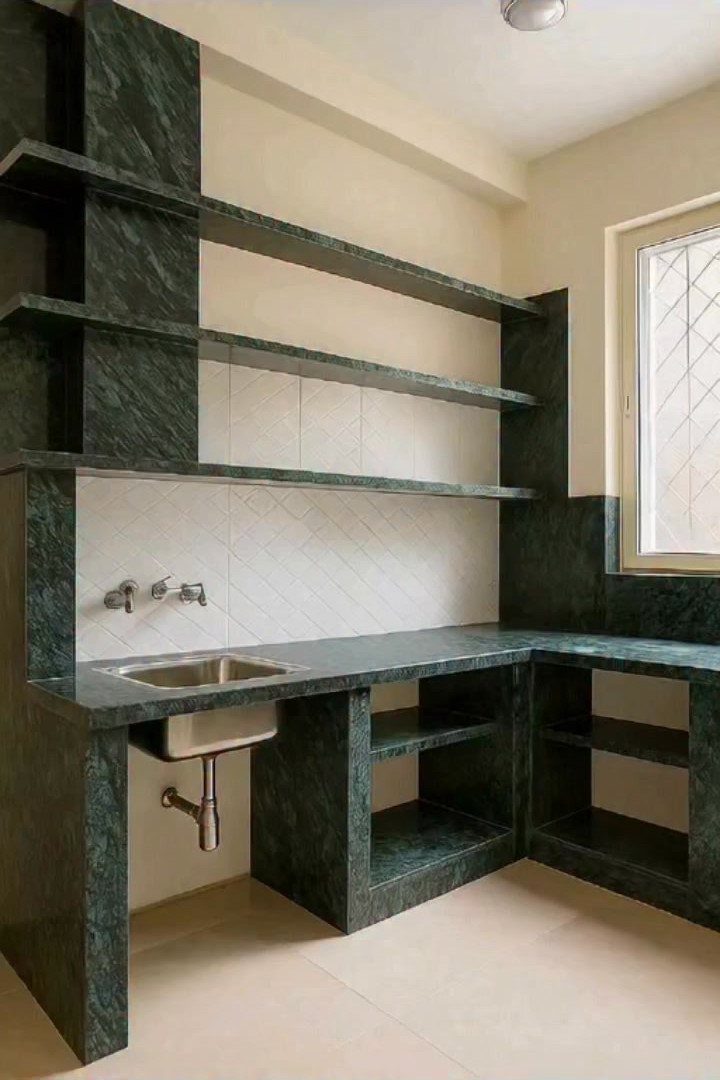
Dark green marble shelves that match the countertop turn the sink wall into one continuous piece of stone. White tile around them lets the green stay calm instead of crowding the wall.
Because the shelf and counter share a material, I’d keep what sits on top simple: a soap dish, a small plant, maybe 2 bowls. Stone this dark makes a strong statement, and clutter fights it.
Real marble slabs are heavy and cost more than wood boards, so budget for sturdy brackets and a careful install.
14. Wood Shelves with Hanging Rails
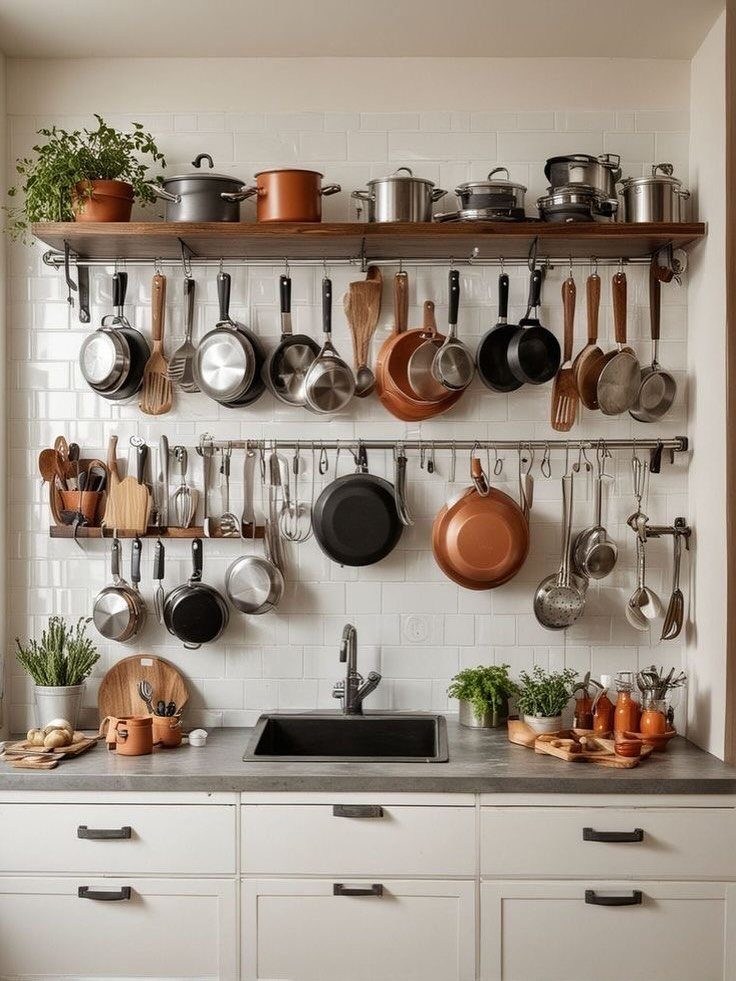
A wooden shelf on top and a metal rail below it give a tiled wall 2 kinds of storage: flat for stacked pots, hanging for pans and utensils. Each piece sits within reach of the sink and counter.
Use S-hooks on the rail for the items you grab daily, and keep the shelf for pieces that stack. I’d hang only cookware you actually like looking at, since all of it stays in view.
A set of rails runs a fraction of what cabinets cost, and it goes up in an afternoon.
15. Scalloped Trim Open Shelving
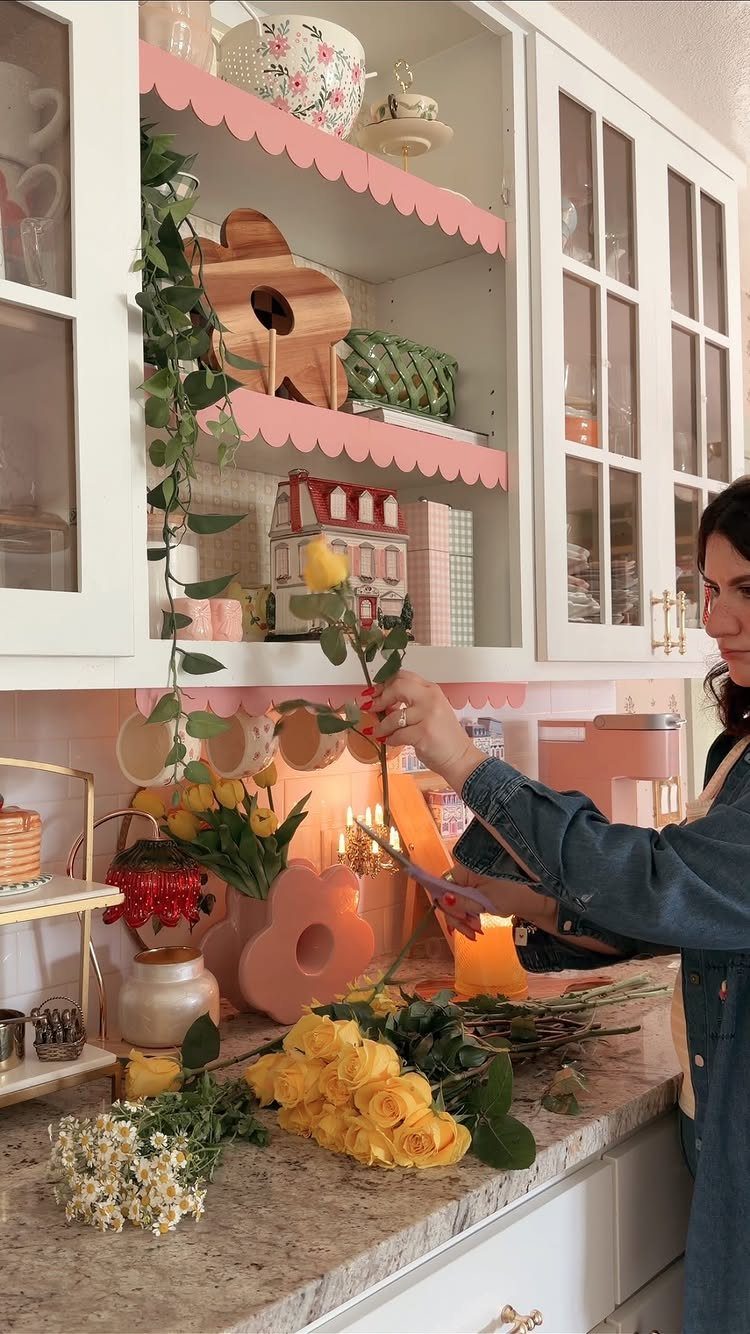
Scalloped edges on open shelves add a soft, decorative curve to the top of a white kitchen, so the shelves read as a feature rather than just storage. Pink paint makes the trim playful without changing the cabinets below.
Keep the shelf contents to a few accent pieces, a vase or a small stack of plates, so the curved edge stays the focus. I’d stay with one color on the trim and leave the rest white.
Painting is the cheap way to try this look.
16. Arched Cubby Mug Shelving
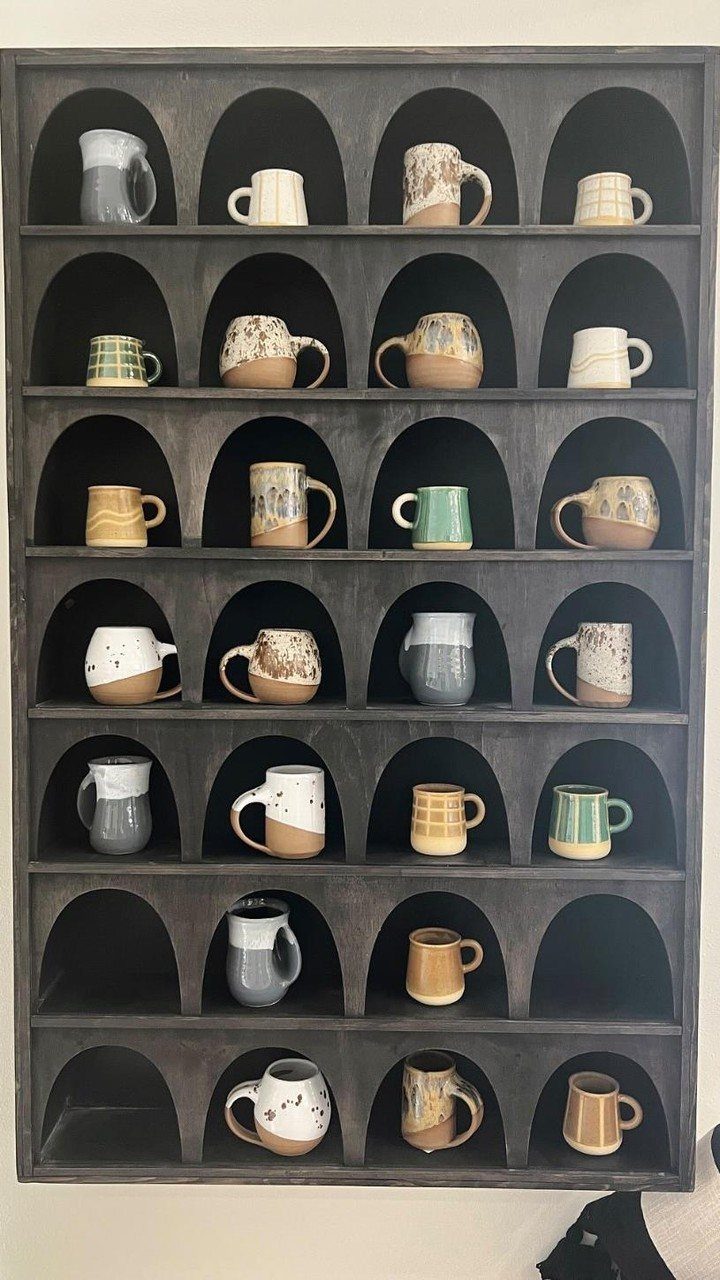
Individual arched cubbies give each mug its own spot, so a collection looks like a gallery wall instead of a crowded cabinet shelf. Dark wood against a plain white wall makes colorful ceramics stand out.
The maker of this unit built it as a wall of cubbies, which is a lot of mugs. Most people use only a handful daily, so I’d fill the cubbies with the ones you love and store the extras elsewhere.
Mount it near the coffee station so the mugs sit within reach.
Maintenance and Cleaning
Cleaning comes up far more often with open shelves than with closed cabinets, so plan for that extra upkeep from the start.
Dust and cooking residue settle on everything displayed, so plan a weekly dusting of the shelves and a wash for the items on them.
Steam and airborne grease slowly dull plates, glassware and decorative pieces, and a few of them will probably need replacing as the years go by. Extra cleaning products add a small ongoing cost too.
Match the cleaner to what the shelf is made of; a mild one protects the finish, while harsh sprays can strip it.
Clear containers for small items make wiping quicker, and a few labels or zones (baking supplies in one spot, dishes in another) keep you from pulling everything down to find one thing.
Styling Tips
Settle on a palette before buying anything, say warm neutrals with a few green accents, and let every dish and decor piece follow it. A consistent scheme is what keeps a shelf from looking cluttered.
Group items in odd numbers, and vary height and texture so the eye has somewhere to move.
Propping a cutting board against the wall adds a layer behind the dishes, and small risers raise the shorter pieces so they don’t disappear.
Mix useful things like bowls and mugs with a few decorative ones, such as a framed photo or a vintage find. Choose shelf materials and brackets that match your cabinets and countertops, and leave breathing room between groups.
Practical Considerations
Before you pull any doors, think about how you cook, how many people use the kitchen, and how much upkeep you will actually do.
If you enjoy restyling and wiping things down, open shelves suit you. If you want low effort, closed cabinets win.
Families often feel the maintenance most once the shelves are in daily use, so be honest about that.
Look at the countertop and island too. Open shelves look best above a counter that’s mostly clear, and an island that collects clutter is easier on the eye when its storage is closed.
Frequently Asked Questions
What are some creative ways to cover open kitchen cabinets?
Adding doors back is the simplest fix, and the options include custom doors that match your cabinets, DIY hinged or magnetic doors made from lightweight wood or acrylic, or a rod with linen panels, which is reversible.
You can also hide the mess behind closed doors and reserve a single open shelf for whatever you actually want on display. Glass cabinet doors let you show off what you own without exposing it to kitchen grease.
How to convert shelves into cabinets?
Retrofit doors onto the open shelves, either custom-made to match your existing cabinetry or built yourself from lightweight wood or acrylic with hinges or magnets.
If you want something cheaper and reversible, hang linen panels from a rod across the opening. Adding doors is worth considering if you find the dusting and wiping too much, since closed storage takes far less upkeep.
What makes a kitchen look outdated?
Clutter and heavy cabinetry are the 2 biggest culprits.
A wall of bulky upper cabinets blocks the eye, while crowded counters make the room feel busy. Swapping a few uppers for a shelf or two and keeping the counter mostly clear lightens the look quickly.
Are open kitchen shelves still in style?
Yes, open kitchen shelves remain a popular choice. They keep daily items within reach and double as a display you can restyle whenever your taste changes.





